

Robin S Webber
This transcript was generated by AI and may contain errors. It is provided to assist those who may not be able to listen to the message.
I want to say thank you very much to the Hymn Choir, beautiful words. Been up in that part of the country around Mesa Verde, Pike's Peak. Certainly is a lovely, lovely part of the country, and what a blessing we do have of living in this, these, the United States of America.
I would like to begin by giving my text for today, and it does come out of the book of Matthew, and it does come from the words of Jesus Christ, coming from what is called the Sermon on the Mount. Join me if you would, and let's look at Matthew 5. Matthew 5, and let us pick up the thought in verse 7, for this is what we will be speaking about in the course of this message. In Matthew 5 and verse 7, it says, Blessed are the merciful, for they shall obtain mercy. It is to this that I would address words today to you on God's Holy Sabbath day, to focus on the words of Jesus Christ written before us, and perhaps a question I have for you as we begin this message, which is so much. Christianity 101 is simply this. How merciful are you as an individual? How merciful are you as an individual? And perhaps to ask the question then, what is written on your heart? To be able to ascertain that and to allow you a thought to be able to answer that question as to what is written on your heart, and hopefully that is the same as what is written on the heart of Christ, is to go through scriptures today. And I'm going to build from the Old Testament to the New Testament on handwriting or matters that have been written down through the millennia to bring us up to this point for you to answer the question, what is written on your heart and indeed are you merciful? For unless we are merciful, then we cannot obtain the mercy of God that I think we all so much desire. So let's build on this for a moment, and I'm going to take you through four specific handwritings that are recorded in the scriptures to bring you to the point to ask what is written on your heart. Join me, if you would, for the first one that I would like to draw you to, and that is in the book of Daniel. Daniel 5. Daniel 5. And as we turn to Daniel, we'll probably recognize that we're turning to a time of empire. Babylon was still intact, and Daniel was still there and was advising the king of Babylon. And we find it over here in Daniel 5, the story that I want to draw you to.
And let's pick up the thought if we could in verse 2. Daniel 5 and verse 2.
This is speaking about Belshazzar, who was the king, and he made a great feast. Thousands of people were there, all the nobility, and they were drinking wine in the presence of the thousand. And while he tasted the wine, Belshazzar gave the command to bring the gold and the silver vessels which his father Nebuchadnezzar had taken from the temple, which had been in Jerusalem, that the king and his lords and his wives and his concubines might drink from them. And then they brought the gold vessels that had been taken from the temple of the house of God, which had been in Jerusalem, and the king and his lords and his wives and the concubines who drank from them. They drank wine and praised the gods of gold and silver and bronze and iron and wood and stone. And then notice what it says in verse 5. In the same hour the fingers of a man's hand appeared and wrote opposite the lab stand on the plaster of the wall of the king's palace. And the king saw the part of the hand that wrote. And the king's countenance changed and his thoughts troubled him so that the joints of his hips were loosened. I'll let you imagine the rest of that story. And his knees knocked against each other. Now what was going on here was that a pagan gentile society took the holy things of God, the vessels and the instruments that had been in the temple that had been taken from Jerusalem to Babylon as booty, as treasure. And they took the holy things of God that were in their keeping and they made mischief with them. They did not appreciate it.
They made it a folly. They brought it down. And not to the high level that those vessels were initially intended for. God was not well pleased. And we find the story then as we go to verse 25. Same chapter, 5. Notice what it says. Daniel is brought out. And it says here in verse 24, then the fingers of the hand were sent from him and this writing was written. And this is the inscription that was written, Many, many, tikko, you farsome. This is the interpretation of each word, many. God has numbered your kingdom and finished it. Tikko, you have been weighed in the balances and found wanting.
Perez, your kingdom has been divided and given to the Medes and the Persians. Then Palsazzar gave the command and they clothed Daniel with purple and put a chain of gold around his neck and made a proclamation concerning him that he should be the third ruler in the kingdom. But notice verse 30. That very night, Balsazzar, king of the Chaldeans, was slain and Darius the Mede received the kingdom, being about 62 years old. So here we find a situation where a pagan king made mischief and did not appreciate the holy things of God that were in his keeping. There's his handwriting, this finger that was on the wall, which you can only imagine that if and while I was speaking up here, all of a sudden there was a power point up here that we were not expecting.
Now I know Mr. Fish does a lot of power point, but wonder if I was up here speaking and all of a sudden you saw not a beam up from a projector, but you literally saw the hand and the finger in writing, many many tekel you farson.
You might join the king shaking his knees and batting them into one another. Now you might say, well what do we expect? And there was God's judgment upon that empire and that people. How dare that king make folly and mischief with the holy things of God! See, for every cause, there is an effect. There is a blessing and there is a cursing. And that kingdom, as great as it was, judgment came upon it. That is the first handwriting that I want to draw your attention to. I think many of us are familiar with it and we say, well that was God's judgment upon a pagan society.
This allows me to now bring you to the next handwriting that I'd like to bring you to. And join me if you would in John 7. Mr. Osterly drew us to John 7 by comment and I want to build upon it. On John 7 and verse 3-7, this is the second handwriting that I want to draw your attention to as we continue to explore the question, what is written on your heart to allow us to comprehend what it means, blessed are the merciful, for they shall obtain mercy.
Because we saw what a gentile society, a society apart from God, do with the holy things of God. Now we come to John 7 and verse 37. And we're going to go through this because it's a fascinating framework that maybe you've never put together and that's why it's so important always to find the beginning of the story. Not just to go to a verse but to develop the context to see what is going on here.
And this is a verse that is known to many of us. I want to build upon it and to show you what was happening as we come to a very, what we might call, famous story in the Bible. A story which is not only a story that is cast in the past but is our story as well. On the last day, that great day of the feast, Jesus stood and cried out saying, If anyone thirst, let him come to me and drink.
And he who believes in me, as the scripture has said, out of his heart will flow rivers of living water. But this he spoke concerning the Spirit, whom those believing in him would receive, for the Holy Spirit was not yet given because Jesus was not glorified.
It's interesting sometimes to frame the story before we even get to it and understand the days that this was being spoken. Here we have on the last day, that great day of the feast, the seventh day of the Feast of Tabernacles, when the water pouring ceremony occurred.
And Jesus gets up and uses this ceremony as a type of what he is offering for all humanity. A humanity that is thirsting as was brought out. A humanity that is dehydrated. A humanity that needs what God has to offer. After he said this, therefore many from the crowd when they heard this said, truly this is the prophet, others said this is the Christ. But some said, will Christ come out of Galilee? Has not the scripture said that Christ comes from the seed of David and from the town of Bethlehem, where David was?
So there was a division among the people because of him. Now notice verse 44 because this is going to be very important in our discussion. Now some of them wanted to take him, but no one laid hands on him. And then the officers came to the chief priest and the Pharisees who said to them, why have you not brought him? And the officers answered, no man ever spoke like this man.
Then the Pharisees answered them, are you also deceived? Have any of the rulers or the Pharisees believed in him? But this crowd that does not know the law is accursed.
Nicodemus gets up. He's no longer coming in at night time to visit Christ, but in the midst of everybody makes a comment here about, does our law judge a man before it hears him and knows what he is doing? And they answered and said, whom are you also from Galilee? Search and look, for no prophet has risen out of Galilee. Now let's understand what's happening at this point. We understand that the Feast of Tabernacles was a pilgrimage festival. People came from around the Diaspora, the Jewish dispersion, to keep the Feast at Jerusalem. We are during the the festivals of God. We are during time which has been set apart and consecrated by God. And now notice what happens here, verse 53, and everyone went into his own house. But now in chapter 8, verse 1, it's fascinating. But Jesus went to the Mount of Olives. Now early in the morning He came again into the temple, and all the people came to Him, and He sat down and taught them. Now what is fascinating when you look at John 7, John 8, and put it together, John 7 is at the end of the Feast of Tabernacles. And now we come to John 8. He comes back the next day to the temple.
This would have us understand that this is on the eighth day festival, that this message is occurring. This is a time of holiness. This is a time when the people that are consecrated before God are to learn and to grow and to develop in the holy things of God and understand what God is doing. To understand that the Feast of Tabernacles was designed by God, especially at that time by that covenant people under the Old Covenant and the people of Israel, to always remind them that they were brought out of Egypt. Why were they in booths? To remind them that they had been rescued, that they had been left alone amongst the people of society and had been slaves and that they had to be redeemed, they had to be rescued, they had to be restored. And now we have, as we come into the eighth day, we understand that this is a time of expansiveness. When God gives, as we understand it in the Church of God, hope to the hopeless. He gives a future to those that had a past. And now we move into this story of John 8. Now, early in the morning, he came again into the temple. Where is this? This is not in a village. This is the holiest site in the holy city of Jerusalem. And we are dealing with covenant people. I'm trying to set the framework of the story that we're about to come into. These are not Babylonians this time. The handwriting that is about to occur is not given to Babylonians and those that are apart from God and worshiping Mardak or Ishtar. These are the people of God. And then the scribes and the Pharisees brought to him a woman caught in adultery. And when they had set her in the midst, they said to him, teacher, this woman was caught in adultery in the very act. This does not leave much room for your imagination. Here we have the teachers of the law, the scribes, and the Pharisees. And they bring to him this woman.
And they say teacher or rabbi. They want a decision made by him regarding this. Here a woman is, in that sense, most likely perhaps dragged out of a house, caught in the very act of adultery with someone. And they bring her out. And it's very important that we focus on that word in the very act.
The witnesses were there. This was not a matter of he says or she says or we says. It's no one. And this they said, testing him, that they might have something of which to accuse him. They had, as it says in the New King, in the living translation, they set a trap. They thought they had him. If he went one way, condemned the woman, he would lose that portion of the audience that had come to him and felt that they could relate with him. After all, it says in the scripture that Jesus was a friend of publicans and and sinners. They were hearing from him things that they were not hearing from anybody else. There was an extension of thoughtfulness and mercy that was not found in the society of that day.
Thus, how he answered, if he condemned, might affect that audience. Likewise, if he also condemned, he might have taken upon himself and he could have been caught in a dialectic trap that he had made judgment on this person and to stone her. And therefore, he took away the prerogative of the Roman Empire. Because the Jews could talk amongst themselves, but capital punishment could only be perpetrated by the Romans. So perhaps it was a trap to set him up to get himself ahead of time to where they could trap him that way. So the trap was set.
They said, testing him, that they might have something to do to accuse him because that's what they wanted to do. Now, notice what they did. They came and they wanted an answer immediately. Now the story gets fascinating. But Jesus stooped down and wrote on the ground with his finger as though he did not hear them. Fascinating. Now, none of us were a fly on the wall, so it gives us room to consider for a moment what was happening here. It's interesting that, in a sense, he paused, he got down on the ground, and he began writing with his finger as though he did not hear them. Now, it's very interesting. I want you to think about this for a moment because a lot of you are watching trials right now. Seems like the only thing that's on television.
And if you notice sometimes in a trial, they keep on making people repeat themselves, don't they? What did you say? What did you mean? What are you stating? So here's Jesus. He gets down. He stoops down and and he's acting like he's not hearing them. And it's like, well, what are you going to do? What are you going to do, Rabbi? What are you going to do, Yeshua? Don't you know that she was called in the act of adultery? Don't you know that she was with a man that she wasn't supposed to be with? Don't you know that we caught her? What are you going to do? What are you going to do?
You know, the old expression is the thoughtless are rarely wordless. And sometimes they just keep on going. And perhaps that was a reason why he stooped down and paused and put them at bay. Because perhaps all the words that we always use are ultimately going to, we're going to have to confront them. So he stoops down, he begins writing. Now, you and I don't know exactly what he wrote. Why he stooped down. He might have stooped down to give time. He might have stooped down to pray to our Heavenly Father for wisdom from above. There is some thought that perhaps he stooped down and maybe he was writing out the Ten Commandments. There's other indications that, there's other indications that when you look at the word wrote there, that he might have been writing down a list of people's sins. It's very interesting that the word there for wrote is categraphon. And when that's used in the Greek, it means to write down a record against someone. So perhaps he was, perhaps he was literally writing out the sins of these men that were accusing these women, this woman. We don't know, but it's interesting. So when, verse 7, they continued asking him, he raised himself up and said to them, He who is without sin among you, let him throw a stone at her first.
Those without a sin among you. You throw the stone. Now, it's very interesting. He does not say that sin was not committed. He says, those of you that, what it says here is that if you do not have a sin, you throw the first stone. It's very interesting. You might want to circle it, because the word sin there, the Greek root word there, is anima martardos, which means, or you that are without sinful desire. Those of you without sinful desire, which I think would make sense when you understand his teaching in the Sermon on the Mount, where it says that beforehand that if a man did this, but now I say unto you that if a man even looks upon a woman. In other words, it goes from action to thought. So he's taking it a whole level deeper here. You know, if that's you, then you throw the first stone. Now that's not what he did at the end, though. Now this is interesting. Maybe you've never seen this before, verse 8. And again he stooped down and rode on the ground. He kept on writing. Very interesting, very interesting.
These men that had brought this woman, I have a question, ladies, may I? Where was the man? Hmm. Where is the man? You see, these men that had accused the people of the day before that these people do not know the law had themselves broken the law. For in the book of Deuteronomy it says that if a couple is caught, they are to bring both the man and the woman. But their purpose was not to uphold the law.
Their purpose was to get Jesus and to create a trap. People that were righteous in their own eyes. People that thought they had it made because who their daddy was. We can look to Abraham. We can look to Moses. And they didn't realize that judgment was upon them. Verse 8. And again he stooped down and rode on the ground. It must have been that there was a target rich environment all around them. Then those who heard it, being convicted by their conscience went out one by one, beginning with the oldest, even to the last. And Jesus was left alone. And the woman standing in the midst.
I love these stories, brother, and when it's just the individual and with the master. For it is here that the Christ does his best work as that good shepherd and that wise shepherd to bring somebody from this to a future. And we begin to see this develop. And when Jesus had raised himself up and saw no one but the woman, he said to her, woman, where are the accusers of yours? Has no one condemned you? And she said, no one, Lord. And Jesus said to her, neither do I condemn you. Go, go and sin no more. It's interesting in the New Living Translation, it's put this way. When the accusers heard this, they slipped away one by one, beginning with the oldest until only Jesus was left in the middle of the crowd with the woman. Then Jesus stood up and said to her, where are your accusers? Didn't even one of them condemn you? No, Lord, she said.
And Jesus said, neither do I go and sin no more. This is a second handwriting I wish to present to you because this handwriting speaks to both you and to me and to those that we deal with.
Here we have a difference. Those of that religious community of that day, those people that were of covenant on the Temple Mount during the Holy Day came with an attitude of condemnation, of strictest judgment, and were willing to do anything to trap Jesus. And this woman was but a pawn. This nameless woman was but a thing to these men to get their way. They wanted to condemn her. They wanted to condemn Christ. Here's the major point that I want to share with you, and you might want to take a note in this message on Christianity 101. And it is simply this, to ask you how merciful you are as an individual. These religious people, and I presume that I'm talking to a religious audience today, these religious people were ready to condemn. Jesus was ready to forgive. This is the power of this story. This is the power of this message.
Now, even as Jesus was willing and desirous to forgive, it doesn't mean that he did not acknowledge that there was sin. Christ did not take her off the hook, but raised the bar. Notice what it says. And Jesus said to her, neither do I condemn you. Go and sin no more. She was given two things. You might want to jot it down. Just as you and I have been given these two items. Number one, she was given a new life. She was given, in that sense, a new opportunity. She was given a new start.
She was given a new birth in life. And she was also, number two, given a challenge.
And the challenge was to live a sinless life. Not to go back where she had been, but to move forward now with a Savior in place. And basically what he did was he erased her past. There they are in that Temple Mount. There they are, perhaps, on the cobblestone in one of the porches.
Just the master and the woman. Nobody else around. A woman that, do we dare say, had a past.
He erased that past with his words. He said, you have a future.
Isn't that what the Holy Days are all about, when you think about it, in the framework of this story?
That the Feast of Sukkoth, the Feast of Unleavened Bread, excuse me, the Feast of Tabernacles, reminds us, takes us back to when Israel had no future.
Had no future ahead of them. Other than to make mud bricks on the banks of the Nile.
Day in and day out and toil and not have a future. And God said, I'm going to rescue you.
I'm going to give you a new birth. You are going to be the first fruit amongst the nations.
You are going to be redeemed. These are words that spill out of the Old Testament. I'm not going to put all the verses down here for you right now, but this is the whole context of the Old Testament.
That God rescued somebody. Just as in Ezekiel 16, when God is talking about Jerusalem, and says that, you know, you were something that nobody else wanted. And I took you, and I gave you a life, and I clothed you. And I said, live! Live!
All of us have been through that. You and I, in baptism, we had a past, we had a story, we had issues, and God said to live. And yet, sometimes when we've moved through that channel, we forget where we have been. And going forward, we forget where we have been, and we do not offer that future to others with the future that has been offered to us.
Thus, we become critical. We become cynical. We become judgmental.
And this is not to excuse sin, but this is to understand how God thinks.
And this goes back to the very words of Jesus Christ, Blessed are the merciful, for they shall obtain mercy. This is a story that is before us.
Now, Christ did not take her off the hook. Frankly, he raised the bar. And in that sense, it was a judgment that was deferred. Join me if you wouldn't look 13 for a second. Look 13.
Let's pick up the thought here in verse 6.
Jesus speaking, spoke a parable, a certain man had a fig tree planted in his vineyard, and he came seeking fruit on it, and he found none. And then he said to the keeper of his vineyard, Look! For three years I've come seeking fruit on this fig tree, and find none. Cut it down.
Why does it use up the ground? But he answered and said to him, Sir, let it alone this year also until I dig around it and fertilize it. And if it bears fruit, well, but if not, after that, you can cut it down. It has been said that the entire message of the Gospel is found in these four verses, that we worship a God that is incredibly merciful, and yet there is a judgment.
The question is this for this woman that was in a sense judgment deferred, judgment removed from what she had done. It relates to this story, to recognize that you and I have got to come to an understanding that we worship a merciful God. But we do not know where his mercy and his judgment pass one another, do we? We don't know the crossover point. But Jesus said, Go and said no more. You have a new life. This takes us now to the third handwriting. Join me, if you would, in Colossians 2, 11. And this becomes more personal. Colossians 2. In Colossians 2, and let's pick up the thought in verse 11.
In him you were also circumcised with the circumcision made without hands, by putting off the body of the sins of the flesh, by the circumcision of Christ.
Now, we need to understand if we can move into the Scripture, we need to understand who this is being spoken to. It is being spoken to first and foremost to the Gentile community.
That is at Colossae. So they are the first audience, but all of us are joined into this because the words affect each and every one of us. In him you were also circumcised, because at that time Gentiles were not circumcised. In him you were also circumcised with the circumcision made without hands, by putting off the body of the sins of the flesh, by the circumcision of Christ, buried with him in baptism, in which also were raised with him through faith, in the working of God who raised him from the dead. And you, being dead in your trespasses and the uncircumcision of your flesh, he is made alive together with him, having forgiven you all trespasses. He's saying to the Gentile community in that sense, you were apart from God. You were not at that time the covenant people. The blessing was not upon you, but now that past is looked over and through Jesus Christ I'm giving you a future. Now notice this, verse 14, having wiped out the handwriting of requirements that was against us, which was contrary to us, and he has taken it out of the way having nailed it to the cross, having disarmed principalities and powers, he made a public spectacle of them, triumphing over them and it. What does this mean to you and to me?
We just talked about a covenant people that forgot their roots. Forgot their roots. Forgot that they had been not only slaves of the of Egypt, but slaves of sin.
And I offer this third handwriting to each and every one of us in this room today to encourage us that you and I cannot forget our roots, that we cannot forget where God found us and began to work with us. Oh, it may not have been on the Temple Mount. It might not have been before a hostile crowd, but each and every one of us had that encounter with God the Father and Jesus Christ. And our past was forgiven and a future opened up to us. And we must understand that that is how our Master, Jesus Christ, thinks and is motivated to give others the future that He has also given us. But this is where we were. Notice what it says here, again in Colossians 2, having wiped out the handwriting of requirements that was against us, and it was contrary to us. He's taken it out of the way, having nailed it to the cross. What is this talking about? The handwriting of ordinances. The Greek root there is it's a handwriting document. When this word was used, it was speaking of a handwritten document of accounts and or of indebtedness and or of, you might say, a record that had been made. The RSV, the Revised Standard Version, makes this very interesting, where it says in verse 14, having canceled the bond and or the record, which stood against us with its legal demands, this He set aside, nailing it to the cross. What does this mean? This is Christianity 101. It's not that the law was nailed to the cross and done away with. That is not what we're discussing. What is being discussed here is the legal demands that you and I, of and by ourselves, joined that lady that was put before Christ, not having been able to live this life in accordance with God's holy and righteous law.
She just broke one of the commandments. We have all, at one time or another, broken others.
Thus, all of us are in this stead. And when it talks about this handwriting of ordinances, you might just say this. This is the picture that I want to paint for you. It's simply this. If you look up and simply this, that here is a man that's on a stake, a star of sacros, whatever you want to call it. And on top of that was the handwriting of ordinances. It was a death certificate.
Robin Webber. You are dead. Not because of anybody else, but because of you and your actions and what you were and what I am, apart from God and His grace and His righteousness and the sacrifice of Jesus Christ. And on that instrument of death was Jesus Christ. And He paid that debt in full for me. Just as much as any man that is on death row, and He's waiting for His moment of execution.
He's had His last meal. There has been no reprieve from the governor. There's no phone call coming in.
And a man walks up to the cell, somebody that you've never seen before.
And he says, who are you? He says, that's not what is important right now, but here's what is important.
I'm going to step into that cell, and I'm going to take your place. And you're going to come out of this cell, and you're going to go free. But I'm going to tell you something. Go! And sin! No more!
I give you opportunity, and I'm going to raise the bar high. The challenge is there. Sin no more.
This door is going to open. I'm going to take your place. And I'm going to take the punishment that you so rightfully of and by yourself have brought upon yourself. That certificate of death is there. That handwriting of the ordinances that you could not measure up to.
It was not a matter that it's a bad law. God's law is righteous. God's law is beautiful. God's law in Romans 7, 14 says it is spiritual.
But it is the record that was there that we could not live up to the demands of that law, of and by ourselves. And a sacrifice, a substitution, had to be put in place. That is why, dear brethren, in Los Angeles, we need to remember our roots.
We need to do that which the covenant community on the Temple Mount did not do for this woman. They judged her. They condemned her. That was their first action. It was not even a reaction. It was an action. Jesus' first action and first step forward was to forgive. Join me, if you would, in Psalm 86 and verse 5.
Psalm 86. For you, Lord, are good, and you are ready to forgive and abundant in mercy to all those who call upon you. Give ear, O Lord, in my prayer and attend to the voice of my supplications. In the day of my trouble I will call upon you, for you will answer me. Among the gods, there is none like you. Again, allow me to draw your attention to verse 5, and let's look at it together as congregation. For you, Lord, are good, and you are ready to forgive. Now, when David mentioned or wrote this around 950 B.C., it's beautiful and it's wonderful. It's one thing to read it. It's another thing to see it in action. And the Lord that was being addressed here by David is the same one that was personified by the Son of God come to earth and that Son of Man, Jesus Christ, there on that Temple Mount, there on that eighth day, giving help to the helpless, hope to the hopeless, giving somebody that had a past and giving them a future. Is that not all what the eighth day festival is about when you think about it? And only God can do that. And God is doing that today, and He's going to multiply that by millions, perhaps billions, when this day comes into total fulfillment. My question is this to you, with what's happening in your life right now, issues that you have that are resting in your heart today. Look at Psalm 86 and verse 5.
That's a recipe. John 8 shows how it's put into the oven. And to take a stand, even when you are alone, like Jesus Christ was alone there on that Temple Mount, and it was put right in front of Him. You know, it's interesting the different translations say that some translations say that she was put in the midst of them. Other translations say that that woman was put right in front of Him.
It's like there's no getting around. What are you going to do?
Do some of you today in your lives have issues, challenges that have been put right in front of you?
What are you going to do?
You're going to do what you've always done?
And or are you going to do it like Jesus Christ did?
And to recognize that, yes, there is the law.
And at the same time, with wisdom and understanding and with prayer, help an individual move from a past to a future.
You say, who me? Why don't I just call on Jesus to do that? Well, He's up there right now.
Jesus is our head. He's the Lord of our life.
If He's our head, then that makes us His feet to do His walking, His arms to do His reaching, and His tongue to do His speaking.
We have responsibility. My question to you today, as we're about to leave the sanctuary facility and go out and live our lives, is simply to ask you, what is written on your heart? We know what was written on the wall in Babylon to a people that did not treat the holy things of God well.
We know what was written in the sand on the temple mount to a covenant people who did not even grasp or remember the holy things of God that had been done to them. We have rehearsed what was written in the handwriting of ordinances, that death sentence that was upon each and every one of us, in which our past was forgiven, and we were given a future. Let me take you to the fourth writing just briefly. Come with me to Revelation 20. Revelation 20. There is a future, and we are giving an account to that which we have been granted. In Revelation 20 in verse 11, let's notice what it says. Then I saw a great white throne, and with him who sat on it, from whose face the earth and the heaven flood away, and there was found no place for them. And I saw the small, the dead, the great standing before God, and books were opened. And another book was opened, which is the book of life. And the dead were judged according to their works. Notice by the things which were written in the books by the things that were written in the book. Now, that can be taken a couple different ways. It can be by those things that are written in this book, as to how our life compares to it, that we are, in a sense, judged by the Word of God. Also, it could mean perhaps those things that have been written. Our account, our record, that is before God, our deeds. Even our good deeds. But our good deeds don't merit salvation.
No amount of deeds here on earth grant salvation. You can't earn it. It's a gift from God. But our good deeds are recorded in response to our faithfulness to God, that define our relationship, that we're desirous to be like God, to be like Jesus Christ, to be a part of that kingdom that is coming. Revelation 20, 22 then, verse 21, verse 22. Interesting. Again, about handwriting.
But I saw no temple in it, speaking of this new Jerusalem that comes down from earth.
For the Lord God Almighty and the Lamb are its temple, and the city had no need of the sun or of the moon to shine in it. For the glory of God illuminated it. The Lamb is its light, and the nations of those who are saved shall walk in its light, and the kings of the earth bring their glory and honor into it. And its gates shall not be shut at all by day. And there shall be no night there, and they shall bring the glory and the honor of the nations into it. But there shall by no means enter into it anything that defiles or causes any abomination or a lie, but only those who are written in the Lamb's book of life.
Couldn't help this morning when I was reviewing some notes here.
It speaks about this glory that is going to be part of this New Jerusalem. The glory that's going to be there. And I couldn't help but think of that mention in the Scriptures. I believe it's in the Proverbs where it says that there is that glory of a king that overlooks a transgression. Okay. Jesus Christ is going to be the king of the wonderful world tomorrow.
Jesus Christ is the king and the Lord of our lives.
Jesus Christ said, blessed are the merciful, for they shall obtain mercy.
My question, as I conclude, is not what is written on a wall in Babylon or what is written on the sand in Jerusalem. I am concerned about what is written in the book of life. And that is being written by you and me right now. By that which is written in our heart, which then comes out in our actions. Each and every one of us in this room that have been baptized, each and every one of us that have accepted Jesus Christ as our Lord and Savior and have responded to the call of God the Father. Each and every one of us that are here have stood on that common ground before that stake, staros, cross, whatever you want to call it. All of us had to stand in that spot, in that pool of blood. It is an unforgettable moment. It is an unforgettable sensation to recognize that the door was not slammed on us, but the door was open to us. A past forgiven, a future to have. Simple question. Grandparents, parents, friends, neighbors. How many of us have a door barred to somebody that we know or love or in relationship with, to where we're just keeping them in their past, rather than by God's good graces in us as His instruments to open that door and to allow the love and the light and the glory of God to be visited upon them by the actions of God's Holy Spirit in you? Are you ready for Monday and Tuesday and Wednesday and Thursday and Friday coming up? Are you prepared to stand by your master on that Temple Mount figuratively? And are you willing and are you open by that which is written in your heart to give somebody a future, to be God's instrument, not to excuse the sin, but to help reconcile that person with God and to help them towards a meaningful future?
Just like that woman caught in adultery, Jesus said, go and said no more. Jesus gave that woman a choice. And the choice as to what you will do this coming week, this coming month, and the rest of your life lies before you. I suggest you make the right choice to be written in the Book of Life.
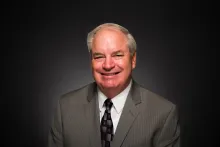
Robin Webber was born in Chicago, Illinois, in 1951, but has lived most of his life in California. He has been a part of the Church of God community since 1963. He attended Ambassador College in Pasadena from 1969-1973. He majored in theology and history.
Mr. Webber's interest remains in the study of history, socio-economics and literature. Over the years, he has offered his services to museums as a docent to share his enthusiasm and passions regarding these areas of expertise.
When time permits, he loves to go mountain biking on nearby ranch land and meet his wife as she hikes toward him.
