

John Elliott
This transcript was generated by AI and may contain errors. It is provided to assist those who may not be able to listen to the message.
There was a time in prehistory when an angel in heaven had everything an angel could. He wasn't just an angel, one of the billions. He was an archangel. He wasn't just outdoing his responsibilities. He was serving, perhaps, above the throne of God, a carob that covered. He had it all in the angelic world. But he wanted more. He wanted more than everything an angel could have. More than had ever been allotted to anything except God the Father and the Logos the Word.
He wanted more. When we look in Scripture, we come to Genesis 3 and verse 1. We come to the very first use of the word more in Scripture. Let's go there. Genesis 3 and verse 1. This mindset of this devious, self-centered, self-seeking, lusting spirit is now revealed. Genesis 3 and verse 1. Now the serpent was more cunning. Cunning meaning one who was crafty.
He was deceitful. He was clever. He could do the perfect advertisement, as it were, the convincing argument that went above and beyond reality. He was more cunning, crafty, than any beast of the field which the Lord God had made. And he said to the woman, as God not indeed said, you shall not eat of every tree of the garden. What is he doing here? He's encouraging humans to want more, to demand more, to seek more.
The serpent goes on then encourages them in verse 5, for God knows that in the days you just have a bite. That's all it takes just a little bite, maybe a nibble. Just do a little thing, something small, not even that significant. And you'll get more. Let me show you how much more you can have with just one bite.
Well, if you eat of it, your eyes will be opened. You'll see more. You'll understand more. And then you will be like God, like he's always wanted to be. You'll be more than just two humans that just popped up, showed up, don't know anything. You will be like God. Is that more? Oh yeah. And then what? Knowing good and evil. Here, you're fresh, you're new, you don't know anything. You're gonna know so much more. You will know all about everything.
Good. You'll know all about what's good and all about what's evil. And you will be able to decide and to choose. You'll know how everything works. Hmm, just one bite. You can have more. Now, it's always nice to talk about somebody else in this regard, but what about you? What about me? You ever had that little bite of something? Ever had that desire? Well, it's not gonna take much. You can get rich real easy, quick, easy.
You can fast-forward yourself. You can promote yourself. You can change yourself into something that is much more than what you are, what you have, how people think about you. More. Sometimes doing that just requires something right at the edge. You know, just right at the edge. Was this a huge departure?
Well, they'll even say, well, you know, my wife gave it to me. You know, it wasn't a big step. You gave me the wife, by the way, and she gave it to me. It's not like I really stepped over the line too far. You know how it is? Well, this thing would really embellish my life, and it's not too far off of my commitment to God, my commitment to spouse, my commitment to society.
It's just a little bit. In fact, if I do it in the dark, it's almost insignificant. It's the satanic influence that has come to humans and become a common tendency today. The problem is more for me is the opposite of agape love. And there you see Satan the devil and God the Father just absolutely in black and white.
Start conflict, right and wrong, sin and right. But humans don't tend to see it in that form. They say opportunity. Don't want to miss an opportunity here. But one is love and thoughtfulness and concern and promotion of God, the kingdom of God, the values of God, the family of God, the welfare of the citizens of the family of God now and in the future. And the other actually is the opposite. It actually infringes on the rights, the blessings, the benefits of God and of other people.
But just a little bit. Just a little bit. We live in an age of lawlessness, and there is a growing appetite in the world for more. It is exponentially grown even in your lifetime, however long that has been, from being sort of content and getting by and then having the opportunity through loans, financing, through all kinds of various things, including cryptocurrencies and some way of getting out, maybe selling illicit things and getting funds some other way, a little bit of pilfering, a little stealing, a little cutting the corners. Humanity has this great appetite for more.
Opportunities include, well, if you can sell something to a potential buyer and get a commission, in order to make the sale, what do you do? Well, I want more. This is a big deal. The contract is big. The commission is big. All I have to do is enhance and embellish a little bit, maybe hide a few facts. If you want a better job, what do you do? Typically, people today write resumes, and they embellish. Some of them have college degrees and experience and everything else that simply never took place.
People will say things and present themselves in ways that get them, hopefully, something more, an opportunity for more. But on the other end, they're hurting people by giving them less, providing less, being inept. People selling themselves, as it were, to a potential mate, claiming things and promising things, when in fact all they want is to get a little more for themselves and in reality they're going to return a lot less than is expected or needed.
A person, even in the church at times, saving a job or a promotion or an opportunity, all you have to do is just step over into the Sabbath a few minutes. Just a few minutes, a little bit, and maybe for a sabbatical reason, you know, some thoughtful, I don't know, helpful little task that you could do. It starts small. You take a little loan from God's tithe. You fudge on your tax a little bit. You sort of don't come through with this.
You don't do exactly what God says. You take something that's not yours, but wow, it's there, it's justified in your mind. Break the rules a little bit. Be the exception because, you know, you and I, we're special. Just ask yourself, are you special? Oh, yeah. And so you deserve certain things. You're entitled to certain things. And so crossing the line as an exception can feel justified. Think of a disciple with Jesus Christ for a minute who was slightly an exception for 30 pieces of silver. He could justify it somehow. It wasn't a big deal in his mind. What is the result of more for me with just one bite? Well, we find it here in Genesis 3. Let's look down into verse 17. Then to Adam, God said, Because you have heeded the voice of your wife and have eaten from the tree of which I commanded you, saying, You shall not eat of it. Curse it is the ground for your sake. How did that work out? How did that work out? All I can have, I can have so much more if I just do this one thing for me. And suddenly the ground is cursed. In toil you shall eat of it all the days of your life. Thorns and thistles it shall bring forth for you. You shall eat of the herb of the field and the sweat of your face. You shall eat bread till you return to the ground. For out of it you were taken, for dust you are and for dust you shall return. You know, that is the reality that is stated throughout the Scriptures. It's a recurring theme of the Scriptures. And what I want to convey here today is you and I need to really love God's law, love God's ways, and appreciate that all of them are not for you. They're not. You know, not stealing is not for you. Not lying is not for you. No, stealing and lying is for me, right? I can get more if I steal and lie. Just watch my pile grow more than an honest man, right? That's not for you. Killing. You know, that's not for you. It might feel good sometimes in your mind that, wow, I just wish that person would die. No, those commandments are for them. They're for others. And if we develop a godly mindset, we will come to love the blessings that we can be to others through getting our mind off of ourselves, not being like Satan, not craving more for me, not creating some endless experience of greater and greater thrills and self-promotion, rather promoting human beings to their ultimate fulfillment, life in the kingdom of God. So today, what do you want to achieve in this life? What do you want to do in this life? Is it by chance more? In our youth, we tend to think, oh, the world is my oyster. You know, what am I going to go out and get? What am I going to make of it? And there's, I don't know, nearly eight billion people out there right now pursuing that. God in his scripture and through the sermon today is going to reveal two surprising lessons. And they are. I'll put them right up front. More is less, less is more. Okay?
I've already seen that so far, but there it is. More is less, less is more. Let's get right to the two surprising lessons, because in the first one, it's more comes from God as a result of seeking less for me. So, less for me, in turn, fills my life with more from God, eternally. Now, forever, eternally. So if you think of something, a wise investor here, you want to invest less in me and more in God and others. And the payback will also be exponentially. The other principle is, the more I seek for me, the less I will ever receive from God. And so the ROI, the return on investment, is diminished to almost worthless, and in fact worthless, as we'll see. The further a person pushes more for me, selfishly, the less will come from God until there's nothing, nothing whatsoever. That doesn't change our human thinking. We are patterned. We have these self-advancing concepts that we have to fight, and that's what self-control is. That's what we want to talk about today, is coming to recognize more for me is less from God, and less for me is more from God. Lessons from the Bible. Again, Lucifer wanted more, Adam and Eve wanted more, Nimrod wanted more, even the righteous individuals. When you look at it, David wanted more. I mean, what more could you ask for? Annointed king of Israel, is it the palace, he's married the king's daughter, but he wants more. He wants more. All the way to the end time, we see this quest for more and more and more. You know, if you want to just turn over quickly to Revelation the third chapter, Revelation chapter three, when Jesus looks at his church, he has seven lessons of the church here, and they're insightful, and they're also somewhat critical, along with encouragement and promises of blessings if we perform correctly.
But notice here in verse 17, to the church at Laodicea, because you say, I am rich, I have become wealthy, I have need of nothing. Notice all the eyes. I, see, I'm pursuing more for me, and I've reached this state, and therefore I'm wealthy.
Is that what he says here? Is that what he wants us to do? No, their state is that you are wretched, miserable, poor, blind, and naked. Poor, blind, and naked in his eyes. They're not going to receive anything from him if they continue down that road. When he says here, verse 17, I counsel you. Here's some advice. He's actually going to give them some financial advice, because they're all about finances. They're wealth, they're wealthy, they're rich, they have need of nothing. He says, okay, let me give you a little lesson here in investments. I counsel. I'm encouraging you. This is going to be good for you. I counsel you to buy from me. That's a choice you make. I'm not doing this to you. I'm counseling you, encouraging you. Buy from me gold.
Get the good stuff from God. That's what gold is. It's gold that's refined in the fire, meaning it's 24 karat gold. It's not what I have on my finger here, which is 12 karat, which probably almost half, 12? Half. Half brass, half silver, you know, and half gold. He's saying, get the real deal. Don't buy one of those fake bars. Get gold. Buy gold from me that is 24 karat.
It's been melted. It's had all those impurities. They float to the top, because gold is heavy. You scrape them right off. That's good advice. So let's consider here some things.
Human nature desires more, and it's everywhere. More food variety. You know, we've come to a time in history — we probably don't even recognize it — that kings of old used to strive for in having various types of foods from other cultures, but they often couldn't get them.
We have foods from every culture on earth. You can walk into your own supermarket and then go to some pretty chic places that have foods literally from every culture, culinary concept, every spice, every fruit, you know, even what we buy in the store. They're not even grown in this country much of it. It's actually imported, because we want the bananas, and we want things out of season.
In the wintertime, we want our ripe fruits and our fresh flowers. Yeah, we want more.
We want more meat. The human state today is a meat-eating state. Before, down through history, you had — I don't know — your little garden that you ate out of, and you had a few animals.
Well, how many of your animals could you eat in a year and still have animals? You know, we go through animals like we've got the whole ranch, just for the barbecue, basically, and everybody wants that, like the kings of old did. And so out there, they've got the feedlots, they've got the chicken house, they've got the turkey houses, they've got the fish farms. We've taken them out of the sea, so now we're farming.
Everybody can have all the meat of every type they can imagine all the time.
We want more. More treats, more candies, more sweets, more exotic things, more things to drink that are tasted different, and nothing seems to last very long because we want new flavors and exciting things. We want more exciting entertainment. We don't watch the old things, it's kind of arcade. We want something new and more exciting and more jazzy and more special effects. And by the way, we want a bigger screen with more pixels, and better stereo sound. I mean, this is the more, the more beauty, the more space, the more speed, the more programs, the more performers, more room, more quality, more economy, more knowledge, more status, more respect. We want more influence. We trust our social media so that we can get more of me recognized by more people and influence and get more recognition, hopefully more praise. We want more control, more say. We want to be able to speak up and our voice be heard and it make an impact. So more power, of course, we want more wealth. Solomon discovered that more is actually an unquantified goal. More is just more. It's like the fire that never gets enough wood. It's like the grave that never gets enough bodies.
More is just more. Let's go to, well, I'll just read Ecclesiastes chapter 5 and verse 10.
He said, He who loves silver will not be satisfied with silver, nor He who loves abundance satisfied with increase. There's no such thing as the end of more. And you see the billionaires, the multi-billionaires. What do they want? More! More billions! What's the magic number? There isn't one. There simply isn't one. Solomon had a good wife. He just wanted 699 more.
And those weren't enough, so he got 300 more.
You know, the root of the matter is this, a shifting away from the two great commandments that Jesus said really is the foundation for all of God's law, all of His mindset, the Bible, of course. Love God with your heart, soul, and might. Love your neighbor as yourself. That's an outgoing thought, and you want more for them. You want all the good and the more for them, and you devote your life to them. It's a shifting away from that to self that brings on the self-promotion, self-serving, and all the compounding results that occur from that. Because when you go out and you start taking more for me and getting more, then others don't have enough, and they resent that.
Society is becoming an I society, small I. You know how the word I starts out? You've got an iPhone.
It's a cutesy little name. iPhone. What does that mean? What's about I and my iPad and my I this and my I that, you see? Nothing wrong with the device, but it's clever how it just got named I.
YouTube. What's it about? It's about my tube. You know, it's about I, my thing on my TV channel.
And I get my own channel, and it's my tube. And so it is. We have individual things that we don't recognize, maybe what they're saying, but you know what personal devices are?
What is a personal device? Well, it's just it's for me. It's what it's for. It's not something you share with anyone else. It's not a thing that you do together. It's not something you sit down and watch. No, you have an I device, a personal device. It's something that you put the ears, the earbuds in, and you yourself listen to your own music, an iPod. And then you have your little 3D, what do they call it, virtual reality. These are goggles you put on, and you go into your own world of virtual reality. There's nobody there with you. You can't share that with anybody. It's just it's a personal device, like a personal watercraft, a PwC, they call them. No longer is it a boat where you put your friends and family and you go boating. No, you have a personal one-person, 150 horsepower, personal watercraft that you go off and you have your thrills by yourself.
And we come to where this sounds good. We have personal promotion and words and pictures of myself on Facebook, social media, some of the other platforms. There's even a new generation termed the iGen. iGeneration. Dr. Jean Twingy states in the book iGen, today's members of iGen, the children of teens, or the children, the teens, the young adults born in the mid-1990s and later, are vastly different from their millennial predecessors and from any other generation. Where iGen goes, so goes our nation and the world. So the point is here, it's a very personalized generation that has grown up and where this is going, so goes the nation, so goes the world.
For more. Now consider the body of Christ. What are we? We are focused on keeping the rules laid down for us by the kingdom of God, within the kingdom of God, and those are humility, serving, giving, loving, sharing. We have an obedient mindset, wanting the best for others.
And when we have that mindset, we're seeking less for me, but more for them, more for all, as it were.
Consider how less comes into the firstfruits equation. Here we are wanting to be firstfruits at Christ's return. Less is a factor that you and I must reconcile in our minds. Do I want more?
Or do I really want less? Because here's the reality. The participants in the kingdom of God today, in this lifetime, they experience a profit loss. Have you noticed that? Every time you get a payroll check, you get a 10% loss for God, another 10% loss for God's festivals, from your bottom line, from your net worth. Out the door it goes. Twice in seven years, you experience another 10% loss for widows, fatherless, needy, etc. This is going the opposite direction here.
I'm suffering a profit loss from my investments. If I'm a farmer, I've got all this crop I'm bringing in. And what's my profit and loss? Well, I'm giving 20-30% of it off the top to God and to others and helping them. This is not like I'm getting the whole thing, plus I just happened to get on the neighbor's property a little bit when they weren't watching.
Productivity drops on your farm there. Every seventh year, you've got a land rest.
That's one-seventh of productivity you might factor in. You have one seventh loss every week. Here we are on the Sabbath. We're not working. That cuts right into the bottom line, doesn't it? I mean Friday nights, Saturdays. Think of the money you could make. Things are the things that you could do to enhance me. But we are giving away one-seventh of our life.
We are additionally losing some cash on Holy Days in offerings.
We're losing time in serving. Serving at the hall, serving each other, mowing someone's lawn, cooking extra food, taking it to them, picking up the phone, writing a letter, helping people, encouraging people. We're losing time.
We are sacrificing a couple of weeks a year more out of our schedule by going and keeping God's Holy Days and attending the Feast of Tabernacles on eighth day.
We are sacrificing our leisure and our comforts by traveling to some places, staying in temporary dwellings. We are having loss of profitable opportunities. In fact, the opposite of that is we are actually being criticized and losing respect from this world by obeying God, keeping His Sabbath and His Holy Days instead of the world's customs and holidays. So right there, we have a real dichotomy, don't we? And yet, for some reason, we're here.
We're here while the self-desires to have more, but there's an internal clash in our minds because we are promoting kingdom of God values that go against self-promotion.
You know, we can easily do as human nature would have us and begin to make little steps in one of the other direction. We don't make just a full commitment and boom, we're either one or the other. It tends to be we find out about things, then we work, we test ourselves, we try a few things, cause and effect, failure. We learn lessons. We all do. Don't think that anybody here just started out perfectly pure and, you know, they just did everything right, no? We are here kind of like King David, and we have a calling from God and we have all these opportunities and we have God's Spirit, but sometimes more looks a little attractive, a little too attractive, and we get burned by it. But that's okay. Jesus Christ died, you know, shed his blood, and he died. Jesus Christ died, you know, shed his blood, and went through a horrible, horrible, torturous sacrifice for us so that we could, after learning that and repenting from that, we could change direction. We have to be careful, though, because things like Sabbath observance, if we're not careful, we can begin to make it about me and not the holy convocation that it is. You know, this is God's Sabbath. He made it. He invited you and me here. This is not our church service, the word we welcome God in and say, oh please take over the service. No, it's his service. He welcomed you and I here, and that is who we come before.
But if we begin to say, well, I have had a hard week. I kind of wore myself out, maybe worked a little harder than I wanted to so I could have more, and now it's God's Sabbath. I think I need to fill in the blanks. I think I need to sleep more, rest more. I need to take care of myself more. I need to do as little as possible, have my comforts filled by others, etc., etc. It's about my energy, my entrance, pamper me with conveniences. Am I being entertained? Am I having a good day?
You know, etc., etc. We can turn this around. It's a logical progression, and yet that war is with the Holy Spirit that's in us. Let's go to Romans chapter 8 and verse 5. Romans chapter 8, beginning in verse 5, For those who live according to the flesh set their minds on things of the flesh. So if we start making this life about me and my fleshly human life, then we have a physical short-term mindset. But those who live according to the Spirit seek the things of the Spirit.
There'd be the things of God, purpose, the calling, the family of God, the mindset of God, and growing up into that. For to be carnally or physically minded is death. There's no future in pursuing something for yourself. But to be spiritually minded, loving God, heart, soul, and might, loving neighbor as self, that is life and its peace.
Because the carnal mind is against, it's hostile to God. Remember? It's get, it's take, it's break the rules, hurt other people a little bit, though you don't tend to think about that. That is hostile.
The word enmity means hostility to God. For it is not subject to the law of God. And what is the law of God? It's the law of love, loving God and loving others. Nor indeed can be.
So then those who are of the flesh, not in the flesh, we're all in the flesh, but those who are mindset of the flesh cannot please God. But you are not in the mindset of the flesh, if I can just translate it that way, you're not of the flesh, but of the Spirit, if indeed the Spirit of God dwells in you. So their brethren is where we want to keep our eyes from wandering onto things that are lusts for me and keep them focused on Jesus Christ, God the Father, the kingdom of God, the family of God, our brothers and sisters in the faith, the future, called ones that God is bringing now and will bring in the future. And really sacrificing our time, efforts, finances, as God commands in the Bible, sacrificing those for others. You know, in 1 John chapter 3 and verse 16 it says, By this we know, love, that he laid down his life for us.
And so we ought to lay down our lives for the brethren.
That's the opposite of more for me, isn't it? Laying down your life is not more for me.
It's more for them. More for them.
In 1 John chapter 2 verses 16 and 17, we get a directive here concerning love. 1 John chapter 2 and verse 16.
In the previous verse he's saying, don't love the world. This self, more kind of greedy, sinful mindset. Don't love that.
For all that is in the world, the lust of the flesh, the lust of the eyes, the pride of life, those three categorize all the mores that you can come up with.
It's not of the Father, it's of the world, and the world is passing away and the lust of it.
But he who does the will of the Father abides forever. And what's the will of the Father? Less! Sacrifice yourself for others. Give to others. Promote God. Promote your fellow man.
Demote yourself in your own mind in the eyes of others. Give God the glory. Give others the glory. Praise others. Don't think highly of yourself. And who does that will be established forever.
So there it is. That's the factor one and the factor two, you know, that we've spoken of.
More for me is less from God, to the point where there's nothing. And less for me is more from God, which is everything. Absolutely everything.
Now, if we go here and consider what the world wants, as he says in these verses, if we want what the world wants, well, it's all fading away. You know, it's this pride of life. It's upgrade, upgrade, upgrade, more, more, more. I need it. I want it. I deserve it.
Even the ads tell me, you deserve this. Use your credit card. I can justify it.
And Jude, if we just go forward one book to the book of Jude, it's one chapter. Jude, verse 11, he's talking here about church members. And he says, Woe to them, for they have gone in the way of Cain, having run greedily in the air of Balaam for profit and perished in the rebellion of Korah. Each one of those was an individual who was wanting and striving to get more than what was theirs, more than what was allotted to them. In verse 16, these are grumblers, complainers, walking according to their own lusts, and their mouth, and they mouth great swelling words, flattering people to gain advantage. They want more advantage, more for me. Let's drop back to verse 11. Woe to them, you know, woe to them.
Woe to them. In verse 12, these are spots in your love feasts, while they feast with you without fear, serving only themselves. See? Only themselves. In verse 13, raging waves of the sea, foaming up their own shame, wandering stars. They're not fixed in any place or position, performing what they should. They're wandering stars, wandering around, seeing what they can do, what they can get, for whom is reserve the blackness of darkness forever.
So they're not going to be there, in other words. The blackness of darkness forever, they don't exist. After the lake of fire, there's just nothing there. They're not in the kingdom of God where light is, where God is light. They're just in the inky nothingness. I don't know how you could say it better than the blackness of darkness. They just don't exist forever.
That's catastrophic consequences for something small, going through the church here in Jude, going through the church and promoting self and trying to get advantage. And the end result is absolutely catastrophic for all time. It's almost as if you have a seed, and the seed is small. You say, well, I'm going to sow this kind of seed in my life, maybe not realizing that every seed grows something, and whatever that thing's growing into is going to be a lot bigger than that seed was.
It's like the statement in the Bible, you know, cast your bread on the waters.
And it'll come back to you. Well, you can cast whatever type of stuff you want in your life out there, and the results are going to come back to you like a tsunami. Now, if you send out stuff that you really don't like, and it's just little, little stuff, little bread, you know, but it comes back like a tsunami on you, that's going to be very unpleasant. But what God's saying here is the second element is if you send out love and help and service and encouragement, it's going to come back on you like a tsunami of love and help and encouragement forever in the kingdom of God.
Right? It's just the way it is. That's the law. It's like members robbing God in Malachi chapter three and verse eight. Notice God's words here. Malachi chapter three and verse eight.
I have a little trouble sometimes thinking about more for me and giving that part off the top, which sometimes is our profit. You know, you have your living expenses, your rent, your electric, you've got your overhead, you've got all these expenses, insurance and repairs and everything. But God just wants 10 percent right off the top of your profits, which I mean that that's right out of the profit part. And that can be hard. So he says here verse eight, Malachi three, will a man rob God?
We might borrow in our terminology. Yet you have robbed me. What way have we robbed you? In tithes and in offerings. Just a little bit, just little portions and bits and nips here, right? The seeds, little small things. But you are cursed with a curse, for you have robbed me, even this whole nation. See the tsunami that comes back and this little missing of something that God commanded? But he says here in verse 10, bring all the tithes into the storehouse. Let me show you how this works. He says you bring the 10 percent storehouse, you bring the second tithe in for the feast, you tithe faithfully, third tithe. Whether it's an actual third tithe, or you have figured out that through your taxable taxes, you have a portion of that already going to the widows, the orphans, the fatherless, the poor and the needy, and that's being taken care of. That's a personal thing that you work out. But you try me now this and see, if I will not open for you the windows of heaven, here comes that tsunami I was talking about. He didn't just say, see if I won't, you know, give you back an extra two percent.
If I don't open the windows of heaven and pour out for you such a blessing, there will not be room enough to receive it.
You know, we can start down a road like David did or Adam and Eve did. Wonderful relationship with God starts out. You've got really everything. You've got it all. But then we get tempted to wanting more. We all get tempted. In the church of God, we sometimes want more. Let's notice over in 1 Corinthians 12 and verse 12. 1 Corinthians chapter 12 and verse 12. This probably applies, I don't know, maybe more to the men. I don't know. I'm not a woman, so you ladies can chime in at some point. Let me know. 1 Corinthians 12. We'll start in verse 12.
For as the body has many members, but all the members of that body being many are one body, so is Christ. So here we are in the church of God, and we're many members. And I don't know, some's an eyeball and some's probably a fingerprint and somebody else has a hair somewhere and somebody else, I don't know. The body has many parts. Some are internal. You just never see them unless you have an operation. They show you a picture, or you get cut really bad. You're like, whoa, didn't know that was really in there. But anyway, it's all in there, right? And it all, without part of it, the body doesn't work. But sometimes we say, hey, you know, I'm the hair on the back of the nasal cavity up inside, you know, that pushes the internal fluids around back there, and I'm not getting a whole lot of attention here. And so Paul addresses this. Paul addresses this. He says in, let's drop down to verse 27.
Now you are the body of Christ and members individually, and God has appointed these in the church. First apostles, second prophets, third teachers, after that miracles and gifts of healings, helps, administrations, varieties of tongues, are all apostles, are all prophets, are all teachers, all workers of miracles, do all have gifts of healings, do all speak with foreign languages, do all interpret. You know, because why is he raising this? Well, because they're humans that we take on this. I want more. I don't want to just be where I'm put. I want to be the eyeball. I want to get up, you know, at least be an ear.
So in chapter 13, though I speak with the tongues of men and angels, if I have not love, I'm a sounding brass or a clanging cymbal. So if it's about me, more for me, even though I might be one of those more visible parts that have been successful, right, I'm just annoying, you know, banging and crashing and making noise. If I have the gift of prophecy and understand all mysteries, etc., etc., but I have not love, I am nothing.
Though I bestow my goods to feed the poor, I give my body to be burned, but if I have not love, it profits me nothing. If I'm doing it just to—oh, look at me! See, it profits nothing. In verse 8, love never fails, but all these other things they end, prophecies end, tongues, foreign languages will someday cease and end. Knowledge, the knowledge that is there, will vanish away when it's supplanted by the knowledge of God and Jesus Christ, the real laws of physics and the laws of creation.
So you and I need to have more of the things that count and less of the things that we might want.
In James chapter 4, in verse 1, is the classic more. James chapter 4, in verse 1, he's talking to the church here. Where do wars and fights come from among you?
You ever had an argument where you got mad and it wasn't about you?
You ever gotten depressed about something just really, really depressed and it wasn't about you?
Chances are, no. Those emotions get the highest, you know, ratings when it's about me.
And I can just roll myself over in my mind and just justify myself, defend myself, whine about myself. This is selfishness. Do they not come from your desires that war in your members? You lust and do not have more. You murder and covet and cannot obtain more.
So you fight and you war. You do not ask or you do not have because you do not ask. You don't have the things of God, the blessings of God. Why? Because God cannot bless self-promotion, self-advancement.
And therefore, he says in verse 4, adulterers and adulterers. What is he saying? He's saying, you're going to the other. What did you say? Suitor. You know, our husband is Jesus Christ.
We're over there with Satan. You know, we're breaking our covenant of unity with God and Jesus Christ, of faithfulness to Jesus Christ. And we're going to that being who's trying to get us on his side.
Do you not know that friendship with the world, God of this world of Satan, is enmity or hostility with God?
So what we need to do then is just come to understand that this classic more for me is not of God. It's not of salvation. It has no future in and of itself.
James 1, 27. You just go back a page on my Bible. James 1, 27 says, pure and undefiled religion before God, the Father. God and the Father is this, to visit orphans and widows in their trouble and to keep oneself unspotted from the world. What can you get from widows and orphans?
You know, if you're going for more, this is not where you're going.
Pure and undefiled religion is to go serve people, help raise them, help encourage them, raise their spirits, raise their state.
And don't go into the more for me in the world.
The common human tendency is, I'm making money. How can I make more? I'm getting attention.
How can I get more? I've been given a responsibility. How can I be given more?
I've had a great experience. What more experiences can I have? We're like Solomon, in a sense, trying to better our stuff, getting more distracted in the meantime, more self-focus, more accumulation. Look at our lives. We have to have more storage. Sometimes we even have to hire more storage spaces because we're getting more. Too much to even get in the house. How many people can even park their cars in their garages these days? Because they've got more. They say the average American each year, I think, accumulates 2,000 pounds more per year in their dwelling. And self-storage units are just growing up everywhere to stuff the more in there.
We get more fat in our bodies. As a nation, we're the fattest nation in the world because we want more. More problems, more debt, more meltdowns, more letdowns, more stresses, more drug and alcohol abuse because we want more feelings. We have more disease, more divorce, more bankruptcy.
And as a result, our nation is more disgraced, more disgraced in the eyes of everyone. In Ecclesiastes 12 and verse 13, Solomon says this. He's the epitome of more.
Let us hear the conclusion of the whole matter. He says, Revere God and keep his commandments, for this is man's all. For God will bring every work into judgment, including every secret thing, whether good or evil.
I want to, as we begin to wrap this up, reinforce these two lessons again. Let's go to Galatians chapter 6 and verse 7. Galatians chapter 6 and verse 7. Because when we get sort of distracted and we start into small little deviations from what God wants of us, what his spirit would lead us in, what his son set us an example to do, when we do small variations, they're small, they're little.
Galatians 6 verse 7 says, Do not be deceived, God is not mocked, for whatever a man sows.
Now let's think about that. What do you sow? Well, you sow seed. Everyone who has a garden knows seed. You usually get a little pack of seeds, and you open this little pack of seeds, and you know, it's a big old paper thing with big old picture on the front of your little plant you're going to grow and get some fruit or whatever. And so you get the seeds. That's interesting. This big old bag has almost nothing in it, but they make this big old thing all colorful. But you shake it right down the bottom. You know, you look in there, way down at the bottom, there's little black things down there, little tiny seeds. So whatever a man sows, these are little tiny things in our life, decisions we make, thoughts we have, little deeds we do, whatever man sows, that he will also reap.
Now when you come back to those seeds, you know, later in the year, you've got some major stuff going on here. In fact, those plants sometimes are hard to contain if you're trying to screen them out for birds and animals. This stuff is growing big, and then it starts throwing fruit at you too fast to eat, and you start hauling it to church and giving it away. You know how it works.
I just wanted a few of these, but it looks like I'm getting overloaded here. So the result of something small is reaping something in vast quantity. So whatever it is we sow, we're going to reap a vast quantity of something similar. Verse 8, For he who sows little seeds to his flesh, little seeds, justifiable little seeds to his flesh, will of his flesh reap major catastrophe, corruption. That's the body, by the way, going through its decay stage. Nobody wants to see that. We put that behind closed doors underground. Don't go there. That's the result of sowing little seeds for the self.
And there's no comeback to that after a person has their real full opportunity.
So small self-promoting seeds get sown regularly, maybe daily, maybe hourly, maybe weekly, whatever.
But they have giant results. Let's reinforce lesson number two. Verse 8, continuing, But he who sows little seeds, remember in that packet. Look, it doesn't matter what's in that packet. You've never seen a full packet of seeds. Well, I haven't. Maybe there's one out there with big beans or something. I don't know, but there are always little ones in the bottom. He who sows little seeds to the spirit. Godliness, not giant events, you know, notable things, just little seeds minute by minute, daily, weekly, hourly, little seeds of God's love, of outgoing sacrifice, of service. He will reap everlasting life. Are you kidding me?
Wow, that is massive. That is huge. And let us not grow weary while doing good, consistently, consistent good, the loving deeds. For in due season, we will reap. We will have this tsunami. We will have this harvest, you know, on a grand scale if we do not lose heart. Therefore, as we have opportunity, let us do good to all, consistency in loving everyone, giving to everyone, doing what we can, especially those who are of the household of faith.
Psalm 71.14. I'd just like to read this before we conclude. Here's the mind of David as he comes in later in life. After he's sampled like you and me, we all bump across the line, and we all get our little tsunami of what we didn't want back. You know, none of us are impervious to that. But David came to the place where he had a heart like God's, and he learned this. Let's look at 71 verse 14. Here's what David said, but I will hope continually and will praise you more and more.
See, David now has turned it around the other way. Instead of wanting more and more for him, he's turned this around, and he is now praising God, the laws of God, the kingdom of God, the nation of Israel. I will praise you yet more and more.
My mouth shall tell of your righteousness and your salvation in the day, all the day, for I do not know their limits. I will go in the strength of the Lord God.
Don't be talking about me and my strength. I will make mention of your righteousness, of yours only. O God, you have taught me from my youth, and to this day I declare your wonderful works.
That is the mind that is going to be blessed. That's the mind like David is going to now come back and lead Israel and the world tomorrow. He's going to live forever with us. So in conclusion, the Bible's principle that the more you promote God and your fellow man, the more God will give you everything. Everything.
Notice the final verse is Revelation 21 verse 7. I call it my favorite verse in the scriptures. You know, more is unlimited from God. More that God gives doesn't have a period at the end of it. Period at the end of it. Notice Revelation 21 verse 7. He who overcomes shall inherit all things.
All things. And I will be his God, and he shall be my son.
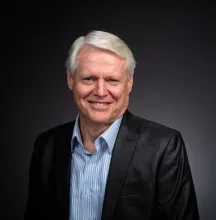
John Elliott serves in the role of President of the United Church of God, an International Association.
