

Ken Martin
This transcript was generated by AI and may contain errors. It is provided to assist those who may not be able to listen to the message.
Recently, my wife and I saw about a 25-year-old man who was going through garbage cans for morsels. He had a system down. He worked very fast. He would go up to a garbage can outside of a facility that sold food, and he would work through it very quickly, looking at packages, looking at remnants of food items and cast off food and checking it for bits and pieces and scraps. I was about five feet away from this individual at one point, and he was quite dirty. He was quite young. He was quite strong, but something obviously wasn't right.
And I thought, how can I help this individual? If I gave him money, I'd probably just be buying drugs with it or something. Otherwise, he wouldn't be going through the garbage can. But as he worked his way through the garbage cans rapidly, he found what he needed, and he was on his way. This individual had a confident look to him. He was fed. He had a system. You might call it dumpster diving.
He had a system. He had a life. There was a couple. They'd been married for 20 years. He's kind of a slob in her eyes. She's a nag in his eyes. They both wanted my counsel at one point. And really, what the counseling session was called for was each wanted to complain about the other in front of me, to add sort of an extra reinforcement to their mate about what their complaints were.
Really, I didn't have to do anything. Just show up. Evidently, it was quite effective in some regards. There was a used car salesman. He was a manager of the used car lot at a dealer here in Phoenix.
He had a good lifestyle, very supportive, attractive girlfriend, seemed to make amazing money. Said he was from an Italian mafia family, so he had some shady kind of backgrounds. Today, while visiting here in Phoenix in 1990, he took me to work with him for part of the day. It was interesting to observe his division of one of the big car dealerships here, and see how it went from behind the desks and behind the scenes, as it were.
Look at all the suckers out there, I was told. Watch us go get these guys. We will get them any or all of four different ways. We'll sell the car for a high price. We'll make money off them that way. We'll steal their trade-in, give them just a little bit of money. We'll make money off them that way. We'll do a credit run and then somehow come up with they have to pay a higher amount of interest.
We'll get them that way. We'll extend the loan over extra years and convince them for a lower payment. We'll get higher interest rate over a longer period of time. We'll get them that way. Four different ways we'll get them. They lied to everybody about everything. The beauty of the whole day was when a woman came in onto the lot and the shark circled. She had brought cash with her. She had brought in NADA, kind of like the Blue Book guy.
She knew the value of the car. She had no trade-in. She didn't want a loan. She knew the value of the car and she wanted a bottom price. These guys changed. He said, I'll have to talk to my manager about the price you're offering and came inside and they all started cursing this woman. In that shop, they would look out the windows which were covered in sort of a dark glass because it's hot and bright and they cursed her upside down.
They'd be like, go, girl, you have got these guys. There was a 15-year-old boy whose father had taught him good work ethics. Now, father, that's good. Work ethics, that's good. Hard worker, had money, that's good. His friends convinced him to spend it on drugs.
That's bad. So at 15, one day, this boy who was smoking some marijuana, he was out with his girlfriend and she stashed her big stash of marijuana in the car somewhere. Not his car because he was only 15, but a friend's car. He didn't know that. The friend convinced him to drive the car for him somewhere, which he did, and he got stopped on the way. Well, here's what happened. No driver's license, cited for that. Possible stolen car, no records, I guess.
They found the narcotics, charged him with narcotics possession with the intent to sell, because obviously there was so much of it. They gave him a DUI when they ran a blood test because he'd been smoking. And the parents had to post a $10,000 bond to get him out of jail. That's a tough deal when you're 15. You know, life is a series of choices. Not only the dumpster diver, not only the lying salesman who later was caught in all lies, he never belonged to an Italian family, all the things that he was lying about caused people to pull back, including the girlfriend, and sort of left him.
These choices are repeated that we make, and they form patterns. And the patterns form our character. They become our character. It's what we are. And our character determines our quality of life. What is the quality of your life? I'm asking myself, and I want you to ask yourself. Because as we see these examples and many others, we can also look within. And we can see that our lives are a composite or a compilation of the choices that we make, the character that we form, the lives that we live out. And so what's the quality of your life, John Elliott? What's the quality of your life?
As you listen, the quality of your relationships, the quality of your career, the quality of your health, the quality of your relationship with God, the quality of your marriage, the quality of your happiness. What's it like? What is that quality? I'd like to take a look at some of this today and examine this topic of Reap What You Sow. There's a statement in the Bible that says, cast your bread upon the waters and you will find it after many days.
It comes from Ecclesiastes 11 and verse 1. It's a curious statement. I've thought about this ever since I've been in the ministry. Remember the first time I came across that and pondered it? We were living up in British Columbia back in 1974. Cast your bread upon the waters and after many days you will find it. What if you think of throwing bread out on the water, kind of get soggy?
I don't know that you'd want to find it after many days. But cast your food. Cast what you have. Cast what you do. Cast what you are, essentially. Cast those choices that you make, those decisions that you do, out on the waters. And they're going to come back to you. They're going to come back in just as if you were standing on the seashore and threw something out into the waves. It may bobble around out there for a while, but pretty soon those waves are going to move it back in your direction and you are going to find it again.
Do your actions and mine. Do our attitudes. Do the decisions that we make, the deeds that we perform. Do these things and after many days the results will come in. Notice it also says, after many days. It didn't say tomorrow. It didn't say later this afternoon. Cast what you do, whatever you do. Cast it out there and it's going to come back and get you right away. After many days. Believe the word many.
After many days the results, the reactions will come rolling in on you like a wave. The principle is what you do comes back to you in force. I'm sure you've experienced this in part. I'm hoping that you won't have to experience it in any great degree or any tragic degree. Some people's lives get ruined because they throw so much junk in the water and then they're overwhelmed by it.
And that's basically all they have. Some of you young people realize that this principle is what you do and what you are comes back to you in spades. In spades, that's a card term. It's like the trump cards. They're going to come back to you multiplied with power. Galatians 6 and 7 is a statement that God makes through the Apostle Paul. But it's very directly from God. Galatians 6 and 7 says, Be not deceived, which means some of us are deceived. In other words, there's a tendency for us to be deceived on this.
We can be deceived about this, but don't you be deceived about this. God is not mocked. For whatsoever a man sows, that will he also reap. In other words, you're not going to sow something and do something and send something out on those waters, as it were, and have something else come back. The man in the trash cans is out there today, I'm quite sure of it, and he's still diving in the trash cans in weather that's over 100 degrees.
I can't imagine pulling my food out of stinky trash cans in heat like this.
The people who were in marriage conflict are still in marriage conflict. They still have a lousy marriage, and they are unhappy. This can be replicated probably by anybody or any of us at any time. Why? What's the reason? Well, they're avoiding a simple principle.
Simple principle in marriage. I was sharing this with somebody yesterday. If you respect your husband, you will be drowned in admiration and love. That's a principle. But if you avoid that, if you criticize, if you demean, if you in any way don't respect or show support for your husband, because we men have fragile egos and we need support, and God created us with that need, we can do a lot of things, but we need somebody that is saying, Wow, you're good, you've done well, you're whatever. We need that. That's what a man needs. If you feed that need, guess what you're going to get back? Admiration and love. However, if, on the other hand, you don't, if you criticize a husband and you always sort of chip away at him and show him his faults, what you're going to do is starve for appreciation and love. How do I know that? I've proved it in my house. My very own home. Oh, yes. Oh, yes. I've thrown many things out on the waves through the years. Okay. That's the same for men with the men. If you appreciate your wife, she does so many things for you, and we can sort of take it for granted and maybe even complain, Well, I don't like cold supper. I don't like putting butter in my hand. Oh, great. Guess what? Guess what? You're not having for supper. You're not having any respect. You're not having any admiration. No. You're going to get criticized. But if you send out appreciation and love, expect to get a tidal wave, an avalanche of respect and admiration. It's just the way it works. So what we do, the experiences that we go through in life, these are choices we make, and every action has its reaction. When things begin to fall in, people often say, What's going on? Why is this happening? And they'll try to fix it. They'll try to band-aid over it. They'll race for counseling or get the one-minute doctor or the little muck counsel call up the radio show host. Oh, I've got this problem. Or write in the newspaper with a one-line question for a one-line answer, the quick fix. Why is this problem happening? Why is the world, you know, in some kind of ecological disaster right now, why are we tipping the scales towards global warming and having the poles suddenly start melting? This thing could really get out of hand. Today, the very first of the tropical depressions has shown up down in the hurricane belt. What's going to happen this year? Why is this happening? Why is this problem happening to me? Why is my marriage falling apart? Why is my health falling apart? Why is my relationship with God or with some other individual falling apart? Whose fault is it? Well, I married the wrong person, I guess, again. You know? It's cause and effect. You know, this Bible, from beginning to end, is all about cause and effect. It starts with cause and effect. It's cause and effect all the way through. And it ends with cause and effect. It's all about what you sow you're going to reap. You and I need to ingrain this into us and start sowing different things. We want to reap different things. You know, the Bible, for instance, says, don't eat fat. Well, taste is magnified by fat. So we know, well, that's not a good idea, not to eat fat, because that really magnifies the fat. Throw in fat and sugar and the taste goes way up. So every packaged good, every corporation that's in the food business, every fast food restaurant or restaurants in general, know to load in the fat. One of the nicest tasting hamburger patties, a single hamburger patty that big, has 700 calories of mostly fat. But it tastes great! I know, I've had one. I didn't realize it until I read the box afterward. Get a heart attack with a single hamburger, just about. But that's okay, you see? It tastes good.
I was noticing that there is a fast food chain, and in its kitchen I could see nothing but fryers, and on the menu there's nothing but deep fried food. Imagine a restaurant that has nothing to heat with except deep fat fryers. Everything is fat, and everything is wrapped, you know, battered, so that the fat soaks into the batter. You know, that stuff's really good when it's hot. That's amazing, isn't it?
Americans are the most obese people, I think, on the planet. Why do you think that is? Cause and effect. We are also some of the most long-lived people on the planet, and we are some of the most unhealthy people on the planet. It's cause and effect. The government puts out, says, here's the solution to all these cancers and diseases and obesity. Eat fresh vegetables and eat fresh fruit. There's one problem with that. Corporations can't make money on fresh vegetables and fruit.
You can't. Like carrots on your body. If you like some, you know, raw celery, we're gonna do the corner on broccoli here. It's not gonna happen. It's not gonna happen. There are several factors that impact cause and effect. Cause and effect isn't just one thing. Cause and effect, cause and effect, cause and effect. I'd like to give you four aspects of cause and effect today. The first thing is, you reap what you sow.
Kind and same kind. That is key number one. We assume, somehow, as humans, that we are gonna reap happiness if we're selfish. You know how it works? Somebody says, why don't you go do this? That'll be fun. Oh, yeah, that sounds good. Yeah. That's for me. I'll do that. I'm not thinking of the spouse, I'm not thinking of the kids, I'm not thinking of anybody else, I'm not thinking of God, I'm not thinking of my fellow man.
But yeah, this sure would be good. This sure would be fun. You know? We assume that we will reap happiness from sowing selfishness. We think that the end result of doing things for me is going to bring happiness. Somehow we think that I'll get admiration from Mary if I criticize her for not giving me admiration. You never give me admiration! What kind of person are you? Oh, dear!
I think you're the greatest! You think that's what you're gonna give back? No, you get back in the kind that you sow. What do you think that if I did that to her, what do you think I'd get back? I'd probably walk out of the door standing straight up with it closed, just fine, with headroom to spare. I mean, what do you expect? In Job 4, verse 8, it says, Those who plow iniquity and sow trouble will reap the same. Now, the profoundness of that is the last word, same. If you sow trouble and iniquity, what's iniquity? It's sin, it's selfishness. If you go out on a selfish quest and you're thinking of yourself, that's what you're going to reap.
People are going to be selfish back to you. They're going to have a reaction back that is going to be self-centered. It's going to be trouble. You're going to get trouble. If I were to go to my wife and say, Honey, I know I'm not so great, but you are really a treasure. I'm going to reap something from that comment in like kind. In like kind. And I've heard her say many times, you know, I am not perfect, but I'm trying.
I'm not perfect either, but I'm trying too. In like kind, in like mentality. Those who plow and sow reap the same. Reap the same. How many parents have tried to get performance out of children by criticizing them? If you would just be more like your big sister, you know, you don't have any good ethics.
You don't work hard. That's your problem. You're never going to amount to anything if you don't change. Just keep it. Oh, yeah. The people of the world are motivated by that, right? But parents do that as a motivational tool. What you sow, you're going to reap. And the next thing you know, the child is that tall and looking at you and has a few things to say.
You know what? You're the lousiest parent on the planet. You're not fit to have kids. Kind of having a discussion here, right? What you sow, you're going to reap. If you tell a child, you know, you're terrific. You're fantastic. You're doing well. Thanks for trying.
You know, you disrespect it here. I've got to give you a couple of swats for disrespecting. I've got to train you up in the way you ought to go, but hang in there. You're doing great. You're a good kid. And the kid's about that high. You know, Mom? You know, Dad? You were pretty good parents. And you told me what I needed to know.
And I really appreciate that. I really respect that. What you sow, you're going to reap the same thing. If you sow kindness, what do you think you're going to reap? If you sow thoughtfulness, if I sow thoughtfulness, if we... And I'm just trying to personalize that. I'm not trying to talk down to you, but I like to try to make this have an impact, so we're not just talking up here, you see? Us and we and them and these concepts. No, you! You, you know? Let's talk... Let's make it personal here. If you are loving and compassionate, what do you expect in return?
You reap the same much of the time. Not that everybody's going to just be perfect right on tune, right on target, nor are we when we try to do things right. You know, the Holy Spirit has in it love and long suffering.
And over time, the result of those are respect and appreciation and admiration. So it's in kind. It comes back in kind. And this is this first point. Point A is, you reap the same kind of thing that you sow. If you want a friend, what kind of principles would you want to apply to friendship?
How would you conduct yourself? What would your deeds be? You might ask yourself, and I can ask myself, do I have friends? If not, why not? Is my spouse my best friend? That's a good indicator right there. If you are a friend to others, your spouse will be your best friend. If you are not a very good friend to others, your spouse probably isn't your best friend, because you are probably not very good at being a friend.
And I fall into that category sometimes. It all depends on if we are too busy, if we are too self-centered, or we don't have the time, or we don't take the time in this racing, racing life, it seems, to invest in relationships, and invest the right things in relationships. We should have respect, and trust, and admiration, and thankfulness from those around us, because of what we are throwing on the waters, what we are casting by what we do and how we act.
Not that anybody really can have that many close friends, because there is just not enough time to have the relationship and the depth, whereby you can share the intimate things and you can be there to assist many people. That's why God gave us marriage. That's why we have families, where people can interact on a very intimate level. David had one close friend, Jonathan. We see that example in the Bible, where some people have very close friends, Ruth and Naomi, very close.
There's even Jesus and His disciples, even perhaps John, a strong relationship there. But with all that's going on, we should at least have people around us that are reflecting back at us good things, because what we send out as individuals, you and me, what we send out is going to come back to us in kind. And if we don't like it, we're always moving around. I don't like the people there. I don't like the people there.
I don't like the people there. Don't like that, mate. Don't like that, mate. Friends always let me down after about a month. You know, could be the old Margaritaville song needs to be played a few times.
That's her problem. Well, could it be my problem? Well, maybe it is my problem. Actually, it is my problem. You know, it's that self-realization that if what's coming back off the waves is what I like, maybe I'm part of the problem. See? So if we've shown maybe words of anger, words of hatred, or acts, or words of bigotry, if we've shown ugliness or superiority to others, what do you think the result's going to be back?
What about God as your friend? The saints, fellow heirs in God. What about them as your friends? How are we doing there? What about your mate as your friend? God says, you are my friend if you obey my commandments. We need to have those actions and deeds be good, be righteous, be thoughtful, be caring. And then Christ will be our friend, and others will be our friends. Luke 12, verse 19 is a parable about an individual. And towards the end of this parable in verse 19, notice his focus. He says, And I will say to my soul. He didn't say, I will say to my family, I will say to my wife, I will say to my friends, I will say to my God. No, I will say to my soul, soul, you have many goods laid up for many years. For who? For yourself. So take your ease. He didn't tell his hardworking wife and friends and others who had helped him come up with all this, and his servants. No, take your ease. Eat, drink, and be merry. Verse 20, But God said to him, Fool, this night your soul will be required of you. Then whose will those things be which you have provided? Verse 21, So is he who lays up treasure for himself. Treasure for himself. Now you can apply this to friendships in general. It says here, And is not rich towards God.
Just take that last word, God, and put any name there you want. So is he who lays up treasure for himself, and is not rich towards his spouse. So is he who lays up treasure for himself, and is not rich towards his community, his church, his family, his friend, whatever. He's going to be caught short. He's thinking selfishly, and that relationship is going to be required of him. That relationship is going to be required of him. Same principle for God, same principle for all relationships. So we reap in kind what we sow.
The second point, point B, Sow today, reap later. That's the way it works. Don't think that you can sow today, and it's going to come back today. It's 3.30 now, so we'll sow some good things here, and maybe we'll get an invite over for dinner afterwards. No, it's not going to happen like that. Remember that thing after many days? You'll find it again. Sow today, reap later. That's the way it works. You really have to be, in other words, serious about this. If you want good results, or if you don't, you'll be reaping later anyway.
You know, wheat is sown in the winter. Well, it's actually sown oftentimes in the late fall, but it's getting cold. Think about that time of the year. Just a matter you're a farmer, you're out there in Kansas, and you're ready to sow your wheat, and the chilly autumn winds are blowing, and the fields are all bare, and it's cold, and northerners blowing in, and you're sowing that wheat, and Thanksgiving's just happening, and you're all full of turkey, and you're thinking about the kids getting out of school in December, and maybe going skiing in Colorado.
It's that time of the year, and then you go through the whole winter after you've sown your wheat, and then you go through spring, kids are in school, and then there's the break, and then there's the holy days, and then you come out, and there's... Pentecost happens, and now the kids are back out of school, and now you've got the summer, summer's hot, you know, crops are growing and everything, and now it's the hot summer, and you're thinking about water skiing, and oh, there's the wheat.
Wheat's in, about September, late August, wheat's in, wheat's done. See, it takes a while. Sow, reap later. What's it like in August compared to when you sow the wheat? Different time of year. Kind of forgot about the wheat, almost, not if you're a farmer, but you might have forgot about the wheat. Like, wow, that was back when it was chilly and cold, and we were heading for winter, and now it's hot. It's a different time of the year, and here comes the wheat. And when the wheat comes in, look out, because in South Dakota, they dump trucks of wheat down the center streets of town.
You lose that turn lane, and a lane on either side of that sometimes, from all the wheat. They have nowhere to put it. Can't get it in the silos and on the train cars fast enough. It's just down the middle of the streets. Look at all...where'd all this wheat come from? We're getting buried in wheat! Down report, we're losing streets fast, folks. Wheat's coming in. Amazing. All of a sudden, you reap what you sow, and it's all over.
There's a lot of it. A schoolmate of ours, Mary's and mine, died about 15 years ago. He was about 35 years old. You know what? He was healthy looking. He was trim, young, hardworking, worked in the construction business, worked hard, did well, one day, fell over to it. Whew! 35 years old makes you think about your life. So I asked the big question of one of our school friends, Why did he die? I mean, I'm wanting to know this. Am I going to fall over dead? He was a year younger than me. Why did he die? Well, because when he was 15, see, he used to, in 16 and 17 and 18, he used to do drugs.
And then he quit. But the drugs ruined his system, and his heart just gave out. His internals just, one day, quit, and that was it. What you sow today, you're going to reap later. It's been said that city people live in an artificial world. They think they can sow and reap immediately. You can go sow some dollars and reap your groceries. You can sow a down payment and reap a car. It's amazing what you can get in the city.
Buy now. Get now. Pay later. Pay some interest, but pay later. But we're kind of used to things coming to us right away. Then there are others, however, who realize the principle of compounding interest over time. They sow, reap later. A lot later. But that interest compounds and compounds and compounds and compounds. And when they reap, it's a good harvest. In Galatians 6, verse 9, it says, And let us not grow weary while doing good. For in due season we shall reap, if we do not lose heart. In due season we will reap, sometime in the future, if we do not lose heart. Keep sowing, sowing what is good, and keep doing good over time.
The third point, point C, is the crop multiplies over time. This can be very good or very bad. The crop of what you sow and I sow multiplies over time. You may sow a little of this. You're going to get a lot back. That's just the principle of sowing. It's just the way it works. My wife and I sowed a grapefruit tree in our backyard. I know it's a real bad term. We sowed a grapefruit tree. We reaped this year a bunch of grapefruits. We are still trying to eat those grapefruits.
We've given grapefruits away. I try to eat one every day. They are still hanging on the tree. And guess what? It's loaded up with new little grapefruits. We are falling behind. When you sow, you're going to reap later, and you're going to reap a lot. Because that crop does multiply. Hosea 8, verse 7, you don't have to turn there. It's a short verse. They sow the wind, and they reap the whirlwind. You sow a little the wind, and you reap the whirlwind. In other words, it's a lot. You sow a corn, a kernel of corn. You should get, what, two, three cobs on a corn?
At least two. Three, if you're lucky, right? On a corn stalk. And each cob has how many kernels of corn on it? Well, it depends on how big it is. 99, 150, times 3, 450 kernels for one. You're going to get buried in corn compared to what you sow. So these principles, you're going to get in kind to what you sow. It's going to come later. Maybe the time when you're not expecting it, you're going to get a lot of it.
A lot of it. In the positive side, in Mark 4, verse 16, Jesus said, But these are the ones sown on good ground, those who hear the word, Accepted and bear fruit, some thirty-fold, some sixty, some a hundred-fold. This is the principle of sowing and reaping. This is what God wants from you and me. He wants to reap where He has not sown, as it were. He wants to reap more than what He put in. He wants our character not to return in kind, but to be multiplied.
You could say it this way. A tidal wave is on its way. A tidal wave is coming back to you as a result of your day-to-day actions. Now, this isn't just one tidal wave. This is a series of tidal waves. You're on the seashore, and you know they're coming, because you and I have cast our bread on the waters.
And with regularity, at some punctuated time, these big rollers are coming back in like tsunamis, because remember that crop comes at a later time, and it comes in a larger amount than what we put into it.
So, a tidal wave is coming back to me and you as a result of what we do daily. What we say, what we think, how we act, what we do, is very, very serious. And you can't get away from it. You cannot get away from it. It's like a tsunami. A tsunami, they arrive long after an earthquake. If you live on an island, tsunamis have hit British Columbia, they've hit Hawaii, they've hit many coastlands around the world. You hear there's an earthquake. Earthquake. Oh! Coming from that earthquake, typically in a specific direction, sort of reflected in one area, one sort of direction. Can be a tsunami. You don't know. Can't tell. Not sure when it's going to hit. Not sure how fast it's going. Not sure where it's going to hit. It's kind of an unknown thing. You make a comment. You do a deed. You don't know how it was taken. You don't know if someone was offended. You realize afterward, maybe I shouldn't have done that. Oh, well, it was me. No big deal. It's not like when somebody does it to you.
And so you never know what went out, where it's going to strike, where it's going to hit, do you? It's kind of like a tsunami. The tsunami wave is three feet tall. A typical tsunami wave is three feet tall, one meter. The problem is, it's one meter tall, but it's 200 miles wide. So you can't detect it.
It's not just a wave, a standing wave. It's a flat wave that peaks three feet high and 200 miles, approximately, or hundreds of kilometers sometimes, in width. And so if you're out on the ocean, well, you know how the ocean is, you'd never know it. So detecting tsunamis is very, very difficult science. However, tsunamis will race along three feet high, 500 miles an hour. So they move, and they come with a punch.
The root of a tsunami extends down to the floor of the ocean. So as it's moving along like that, it is actually touching the floor of the ocean. And where the ocean is deep, the tsunami will be very flat, and it will go very, very rapidly. So this thing can buzz along. Now, 500 miles an hour sounds fast, doesn't it? Ever flown on a jet and thought it took a long time?
You were flying at 500 miles an hour. Plus a little bit, but not much. You can fly for a long time across an ocean, and people complain about going to Australia or Hong Kong or China or Japan, how long it takes to get there. Well, just think of the tsunami. You never know when it's going to get there, but sooner or later, this thing begins to get into shallower water. And as it gets shallower, it begins to stand up a little taller and slow down a little bit.
And finally, when it comes up to the shore, the base of the ocean has come up so short that the tsunami is now standing up sometimes 100, 150 feet. Who knows how tall? They come in various heights. You never know. And slowly, this thing sucks all the water out to it as it stands up tall, drains pretty much the seashore out a ways, and then it stands right up when it gets to the edge and crashes onto the shore.
That's a lot about tsunamis. Probably you didn't want to know. Tsunamis come in multiple ways. The first one is not the tallest one. Sometimes the second one isn't the tallest one. There are more coming after that, typically. There can be hours between the waves. These are big events. In 2004, the tsunami that went through the Indian Ocean killed 230,000 people, more or less. That's a lot of people.
Well, a tidal wave, a tsunami, is coming back at us as a result of our day-to-day activities. We can sow selfishness and seemingly get away with it for a while. But when the cows come home, it's going to be a stampede. That's the problem. Just like a tsunami, all of our actions can have this effect.
You know what it's like, maybe with a close friend, a spouse, or maybe at work. You can get away, you can send some stuff out, you can work improperly, you can make comments, you can take people for granted, you can take advantage of situations, and all of a sudden, honey, we need to have a talk. I had a little chat with a lawyer. Honey, we need to have a talk. Or how about this one? I need to come up to my office. I've got your paycheck on the desk.
These things happen with hugeness. A bunch of little things can come back large. Jesus Christ is here, and you can't come in. The door is shut. Wow! These things can loom large. We can think we can get away with it, but we don't. You know, humans, I think probably one of our biggest problems as humans is we all lack self-esteem.
Every one of us does. You probably look at somebody else, and they're the most confident person in the world. Well, you've just seen probably one of the most inferior people in the world in that person's mind. And that's how we combat that. Somebody is just really superior, and it's because they're so inferior, they put on this exterior. If you find somebody that's really inferior but doesn't care, now there's a person who does not have a lot of inferiority conflicts.
He just doesn't care. He feels just fine. Or she feels just fine. But we as humans lack self-esteem. We have this inferior accomplice. And so what we tend to be is we react to others with jealousy. Oh, every hero won't. Oh, look at that. Ooh, look, Alicia, where's that dress? Look at the way she's... You know, they never comment on somebody that's totally out of their league, like my grandma. I never heard anybody complain about her. They weren't worried about her.
It's like a 20-year-old thing. Look at that 20-year-old thing. Ooh, look at she's doing it. You know, people are liable to look at her and not me. Well, I'm not sure that that's the case, but you see, what happens is we get as individuals, as human beings, jealous, envious.
And we start criticizing one another. Why? Because we don't feel like we're doing okay or we're enough or whatever. So we can be thankless to them, you know, that other person. Same with a man, you know. Wow, that's not him. Arr, arr, arr, arr, arr. And what are we doing? Well, I feel inferior to him, so I've got to chop him down to size.
And result is, we create our own false pride. Look at, see, I've reduced the level, the feel. Look at all you people, you're lower than me. Just got through chopping you all down, see? Well, if I do that in my mind and I can reduce my wife and I can reduce my friends and I can reuse everybody around, I don't feel so inferior anymore. And that's what humans typically do. We come up with a false pride, a false vanity that's based on criticism, comparing one to another. And we have this mentality that is not thankful, it's not loving, it's not appreciative. And the resulting tsunami that comes back to us is all manner of conflict. It's manner of conflict at home, in the office, at church, among friends, conflict with God. It's all these conflicts, terminations of relationships. So what do you want in your tsunami? What do you want to come rolling over you periodically? What do I want to come rolling over me periodically? How about this? Malachi 3, verse 10.
How do you like this tsunami to roll over you? Bring all the tithes into the storehouse that there may be food in my house, and test me now in this, says the Lord. If I will not open for you the windows of heaven and pour out for you such a blessing that there will not be room enough to receive it. How do you like to get buried in that? You know, what do you want in your tsunami? That's a good question. I'm going to write that down before I forget it.
Because, really, we get to choose, don't we? We get to choose.
The fourth point is, the return is comparable to the investment. Reaping what you sow, these four points we really need to understand. The return is comparable to the investment. You know, in 2 Corinthians 9, verse 6, it says, He who sows sparingly will also reap sparingly. Well, that applies both spiritually and physically. What you sow, you're going to reap. And in the quantity that you sow, you will have a comparable quantity, some type of a relationship between what you sow and how much you reap. In other words, if I sow a handful of wheat, I can expect maybe a bushel to come back. If I sow a truckload of wheat, I could expect a trainload of wheat.
It's going to come similar to that. And I know there are some times, even in my life, that I've been a little bit stingy, and I'm not sown very much, and not given very much. And guess what? I have received in kind. I think you probably have learned that lesson as well, if you've been around very long. The return is comparable to the investment.
In verse 6 going on, And he who sows bountifully will also reap bountifully, both spiritually and physically, both positively and negatively. If you sow bad things, you're going to reap a lot of bad things. If you sow a little bit of bad, you're going to get a little bit of bad back. If you sow a little bit of good, you're going to get a little good back. If I want Mary and I to be a little bit happy, I know just how to do that. Give just a little bit. If I want us to be a lot happy, I know how to do that. Give a lot. It's comparable to the interest, investment, I'm sorry.
A loving person will be truly loved. A truly self-centered person will be truly miserable.
Revelation 18.7, when John was revealed the prophecy about the fall of the false kingdom in the future, it says, When you think about that, God rewards us, blesses us, or cursings come to us, and about a measure that's appropriate. Even your parents will try to do this when you were young, or if you're still young, your parents will try to do this. If you kick the cat, you can expect maybe you get a swat or two. If you hang the cat, and it's still living, you might be in your room for a week. But if the cat doesn't make it, you might want to move out with Aunt Frieda for a while. You know how it is. It's just the way it is. If you and I invest certain things in our life into our marriage, to our friends, to our God, or to our finances, the same principle applies. The more you put into it, the same kind of thing you're going to get back later, in a larger amount, and it's going to be comparable to what you put into it. The key to success, moving on now, is repentance. Repentance. We've got to repent of human nature. If you go to Galatians 5, 19-21, you're going to find all the tragic things that humans typically do. They just trash and shatter relationships. Sowing to the self just reaps the whirlwind of bad things. 2 Timothy 3, verse 1, says, In the last days, perilous times will come, for men will be lovers of themselves. And all these selfish things they will get into, boasters of themselves, and proud and blasphemers, disobedient to parents, unthankful, unloving, see where these things come from? They're sowing to themselves the wrong thing. What are they going to reap from that? Bad, bad things. We need to get away from that. We need to get away from that.
Psalm 73, David said, he had almost stumbled. He had seen the ways of the wicked. He'd seen the ways of selfishness, and he was drawn to it. He says, My steps had nearly slipped, for I was envious of the boastful, when I saw the prosperity of the wicked.
And verse 6, But then he saw what came back on the waves. Pride serves as their necklace. Violence covers them like a garment. Their eyes bulge with abundance. They have more than heart could wish. Verse 8, They scoff and speak wickedly concerning oppression. They speak loftily. They set their mouth against the heavens, and their tongue walks through the earth. And the end result of that was, they were going to lose it all. That's not what David wanted. So don't envy the wicked. Don't choose their way. Don't sow in the direction that your human nature and mind wants to sow. Don't sow that. You're going to reap that. Sow something else. Jesus said in Matthew 6, verse 32, For after all these things the Gentiles seek. Those who aren't really coming after God will seek physical, self-centered, materialistic things for themselves.
But he says, don't seek after those things. Your heavenly Father knows that you need all these things. But you seek first the kingdom of God and His righteousness. You sow those things, and all these things will be added to you. In other words, you sow a different seed. You sow righteousness of God to the kingdom of God.
Sow a different seed. Reap a different harvest. We can change our harvest, brethren. Every one of us sows good seed. I have no doubt about that. But every one of us sows a little wild oats, a little wild seed in there, too. We've got some tares coming up there, some weeding needs to be done. We need to go in and repent and say, you know what? What's coming back sometimes from my friend, my spouse, my God, whatever? I need to get rid of that. And not just blame it on old Harry and Joe and whoever's at work. Begin to say, you know, part of this is bounce back.
What hits the wall bounces back. And I need to change some of that. It's like the 15-year-old boy. He got out of jail. He decided, you know what? That's not the direction I want to go. He's now 23. He's a manager. He is highly respected and highly sought-after. Because he has incredible talent.
And I don't know where he got this, but he also has an incredible desire to help anybody, anytime. And people love him for it. And he works very hard. He's doing really well. And he's spending his money now. He's not in the church, but he's spending his money now for things that count, things that matter.
He's not had any drugs. He's doing fine. He likes reaping the new crop. And that's a good thing. The fruit of the Holy Spirit is found in Galatians 5, 22, and 23. Love, joy, peace, long suffering, gentleness, goodness, meekness, patience, self-control. The good things are sent out, and guess what? The things come back in spades, as it were. They come back tripled and doubled with power. It's a wonderful thing to be sowing to the kingdom of God. It says in Galatians 6, verse 8, For he who sows to his flesh will of the flesh reap corruption, But he who sows to the spirit will of the spirit reap everlasting life.
Different crops, different seeds. Which do you want coming back? Which do I want coming back? Well, I know what I want, but sometimes it's like Paul. That which I don't want to do, that seems logical at the moment. It seems logical to say how I really feel. And so you throw that out in the waters. Get that back in a tidal wave sometime. The world is sowing wild seeds. Wild seeds often are thorny. They hurt.
The results in society are bad and getting worse. The earth and the societies upon it are beginning to reap larger and larger consequences. Jesus Christ tells us that this is going a certain direction. It's going to have catastrophic conclusions. The calamities we see are increasing, both natural and in society. There's inexplicable violence. I heard something in the news this week that I would not even tell another human being.
It bothers me so much just to even think about that somebody would do that to somebody else. Never even heard of such a thing. There's lust. There's greed. And we're all caught in it. We are in the world. We're not of the world, but we are in the world. Jesus Christ talked about that in John the 17th chapter. In Ephesians 2 and verse 2, we once walked in the world.
We were of the world. We walked according to the course of this world. Ephesians chapter 2 and verse 2, In which you once walked according to the course of this world, among whom we also once conducted ourselves in the lust of our flesh, fulfilling the desires of the flesh and of the mind, and were by nature children of wrath. Children of wrath. That's what came back at us. Wrath is the result of selfishness. It's the cause of conflict. It's the cause of war.
Wrath breeds wrath. You send out war, you get war. You send out anger, you'll get anger back. You act selfishly, impulsively. People will react selfishly and impulsively. So now, brethren, we need to repent. We need to sow. We need to be sowing different seed. Otherwise, we're going to reap the same tsunami wave slamming into this world all the way to the very end.
Jesus said in Matthew 24, 7, For nation will rise against nation, kingdom against kingdom, and there will be famines and pestilences and earthquakes in various places, and these are the beginning of sorrows, cause and effect. Proverbs 1, verse 25-33, talks about this very thing. You disdain my counsel, you have none of my rebuke, God said. Also, I will laugh at your calamity. I will mock when your terror comes. We talk about terror and terrorism. Here it comes. It's building. When your terror, verse 27, comes like a storm, and your destruction comes like a whirlwind, when distress and anguish come upon you.
That's what this world is sowing. That's what this world is sending out. And it's going to come back multiplied. Verse 29, because they hated knowledge, and did not choose the fear of the Lord, they would have none of my counsel, despise my every rebuke, therefore they shall eat the fruit of their own way. Here it is. You're going to eat what you sow.
You're going to reap what you sow. Eat the fruit of their own way, and be filled full with their own fancies. Verse 33, But whoever listens to me will dwell safely, and will be secure without fear of evil. We can sow two things, brethren, and it's up to us.
We'll reap what we sow. It's up to us what's coming back in the waves in reaction. Today we've heard the lesson. Reap what you sow. But have we learned anything? We've heard it. Oh, that's a nice sermon. We've heard it. We can read it, but have we learned anything?
Will we really make a change? Now I'd like to read Galatians 6, verse 7 and 8. Actually, verse 9. Done. Parts of this. Announce. Do not be deceived. Again, there's no reason for us to be deceived now. God is not mocked. Nope, this Bible tells it. Cause and effect from beginning to end. For whatever a man sows, that will he also reap.
For he who sows to his flesh will of the flesh reap corruption. For he who sows to the spirit will of the spirit reap everlasting life. We learned it. Will we apply it? Will we apply it to all areas of our life? And really believe that our choice, our daily consequences can change. They can be good. We can get buried with wonderful things. Just unbelievably buried. And God has proved that to me. I think I'm the most blessed person who walks on the face of the earth. Simply because God has told me, you know, throw different things on the waves. And you'll get buried by things you really like.
And that's a principle that I've come to learn, and I wanted to share that with you here today. Verse 9, And let us not grow weary while well doing. For in due season we shall reap if we do not lose heart. Focus on everything you think. On everything you do. On everything you say. Bring every thought into subjection, the Bible says.
Master the tongue. Do unto others as you would have them do to you. Love God. Keep His commandments. Throw those things on the water and see what comes back. It would be wonderful. You wouldn't mind getting tumbled in its tsunami or that stuff over and over. Revelation 22, verse 12, Jesus said, Behold, I'm coming quickly and my reward is with me. What you sow, you're going to reap. My reward is with me to give to everyone according to His work.
That's the lesson for today. There's a huge tsunami heading your way. It's the biggest of all. It's life and death. It's going to supersede your wildest dreams or biggest nightmare. And that's what it is. It's the big one. Let's be awake. Let's be watching. Let's be faithful children of God.
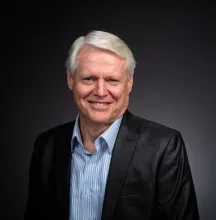
John Elliott serves in the role of President of the United Church of God, an International Association.
