
Robin S Webber
This transcript was generated by AI and may contain errors. It is provided to assist those who may not be able to listen to the message.
I want to begin this message today by sharing my thankfulness of what Mr. Shabe has recently done, and that is to get our nose into the Bible and to direct us towards reading through the Book of Deuteronomy coming up to the feast. And so we're going to build upon that today. This is going to kind of be part sermon, part Bible study to show you a little bit of what at least I'm receiving out of this study so far, and I've been very excited about it. So I want to give you my title right up front because it's really how I do study and how we bring the Old Testament and the New Testament together in a seamless fashion. So the title of my message is simply going to be this, New Covenant Eyes, New Covenant Eyes Exploring Deuteronomy. And I'd like to talk about that for a moment as we build upon this to recognize that Deuteronomy, which is the fifth book of the law, it's called Deuteronomy in the Greek because it's very interesting that all five books, the first five books of the Bible are all Greek—Genesis, Exodus, Leviticus, Numbers, and Deuteronomy—that is Greek. But it's very interesting that in the Hebrew tongue—and we always want to go back what did it originally mean to the original people. That's how we want to study the Bible. In the Hebrew tongue, it is hada borim. Don't worry about the spelling right now. And it's interesting what hada borim means. It means simply this if you'd like to jot this down. These be the words. These be the words. And it is even abbreviated beyond that, the words. Now we need to understand who the words and where the origin comes because the one that wrote Moses was but a vessel of God Almighty. So these are the words of God. It's very interesting when you look at the book of Deuteronomy that it's in one sense a welcoming after 40 years to a home that has been promised to them. A land of milk and honey. A promised land. A land that was spoken to their forefather, Abram, and Abraham, later called. That would be to his seed. So in one sense, it's a welcome. I want you to think this through. In one sense, Deuteronomy is a welcome in preparing them to go into the land, and it's also a farewell message. It's a welcome of going forward, and it's a farewell message to the vessel that God has used for 40 years. And his name is Abraham. And as Mr. Shaby pointed out, and I'll just allude to it if you'd like to jot down Deuteronomy 31, 10 through 17. Deuteronomy 31, 10 through 17, that when they entered into the land, every seven years, and that seven years in the terms of the Bible back then was a year of release, that they were to read, are you ready? Very important, the entire book of Deuteronomy. So, something that I learned, and we're all still learning, right, is that—because we always remember that in the post-exile period, after the Jews had returned, that during the time of Ezra, when they found the law, they all stood, right? They all stood, and they listened by their ears to the law being written. Now, but we understand that there is a basis for that going back in the time of the judges and forward, that every seven years they were to read the entire book of Deuteronomy. They were to hear these words, the words. Now, you think you've heard some long sermons? Hello? You think of Deuteronomy? But remember, there were no Bibles in hand. There was no audio feature to listen on the way to work in a car, because cars didn't exist, much less the audio.
And the other thing that I want to share with you in your own reading, because we're all in this together right now, when you read about it, everybody had to be present—man, woman, and child. Because Deuteronomy was not only speaking to the people that had been, the people that were about to what? Cross over. But it was also to be towards those, the younger people that were going to grow up in the land. Very interesting. I want to mention that in my own personal reading, and I'll just share with you—and I've shared it with Susan sometimes, you know, when we talk in the morning after our readings—is that with Deuteronomy, the words have literally exploded to me when you go noun, verb, direct object, who's it being talked about, etc., etc.
And the words have really exploded. If you want to just take a note right now, I'm going to give you a little information. There are some key words, and I'm up to chapter 9 right now, some of the key words that have been exploding just kind of boom and boom and boom and in in rhythmatic fashion.
Some of the key words are the word heart. Heart. In the book of Deuteronomy, heart is mentioned 44 times. The heart. Your heart. 44 times. Sometimes when we think that it's only in the New Covenant period where God's really going after the heart, God has always gone after the heart of his chosen people. The heart is essential for any room of growth, any any hope of growth. Another one that has exploded in my mind is the term remember.
Remember. The term remember is mentioned 13 times, and there's a reason why God says remember, and we're going to be going through that. Another one that comes exploding out of the scriptures of Deuteronomy is obey. Ten times the word obey is used, what we call the oat word. Another word that comes out exploding is the term your. Y-O-U-R. Your. Which is normally followed by God. Your God. Not somebody else's God, not just any God, but your God. And these words keep on repeating themselves again and again and again. I think I mentioned heart. It's mentioned 43 times just in the book. So one thing that is interesting in all of that is to recognize that the term heart is used in only one other book more than in Deuteronomy, and it's the Psalms.
David, who was a man what? After God's own heart. But the heart, the heart, the heart, the heart, which really tells you all along that when you're reading through the Old Testament, the fifth book of the law, is that it's not just about the law. The law is good, obviously, but to recognize that God doesn't just want you to be a robot. He wants your heart. And so Deuteronomy to me is a book about the heart. These are just kind of some of the things that I have been picking up. One thing, two, is to recognize Deuteronomy.
In the Greek, a dude, you can go to recognizing that it's called basically the second giving. But it's not a different law. It's not a different way of being, but it is expansive, and it does draw on new thought, and it is to be adapted into the land that they're about to cross over into. Again, let's remember that those that were only 20 at the time of the rebellion where they wouldn't go into the land, that whole older generation was not allowed to go into the land. So now some of these people are now 60 years old, but they've been wandering for 40 years.
But now they're going to go into a land they've been called to be a witness to those that are around. So it's just kind of interesting to see that, okay, they're not going to be on the move physically. They're going to be stationary, and they're going to be planted in some place that is incredible.
Basically, Canaan was little Egypt on steroids, and God's going to put them there to be a witness to where, as it says in Deuteronomy 6, to where the nations around them might go to survive as they come in. What kind of a people is this that have this kind of a law that has this kind of a God? A little bit like what Skip was alluding to—just noticing the difference, and that there is a noticeable difference. One thing I'd like to share with you that sometimes I shared recently in the classes that some of you partook of, and that was on the matter of how to study the Bible, let's understand that there are six themes—I think six consistent themes—through the Scriptures from Genesis to Revelation.
I'd like to just share those with you for a moment, because they create this seamless tapestry between the Old Testament and the New Testament. The first one is that—first thing—that God said, let us make man in our image and after our likeness. Second theme, I will be your God, and you will be my people.
Third theme, I am holy, therefore you be holy. Fourth theme, behold, I do a new thing. As we move from the Old Testament to the New Testament, from the Old Covenant to the New Covenant, to ultimately beyond us into the future.
Number five, what new thing is he doing? He is bringing many sons and many daughters to glory, mentioned in the book of Hebrews. Sixth theme is simply this, I will never leave you nor forsake you.
If you just think of the Bible with those threads that run from beginning to end, you begin to go down a familiar path that will have newness as it comes along, and it will be expansive, and to recognize that we worship the God that knows exactly where we are. So with that stated, just some background, and we're going to go right into it. So let's go to Deuteronomy 9. If you'd please turn to Deuteronomy 9, we're just going to go through this one chapter, and hopefully it'll be illuminating and excite you to move further, whether you're listening here today with me or listening to this sermon somewhere in the future, because we have a whole lot more chapters to go through up until the feast time. So here we go, Deuteronomy 9, chapter 1. Again, the title of our message is, New Covenant Eyes Exploring.
Deuteronomy 9, verse 1. It says, Here, O Israel, you are to cross over the Jordan today, and go in to dispossess nations greater and mightier than yourself, cities great and fortified, seemingly up to heaven.
And there's a people great and tall, the descendants of the Anakim, whom you know, been there, done that before, and of whom you heard it said, who can stand before the descendants of Anak. Let's look at this and break this first down for a moment, which is going to be very important for all of us, and Skip actually touched on it in the first message. Number one, it says, Here, O Israel. That has an echo of what proceeded about three chapters back, which again is the Shema. Here, O Israel, the Lord your God, the Lord your God is one, and you shall love the Lord your God with all of your heart, with all of your soul, with all of your might, all of your being. Jesus Christ would later repeat that in Mark 12, but he would add to it because, again, think about this for a moment, the Old Testament, the New Testament, the First Moses, and the Second Moses, the Lesser Moses, and the Greater Moses, because, as it says in Deuteronomy 1815, that there would be one that would come along like and unto me, speaking of Jesus, because Jesus would expand on the Shema. And in that, he would say, Here, O Israel, the Lord your God, the Lord your God is one, and you shall love the Lord your God with all of your heart, all of your heart. And it goes on to say, And with all of your soul, and with all of your mind, and with all of your strength, and the Second is like and unto it, you shall love your neighbor as yourself. And on this, all the commandments hang. He actually does something magnificent there. He combines the two commandments and makes them one long. To love God means you're going to love neighbor, just as Skip was bringing out in the first message. There's no division in between. If you are going to love God with all of your heart, that's going to be visited upon those that are around you. But it says, Now, notice, Here, O Israel. I'd like to break that down for a moment, because this is essential as we go through the book of Deuteronomy. As I mentioned, the term hearing comes up again and again. The hearing there is essential. And I'd like to read something here, and I've actually got a hand out for all of you later, a teacher that always likes to hand out things. So, this is from a lady named Lois Tevaburg. I've got a number of her books. Really enjoy it to, again, recognize what did it mean to the people at that time. And this is out of a book that she wrote, Listening to the Language of the Bible. And it says, Then Moses took the book of the covenant and read it in the hearing of the people. And they said, All that the Lord has spoken we will do, and we'll be obedient to it. Exodus 24.7. Again, we see that in the book of Deuteronomy. The word that means hear or listen, Shema, the noun Shema, is an excellent example of the difference between Hebrew, which stresses physical action, and Greek and Western culture that stresses mental activity. Listening in our culture is a mental activity, and hearing just means that our ears pick up sounds.
But in Hebrew, the word Shema describes hearing and also its effects, taking heed, being obedient, doing what is asked. Any parent who yells at us, their children, Were you listening? When they ignore a command to pick up their rooms, understands that listening should result in action. In fact, almost every place we see the word obey in the Bible, it is translated from the word Shema. The word Shema is also the name of the Pledge of Allegiance that Jesus and other observant Jews, Jesus being a Jew, Jesus being a rabbi at that time on earth. Jews, up until this day, have said every morning and evening, It is the first word of the first line, Hear, O Israel! And I already went through that twice with you, both the Old Testament and New Testament. By saying this, a Jew would remind himself of his spiritual commitment to love God, to dedicate himself to following God and doing his will. Some Jews teach their children the Shema. This was interesting. Some Jews teach their children the Shema as soon as they learn to talk. It is the central affirmation for a Jewish person of his or her commitment to the Lord. The word Shema here again means take heed or listen and obey.
That gives us a clue of why Jesus said that, why Moses said that. In other words, I want to share something with you. The word Hear and the word Obey comes out of the same word.
In the mind of old, and hopefully also in the New Covenant mind, in the New Covenant heart of the day, to hear is to obey. There is, again, when you think of hearing, you know, we have auditory senses, and so we hear something. We can hear, but hearing does not mean, number two, listening.
Number three, it doesn't mean that you understand it. Are you staying with me on the progression?
And number four, that it results in positive, godly action. Let's go through that again.
Hearing rings your eardrum or bangs on it. Hearing is a sense. But then are we listening, which means mental acuity. Then are we asking God to guide us by his Spirit to come to understand.
That then goes into action. I'd like you to go to Ezra. Would you join me for a second in the book of Ezra 7 and verse 10? Ezra 7 and verse 10. Let's look at the example of Ezra, who later on would read the law, right? Ezra 7. This is interesting. Ezra 7 verse 10. Notice, and this is our question. I think this is why Mr. Shaby has been inspired, and I don't say that lightly, to have us all together. To use a Hebrew phrase, is that not cool? To all to be together as a family skip, to be reading through the same scriptures for coming up to the feast. It says, For Ezra had prepared his heart, prepared his heart, not his eardrums, not even what he might come to glean from what he heard, but he prepared his heart to seek the law of the Lord and to do it, to do it, and to teach statutes and ordinances in that day. Now, with that thought, let's go to a companion of that. Let's go to Nehemiah, and let's go to Nehemiah 8 and verse 8. In Nehemiah 8 and verse 8, let's notice something else. And it says this, and this is what we need to be doing right now, not only with the book of Deuteronomy, but as we explore and bring God's Word into our life. So they read distinctly from the book. Distinctly means distinct. Their heads were into it. In the law of God, of which Deuteronomy, fifth book of the Pentateuch, is the law of God, and they gave the sins and helped them to understand the reading. But the understanding of God's Word cannot, that's not, that's only the third turn of the wheel of progress. It must be brought into action. In Luke 646, I want to share something. We're just in the first verse. Luke 646, join me if you would, please. This is what Jesus says here in Luke 646. But why do you call me, Lord, Lord, and do not the things which I say? You've heard it. You've listened. You might have even understood it, but you haven't done it. Does that fit any of us here today perchance? Notice what it says here. Whoever comes to me and hears my heart, and hears my heart, and hears my heart, and hears my heart, and hears my heart, and notice what it says here. Whoever comes to me and hears my sayings, and does them, Shema, hearing and obeying out of the same well of what God wants us to draw upon, will show, excuse me, I will show you whom he is like hearing and doing. James, later on, you can just jot this down, James 1, 22 through 25, brings it. I think I'll turn to that. Now, this is rather basic, but that's okay. James 1, to really kind of get down underneath the surface of what Deuteronomy is about. In James 1, and this is the brother of Jesus who says this, no wonder he says this, he says, but he who looks into the perfect law of liberty and continues in it, and is not a forgetful hearer, hearing Shema, but a doer of the work, one who obeys Shema, same thing, same language, needing same outcome. Basically, what you might have put this down, hearing and obeying ought to be a twin, giving birth to holiness. Hearing and obeying ought to be twins. Out of the guidance of the Holy Spirit in the new covenant in us to produce, not to become distracted, but what God says to do in the words, these words, the book of Deuteronomy. Interesting. Well, we've gone through the first two words, O hear. Now, let's go to the next one. Notice, it says, now notice who he's speaking to. He says, Hear, O Israel.
Israel was a name that God gave the ancestor of the Israelites, but they bore that name. They said, we are Israel. We are the progeny of our great, great granddaddy, Jacob, who beforehand, and was he glad to get a name change, you know, because you know what Jacob meant, you know, he'll catch her, usurp her, and everything else that you can throw into the kitchen soup. And God, after that night of wrestling with this guy, said, I'm going to give you a new name. You're going to be prevailer. You're going to the name and the root of Israel means one that is firm, one that is firm, one that is upright, one that has stature. That name was given to him. Israel was given a name. Come on in, folks. We'll get you some seats. Go ahead. So that to recognize then that, to recognize what I want to share with you. We see this. It says, Hear, O Israel. Remember what jot this down, please, in Galatians 6, 16. God says we are the Israel of God. We also bear that name. We that were without from the house of Israel that had been grafted in have been given the name spiritual Israel, Galatians 6, 16. We have a name to live up to, not only spiritual Israel, but when we were baptized, when we were baptized, we were baptized into the name of the father and of the son. That name, when you're baptized, you are baptized in the name of the father and the son. And when we bear a name, at least how I was taught back in the 1950s and 60s, and I think you all were too, that the name we got, we were to add to it. We were to live up to a name.
Not perfectly, none of us are, but that we would hopefully bear that name, honor that name, do right by that name as it were, to carry that name. How much more when we recognize the family, as Skip mentioned, that we have been introduced into and invited into, the very family of God.
Here, O Israel, O spiritual Israel, before we cross over, before we cross over a day, before we cross over the festivals, before some of us cross over for the moment from life to death, before we cross over into a new age and into that wonderful world tomorrow. You are to cross over the Jordan today and go into dispossess the nations greater and mightier than yourself, cities great and fortified, a people great and tall, and it talks about the giants. And we always go back to the very famous story. There are only a month or two months out of Egypt, and then they have the opportunity to cross, and they come back. You have not seen what I have seen. You don't want to see it. Oh, your legs are still shaking. Yeah, it was horrible. In fact, we were like grasshoppers in their eyes, as you remember the story out of Joshua. They were not grasshoppers, but they saw themselves as grasshoppers. They imposed upon themselves being spiritual midgets, in that sense, after the great God had liberated them from Egypt, brought them across the Red Sea, done this and that for them, keeping the pipeline of water going for them, but they forgot.
I always like to think about, in Joshua, it talks about the Anakinim and, you know, the spies and everything. There be giants in the land. I have a question for you as we're reading the book of Deuteronomy. Do you have any giants in your life right now? I've always found out there will always be giants that are in the land. There's always going to be giants that are in the land that are going to try to paralyze us into insignificance when the great God and his son, Jesus Christ, have called us. What giants are you facing right now that you're dodging that are paralyzing you or you think that you've left behind you? Can I tell you something? When I read the book and I know it's going to apply to me, God will always bring us back to the spot where we need to grow, due to where we need to know who we understand. Just sit down with Peter when you meet him in the wonderful world tomorrow and tell him how the Sea of Galilee went. The last talk with Jesus, the, Do you love me? Where Jesus is looking and says, Peter, this is where it all began. This is when you said you were going to follow me. Here we are again. And Peter had to go through that test because what was going to be ahead of him as one of the lead apostles and what he brought to that early church, the giants were going to face him and ultimately unto his death, which by myth or by legend, we know how that wound up, which is not pretty. God wants to know how big he is in your life rather than the giants that you're facing right now. Therefore, verse 3, therefore with this said introduction, Lord, giants, this, that, here it obey. Therefore, understand today that the Lord your God is who goes over before you as a consuming fire and he will destroy them and bring them down before you before you. So you shall drive them out and destroy them quickly as the Lord has said. Notice what it says here. One of the key words, one of Bob Garden higher's favorite words since the class that we took Bob. Therefore, God will always state something upfront like he did in the first two verses. Then comes the big therefore. Have you had a therefore in your life recently where you've read the word, you've seen the example of Jesus Christ or those that are called by him? Okay, now what are you going to do? Therefore, with all of this spoken, understand that the Lord your God goes before you as a consuming fire. You might want to jot down in your notes that consuming fire. What does fire do? It does two things. It lights up things and number two, it purifies the light of God and the purification of God was going to go before them as they crossed the river. And notice so importantly, you'll see this throughout Deuteronomy, the Lord your God. Bottom line, are you with me? Still going? Your means we belong to God and God belongs to us. We belong. It's your God, not because of who you are, but because of what God did and entered into the life of a slave people who were not a people and took them out of the greatest empire in the western world, at least at that time, Egypt, and liberated them. The Lord your God and he has chosen you not because of who you are, but because of his grace. Grace was highly extant in the Old Testament. God's favor, the energy beginning with God to do something was something that was not just as much as Adam was made out of clay and brought life. So Israel was taken from the mud off the banks of the River Nile and given life to be a people.
Do not think now, now important, do not think. Now why would God say do not think to a human audience?
Because most likely we will think. So he says do not think in your heart after the Lord your God has cast them out before you saying because of my righteousness the Lord has brought me into possess this land but it because of the weakness of these nations that the Lord is driving them out from before you. Verse five, it is not not because of your righteousness or the unrighteousness of your heart that you go into possess their land but because of the wickedness of these nations that the Lord oh not mad at you but just telling you your God drives them but from before you and that he may fulfill the word which the Lord swore to your fathers to Abraham Isaac and Jacob. You might say at this point enough already, got it right? No, no, now stay with me. Therefore understand, there's the therefore word again, understand that the Lord your God is not giving you this good land to possess because of your righteousness for you are a stiff-necked people. Now there's three things here, three times. Ready? Like a gong. It is about us, but it's not about us. It all stems from God, God who is uncreated and didn't have to have any of this physical creation to satisfy himself.
God and the Word had life self-inherent. They are, they exist.
To use bad English they is. They're self-contained, but out of that love and out of that generosity and that desire to extend themselves and to have a family, they started this.
But sometimes what we need to do, what we understand is, I say of myself, after all these years in the church, almost three score years, I still have a lot of my and a lot of me.
And God wants us to understand we are individuals, but He wants to see less me and less I in the front of paragraphs, columns to all of you, sermons that I give, and give God the glory and give God the honor and take the self out of self-righteousness because there is no righteousness, no righteousness apart from God. Join me if you would for a moment in 1 Corinthians because we're exploring this with new covenant eyes. 1 Corinthians 1.
1 Corinthians 1 verse 26. For you see your calling, brethren, not that many wise according to the flesh, not many mighty nor noble, are called, but God has chosen the foolish things of the world to put to shame the wise, and God has chosen the weak things of the world to put in shame the things which are mighty, and the base things of the world, and the things which are despised God has chosen, and the things which are not to bring to nothing the things that are, that no flesh should glory in his presence, but of him you are in Christ Jesus who became for us wisdom from God and righteousness and sanctification and redemption, that as it is written, he who glories, let him glory in the Lord.
It is interesting when you look at the first commandment, the first commandment which spells out the rest and lays the flooring, I am the Lord your God which brought you out of the land of Egypt. You shall have no other gods before me, right? I am, God's name, the Lord, King, your God, first cause. And I brought you out of the land of Egypt as wonderful and as fantastic a man as Moses was, as it says in the book of Numbers, there is nobody more humble than Moses.
And yet, Moses was used as a vessel, a mighty vessel, but a human vessel. And at the end, Moses did not cross the river. The glory would go to God. It would be God that started from point A to point Z because he is. Men will come and go. And to recognize then, be careful in the sense of thinking that we're doing it. Remember as we go through Deuteronomy, remember as we go through Israel, as we go through Moses, put down Zechariah 4 and verse 6, not by my might, not by my power, but by your spirit. And God says right here in Deuteronomy, I will go before you.
He went by through by in front of Israel by the cloud by day and by the pillar of fire at night. But we've got something so much better today under the new covenant because it's not merely a matter of God going before us to face our giants, but he literally dwells within us. He dwells within us.
The indwelling of God the Father and that spirit, which Jesus himself says, I am the way.
I am the light. I am the life. What a wonderment to be a member of the Israel of God and under the new covenant as we move towards that promised land ourselves. It says verse 7, remember. Now, why does he say remember again? It's simply this. As human beings, we forget to remember.
And why is it then we remember to forget? We tend to forget to remember. And that's why God brings us into chorus with him every seventh day and why he brings out the great GPS of his master plan, of having made man in his image and after his likeness and saying, I will be your God and you will be my people. To be holy as I am holy. Behold, I do a new thing.
And the plan of God tells us he's going to be bringing many sons to glory and that he will never leave us nor forsake us. This is what the Sabbath day reminds of us, this temple and time in which his presence is here and he invites us into it. This is what the festivals are. The festivals are temples in time where he puts his presence and invites us to come. Let's continue on this then where it says, it says, remember do not forget, etc. I'm going to skip down here until you came to this. Okay. Remember and do not forget how you provoked the Lord your God to wrath in the wilderness. Notice from the day. I hate to bring this up. He's basically saying from day one, day one, you ever say that you've used that phrase from day one. He's saying from day one, you were kind of like a pain to me until you came to this place, you have been rebellious against the Lord. That means on the other side of the Red Sea, they started doing that famous anthem of human nature. Murmur, murmur, murmur, murmur, murmur, murmur.
First time. Then notice verse eight. And in Horeb, you provoked the Lord to wrath so that the Lord was angry enough with you to have destroyed you. Horeb being Sinai. And we recognize what they did in Sinai. When I went up into the mountain to receive the tablets of stone, the tablets of the covenant which the Lord made with you, then I stayed on that mountain forty days and forty nights. I neither ate nor drank water. Now something I've learned, which is really neat about this study, I'm going to share with you in a moment, but this is the first time that Moses fasted for forty days and forty nights.
Keep that in mind. Then the Lord delivered to me two tablets of stone written with the finger of God, the finger of God, and to them were all the words, the words, the words like Deuteronomy, the words, which the Lord had spoken to you on the mountain from the midst of the fire in the days of the assembly. It's very interesting that written in their hearts there was an imprint. God, by His finger, wrote Himself in the stone.
Today, under the new covenant, God puts and imprints that, Hebrews 8 and verse 10, if you'd like to go to it, giving us that new heart and putting His laws in there.
And it came to pass at the end of forty days and nights that the Lord gave me two tablets of stone. This is going to go rather quickly now.
And then the Lord said to me, Arise, go down and quickly hear, for your people who you brought out of Egypt have corrupted, they have quickly turned aside from the way which I commanded them, they have made themselves a molded image. Sometimes you look at it, hey, man, hey, man, what's with Israel? With everything that God opened up and showed them. They've gone back, and they're calling it a feast to the eternal. Hello. What about a feast to the eternal in the book of Exodus? It's not a feast to Buddha. Of course, Buddha would be another thousand years coming. But anyway, it wasn't a feast to Buddha. It was a feast to the eternal, but they brought out the calf. And God says, how quickly?
How quickly sometimes have people that have been in our midst gone back to the world that God called them out of? And you go, hello?
And to recognize that if we do not remember, and if we do not jump on the therefores and become closer to God, that can happen to any of us. Furthermore, the Lord spoke to me saying, I have seen this people, and yep, want to bring it up again? They're stiff-necked.
Let me alone. Now, stand by, put your seatbelts on, because God's going to get a seemingly little testy here right now. Furthermore, the Lord spoke saying, I have seen their stiff-necked, verse 14, let me alone that I may destroy them and blot out their name from under heaven, and I will make of you a nation mightier and greater than they I will make of you. Who's he talking about? Who's he talking about? Go ahead, Victor. Yeah, this isn't even multiple choice. It's Moses. Good. Okay. He says, I'm going to start all over with you, not Adam.
Not Mr. and Mrs. Noah, but you. I'm done. So I turned and came down from the mountain, and the mountain burned with fire, and the two tablets of the covenant were in my two hands, and I looked, and behold, you had sinned against. Notice the Lord your God.
Dear friends here in San Diego, and those that are listening on this may listen sometime weeks, months, years down the line. Own it.
God is our God, your God. He owns us. We belong to Him, but the neat thing about that too is He belongs to us, because God doesn't want just rules. He wants a relationship, and the rules and the commandments of God lead us to a relationship towards Him and towards one another. And so then it says here, verse 17, then I took two tablets and threw them out of my two hands and broke them before your eyes. He's reminding the people what had happened 40 years before. Verse 18, and I fell down before the Lord as at the first 40 days, no, excuse me, pardon me, and I fell down before the Lord as at the first 40 days and 40 nights. I neither ate bread nor drank water because of all your sin, which you committed in doing weekly in the sight of the Lord to provoke Him to anger.
Had you ever noticed that before? I had, oh, sorry, confessions, I had never seen that before. I'd always known that, no, Moses had fasted for 40 days. He did it twice. Get ready. You're going to learn more as we read through the book of Deuteronomy. Isn't this neat as you're learning all this? It's fantastic. For I was afraid of the anger and hotest pleasure with which the Lord was angry with you to destroy you. But the Lord listened to me at that time. Also, circle that.
If He's going to listen to Moses, He will listen to you and me as the spiritual Israel of God.
Our prayers can provoke. Now, God, we understand God's past, present, future, and all of that, and God is incredibly merciful. But somewhere, let's at least put it, are you with me? Put it there. God poked into, excuse me, Moses poked into God and said, God, these are Your people. And if you do something with them, what are the nations going to say?
Have you or I prayed for somebody like that recently?
Where Moses was that concerned that he fasted about it and or that he went to God? You know, we at times can talk about people till the cows come home. Did I say that? No.
But instead of talking about people that need God's help, go to God, because only He can provoke their hearts and guide them by His Spirit. There's no line. We are either praying on people, P-R-E-Y-I-N-G, or we can be praying for people.
Am I saying this to a bunch of Christians? Maybe I'm the only one that's ever prayed on somebody.
I've prayed on a lot of people. I've anointed them, obviously. But that other one, sometimes, in my life, is crept up, too. Confession is good for the soul.
But that's why the book of Deuteronomy is important as we go into the land, as we live today, as we live tomorrow, as we stay in Egypt, as we stay in Babylon, that our life is different, that we're not going to talk, talk, talk about others, but talk to the one that can do something about it. And when we do, I tell you, you will see changes. Not only changes in that person, but changes in yourself. Let's go to verse 20. And the Lord was very angry with Aaron. Oh, not only the people, but Aaron. Brother. And the Lord was very angry with Aaron and would have destroyed him. So, oh, hello? Aaron is about to go up and smoke. So I prayed for Aaron also that same time. And we know that Aaron survived. Aaron, who was the first high priest, who was a man who had faults, but God had long, long plan, long, long-term plans. See, 19 and 20 is not just talking about the past, but what you and I need to do today. Prayer changes things. If you don't believe that, you can just go now, because none of this is going to help you. If you don't think that prayer can't change things, stop at Deuteronomy 9.
Prayer changes us. If for no other reason, nobody else, it changes us. And it can poke at God.
And our prayers go up to God. The Father's like this. Jesus is on His right hand.
Father, I've been down there. I know what they're like. I know the test. I know where they're at.
Don't listen to Satan on this one. I know who they are. Forgive them.
Lead them by your spirit to a better outcome and a better tomorrow, because they're going to be training your people in the wonderful world tomorrow. We're going to conclude real fast, and it says. And so then it says, and also at Tabran and Massah and Kebroth, Hetah Tvah, you provoked the Lord to wrath. That was over the water. Third time, provoked. And then likewise, when the Lord sent you, verse 23, to Kadesh and Barnea, saying, Go up and possess the land which I have given you. Then you rebelled against the commandment of the Lord. Oh, the Lord your God can't get away from him. We belong to him. He belongs to us by his grace and by his favor. And God really does not give up easily.
You have been rebellious against the Lord from that day I knew you. Now notice verse 25, where you all locked into verse 25. Notice what it says. Then I prostrate it myself before the Lord forty days and forty nights. I kept prostrating myself because the Lord had said he would destroy you. Third time, forty days. That's 120 days told. That's a lot of heavy fasting.
He must have looked like a ghost when he came down from Sinai and all the other times. Notice, therefore, I pray to the Lord and said, Oh, Lord, do not destroy your people. He's telling God. God sometimes is saying, You are my people. Moses, in a sense, humanly, is saying, no, therefore, I pray to the Lord and said, Oh, Lord, God, do not destroy your people.
God often times is reminding us that we are His people. Here's Moses. He talks about what we say in Yiddish, a little chutzpah. You know, chutzpah can be good chutzpah or bad chutzpah. Normally, in the Hebrew, the higher language, not too good. Kind of like, who let him in to say something to us. But in Yiddish, it goes a little bit lower, where it's something that speaks to being brave, to being stand up, to being bold. And I'm going to finish on this in a moment because this is important. A lot of chutzpah here, he says, These are your people redeemed through your greatness, your righteousness. And now verse 26, your greatness, whom you have brought out of the land of Egypt with a mighty hand. Verse 27, Remember your servants, Abraham, Isaac, and Jacob, and do not look on the stubbornness of this people or their wickedness or their sin, lest the land from which you brought us should say, because the Lord was unable to bring them to the land which he brought, promised them, and because he hated them, he has brought you, he has brought them out to kill them in the wilderness. Yet, verse 29, last verse, at the end, as in the beginning, yet they are your people and your inheritance, whom you love the pronoun, just so powerful. See, when you get into the study and you're looking at the words, the words, look at it word by word, noun, verb, adjective, predicate, nominative, sometimes it goes back to God, sometimes it's about man. What is the direct, what is the direct object of God's love? Us! How do we know that? Because it says in Romans, you don't think I love, I gave you my son. Jesus the Christ, that second Moses, that greater Moses, that is going to lead us not only over a river into a fiscal promised land, but into the wonderful world tomorrow, gave himself for us. That's how much we know that God loves us.
That you have brought them out by your mighty power and by your outstretched arm. You know, we're going to conclude. Would you join me, please, over in Hebrews 4 for our final turning? Hebrews 4. In Hebrews 4, you know, I was talking about Moses having a little chutzpah.
Not only had chutzpah, but he had some pah, okay? He had some chutzpah. He was bold.
We can be like Moses. Now, we may not have one drop of Jewish blood or be from New York and know a little Yiddish or from Fairfax over in LA with a little Yiddish. I used to work Fairfax in the Jewish district of LA. But I want to share something with you. As New Covenant Christians, I'm going to finish this. I hadn't thought about this. As New Covenant Christians, as those grafted in to the house of Israel and the spiritual Israel, God wants you to have some chutzpah. You say, Weber, where are you going? Join me in Hebrews Genesis, Hebrews 4, verse 14. Seeing then that we have a great high priest who has passed to the heavens, he has already crossed over at the right hand of God. He not only lived, he not only died, he was not only resurrected, but he ascended, he was exalted, and he is now at the right hand of God. And he is there for us to claim as our own this greater Moses, this second Moses, the eternal Moses, the one who is God's ultimate beloved. Seeing then that you have passed through the heavens, Jesus, the Son of God, let us hold fast our confession. For we do not have a high priest who cannot sympathize with our weakness, but was in all points tempted as we are, and yet without sin. Verse 16, here comes the chutzpah moment. Let us therefore, Bob, there's your word, therefore, with all this said, let us therefore come boldly, boldly to the throne of grace, to the throne of righteousness, that we may obtain mercy and find grace to help and time of need. The invitation is there. The invitation is on to be bold, to know that we are not alone, that there is not only one that goes before us, but the indwelling of the Father, and the indwelling of that second Moses, that greater Moses, the ultimate deliverer, the ultimate law-giver, the one that bids us welcome to cross over from age to age and live forever with He and His Father.
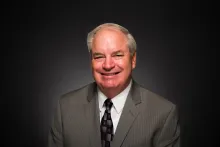
Robin Webber was born in Chicago, Illinois, in 1951, but has lived most of his life in California. He has been a part of the Church of God community since 1963. He attended Ambassador College in Pasadena from 1969-1973. He majored in theology and history.
Mr. Webber's interest remains in the study of history, socio-economics and literature. Over the years, he has offered his services to museums as a docent to share his enthusiasm and passions regarding these areas of expertise.
When time permits, he loves to go mountain biking on nearby ranch land and meet his wife as she hikes toward him.
