
Robin S Webber
This transcript was generated by AI and may contain errors. It is provided to assist those who may not be able to listen to the message.
Well, it is a joy to be able to be here on a high day and to be able to share a message, hopefully, that God will bring to you through this vessel. Appreciate what Mr. Gardinhire brought to us to begin with. And for those that are listening, either on the stream right now or in the months, the years to come, I hope that what I'm going to be able to share today will be not only encouraging, not only informative, but will be interrupting, which is one of my favorite words these days, because I look forward to God's continual interruption in my life as he seeds and as he cultivates myself and all of you as first fruits. And you know, you just don't stick a plant in the ground and it's on its own. You have to keep on working with it. You have to keep on pruning it. You have to keep on fertilizing it. Sometimes you might even have to move it here for more light. And so there's a lot of lessons that we can learn. It's interesting that Mr. Gardinhire brought up all the different names that revolve around this one high day. There are so many handles. That's why we have to kind of keep on coming back every year. There are so many handles this one day. The Feast of Harvest, the Feast of First Fruits, and the Feast of Weeks, and of course the Greek terminology, Pentakost. I thought I was going to say Pentakote. I thought I was going to have a little spark to it, you know, because of all the things that happened on Pentakost. I'd like to throw out another name for you if I might. You can jot this down. The Jewish community for years on end have called this day Matan Torah. Matan Torah. And that's to a degree what we're going to be centering on today. You say, what does Matan Torah mean? It means just simply this in English, the giving of the law. Traditionally in the Jewish community, and by and large the Christian community has accepted this as well, that we believe that on this day, thousands of years ago, that this is when God gave the Ten Commandments to Israel. Now, you may know that already. You say, well, whatever. End of sermon. Let's go eat. No, there's going to be more that's going to be coming. Because there's a lot there that we need to learn. Most of us know that the Ten Commandments, we normally go to the chapter in Exodus, that we go to Exodus 20, and there it says, you know, and it begins the Ten Commandments. And there's ten.
The difficulty with that, when we just simply go to Exodus 20, is we lose the impact of what God is doing. Not only then, but what God is doing in our lives today, as Paul would say, the Israel of God. For those that may be on the stream for the first time watching us, for the film that might be here, and are not awakened to the fact, or know that in the Church of God community, that we look at Scripture as being one revelation from cover to cover. Only man has divided it between the Old Testament and the New Testament.
God never intended that. This is the story in expanded form, chapter by chapter, as it develops. It's always the story of creation. It's the story of Passover. It's the story of Exodus. It's the story of a pilgrimage. It's the story of, at times, having to go through the wilderness, as maybe some of us are even right now in our own lives, and looking for God to give us spiritual manna. It's the story, ultimately, of a Promised Land. It's the story of crossing not only a gulf between the shore of slavery and the shore of freedom, but it's also crossing river, crossing, ultimately, the Jordan into the Promised Land.
It's the story of a faithful God that you and I have committed our lives to, and said that you will be our Lord, and we will be your servant. Help us to understand you. That's why I'm going to be sharing this message today, to help you to understand more about the law of God, the Ten Commandments, what God wants you and me to be as new creations within his hands. The challenge that we have in Exodus 20, if you'll turn over there, and as we do that, in Exodus 20, actually I'm going to go to Exodus 3.
Join me in Exodus 3. We're going to go there. We need to understand that what was going on here is God was fulfilling something that he had told Moses long before. Let's notice Exodus 3. Let's pick up the thought in verse 12. So he said, I will certainly be with you. This is the I Am speaking. And this shall be a sign to you that I have sent you when you have brought the people out of Egypt, and you shall serve God.
Notice, and you shall serve God on this mountain. Then Moses said to God, indeed, when I come to the children of Israel and say to them, the God of your father has sent me to you, and they say, what is his name? What shall I say? And God said to Moses, I am who I am. And he said, thus you say to the children of Israel, I am has sent me to you. Now, let's notice something. God says, as a sign to Moses, go back to Egypt.
It's going to be kind of tough over there, but I will be with you. But when you come out of Egypt, you will come to this mountain, but you will not be alone. You will bring your brethren with you. And before you move to that land of promise, you're going to learn something. You're going to learn how to serve me.
There's a cause and effect. You're coming to come to this mountain, and I'm going to have a class with you. It's going to be a laboratory of you coming to know me, and me coming to know you, that we might have a relationship. What is God doing here?
What is God doing here? He was giving an invitation to Moses to bring Israel, that they were to eventually approach this mountain, that we know as Mount Sinai. What he was doing, he said, we're going to have a meeting. And sometimes when we do that, when we set up a meeting between one party and another, you know what we call it? We call it a rendezvous. Let me give you the definition of rendezvous.
It's a meeting at an agreed time and place, typically between two parties. And that's what God was doing. He was looking into the future, seeing it, going back to Moses in the present, saying, I will meet you at the mountain, and your people will approach. What does this have to do then with you and me? What can we ascertain through the lessons of Mount Sinai to we that are in the body of Christ, to we that are the Israel of God, as Paul so says in Galatians 6, 16?
What do we learn from this setting? Allow me to give you the title of my message so you will stay with me. It is simply this. Pentecost, a rendezvous with holiness. Pentecost, a rendezvous with holiness. When Moses was with Israel, and he said, I'll get you out of here, guys. And sisters, they didn't fully understand what was going on. They knew that there was this being that had delivered them from bondage.
But at that point, they did not have the full tilt of what kind of a God, what kind of a being, one that they could not even see what he was. What was the composure? What were they to expect?
The first thing that we're going to find out is simply this. The first, I'm going to give you a few words. You might want to jot this down, because this is going to affect you in 2023. The first is approach. Approach. What was happening as they approached the mountain, not specifically on this day of Matan Torah, or the Feast of the Weeks, Feast of Harvest, etc., etc. But what led up to it? Join me if you would. Let's take a look here at Exodus 19, and let's pick up verse 3. And this is so important when perhaps you're talking to people about the Ten Commandments. We need to go back. It's not just simply the Ten Commandments, but what is God doing? And we notice, especially with those who are of a first few people in Exodus 19, and we pick up the thought in verse 3. And Moses went up to God, and the Lord called him from the mountain, saying, Thus you shall say to the house of Jacob, and tell the children of Israel, You have seen what I did to the Egyptians, and how I bore you on eagle's wings. He lifted them, as it were, figuratively out of Egypt, and protected them, and brought them to himself. I brought you. You're here. Now therefore, if you will indeed obey my voice, and keep my covenant, then you shall be a special treasure to me above all people, for the earth is mine. And you shall be to me a kingdom of priests, and not only a kingdom of priests, but now, now we go deeper, and a holy nation. These are the words which shall you shall speak to the children of Israel. So with that said, Moses comes down the mountain, verse 7, so Moses came and called for the elders and the people, and laid before them all all. There is nothing hidden from them.
Moses was an honest broker, honest vessel, gave all these words which the Lord commanded him.
Then all the people answered together and said, all that's really important, all that the Lord has spoken, we will do. So Moses brought back the words of the people to the Lord. And then it says, verse 9, And the Lord said to Moses, Behold, I come to you in the thick cloud, that the people may hear when I speak with you, and believe you forever. So Moses told the words, the people to the Lord. So we look at this. Now, okay, rendezvous, we're going to have an appointment. But now comes something very important on what we call the approach. It is not only approach that occurred 3,500 years ago, but what our approach needs to be today and every day, as we come before the Holy God. Then the Lord said, Go to the people and consecrate them, consecrate them, set them apart today and tomorrow. And notice what it says, And let them wash their clothes. Remember, we're in times past, and they've been on the road for a month and more. Let them wash their clothes. Very interesting. And let them be ready for the third day. For on the third day, the Lord will come down upon Mount Sinai in the sight of all the people. Now, notice verse 12. Very important. And you shall set bounds for the people all around, saying, Take heed to yourself that you do not go up to the mountain or touch its base. Whoever touches the mountain shall surely be put to death.
So let's stay with me. They had to clean themselves up. It wasn't just as I am. I'll just kind of come as I am and God and everybody else will kind of get used to it.
There is preparation. What's going on here and what's going on right here in this room today?
Holiness. It's not from around here, is it? It doesn't come from the mud, the clay, the terra firma that we walk on. They were about to become acquainted with holiness.
And you just don't step into it. You just don't bump into it. You just don't step on it. You respect it. You know that it's totally different than anything else earthly. But at that time, and that pilgrim people, they could only go so far. They could not go up the mountain unless they lose their life. What else is going on here? So Moses, verse 14, went down from the mountain to the people and sanctified the people and they washed their clothes. And he said to the people, be ready for the third day and do not come near your wives. So everything in this sense was to stop. He's speaking about marital relationships. Everything is on hold until you meet your God. Have you ever gone through Exodus 19? God is trying to show and get them prepared that they're moving from the world of slavery, the physical world.
They're about to be touched and come up to holiness. When you see the cloud that is mentioned, God's presence is often depicted by a cloud. You think of the cloud that rusted and came down over the tabernacle. The cloud. The cloud represents the presence of God. You think of the cloud that when Solomon consecrated, set apart the temple, the Shekinah cloud came upon Solomon's temple. We're going to learn more as we go along.
Then we come to Exodus 20 and God lays forth his plan. I am the Lord your God. I am, interesting, the Lord your God, who brought you out of the land of Egypt, out of the house of bondage. Oftentimes in many a church, we just learn short form. I certainly did when I was younger in another church, and you just kind of go through the short form. If you don't hit the first verse in its fullness, you lose the story. I am. Nobody else, not Moses, nobody else brought you out of the land. I used Moses as a vessel, but I am the Lord your God. You have been touched by God, who brought you out of the land of Egypt, out of the house of bondage. You were in slavery.
You were the living dead. You had no future. This is what our great God did.
How did that work out and what happened? What's going on here?
I'm going to add another word. We start it with approach.
I'm going to give you another word now. You might want to jot it down.
Awareness. God said, you will approach me, and as you do, I want you to be aware. You know, you were. You're wonderful. You're the spiritual Israel of God, and you know what? You approached where God set his name on this day. You were aware of that, and you approached with enthusiasm, with dedication, with faith, and with obedience. This is good, but we can grow in it and understand more. What was he doing with ancient Israel? He was setting them apart as much as Adam and Eve, or the patriarchs. When you think of Adam and Eve, what we sometimes call the first couple. I'm not talking about the people in the White House. We oftentimes call them the first couple or whoever's inhabiting the White House at that time. But the first couple had the opportunity to be firstfruits. God placed them in an environment that was rich with his presence, where he walked and where he talked with these two that were made as an image. They rejected it. Later on, he would begin to deal singularly with different people. He would deal with an Abram, he would deal with an Isaac, he would deal with a Jacob, he would deal with Joseph, the patriarchs. They were all, in one sense or another, invited to come before and experience the presence of God.
One thing about being a Christian and being a disciple of Jesus Christ and having surrendered ourselves to God the Father and Jesus Christ is to recognize that it's not just simply a matter of coming before God, but to experience Him, to experience Him, because God wants an intimate relationship with each and every one of us. When you think about this, Israel here, chapter 19, these were the descendants of Abram and Sarai, later on Abraham and Sarah.
What was God doing with each of these individuals? What was offered to Adam and Eve?
What was offered to Abram and Sarai or an Isaac or a Jacob? Now, God was, do I dare say a word? I don't know how to say it, Bob, in Hebrew, but He was breaking out. He was no longer going just family by family or singular. He was going to deal with an entire collective and to set them apart, and in that sense, as much as He could through the cloud, in the cloud, grant them an understanding that God had come down and the presence of holiness was upon them.
This is incredible. And if they would go into covenant with Him, that these descendants of Father Abraham, they would become a new creation. They would become a new kind of man, a new kind of woman, a new kind of community with one head.
And they said, we will do all. How did that work out? How did that work out?
Before 40 days was up, they were dancing around a golden calf.
They were ancestors later on, the children of Israel. In Jeremiah, join me if you would in Jeremiah 2 and verse 3. In Jeremiah 2 and verse 3, pardon me. Let's notice something here.
Seeing where the feast of firstfruits. Notice what it says here in Jeremiah 2 and verse 3. Israel was holiness.
Wow. Israel was holiness to the Lord. The firstfruits. Feast of firstfruits? The firstfruits of His increase.
Oh, that devour Him will offend. Disaster will come upon them, says the Lord. And the firstfruits of His increase.
Oh, that devour Him will offend. Disaster will come upon them, says the Lord. Israel is called to be a firstfruit nation. What they were doing was in a sense a type of a greater picture that was to unfold. Before we go any further, just Robin talking to you here, okay? Why am I sharing this with you? Let's understand something. The big butt here. No, the big butt that... Boy, we need to know that. What do you and I learn today as the Israel of God? Firstfruits, the body of Christ. Disciples of the Master.
What was God teaching them in Exodus 19? Going to appear before God wasn't to be a casual bump in. Spiritually, emotionally, or physically. Think of Moses. Remember when Moses got his introduction to the... What? The burning bush? You don't know the story? You don't know the story? What did God ask Moses to do? Now, my questions are easier than Bob's, okay? So what did... What... The voice came out of the burning bush, and what did it say? I know I have hundreds, if not thousands of years of Bible reading in this. This is not going to be a hard question. On this day of Pentecost, speak out just like Peter in Jerusalem. Give me the answer! Let's do this together. It's more fun when we do it together. Take off your... Yeah. One, two, three. Take off your... Oh, no, no, no, no. You are... Let's get into it, okay? One, two, three. Take off your shoes! Oh, that was more fun, wasn't it? We can't have fun with this stuff. Take off your shoes! Realize that where you were and who you are now approaching and who has rescued and will rescue, actually, moving forward, this is holiness. This is different. This is the world that Israel was being invited into. And if not they, because of the rejection over the centuries today. You and me. As the Israel of God, the body of Christ, the disciples of the Master, as we heard in Bob's fine first message, we're being offered that. There's one of the great themes, two great themes that they're kind of connected. But we have to understand, one of the great themes that kind of just continues to echo down through the Scriptures is this.
I will be your God and you will be my people. Boy, that sounds good. I think I can dig that. That's Hebrew for I can dig that. I think I'm in. I'll be all in. But then the other great theme that stretches through the Scriptures, from the law into 1 Peter, I am holy, therefore you be holy. It comes with conditions that humanly of and by ourselves we are not equipped for, other than the gift of God, the gift of the Spirit. In all of this that I'm saying, I want you to share something in Exodus 31.18. Join me if you would here. Exodus 31.18.
In Exodus 31.18, it says simply this, And when he had made an end of speaking with him on Mount Sinai, he gave Moses two tables of the testimony, tables of stone written with the finger of God. Written with the finger of God. You can also find that ascribed again in Deuteronomy 9 and verse 10. You can jot that down. The first giving of the law was written with the very touch, the very divine finger of God, carving into stone what love is all about, defined by the law, love towards God and love towards neighbor.
God himself is a God of love. God brought Israel out of Egypt, and he appeared with them, appeared before them, in that pillar. The pillar was not a dust cloud like we have up in Riverside County. Okay, and we get some big ones in the summer. No, that pillar was the presence of God.
That was not delegated down to some second or third-ranked angel, which is glorious in itself, an angelic. No, God was in that cloud. A cloud always represents the presence of God in the Scripture. Join me if you would in Exodus 31. God loved Israel. God wanted Israel to succeed and did everything that it could. In Exodus 31, excuse me, Exodus 3.21.
In Exodus 3.21, pardon me. Let me get back here.
In Exodus 3 and verse... Did I say Exodus 3? Yeah, Exodus 3.21. Yeah.
You know, I'm looking for that right now. That might not be Exodus 31. Hmm. I'll just go to Deuteronomy... I'll go to Deuteronomy 1.30. Let's skip that one. Let's go to Deuteronomy 1.30.
Deuteronomy 1 and verse 30 and 31.
Notice, as a man carries his son in all the way that you went until you came into this place. God is not a harsh God. God wanted Israel to succeed. God wanted Israel to be a nation of first fruits to him.
He sanctified them before Sinai.
He did everything that he could for them. Join me if you would in Psalm 78. In Psalm 78. Let's go over there a second.
In Psalm 78 and picking up the thought. In... Pardon me. Verse 12.
In Psalm 78... In the land of Egypt and in the field of Zoan, He divided the sea and caused them to pass through. And He made the water stand up like a heap. In the daytime also He led them with the cloud. And all the night with a light of fire, that pillar, He split the rocks in the wilderness and gave them drink and abundance like the depths.
And He also brought streams out of the rock and caused water to run down like rivers.
He did everything for them. He wanted them to succeed.
But there's something that we need to learn about this. The one thing that they had to do is they had to give their heart to God. Join me if you would in Deuteronomy 6, verse 5. In Deuteronomy 6 and verse 5. And I speak to you as we read this today. In the Jewish community, this is called the Shema.
In Deuteronomy 6 and verse 5. And this was from the beginning. Some people say, well, God only deals with the heart in the New Testament. No, He has always wanted to deal with the heart. In Deuteronomy 6 and verse 4. Hero Israel, the Lord our God, the Lord is one. And you shall love the Lord your God with all of your heart.
And with all of your soul and with all of your strength. That applies to the spiritual Israel of God today, you and me. He does not want your brain. Sorry. Some of you might be brainiacs. Some of you might have a really high IQ. More power to you. But that goes to the grave. That's just gray matter that's going to decay in the grave. Now that I've got everybody awake. No, anyway. God doesn't want our brain. He wants our heart. This would be, again, recited in the Gospel of Mark when Jesus, a Jew who had grown up with this, who is the I AM that is speaking here in Deuteronomy, says, The Lord your God, the Lord your God is one, and you shall love the Lord your God with all of your heart and all of your mind and all of your soul.
And the second is likened unto it. You shall love your neighbor as yourself. When the Jewish community used the word here, which is Shema, that was an immediate cause and effect. If you heard the word of God, just like ancient Israel on Mount Sinai, you would respond and say, Yes, I will do all that you say. I hear. I obey. No space in between. I have a question. How are we doing with that one? How much space do we have in between what God says and what we've said we would do and what we do? See, that's why we need the Holy Spirit. Israel is an example that they could not do it up and by themselves.
They were going to need to have the gift of the Holy Spirit. They didn't do it. In Hosea 4 and verse 6, I'll just read that out of the English Standard Version. Hosea 4 and 6 says, For I desire steadfast love and not sacrifice, the knowledge of God rather than burnt offering. God in other scriptures would say, I just despise your feast days because you just kind of come and do out of habit, out of custom, showing up, putting in time, but you're not allowing my presence, my holiness to penetrate you.
And to be that new creation, that new kind of man, that new kind of woman, that new kind of community that I long for to be intimate with. God wants us to know Him. The term in the Hebrew is extremely intimate in that knowledge of to know someone.
He wants to be up close and personal and be integrated. Not only He, but His holiness integrated into each of us. Didn't work for Israel, but in Deuteronomy 18 and verse 15, join me if you would there for a moment. In Deuteronomy 18 and verse 15, we notice this. Something is going to happen. The Lord your God will raise up for you a prophet like me from your midst, from your brethren.
Him shall you hear. It's interesting that it's repeated again in verse 18. I will raise up for them a prophet like you for among their brethren, and will put my word in his mouth, and he shall speak to them all that I command him. This is a Messianic prophecy, given 1400 years before Jesus of Bethlehem was born. Jesus would come as, in a sense, a typology. Moses was a type of Christ. He was a vessel of God, a deliverer, and he was also a lawgiver. Jesus would come, you think of the typologies, and he would be a deliverer.
He would be that greater Moses, the Son of God, speaking of Jesus, that through his sacrifice would deliver us from the shore of slavery from Egypt, and bring us through the water and the gulf, and bring us up to the sure shore of liberty towards the ultimate promised land that we read about in Scripture.
When you think of Scripture, I'm going to make a comment here. There are three things that I want you to think about. There are actually three mounts. Now, today, stay with me so you can take this home with you. Approach, and being aware of what we approach. Number three, there are three mounts that we need to think of when we think of Scripture. It's just like in the same sense there are three gardens.
There's the Garden of Eden, the original one in Genesis 2. There is Revelation 22, which is the ultimate Garden of Eden when you read Revelation 22, speaking with the Tree of Life. But that would be made impossible without the garden that was in between, which happened at the Garden of Gethsemane, when Jesus said, Not my will, but your will be done. Faith and obedience in his Father and total surrender. The same with mounts. There are three mounts that I want you to think about. You can jot this down. This is real simple. Number one, there's Mount Sinai.
We're going to discuss another mount in a moment. It's called Mount Zion. But between those two mounts, stay with me. This is the PowerPoint. My arms are going out. Here we begin with, over here at Mount Sinai, the holiness of God. Over here we have Mount Zion, which pictures upwards the holiness of God. But there's another mount. That second Moses, that greater Moses, the Son of God, shared with us. It's in Matthew 5, 6, and 7. The Sermon on the Mount.
The Sermon on the Mount is something that is not...cannot be obtained by just simply that which is written on stone.
I'm not dismissing what's written on stone. Please understand. But in that, when you go through Matthew 5, 6, and 7, that gets right inside of each and every one of us.
Being holy as God is holy. You know, we can look at people from the outside, and they can look like a hundred dollar bill.
But they may be bankrupt on the inside. Even maybe sometimes people that come amongst us, on a Sabbath or on a feast day.
They shine like bright lights on the outside, but there's a darkness on the inside.
Matthew 5, 6, and 7 tells us simply this. That God wants all of us. Not just what humanity sees, but what He sees every day ticking inside of us.
We all stand naked. Don't get scared. We all stand spiritually naked before our God.
We can fool. What Abraham Lincoln say, you can fool some of the people some of the time, most of the people all the time, but you can't fool God.
What we need to understand on this day of Pentecost, this day of firstfruits, God wants all of us.
Not half of us, not a quarter, not an eighth. And the biggest lesson that we learn...
Have you ever noticed... and again, I'm your pastor and fellow Christian, and we're on this journey.
I look at Matthew 5, 6, and 7, and sometimes I go, ah, that's impossible.
I can do the outside stuff. I can shine like a ring-ding star.
But inside? I'm like Paul. I've got some churning going on. I've got wars that go on inside of me.
I come up to the mountain of God and I find myself wanting.
The sermon I suggest to you, that the sermon on the mound is impossible...
...without the Spirit of God and the gift of God and His presence in us to move us forward.
I want you to soak that in for a moment. And that's why Jesus Christ came as a deliverer, as the one that gave all, all... ...that word, all, and the Exodus, all, all. Now we know, because Jesus would come along and say, in days of old, it would say that if you murdered a man...
...but then He says, but I say unto you, speaking as the I AM, speaking as the Son of God, He says, if you even think this about a person, it's murder.
Mentally, spiritually.
Jesus says again, in days of old, if there was an adulterer, there was a penalty.
It was all out in the open. But I say unto you, if, and He proceeds with that, if it's even in your mind...
...you've committed adultery.
See, we don't have that capability of Him by ourselves. That's why Israel went through it, what it went through. And that's why Christ came, that He died. And then He said something rather stunning. Join me if you would in John 14. In John 14.
In John 14. In picking up the thought.
In verse 16. And I will pray the Father, and He will give you another helper, that...
...that helper might abide with you forever.
The Spirit of Truth, whom the world cannot receive, because it neither sees Him nor knows Him. But you know. For He dwells with you, and will be in you.
I will not leave you orphans. I will come to you.
Now, that's very important. I will come to you.
What does that mean? Does that mean the Second Coming? No, often times you talk about a First Coming, you talk about a Second Coming. No, He was making a promise. A promise that extended beyond meeting the disciples in Galilee, and walking through walls in Jerusalem. He was saying, I will come to you. How is that possible? That happened on Pentecost.
That happened by the giving of God's Holy Spirit on this day. How can I say that? What do I mean? Join me if you would in Romans 8. I wanted to find the Holy Spirit for you. In Romans 8, which is probably the best explanation that I know in Scripture, it says in verse 7, because the carnal mind is enmity against God, for it is not subject to the law of God, neither can be. So then those who are in the flesh cannot please God. But you are not in the flesh, but you're in the spirit. The days of simply dealing with the outside are over. God wants all of you, and He's giving you a gift. You are not in the flesh, but in the spirit of indeed, the Spirit of God dwells in you. Now, if anyone does not have noticed the Spirit of Christ, He is not His.
It speaks of a Spirit of Christ. And it says, And if Christ is in you, the body is dead because of sin, but the Spirit is life because of righteousness. But if the Spirit of Him who raised Jesus from the dead dwells in you. Now, this is speaking of the Father. He who raised Christ, that's the Father who raised Christ from the dead, will also give life to your mortal bodies, through His Spirit who dwells in you.
This is speaking of the Spirit of the Father. This is speaking of the Spirit of the Son. This is speaking, the word I like to use and have for over 40 years in ministry, is simply this. God pours His essence into us. He pours His essence. It's His Spirit. It's the Spirit of His Son. It's not a third person. It's not just a power tool. Oh, I've got this spiritual screwdriver and I'll use that.
No, no. God is dwelling in us. As much as God dwelled in that burning bush, the I Am, that same I Am that led Israel through the wilderness and was that rock that Paul speaks about in 1 Corinthians 10 and 1 through 4, has taken up. Are you with me, brethren? On this day of Pentecost, He has by His grace elected to dwell in you, His presence. Can I say something in Hebrew? Wow! Wow! And that Spirit is not working from the outside in, but from the inside out. Have you ever had a situation where you say, Oh, I shouldn't have said that.
Look, it came out of my mouth. No, you're too late in the game. As a disciple of Jesus Christ, we start with God just like Genesis 1.1. The Holy Spirit, the essence of God the Father and Jesus Christ, is working in us.
So it starts with our motivation. It starts with the engine of our desires, or what we're focusing on. Our motivations will shape our thinking. Our thinking shapes our words. Our words shape our deeds, our actions. Our actions shape our deeds. Brethren, as we move away from where we are today in San Diego, I want you to think about this. Dedicate yourself to this.
In the beginning, with every motive that's in our heart, you know, you can look like you're doing the right thing to everybody else, but what is your motive? What's behind the curtain of why you're doing what you're doing? Doing a right thing is not always based upon a right motive. There's two separate things. But if your motives are right, then the light of God is shining in you, and it's going to bless you, and it's going to keep you. That's why we have the Holy Spirit. What did Paul say in Galatians 2 and verse 20? He said, about Jesus Christ dwelling in me, I have a question for you that only you can answer.
Do you really believe that? Do you believe that the essence of God the Father in Jesus Christ, He just hasn't given us a hand-me-down spiritual tool? Yes, it's the power of God. Yes, it can express the love of God. But why? Because they reside in us. In 1 Corinthians 3, you can just draw that down to 16 and 19, it says, The word there, temple, is naos, in AOS, which speaks of the Holy of Holies.
Remember how God on the Day of Atonement would come down? The cloud would rest on the tabernacle, and the high priest would come in. Not everybody else, because just like in Exodus 19, there were bounds. Only one man out of the community could go in and offer sacrifice for the people.
God is saying, He's dwelling. This is so profound. When we have the Holy Spirit, I mean, if we can't get excited about this, we might as well tuck it in. Okay? Are you with me? I'm trying to encourage you to realize that we're not just another... We are the first fruits of God by His grace, not because of who we are, or what we're thinking, or whatever.
Just like He took a bunch of slaves out of Egypt, that were not a people that He made a people. That's where we're at today. You're here today because of the touch of God. And He not only wants to write on stone, but He wants to write on your heart. And still do some carving on you. Hate to bring it up. Are you ready for God as we move away from this day? Are you waiting for God to kind of, rather than just writing on stone, to write on your heart and begin provoking you towards righteousness, provoking you towards holiness, and at times allowing us to step into something that is going to show Him that we get it, that we know it.
And even what I just said about the sermon, I'm going to trip, we're going to fall, we're going to stumble. But our God is going to be with us as much as He was with ancient Israel, as He went before them, as He went around them, as He was behind them. At times as He would hover over them. As I read from Psalm 139, His presence is everywhere. You keep that in your heart. We're not here on a high day just to speak about things that are going to put you to sleep. If I put you to sleep, other than if you're nodding in agreement, if I put you to sleep, I'm not doing my job as a servant of God.
He wants to mess with you in a right way. He wants to go deep. He wants to deal with your heart. The Bible is about a heart from the Old Testament to the New Testament. Sometimes we can just be like stone. Show me if you would in Ezekiel 36. We're going to wrap it up here in a moment or two. Ezekiel 36. This is speaking of ancient Israel. God has unfinished business with Israel, but it speaks to the Israel of God as well today. In this chapter that moves beyond what Ezekiel is writing about.
You think of baptism. You think of immersion. You think of giving your life away to God, surrendering your personal kingdom of dust towards that which is holy and the presence of eternity that might dwell in us. Then I will sprinkle you with clean water and you shall be clean. I will cleanse you from all your filthiness and from all your idols. And I will give you a new heart. And I will put a new spirit within you. I will take the heart of stone out of your flesh and give you a heart of flesh.
Something new. And I will put my spirit within you and cause you to walk in my statutes and you will keep my judgments and do them. Brethren, what a marvelous, incredible privilege we have to have God working with us. Not with the heart of stone, but with a new heart. And you know what? This is speaking to each and every one of us. Sometimes many of us have been on this trek for years and years.
I'm thinking that this is my, probably Susan's, 61st feast of firstfruits since we were kids. The pilgrimage continues. God will tell us when it's done. Don't have to get ahead of him. Some of us are tired. Some of us are weary. Some of us are depressed. Some of us are despairing. Some of us are hugging that heart of stone rather than the new heart that God granted us for the sacrifice of the Son. On this day of Pentecost, are you ready once again to surrender your heart to God, that His Spirit might fill it?
Surrender everything. Not only what people see on the outside, but what people see on the inside, what God alone sees on the inside. You know, one thing about Jesus, why He is called the first for the firstfruits, is that He is going to, He is going to at the end, at the very end, in 1 Corinthians 15, 23, it says, and when it is all done, He is going to surrender up all that is underneath Him. Everything to the Father. See, God the Father and Jesus have a love affair going on, and God the Father has total trust and confidence in His servant, the Lord Jesus Christ.
And when it is all said and done, with everything under Him, He is going to give that all up. What part of God's Spirit have we not allowed to touch and move and motivate our lives in unconditional surrender, saying, Father, I need You. Jesus, You said You would come and You have come. Paul had to wake up the Corinthians and he said in 2 Corinthians 13 and verse 5, Know you not that Jesus dwells inside of you?
The I AM is no longer up in the mountain, but inside of us to guide us, to keep us, to be that Spirit, to show the way. Join me if you would in Hebrews 12. Just two verses. In Hebrews 12, because this is dealing with the third Mount. This is what we approach. Brethren, the reason I'm giving this, this is what we approach now and is available to us that we need to come to appreciate in Hebrews 12.
Notice what it says here. Verse 18, For You have not come to the mountain that may be touched and that burned with fire, and a blackness and darkness and tempest, and the sound of a trumpet and the voice of words, so that those who heard it begged that the word should not be spoken to them anymore. For they could not endure that which was commanded.
And if so, much as beast touches the mountain, it shall be stoned, or shot with an arrow. And so terrifying was the sight that Moses said, I am exceedingly afraid and trembling. But You, You, the saints of God in San Diego today, and those that are listening to this message, You have come, God is creating this picture as if it is, because it is, is.
You have come to Mount Zion, to the city of the living God, the heavenly Jerusalem, to an innumerable company of angels, to the General Assembly, and Church of the Firstborn, who are registered in heaven, to God the Judge of all, to the spirits of just men made perfect.
And notice to Jesus the Mediator, that second Moses, that great Moses, the Mediator of that new covenant, and to the blood of sprinkling that speaks better things than that of Abel. See then that You do not refuse Him who speaks.
Brethren, if we can't get excited about this, it comes to me after services. Let's have a talk. I get so excited talking about this. My voice goes up. I'm not trying to shout at you. I am just shouting in joy. I am thrilled and I tremble at what our great God offers us. We do not deserve it. But by His grace, not only unmerited pardon at the start of the pilgrimage, but His sustaining grace, His favor, that voice that comes through that which is within us. So often we're looking for God from the outside in rather than recognize He's dwelling in us and recognizing that there's a GPS inside of us, a homing device to move towards this Mount Zion.
And what He promises and what He tells us to approach and to be aware of what we're approaching and to appreciate what we're approaching. It is a better covenant. It has better promises. As we would say down in the Garment District, such a deal.
Join me if you would in conclusion to Hebrews 4.
In Hebrews 4 and verse 14, on this, Bob, feast of first fruits, feast of harvest, Pentecost.
This is what I want to leave you with. Remember how the children of Israel could come up to but could not touch the mountain of God. There is a boundary.
Lest they die. A man could not enter the tabernacle of old, save the high priest. Lest they die. There was a veil. There was a curtain that only the high priest himself, the veil that had the carobim on it. As the guardians of Eden, only the high priest could go through once a year. There is a better covenant. There are better promises.
We have a surer Moses, a greater lawgiver, a greater deliverer.
And God has hand-wrapped us and said, I want you to be a part of this program.
And he says that seeing then that we have a great high priest who has passed through the heavens, Jesus, the Son of God, hold fast to your confession. For we do not have a high priest who cannot sympathize with our weakness, but was in all points as we are yet without sin. Let us, therefore, come boldly to the throne of grace. Let us, this is not in the singular. This is for people that have been sinners and called out of this world. Let us, pronouns in scripture, have meaning. Let us, therefore, boom, come, yes! How do we come like lambs for the slaughter? No, boldly to the throne of grace that we may obtain mercy and find grace to help in time of need.
Brethren, the joy and the beauty of this feast of Pentecost is that God has established for you and me a rendezvous with holiness. Who is holy? God says, I am holy. Therefore, you be holy. And He's given us His essence. And Jesus has given His essence, that personal touch, to you and me.
What a glorious God we have!
As you and I approach and are aware and accept the call of the covenant and appreciate what our Father and His Son has done for us, let all praise, let all glory be upon the name of the Father and upon His Son, the first of the first fruits.
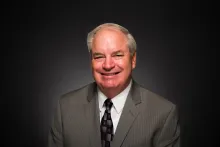
Robin Webber was born in Chicago, Illinois, in 1951, but has lived most of his life in California. He has been a part of the Church of God community since 1963. He attended Ambassador College in Pasadena from 1969-1973. He majored in theology and history.
Mr. Webber's interest remains in the study of history, socio-economics and literature. Over the years, he has offered his services to museums as a docent to share his enthusiasm and passions regarding these areas of expertise.
When time permits, he loves to go mountain biking on nearby ranch land and meet his wife as she hikes toward him.
