

Robin S Webber
This transcript was generated by AI and may contain errors. It is provided to assist those who may not be able to listen to the message.
I want to say thank you very much to the Hymn Choir for that beautiful piece. If any of you have the gift of tongues and interpretation, appreciate that. And certainly want to say thank you very much to Mr. Lyons for his first message this afternoon. One thing about Mr. Lyons, you will never go to sleep. And that's what good speaking is about. We appreciate that. In the Church of God community, we look upon the Bible as one seamless book, with an expanding revelation in regards to God's activity in the human realm. We don't look upon it as two different stories, with two different outcomes, with two different messages. This is the Gospel between two covers. It is one book. It is all good news. And especially when you look at the first words of the Scriptures in the beginning, God. And when you have that as your basis and your foundation, the rest is going to work out. As we approach the New Testament Passover, which is just a couple of weeks away, the question I have for us this afternoon is, how do we bring the two Testaments together? These two sections of the book to enable us to responsibly renew our covenant responsibilities and commitment with God when we partake of that bread and when we partake of that wine, symbolizing His Son's sacrifice. What I'd like to do this afternoon, friends, is I'd like to bring together the Old Testament and the New Testament and understand God's ageless desire for humanity. And not only for humanity, but let's break that down for each and every one of us that are hearing this message this afternoon. And that is simply this. What is that ageless desire of God Almighty? Simply put, it's to have an intimate relationship, an intimate relationship between Him and you alone. The title of my message this afternoon is simply this. You shall love the Lord. You shall love the Lord alone.
I'd like to begin this message by turning to Matthew 22, scriptures that may be familiar to many of us. But I'd like to build upon this by turning to Matthew 22. If you'll join me there as we open up the scriptures together as a congregation. And as we go to Matthew 22, we come into the midst of a conversation and an interchange. Actually, let's pick up the thought in verse 34. But when the Pharisee heard that he had silenced his hadgesses, they gathered together and then one of them, a lawyer asked him a question, testing him and saying, This is the first. And Jesus said to him, You shall love the Lord your God with all of your heart, with all of your soul, and with all of your mind.
This is the first. And the great commandment. And you shall also, and the second is likened unto it, You shall love your neighbor as yourself. On these two commandments hang all the law and all the prophets. We start here.
But this is just simply one account that is in the four Gospels. And there's another account that's going to build upon this to bring us to what the title of this message is today. You shall love the Lord alone. This is a wonderful beginning spot, but it is not the whole story. Because you can love God and have room for Him, and you can love your neighbor, but that's not the finality of what was actually said on that day. It's not just simply enough to have love. There's something else, and that's why we need to then turn to Mark 12. Join me if you would there, please. In Mark 12, as we begin to build a thought that I want to expand upon then. In Mark 12, and let's pick up the thought in verse 29.
Actually, I'll start in verse 28 again. I apologize. Then one of the scribes came, and having heard them reason together, perceiving that he had answered them well.
Allow me to set the stage here. This was not necessarily an adversarial relationship happening here. Sometimes you hear, oh, the scribes, and red flags go up. But notice what it says here. He'd answered them well, and he asked them, which is the first command of all?
Jesus answered them. Now notice verse 29. Something is put into Mark that was not into Matthew. The first of all the commandments is here, oh, Israel. The Lord our God. The Lord is one.
And you shall love the Lord your God with all your heart, with all your soul, with all your mind, with all your strength. This is the first commandment. And the second is likened unto it. You shall love your neighbor as yourself. And there is no other commandment greater than these. Notice verse 32. So the scribes said to them, well said, teacher, you have spoken the truth, for there is one God, and there is no other but He. And to love Him with all your heart, with all your understanding, with all your soul, and with all your strength, and to love one another as oneself is more than all the whole-burn offerings and sacrifices.
Now when Jesus saw that He had answered wisely, He said to him, you are not far from the kingdom of God. You are not far from the kingdom of God. What was going on here in this interchange between two Jewish men in the first century AD? He asked, what is it in the law that is the greatest commandment? The Torah is normally thought by you and me as being the first five books of Scripture. But the very word itself, Torah, meaning teaching, can also define all of what we call the Hebrew Scriptures and or what you and I would call the Old Testament.
What we find in this setting is rather than a legalistic traffic, it was an invitation to be involved in what we might call a fascinating debate. Kind of like what we have here in Bible chat and like we have in our other congregations in our circuit message chat. There was a discussion that was going on. And what the lawyer was asking is simply this, and here you go.
What is the essence of Scripture? How do you boil it down? How do you just bring it right down to something that you can not only put in your pocket, but put in your heart, can live and turn the engine of your life? What is it when it's all said and done? What is the very heart, the very essence of what the Creator would have us do as the creation? Jesus answered by quoting something that was central to the Jewish faith. It's called the Shema.
And then he added another verse from Leviticus 19, verse 18, which we call that second commandment, where you shall love your neighbor. Why did he do that?
There's three questions we're going to answer in this message. Three questions to ponder. When we recognize what Jesus stated here when he said, Hear, O Israel, the Lord your God is one. Number one, how deep-seated does this identifying essence of God's will dwell in your heart? After all, the lawyer, the scribe, he's dead. He's gone. He's buried. We're talking to a live audience. What does that mean to you and me that as the Israel of God, as the Apostle Paul explained in Galatians 6, 16, calling the church the Israel of God, how deep-seated is that understanding in us that essence of the God that we worship?
Number two, from whence did Christ draw this from? From whence did Christ draw this from? Hear, O Israel, the Lord your God is one. Number three, what then does that mean to us as New Testament Christians as we approach that table on that evening and sit out there, renewing that covenant and partaking of the bread and partaking of the wine that symbolizes the sacrifice of our Savior?
I'd like to share a story to continue this message, to kind of answer or illustrate point one. What's point one? How deep-seated does this identifying essence of God's will dwell in your heart? How much is it a part of the very fiber of your life?
Hear, O Israel, the Lord your God is one. And we're going to come to understand what it means, the word one, which I think you'll find fascinating. I'd like to share a story about a gentleman named Eleazar Silver, who was searching for Jewish children after World War II. I gained this story from a fascinating book called Walking in the Dust of Rabbi Jesus by Lois Tevurberg.
And this is the story of Eleazar Silver. During World War II, obviously, with the Holocaust, people were fleeing and they were sending their children out just as much as they could to escape the horror of the Nazi regime and the Holocaust. A lot of Jewish children were scattered around Europe during that time from 1936 through 1945. And they were taken in by many well-meaning folk throughout many, many countries in Europe, not just the Dutch, but in the Danish, but many, many others.
And oftentimes, they were taken at the convents, they were taken in monasteries, and at times they were taken into farmhouses and hid away from those that would want to do them harm simply because they were Jewish. And Mr. Silver, in this search, in this rescue mission, he entered a French monastery to inquire if there were any Jewish children there that he might be able to take back to their homeland, get them back to their parents. And the people there told him that there was just simply no one there that fit the description.
And all were Christian with German names. Now, some of the names that he noticed on the roster were Schwartz, Kaufman, and other names. Obviously German, but could also be Jewish. Now, this is where the story takes on a fascinating turn, because it seemed as if for a moment he'd come up against a dead wall, or a brick wall. So he asked the person, he said, do you mind if I kind of just wander through the ward for a few minutes and just see the children that are here and see their smiling faces?
So Mr. Silver did that, and he went into the wards, and he began to scan the rooms and saw the young faces. And as he walked down the aisles, he began to sing in Hebrew. Shema Israel Adonai Elohinu Adonai Hechad What did he sing? Shema Israel Adonai Elohinu Adonai Hechad Some of the little faces that were in those wards and down those aisles began to light up, and tiny voices began to chime in.
They began to hum along. They began to sing the words. They recognized these ancient words from early memories of their fathers and mothers reciting them, each morning and evening in their prayers. Here, O Israel, the Lord your God is one. It was so deeply embedded in them that even away from their family and away from their culture and in a completely different environment, this understanding of the essence of God's teaching as Jesus boiled it down resided in these young hearts and these young minds, and they were attuned to it.
Wouldn't that be something to see? Don't you wish that you could have gone down the aisles with Mr. Silver and begin to see that connection, that sense of being, that commonality of spirit and culture going back not only years, not only generations, but millennia? Here, O Israel, the Lord your God is one. It was about their identity.
What is interesting is that there was another Jewish lad that learned that 2,000 years before. I would think that Yeshua, or Jesus, the Greek, most likely sat on the lap of Joseph and would have learned as any Jewish child the Shema, the Shema. Here, O Israel, the Lord your God is one. For those of you that are taking notes who might want to jot this down, this wording, Shema, just simply six words. And it comes out of Deuteronomy. There are other parts of the Shema. There are actually three components of it, and I'm not going to be able to dwell on all of them today for sake of time.
But they were repeated twice daily by devout Jews testifying of their commitment to God. We're going to turn now to Deuteronomy 6. Join me if you would there. As we turn to Deuteronomy 6, for those that are fleet of hand, you might want to also jot down Deuteronomy 11, 13 through 17, and Numbers 15, 37 through 41. I will allow you to look that up on your time and continue the study. But let's join over here in Deuteronomy 6 and notice what Jesus was quoting from.
In Deuteronomy 6. And let's break it down. Sh'ma Israel Adonai Elohin Adonai Ha'khi That means, Hear O Israel, the Lord our God, the Lord is One. When you look at this verse in Deuteronomy 6.4, let's focus on it for a moment, opening our Bibles as a congregation and looking at this straight on. There's a challenge here, and there's a missed opportunity. And there is at times a misdirection as to what the intent of this verse is. Many people will tackle this verse as a theological statement, trying to understand what we might call components of deity. And that's not the conversation that is happening here. This is not a statement on theology. That may come as a surprise to some of you. It's not a statement on theology. Much rather, it is something different. It's a statement of allegiance to a sovereign force that alone exists, then and now.
We'll discuss that in a moment. We'll break it down. It's very interesting that today there are many, many translations that have a different translation of this than what we at times find here. The Tanakh, the New Living Translation, the New Revised Standard Version all use a different terminology here. Hero Israel, the Lord our God. And at this time in Israel's history, it was very possessive. It was very unique. They were the covenant people of God. There was a being and a relationship that was totally unique.
And the words here are, Hero Israel, the Lord our God, the Lord alone. And or the Lord that is unique, that the relationship is unique, that is between us and God. And He is the one true God, the one sovereign force that does exist, has always existed, is. And He is ours and we are His in a covenant relationship. Thus what we find here is we're dealing with a relationship that is about the unity. Join me if you would in Exodus 6.
Exodus 6, very early on. We find in Exodus 6 and verse 6 speaking of this, Therefore say to the children of Israel, I am the Lord. I will bring you out from under the burdens of the Egyptians, and I will rescue you from their bondage. And I will redeem you with an outstretched arm and with great judgments. And I will take you as my people. Utterly fascinating, incredible. The activity of the divine in human history, of intervening in human history against the greatest empire that had yet existed.
Taking slaves and saying, I will be your God and you will be my people, and they shall know that I am the Lord your God who brings you out from under those burdens. And I will bring you into the land which I swore to give to Abraham, Isaac and Jacob, and I will give it to you as a heritage. I am the Lord. Rather than a statement of theology, it's a statement of allegiance. It's a statement of commitment that God made back in the book of Exodus, confirmed here in Deuteronomy, a statement that is beyond simply a statement of belief, a statement of loyalty to the God that brought them out of the land of Egypt.
That is their priority. That was what they were to keep in mind, no matter where they went. When you look at the book of Deuteronomy, let's understand why Deuteronomy was written. Israel had been in the wilderness for 40 years. They had been going around in circles. They had been a slave people, a people that had not been a people, other than by immediate kinship of the tribes, now brought together. They had been wandering for 40 years.
They had just left the repository of paganism, Egypt, in which there were idols, there were multiple gods. There was a god or a goddess for every reason, for every season of the year. And now God was going to take them where? You might call it little Egypt. Canaan wasn't too far behind and in some ways even worse. In an environment and in a society where there were idols and gods and goddesses everywhere.
Some of us that maybe are not steeped into history or social studies, so often we think of idols. And idols being like the great sleeping Buddha over in Cambodia or in Thailand or wherever that might be, 90 feet long or 100 feet long and 15 feet high. Or we think of different idols that we've seen in movies, Biblical movies, 15 feet high, 20 feet high. Idolatry was so pervasive it was everywhere. When you go back to the story of Genesis and you see some of Abraham's family, stories about how the women would take their idols with them, they were about the size of my cell phone.
All analogies break down, but I'll be coming back to that. This is my half-brain phone. I know people usually laugh when they see this. I haven't yet come up to a smartphone, but God does call the weak of the world. I'm just teasing. Anyway, they were portable gods. Gods were tucked into your pocket. They were tucked into your socks. If they had socks, they were tucked into your toga. They were tucked into your tents. You took them with you. In fact, when Israel went through the sea, they were wearing earrings that later on they gave up to a bigger god called the golden calf. The earrings that they were were charms.
They were charms to appease the stars, the seasons. It was pervasive. It was everywhere. Everywhere you went, there was idolatry. Things that were robbing hearts and souls from the Creator God revealed in Genesis in the beginning God. And so this was spoken. Hear, O Israel, as you leave Egypt and as you enter the land, remember this. Understand your allegiance. Understand who brought you out of the land of Egypt. It was not you.
It was not Moses. It was the Lord your God. Alone. He is unique. And He is all in all. Why was this spoken? As they went into this new environment. Because there's something about Egypt that was very, very pervasive. It was all that Israel had known. You know, back in the book of Kings, it talks about all the wisdom of Egypt. All the wisdom of Egypt. It's interesting that all that wisdom of Egypt that was so attractive to the Hittites and to the other Semitic tribes of the Levant and the Middle East, that there's this thing about Egypt that had always seemed to be there.
And perhaps it was best summarized in what is called the tale of Sinyue. And Sinyue was kind of like the Marco Polo or the Lawrence of Arabia of his time about 2000 B.C. And he had moved away from Egypt. He'd been an Egyptian courtier. But this Egyptian courtier or nobleman had lived much of his life in Canaan and or with the Bedouins.
But at the end of his life, he longed for Egypt, just like Dorothy in the Wizard of Oz, clicking her heels. There's no place like home. Egypt was home to all that was in civilization in that fertile river valley. It was all that it was. It was that epitome, that essence of the tree of good and evil. There were great things. There were great advances, humanly speaking, in science and in math. But there was depravity. There was slavery. There was brutality. It was that mix of the tree of good and evil.
But Sinyue wanted to go home. He wanted to leave the frontier. He wanted to leave the wilderness. It would be like Daniel Boone back in the 1780s or 1790s, saying, I think it's time to go home to Williamsburg and enjoy the luxury of a mansion, and to go back and to be at home. This legend had a powerful influence on all that was Egypt.
Just as much as some of our mythology or some of our legends about a George Washington and or an Abraham Lincoln have shaped the persona of America and how we think of our country. Can you imagine that when Moses came up against Pharaoh and said to Pharaoh, let my people go, what Pharaoh's reaction would have been? Where? You've got to be kidding. Why would you leave all of this? Why would you leave all of this? And Moses would come back again and again and say, let my people go. Just as much as today as Christians and people of covenant under the New Covenant, sometimes people will look at you cross-eyed. They'll even look at you with their third eye.
That's when it gets scary. And they'll wonder, what's wrong with you? Isn't this world good enough? Isn't this society good enough? What is this in you that drives you forward in your life with this compass unknown by me and the neighbors? And yet you are what you are and you live differently. The identity that you have. The essence that is in your heart and in your soul.
What makes you so different? Why do you want to abandon what everybody else is doing? The Smiths and the Jones and the Peresas. Why can't you be like us and just simply be satisfied? Why aren't you out on the street playing with everybody else on Saturday? Why aren't you in school with everybody else on Saturday? Why don't you talk in the jargon that we do and use the language that we use? Why are you different? The call to spiritual Israel today is the same as ancient Israel of old. Hero Israel. The Lord your God.
Your God alone who is totally unique. Can you think about this? Is there any wonder that when Stephen and his great defense before the Sanhedrin said, speaking of their fathers, but in their hearts, they turned back. You could take the slave out of Egypt, but you couldn't take the Egyptian out of the slave. This was even after God had miraculously rescued them time and again.
When you think of, and I think it'd be a really worthwhile study for all of us, to tie the whole story together, to go back to Exodus 7, 8, 9, and notice how God threw the plagues. We call them the ten plagues. But to recognize that each of those plagues was not happenstance. God wasn't up there saying, hmm, I wonder what we'll do next. Just put down a lightning bolt here. No, there was a calculated reason for everything that God did with every plague.
He was taking on the gods and the goddesses of Egypt one by one. Consider just for a moment, He first of all started with the Nile. Egypt being the gift of the Nile. The Nile River going so far into Africa that it seemed ageless. It seemed like it had no beginning. It seemed to be the divine river. It affected the culture with its rises and its falls.
It was life. Where the water was, there was life. And where the water was not an inch away, there was no life. They worshipped it. They called it Hapi. H-A-P-I. That was the first thing to go. Then God would deal with the frogs. You talk about an advanced society, but to recognize that they worshipped frogs.
They called them the Hathor. You ever seen a few frogs? You have two frogs, and pretty soon you have a hundred frogs, right? They worshipped Hathor as the goddess of fertility. Then there were the gnats, and then there were the flies. And then there was the plague on the cattle, the apis bull, the symbol of strength, of maleness, of fertility. And it was worshipped. And God took that cow out. Then there was the plague of boils that boiled up from the very surface of the Egyptians to really show them, frankly, how putrid their civilization was from the inside out.
Egypt that worshipped materialism and focused so much on what they looked like rather than what they were. Hmm. Hmm. Sounds like America today. How much goes into Americana based upon what you look like from the outside and outward appearances, making yourself up and pretending to be something that God didn't really make you to be. And at all that time, in all that effort, all that money, recognizing that God's more concerned about what's in your heart than what's on your face or what's in your muscles. Remember many, many years ago, one of my mentors used to mention that beauty is skin deep, but ugliness runs all the way to the bone.
And that's what God wanted to deal with with Egypt. Then he brought on the hail. Then he brought on the locust. And then he brought on the darkness and he attacked and took apart the sun god. The great worship of Egypt that later on went into Rome and later on infused into other religions over 3,000 years. He made it dark. The Egyptians did not realize that they were a kingdom of darkness enslaving their fellow man. And then finally, the death of the firstborn. Pharaoh was worshipped as the god-king. He was deity, a man who thought he was a god, who could make his own rules.
God took his firstborn son as well as all the firstborn of Egypt. Isaiah 40. Let's take a verse here. Hear, O Israel, the Lord your God, the Lord alone. Isaiah 40. Let's pick up the thought if we could. In verse 17. All nations before him are as nothing, and they are counted by him less than nothing and worthless. To whom then will you liken God? Or what likeness will you compare him to? Dropping down to verse 25. Again, it goes up. To whom then will you liken me? Or to whom shall I be equal? says the Holy One. Lift up your eyes on high and see who has created these things.
Who brings out their hosts by number? He calls them all by name. And by the greatness of his might and the strength of his power, not one is missing. What do you say, O Jacob? And speak, O Israel, my way is hidden from the Lord. And my just claim is passed over by my God. Sometimes as covenant people, can we talk? Sometimes as covenant people we can say, God, I've given you my allegiance, I've given you my loyalty, but what have you done for me recently?
And some of us might say, how long, O Lord? How long? I'm here today as a servant of God to tell each and every one of you that no matter how humanly quiet it seems, God is working mightily and steadily in ways that you're not perhaps even aware of to bring out your best and to bring out His perfection in each and every one of us. How many hundreds of years did Israel cry out saying, Remember our Father Abram? Remember the promises to Him? And here we are in slavery, and it didn't get any better.
It only got worse. And as it got worse and worse and worse, they didn't even recognize that God has a solution in hand. That a young boy was taken out of the River Nile, the child of a slave and brought into the court of Pharaoh by the ruler's own daughter. And to recognize that this man would, as a son of Pharaoh or a family member of Pharaoh, he would be trained and he would be taught the history of the priest of Hyliopolis.
He would learn to lay down history, action by action and event by event. He would learn the geography. He would have the GPS of the Egyptian Empire and know its ins and outs. He would learn the hieroglyphics. He would learn the sacred writings and what it takes to make sacred writings. He would learn from that script from which the word comes Scripture that he would later compose the Pentateuch. As Mirmasheh Kinkari as Josephus brings out, General Mirmasheh Kinkari, he would be the conqueror of Ethiopia.
He would learn to move armies and know how to go from point A to point B and also defend the interests of his people. As a prince, with the Canaanite vassals coming in, he would begin to have an awareness of the Canaanite territory that one day his people would go into. And as a shepherd in Midian for 40 years, long years, he would learn to be a shepherd. Have you ever noticed that sheep don't quite run like an army? So God, when it seems so quiet in Egypt, was preparing all along an answer for a deliverer, a man that would not only know how to run an army and make it move and make its mission and do it, but how to bring sheep along from one pasture to another.
Interesting. He had all of that going for him, but it says in Hebrews by faith, Moses, when he came of age, refused to be called the sons of Pharaoh's daughter, choosing rather to suffer affliction with the people of God, than to enjoy the passing pleasures of sin, esteeming, and it's fascinating the way the author of Hebrews brings us out, esteeming the reproach of Christ greater riches than the treasures in Egypt. And then God would have to sandblast Egypt off of Israel for 40 years in the wilderness.
Have you ever thought about the first three commandments? Ten commandments. You know, we are a Bible-believing Ten Commandment Church, aren't we? All ten. Not just nine. Not just eight and a half. But think of those. When you think of the Ten Commandments, how does it begin? Turn to Exodus 20 in verse 1, please. Let's take a look at it. I want you to think about this as we come up to the New Testament Passover, please.
The Ten Commandments. Look at Exodus 20. The difficulty with American society today is that they basically learned the Ten Commandments short form rather than long form. In Exodus 20 and verse 1, notice what it says here.
And God spoke all these words saying, I am the family name. I am the Lord your God. I am unique. I am alone. I am yours and you are mine who brought you out of the land of Egypt. Not Moses. Not Moses. Not a man. Not a human deliverer. I alone am unique. I alone am sovereign over the creation. And yet I want to have this intimate relationship with you and you be mine and I be yours. And you shall have no other gods before me.
Brethren, as you come into this room on that evening of the New Testament Passover, I want you to remember the First Commandment. There is none other. The One that has called us to be His people as the Israel of God today. New Covenant people, with lessons from the Old Covenant, now expand it through the ultimate sacrifice of Jesus Christ.
Brethren, there are so many things that are pulling at us today. Distracting us from laboring in the Word. Distracting us from meditating on the law and the love and the relationship of God that He wants to have with us. I am very, very concerned about what is pulling at our people and pulling at this world.
The stress, the interactivity, all the information that is coming at us. That we do not have that opportunity to sit like David. And I know this may sound polyanish, but to sit underneath a tree, to feel the wind against our face, to count the sheep and our flock, to see the wind blow through the grass, to see the wildflowers coming up out of the ground as the warmth of the spring sunshine bids them forward.
Rather, we're caught in traffic jams, we're caught in two-income families, we're caught with this thing that's in our pocket that draws our attention, wondering if anybody knows that we exist. Is anybody calling us? Is there anything else that I can know? Is there anybody else that's trying to get to me? What time schedule do I need to make? Who's going to be next on my list? Rather than remembering, remembering, hear, O Israel, the Lord our God alone is sovereign and calls us to come out of this world, out of this world, out of this cosmos, out of this culture, out of this society, out of this hamster wheel that makes us forget how unique and how special we are to our God, so much so that He gave His only begotten Son.
He gave us not a reluctant Savior like Moses, a human man who said, God, I think maybe you really kind of need to send somebody else.
Might be a good idea. I'm a little slow in the in the jaw here. Could you send somebody else? I'd rather just be on the bench.
Rather than recognizing when you come before that table and the bread and wine is there on this evening, that we will remember that Jesus said that with eagerness and with desire, I have desired to have this evening with you.
And to recognize the joy that was set before Him as He went to the cross.
The second commandment, the second commandment, you shall not make unto yourself any graven image, any carved image of any likeness of anything that is in heaven, or that is in the earth or in the water underneath them. You're not going to be supposed to bow down to them. Don't do it. This was, hear me out, please. This was just incredibly radical because everybody else was doing it back then.
And God said, you can't capture me. Don't even try. Don't even, are you with me? Go there. Can't be done.
I am, in that sense, ageless. I am. It's not that I was. It's not that I will be. I am.
You can't put me in a box, and mankind has been trying to put God in a box ever since.
And rather than allowing the Spirit of God to make us into His image, we tend to try to make God into our image and then kind of carry Him in our pocket rather than in our heart. Remember, we are to love the Lord our God with all of our heart, all of our soul, and all of our strength, every fiber of our being.
And when you come and partake of that bread and that wine of the New Testament Passover, you are saying, I commit to you. You are my God alone. You are unique. You've called me out of this world, not because of who I am, but because of what you are, and in your great love and in your great mercy.
And thinking of that mercy, thinking of the second commandment, you go to Romans where it says, how do you measure the love of Christ?
How do you measure the one that the Father sent to us and somehow take a tape measure? Paul himself says in Romans, you can't do it. There is no dimension to what the love of Christ is.
No mountain high enough, no valley low enough. And that when you and I come together on that New Testament Passover, just like Egypt of old, think about this for a moment, can we?
Is that God did not pick us when we were at our best. Just like ancient Egypt. He looked down and picked us up at our least.
He picked us up when we were dirty. He picked us up when we were stinky. He picked us up in spite of what we thought. We didn't come to God. God intervened in our life by His grace and by His foreknowing just as much as when He intervened in Egypt and said, I will be your God and you will be my people and you will come to me, not through a physical Savior like Moses, but one likened unto Moses, not the man that went to God, but the God-man that came down to men so that men might be able to touch God and at the same time that God might be touched by our infirmities.
Brother, I'm sharing this as an encouragement to all of us. I know we've gone through another year, haven't we, together? With the human challenges, we're tired, time is worn out. We say, how long, O God, how much more? You and I go by an unknown compass other than known by God. He has the years and the days of our life in His hands and we don't see everything before us, but we have that identity, that same identity as those young Jewish children who began to hum that tune that brought them back to that which is embedded in their soul so deep that the culture, the trials, the challenges, even being separated from their physical life, and their loved ones could not take that out of them. Hero Israel, the Lord your God, alone, unique. Third commandment. Mr. Line spoke to it. You shall not take the name of the Lord your God in vain, for He will not hold Him guiltless that takes His name in vain. What does that mean? What an incredible... Brother and I, we either believe this or we do not. And if we believe this, our lives change in God's graceful hands. That God has placed His name on us. How neat is that? How incredible is that? And a name is not just like Weber or Smith or Jones. And I know all of you want to be a garnet. It's more than just a couple syllables. It's all in all that God is. Join me if you would in Ephesians 3. In Ephesians 3, come over there with me, please. Notice what our good God has done for us. For this reason, in verse 14, I bow my knee to the Father of our Lord Jesus Christ. You always see the Father and the Son in tandem. Jesus said, My Father works, and so do I, even until now. For whom the whole family in heaven and on earth is named, that He would grant you according to the riches of His glory to be strengthened with might through His Spirit and the inner man. That Christ might dwell in your hearts through faith. The same faith that Moses underwent when he forsook the riches of Egypt. Not accounting the reproach that would come to him, esteeming the riches of Jesus Christ even more. That we might be rooted and grounded in love, and may be able to comprehend with all the saints what is the width and the depth and the height to know the love of Christ, which passes knowledge that you may be filled with all the fullness of God.
I mentioned earlier on in this message, we're going to begin to conclude. We spoke of how God destroyed Egypt. And Pharaoh was undone, and he was humiliated. That work continues in this ageless expansion of what God is doing. Would you please just join me for a moment in 1 John 3?
In 1 John 3, let's pick up the thought if we could in verse 8.
He who sins is of the devil, for the devil has sinned from the beginning. For this purpose the Son of God was manifested, that he might destroy the work of the devil. Not just destroy the Egyptian Empire, they were but pawns and a human instrument influenced by the wavelength of Satan's being.
Christ came, and on that cross, and with that sacrifice, trumped death, became the sacrifice, became the way back to Eden. Back not to the tree of good and evil, which Egypt represented, but gives us access to the tree of life that God offered from the very beginning and continues to offer from Genesis 1 to Revelation 22.
That's the work of God the Father through Jesus Christ.
Brethren, the message that I bring to you is just very, very simple.
And that is that we have an opportunity.
And if I can make this point, and I think it's an important one as I conclude, and I'm just talking to you as a friend, it's so often we think that we have to go into high gear a month before the spring festivals and somehow create all of this triple, quadruple examination upon ourselves as to whether or not we're worthy.
None of us are worthy of and by ourselves.
It's only God that is worthy. And He spreads and He shares that worthiness to us through the sacrifice of His Son.
And to recognize that we should be having this kind of examination, if I can be frank, may I?
We should have this kind of examination every day of our life as to our relationship with God.
As to whether or not that He truly is our God and that indeed we are acting as His people.
Yes, He wants us to partake of the bread. Yes, He wants us to partake of the wine.
And observing these days has such incredible significance. It is a rallying point to bring the people of God together individually and collectively before their God.
But this is the kind of examination that we need to be doing every day if we only wait on a calendar day.
Okay. I got my Holy Day calendar from Cincinnati, California. I've got it right up on my refrigerator.
So we know when it's going to be. So therefore, X marks the spots where I'm going to get ready to renew this covenant.
Can I make a comment? Covenant renewing is a process of every day.
Knowing who your God is, knowing that He has delivered you, knowing that He has delivered me.
There is no amount of preparation or by our works that creates merit, as it were.
The merit, the grace, the work has been done by God the Father and Jesus Christ. He sent His Son.
And His Son willingly went to Golgotha and nailed to a piece of wood.
He didn't give somebody else's blood. He gave His own blood. For you and for me.
That's the blood. That's the life. That's the uniqueness. That's the alone. That's the sovereignty of Godhead.
I hope this message has helped you to consider for a moment where you stand before our God.
Let's not look back to Egypt. Let's recognize the allegiance, the loyalty that a covenant brings.
Lawyers deal in contracts. Contracts will come and they will go. Lawyers can also find loopholes and arguments. They're trained in that. That's why we hire them.
As Christians, bought and purchased by the blood of Jesus Christ, given to us by God our Heavenly Father, you and I are not in a contract. It is sealed with blood. It is for life. There are no loopholes.
We are lifers. Come mountain top, come plateau, come valley. We are lifers.
We do not know what tomorrow will bring, much less the next moment.
But in faith and in confidence, we read the words of Scriptures in the Old Testament and the New.
Scriptures written to an ancient people and people that are yet going to be born that are going to become the Israel of God.
To give us moral clarity, to give us a GPS no matter where we are, no matter where we find ourselves, whether in an orphanage in France or whether in modern day 2015 Los Angeles.
Not just simply told by a Jewish man in an orphanage, but the head of the spiritual body called the Body of Christ.
The GPS is there. The anchor of our lives is there. Hero Israel. The Lord your God.
Alone, unique, ours. He is ours. We are His. And thus we approach the New Testament Passover with joy and gladness and knowing that we are loved.
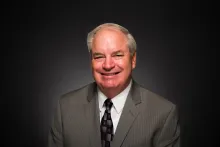
Robin Webber was born in Chicago, Illinois, in 1951, but has lived most of his life in California. He has been a part of the Church of God community since 1963. He attended Ambassador College in Pasadena from 1969-1973. He majored in theology and history.
Mr. Webber's interest remains in the study of history, socio-economics and literature. Over the years, he has offered his services to museums as a docent to share his enthusiasm and passions regarding these areas of expertise.
When time permits, he loves to go mountain biking on nearby ranch land and meet his wife as she hikes toward him.
