
Robin S Webber
This transcript was generated by AI and may contain errors. It is provided to assist those who may not be able to listen to the message.
Well, we want to welcome everybody that is here today, here in Redlands, California. And today we're going to conclude the series on a New Covenant heart towards Christian responsibilities. We've been going through this, oh, I'm not sure how long we've been going on and on a number of weeks, and we thank you for your dedication and patience for getting through this series. But today we're going to bring it to an end, but we're going to be covering one more responsibility that we need to understand. And there are many, many others. We've only basically focused on three, and there are others. But the framework that I'm offering you during this series, I hope that you can then apply to those that you wish to study yourselves. During this time, we've come to understand and appreciate how we exist as New Covenant Christians in direct response to God's grace-filled intervention and rescue in our life. And using the word response is very, very important, along with the application of understanding what God's grace is. That God's grace reminds us that it begins, it is, and it is completed in Him. That long ago He made a decision and has invited us into a process that He is performing. And there is not only an invitation, but there is His personal involvement in our lives, and He will indeed be there at the end. But because of that, and because you and I have come to understand and recognize, as New Covenant Christians, His sovereignty and have accepted His sovereignty in our lives and come to Him in faith and belief that He is the good God, that He in His ways are sufficient, we therefore respond to Him based upon what His word does say. Now, when we talk about Christian responsibilities, again, and some of you were not here before, let me just kind of put it right out on the tractor for us, if I can for a moment. Even as we perform God's commandments or His directives, whatever we might want to call it, when we perform God's commandments, we don't do it to earn salvation. Because there's nothing that we can do down here below of and by itself to earn salvation. Eternal life is the gift of God. But we do the things that are mentioned in the word for a very specific reason. God says, I am holy, therefore you be holy. And thus, understanding that, we obey the Word of God. We obey God as evidence of our faith.
We obey God as evidence of our faith. And so, we come to understand that observing God's commandments does not generate salvation on its own. Never will, just simply can't. But it identifies our surrender and transformation within God's will. I'd like you to think about that for a moment. Obeying God's commandments identifies our surrender to His will.
Understanding what grace is beyond a five-letter word. That it is the active presence of God in our lives, before us, in us, through us, and will yet to be worked out in the future. A fundamental touchstone verse that we have been using all along in this process is found over in Romans 4. Join me if you would in Romans.
And let's focus beginning on verse 1. What, then, shall we say that Abraham our father has according to the flesh? For if Abraham was justified by works or by what he had done, he has something to boast about. He could crow all day long. But there's one audience that wouldn't hear him, but not before God. For what does the Scripture say? Abraham believed God, and it was accounted to him for righteousness.
Here in Romans, we find the definition or the explanation of the New Covenant individual. The man of faith that takes God at his word has God as sovereign in his life. And therefore, understanding who God is and has yielded up his own life and is no longer his own person surrenders himself to that God by the way that he responds to the instructions and the word of God. Now let's understand something beyond Father Abraham. Such faith-filled surrender, and surrender is a beautiful word. It's an active and it's a powerful word when you understand surrender. We don't see that too much anymore in our day and age. People don't surrender. They just kind of keep on fighting when you see the wars that are around the world. You'd have to go back to World War II and understand what happened when the whole world was at war and finally when Japan and finally when Germany surrendered, it was an unconditional surrender. And something that we have not really been used to seeing on the world stage now for nearly 60 to 70 years. That's basically, I'm done! I'm laying down my arms. I know that I simply can't go on any further.
I don't have it in myself. And there was unconditional surrender. Such faith-filled surrender that we're talking about is seamless in the life of a New Covenant Christian. It's not predicated just simply on a doctrine here and a doctrine there. Here a doctrine there, a doctrine everywhere, a doctrine doctrine. It's not just simply predicated on an activity that we might do here or there. Again, it is seamless. God, who is the master educator, designed an active and participatory worship of him that cuts across the grain of our life. God understands, because he made humanity, understands humanity, that there are three things that are oh so precious to each and every one of us. And they all begin with T. Number one, time. Number two, our tummies. And number three, our treasures. And so for people that are spirit-led, spirit-fed, and under the New Covenant, yet we remain in this physical tent. We remain in this world of time and space. And the master educator asks us to worship him. That means worship is an Old English word, which means to give God his worth, his worthship. And so God cuts across the very grain of our life. Those things that are oh so important to us, our time. What do people always say? Oh, we don't have enough time. And or how much do people talk about their own tummy and what's going to go into it? Sometimes you need to talk about the weather, you talk about food.
And then right here in the back pocket, I don't know if the microphone can pick that up. I'm not going to put the mic down there. Don't worry, you don't want to scare the children. But you know, the old wallet, what do I have? And God says, the worship that I expect of you on a day-by-day basis is going to touch each and every one of those. And so in the course of this series, we've dealt with how we worship God and extol God by giving him our time, the Sabbath. Giving him that which we eat by understanding the biblical food laws. And now today we're going to touch on the third Christian responsibility in this series. We're going to talk about tithing. Tithing that affects our treasure. With that thought in mind, a simple question. Why should a New Covenant Christian tithe? Is it simply a mandatory habit that we just kind of get into a pattern of? Do we feel somehow coerced that we have to? Or what's God going to think of us? He's kind of looking up there, kind of the the judgmental God. Or is it a spiritual force at work in our lives? I want you to think about that for a moment. I'm looking at an audience. Many of you have actually tithed for 30, 40, or 50 years. But sometimes as we go and do it and do it and do it, we lose the energy. We lose the lesson. And so out goes, you know, when we're tithing, you know, we're we're writing our bills. That tithing can become one more bill, one more envelope, one more stamp, rather than the act of force, the spiritual energy, the tool of grace that God gives us to understand His involvement in our life. And that we in turn return worship, saying, God, you are sovereign. I worship you and I understand you and your sufficiency. As Paul said, your grace is enough. So let's cover those points. Let's understand how the Sabbath, excuse me, how tithing is a tool of grace and can be a powerful and dynamic energy force in our lives. Point number one, I want to share with you. I'm going to give you five points. Number one, first point, New Covenant Christians tithe because the father of the faithful tithed. Allow me to repeat that, please. New Covenant Christians tithed because the father of the faithful tithed. It's interesting that in establishing a people and that God did back in your when He took a nation of slaves that had been in slavery for hundreds of years, and He rescued them, He liberated them, and then He gave them a future. And He says, you are going to be kings and you are going to be priests, and I'm going to put you in the middle of the way of the sea with all the empires and all the nations that are around. And people are going to say, what God do these people have? That such favor shines upon them. The difficulty is, though, that those slaves didn't have a history when they came out of Egypt. Unfortunately, with slavery, whether in years of yore or in the last couple hundred years in our country, at times when people are separated from their families, the history breaks down and they don't know where they're going. They don't know how to go forward because they don't know where they come from. And that's one of the reasons why the Book of Genesis is in the Bible. The Book of Genesis is a family scrap book for the people of Israel and for the spiritual Israel of today, which is the church.
Moses is inspired by God to go back and write down the family history, to give a link, and to help Israel understand that what is asked of them and the expectations that God has of them are not theirs alone, but has always been there from the beginning. And we find one of those scrapbook portals back in Genesis 14. Join me if you would, and it goes back to Abraham. They're a great, great, great, great, great, great granddaddy. And it goes back to a specific example of Abraham. Allow me to set the scene. It is that time when his nephew Lot had been kidnapped, and all of a sudden, Abraham, or at that time Abram, goes on the hunt.
Verse 14, now when Abram heard that his brother was taken captive, he armed his 318 trained servants who were born in his own house and went in pursuit as far as Dan. And he divided his forces against them by night, and he and his servants attacked them and pursued them as far as Hobah, which is north of Damascus.
And so he brought back all the goods, and also brought back his brother. Now it's his brother. That's just a translation. Actually, it's his nephew Lot, and all the goods, as well as the women and the people. And the king of Sodom went out to meet him at the valley of Shava, that is the king's valley, after his return from the defeat of Kedelah, and the kings who were with him. Now, the story begins to get involved and interesting. Then Melchizedek, king of Salem, brought out bread and wine, and he was the priest of God most high.
Here was Melchizedek. Here was the man that was a priest, king of Salem, which means peace. And there's so much that we could describe in Melchizedek, different sermon, different time of understanding exactly who Melchizedek is. But let's just leave him at this point as the servant of God. And this servant blessed him and said, Blessed be Abram of God most high, possessor of heaven and earth, and blessed be God most high, who has delivered your enemies into your hands.
After that, notice what Abram did. And he gave him a tithe of all. First time that tithe is mentioned in the Bible. Now, let's understand what occurred here. There had actually been material gained from going back and rescuing Lot, captured goods, as it were, and Abram made a decision. And tithing is a decision. And he made a decision to give back because of God's blessings. And he gave him a tithe of all. Now, it's interesting when we see that word. You might want to circle it because it's the first time it's mentioned in Scripture.
That comes from a Hebrew word, masorad, and or the Greek word decate. I might be a little bit off on the accent, D-E-K-A-T-E, which means tenth. In the English or the Anglo-Saxon tongue, it would be to tenth and or to tithe. So what Abram did is he gave 10 percent. That is what a tithe is, and that's very fundamental. Let me share why. Sometimes when you turn on television on a Sunday morning, you'll see different televangelists and they're preaching, and then they'll be in a church service, and then they'll say, well, now it is time to give of the tithe.
And basically, that has been in a sense over the years, if I can use a phrase I'll recalibrate, brought down to not fully understanding what a tithe is. A tithe is not just simply reaching in your pocket and getting coins. It's not just simply reaching in your wallet and seeing what's in the wallet and giving a tithe. Now, they're sincere. This is not about sincerity. This is not about devotion. This is not about them wanting to support what they consider a work of God.
But just giving what's in your wallet or giving coins out of your pocket is not a tithe. A tithe is a tenth of all, and that is important because the understanding of tithe is that it is going to actually cut across the grain of our physical existence as to whether or not what God is a good God, what is God's sufficient, and will He meet our needs. A brahm tithes, which is very important. Now, we need to grasp something. You ready to go a little bit deeper, friends? Let's understand something. We need to grasp that tithing wasn't the beginning of a brahm's faith.
This was not the beginning of a brahm's faith. It was a response to the one that was sovereign in his life. Tithing is a response. Let's remember again, any and all that we do does not merit God's favor of and by itself. It is a response recognizing the goodness and the sovereignty of God. That's over in Genesis 12. Join me if you would there for a moment. In Genesis 12, this is where the faith of a brahm is recorded at its beginning.
Now, the Lord had said to a brahm, get out of your country from your family and from your father's house to a land that I will show you. It goes down a few verses. Now, let's join me in verse 4. Let's notice something. And so a brahm departed as the Lord had spoken to him. One of the great sentences of all times, one of the great verses of the Bible, God came to this man and said, get up out of your country.
A brahm took God at his word. Now, last week you heard Mr. Carlisle, I think more about what a wilderness is like, if I'm not mistaken. Am I thinking right? Was that the discussion last week? Help me, Bob. What was it about? Pardon? Okay, but you've talked about the wilderness before. You've talked about what real wilderness is. Yeah, Bob is in his adventures with Elaine.
Over in the Middle East, he's brought back to us material about what wilderness is really like. And when God told a brahm to leave Ur, which was Manhattan of its day, you know, when he left and he started moving into the interior of the Middle East, I've got some news for you. There were no Motel 6s. There was no McDonald's. There was no Carl's. And by the way, for Californians, there was no In-N-Out Burger. It was tough, sledding, leaving everything behind him, leaving that which personified the tree of good and evil.
But because he yielded to God and surrendered his life, he partook of that tree of life.
And he acknowledged God as a sovereign. Now what we see in chapter 15 is a response. He ties to that God. And so we understand that the tie that God, that Abram gave in chapter 14 is an expression of an active acknowledgement of God's sovereignty in his life. And so we come to understand a very simple point about tithing that I'd like to share with you. And it really reflects the same with the Sabbath and with the biblical food laws that we've talked about. Tithing is a physical expression of a spiritual confession. Very simple way of putting it. Tithing is a physical expression of a spiritual confession that God is sovereign in your life. That you understand his grace, you understand his intervention, his interruption in your life, your personal rescue, as much as he rescued Abram in the past or rescued the Israelites later.
And thus you confess in a sense by offering God your time, your diet, and also even your treasure as an acknowledgement that God will make up the difference.
Very important to understand.
It's interesting that as Abram did this, chapter 15 leads into the blessing upon Abram.
Chapter 15 leads in, and you can pick that up in your own study, how he said, you know, God, I don't have any children. That's when he goes out and he begins counting the stars of heaven and begins to, God begins to share how his seed is going to be throughout the earth. Now let's understand something. Every time you and I do something, whether we honor God with our time, whether we honor God with our diet, whether we honor God with our funds, does not necessarily mean that God is going to write back, do something for us. Because basically what we understand, especially under the New Covenant and the ultimate reward that God is giving us, is not a child.
It's not a child, but we ourselves to be children of God in the kingdom of God. That is the great blessing. This world will pass away. God does not say that every time we push button here, that somehow this button is going to be pushed over there. It's like the old Dutch phrase, God does not pay weekly, but he does pay in the end. And each and every one of us are being called to be a child of God. Now, why is this so relevant? Join me if you would in Galatians. We're going from the Old Testament to the New Testament. Now in the book of Galatians, let's understand something here. In Galatians 3, let's understand a powerful point. Verse 7, Therefore, know that only those who are of faith are sons of Abraham.
Sons of faith. And the scripture for seeing that God would justify the Gentiles by faith, preach the gospel to Abraham beforehand, saying, In you all the nation shall be blessed. So then those who are of faith are blessed with believing Abraham. Abraham believed, and therefore it was accounted unto him for righteousness sake. And we likewise, as Christians under the new covenant, as we believe, we are justified, we find that favor in God's eyes and in his heart. And our belief in God that he is sovereign is translated by our obedience. Faith and obedience are not pulls apart. Our obedience is just simply our faith translated into action, that we respond to the Word of God, just as Jesus said, that man shall not live by bread alone, but by every word of God.
Let's understand something, because sometimes we can get our figures mixed up. Tithing is not about giving simply 10% of what God has blessed us with. Sometimes we miss the point. You say, wait a minute, is this going to be a new doctrine? Is it 11%, 12%? Do I hear 13%? No, that's not what I'm saying. If we simply limit tithing to the figure of 10%, we miss out what tithing is about. Tithing is about reminding ourselves and sharing with God that we give Him 100% of our life. Tithing is to acknowledge that God is sovereign, that He owns us, and that we are 100% His. And all He asks is 10%. Isn't it interesting when you put those percentages together?
He doesn't want 10% of us and 100% of our income. What He wants is to know that we offer Him 100% of ourselves in everything that we do, in everything that we say, and yet He does cut across the grain of our existence. He, in a sense, moves right into those aspects that are so important to us, especially in these times of economic plight, which I can appreciate that many of us are going through. And yet He says, believe in Me. Point number two. A New Covenant Christian ties because God's law is recorded throughout Scripture. Let me repeat it. A New Covenant Christian ties because God's law is recorded throughout the Scripture. That is both the Old Testament and the New Testament. Join me if you would in Leviticus 27 for just a peek. No, I'll tell you what. Don't go there. Let's go to Deuteronomy 14. It basically says the same thing, but we'll go to Deuteronomy.
I always like to go to Deuteronomy because it reminds us that God said it twice. That's what Deuteronomy means, the second giving of the law. He didn't have a mind change on this. It's also mentioned in Leviticus. But over in Deuteronomy 14, let's notice what God says here.
And picking up the thought in verse 22, you shall truly tithe all of the increase of your grain that the field produces year by year. Now it's very interesting. It says all the increase. Tithing is not based upon what you don't have. It's based upon what you do have. It's based upon the outcome of everything after business expense, not before. And God says that you will give all that to me. It's what He expects. Now, what is interesting, we find that as the book moves forward in Genesis, we found that Abram honored God with a tithe. And it is mentioned as an activity. But now we find that it is to Israel, it is written as a law. It is now a part of God's code for those of a covenant people that are chosen to follow Him. But why to whom was it to be given? But why? There's a why in there. Join me again in Numbers 18. And maybe you've never seen this before. I don't know. Has anybody been in Numbers 18 recently out here in the audience? Just checking. That's why we're going there. Numbers 18. And maybe you've never seen it this way before. Numbers 18 verse 21. Behold, I have given the children of Levi all the tithes in Israel as an inheritance in return for the work which they perform the work of the Tabernacle of Meeting.
I'm going to stop here for just a second because we've got some interference in our line.
I'm sorry? Okay. One second, please. I'm going to turn this off, Tim.
See, I have complete faith in you. I've got to practice what I preach.
Okay. We'll pick up this thought then. Join me in Numbers 18.21 to understand why and to whom we tithe. In Numbers 18 and in verse 21. Behold, I have given the children of Levi all the tithes in Israel as an inheritance in return for the work which they perform the work of the Tabernacle of Meeting. Now, this is fascinating. A whole tribe of ancient Israel was dedicated to the service of God at the Tabernacle. God set apart an entire people and then noticed what they were to do. They were to perform. What were they to perform? The work of the Tabernacle of Meeting. Now, this is interesting because what happens is when you recognize this, they were doing the work of God. This is where God presented himself to Israel. This is oftentimes where he communicated was at the Tabernacle. And they were to perform that work around the Tabernacle. But now it's interesting that it's not only a command to Israel and it's not only a matter of worship, but now God is offering partnership, partnership of ancient Israel to maintain the Tabernacle by what they share, by how they tithe, that they give to these servants of God to perform the Tabernacle of the Meeting. Now, here's a thought that happens. People say, well, that's good. That's well. Tithing was done in the Old Testament. But now we just simply move on and give as the Spirit guides us.
Let's understand something. To limit Tabernacling or a Tabernacle to the Old Testament is not biblically sound. Do you realize that the principle of Tabernacle runs from Leviticus all the way to the book of Revelation? If you don't, join me if you would for a moment in Revelation 21. Join me in Revelation 21. Let's pick up a thought here.
This is at the end of the book, as it were. And you notice what it says, Then I, John, saw the holy city, new Jerusalem, coming down out of heaven from God, prepared as a bride adorned for her husband. And I heard a loud voice from heaven, saying, Behold, notice the Tabernacle of God is with men, and he will dwell with them, and they shall be his people, and God himself will be with them and be their God. In the Old Testament, at times, God would come down and visit Israel through what is called the Shekinah presence, that cloud that would either hover over the Tabernacle or literally enter the Holy of Holies, which is just a type of the greater anti-type that God desires to Tabernacle, to dwell, to, as it is in the Greek, sca-nu, with man, to be in their midst. Interesting that in ancient Israel, when they were in the wilderness experience, the Tabernacle was not on the sidelines of the camp. It was right in the middle. Did you realize that? Have any of you ever seen pictures of how the camp of Israel was set up? The first thing that went up was what? The Tabernacle. And then all the tribes would surround it. God was in their midst. And then all the tribes would tithe to the Levites, to Tabernacle, to sustain the work that God is performing. Now, what is interesting is that today, God desires to Tabernacle inside of us. The Apostle Paul says, do you not remember? Do you not know? Hey, think about it for a moment that you are the temple. You are the dwelling spot of God as New Covenant Christians. Therefore, we recognize as much as ancient Israel performed, excuse me, ancient Israel gave of their tithes to the servants of God to perform the works of God of Tabernacle, that is something that is even now today being done under the New Covenant. Because God has not yet gone out of what? The Tabernacle business. To be in our midst. To be inside of us. To bring us to full relationship with Him. That's exciting.
Join me if you would in Matthew 23, 23. Jesus Christ spoke about tithing. I know sometimes people will unfortunately make them a mistake in notion that Jesus basically came and did away with the law. He didn't. Let's notice what it says here in Matthew 23, 23. And He offers a powerful point.
He's speaking, woe to you, scribes and Pharisees, you're hypocritical. For you pay tithe of mint and anise and come and all of these spices. I mean, do you ever get picky?
I mean, you don't let anything go by you. You even tithe on these little articles. I mean, you're looking at the bottom of the bag that you bring home, as it were, to see what's down there, to see if you can tithe on it. But you have neglected the weightier matters of the law, justice, mercy, and faith. And these you ought to have done without leaving the others undone.
See, it's very interesting that what Jesus said was, you did well and good over here, but you lost the lesson. That what I'm giving you to perform, whether it be about the Sabbath, whether it be about the biblical food laws, or whether it be about tithing, is not just simply a stand-alone rule. Rules without a relationship are like a postcard without a stamp. They're not going to go anywhere. He got the picture, but it's not going to travel.
Here they were. They were so circumspect on tithing on little itsy bitsy teeny weeny. Sounds like an old song out of the late 50s. On all these little miniscule items, they really wanted to focus on the 10%, but they forgot the 100% of relationship that they were to provide to their fellow man. Jesus is basically saying, he might as well not have tithing at all. But he wasn't throwing away tithing. He's basically saying that the rule and the relationship are, in a sense, one coin with two parts.
The rule and the relationship are together, and that it's beyond 10%. It's 100% of what we give to God and what we give to our fellow man. But there's no abolition. There's no abrogation of tithing. Christ, the one that spoke and gave this to ancient Israel, doesn't that abrogate it? It does not abolish it. You can use your fancy word. He validates it. He says, well and good. But while you're doing it, if you only yield to the rule but don't understand the relationship, you've only got half of what I want to give you. And you see, friends, that can be the difference between the Old Covenant and the New Covenant, because the New Covenant is a matter of the heart.
Point number three. New Covenant Christians give something back to a good God. New Covenant Christians give something back to a good God. You know, Paul, in his writings, in Acts 20 verse 35, spoke of something that is not even spoken in the written gospels themselves when he said, Jesus said, and you don't find it anywhere else in the book. It says, it is more blessed to give than to receive. I have a question for you, friends. Why do you tithe? Do you tithe to give? Without any strings attached? To honor God? To extol His sovereignty? To express His goodness, His sufficiency? Or do we tithe to get something in return? Let's ask ourselves that.
If we are simply thinking that tithing can be like an insurance policy, or it's a divine investment program, or that somehow it's a down payment on eternity, I think we're losing the point. I think then we are moving into the realm of salvation by works.
Basically, I can't tithe, speaking of myself, I can't tithe with any expectation of anything in return. Otherwise, I miss the point. You miss the point. You can't buy God. Remember, going back to the initial example of a Brahm tithing, he tithed in response for what God had done before, not what God might do in the future. Got the lesson? He tithed because he knew what God was, who he was, and what he had performed. And if he never performed another thing in a Brahm's life, I would suggest he would have kept on tithing.
Let's understand something. We can't buy God. Tithing cannot be simply a kosher tip. God is not a cosmic bellboy at our back, at our pleasure. God in his magnificence understands, knows what lies in our future, even before it happens.
Our tithe before God is in a sense acknowledgement that we are in the palms of his hand, and that it is the best place in the world, even when the road gets a little bumpy along the way.
That's why I tithe. Why did you tithe? Let's go to the next point. Oh, I'd like to share something with you. You know, I forgot. Pardon me. Let's go back from—I'd like to read from Brownlow's book. Today is mine. It's one of my favorite devotionals. I've quoted from it over the years. I'd like to go to the November 5th entry, just to share this. It's very brief. And it's simply entitled, The Giver with the Gift. And it's not just a title on a page. I hope this is how we are when we tithe. Who gives himself with his gift, gives the most to life.
All other giving is small. Gifts, gifts, how we love them. If they come as gifts and not to seats. If they express goodness, not bribes. If they are free acts of thoughtfulness, not attached to gain seeking strings and or hidden motives. Remember, the giver and the gift belong together. Not good if detached. So for the highest type of giving, be and remain the better part of what you give. What are we saying when we read something like that? When you offer God your tithe in the course of a month, and may I make a comment? I know the audience that I'm talking to is a wonderful audience, a faithful audience, a tithing audience.
What I'm merely trying to do is expand your realm of what tithing is about on this day.
You are to be appreciated. I know God loves you and God appreciates you following his word. The course of this message is just to even give you more substance, more of a spiritual booster rocket, to recognize that it's not just simply about banking. It is about, ultimately, your relationship with God. And just to appreciate that and to understand that. We appreciate you. Point number four, New Covenant Christians tithe as a form of personal worship. New Covenant Christians tithe as a form of personal worship. Now, today, we don't offer animal sacrifices, and so the goats and the lambs and the turtledoves can relax and they can rest, and they can stay in the pen and not be worried. But God calls upon us for a different sacrifice. Romans 12 and verse 1 says, you are to be what? A living sacrifice. Interesting. So God tells us, gives us an assignment. He gives us a job assignment. He says, here's what you are to be.
God tells us. But it's very interesting. Within the telling, he also, again, that's the rule, you are to be a living sacrifice. But then he gives us the relationship. In Romans 12 and verse 1, he says, you are to be a living sacrifice now. Here's the next part. Holy and acceptable. Ooh! Now, that's different. In other words, God is saying, I don't want you just simply to be a lamb for the slaughter. I don't want you to. I'm a dead duck. Why is it my turn? Why do I have to do this? Why has God called me now? Why these rules? That's the grovel in my wise voice.
Because he's performing a work in our tabernacle. And he wants to tabernacle on us. He wants us to be holy as he is holy. And so he slices across the grain of our existence, whether it be our time, whether it be our tummy, and or whether it be our treasure. So we understand then that as a living sacrifice, it's more than a rule. It's a relationship.
Humanly speaking, tithing does demand sacrifice on our part.
But our living witness is to be more than just simply lip service. It is to be life service. And there is a difference between lip service and life service. Life service, because we respond to God's instructions.
It takes us to a different level. When we worship God, we worship God and acknowledge that he will give us our daily bread. And tithing is a form of worship. You know, it's kind of interesting. I'll just allude to it. If you want to, I'll just share the story with you. Let's go back to it. We've got a moment here. Genesis 28. I alluded to it this morning in San Diego, but I want to show you something here in Genesis 28. Really interesting stuff. Genesis 28 and verse 18. And it says, Then Jacob rose up early in the morning, took the stone that he had put at his head, set it up as a pillar, and poured oil on top of it. And he called the name of that place Bethel. But the name of that city had been let previously. Then Jacob made a vow, saying, If God will be with me, and keep me in this way, that I am going, and give me bread to eat, and clothing to put on, so that I come back to my Father's house in peace, then the Lord shall be my God. And this stone, which I have set up as a pillar, shall be God's house. And of all that you give me, I will surely give a tenth to you. Now, a couple things are happening here. Interesting. Now, you read Jacob, and you know, Jacob as a character always kind of came at God and frankly, his family in just a little different way. Now, when you first read this, you say, wait, well, wait a minute. Is this a bribe or is this a pledge? But you know Jacob by personality. He's a character, but God loves them. When you go back to this, there's a lot of ifs there, aren't there, in the beginning, if you do this and if you do that. But let's understand this is not where Jacob ends. This is where Jacob begins with his relationship with God. Do you remember how you were when you first came into this way of life and where you were with the milk of the word and your expectations of God and not really understanding the sufficiency and the fullness of God? And some of us even, to a degree, can do the ifs, the ands, and the buts. And we could also limit God to simply being a cosmic bellboy for us that if we ring the bell and if we do this, then God's got to respond and bring up the good luggage to us. I hope that in the years that we have matured and we have developed beyond that and that we are not here to bribe God or to conditionally exist with God, but that our love and that our surrender and our identity towards God's sovereignty and His sufficiency is enough. You know, when it comes to tithing, you and I have the opportunity to do what Adam and Eve did not. Adam and Eve were given an opportunity to take God at His word. God said, look, of all the trees of the garden, you can eat. Of all the trees. In fact, here's the tree of life, which represents my sufficiency.
This will do it, folks. This is it. Sufficient. You don't have to add. You don't have to add one more thing. But we know what Father Adam and Mother Eve did. They wanted to add. You say, God, thank you very much. But we're going to wander over here and we want to add.
When we honor God with our tithes, we are saying, God, you are sufficient. You are enough. And to recognize too, you know, you go back to the story, it's very interesting. When it says that Jacob set up that pillar and he anointed it with oil. Oil is a representation of God's Holy Spirit, isn't it?
And you can imagine as he poured that oil on that stone, that oil slowly, you know. You ever done that where somebody cracked an egg on your head? You know, not real. But I mean, just used to do that when we were in junior. Shawn, you wonder what we used to do in junior high. Somebody come up going to crack an egg and kind of go like this. And then it kind of just slowly feel like something going down. That's what we did at Imperial schools. I'm looking at you and you're looking at me and you're going like, I didn't go to that school. Anyway, you know what we did at recess. Anyway, imagine the temp, make sure that's edited out of the tape. They didn't like that, okay? Just teasing. Anyway, imagine that oil going down slowly over that stone.
Can I suggest that when we offer God our tithe, that we recognize that in a sense, it is an act of worship. And in that sense, that our yieldedness and God's Spirit should be active in us to permeate our offering, our tithe, that envelope, just as much as the oil of Jacob that ran down that stone. We should not make tithing simply a habit like one more bill. Here's the water bill stamp. Here's the gas bill stamp. Here's the whatever bill stamp. Here's to the United Church of God or whoever you might be tithing to stamp. And we just kind of put them all together and out the door. If we do that, we don't recognize what tithing is. Tithing is an act of worship. It is a matter of the Spirit that in us as New Covenant Christians, we appreciate, we accept, we surrender. Our identity is towards the sovereignty of God, and He is sufficient.
Now, you think about, I can only ask you, how do you render your tithe? Do you think about it? Do you pray about it? Do you set it aside as we have been set aside by God, and that we're not just one more utility to God, but we're made in His image and after His likeness, and He is offering each and every one of us a future. That's kind of neat, isn't it? Point number five, and we conclude. New Covenant Christians tithe to exercise stewardship of God's gifts.
New Covenant Christians tithe to exercise stewardship of God's gifts. In a sense, I put God's money to work in His work, because then I will then wisely budget that which I have left. Let me use this principle. If I have 10 pennies up here, I say, I have 10 puns, I have 10 pennies, whoa! I'm on top of the world.
But if I take one penny out, which is God's penny, they all agree that it's God's penny, but if I take that penny out, how am I going to look at those other nine pennies now? Am I going to look at them a little bit in a more careful manner?
But I can't do that. I won't have enough. It kind of reminds me of the gentleman years and years ago. I heard a story that was told to me about a gentleman that just felt that he just couldn't give God a tithe. He said, you know, I just don't have it. I just can't give God a tithe. And, you know, lo and behold, we didn't realize that the gentleman was a prophet, because then he lost his job, and then he couldn't afford to tithe. He predetermined, in a sense, what would happen. He says, I just can't do it. I can't tithe.
And then he lost his job, and then he didn't have any salary, so he couldn't tithe. God sometimes holds us to his word. It's kind of interesting. But tithing is a principle to help us even be stewards of the remainder of God's blessings. You know, when you think about it today, why is America and why is the Western world in the mess that it is? Because we have an ATM mentality. We can just keep on punching that card, and punching that card, and punching that card, and living undead, and doing this, and bigger and bigger, and bigger and bigger is not something necessarily better and better when you cannot afford it. For basically 50 or 60 years, America has gone down the drain as far as being effective stewards of the blessings that God has given it. We've moved so far from our puritanical forebears, Yankee ingenuity, and a little bit of Yankee shrewdness of making a penny stretch. America was known for that at one time, and now we've just simply... we don't think about what we're spending, and now look what's happened to our country. And I feel very sorry for all those people. I really do. I feel very sorry when I open up my paper, and I see that 1,200 dealerships are going out here, 1,300 dealerships are going out here, of names that have been around from the time of my grandfather, her great-grandfather, that are basically going the way of the dinosaur. And he said 1,200 dealerships here, 1,300 dealerships here, and then you escalate that with all the other parts and businesses and all the people and the restaurants that are around those. It goes on and on and on and on and by the way on and on and on.
Because we have forgotten the principle in the Bible, oh no man anything.
But we think we can. And then our society comes down all around us. Now again, America may rebound, probably will rebound to one degree or another in a year or two for now. And or maybe it won't. I don't know that at the time, you know, let's not borrow trouble from the future, but let's understand the lesson that tithing by giving God that one penny out of 10 immediately creates a focus in us as to how to better spend the nine pennies that we have left.
You see, tithing not only stretches your heart, but it also stretches your thinking. Tithing, I believe, can also stretch your callers.
Let's conclude, friends. We've gone through five principles. Let's just go to Matthew 6 and conclude. I hope this has been frankly encouraging to you today as we've come to understand that tithing can be an active, working, spiritual force in our life. And that it is indeed a tool of grace, because tithing points to the sufficiency and the supremacy of God in giving Him full worship by rendering to Him that which He asks for. In Matthew 6, and let's pick up the thought in verse 21, for where your treasure is, there your heart will be also. Verse 24, no one can serve two masters, for either he will hate the one and love the other, or else he will be loyal to the one and despise the other. You cannot serve God and mammon at the same time. Did that say that mammon is wrong? No.
But God says you shall have no other gods before me. It's a matter of priorities. I hope this entire series has been beneficial to all of you. I know that over the years you've heard sermons on the Sabbath, biblical food laws, tithing. Why have we spent this time with all of you in these seven or eight messages that I've given? It's been designed not only to deal with the doctrine, but to give and to offer you a framework that I believe that every New Covenant Christian needs to express themselves. I hope that it's given you confidence that when these issues do come up, that you will be able to share it in a new, enlightening, expansive way that not only deals with the mind, but deals with the heart. Not only deals with the rules, but deals with relationship. If you'll just simply keep it on that plane, and you think about that, as to where you want to leave it. Do you want to leave God's word just simply at rules that our mind accepts? Or do we want to expand it and develop it to dealing with a heart and the relationships that God has in store for us?
Your choice in how you approach the words of God and frame it will have consequences.
How you approach it will make all the difference in the world. But make no mistake, God above gives new covenant Christians down here below responsibilities. We keep them because Jesus said, man shall not live by bread alone, but by every word that proceeds out of the mouth of God. Look forward to seeing you after services.
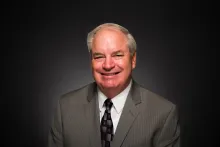
Robin Webber was born in Chicago, Illinois, in 1951, but has lived most of his life in California. He has been a part of the Church of God community since 1963. He attended Ambassador College in Pasadena from 1969-1973. He majored in theology and history.
Mr. Webber's interest remains in the study of history, socio-economics and literature. Over the years, he has offered his services to museums as a docent to share his enthusiasm and passions regarding these areas of expertise.
When time permits, he loves to go mountain biking on nearby ranch land and meet his wife as she hikes toward him.
