
Robin S Webber
This transcript was generated by AI and may contain errors. It is provided to assist those who may not be able to listen to the message.
Thank you very much to the Hymn Choir. Thank you very much for that presentation. He's very inspiring to be able to hear that. I want to mention for those of you that are visiting us today, it is usually not this dark up here. This is not a prop. We're having some difficulty with the lights going off and on. We've had to close down things and change the format up here. If you cannot see me as it gets darker during the day, I'll just start speaking louder and louder. Anyway, we are in the middle. We're at the middle, but we're coming to the end of a series that I've wanted to present to you as a congregation. It's called New Covenant Realities and Christian Responsibilities. Those really do go hand in hand and heart in heart to recognize that you and I have been given the supreme privilege of being invited to be recipients and participants with that which is the New Covenant. But to also recognize with opportunity comes responsibility, comes accountability. To recognize that as Christians, and that when we read the book, to recognize that we have a gracious God.
And that gracious God allows us to come to an understanding of belief and faith in Him, to understand that there's been a marvelous rescue, a marvelous intervention in our lives by something that could never be earthbound or from below. But to recognize that each and every one of us that are in this room today have been rescued from ourselves, from on high, from none other than God Almighty. And He gives us a gift. He gives us wonderful things. And it is nothing that we can buy. It is nothing that we can earn of and by ourselves. No amount of what we do down here below will ever push in the doors of the kingdom of God. It is His gift. It is His opening the doors. It is allowing us to become members of His family as immortal children for eternity forward.
You and I, as we covered at Pentecost, have the privilege of being firstfruits. I'm not sure if it was brought out at Pentecost. I would hope that it would be. And if not, we'll just make this a repeat echo.
But to be called as those ahead of season, to be called by the Almighty, to have the privilege of being firstfruits, not because of who we are or what we have done, but because of what God has done and the saving works of God through Jesus Christ, is nothing that we ever want to walk away from.
This is now the time of firstfruits. It is being offered to you and I by God. Why I'm not sure for me, but why He is.
To recognize what a supreme privilege we have to be able to open this book and to understand the revelation and the wonderful things of God is nothing that you and I ever want to walk away from or to take for granted, but to thank God every day for this priceless privilege to be those called ahead of time.
But at the same time, with opportunity comes responsibility. We have an opportunity to approach God in faith. We have an opportunity to experience His grace and His rescue now. But with that comes Christian responsibility.
When we accept Jesus Christ as our Lord and Savior, He is the Word of God with the capital W. When we do that, He becomes the Lord of our life.
But to recognize, then, that as we surrender our lives and our personal kingdoms to God Almighty and to His Son Jesus Christ, we also surrender our lives to the authority of God's Word and what is written in here from cover to cover.
In other words, God has expectations. And being the Creator and being the Master Educator, He knows what is best for us.
And thus, we have the will of God before us to, by His Holy Spirit, accomplish in our eyes.
And thus, we read this book to understand how we worship Him, not only on one day of the week, but every day of the week, every moment of our life, every thought of our existence, to recognize that God would ask us to surrender all of our life to Him.
And it's very interesting because He made us as human beings, and He knows how to exact, if I can use that phrase, worship from us, that we surrender to Him and give to Him.
And He does it uniquely in three different ways. You might want to jot this down to be refreshed to where we were before, that God would ask of us three things.
That we surrender our time, that we surrender our tummies, and that we surrender our treasure to Him as an act of worship.
That's very, very simple. You might just call it the three T's.
We surrender our time by understanding the truth of the Seventh-Day Sabbath.
We surrender to Him our tummies by understanding the biblical food laws that are still incumbent upon a New Covenant Christian in 2011.
And now, today, we're going to discuss how we surrender our treasure.
Now, your treasure might be more than my treasure. My treasure might be more than yours.
And don't think too far, because I don't have too much treasure.
But what we're going to be talking about today is the biblical understanding regarding tithing.
And what I'd like to do today is share five points on why New Covenant Christians should tithe to God.
And to help you understand that it moves beyond simply finances, it moves beyond simply multiplication, but it can be a dynamic spiritual force in your life to connect you with God Almighty.
The first point that I would like to bring to you this afternoon is this.
New Covenant Christians tithe because the Father of the faithful tithed.
Allow me to repeat myself. New Covenant Christians tithe because the Father of the faithful tithed. That's very important when we understand, recognizing, as we do in the Church of God community, that the Bible is not divided into two books.
The Old Testament and the New Testament were defined by man.
But God has given us one book bound by two covers with a revelation that increases and expands, and that we need to bring it together as a seamless whole to understand the will of God for New Covenant Christians.
It's very interesting that in establishing a people called to be a covenant nation of kings and of priests, Moses reached into the past and pinpoints the account of Abraham.
Join me, if you would, in Genesis 14.
Genesis 14. In fact, the whole story of Abram, later to be called Abraham, is fascinating.
Because what was going on here is that God inspired Moses to give the people of Israel a family scrapbook.
They've been in Egypt for a long time.
Perhaps they had lost track of who and what they were about and some of the actions of their ancestors.
And so there had to be a tie-in so that those people would have purpose and so that there would be an example.
And here then we have the story of Abraham and how basically he honored God.
And we have that same opportunity, friends. And I don't know if we always stop and think about it, that when we do present our God a tithe, perhaps we just write a check and perhaps we just put it in the envelope stamped or unstamped and we lick it and put a stamp on it and it goes out.
And yet it is in that moment that you and I are honoring God.
And that's why New Covenant Christians tithe, so that we can honor God like the father of the faithful did.
In Genesis 14 and verse 14, let's pick up the thought here.
Now when Abram heard that his brother was taken captive, speaking of Lot, he armed 308 trained servants who were born in his own house and went in pursuit as far as Dan, and he divided his force against them by night, and he and his servant attacked them, pursued them as far as Hopah, which is north of Damascus.
And so he brought back all the goods and also brought back to his brother Lot and his goods as well as the women and the people.
So there was a search and rescue going on.
And the king of Sodom went out to meet him at the valley of Shabbat, that is the king's valley.
And he returned from the feet of Kedelamir and the kings who were with him.
Then Melchizedek, king of Salem, brought out bread and wine, now he was the priest of God Most High, and he blessed him and said, Blessed be Abram of God Most High, possessor of heaven and earth. Now notice, if you would please, the bottom of verse 20. And he gave him a tithe of all. First mention of tithing in Scripture. He offers a tithe of all to God's representative. This unique individual mentioned in the Old Testament later to be defined further in the book of Hebrews. He tithed. It's very interesting that from the Hebrew, from the Greek, different words, Masar, Tikat, he tithed. When we use the word tithe as is emblazoned here before us, it basically means he tenth'd. That's the easy way of remembering it. He tenth'd. That's how it was mentioned in Anglo-Saxon. What's going on here? What is happening? Why is he tithing? We need to grasp that tithing was not the beginning of his faith, but it was an expression of his faith. The beginning of the faith, if you hold your hand there in Genesis 14, the beginning starts over a couple chapters. Chapter 12, let's notice, verse 1. Now the Lord God had said to Abram, Get out of your country from your family and from your father's house to a land that I will show you, and I'll make you a great nation, and I will bless you. And it continues there. The most important part as you go down is that it says, And he departed, and or he went. As humanity was beginning to fill up the river valleys of Mesopotamia and the Nile, as the highway was moving into Ur of the Chaldee, or the great cities of Egypt, here's the man that goes out. Here is the family that moves forward without compass, going into the unknown other than knowing that he has surrendered himself to this God that has revealed himself. The relationship had already begun to develop. It was a relationship of belief, a relationship based upon faith and surrender to God's will. No human reason. No reason why he should leave the New York of his day. But he did. Because a relationship was offered to him, and he left. Now we find this expression, we find this active acknowledgment of God's sovereignty in his life. And he surrenders, shall we say, his treasure to God. He is responding to God's grace, God's love, God's goodness, God's intervention, the blessing of having received back his nephew, Lont.
Let's put it this way for those of you that are taking notes so that we'll encapsulate this first point. Abraham, a Brahm, pied. It was a physical expression of a spiritual confession that God is the king of your life. It's a physical expression of a spiritual confession that you are honoring God as the one that has rescued you and brought you about and given you a new path and a new way and a new understanding in life. That's beautiful and that's wonderful. There's two important qualities that we need to understand about Abraham in this circumstance. The first quality that I want to share with you, if you're taking notes, you can do one or two. And that is that Abraham was outwardly focused. He was not concerned about his intake.
Once he had defeated the kings, he didn't say, well, what did we get over here, boys? Let's rack it up and let's see what we can take home. That's not what Abraham did. And he took nothing from the king of Sodom. Notice verse 21 here, back here in chapter 14, verse 21. Notice what it says, Now the king of Sodom said to Abraham, Give me the persons and take the goods for yourselves. Notice verse 22, fascinating. But Abram said to the king of Sodom, I have raised my hand to the Lord God most high, the possessor of heaven and earth, that I will take nothing from a thread to a sandal strap and that I will take anything that is yours, lest you should say I have made Abram rich, except only what the young men have eaten and the portion of the men who went with me, and he mentions their names. What do we learn from this as this story surrounds the word of tithe? Abram demonstrated he merely wanted to owe God and to be owned by God. He did not want to be owed or owned by anybody that is on earth. I don't know if you're like me, but when I was growing up, my folks taught me an expression. If you take the king's shekel, you have to do the king's bidding. We have an incredible statement by the man of faith that he was neither going to be owned by man, but only O God, and thus be owned by God. He was the servant to none other than to God. Thus, this is why he offered tithe, the tenth, to God. As a result, we find here something again. Point number two is simply this. He not only wanted to be owned by God, but he wanted to honor God. Let's notice a powerful principle out of the book of Proverbs. Proverbs 3, join me. Let's open up our Bibles on this Sabbath day if you haven't had that opportunity yet. Let's understand what God would have us to learn here on the Sabbath. Proverbs 3, verse 6, And then notice verse 9, Honor the Lord with all your possessions and with the firstfruits of all of your increase. They don't teach that today on Internet. You don't hear much about that on television. You don't read about that much in newspapers anymore. But you learn it from the Word of God. To honor God, to honor another individual, is a beautiful thing. It surrenders your thought, your time, your efforts to be able to honor someone. And here it says in verse 9, Honor the Lord with your possessions. The reason as New Covenant Christians why we today in 2011 give God a tithe is to show Him honor, to give Him glory, to understand that His work and His glory continues and that you and I have a part in that because we're owned by God. It's interesting as we come back to Genesis, because He showed forth honor, we recognize that indeed Abram was in turn honored by God. Chapter 15, verse 1, after these things, the Word of the Lord came to Abram in a vision saying, Do not be afraid, Abram, I am your shield, your exceeding great reward. And it goes on talking about the blessings that God bestowed upon Abraham.
Now, what was mentioned there was that Abram would, even in his old age, and along with Sarai, later to be Sarah, they would be blessed with a child of their union. Because he honored God, because he made that choice to be owned by God and to owe no man, God gave him a promise and God gave him a blessing. Now, today God is not necessarily giving us that particular blessing that Susan and I, in our older age, honey, our older age, phew, boy, that spared me a talk on the highway going home. He doesn't put out that we're going to be blessed with children. As Susan and I often said, we've already had ours, that's just fine. Thank you very much.
But we are going to be honored and we are going to be blessed by being a child of God forever as time and space melt into eternity, that we are going to be a part of his family. Not because of what we have done, but because of what God has done.
But our obedience is an expression of our faith, that we worship a good God, that even in challenging times, as we're going through today, as was mentioned by Mr. Hall, that we worship a shepherd in whom we shall not want, in whom we shall not have to worry, and that God will supply our every need. Join me, if you would, in Galatians 3 to wrap up this point.
Galatians 3, the first point being, a new covenant Christian tithes because the Father of the faithful tithed. And this is very important for us to understand. Galatians 3 and verse 5.
Therefore, he who supplies the Spirit to you and works miracles among you, does he do it by the works of the law or by the hearing of faith? Just as Abraham believed God and it was accounted to him for righteousness, therefore know that only those who are, notice, of faith are the sons of Abraham. And the scripture foreseeing that God would justify the Gentiles by faith preached the gospel to Abraham beforehand, saying, In you all the nations shall be blessed. Now notice verse 9. So then those who are of faith are blessed with believing Abraham. This is essential to understand as New Covenant Christians anchored in 2011. Why is this brought up? Here is an individual, a Brahm, later to be known as Abraham. He is not an Israelite and he is not a Jew. He is not tied to a tabernacle in the wilderness. Neither is he tied to a temple of stone later on. He is tied to God. He is tied to God. Here is the faithful man, neither Israelite nor Jew, that was to proceed forth from him. Thus he stands out as an example of faith to all, whether it be Jew and or Gentile, to Christians today that come to God in faith. Here is the faith-filled man. And this is where we get the term that Abraham is the father of the faithful. Now why is this important for you and me? Tithing is more than writing figures on a check. It is more than just multiplying your gross or net income, what you choose to do, based upon 10%. It is an outward confession that you are giving 100% of yourself to God. Have you ever thought about that way? Because so often with tithing we get stuck on what? We just think of 10%. You've been there, I've been there. We think 10% to 10th. Yes, God's request of us requires of us, those that are owned of God, 10%. But if we keep it at 10% in our mind, we lose the lesson of tithing as we move into the spirit, beyond the letter, but the spirit of why we do what we do as New Covenant Christians, that we are giving 100% of our devotion and our faith and our confidence that we worship and we follow a shepherd in whom we shall not want. Now, you think about that for a moment, but right now I've got to take you to point number two. Point number two. New Covenant Christians tithe because God's law is recorded throughout Scripture. God is very clear if you'll join me in the book of the law, Leviticus, Leviticus 27. And for those of you that again may be visiting the United Church of God for the very first time, we look at the Bible as one revelation that expands. It's not two books and one cover. It's one book from one God, our God. It's man that divides it up. In Leviticus 27, you're there, I'm not. Leviticus 27 in verse 30. Let's notice what it says. No person under the... Is that what I want? Leviticus 27. Yeah, Leviticus 27 in verse 30. Oh, here we go. And all the tithe, verse 30, I was in verse 29, pardon me. And all the tithe of the land, whether of the seed of the land or of the fruit of the tree, is the Lord's. Say, wow, I didn't know that. But then he defines it further. It is holy to the Lord. If a man wants at all to redeem any of his tithes, he shall add one fifth to it. And concerning the tithe of the herd or the flock or whatever passes under the rod, notice, the tenth shall be holy to the Lord.
It's very important to understand something. But this whole series that we've been going through, why does God request of us to set aside time, such as the seventh-day Sabbath, and or food, the biblical food laws, are now in the discussion of money. Why does he ask us to set that aside? There's an overall echo throughout the Scripture that we need to remember, and this is why. God is a holy God. A holy God gives a holy people a holy law for a holy purpose. What is the one word that ties all of that together? Holy. We're consecrated. We're set apart. We have tremendous privilege as first fruits, called of God. And with privilege and with opportunity comes responsibility to obey the Word of God. But why and to whom was that which is holy given? Why and whom was it given? Join me, if you would, in Numbers 18. Numbers 18, verse 21. I want to show you something that maybe you've never seen before. Behold, I have given the children of Levi all the tithes in Israel as an inheritance in return for the work which they perform. Oh, what do they do? Are they working on a dairy? Are they electricians? Plumbers? Are they selling insurance? What are these Levites doing and why do they receive the tithes of Israel? For the work which they perform. The work of the tabernacle of meeting. The work of the tabernacle of meeting. The tabernacle is where God visited and came into the midst and into the presence of His people. But sometimes people forget what God is doing. They think, well, that tabernacle word, that's kind of a... It's kind of like something I might be able to use in Scrabble sometime if I have a lot of letters. That'd be a zinger. And or that tabernacle stuff is that which is way back in the wilderness, back in the sands of Sinai. But tabernacle is a living, breathing element that moves from Sinai all the way into the future. God never finishes tabernacling until the end of the Bible. Did you realize that? God is now today still in the work of tabernacling. Let's appreciate that for a moment. Let's understand what's going on here. This biblical practice is now expanded in concept. Because what we're finding is before when Abram did it, when Abram offered a tithe to God after the defeat of the kings, it was to honor God. That's the first reason why we do that. But now we find something else to support the work of God that God has introduced. He brings us into partnership, the work of God, which is in motion. Join me if you will in Leviticus 11. Leviticus 11. And let's come to appreciate something.
Leviticus 11 and verse 45. For I am the Lord who brings you up out of the land of Egypt to be your God. And you shall therefore be holy, for I am holy. That is what the work of God is all about when you put it into a simple verse. A holy God is calling a holy people and has given them a holy law for a holy purpose. I am holy, therefore you be holy.
That is the work of Tabernacling. And it continues. If you go to 1 Peter 1.15, 1 Peter 1. Let's use the entirety of the Bible. Moving to the New Testament, 1 Peter 1 and verse 15. Again, notice the echo that comes down from the wilderness around Sinai is not just remaining there, but moves into the New Testament in 1 Peter 1.15 through the words of the Apostle Peter. But as He who called you as holy, you also be holy in all your conduct, because it is written, Be holy, for I am holy.
And the reason why we can even hope to be holy is because as we learned at Pentecost, that the Spirit of God in us, Tabernacling inside of us, the indwelling, as it were, of the presence of God, that Shekinah experience of God now living in this, which He calls His temple, of which we are. And to recognize that that work continues to this day.
Join me, if you would, in Revelation 22. Revelation 21. Notice in Revelation 21.2, in this vision of the new heaven and the new earth, as that earth passes away, then I, verse 2, John, Saul, the holy city, knew Jerusalem, coming down of heaven from God, prepared as a bride adorned for her husband. And I heard a loud voice, verse 3 from heaven, saying, Behold, the tabernacle of God is with men, and he will dwell.
That means, Skenu, out of the Greek, he will tent, he will tabernacle with them, and they shall be his people, and God himself will be with them, and be their God. The Levites were given the tithe of old, to do the work of tabernacle. That work is not over, but it's no longer just simply with curtains and tents and packing up something and moving it to a different location. It's about the temple of God that God has ordained in this day and age, that he says, You are the temple of God. I'm setting up shop in people's lives, and you have a part today as the people of God to support that effort, to let people know that we don't have an absentee landlord down here on earth, but we have a God that is interested in humanity.
Boy, you know, it's tough out there right now, isn't it, folks, when you read the news? It's tough! It's discouraging, not only in America, but around the world. And if you just looked at the newspaper, you could really go down and down rapidly. But when you see the Word of God, when you see that there is a rescue that is coming, when you see that God is going to set up shop here on this earth, that he is going to connect with humanity through Jesus Christ, and that there is hope, that there is encouragement, that there is a future, and that the ties that we render unto God can be a part of sharing the work and the good news that God is coming to tabernacle with humanity.
Join me in Romans 7, verse 14. Romans 7, 14. Again, sometimes people will say, well, you know, the law has been done away with. It's just a school teacher. In Romans 7, verse 14, notice what it says, for we know that the law is spiritual. It's spiritual. It's not just simply imprinted on stones out of Sinai. God is love. That love is defined by law.
That law was rendered unto Moses and was recodified and expanded and expressed anew under that second Moses, that greater Moses, Jesus Christ. And Jesus Christ says that second and greater Moses came not to do away with his father's law, but to expand upon it, to express it, to allow us to understand how God in the flesh, if he came to this earth, would live and talk about it and experience it.
And he did that because Jesus was literally God in the flesh. And then Paul picks this up and says that the law is spiritual. It has eternal scope, has far-reaching dimensions. Because again, we're honoring God and we're saying, God, we are owned by you. We serve you and we trust in your sufficiency. We're not going to do what Father Adam and Mother Eve did.
When they got the whole story explained to them, they were still a-wanting. And they felt that you had left out a chapter and left them high and dry, that you were keeping something from them. And therefore they took of their own and ate of that which God had said expressly not to eat. Why did they do that? Simply because they were hungry?
Simply because they were having a sugar-fit? I don't think so. That was because it showed that they did not believe in God's sufficiency. And that God would take care of his own and had a means and had a way to do that. Join me in Matthew 23, 23.
Matthew 23, 23. Again, to show that this law is extant in the New Testament with Jesus Christ. In Matthew 23, 23, let's notice what it says. As he is being challenged by the religious authorities of his day, Woe to you scribes and Pharisees, hypocrites, for you pay tithe of mint and anise and cumin, and have neglected the weightier matters of the law. Now, what we notice here is he does not do away with the law. He doesn't abrogate it. He doesn't abolish it.
You can use any fancy theological term that you want to. He does not do away with the law. He expands upon it. He moves from the letter to the Spirit. And he says, No, this you should have done, and have neglected the weightier matters of the law, justice, mercy, and faith. These you ought to have done without leaving the others undone. Now, why is this important for you and I as Christians under the New Covenant? If we simply keep the law in the letter, and simply keep it as a rule, rules are good, and commandments are there for the keeping, but if we just simply keep it at that level, we're missing the lesson of the New Covenant.
When God's laws are written in our mind and in our hearts and inscribed on them, that if we are so particular with tithing, and that we wouldn't miss one penny on anything of any income, just as these gentlemen with their spices and their goods, and we're doing this and we're doing that, and we're really good at multiplying 10%, and we're really good at putting it in an envelope, and we're really good as far as sending it off to somebody to do this or to do that with.
That's nothing! It is absolutely nothing if we are not at the same time developing our relationships with one another. If we are not, if we are simply sorting out our money and not sorting out our hearts, it's nilch! It doesn't take us anywhere. Instead of seeing George Washington or Jackson or Ulysses S. Grant on a bill, that should be a mirror to ourselves with our face and our heart in there of why we do what we do, not only with the money that God has blessed us with, but with the people that God has brought into our life.
Rules without relationships are like a postcard without a stamp. It'll give you a picture, but it won't take you anywhere. You have to have it all put together. Which leads us to point number three. These points will be shorter. New Covenant Christians give something back to a good God. New Covenant Christians give something back to a good God. In Acts 20, verse 35, you can just jot that down.
It's a short verse. I'll share it with you. It is where it is said in Scripture, it is more blessed to give than to receive. It is good to give. I don't tithe to get. I tithe to give. Why do you tithe? Why do you tithe? Do we tithe because we feel that we have God on a leash?
We give to Him, thus He must give back to us? Is a tithe simply a bribe? And or is it coerced giving that we're expecting an immediate return? Why do we tithe? Is tithing an insurance policy? Or is it a divine investment program or a down payment towards eternity? Do we begin to see something accrue here? And therefore, we say in our mind, God, we're piling this up. And what are you doing over here?
Now, when I say this, please hear me. Please understand me. I believe that God does bless people that tithe. We are blessed, Susan and I. I know many of you are blessed. And God can sometimes take our little and return it with a lot. I'm sure all of us, if we sat around tonight around the table, we could talk about the blessings of God that He gives to a faithful people.
But I'm just sharing with you, it's just simply one Christian to another. If that's why we're doing it with strings attached, we're missing the lesson of tithing. We give God tithe towards the work of tabernacling, because it is a good thing to do. It is good to give. Just as much as we as parents or grandparents sit down with our children or grandchildren and teach them to think beyond themselves, to serve, to give as Mr.
Hall brought out in works of service, and to recognize that as we give. There's a living law, and I know Susan's heard me say this all my life, and I believe in it. My religion sometimes is very simple. I can sometimes use fancy words, but my religion is very simple, and that is simply this. You cannot out-give God. A giving hand is a gathering hand.
A giving hand is a gathering hand. It is a law. And as you give, it will be turned. And I realize sometimes right now we feel strained because of the circumstances that we might be in. But I want to share something with you. I do know this, that you cannot out-give God. You just cannot do that. And when we move beyond trying to buy God into our life, we don't have to buy God into our life.
Why do I say that? He already loves us. How do I say, how do I know that you love me? He comes back to me and says, well, I gave you my son. What greater love note can I give? What greater expression can I share with you, other than you have my favor, you are the apple of my eye. My son gave his life for you. You don't need to try to buy me. What I have to give you is free. It is yours.
But I would ask you to offer this physical expression of a spiritual confession to allow you to understand. Because God doesn't need our tithe, does he? He doesn't need our tithe. Tithing is not for God, per se, as much as it is for molding and shaping our minds and our hearts to surrender ourselves to God and to understand His sufficiency. Point number four. New Covenant Christians tithe as a form of personal worship. New Covenant Christians tithe as a personal form of worship. Today we don't offer animal sacrifices, for indeed Jesus Christ has come, the Lamb of God.
But likewise, we are to offer ourselves up. Romans 12 and verse 1. Join me there for a moment. Romans 12 and verse 1. God speaking through the Apostle Paul, I beseech you therefore, brethren, by the mercies of God, that you present your bodies a living sacrifice, holy, acceptable to God, which is your reasonable service. And by the way, while you're at it, don't conform yourself to this world, but be transformed by the renewing of your mind, that you may prove what that is good and acceptable and the perfect will of God.
Again, notice, we're not just simply to be a living sacrifice, but we're to be holy and acceptable. One thing that I've always discovered in my simple form of Bible studies is that whenever God asks us to do something, He also accompanies the attributes along with it. See, you could be a living sacrifice, and you could come out looking like a dead duck. God is not calling us to be a living sacrifice that goes to the sacrifice, Oh no, it's me. This is horrible. Because that'd be just like a dead duck. That'd be like a turkey on November 11th, knowing what's coming on in a couple weeks.
Now, God says you're to be a living sacrifice. And by the way, you could do that under the letter of the law and be a sacrifice, but the spirit of the law for a New Covenant Christian says you're not only to be a sacrifice, but now in the inner man and in the inner woman, you do it with all of your being and all of your heart and all of your might before the good God.
It's a relationship that is expected. Humanly, tithing does demand sacrifice on our part. It does. It is not just lip service. It is life service. It is not just simply reserved for a Sabbath day and or for a festival in the form of offering. God, in His wisdom as the Master Educator, decided that our worship before Him would be daily, and that what He would enact or exact for us to develop our faith in Him would cut right across the grain of our lives.
I wish I could have a saw appear right now. Just back and forth. You hear that saw? That's when you're supposed to nod. There's a saw up here. You know, you just hear, you know, Well, that's what God does by what He asks us as New Covenant Christians with Christian responsibilities. Whether it be giving to God a day out of the week. Some people say, I can't do that. I don't have the time. That's just impossible. I've got to work on that day. If I don't work on this day, this is going to happen, and this is going to happen, and this is going to happen.
But when you think that, then you have negated what would happen when you turn your life over to God and allow Him to make up the difference. Some people will say, well, I can't go without that food. My grandpappy ate it. My mammy ate it. We've always eaten this. And if we don't eat this, well, there won't be anything to eat. And so God asked us Monday, Tuesday, Wednesday, and Thursday to remember who is our provider, who is the ultimate nourisher, and who gives us not only the physical but the spiritual bounty of life.
And thus we surrender our tummies to Him. And then it comes to this matter of our treasures, and now, uh-oh, now we're getting personal, because it's harder and harder to rub two pennies together today, isn't it, friends? And we heard that from Mr. Hall. But to recognize all of this that is happening brings us back to the first verse of the 23rd Psalm, and that we make that spiritual confession by our physical expression that the Lord is our shepherd, and indeed we shall not want.
He will provide. And He's doing that. You know, if I just make a comment, it's not in my notes. In fact, I haven't been looking much at my notes, because I was kind of coming from Bakersfield and didn't have the time to... I hope some of this has been encouraging to you today, but that here we are right now in the United Church of God. And I just tell you, it has just been amazing, the blessings that have been occurring.
And those blessings are happening through all of you by your devotion and by your generosity and by your expression and your confidence in this instrument within the Body of Christ. You know, and I know, without talking much about it, that this has been quite a unique year in Church of God history, and that we have entered a new reality.
And we stepped out in faith, recognizing that we worship a good God and recognizing that we have brethren that are just utterly incredible.
Utterly incredible. And they get it, and they got it. They want to preach the Gospel of Jesus Christ and the Kingdom of God. They want to make disciples, and they want to take care of those disciples. And it's just amazing how all of you have stepped up with all of the challenges that we've had as this organization, with all the challenges that we have had economically. It is amazing how you, the people of God, continue the work of tabernacling, of recognizing that it is not over. That as you have been blessed, you want others to be blessed. That you want others to hear that Gospel that was preached to Abraham as we read in Galatians. The Gospel that was preached to your parents, preached to your grandparents, and yet to be heard by others.
And I realize that it has been challenging for some of you, but you are digging in and moving beyond that and giving, sometimes, what you ought not give. That's your decision, not mine. This is not about a request for money. It is a comment on how the Spirit of God motivates and works with us to rise to the need and to recognize that a giving hand is a gathering hand.
And as we collectively move behind what is being done, because this is not about a work of men. This is about a work in which Jesus Christ is the spiritual and living and literal head of this body.
And to recognize what you have done. We recognize that in one sense, while we are fewer in number, that actually the response is greater. I see the figures as one who is a council member. I see the figures every week. And every week, all of you make my jaw drop. Thank you. As to your heart and your devotion and what you're doing. And nobody has asked you to give more.
Because it's not from the outside in, it's from the inside out. That when God's people see that pillar of fire, or they see that cloud, or they see the work of God being accomplished, and the tabernacling existence occurring, they're going to rally around it. And they're going to give. And it's a beautiful thing that all of you are doing. And I've just got to mention that to you. And I'm not so much astonished at you as I am... what's the word I want?
I am thrilled by seeing the spirit of God energized in a body of people that still have a fire in their belly to do that, of which we were first called. Let me go to point number five and conclude. We could go to 5.15 because that's when the potluck begins, but I'm not going to push you beyond what you can do. But I want to share this with you to finish this here. New Covenant Christians tithe to exercise stewardship of God's gifts. We do it to exercise stewardship of God's gifts. In a sense, I put God's money to work in His work, because then I will then wisely budget that which I have left to budget.
It's a very interesting law, and at first glance you don't think it works, but you will use your funding more carefully if you have nine pennies rather than ten pennies. When you go down from ten pennies to nine pennies, speaking of the tithe, that makes you automatically think more deeply as how you will use that which God gives you to use in your daily life. You're going to think twice, not only what you have left, but where you place them in relationship to value.
Now, let me explain that for a moment. You give the first penny out of ten pennies to God because you value His intervention, His rescue, His relationship in your ongoing life. That is a matter of value, and you've placed that one penny aside because that is of value, and you honor God, and it's good to give.
But now you have nine pennies left. God only asked one. But now you have nine pennies. But now, because you've already thought of value and relationships, now you're going to look at those other nine pennies, and you're going to use them more carefully. See, tithing not only stretches your thinking, but ultimately it stretches your dollars. Why is that?
Because then it challenges you and me to focus on God, to focus on family, to focus on the future rather than simply the here and now. How many people do you know at the workplace, at the school place, down at the gym, where they're just blowing their money left and right as if there is no end, and there is no end, because we keep on borrowing from you-know-who across the ocean.
So there's no end, and nobody has any concept of value or where it's coming from, and people that are at work, they keep on saying, Well, I wish Washington would keep on-I wish they'd just stop spending. But they don't realize it's not just Washington that has the disease. Americans have the disease. They are spending more than they are bringing in. It is not just Pennsylvania Avenue. It is not just Wall Street. It's Main Street.
It's your street. We're living beyond our means because we're not thinking of things of value. When you put that one penny aside as a value item towards God, that's going to make you stretch those other nine pennies towards matters that are valuable. And thus, you will be blessed because you put God at the head of the ship, and that's going to trickle down.
You want to talk about trickle-down economics? Not taking any party side here. But just talking about trickle-down economics? When you tithe, there is a trickle-down economic in your kitchen side table budget for you and your wife to go through. And you will find that you will have more when you tithe than when you don't. Because now you are careful with the goodness and the bounty that God has given us.
Tithing puts a cruise control on your life. Susan, my lovely wife, asked me to use the cruise control today rather than exercising the speed of spirit. And this is a good thing because there are officers out there that will help remind me if I do not use the cruise control properly. Tithing is like... Oh, that one cow I ran. No, just teasing. No, just teasing. Tithing is like cruise control in your life. It sets your whole engine going the right way. What else does tithing do? It allows you to recognize this, that all possessions, all of them, are temporary.
All possessions are temporary. You are investing in eternity. You also come to recognize, if I am not careful, my possessions will possess me. Does that not sound like the America that you and I live in, us today? That people can't buy enough or big enough toys that take them into debt because they're not putting first things first. And yes, my possessions can alienate me and even cut me off from God, if I'm not careful. In conclusion, brethren, we have a fantastic, wonderful God that has called us to be participants in the New Covenant.
New Covenant reality, a new day, a dawn that stretches into eternity. But at the same time, we also have responsibilities to adhere to the Word of God. Thus, we have responsibilities. And the Master Educator has put these tools of grace within our spiritual lap, whether it be the Seventh-day Sabbath, whether it be the biblical food laws, or whether it be tithing.
To be a lamp unto our feet. I hope this series of six or seven messages has been profitable to you. I hope it's enlightened you. I hope it's allowed all of us to grow in the grace and the knowledge of our Lord and Savior, Jesus Christ, as to why we do what we do, how we do, to whom we do. And that all praise and all glory and all honor goes to Him who is the recipient when we follow those responsibilities, and that is to none other than God the Father and Jesus Christ.
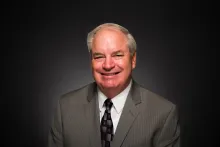
Robin Webber was born in Chicago, Illinois, in 1951, but has lived most of his life in California. He has been a part of the Church of God community since 1963. He attended Ambassador College in Pasadena from 1969-1973. He majored in theology and history.
Mr. Webber's interest remains in the study of history, socio-economics and literature. Over the years, he has offered his services to museums as a docent to share his enthusiasm and passions regarding these areas of expertise.
When time permits, he loves to go mountain biking on nearby ranch land and meet his wife as she hikes toward him.
