
Robin S Webber
This transcript was generated by AI and may contain errors. It is provided to assist those who may not be able to listen to the message.
Well, again, we want to welcome everybody that's here at the United Church of God Los Angeles today. And if you happen to be visiting just today, we are in the midst of a series, and it's called New Covenant Realities and Christian Responsibilities. I'd like to back up for just a moment to bring everybody together in the room, and then we're going to move forward today.
Again, the title of this series is New Covenant Realities and Christian Responsibilities. We've been looking at certain tools of grace that are given to Christians to observe in the framework of the New Covenant and understanding how we approach God as Christians. A couple of messages ago, we spent a lot of time on the foundation.
We discussed the aspect of grace, that grace is about God's initiative, it's about God's invitation to us, and it's about God's continuing involvement with us. That everything, when it's all said and done, starts and stems from God, and He welcomes us into His eternal purpose for us as His creation. We also discussed in part the role of a man of faith.
His name was Abram, a man who is known as the father of the faith, and a man that Paul, the apostle, mentions in the New Testament as one that was not approved before God because of what He did and by His works, but because of what He believed in His faith in God. And yet, at the same time, we came to understand there's this marvelous linchpin verse that's mentioned in Genesis that Abraham also obeyed God, kept God's commandments, kept God's statutes, kept God's charges. And God knew that He would because His obedience was the translation of His faith in this life.
So that's kind of the foundation that we have been laying, that God, by His miraculous design, has invited you and me to be a part of His New Covenant creation. And in a sense, ahead of time, because God also calls us first fruits. And so we came to realize that really when it's all said and done, that there is nothing, nothing at all, humanly, that would merit us eternal salvation in any manner or any guise. That indeed, eternal life is nothing less than the gift of God.
So we laid out that foundation. But as God performs what God performs, we also have a responsibility. We have a responsibility to worship God by obeying His Word, which if God is sovereign over us, then His Word also becomes sovereign over us. And if Jesus Christ is the King of our life, then we recognize that this book, this royal book of the King, we do what it says.
And it tells us how to worship Him, not only by coming to church, but by every day, that God's worship of Him by us cuts across the very grain of our existence. And some of you by now have kind of the three T's down, T like in toy, to recognize that God asked us to worship Him by giving Him time, by giving Him a part of our tummy, and by giving Him a part of what we call our treasure. In other words, with time, He tells us to honor the seventh day Sabbath.
By our tummy, He gives us the biblical food laws, and by our treasure, He tells us how we are to honor Him with a tithe. Now, the discussion of the biblical food laws and the discussion of the tithe will be coming later on down to the track, because right now we are discussing a very specific tool of grace, and it's called the seventh day Sabbath. Last time we got into the second message, and we discussed how a new covenant heart will understand that the Sabbath is forever a memorial to God's plural acts of creation. So often people limit what the seventh day Sabbath is about, because they only look upon it as a past event, something that God did way back before Sinai.
But that's not how a new covenant heart understands the seventh day Sabbath. We come to understand that the seventh day Sabbath is plural in nature. We come to understand that it is not only what God did at Eden, and then on that day of the seventh day, He hallowed it and He blessed it, and He poured Himself into it. His presence went into it, and as His presence went into that seventh day Sabbath, eternity was poured into that day. And thus it remains honored.
But it wasn't only just for the past of what God had done then. It wasn't of God stopped because He was pooped out. He was worn down, that He needed to rest. He's divine. He's spiritual. No. He Shabbat. He ceased. He stopped at what He was doing, which up to that point had been a physical creation. And now the rest of it was going to be designed towards the spiritual creation of man and woman being made in His image and in His likeness after His Militude.
But only part of it was done. The physical had been accomplished. The spiritual is yet ahead. And thus we come to recognize then that God's greatest work, greatest creation, is yet in progress. Remember how we went through Ephesians. It speaks about God's workmanship in us. That God is still at work. And to recognize that at the very end we came to understand that the Sabbath represents yet a time of peace ahead when all of humanity is going to come to rest.
Now we covered a whole lot more than that. And I hope that you'll go back. And if you haven't had an opportunity, it's online on our local home page. And for those of you that weren't here, I hope you'll go back because I just gave you about five minutes of what really covered about two hours. Today I'd like to take us now to the second point that I'd like to bring to you, which I think is going to be very important. The second point that I want to bring to you is simply this.
A new covenant heart will view the seventh day as a day of freedom. The new covenant heart will view the seventh day Sabbath as a day of freedom. Now why do I mention this? Because that's how God defines and illustrates the seventh day Sabbath. A careful study of the Bible indelibly links the seventh day Sabbath with freedom, not bondage. How many of you in this audience, whether in this church or perhaps another church, hopefully not in this church, but other churches, or other places that you have visited at times have heard the Sabbath linked with bondage?
And then if it's linked with bondage, it must be something that's, well, less than good, not to be desired, not to be incorporated within the Christian life. Sometimes other fellowships, other denominations will talk about the law being bondage, having been done away with, as if it was something wrong, something evil. Let's understand that because I'm coming to you as a pastor of Jesus Christ, and I'm telling you that the seventh day Sabbath is indelibly linked with the item of freedom.
Join me if you would. Let's open up our Bibles on the Holy Sabbath day. Come with me if you would to Deuteronomy. Very interesting discussion is laid out here before. So allow me to set up what the book of Deuteronomy is about. Deuteronomy is, Deuteronomy, it's Greek, it literally means second. It is the second giving of the law. The first giving was at Sinai. Now, when God gave the law to Israel at Sinai, they had just come out of Egypt.
They were kind of what we may call new at this. And they were going to be a wandering people for many, many years. Now, as the book of Deuteronomy is being written, they're crossing river. They're going over Jordan. And now they're no longer going to be a wandering people, but they're going to be a stationary nation, surrounded by all the other nations. And one thing that God said to Israel as he placed them right in the center of the way of the sea, right in the midst of Egypt and over to the east, Mesopotamia, he said, do not be like them.
That's some kind of instruction. God had a task ahead of him. How about we, our parents, that have had teenagers? And we say sometimes, do not be like them. The kids down the block. Don't be like them. Perhaps some of the wrong influences in school. Don't be like them, what they see on the media.
Why? Because we're jealous, in a rightful way, about our children. We want the best for them. And God told Israel, do not be like them. And sometimes you forget that, and you want to be like them because you forgot what God did for you. So very long ago. So the second giving of the law is to take them back and to remind them of what God had done. Join me if you would now, and do it on the 5 verse 12. As we read the second giving of this law, understand it is going to nail the seventh day Sabbath, but now it's going to add additional material that maybe you have never seen yourself.
Observe the Sabbath day to keep it holy, as the Lord your God commanded you. Six days you shall labor and do all of your work, but the seventh day is the Sabbath of the Lord your God. In it you shall do no work, you, nor your son, nor your daughter, nor your male servant, nor your female servant, nor your ox, nor your donkey, nor any of your cattle, nor your stranger, who is within your gates, that your male servant and your female servant may rest as well as you.
Now we come to verse 15, which is where I want to focus. And remember that you were a slave in the land of Egypt, and the Lord your God brought you out from there by a mighty hand and by an outstretched arm, and therefore the Lord your God commanded you to keep the Sabbath day. Now this does not, in a sense, take away from what is mentioned in Exodus 20. In Exodus 20, the seventh day Sabbath is linked with the creation day. And that is one facet and one way of looking at it.
But now God creates this linkage in this second giving, this expanded giving, this additional information of why he wants his people to keep the seventh day. He wanted to remind Israel that they had been rescued, that it was not by their works, that it was not by something that they conjured up or cooked up in a hut on the banks of the Nile, that it was God's hand, and by God's miracle, a people that had not been a people, a weakened people, those that were in slavery, those who had no hope, those who had no future, those who woke up in the morning only to be whipped and beaten and trodden down, and no hope for their children, no hope for their grandchildren.
God wanted to remind them that they were rescued, not by what they did, but by God's grace. And they were given life, and they were given hope. And just like that famous word that comes out of the book of Ezekiel, live, thus friends, here in the United Church of God Los Angeles, let's understand something. The Seventh-Day Sabbath is associated with freedom, with a rescue, with having a Savior. Very important to understand and to appreciate. That very same God that led Israel through the wilderness and gave the law came in the personage of Jesus Christ.
Let's understand that for a moment. Join me, if you would, in 1 Corinthians 10. And let's understand the words of Paul as inspired by the Holy Spirit. Move over, brethren, verse 1. I do not want you to be unaware that all of our fathers were under the cloud, all passed through the sea, all were baptized into Moses, in the cloud and in the sea, and ate the same spiritual food.
Spiritual food. That can be taken many ways, whether it came, the manna came from heaven, but also the spiritual food of God's way of life, of God's commandments. And all drank the same spiritual drink, for they drank of that spiritual rock that followed them, and that rock was Christ.
Now, we're going to begin to build a bridge here, between Deuteronomy 5 and verse 12, that the Sabbath in the Old Testament was defined and to be remembered with freedom and liberation, jubilation. It was a form of jubilee. Here in America, we keep what? July 4th, once a year, and the fireworks go off. God, in a sense, has given a covenant people a 4th of July, every week, from Friday night sunset till Saturday sunset, to celebrate their freedom in Him.
Whether Israel of old, from Egypt, or as a new covenant people rescued from spiritual Egypt and rescued from our sins, and led by that 2nd and by that greater Moses, Jesus Christ. The same one that is defined here in 1 Corinthians 10. Now, let's understand something as we begin to develop this linkage.
Some people, even so, will say that today that God no longer requires the 7th-day observance. They do link it with bondage, or they do link it as being fossilized in the sands of Sinai. The big questions are simply this, and you might want to jot them down so you can kind of stay in the message here. This is very important. Can a good God make bad laws? Can a good God make bad laws? Is there anything bad about God? What part of this Bible is bad? What part of God's Word doesn't work? This is a very important question to ask.
We must use a certain amount of spiritual guidance and reason in coming to point here. Or, is the bondage that Paul discusses in his writings, is that obsessing over the law as a Savior? Is that obsessing over the law as a Savior unto itself?
Or, is it discussing a curse? And what is that curse? Is it a cursed law? Or, by breaking the laws of God, which are holy and righteous and spiritual in nature, do we come under the curse of death? I would suggest the latter. I've never met anybody saying, well, what are you doing today? I'm dying and I'm really looking forward to it. I don't think any of us would say that.
I think most of us, even though we recognize that it is appointed unto all men once to die, and then the judgment, I don't think any of us are looking forward to death. Always reminds me of what Woody Allen said, I don't mind dying, I just don't want to be there when it happens. There is a curse, and the curse is the curse of death.
Let's build upon this subject for a moment and understand some things that are very important. Join me, if you would, in Romans 7, 14. In Romans 7, verse 14. And I hope, especially if I might say, I hope a lot of our young people are listening today. Because I'm trying to offer not only the recycled teenagers here that are older than you, but some of you that are 18, 19, 20, 21, 22.
We're not just dealing with the rule, and there is the rule, but I'm trying to give you an expanded framework that comes with an expanded viewpoint, with an expanded heart that God gives us as New Covenant Christians, that we're not just tied to a rule, but we've been given a relationship, and the relationship points to the rule. And as we understand who we're relating with, then that rule does not become less binding, it becomes more binding.
Then we don't do it just simply out of duty, but we do it out of desire because we recognize who the king of our life is, and that we can have that confidence in him. Again, let's go to Romans 7.14, you may be there, where it says, for we know that the law is spiritual.
There are people that want to just simply put the Ten Commandments on a shelf in a museum as a fossilized rendition of that, which comes out of Sinai, approximately 1400 B.C. This is not the case. Romans 7.14 says that the law of God is spiritual in nature, and the Ten Commandments are at the very foundation of that.
To build upon that, where does Paul bring that about? Join me, if you would, in Matthew 5. Matthew 5, and let's have this discussion, which is very important. Let's read it once, and then we'll go back and build upon it. Here are some of the teachings that we're going through right now in our own adult Bible class, and I hope all of you are really profiting by going through the Sermon on the Mount.
But we come up to this verse that is very interesting in Matthew 5, 17-18, and you say, well, what is interesting? We'll get to it in a moment, but let me build upon it for just a moment. We're going to rewind here for a second, because Jesus Christ was giving his major teaching here, and Jesus, the Christ, was like no other teacher that had ever quite been. Most Jewish rabbis would quote other Jewish teachers, or they would quote the prophets, or they would quote that somebody else knew.
They were always building upon another man, even a godly man. But Jesus had become a known where he would say, truly, I say to you, truly, I say to you, he was not building upon anybody else.
He was not saying so-and-so that has the rabbinical school down the line. My colleague, Judah Ben-Hur, he said, oh, truly, I say to you, people were astounded with the Christ. They said, who is this? This must be some new teaching. This must be some new doctrine. He speaks as if he has an authority. And people were wondering where he was going, that maybe he was veering off from all of that which had been before in the law and the prophets. This then now allows us to have the discussion in Matthew 5.17. He starts with a negative, and it's going to build to a positive, amazing way of educating an audience. I point it out to you. Let's build upon it. Do not think that I came to destroy the law or the prophets. I did not come to destroy, but to fulfill. For surely I say to you, till heaven and earth pass away, one jot or one tittle will in no means pass from the law till all is fulfilled. If you want to take a jot, you want to take a tittle, these were very small marks in the Hebrew alphabet. We might liken them. There's not the exact parallel. Remember that old alphabet chart that was in front of you back in second or third grade? You were somehow supposed to write like that forever the rest of your life until you found your own signature. But you had that kind of chart at the top of the blackboard. Did we all go to the same kind of schools? Did you all profit by an American education? Just checking. A tittle would be like the crossing of a T. A jot would be like that little small dot. And Christ was saying, if you can fathom the Hebrew alphabet and we're paralleling it to the English alphabet, when you see that all in front of you, nothing, nothing is being abolished, removed, or abrogated. It is all there. It is holy. It's going to be fulfilled. Now, he moves from his discussion about where he's coming from, then notice how the discussion turns to our responsibility. Now, the discussion goes from the teacher to you and I, the audience. Fascinating. Whoever therefore breaks one of the least of these commandments and teaches men so shall be called least in the kingdom of heaven, but whoever does and teaches them, he shall be called great in the kingdom of God. Then notice verse 20. For I say to you that unless your righteousness exceeds the righteousness of the scribes and the Pharisees, you will by no means enter the kingdom of heaven. Now, the kingdom of heaven is a phrase that Matthew uses alone, and that is a parallel to the kingdom of God. I'd like to read for a moment from a gentleman named John R. W. Stott, and I'd like to read from his book entitled The Sermon on the Mount.
Back in 1995, when there was tremendous friction within the church over the issue of the Seventh-Day Sabbath, many of us that were pastors were gladdened and heartened by these words that came from Mr. Stott and used them in some of our messages from this man who's a commentator on the Scripture. Please, Lyndon, for a moment. I will try to read it. It's not too long. I hope it'll be interesting. It's a fascinating thought.
In every generation of the Christian era, there have been those who could not accommodate themselves to Christ's attitude to the law. The famous 2nd-century heretic Marcion, who rewrote the New Testament by eliminating its references to the Old, naturally erased this passage, the ones that we just read.
Some of his followers went further. They dared even reverse its meaning by exchanging the verbs so that the sentence then read, I have not come, I have come not to fulfill the law and the prophets, but to abolish them. Their counterparts today seem to be those who have embraced the so-called numerality, for they declare that the very category of law is abolished for the Christian. Though Christ said he had not come to abolish it, that no law any longer binds Christian people except the law of love, and in fact that the command of love is the only absolute there is. Stott says, I shall have more to say about this later. Then continuing, for the moment, it is enough to emphasize that according to this verse, you might want to look down for a moment in your Bible, verse 17, so we know what we're talking about, the attitude of Jesus to the Old Testament was not one of destruction and or of discontinuity, but rather of a constructive, organic continuity. You say, what in the world is an organic continuity? Something, I know, I saw that, I said, oh, we're back on the farm. Organic continuity would mean something that yet lives, something that yet sprouts life, yet expands, yet has the ability to grow and develop fruit. He summed up his position in a single word, not abolition, but fulfillment. The Apostle Paul taught very clearly the same truth. His statement that Christ is the end of the law does not mean that we are now free to disobey it, for the opposite is the case. It means, rather, that acceptance with God is not through obedience to the law, but through faith in Christ, and indeed that the law itself bears witness to this good news.
That if we have accepted God the Father and Jesus Christ as our sovereign, and His Son as our Lord, and we believe in that life and that death and that resurrection, we then yield our life. We then allow their law, their thoughts, their minds, their dictates, their commandments, the C-word, if you will, to thus have sovereignty over our life that we might come into one with the deity. Join me, if you would, in Romans 8, verse 3. Romans 8 and verse 3.
For what the law could not do in that it was weak through the flesh, God did by sending His own Son in the likeness of sinful flesh on account of sin, and He, speaking of Christ, condemned sin in the flesh. What? That the righteous requirement of the law might be fulfilled in us, who do not walk according to the flesh, but according to the Spirit.
That righteous requirement. Christ did what we could not do of and by ourselves, and yet, nonetheless, it does not do away for the law. For those who live according to the flesh, set their mind on the things of the flesh, but those who live according to the Spirit, the things of the Spirit. Romans 7, 14 says that the law is spiritual. The fourth commandment of God says, you shall remember the seventh day to keep it holy. Thus we find, going back to Scott, very interesting. Having stated that His purpose in coming, speaking of Christ, was to fulfill the law, Jesus went on to give the cause, and the consequence of this, this cause is the permanence of the law until it is fulfilled.
And the consequence is the obedience to the law, hear these words now, very powerful, which the citizens of God's kingdom must give. If you are going to be a citizen of what Matthew calls the kingdom of heaven, in parallel counts the kingdom of God, it says then obedience to the law must be. It does not save you. We do not earn salvation through it, but it has manifested our faith and our belief in God, that God is sufficient. His ways are complete. They have not changed. They have not been abolished.
They have not been abrogated. Simple Anglo-Saxon. They have not been done away with. God is the same yesterday, today, and forever. And thus, if you weren't here, if you were not here in that first message, that when we went to the book of Hebrews, as it extols the magnificence of the Christ, as the heavenly Apostle, above Moses, above Joshua, the tabernacle above, above being above the tabernacle that is below, and all in all and above the angels.
Hebrews 4, verse 9, that little nugget that's right in there for a new covenant Christian, to have revealed to him, to understand, and to obey. Sabatismos apalipatos. There remains, therefore, the rest for the people of God. That is a technical observance of the seventh-day Sabbath. In the midst of the manifesto of the excellence of Christ lifted up above all, there yet remains the seventh-day Sabbath, of which you and I covered that he calls and proclaims himself as the Lord of the Sabbath.
Why do I bring this up? The reality of the four Gospels is simply this. When you look at space by print, that more discussion is offered in the Gospels about the discussion of the Sabbath than any other item. I think that's fascinating. And the Gospels were basically recorded 20 to 30, 35 years after the life of Christ.
If Paul and all of the guys had gotten together and there was some kind of new truth, the seventh-day Sabbath would no longer be extant. You think that they would have gotten it there. But no, the Gospels are abundant with that. And why is that? The Gospels give the Gospel account about the Sabbath for one reason. Here you go. You might want to jot it down. To show how God would keep the Sabbath if he were on earth. How God would keep the Sabbath if he were on earth.
Not man, not woman, but how God would keep the Sabbath. Because, after all, Jesus was the Son of God. The world, the culture that he had come into, had made the seventh-day Sabbath, frankly, bondage. Had limited, had squeezed it into a corner, had made it just simply so rule-oriented that it had squeezed the relationship, and the joy and the freedom to serve and to give and to liberate. And the activity that the Sabbath is about, and they had basically squashed it by rules and by regulations that you won't find in the Bible.
Rules that, you know, there were 39 prohibitions regarding the Sabbath that you can't find in the Bible. I mean, even if you swallowed... Can we talk a moment? Have any of you ever swallowed a bug? You know, you kind of inhaled and the bug went in. You don't want to raise your hand. That's all right. I know it's probably a little bit embarrassing. Confession is good for the soul. I have.
I did it. Oh, no. Well, if you did that on the Sabbath, that would have been considered work.
Especially if you started masticating the bug.
To take somebody that you found wounded or in infirmity, you could take them out of a ditch. You could maybe put them on a road. You could maybe put an umbrella over them, but you couldn't take care of them any further. Do you know why? Because it was considered work. Jesus Christ, one of his missions as the Son of Man, the Son of God, the Lord of the Sabbath, was to bring to the New Covenant realization the activity, the joy, and the spiritual realm of what the seventh-day Sabbath is all about.
That it is not a day of bondage. It is not just a rule left to itself, but it is about God's love. It's about spiritual activity. As much activity as when God Shabbat it there in Genesis 3, when he said that he... not Genesis 3, Genesis 2, and it says that he Shabbat it. He ceased. He stopped doing his physical work, his industrial labor, and now it's all about spiritual activity. Jesus came to show us that example. Join me if you would in Matthew 12.
In Matthew 12.
In Matthew 12, and let's pick up the thought here.
Verse 1.
At that time Jesus went through the green fields on the Sabbath, and his disciples were hungry and began to pluck heads of grain and to eat.
And when the Pharisee saw it, they said to him, Look, your disciples are doing what is not lawful to be done on the Sabbath.
But he said to them, Have you not read?
No, whenever you're challenged by somebody, don't give people your good argument. Point them to a scripture in the Bible. When are we all going to learn that lesson that Jesus Christ set for us?
I found so often I get nowhere when I argue my own points, share my own points. But when I can point a person to scripture, am I the only one? Or have you gotten into that?
You see, things begin to happen. He said, Have you not read what David did when he was hungry? He and those who were with him, how he entered the house of God and ate the showbread, which was not lawful for him to eat, nor for those who were with him, but only for the priest?
Or have you not read in the law that the Sabbath, the priest, and the temple profane the Sabbath and are blameless?
Yet I say to you that in this place there is one greater than the temple. For the very presence of God as the Son of God was invested in him.
Not just simply the Shekinah glory, that cloud and that presence in some stone building up at the top of Jerusalem, but he was indeed the walking, talking, living temple of God as God in the flesh, as that second and greater Moses giving instruction, not only to the letter of the law, but to the Spirit of the law. But if you had not known what this means, I desire mercy and not sacrifice, you would not have condemned the guiltless. For the Son of Man is the Lord of the Sabbath.
Jesus, God in the flesh, was showing how to use this grace, this tool of grace.
Freedom, freedom to show mercy rather than just simply mirror and sheer religiosity. This was not about harvesting, this was not about rolling up your sleeves and going to work and working up a sweat.
This was about survival.
The Sabbath has been given to us as a gift of God to use this Holy Spirit to understand how to use properly.
How to use properly. And God gives us His Spirit to ascertain, to consider what we will do in our lives. Let's take another look at this. Let's go to Luke 13.
Luke 13 and verse 10.
Another story.
And what is so exciting, the Spirit-led mind, of whom I think I'm talking to out here, comes to recognize that more ink space is taken up in the Gospels about the Sabbath than any other issue. And, oh, I feel so sorry for the poor souls that look at the same Scripture and think that somehow it's been abrogated or abolished or done away with. No, not at all. If anything, what Jesus Christ is doing is He's making it more binding. Because He's not only dealing with our externals but our internals. He's not only dealing with our head, He's dealing with our heart that the Sabbath is a tool of grace and an instrument of jubile, which I'll bring out in a moment. Notice what it says here in Luke 13 verse 10. Now, He was teaching in one of the synagogues on the Sabbath, and behold, there was a woman who had a spirit of infirmity 18 years and was bent over and could in no way raise herself up. Oh my! I don't think words can even begin to tell us what a sad picture this is.
Here is a woman that for 18 years and she is bent over, could not even raise herself up. What a sad picture, friends.
But when Jesus saw her, He called her to Him, and said to her, Woman, you are loosed from your infirmity. And He laid His hands on her, and immediately she was made straight and glorified God. Oh, how wonderful! Oh, how exciting! You would think that the entire crowd around Him was doing some high fives at that point. High five? This is wonderful! Fantastic! This is better than a touchdown next Sunday at Super Bowl. One for God. This is great!
But is that what the story says? But the ruler of the synagogue answered with indignation, because Jesus had healed on the Sabbath. And He said to the crowd, There are six days on which men ought to work. Therefore come and be healed on them, and not on the Sabbath day.
And then notice the wisdom of God, because Jesus was given to us as wisdom of God, so that you and I, as New Covenant Christians, can also understand how to use this tool of grace called the Sabbath. And He said this, The Lord then answered Him, saying, Hypocrite, Does not each one of you on the Sabbath lose his ox, or donkey, from the stall, and lead it away to water it? So ought not this woman, being a daughter of Abraham, whom Satan is bound. Think of it!
Instead of all of your prohibitions that you have made up, in which you've strangled the beauty of the Sabbath day, think of it!
After eighteen years, be loosed from this bond on the Sabbath.
And when He had said these things, all of His adversaries were put to shame, and all the multitude rejoiced, for all the glorious things that were done by Him.
Let's remember the instructions of the one that signed His signature over the Sabbath, and said, I am the Lord of the Sabbath.
He said the Sabbath was made for man, not man for the Sabbath. And we come to realize some powerful points as I begin to conclude here.
That the Sabbath, when we look at these examples, is, if you might want to jot this down, is a type of Jubilee. It's a type.
I didn't say it is, but it is a type of Jubilee.
Earlier on, I said that it's a type of the Fourth of July, of rescue, of deliverance, of celebration, of the birth, of what God is doing in a nation, and or you and me as a human being.
But it's also a form of Jubilee. You know, there's been a lot of discussion. I'm sure you've had some of those discussions amongst yourselves. We've got a bunch of guys together who say, well, do you know when the Jubilee began, and has the Jubilee been lost, and whatever happened to the Jubilee, and did Israel lose count of the Jubilee? Have any of you ever been in those discussions, or am I the only one?
But there's one thing that we have retained, my friends, and that is in the sense a weekly Jubilee of spiritual activity, of release, of deliverance, of freedom.
Freedom from our sins, freedom from bondage, freedom from the ways of this world that never stop, that never rest, that never garner the spiritual, emotional, and physical benefits of the Sabbath day. We have indeed been given a release. Now, there's something very important that I want to share with you here. If you'll join me in Romans...excuse me, not Romans, we'll conclude with these thoughts.
If you'll join me in John 16.
And we'll conclude with this series of thoughts today.
I was actually going to bring in another point today, but somebody said last week you're kind of appreciating just going through some of these points with the framework. So I'm just listening to you out there because I had about two other points I wanted to bring you today. But I think I've given you a lot of hopefully homework and hard work to think about. But let's look at John 16 for a moment here. Fascinating bit of Scripture that I'd like to share with you.
Nevertheless, I tell you the truth. Verse 7. It is to your advantage, John 16, that I go away for if I do not go away, the Helper will not come to you, but if I depart, I will send him to you.
And when he has come, speaking of the Holy Spirit, he will convict the world of sin and of righteousness and of judgment. Of sin because they do not believe in me, of righteousness because I go to my father and you can see me no more, and of judgment because the ruler of this world is judged.
But if you'll go back up to verse 8, just a fascinating thought I'd like to kind of expand upon a little bit, that the Holy Spirit guides us and convicts us of sin. Sometimes you think, well, the Holy Spirit is just up here. If you want to look up here for a moment, this is the PowerPoint. The Holy Spirit is going, this is the way, walk you in it.
Actually, we'd like a shove, and it's not normally a shove. If you noticed, the Holy Spirit guides us and leads us. But it also says, are you with me? It also says here, the Holy Spirit convicts us towards righteousness. And here's a thought I'd like to leave with you as we begin to conclude. I heard this many, many years ago from a minister, much older now. His name was Art McCarrow. And I remember him mentioning it in the auditorium at the time. Oh, way back, about 35 years ago. But it's one of those things that you kind of keep here. He says, here's where we need to be. You might want to jot this down. We need to be conservative with God's law, but liberal with His love.
Now, I want you to think that through for a moment. We need to be conservative with God's law, but we need to be liberal with His love. The Sabbath day has been given to us to honor God and to obey. He gives certain strictures that you and I cannot change. They cannot be abolished. They're not abrogated. They're not done away with. We shall not do our industrial work.
We are not to seek our own pleasures and on and on. We'll get to that later on in this series. We are to be conservative. God's law gives us bumpers to be able to room around safely on this seventh day. But God's Spirit should also be convicting us of righteousness, of love, of proper spiritual activity on the Sabbath. The Sabbath is never designed to simply be a couch potato. It was not simply designed to be passive. It was not just simply designed to sit on your rear and simply watch the world go by and not be involved in a rightful and a loving capacity. The Sabbath was never designed to simply rotate around the self, but to glorify God by loving Him and also loving others. Allow me to share something with you. I give you a tremendous challenge as we conclude. Because to be conservative with the laws of God and yet liberal with His agape love is not humanly natural. Or am I the only one that's discovered that? We need that hope from above. Unfortunately, what we have normally in the religious nature of people is either they are very legalistic, legalistic, legalistic. Have you ever met those kind of folks? To where they really do believe that man was made for the Sabbath rather than the Sabbath made for man. And they just see the rule. They hold on to the rule for themselves. Rather than recognizing that it's been given to them, the Seventh-Day Sabbath is a tool of grace, a sign of rescue. Not only for them, but for the world one day. On the other hand, we have people that are very progressive, progressive. And they move God's law to where it has no effect. And it has no simplest to what God has directed from heaven above. And what Jesus Christ says is. Thus, we find that with religious folk, we usually have two diverse poles. We have over here the legalist, over here that just simply look at it as a rule. And, oh, they're so very good at keeping it at the latter while they condemn others with their spirit.
Over here, we have people over here that basically have almost made the Sabbath a non-day. Kind of just made it a day when you come to church. Rather than recognizing that eternity was poured into a 24-hour period from sunset to sunset. And that we worship and that we honor God with all of our heart, all of our mind, all of our soul, all of our spiritual activity. And praise Him for the freedom and the liberation that He's given us. We that were slaves to sin, and now a part of the Israel of God. The only thing that saves you and me, and it's not by us, but by God's grace, of escaping being over here with the legalist, or being over here with the folks that have made the Sabbath non-effect, folks, is the Holy Spirit. To guide us and to keep us. This is the way to walk you in it. To be conservative with God's holy and sacred law, and yet liberal in offering His love on that day. Can we do that this coming week, two weeks, until I see you again? We're only on point three. We have four more to go. But I hope this has created a framework in which we can honor God with all of our heart, and all of our mind, and all of our soul. And to recognize that He's given us this tool of grace to worship Him, and indeed it is all about Him.
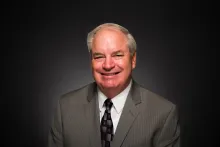
Robin Webber was born in Chicago, Illinois, in 1951, but has lived most of his life in California. He has been a part of the Church of God community since 1963. He attended Ambassador College in Pasadena from 1969-1973. He majored in theology and history.
Mr. Webber's interest remains in the study of history, socio-economics and literature. Over the years, he has offered his services to museums as a docent to share his enthusiasm and passions regarding these areas of expertise.
When time permits, he loves to go mountain biking on nearby ranch land and meet his wife as she hikes toward him.
