


Robin S Webber
The Apostle Paul in 1 Corinthians 11:28 challenges believers to "examine themselves" as we approach the New Testament Passover to partake of the symbols of Jesus' sacrifice for us. This challenge is to allow us to examine that our personal growing faith is genuine and in accord with following The Great Shepherd of the Sheep. This is documented in 7 precious statements made in Psalms 23 that are turned into 7 relevant questions that make you think and consider and only you can truthfully answer. This is Part 1 of a 2 Part series in which the first 3 relevant questions will be explored.
This transcript was generated by AI and may contain errors. It is provided to assist those who may not be able to listen to the message.
Well, I would like to build upon the opening statement that Mr. Miller made in the Sermonette, and that is he used the connotation of the State of the Union. And that's what we're going to be building upon now as we go into the second message, and that is the State of the Union with our Heavenly Father and with Jesus Christ, especially as we come up to the New Testament Passover, which is going to be my focus this afternoon.
Normally, I kind of wait two or three weeks before the spring festival to start preparing for it with a congregation. But over the last couple of years, I call to mind when you think of that incredible verse that's in Luke 51 through 52, where Jesus Christ, who is more up in the North Country, it says in Luke 9, 51 through 52, and then he set his face towards Jerusalem. The time had come. And Jesus, as the word, not only created time, but He's also the Master of Timing. Much of those three and a half years is kind of like a yo-yo going back and forth between the Galilee, Samaria, down to Judea, into Jerusalem, and out, because everything had to basically match up with the plan that was before them.
But you think about that for a moment, is that in that sense, it says it's as if it had been accomplished up here, and it said, and then He set His face towards Jerusalem, and He was locked in. He didn't just bump into Jerusalem, just as we're not to just bump into the New Testament Passover. And not only that, when you look at the story of Lazarus, that story occurred about 30 days out from the New Testament Passover. Jesus had come down, after that Luke 9, 51, 52 statement, was coming down, and He was called into Bethany, right, because of the impending death of His good friend, family friend, Lazarus.
And recognize that that was utilized in a sense, when you think of the story of Lazarus, and you remember where it is. It's in Bethany. Now, for those of you that know where Bethany is, Bethany is just on the shady side of Mount Olive.
We know that Mount Olive overlooks Jerusalem, but He was on the shady side on the other side, so He's only about three or four miles outside of Jerusalem. And that is where He crescendoed with this incredible miracle, right on the doorstep, right on the doorstep of Jerusalem. You see, another thing is that God never wastes a miracle, the where or the when. Why did He do that? Because He knew that the new—if you saw somebody be raised from the dead, He knew that that news was going to go into Jerusalem.
It was always like, behold, doorbell ring, knock, knock, I'm out here, and I will be coming in. And thus, then, the events that happened in 31 A.D. Jesus prepared for His entrance into Jerusalem. And we, as the people of God, need to prepare our entrance as we come into the spring festivals. As we approach the spring festival season, it commences with the New Testament Passover, in which we commemorate the death of the Son of God.
We commemorate the death of the Son of God for our sins, that we might live anew every day after that, for our Heavenly Father and before Him, that indeed there can be, as Mr. Miller brought out, that state of union, that togetherness that God the Father Himself wants. And we are personally challenged, personally challenged by the Apostle Paul to prepare and to examine ourselves, and not just bump in to this precious moment that brings us back to our rescue out of spiritual slavery and into the family of God.
Join me if you would, and please turn to 1 Corinthians 11. 1 Corinthians 11, and let's notice what the Apostle Paul states. In 1 Corinthians 11 and verse 23, it tells us this, For I received, Paul speaking, for I received from the Lord that which I also delivered to you, that the Lord Jesus, the Lord Jesus, on that same night in which He was betrayed, took bread.
And when He had given thanks, He broke it and said, Take, this is my body, which is broken, for you do this in remembrance of me. And in the same manner, He also took the cup after supper, saying, This cup is the new covenant in my blood. This do as often as you drink it in remembrance of me. For as often as you eat this bread and drink this cup, you proclaim the Lord's death till He comes. Therefore, whoever eats this bread or drinks this cup of the Lord, in any unworthy manner, will be guilty of the body and the blood of the Lord.
That should wake us up, gain our attention, and continue with the invitation that Paul is telling us to do as we prepare for the New Testament Passover. Notice what it says in verse 28, But let a man and ladies today, let a man, I'll add the word lady, examine himself, and so let him eat of the bread and drink of the cup. So we are given a role to play, a role to play, and we are to examine ourselves. The word examine comes from the Greek word, it is dokamasso. Dokamasso, that may not be quite the right accent, but dokamasso is beginning with the D. And that means to test, that means to prove, that means to approve, and the word that I like to center on it means to document. To document. Have you ever had your documents looked at, stamp stamp?
They're documented so that people will know that you can enter into a facility or enter into an airline, that you are who you really say that you are. So we might say then, what are we going to document? Bottom line is simply this, we are going to document our faith, testing that it is indeed genuine, genuine, that the heart prince of love, the heart prince of our appreciation for what Jesus Christ did for us and for what his heavenly father allowed as he was there watching and did what he moved Abraham away from doing in the sacrifice of Isaac.
Recognizing that a couple thousand years down the line that they would go through it themselves. That was just merely a type they were going to go through and do it all for you and for me.
And out of that, and out of that, to recognize that it is genuine, that those heart prince and that reality, and I'm speaking to each and every one of us, that we have that faith.
We have that faith no matter what comes in our lives. That going back to John 3 16, For God so loved the world that he gave his only begotten Son, that whosoever believeth on him should not die, but have everlasting life. And it goes on to say, For God sent his Son not into the world to condemn the world, but through the world and through this death and through this life, that the world might be saved. That is so big in Scripture. And not only to hear about it, but to have faith in that, no matter what season of life that we're in, no matter what comes our way, that the one that came from above and came down and tinted with us, tabernacled in our flesh, and yet also the Son of God, Emmanuel, God with us, died the most gruesome death and took all that we deserve upon himself, that we might not only exist, but have life abundant and have our heavenly Father and our Christ there for us, no matter what comes our way. The New Testament Passover, if you want to jot this down and skip allude it to the festivals ahead, too, the New Testament Passover is a festival of faith. It's a festival of faith. It's not something just lost in the Old Testament. It's not fossilized. It's living. It's real. And to recognize that it's a festival of faith, as are the other six festivals along with the holy days that are within. My question to you this afternoon is, how can we document how genuine our faith towards the Father and His Son is? How can we know when we partake of that bread and that wine that'll be right up here on that evening, how can we know that we are truly bonded with the substance, the substance of Jesus Christ, as our Passover, as our Redeemer, as our Lord, and as our Savior? You know, so often some of you that are newer to scriptures and may not understand this, whether you're watching on this stream or not, when we say the Lord Jesus Christ, those aren't words that just got there accidentally, sometimes when Paul or Peter are writing, the Lord Jesus Christ. Lord comes from kyrios, out of the Greek. That means ruler, Lord. Lord Jesus, in Hebrew is Yeshua. We might say Joshua. In Greek we say Jesus.
That's salvation. Christ. Christ is representative of Him being anointed. He is the Messiah that was proclaimed back in the Old Testament and comes to us loudly in the New Testament. He did not have an accidental fall to earth and all of a sudden, oh, here I am. No. He was on the job from the beginning and knowing that one day from the very beginning, as it says, that that sacrifice would come apart. So that's what we're going to focus on. How do we tell God that we love Him?
How do we do that? How does that go about? And that we understand what He did for us and continue what to perform on our behalf. Now, before I go any further, I want you to know this. I'm going to send you out all of my notes. I'd rather you just take it in because I'm not even going to be able to cover it. I know Mr. Howe wants me to cover everything on my notes. I'm not going to do that. I've got too much. Victor, I'm waving at Victor.
But you can, we're going to go through this down, down, down, and what I don't cover, I want you to cover because you're students of Jesus Christ. Okay? So this afternoon, let's go through, let's go through the telling verses of Psalm, the 23rd Psalm. It tells us a lot about God.
It tells us a lot about ourselves. It tells us where we exist in our personal relationship, that state of the union that Mr. Miller alluded to with our God. It not only offers incredible encouragement, but from the scriptural resources, we can gain seven relevant questions to prepare, to be documented as we approach the New Testament Passover, 2026, and to test ourselves as to whether or not we approach the New Testament Passover and the full knowledge of this, who God is, number one. Number two, what we should be striving to be. Number three, our incredible need for Him. Number four, His daily presence in our lives. So let's begin. Let's turn over to Psalm 23. That one you can turn to. Psalm 23. And we're going to look at it. We're very familiar with it. You know, most of us have heard of the 23rd Psalm since we were kitlets and memorized it wherever we might have been at that time. Our parents had it or this or that. But we're going to go through the 23rd Psalm, that one that you know, the Lord is my shepherd. I shall not want.
Et cetera, et cetera. We're going to find seven statements in there. But what we're going to do in preparation... Are you with me? What we're going to do in preparation, rather than a statement, we're going to ask... We're going to make it into a question that only you can answer. So let's start with number one. We're only going to go through three. That'll take up the time. Three. I'm going to come back next time I'm here. We're going to go to part two, and we'll continue with the four questions. Okay. So otherwise we'd be here too, as was once proclaimed in the Motown song, till the midnight hour. And I don't think you want to do that. So here we go. Point number one.
It says, the Lord is my shepherd. I shall not want. Let's turn that around, not to a proclamation or statement at this point. Let's ask you personally a question. Is the Lord your shepherd?
And that you shall not want.
Is somewhere in your life where you feel needy, that God's put you on the ignore button, pushed it, and doesn't know where you are. So the first one I just asked you is one Christian to another, simply this is the Lord your shepherd. And does he fulfill your needs? It's noteworthy when you look at Psalm 23. It's noteworthy that the first statement of the 23rd Psalm puts God right up front. Think about that for a moment. In many of the Psalms, and you wade through those Psalms sometimes, and it's like David is like going cuckoo. He's being tossed to and fro between his enemies, and they're real. I know this and that and that, or this is happening, or this is happening. One thing when you read the Psalms, you know that by the end it swells up and it's glorious as to how David proclaims God at the end. And there are moments for that in our life.
But the question I look at this as I see the structure of Psalm 23 is this, is God first in your life? Is Jesus Christ first in your life? That's what we're going to be talking about here for a moment. Instead of finding God, here David is secure that a loving God has sought him out and cares for him. This faith-filled security creates the foundation of everything else that will, it creates the foundation of everything else that is going to follow.
Foundations are important, remember? Remember how Jesus said how to build our foundation? Don't build it on what? Don't build it on sand? Don't build it on a cliff? Everything that people in Southern California do, especially by Malibu? No. Anyway, that to recognize our I better pick on San Diego County and or oh what's that? Lucadia. How's that? We'll make it we'll make it make it equal between the counties. So we're taking a look at this.
This faith-filled security creates the foundation upon this rock upon this rock upon which rest the rest of verse will come. This is not an individual who is reaching for God as a last resort or an afterthought. But notice this, and you'll find this in the notes tonight when you do. I want you to think about is God the Father and Jesus Christ your first impulse?
Is it your first thought? Is it your first cause? Every day, every moment of the day that you are on that rock. First impulse. You know, we all impulse have all of a sudden, you know, you know, we're all impulsive. That's how God's made us motion. We see motion, we see needs, and we reflect that by how we we move and we and how we respond. And to recognize that again, between cause and effect. Here's cause. Here's the fact cause is going to create the effect.
But in between that is a moment right here in the middle, because we are free moral agents. That's how God made us. We have free moral agency. God doesn't want robots. He could have created robots and AI if he wanted to. He didn't. He created flesh and blood, men and women to make choices, not to be constrained, not to be forced. God is never going to just make you do something because he wants to know what you're going to do as you've come into relationship with him.
And has it really changed our lives? Always remember this Genesis 1-1.
The very beginning of all scripture in the beginning, God. Now, the way the Hebrew script is set up and with the caricatures, the letters in the beginning, God, it goes like this.
There's an openness. It's not like a sea would be. No, it's an opening. God is entered into time and space from eternity. In the beginning, God created. And even the Hebrew structure has God in the beginning. My question simply to you, a simple question. As we look at the Lord as my shepherd, I shall not want and examine ourselves towards documentation. Is that how we live our life? And or are we just simply pretending to be a Christian? Or does the word of God, the word of God, Jesus, does the written word, does the spirit, which is the spirit of the father and the son, does that in a sense rule our lives as to how we make our choices? This past year, 2025 to this time in 2026, is God in the beginning. When that happens sometimes, we recognize that there's two ways of saying, Oh my God, we can say it out of exasperation, Oh my God, didn't mean to scare you. And or we can say, Oh my God, in worship and confidence and ready now to move ahead, just like David going to the valley of Eloth, recognizing that he was not alone, he gave the battle to the Lord, didn't he?
In saying, I shall not want, it only it not only affirms God's past blessings, but gives the confidence into a future element that God will continue to supply our needs both physically and spiritually, not our wish list, but our needless to be complete in Christ. How can we bring that out? When I say that it will affirm God's past blessings. When you think of David, remember David when he was with Saul and Saul saying, you know, Hey, little guy, you're going down. This is a giant over here. And what does David do? David comes back, little chutzpah, as we say, and he says, God gave me the lion and he gave me the bear. And this dude on the other side, Mr. Nine foot tall dude, he'd gone down. God did this for me. God did this for me.
He has not abandoned me. We all have those moments that we need to reflect on and bring them up current, have them in our the pocket of our heart, that when we come into challenges to simply remind us that we're not alone. We're just simply not alone. I look over my years as a Christian and growing up, even as a boy with my mother and my father, I know that God delivered me. You know, my story I've talked to before when I was 16, I was divinely healed of spinal meningitis.
I think that was for a purpose. Those were in the radio church of God day, so you might know what I'm talking about. And that I was I was healed. And that was emblazoned on me forever then, not forget what God did for me so that I might serve others and encourage them and let them know that God is in charge and that God has his purposes.
On that same year, did God allow other children to die that were anointed? I'd have to say yes.
To be real. And God knows where they are, and he knows what their parents went through.
But for this Robin to chirp, made to keep chirping God's praises, and that God can intervene. And I often mention that to people when they go into hospitals. I want them to know I believe in it. The Lord is my shepherd, and I shall not want.
Let's go to John 10. John 10.
It says, The Lord is my shepherd, and I shall not want. In John 10, and picking up the thought, if he could, in verse one. And most assuredly I say to you, he who does not enter in the sheepfold by the door, but climbs up some other way, the same as a thief and a robber. But he who enters by the door is the shepherd of the sheep. To him the doorkeeper opens, and the sheep hear his voice, and he calls his own sheep by name. There's this intimacy.
We not only are to know that Christ is our Passover, and that's sacrifice, but he knows us. It's not just a one-way street. He knows us by name. And the sheep know, excuse me, and calls his own sheep by name and leads them out. And the sheep not only know his name, but they also know his call. In the Middle East, even down to this day, out in the Henderland, there'll be different flocks, just as it was 2000, 2500, 3000 years ago. And when you have shepherds out there, they have a whistle. They have a whistle, or they have something guttural that they do, because there's different sheep mixing down in that field, different flocks from different people. But when that one shepherd makes that sound, be it a whistle, be it some vocal sound, the sheep come to him. He calls them out by name, and they respond because they know his voice.
And when he brings out his own sheep, he goes before them, and the sheep follow him, for they know his voice. Yet they will by no means follow a stranger, but will flee, for they do not know the voice of strangers. And Jesus used this illustration, but they did not understand the things which he spoke to them. Then Genesis said to them again, most assuredly I say to you, I am the door, I am the door of the sheep. And whoever came before me are thieves and robbers, but the sheep did not hear them. I am the door, one of the great seven I.M.s of the Gospel of John. I am the door. If anyone enters by me, he will be saved and will go in and out and find pasture.
The door is very important twofold when we think about this.
When we think of the Old Testament, when we go back to that type of the old of the Passover in the Old Testament, what did God ask ancient Israel to do in that night in Goshen to prepare for the death angel to come? What were they to do? Go ahead, please. Right, with what?
Not lipstick. Blood. With blood. Thank you, Mrs. Becktold. With blood.
The door. The framework that separates you and me between life and death. I am the door.
I can say that. I can get excited. You know that when I'm speaking.
But we've all got to be excited and take a reality check. Do we truly believe that, no matter what comes our way, no matter what we've done as we come back to God the Father and to Jesus Christ, that like that prodigal father and with the Son by him, that as we sometimes wander from that door and we go down trap doors of our own making or other people's makings, that that door is there.
And not only that, let's take it again that in Deuteronomy 6, 4 and 6, where it talks about what Israel was to do to put up on the door. They were to put up certain emblems up there. I don't know if you're, Marianne, you may be familiar with this, about what the Jews do with the doors. If you've ever been over to Fairfax or Peco Union in LA, I remember I used to be an insurance inspector, so I was everywhere. And to recognize that at the door there's always a little medallion there.
It's the Ten Commandments. And there are at times there is also then there's the Shema, which means to what? Shema is Hebrew for what? To hear. And in scripture, it's not enough simply to hear, it is to obey. They are looked upon as being united. If you're going to hear from the shepherd, you are to obey. Period. You find that in the book of James, which is written in very much a Judaic fashion. God not only loves the hearer of the Word, but what? The doer of the Word. So we take a look at that and understand that.
He is the door. He is the way. And again, to recognize too with the door, point number two, then the sheep. When they, when they, I'm looking for a prop here. I'll put it this way. Tammy, you better be ready to move that to the over here for a second. That a sheep, here's the door. They are in the sheepfold here. The pasture and the world is out there.
And so when they go through that door, they're going out into the world. When they come back through that door, they're home. In other words, the door is their entrance and their exit to everything that happens in their life. That's how we are to think.
The Lord is my shepherd. I shall not want. I have a whole lot more, but I'm just going to go to point number two. You'll get all the notes. And by the way, those that are streaming, if you'll just email me, I'll be happy to send out my notes to you as well. And more than happy to do that. Let's go to point number two. It says, Lord is my shepherd. I shall not want. Now we go to point number two. He makes me to lie down in green pastures. He makes me lie down in green pastures. It is of note here that David not only acknowledges God as his shepherd, but now speaks to him, ought to speak to him as a responsive sheep. In the sense of following God's lead, God leads us towards green pastures. And we are to lie down. We are to accept the lead of his goodness and his knowing touch. Why is it that sheep can lie down? What makes that happen?
Now, the first thing I've got to mention to you, we're going to have a personality test here, is simply this. Do you regard yourself as a sheep?
I'm hearing a dead silence out there.
Thank you, Vic. Very good. David understood that concept. Christ referred to his church as, what? A little flock. A flock of what? A flock of sheep. Now, when you think about that, I know there are more exciting things to be called. Can you imagine going down to a car dealership? You know, there's auto row, and you go from this dealership to that dealership to this dealership.
Have you ever seen a car for sale called sheep? I don't think so. Or lamb? Unless it's laminated with something, I'm not sure. Normally, it's more like a bull, lion, Mustang, cougar.
Or, since they had Jurassic Park, maybe they have some auto out there called T-Rex.
I don't think they're selling many sheep.
God's called us to be sheep. He's developed them. And sometimes we might want to pride ourselves as being a lion or an otter or a beaver or even a golden, how nice can it be to be a golden retriever?
But he hasn't called you to the dogs. He's called us to be sheep. What are some of the characteristics real quickly about sheep? Number one, they are adaptable. That means they are flexible.
Sheep like to move around. They enjoy moving from old to new pasture. They are able to exist without water longer than most animals. They eat most of the weeds common to any given terrain.
Now, let's think about that for a moment as we approach this Festival of Faith, the first festival in the spring festivals. Let's ask ourselves, how adaptable am I?
Am I simply set in my own ways and nobody including God's Word is going to move this old hide?
I've seen it. I've done it. And I'm not bulging.
I'm set in my ways. You know, you can't teach this old dog new tricks.
I know you've never said that, but you're not a dog.
You're one of God's lambs. You're one of one of his sheep. And God expects more of us than that.
As we approach this festival, let's ask ourselves then, how adaptable am I? Here's another one for you. And that is sheep are friendly. Sheep are gregarious and they they're sociable.
All sheep possess a flocking instinct. That's why God calls us a flock. When sheep are separated from the flock, it is an indication that it is lost, ill, or injured. You will rarely see a sheep alone. You'll rarely see a sheep alone. And there's a bottom line having lived in sheep country until all the subdivisions came in of recent date up in Menifee, where I live. You know, we used to have all that ranch behind us and they would bring the sheep in. And sheep, you know, actually down from Paris and Menifee used to be around Sun City, which I live in the Sun City portion of Menifee. And down there, they would do winter wheat, and then they would harvest it. Then there'd be all this standing still, the stubs. And then they would bring in the sheep. And I said, this is a pastor's paradise. This is what I needed. I mean, I understand the 23rd Psalm and also my role so much more when you actually, you know, when you put your foot in the soil or you see it before you rather than reading about it. And I'd given a message to this. I was up in Redlands, and they know about this more than you folks do down here.
And so I'm going home with Susie on the 215, and I look over to the right, and guess what?
There's a sheep. And after everything I said, guess what? That you'll never see a sheep alone. Guess what? There's a sheep. And it's standing up in the stubble, and it's alone. I go, oh, great.
But I slowed down a little bit, and I kept on going, and I looked over, and guess what popped up out of the stubble? A lamb with mama, and the sheep was not alone. One thing you learn about sheep, etc., is that when you're traveling, if you wonder where sheep are, there's two things you're going to see. You're either going to see this little teardrop gray-colored trailer, like for one body.
Right? Good. Can you hear a name? And I'll go there. Is that so that? And so you know that's where the shepherd parks at night, and he's out there with the sheep. So what you always look for, remember this, if you see the trailer first, know that the sheep aren't too far away. If you see the sheep first, start looking for the trailer, because the shepherd and the sheep are together, no matter what happens. I hope that's a good visual for you. And maybe you start, you need to start, if maybe you feel abandoned by that great shepherd of the sheep, maybe you need to start looking up where the big trailer is and have a talk with him. He knows where you are. Maybe we've lost touch with him. And something to consider as we move towards the New Testament Passover.
Jesus himself, our example, he loved people. He was friendly. You know, his disciples, in olden times when you had a rabbi, and he was a rabbi, a Jewish rabbi, they called him rabbi, there was the rabbi, and then there were the students. And like the rabbi was like above the clouds of Mount Olympus, different religion, but you get my point. He's like Ray up here, the students, ooh, ahh. And there was this distance between rabbi and the students.
What did Jesus call his disciples? He says, I no longer call you what? But he said, I now call you my friends. That's the kind of Savior we have as we come towards that New Testament Passover. And a friend in need is a friend indeed. And to recognize that we can do that.
Sheep are never alone. And you know what one thing is? Oh, going back again, did Jesus love being with his friends? Yes, he did. And you think of the wedding of Cana. He was there celebrating. He might have been also officiating, I'm not sure, but he was celebrating. And they'd run out of wine. What did he do? Give him some cheap thunderbird? No. You know the rest of the story. He was there to celebrate. Remember when we talked about the wedding supper here? The whole village, there was no Disneyland back in those days, no Knott's Berry Farm. There was the wedding supper, which is normally the biggest event of the village during the year. And everybody came out, and they rejoiced for the groom and the bride. Jesus is in the midst of that. He was enjoying himself and rejoicing.
Just a thought. We all need friends. You know, if you don't have a friend in this way of life, you pray about that. As most of you know, I'm the regional pastor for the Southwest, and I get together with our men at times and just have a talk. I'm kind of the Dutch uncle, okay? I'm the old guy now, and I have a Dutch... And I said, we all need to have a brother in the ministry that we can turn to.
I said after 50 years of ministry, which will be, I mean, my 51st year now, but that I've never found lone rangers make it too well. We all need some, but we all need a Jonathan. And like David, we need brothers. And also, to move it to the other gender, we need sisters that are born for adversity. Sheep, if they wander, they can be found. We know that story about the lost sheep. But recognize that we're not just a organization. We're not just a congregation. That sounds so sterile. We're a family.
We're brothers. We're sisters. And maybe this is the time that maybe you're feeling lonely right now that you really ask God to guide you to the right person. And let's turn it around like I always like to do and ask God for us that do have multiple friends where I have brothers that are in the ministry, but also friends that are in the church. Ask God to help you to lie down in that green pasture of friendship. You know what? If you're not a sheep, this will scare you into doing what I'm asking. If you're not a sheep, you're a goat. What's your choice?
Okay? So to recognize that as we're coming up to the Passover.
I'm going to go to point number three.
The Lord is my shepherd I shall not want. He maketh me to lie down in green pastures. The question is, he's going to make us lie down in green pastures. The question is, will you lie down?
And how responsive are you to the touch of our master? And it's not always going to be in good pasture. You know, it's very interesting that at times God will allow us and take us into the wilderness. You know, when you look at Matthew 4 and verse 1, in Matthew 4 and verse 1, it says, and the Spirit led Jesus into the wilderness. Let him into the wilderness. God sometimes is not sometimes is not always going to have a he take he took his prophets oftentimes into the wilderness to to dust them off from society to be still and to know that he is God. But they didn't stay in the wilderness. And all of us have wilderness experiences. Don't don't feel alone. We are at times going to be in the wilderness. And you're going to say where in the world is God? Hopefully it's at that level.
Where in the world is God? And to recognize the times he plants us into the wilderness, to be still, that he is our only salvation.
That even as life seems all over for us, that we are in relation with him that is a mortal and existent and eternal. And he hasn't lost track of us. And we learn those lessons of the wilderness. And then he brings us back into community to share what we've learned over here just as much as Jesus shared with us today what he learned, which takes us to the third point. He and that is he leads me by the still waters. He leads me by the still waters. It's important to realize that it is the shepherd who leads sheep to the water. If not, the sheep drink from polluted potholes from which they pick up germs and parasites. And early in the morning, he will lead them to the dew on the pasture or the stream or the water of a deep well. In the Mediterranean climate and in the wilderness climate, within that Mediterranean climate, like we have here, when you might think of especially up where we live in Riverside County, we have lower, but we have high, we have higher areas that are like what we call high desert. You can pasture on them, but it's all different that way. And likewise, when you think about our shepherd, it says that Christ leads us to the still waters. But here's the bottom line.
So he will lead us to the still waters. But now, this State of the Union skip that you talked about, now we have to make the choice. And that is that he will lead us to that water. We have to choose to drink where he has done that. You know, when you think of ancient Israel, the first covenant people under the old covenant, that how many times did God by miracle lead them to water those 40 years in the wilderness? There were at least three big occasions. And at times they weren't happy campers, were they? No, no, not at all. And to recognize that we have to choose.
God's not going to drown us with his truth. God's not going to drown us with his truth.
We must see the need and act upon it. Join me for that in John 668. In John 668.
This is his discussion with verse 66. From that time many of his disciples went back and walked with him no more. They weren't really followers. Then Jesus said to the 12, Do you also want to go away? But Simon Peter answered him, Lord, to whom shall we go? You have the words of eternal life.
And also we have come to believe and know that you are the anointed. You are the one that was prophesied about. You are the Christ and you are the son of the living God. You're not the, you're, you're not hanging around an idol of concrete or of gold. There is a living God. How often do we go through the Old Testament, the New Testament, and it brings up again about the living God.
And is God living in us? Have we been on the trail for so long that any joy in us has evaporated and gone out of us and that we need this New Testament Passover coming up in 2026 more than ever to exist within that state of union that God gave his son for us to exist in? And even as we do that, it says in Ephesians, it talks about, you know, the different elements of, talks about the scriptures, the water of the Word. Scripture is life-giving.
Remember, we not only worship the living Word who gave the spoken Word, but that living Word to the spoken Word is in the written Word. Simple. We don't need to turn there. Matthew 4. Into the wilderness goes Jesus of Nazareth. The Spirit leads him into the wilderness, and guess who's waiting for him? The bad guy. And he tempts him. He puts it right out there.
Such a deal, as we would say in the Middle East. Such a deal. You can't turn this one down.
And you know what our master, our hero, did. And each time he came back, and what did he say? Three simple words. It is written. It is written. And you're saying, what were you going to do?
Written. And you're saying, what were I going to do? Yeah, three times. It is written.
But that same law which was written on stone is to exist in our hearts today.
It's to be written in our hearts, and it is to energize that impulse, that first impulse, to respond to what God has called us to rather than responding to what self-desires.
In all of this, there's going to be challenges.
But to recognize that, it will save us from troubles. It doesn't save us from a troubled, free existence.
But our response will be to above rather than what's below. And to know the good Shepherd.
The Lord is my Shepherd I shall not want. I've talked to you before about a gentleman named Garth Ford Robb. Garth Ford Robb was a member of ours in Pasadena, and he was blind since the age of three. And sometimes he was in our auditorium-p.m. congregation at the time. And if you've ever been in downtown Pasadena, it's a big little town, you know, tall buildings. Yeah, here's my fellow Pasadena. And he was down by a Royal Parkway and Del Mar Avenue, you know, down by the tracks.
And here was this man every day. He had his red and white cane, and he was tapping away, walking through the streets of Pasadena. Blind as a bat.
He called me over to visit him one time. He was in a bachelor unit. We had a lot of bachelor units in those days in Pasadena with the number of people that we had. And I was there to anoint him. I'd never been there before. And I've written about this in the series that I write on Follow Me.
And over his door was a bumper sticker I will never forget. You know, my favorite, not my favorite, but another one, blessed are the flexible, for they shall not be bent out of shape.
But this one should go above it, and this is why. Over Garth's bedroom door, it said, worry is a responsibility that God hasn't given me.
Am I talking to the right audience? Is that how we're going to approach as we come to the table that night as we partake of the bread and the wine? That God loved us so much that He gave His only Son, that whosoever should believeth on Him should not perish, but have everlasting life. He said, but I've been outside of that. I've slipped. I've slighted this year.
And maybe we're like the prodigal son. And not only those that are here, but those that'll be listening. There'll be lots of people listening on gcg.org. Maybe we're like that prodigal son.
Maybe God is giving us this incredible inheritance, and to this point, we have blown it. We've used it up. We have not handled it wisely. We've walked away. Here's the point I want to share with you, and we'll conclude. Let's remember that story of the prodigal son focuses on God our Father.
And the prodigal son went, and he wasted this most precious gift that had been given Him, the inheritance.
Wasted it. I'm seeing a picture of something I've seen before, and it's so beautiful. There's his father. There's his father. He's kind of on top of a hill, but the ranch is down below.
There's wheat fields kind of going up into the horizon. He's out there. You know what?
Fathers will do this. You know this, and your mother and mothers know about your man and also wives. I've been at the door at night waiting for my daughter. Don't tell them this. She grew up with them. But it's 11 o'clock. It's midnight. I'm at the door, and I'm always waiting.
Because Susie and I love our girls.
And that's what our Heavenly Father is like. This man in this picture, he's out there, and he's looking, and all of a sudden he looks off in the distance, and there's this little dot that's just come over the hill. Just come over the hill, and it begins to get bigger and bigger as it goes down into the Gulf of the Valley. And the Father knows who it is, and you know who it is that I'm going to talk about. And all of a sudden he's just like this. He's so excited because this movement's coming towards him. And he's starting this way, and his wife opens the door just to that time Matilda, and that's Henry. And it's like Matilda's going, oh look at Henry. What is he jumping up and down for? What's going on? And he passes. He just keeps on going. And he is running down the hill, and there's going to be this moment of impact, and the Father has his arms wide open as far as you can do. If you're a Father, you understand this. As a mother, you understand this. You know why we're going to be excited when you see our three girls tonight. And they're coming, and the prodigal son who blew it, blew it, blew it, blew it, and yet his father's going to receive him back. And those arms are so big, you think it's like a condor. And then he, the moment of impact, and he wraps that son, and they just embrace.
And it's welcome home. Reminds me of the story of Lincoln. When somebody came and asked him, the war was almost over. He would die about three weeks before the war, but somebody came to him before that. We knew that the war was going to wind down. And he said, they said, Mr. President, what are you going to do now that the South is going to surrender? What will you do?
And Lincoln, his words are few, but oftentimes incredible, he said, I will welcome them back as if they never left. Did that thought be with us as we approach the New Testament Passover 2026?
If a man can say that, what is our father waiting on but us? He not only allows us to be in green pastures to lie down, not only to be by still waters, but to lift our voices up, come boldly before that throne, and say, Father, I love you. I repent. I want to be your child. I know I've gone astray this year.
I haven't been running towards sin. I've been trying to run away from sin, but I still stumbled.
I'm coming to this festival of faith that I do believe your words, words for everybody that is made in your image and likeness, to come home, to Papa.
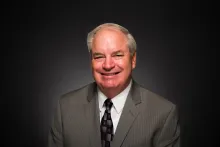
Robin Webber was born in Chicago, Illinois, in 1951, but has lived most of his life in California. He has been a part of the Church of God community since 1963. He attended Ambassador College in Pasadena from 1969-1973. He majored in theology and history.
Mr. Webber's interest remains in the study of history, socio-economics and literature. Over the years, he has offered his services to museums as a docent to share his enthusiasm and passions regarding these areas of expertise.
When time permits, he loves to go mountain biking on nearby ranch land and meet his wife as she hikes toward him.
