


Robin S Webber
The Apostle Paul in 1 Corinthians 11:28 challenges believers to "examine themselves" as we approach the New Testament Passover to partake of the symbols of Jesus' sacrifice for us. This challenge is to allow us to examine that our personal growing faith is genuine and in accord with following The Great Shepherd of the Sheep. This is documented in 7 precious statements made in Psalms 23 that are turned into 7 relevant questions that make us think and consider that only ourselves can truthfully answer. This is Part #2 of a 2-part series in which the last 4 relevant questions will be explored.
Well, good afternoon, everyone, and I want to welcome everybody that is here present with us today, as well as those that are on the streaming service, whether it's our local members or those that are tuned in from afar. And I want to just kind of bring it up front right in the beginning, is that this is going to be the second part of a two-part series. And what I'd like to mention to all of you, especially you that are here, but also be available to all of you, that I'm going to be covering a lot of material, a lot of that material I'm not going to get to. And so I'm going to be sending out my notes again, like I did before on this series. I'd rather you just kind of be with me on this journey as we go through the 23rd Psalm, and not having to take every note, every note, every note. And I'd just like to stay focused. If you want to take notes, that's your business, but I'll be sending them out probably by Monday to all of you, as well as I've been getting a lot of requests from around the world for the notes of this message. So I will do what I say. So just so you know that. So today, as I mentioned, we are going to be focusing on the second part of a two-part message, utilizing the 23rd Psalm as a personal guide to prepare for the upcoming New Testament Passover. And let's remember just to begin with, it is not just the Passover. It is not the Passover of the Old Covenant. That is a type and a very valuable type and a foundation. But what we are doing is for New Covenant Christians, that as we recognize the seamlessness of the scriptures, we also recognize that it builds over time between the type and the anti-type, and that that lamb that was offered up thousands and thousands of years ago is a type of that greater lamb, that light that Mr. Miller was talking about. And that is the one that we are commemorating, the very Son of God, the one that was the Word, the one that is created, the one that is uncreated, pardon me, the one that is uncreated. And that is the one that we are going to be talking about today. And the goal of today's message, just like last time, is that we are going to continue with the seven questions that we are going to ask of you that come out of the declarations of David in the 23rd Psalm. But instead of declarations—and he made his declarations— that these are to help us study and prepare as we come up to the New Testament Passover to truly examine ourselves and to be able to, with enthusiasm and with confidence and with knowing, yes, that we cannot do it alone, but that is our heart, that these declarations might be ours as well, or maybe show where we are wanting and then therefore be able, with Christ's help and the Spirit, to be able to move forward and to recognize that in what we're doing, talking about Skip's message of life, these seven questions that we're asking ourselves provide light in our examination. Because as we come up to these days, we might say of old, that we first find in Leviticus 23 and etc., or back in Exodus 12, 14, with the Passover of old or the night to be much observed, these all, if you want to take a note, here's one, these are not just rituals.
This demands faith, the faith of God in us through his Spirit, growing and developing, that we have faith as we come before God on that evening and come before the table. There will only be two things that are on that table that evening, nothing else, and that are the symbols of Jesus Christ's sacrifice. And they are symbolic because he is risen and he is in heaven above, and he is by the right hand of his Father. But he has asked us to do this in memory of him.
So thus, with this, we're going to, here's what I'd like to share, and what I'm sharing with you, I'm thinking triple time, quadruple time, because I'm doing the notes, and I'm examining myself through this process as we go forward. And the purpose of this message is, frankly, is to probe.
To probe. To probe my heart. To probe your heart. It is to, if need be, by the Spirit, to puncture our lives and make us think. It is also to deeply penetrate into our psyche and into our heart, as what kind of a disciple of Jesus Christ you and I are. And all of this puncturing, probing, is to allow us to project, ultimately, the witnessing light of Jesus Christ living in us, to come back to Mr. Miller's message. So last time we covered the first two verses in Psalms 23, verse 1, verse 2. Let me allow me just to repeat that to all of you, so we are all on the same page. The Lord is my shepherd. I shall not want. He maketh me to lie down in green pastures. He leads me beside the still waters. And we divided that up into three points, and we said, the Lord is my shepherd. I shall not want. We turn it around in this spiritual exercise, which is in accordance with what Paul mentions in his writings, is to examine ourselves. So we take the declaration, the Lord is my shepherd. I shall not want. So let's ask ourselves a question. David had it locked in his mind, in his heart, and yes, he stumbled, and we will stumble, even as we proclaim this. But instead of the Lord is my shepherd, let's ask ourselves, is the Lord your shepherd? Is the Lord your shepherd? Not only with a nod that you might be nodding right now, that's all right, but there's a nod that is on the outside, and there is a nod on the inside of your heart. Is your heart nodding towards that? Because the heart, the heart, is the seat, the beginning of all impulse, of what is lodged in our heart, not even in our brain.
The heart is given to God. It's only going to monitor the brain to have different reactions.
So we're going to get down to, no pun intended, but we're going to get down to the heart of the matter. And so we take a look at that, and we come to understand that Christ is the great and the loving shepherd in Psalm 23. And at the same time, point number two, it points to Him as the great shepherd, but number two, it asks us what kind of sheep are we? Not only who the shepherd is, and we proclaim Him, but what kind of a sheep are we in following that shepherd?
So bottom line, point one, have I truly accepted the Lord as my personal shepherd and accepted fully His manner of the provisions of what He provides in our lives?
Point number two, do I responsibly, in surrendering faith, settle and compliantly lie down wherever, whenever, and however God feels its best for me to grow?
The Lord is my shepherd, okay, and I shall not want. And He puts me into green pastures, but do we just trample through or do we lie down, having trust and confidence in Him, that that is what we are to do and to munch on and to grow in? Point number three, have I fully yielded to the good shepherd's lead and fully imbibed of the still waters that only He can provide?
The still waters. Question, how important is it to be still these days with everything coming at us?
Still. Psalms 46 and verse 10, be still and know that I am God. But you cannot know that God is God until we are still. And this generation of humanity of the 6,000 years of the human experience is more bombarded with items coming our way, that our grandparents and our great grandparents never had to deal with. That, yes, it can be based upon how you use information, it can either be a weapon or it can be a tool. But we know what happens with human nature left to itself, that we get bombarded with this, get bombarded with this, phone calls, this, that, and get us off that path that God is trying to lead us to. So we're going to move forward now. And as we've we're analyzing the shepherd and the flock relationship, we will now move from green pastures. This is going to be important. We're going to move from green pastures and still waters to grasp the significance.
Stay with me. Seatbelts on, airbags deployed, the significance of trial, of suffering, of sacrifice, and yes, through all of this, ultimately salvation. Let's further document the faith of Christ in us as we walk towards and walk into and come out of the valley of death.
So now point number four, we're moving into the fullness of part two of this series.
It says, He restores my soul. He leads me in the paths of righteousness for His own name's sake. Allow me to repeat that. He restores my soul. He leads me, leads me in the paths of righteousness for His name's sake. I want to just start with this thought as we come up to the New Testament Passover, which is for the baptized members of the church, is that it says, for His name's sake.
Let's remember that God the Father has put His Son's name on us.
We are owned in that sense by that which is above.
In ancient times, when merchandise would maybe go from Alexandria to Rome, or maybe to Constantinople later, it might be wine, it might be grain, it might be in boxes, it might be covered in sheets, but there was a stamp on it. It's called a shiragma in the Greek. Same word of mark, the same word that we use for in Revelation about the mark of the beast. The word simply is this, the word's not bad. The question is, who owns us?
And when we were baptized, when we were baptized, we basically said as we were asked in the baptismal creed as to who owns us. Baptismal creed goes like this for those that are newer to our church, it's simply this. Name, please. Okay. So and so have you repented of your sins?
I don't think anybody at that moment has gone this way. No, because everybody's sincere.
Have you repented of your sins? Yes. And have you accepted Jesus Christ as your personal savior? Yes. Because you have repented of your sins. And because you have accepted Jesus Christ as your personal savior. I therefore, as a minister of Jesus Christ, am not going to baptize you. Hear me, please, Church of God members, I'm not going to baptize you into any church, sect, creed, or organization of this world. But I'm going to baptize you in the name of the Father, of the Son, and for the Holy Spirit, and of the Holy Spirit. And then I say, and do you understand?
Don't hold them down too long. They've all come up so far. We did one about two weeks ago. The guy got a little nervous in the bathtub. He didn't know he was going to come up out of that in Las Vegas. That's a whole other. You would know, you would know somebody, Victor, if you, but I'm not going to mention it for the public. And to recognize that we are baptized in the name of the Father. When you go down, nobody else is going down with you. You are making an individual, personal commitment in that sense of vow before the Heavenly Father about His Son, and yes, about the Heavenly Father Himself. There's not a gun to your head. And you've made that decision that you are no longer your own person. That in that sense, you have taken on the name of God in the name of the Father, of the Son, and the Holy Spirit. That's how important it is. And remember that this past year, there has been at times when perhaps we haven't acknowledged God as our shepherd. We have not laid down in green pastures. We have not partaken of the still waters of God's revelation. We have not followed the one who calls Himself the path. When you remember what it says in John 14 in verse 6, when he talks in the Path of Righteousness, the path is none other than Jesus Christ Himself. When He says, I am what? The way? I am the truth, and I am the life. When He says, I am the way, some translations, probably those that Mr. Miller is reading in the Amplified, it'll say not the way, but the path. It is the path. How often have we maybe been out in the wilderness? Maybe up in the Laguna Mountains. Maybe we've been up in L.A. where we have real mountains in Riverside County, real mountains, and you're up high and away, and you get lost. What are you looking for to get down?
You're looking for a path to get from point A to point B, recognizing perhaps that you are lost, and you need that path. You're not going to have the energy to get through all the scrub brush and the sagebrush and the woods that lie between you and home. Jesus Christ is the path, and He is the way. And a question of how often I write during the year, the column that I write in Beyond the Day magazine, it's called follow me. And that's an invitation that Jesus Christ gives to each every one of those that will follow Him as disciples. He does two things in Scripture. You look back in the Old Testament, Isaiah 30 verse 21, it says, this is the way. This is the way.
Walk you in it. But then you remember all the times the downbeat in the Gospels, where He's talking to people, giving them invitation freely. And what does He then say?
Follow Me. It's one thing to point something. It's another thing to say, follow Me.
He wants us to follow Him, but it has to be on the pathway that He has set.
Perhaps we have not heeded Scripture, which is the water of the Word. When we read God's Word, it is nourishment. It is refreshment like cold water. And we drink it in. Perhaps we have not been doing that. Perhaps we have not been still. Perhaps we have not been calm, as life storms will surely come to us. Perhaps, perhaps we show up to church. We come through the doors. We're happy and glad and feel this is at home. But then, in the course of the week, for some reason or another, we've gotten off-kilter. We've gotten away from our Lord. We've gotten away from our Father above.
And do I dare say, maybe at times we're drinking from a different pond than the one that He led us up to. And then we wonder why we have the challenges that we do at times. Simply put, you and I, in the course of this year, from New Testament Passover to New Testament Passover, will do our own thing, do our own work, take on our own water, drink from a different pond, and to recognize then that as we come up to this year, here's the encouragement I want to share. Stop the cameras, hold everything, here's the encouragement. And to recognize that His work in us and for us is simply salvation. And no matter what you've done or where you've been, those that are listening to this message, wherever you might be, as you'll hear this in days to come, God is not done with any one of us. We can only be done with Him. He will not give up.
And to recognize that salvation is a process of being restored again and again and again.
But the difference being with the same Savior, with the same Heavenly Father.
David the Psalmist understood this. Join me if you would in Psalm 42. Psalm 42, and picking up the thought if we could in verse 5. Psalm 42 verse 5. In Psalm 42 and verse 5, notice what it says here. Why are you cast down, O my soul? And why are you disquiet it within me?
The term there is cast down. That's shepherd talk. When a sheep is cast down, it's one thing that it's maybe perhaps turned over on its back and can't get up.
All four legs are up. It might be losing its footing due to getting too big.
Maybe it's getting too comfortable in soft spots. Thus it's cast down and becomes exposed to heat, to predators, to parasites. Sometimes, can we talk? And are you with me? And do you understand?
This can be any and all of us at some time during the year. And that's why more than ever we need to partake of the New Testament Passover this year to know what our Father allowed his Son to do for us. That we might get over ourselves. That we might get on the diet plan that they have shown us through the Scripture. And to be able to get up on not only physical feet, but spiritual feet and continue our walk towards the kingdom of God.
Simply put, to be cast down, you get basically full of yourselves. And we deceive ourselves sometimes, thinking we can fool everyone by saying or doing, oh, we're just fine. It's business as usual. Or creating false reports, or acting religious when maybe that week it doesn't seem... Are you with me? It doesn't seem like we have a religious bone in our body.
And we're walking away from the throne of God rather than towards it. And yet God awaits for the return, which is the most important thing. Which is the most important thing.
I'd like to share something with you. I've been in this way of life now for a lot of years.
Fifty-five years, I think, since I was baptized.
That means I'm 25 now. No, just okay, when you add the figures, that's not working. But to understand something very important, this is what only you can answer.
I'll make this comment. There are two things, and they're totally different. There's one thing to be walking with Christ. And a completely, totally different thing, having Christ walk in you. Well, you say, Robin, how can you say that? Well, I'm going to.
And that is to recognize, just ask the twelve apostles, who were the disciples before that, the twelve disciples. They walked with Jesus Christ for three and a half years.
They walked through the Decapolis. They circled the Sea of Galilee. They were in Samaria. They were in Judea. They were in Bethany. They were in Jerusalem, etc., etc. And where were they on the night of that Passover of the New Covenant before our Savior was betrayed?
Two different things happening here, to simply walk with Christ, and having Christ walk in you, that then creates with His Spirit, along with the Spirit of the Father in us, to measure our steps in accordance with Him. That when He says, this is the way, and He is our Master, not only a shepherd, another synonym is He is our Master. And He says, this is the way. Walk you in it. Follow Me. Because when He says follow Me, He's already been there. Anything that we are going through, He has been there. We're going to bring that out in a little bit longer moment, time. But with all of that is to remember, no matter where we are, I'm talking to you, who you talk, I'm talking to you, I'm talking to me, that no matter what we have done, there is the most encouraging moment in Jesus' ministry when He's dealing with Peter. I'm going to turn to that. The amazing Scripture. Join me if you would in Luke 22, 31. In Luke 22 and verse 31, this is on the night in the upper loft, and the disciples have gone south, and sure, Peter's right in there with the crew, knowing Peter never misses the action. And it said here, and the Lord said, Simon, Simon, indeed, Satan has asked for you, that he may sift you like wheat. And don't think it's only just about Peter. Yes, a very pivotal person in the New Testament church.
But let's understand something. That force from the unseen realm that has impact in our lives and in this world does not want to see us continue with Jesus Christ. And yet, notice what Jesus Christ says here, but I have prayed for you that your faith should not fail. And now notice this.
Remember what I talked about, that sometimes conversion is starting over and over and over again with the same Savior? Notice what it says here at the end. And when you have returned to me, strengthen your brethren. It's not time even necessarily wasted. When you've learned your lessons and you bring it back, we become the spirit of experience like Jesus Christ.
And that we can motivate, that we can instill trust, that we can have people looking up, rather than looking around and moving forward as a team. As Christians, we must understand that it is no disgrace to start over, but an opportunity. And it can move us into godly paths rather than stuck in our own self-made ruts like those sheep that are cast down. Now, with that stated, allow me to be blunt. Sheep are notorious creatures of habit. We know that in our own life that it's hard to break old habits. If left to themselves, they will follow the same trails until they become ruts, graze the same hills till they are denuded, and drink the same water until it is utterly polluted by their own waste. That's why the shepherd is in front of them, and leading and guiding them, and loving them, and nurturing them, and protecting them, and they have to be on the move. And they need to follow the dictates and the loving command of the shepherd. One of the shepherd's chief jobs is to keep the flock moving. In paths that will be right for them, and serve his purposes. Stay with me. Long sentence. It says, paths that will be right for them, and also serve then his, the shepherd's purposes. Remember, we are not our own.
We have been bought and paid for by the blood of Jesus Christ.
And yes, in a sense, no longer to be slaves to this world to be slaves of righteousness.
But I'd rather, if I'm going to give up ownership, I want to be a slave of righteousness.
I want that light that Mr. Miller was talking about shining in me, moving out, projecting hope and encouragement and faith to my fellow disciples, and to always, always remember that we read to know that we are not alone.
As we approach this New Testament Passover, have you and I, as we examine ourselves, have we come to grasp the reality of Jeremiah 10, verse 23? Let's take a, let's stare at it for a moment. Okay, join me in Jeremiah 10. In Jeremiah 10, in verse 23.
This is called a reality check.
O Lord, I know the way of man is not in himself, it is not in man who walks to direct his steps.
O Lord, correct me, but with justice, not in your anger lest you bring me to nothing.
Have we had that conversation with God these past few weeks as we prepare to come up to these festivals of faith? Have we, there isn't a man who walks who knows to direct his steps.
Or woman, we're in the 21st century.
Have you asked for correction?
Do you see that you need correction?
And please understand, everything I'm talking about is not negative, it's very positive.
Because we have somebody that loves us so much that he died for us.
But with that death and with the vow that we took before God, for those of you that are newer to the church of God community, there's only twice that we vow in our life. Two vows. First vow is our baptismal vow because we are espoused to Jesus Christ when we partake of that and when we're baptized. And the second is patterned after that, and that is our wedding vow. And both have a commonality, that is, until death do you part. And that's what we're dealing with. As we approach the New Testament Passover table, we must ask ourselves these questions that only you can answer in your examination. Number one, do we understand fully that God is the God that awaits our return?
Do we understand fully that God is the God that is always awaiting our return?
Number two, as we return, are we willing to walk new paths in full faith that God is going to work with us through this trial, whatever it is, whatever it takes, but on the other side, we are not to feed on our fears. We're not to feed on our fears. Think of the sheep analogy, but we are to feed on Christ. We cannot, as laws of science, laws of history, laws of personal life, if there is a vacuum, it is going to be filled one way or the other. And I'm not talking a vacuum cleaner like Hoover, okay? But a vacuum, when there is a vacuum, something is going to fill it, whether it's in the climate, whether it is in history, whether it's in personal lives, it's going to be filled one way or the other. And God has given you a mind, and He is filling your heart to make sure that it is filled and kept with the Holy Spirit to guide us in those paths of righteousness. Let's go to point number five. Point number five. Point number five. Yea, though I walk through the valley of the shadow of death, I shall fear no evil, for your rod and your staff comfort me.
When challenges come that you have not expected, that you thought would never happen to you, that seem interminably long question. Question. And the question is, are you alone in that? Are you staying alone?
Or are you inviting Jesus Christ into that valley to walk with you? This coming year, we're going to be confronted personally or indirectly with matters of major challenge. Some will be more personal, more staggering. Some matters of life, some matters of death, some matters of health, some matters of things happening to our children or grandchildren. I pray not, but life is life and things happen.
Some will be staggering, more shocking than others. Bottom line is, even as Christians in this human flesh, none of us live a Teflon existence. None of us live a Teflon existence. If you think you do, just do what we call the human test. Pinch your skin hair. It's getting saggier as I get older. It's easier, you know, I can just hold on to it now. Used to be I'd look for it.
Yeah, I feel that I'm still human. Okay. But through the gullies and the valleys are also where it can be most dangerous. Oh, excuse me, I passed up something. The words of David don't say evil will not occur. Sometimes seeming evil come upon us that we just don't die, but it can be seeming like a living death. But they plainly state, I will not fear the evil. Let's understand the only way to move a flock to higher grounds for good pasture is to climb through the valleys.
And again, the sheep must have new ground. They must have new ground. They must have nourishment.
And we kind of know that somewhat in California, because we can have semi-arid, we can have normal, but the pasture may be up 2,000 foot, 3,000 foot of elevation, and those sheep need to have that nourishment. And that is the job of the shepherd. Jesus Christ himself was led into the wilderness by the spirit. Did you ever notice that? He didn't lose his way. He was led into the wilderness by the spirit. And you know who was waiting there for him.
The Great World War before 1914.
The Lamb of God, Jesus the Christ, and the adversary.
And the test was on in the wilderness. After 40 days of fasting, 40 days, and the adversary tried to take Jesus out, tempted him, tempted him, tempted him. And every time Jesus came back and said, it is written. I love that drum. I'd love that drum beat. If you want one great drum beat, you know, I always think of the Gettysburg Address with Abraham Lincoln. I think I talked about that recently with you is that no, that is he's concluding that wind up in the last half minute of the Gettysburg Address. Why has all of this happened? That and that and that, that this nation might go on. How do you make sense out of the senseless when 50,000 people died in the Battle of Gettysburg, the three battles over three days, and Abraham Lincoln was called to make a few comments that day. He was not even the official guest speaker, but he was called upon his president to make a few comments. You know how long those comments were? You know the story, right? Two minutes. The gentleman before him spoke for two hours, and the gentleman who happened to be a friend said later on, he said to Mr. Lincoln, he said, I wish I could have said in two hours what you said in two minutes, because in the Gettysburg Address, he gave the the systematic theme was basically life, death, and resurrection. When you look at it, this four score and seven years ago, this nation was what? Conceived.
Then there are men that have given the full measure of their devotion, death. Why? That this nation might live on, and that it might, that, and that, and that. What a wonderful guide. And that's what Jesus did for you and me to be a guide of that there's a future. And that future is basically a resrounding that we open the still waters of scripture and drink of the water of the word, and to be able to move out of that wilderness experience.
The wilderness experience is where you learn you can only go so far on your own two feet, and allow Christ as that good shepherd to carry you into the realms and canyons.
He already knows those. He's already been in the valley of the shadow of death.
He knows what that is like. Even as we are baptized, we are baptized into his death because he was the one that went into the valley of the shadow of death.
He knows what it's like to have people all around him, mocking him, bullying him verbally, maybe even throwing things at him as he came through Jerusalem up to the altar of Gogatha.
He knows what it's like to have, in a sense, the world all around him, against him.
And yet his eyes were always on his father above. Allow me to share a story with you.
It's while a little boy and his father, they were...
They were taking a drive on a beautiful spring day, and they had their windows rolled down because it was so beautiful, so lovely. I'm sure we've all had those days. Feel the air coming in. Guess what else came in?
A bumblebee came through the window.
I've dealt with flies, but not a bumblebee.
But a bumblebee came in through the window, and all of a sudden the child went into an incredible panic.
He was allergic to bees, and you know how that can be. Bees or peanuts. You don't know what's going to happen. He completely lost it. He went into panic mode.
But you know what his father did? His father reached out and grabbed that bumblebee and held it.
And the lad's demeanor calmed down.
Dad had done his thing that dads do. But then all of a sudden, the dad went back. He let go. And guess what? The bumblebee started buzzing around all over again, and the boy panicked.
And then his dad said, son, watch. And he went like that and turned his hand.
And you know what was in his hand? The stinger.
And that's what our Savior did for you and for me.
He took the sting of death for you and me.
That's how much He loves us.
He took that stinger for you and for me. And you hear the echoes of Paul where, you know, death, where is thy sting? Grave, where is thy victory? And that's who we worship when at times we are going through that valley of the shadow of death. I'm going to move on and I'm going to let you be able to read the notes. That's why I'm going to send them all out. I usually cover about half of what are in my notes.
Point number six. You prepare a table before me in the presence of my enemies, and you anoint my head with oil my cup runneth over. In many parts of the world, the high plateaus that sheep pasture in are called mesas. We think of la mesa, which means the table here in San Diego, literally table in Spanish. The energetic and the good shepherd will take time to go ahead and prepare these tables of land for their sheep before they arrive.
The shepherd's already gone up ahead. He makes an advanced expedition. He takes salts and other minerals to distribute over the range. He searches out and finds the best pasture, the best grass to lie down away from the weeds that may cause harm, and the predators that surely are going to come to disrupt the sheep.
John 10 in that beautiful chapter about the good shepherd, John 10 in verse 4, simply says, he goes before them. He goes before them. He's walked that path already right. He's already been up on that mesa. He's already been up on that table. That's what leaders do. That's what leaders do. They put themselves in the game of life. And it's because of that that in John 16 verse 33, which we'll read that night of the New Testament Passover, it says, be of good cheer. Be of good cheer. I've been through the tribulation for you. Relax. And as I said before, Christ knows what it's like to be surrounded by enemies on that.
Can you imagine that? Can you wrap your heart, your mind around that with that? What that must have been like on Golgotha. Here is the creator of all humanity. The Word in the beginning was what? The Word and the Word was with God. And he created all things. And here is literally the creation, murdering under false witness, the one that made them. And yet you know, and I recognize that as we go through the New Testament Passover honoring the death, we also recognize that he has resurrected and to recognize then that what happened during that resurrection, which occurs during the days of Unleavened Bread that year back then, that these days are not just about death and darkness.
It's about light. And it's about life. And it's about miracles that God the Father above overturned. The Supreme Court in heaven overturned the judgments of man below. And yes, even as he took our sins upon him, he was guiltless. And God the Father, in which he said, I commit my soul to you. It is the same one that's our Father.
Isn't that exciting as we come up to these days? We read to know that we are not alone. Actually, one second. Second here. Yeah, I want to... That's six. Okay. I'm sorry. I skipped my notes here somewhere. Okay. We talked about that. I'm just simply going to go to point seven.
I'm going to send out all my notes here in a moment. Go to point number seven. At the end, it says, Surely goodness and mercy will follow me all the days of my life, and I will dwell in the house of the Lord forever. Let's turn that into a question. Do I really believe that goodness and mercy will follow me? Have I tasted any of that in a small smilitude in this lifetime?
That it will follow me, and I shall dwell in the house of the Lord forever? The Word of God—and you've heard me often say this when you go to John 1, which is an incredible chapter in the Bible—it defines who the Word was. And it defines the uncreatedness of Jesus Christ when it says, In the beginning was the Word, and the Word was with God, etc. That's a statement of theology.
Others may have that. Other religions have a grand statement of defining their God. But what makes our Savior and our Good Shepherd so much different is in verse 14. And it says, And the Word came down and dwelt with us. I want you to think about that. That means that He tinted. The word dwelt comes from the Greek word skenu. That can be tabernacle. That can be a tent. In that sense, something temporary. And that's what makes Christianity so different than anything else.
Is that God became us. That one day we might become Him. That Jesus Christ is that bridge between the Father and us. That Jesus came and became us. That God might touch us. And then when He returns to heaven, that the Father might be touched from us by Him who was us. And that's the beauty of our relationship. And the beauty of when it says, And I shall dwell in the house of the Lord forever. When it says the house of the Lord, that's nice. It's poetic. It's kind of King James. If you go to the New Living Translation Skip, it says, it talks about dwelling in a home. What is the—can I ask you a question? What is the difference—we're going to finish up here in about two or three. What is the difference between a house and a home? Can somebody help me? I just landed from Mars. I've come down. Earthlings. What's the difference between a house and a home? Who said that? Oh, Tammy! Okay. Yes. A house is a physical structure. You can put up a house. You can frame a dwelling. But a home is totally unique. It's of the Spirit. It's of love. And when we look at Jesus talking in John 14 that I've gone to prepare ahead of you like the shepherd, I am going to prepare ahead of you. And when you see this aspect of home, home is about relationships. Home is about relationships.
And recognize that when we think about one day being there—and God already sees this as if it already is— to recognize that when we think about the kingdom of God, when it says, seek ye first the kingdom of God and His righteousness—Matthew 6, 33—there's two things happening, and we need to understand it. Seek ye first the kingdom of God. Sometimes in our minds, we think that the kingdom of God is merely a destination, a point in the future. Contact, earthlings, contact. There's two things that are in that verse, and sometimes we miss the second part, which is just as equal. And to end His righteousness. The kingdom of God is a destination. And His righteousness is a way of traveling. As disciples of Jesus Christ, we are not only to set our GPS on the kingdom of God and long for it, look forward to it, which I'll mention in the next service after this, but the way of traveling. To recognize that the Lord is my shepherd, I shall not want. He makes me to lie down in green pastures. He leads me by the still waters. He restoreth my soul and on and on. And to recognize that when we've given our life to God the Father through Jesus Christ, we will never be alone. And He is creating with excitement and longing that home for you and me. Allow me to finish with this story, and it is simply this. There was an elderly gentleman. He was out walking with his young grandson, and he asked, Sonny, how far are we away from home? And the boy answered, Grandpa, I don't know.
And then the grandfather asked, well, where are you? And again, the boy answered, I don't know. With two down, it's almost like doing a driver's test and you begin getting nervous, right, when you're doing that. And then finally, the grandfather asked good naturally, well, sounds if you're lost. And the young boy looked up to his grandfather and said, nope, I can't be lost. I'm with you. This is the time as we approach the New Testament Passover to recognize the joy and the beauty of the Christian walk. That our father will always be there for us. I don't know if I described last time I was sure about the prodigal son and the father. Did I do that one here? Well, you know what? Those arms are still open. Okay, we went through that. I had to remember if that was here in Redlands. Most of us have children, grandchildren, some have great-grandchildren. And Susan and I have been blessed with, and she may be listening, we've been blessed with seven, seven, three daughters, seven grandchildren, and two great-grandchildren now.
As a human father and as a human patriarch of the tribe now, in that sense, I can't think of ever closing up my arms on any of my children or any of mine. They're not mine. Susan, you heard this hour? Yeah, I always have to watch our tribe that we have. Those arms are out wider and longer than a condor.
Much more beautiful arms than a condor's wings. And God's love towards us soars so much that He gave His Son for us, that those that believe in Him might not die but be saved.
We have some questions to ask ourselves yet. We have about a week and a half until that evening in that festival of faith. I hope this has allowed you to continue on your journey, to not be cast down, to roll over out of that rut that maybe has come our way this year, and to recognize that when we turn around and we give our lives to God, it's an experience. And to know that His arms await us on that night as we approach, and as we memorialize the greatest sacrifice ever in the universe. If for nobody else, for you, for you, for all of us, and for me. May all praise and may all glory and all honor go to God the Father and His Son, our Savior, our Holy High Priest in heaven, and as Jesus would say, call me friends. And that's what we're talking about.
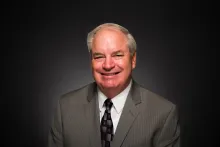
Robin Webber was born in Chicago, Illinois, in 1951, but has lived most of his life in California. He has been a part of the Church of God community since 1963. He attended Ambassador College in Pasadena from 1969-1973. He majored in theology and history.
Mr. Webber's interest remains in the study of history, socio-economics and literature. Over the years, he has offered his services to museums as a docent to share his enthusiasm and passions regarding these areas of expertise.
When time permits, he loves to go mountain biking on nearby ranch land and meet his wife as she hikes toward him.
