


Robin S Webber
This transcript was generated by AI and may contain errors. It is provided to assist those who may not be able to listen to the message.
Well, I certainly appreciate the foundation that Mr. Marchbanks brought to us this afternoon, and I do want to build upon that, because I do want to discuss both the Passover of old and the New Testament Passover that you and I are going to be observing here in a couple of weeks.
That season is upon us, and it's time for us to take stock. My message this afternoon is twofold in nature, and I'd like to share that with you, because it is going to be both. One is to inform, and the other is to encourage. And I would suggest that heavy on the encouragement, because I think the people of God down through the ages, no matter where, no matter who, and no matter when, are in need of deepest encouragement, is the world that God has called us out of.
When we think of the Passover of old and the New Testament Passover of today, there are tremendous parallels between what God instituted through Moses and Egypt and what Jesus Christ himself instituted on that last night of his human existence. So there are tremendous parallels. There are also tremendous matters of content and ingenuity that come down through the ages. And, most importantly, there is an expansion of understanding of what God is performing in the life of spiritual Israel today.
It's a very interesting term that the Apostle Paul uses in Galatians 6 and verse 16, which kind of ties in the entire Bible, because the Bible is not two books, it's one book. It's man that has divided it. It's an ongoing story that deals with expansion, that on one hand God initially called a physical people. They were called Israel, and that was Israel of old. But Paul refers to another Israel. He calls it the Israel of God. And that's speaking of the elect, that's speaking of a spiritual Israel, it's speaking of, as Paul refers to it as the body of Christ.
And so we're going to bring that all together today. And perhaps those parallels and that continuity between the Passover of old and the New Testament Passover is best understood by what I'm going to share with you today. And we're going to be talking about the name of God. I don't know how often you and I focus on that, but God's name tells us a lot about the God that has called us out of this world, the God whom we follow and the God who we rely on.
So we're going to focus on that today. We're going to focus on the name of God. Now, the reason why the name of God is so important is that is how God reveals Himself down through the ages to assure us and to comfort us. And it's very important. This name that is revealed to those that God calls, those that God sends before Him, and those whom, as we heard earlier, that God delivers.
The title of my message today is a simple title. I think you'll understand it more by the end. It simply goes like this. I AM. That's it. I AM. And indeed you are. If you want to jot that down, you'll be able to stay with me a little bit better in this message. And I think by the end you're going to see how we bring I AM, and you are together by understanding the name of God. And the reason why I am sharing this with you is so that when you come before that table at the New Testament Passover and you partake of that bread and that wine as symbols of our Savior's sacrifice, then you are going to be able to say, I know that you say I AM.
And because you are, therefore I take this in faith and confidence as I move into this coming year. Let's begin by allowing God to introduce Himself in the book of Exodus. Join me if you would in Exodus 3. Let's go over there together as a congregation and notice what leads up the account that leads up to how God reveals Himself.
Let me find that in Exodus 3. And beginning in, actually let's pick up the thought in verse 9. Now therefore, behold, the cry of the children of Israel has come to me, and I have also seen the oppression with which the Egyptians oppressed them. Come now therefore, and I will send you to Pharaoh that you may bring my people, the children of Israel, out of Egypt.
But Moses said, who am I that I should go to Pharaoh and that I should bring the children of Israel out of Egypt?
So he said, I will certainly be with you, and this sign shall be a sign to you that I have sent you. When you have brought the people out of Egypt, you shall serve God on this mountain. God was going to deliver Israel out of Egypt, but He also had anticipation that they were going to be called to a life of service to Him. And that plays in part of our calling and the anticipation that God has of us, that as He delivers us, we respond in obedience and in service to His perfect will. Then Moses, in verse 13, said to God, indeed, when I come to the children of Israel and say to them, the God of your fathers has sent me to you, and they say to me, what is His name? I have a question for you. This voice that's coming out of the burning bush. I have a question for you, and that is, who am I going to say sent me? And then notice God's response in verse 14. And God said to Moses, tell them this, I am who I am. And He said, then ye shall say to the children of Israel, I am has sent me to you. Now, brethren here in Redlands, let's understand that's how God defines Himself and refers to Himself. When I meet somebody, they say, well, hey, nice meeting you. What's your name? I go, hi, my name is Robin Weber. When Moses was introduced to this God in the burning bush, God introduced Himself by saying, I am who I am. Now, let's understand what is going on here. God is basically saying this, you can just call me always, always. That's it. I am always. Now, let's understand something. And some of you may be hearing this for the first time or have maybe never focused on it before. Let's kind of break this down for a moment of the importance of the term I am. I am describes two things about God. Let's go one, two. It describes two things about God. Number one, it describes the nature of God's essence. It describes the nature of God's essence. Now, you notice I use the term essence and that's very important.
Essence is not spatial. And we're going to be talking about that in a moment. It describes what God is. Number two, then, it also describes what he is like.
In other words, the term I am that I am describes his nature. And number two, it describes his attributes. Sometimes even students of the Bible can not understand that or they confuse it.
Both need to be understood. Both are what we might say always in existence. What he is and what he is like. And sometimes it's a wise exercise to separate it, but never separate it too much and bring it together. It's eternal. And what God is revealing is that he is transcendent.
Beyond time and space. This was an incredible revelation because in the land of Egypt, you had all sorts of gods. You had gods for every reason, for every season. Gods that you could see, gods that you could hold, gods that you could feel. Whether it be a bull, whether it be a crocodile, whether it be Pharaoh himself that we heard about. It was something that was tangible. It was something that was subject to time and space. It was localized. It was within the capacity of your five senses to experience. And God reveals himself as something that's beyond time and space.
Outside this goldfish bowl, there are no bookends. Have you ever put a bunch of books together, and what you do, to keep them together, you have bookends, to keep them in place. Otherwise, I know what the shelves in your house look like if you don't have bookends. It kind of looks like after the earthquake down here in Fullerton yesterday, if you've seen some of the pictures.
We're used to bookends. There are no bookends with God. There is no beginning. There is no end.
And that's really hard for you and I to comprehend, because we are so spatial. We are subject to time and space. We're subject to everything being in reach, everything being right in front of us.
And God says, I'll tell you who to tell them is sending you, my name is always. Now, that is important to understand, because now we're going to move to... Are you with me? Let's go to the New Testament, because another one came along greater than Moses. At times, he can be referred to as the second Moses. Moses himself had said in Deuteronomy 1815 that there will be one that is likened unto me that will come. And that was speaking of Jesus the Christ, Jesus of Nazareth. What is very interesting as we begin to develop this continuity through this one book called the Bible, it's fascinating how Jesus revealed himself early on in his ministry. In John 8, join me if you would there, in John 8. Let's pick up the thought if we could in verse 51. And we're going to kind of be breaking into the conversation here. Most are, surely I see to you, if anyone keeps my word, he shall never see death. And then the Jews said to him, now we know that you have a demon.
Abraham is dead in the prophets, and you say, if anyone keeps my word, he shall never taste death. Are you greater than our father Abraham, who is dead and the prophets are dead? Who do you make yourself out to be? Verse 54, and Jesus answered, If I honor myself, my honor is nothing. It is my father who honors me, of whom you say that he is your God. Yet you have not known him, but I know him. And if I say I do not know him, I shall be a liar like you. But I do know him, and keep his word. Now it gets interesting. Verse 56, Your father rejoiced to see my day, and he saw it, and was glad. Then the Jews said to him, Hey, you're not even fifty years old, and have you seen Abraham? Now notice verse 58, And Jesus said to them, Most assuredly, I say to you, before Abraham was, I am.
Jesus was saying something very loud and clear here. He was claiming the name of no less than God. And he says that Abraham rejoiced to see my day. Then he develops his bond as if he had known Abram, known Abraham. And that can be traced back to Genesis 15 for a moment. Join me if you would, Genesis 15, where this encounter occurs between Abraham and God. In Genesis 15, verse 1, After these things, the word of the Lord came to Abram in a vision, saying, Do not be afraid, Abram. And then notice what it says, I am. This is identifying, I am. Now, I am in Scripture, especially in the Greek, can either be used as a verb that moves towards a predicate nomad that moves back to the noun, and or it can be used as an echo, an echo declaring the name of God. Abram, I am your shield, your exceeding great reward. And then notice what it says, but Abram said, Lord God, and or Jehovah, Yahweh, what will you give me, seeing I go childless and the heir of my house is a liaison of Damascus. And then that's when God says, you look up and you count the stars of heaven, and I'm going to make of you, I'll bless people. I believe that's both spiritually and also in that sense, physically, as we understand the descendants of Abraham. But God identified it, and Jesus is now claiming that same identification for himself. I'll share a fascinating verse that maybe you've never seen before. Join me if you would in John 8 21. Let's go back to that same chapter a little bit before in John 8 verse 21. Notice what it says here. Then Jesus said to them again, I am going away, and you will seek me, and you will die in your sin. Where I go, you cannot come. So the Jews said, will he kill himself? Because he says, wherever I go, you cannot come. And he said to them, you are from beneath. I am from above. You are of this world. I am not of this world. Therefore, I said to you that you will die in your sins. For if you do not believe that I am he, you will die in your sins. It's very interesting if you look at verse 24. Let's take a look at this. Verse 24. Notice what it says. If you do not believe that I am the he is an italics. It's added.
Jesus is putting it right out there. He is saying, I am that same one that spoke to Moses out of the burning bush. I too have been called and sent to be a deliverer to people, not only out of a physical deliverance, but towards a spiritual promised land. I am. And if you do not believe that, then there are consequences. Now, why do I bring all this to us? This is just foundation. The foundation that I want to lay down then, brethren, especially in the book of John, is this. Jesus goes on to describe, almost in rhythm throughout the book of John, of who he is. And he keeps on using this phrase, I am. And it's meant to develop within us a security. I know that today, especially when Hugh and I look around, maybe I'm the only one, maybe it's always been that way since the Eden, I'm not sure. But have you noticed how it just seems like everything's always changing? And perhaps even more so today than ever, just when you think you got a handle on something, it changes. I think especially with the technological revolution that's been occurring the last 20 years, just when you get a cell phone, they tell you it's a Jurassic model. You need something new. Just when you think you know how to push this button, there's three more buttons to choose from. And things just kind of are just going and going. And everything kind of, you know, you come out of date, you need this model car, you need this kind of home, you need this kind of cell phone, you need this kind of tablet, you need this kind of cloud within your gizmos and your mechanisms. I always thought the clouds were in heaven. Now they're down below, from what I understand. But that everything's changing and changing and changing. Sometimes you just want to have stability. You want an anchor in your life that is going to hold you when you come up against the challenges of life, whether it be in your family, whether it be in your job, whether it be with your health situation, whether it be with this interpersonal situation that's going between these two ears up here. You would just want something that's always the same, is always going to be there, is always, you know what you got. And that's why God of old and Jesus Christ in the New Testament says, I am. I do not change. I am the same. And I am always.
And what I'd like to do just for a few minutes, and it will just take a few minutes, but we'll get through it. Jesus identifies himself in the book of John through what are called the seven great I am phrases in the book of John. And I want to share these with you as we come up to the New Testament Passover to give you assurance, to give you encouragement, and to recognize what it means that when you take that bread, when you take that wine, what you and I are basically saying is simply this. It comes out of Psalm 23. This is how I always look at it. This is actually what I say when I'm partaking of the bread and the wine. The Lord is my shepherd. I shall not want.
I don't have to go any further. What this bread and what this wine symbolizes is I take it once again and reconfirming my covenant with God Almighty as God is sufficient. I don't need to look anywhere else. So with that foundation, let's look at a few verses here. Join me if you would.
The first one is in John 6, 41. In John 6 and verse 41, join me if you would there. The first on him, John 6, 41. Then the Jews complained about him because he said, Notice, I am the bread which came down from heaven. And they said, Isn't this Jesus, the son of Joseph, whose father and mother we know? How is it then that he says, I have come down from heaven? And Jesus therefore answered and said to them, Don't murmur among yourselves. No one can come to me unless the father who sent me draws him, and I will raise him up on that last day. It is written in the prophets, And they shall all be taught by God. Therefore, everyone who has heard and learned from the father comes to me. Not that anyone has seen the father except he who is from God, and he has seen the father referring to himself. Most assuredly I say to you, he who believes in me has everlasting life. Notice verse 48. I am the bread of life. The first great I am from the Gospel of John is, I am the family name, the name of God. I am and refers to himself as the bread of life. Why? Let's understand that in Days of Yore, that bread was called the staff of life.
Bread was everything. Bread was the main staple. It was the main meal.
Today, you and I in 21st century America, we have refrigerators, we have freezers, we have Winco, we have Stater brothers, we have Ralphs, we have some of you ladies making your own bread at home, but you can go to the market and you can get all the ingredients.
Can you imagine living in that Mediterranean climate? We heard about the famines.
Like this year, where it hasn't rained that much in Southern California.
And no rain, no grain. They have a saying up in Bakersfield, remember I passed through Bakersfield too, where water flows, plants grow. If no water flows, there are no plants. If there is no grain, there is no rain, there is no grain. And to recognize that life was dependent upon grain.
Bread was everything. And Jesus is referring to Himself then in that likeness that bread, I have come, as He said, that they might have life and inhabit more abundantly.
He is the sustenance to feed upon. He is the bread. He is the word. He is the I am. He is that living word. He is more than that. He is now the written word. And you and I have that opportunity to feast on Him. When Jesus was in the wilderness and the tempter came to Him, Jesus told Him in Matthew, for, man shall not live by bread alone, but by every word that proceeds from the mouth of God. And Jesus set the most marvelous example. That every time Satan came at Him, what was the famous phrase that he used? What was his line? He said, It is written. And Satan would come at Him again and say, It is written. And we have to recognize, brethren, that especially when we look at the Gospels, is to recognize that in a sense Jesus, who is life, who promised us life abundantly, came to this life and had his life encapsulated in these Gospels, so that, frankly, you and I can feast on the Word of God. We can feast on this Word. What you are is what you eat. And Jesus said, I am the bread of life. It was so important that he said it twice. And when everything else is changing, you can go to this Word and recognize that it is an anchor in your life, that God has not left us alone. I was with my brother-in-law the other day. He is one of these GPS people.
Likes people talking to him when he is driving. Just drives me nuts. But anyway, he had to have a GPS. I said, I can take care of it. No, I want to use my GPS. It was this little toy. He was enjoying it. So I didn't do it. And turn here. Getting crowded. Oh boy, I tell you. Anyway, I'm laughing. And I love my brother-in-law. But the point is this. This is the GPS for life.
It is what God gave to us. His son came down to this earth so that you and I could understand how God would live if he were a human being, so that we can follow in his footsteps. Some of you right now are when you be baptized, right? And that's what it's all about. Jesus said, follow me. Here are the steps. You're not going to be in the dark. And I will always be there with you. Let's turn over to John 8 for the second I am. John 8. In John 8 and verse 12, let's notice what it says here. John 8 and verse 12. Then Jesus spoke to them again, saying, I am the light of the world, and he who follows me shall not walk in darkness, but have the light of life.
Jesus here refers to himself as I am the light of the world. Jesus here was, when he said this, you read and I read this, and we have to read it in the context of the Bible.
What he was saying was, I am Messiah. I am the fulfillment of all of the prophets and what they stated. I am the fulfillment of what the prophet Isaiah said over in Isaiah 9 and verse 2, when he stated simply this, the people who walked in darkness have seen a great light, and those who dwell in the land of the shadow of death, upon them a light has shined. He said, I am that light. I am Messiah. I have been bequeathed by God. I am the answer to all of the Scriptures, and I am yours for the taking. When you think of the story of creation early on in Genesis 1 and Genesis 2, it speaks about that the earth was without form or void. There was a darkness. There was a lack. There was something that was missing. And then on one of those initial days of creation, it said, let there be light. Light is incredible, and I'll tell you why. Darkness does not penetrate light. Light penetrates darkness. And God called each and every one of us when we were in darkness. When there was no light or any understanding of the great purposes of life, and God reached down and began to work with us and deal with us. In John 12 and verse 45, he continues to expound this thought of light when he says, Then Jesus cried out and said, He who believes in me believes not in me, but in him who sent me, and he who sees me sees him who sent me. I have come as a light into the world that whoever believes in me should not abide in the darkness. Jesus describes himself as light. You know, as we come up to that New Testament Passover table that is set before us, and as the bread and the wine is passed out before us, you and I make a statement of faith. You see, let's remember that Passover is not just quote-unquote a ritual of works. The New Testament Passover is a festival of faith, and faith in one of the other great I.M.s that speaks of the Christ. If you'll join me over in Revelation 22, there's a lot of I.M.s scattered all throughout the Bible. There's all sorts of I.M.s, but this is one of my favorites in reference to light in Revelation 22 and verse 16. I, Jesus, have seen my angel to testify to you these things in the churches. And notice what he says, I am the root, and the offspring of David, notice, the bright and morning star. Jesus says, I am always the bright and the morning star.
Why is that reference made about the Christ in the book of Revelation? A couple of times, actually.
The morning star appears when it is darkest and when it is coldest.
It appears when it's darkest and it's coldest. And in that sense, you can say that Jesus Christ appears in our life when we call upon our Father when it is darkest and when it is coldest. When it doesn't seem like there's any answers, that light appears. It always comes up. It's always there. And Jesus says, I am that bright and that morning star. And you can have confidence. You can take it to the bank. You can know that I will never leave you nor forsake you. I will always be in place. Always.
Let's go to John 10 and verse 9 and notice the next one. John 10 and verse 9.
Jesus says in John 10 and verse 9, I am the door. If anyone enters by me, he will be saved and will go in and out and find pasture. This has a twofold application when you think about it.
Number one, Jesus was claiming in that sense, and this ties right in with the Passover of old.
To recognize that, as was being mentioned by Mr. March Banks, when God delivered Israel of old, he told Moses, tell the people, you go out and you take the lamb, and you slay the lamb, and you take the blood from that lamb, and you put it on the portals of the door to your house, to your home. And by doing that, to recognize that there will be life, that as God sends forth the destroyer, as God moves through a nation and passes through the mightiest empire that had ever existed to that point, he will pass over your house. He will pass over that nation, because the blood is on the doorpost. The door was very, very important in the thoughts and the minds of Israel and of the Jews. Beyond that point, which is very interesting, is to recognize that today, that blood covers our sins. Kapoor, out of the Hebrew, a covering. And that covering keeps at bay that judgment of God. That when you and I become baptized, and when you and I accept Jesus Christ as our personal Savior, and when we accept that Father's gift to us, and that atoning blood, that that keeps at bay that which we deserve based upon our own works.
And God removes then the punishment and the judgment of what we have done as far as east is from the west. And he calls us his child. He calls us family. He gives us spiritual blessings. It's also very interesting then that another concept of the door, that I am the door, is to recognize that God causes people sheep, doesn't he? Now, I know some of us would like to be called something more exotic than sheep. Mustang, cougar. Have you ever noticed that no automobiles are ever named sheep? It's always something that has a little pizzazz, a little zest, a little get up and go cougar. My dad had an XR7 cougar when I was young. Oh, that was fun to drive.
But God doesn't call us those names. He calls us sheep.
Now, Susie and I have the pleasure and the blessing of living down in sheep country, down in Menifee. The sheep move all around, and that is such a joy to me being a servant of God and dealing with sheep and talking about sheep, because anytime you look out there, you recognize, if you see a man alone, and there's always that little trailer, there's a little great trailer, and there's a man, and there's a dog, and you think, oh, they're alone. No, the sheep are right there. And or if you spot the sheep first, and there's, you know, maybe 50 to 400 sheep down there, you're looking around, you look over there, the shepherd's right there with them. You just have to look for a moment. They're inseparable. They're always together, and that shepherd is always with them. And what is interesting, when Jesus said that I am the door, he was speaking directly to the sheep of whom we are. We are the flock of God, that a sheep looks at a door differently than maybe you and I do. When at nighttime, when they are in the sheep fold, that they set up down where we live, and that they're in there, that protects them from the coyotes. That protects them from the bobcats, and the sheep are there. But in the morning, that door is open. They go out into the world through that door frame. That's how they exit home and enter into the world. They go by the framework of that which is in front of them. And then, when they are ushered back into the sheep fold at night, they once again go through that frame. That's what Jesus is telling us, that I am the door, and I am always there for you to go out into the world, and enter into the world, and to be my disciple, to follow my example and my parameters and how I live. And then, when you come in amongst one another, into the body of Christ, yes, you come home, as it were. You also enter through this portal. You enter through this door. You enter through this measurement, as it were. And this is how you relate. Jesus said, I am the door. When you and I partake of the bread and the wine at the New Testament Passover, we are saying in faith and in covenant that Jesus Christ, you are the door. You are what the Father has provided. You are that framework of my life. That blood of yours is on that framework. That existence is there, and that is what I am dedicated to with all of my heart and all of my soul and all of my mind to live up to.
I am the door. Let's go to John 10 and verse 11. In John 10 and verse 11, another one of the great I Am's, Jesus says, I am the Good Shepherd. And the Good Shepherd gives his life for the sheep.
But a hireling, he was not the shepherd. One who does not own the sheep, sees the wolf coming and leaves the sheep and flees, and the wolf catches the sheep and scatters them. The hireling flees, because he is a hireling and does not care about the sheep. I am the name that emanated out of that burning bush. I am the Good Shepherd, and I know my sheep, and I am known by my own. Jesus was hammering home this point because he is using it as a contrast to the shepherds that were placed over Israel, that failed, that were human, that were only there for a season. You can jot down Ezekiel 34 and go to verse 5, go to verse 8 through 16, where it speaks about the shepherds of Israel that caused my people to scatter. They were about themselves. They were not thinking of that Great Shepherd. Sometimes people will say, well, today religion is relative. There are many, many roads all moving in the same direction, to heaven or to nirvana or to Valhalla, whatever term you want to use for paradise. No, no, no, I don't think so. Christianity is unique amongst all the religions of the earth. Jesus came for one specific purpose, I won't say one specific purpose, but one of the grand purposes of why he came was to speak of himself as the Good Shepherd, and in that he revealed to humanity something that had never been revealed before, a God that seeks after his own, the God that searches, the God that does not give up. In ancient times, in the Judean wilderness, in the villages thereof, a shepherd would lose a sheep. He'd lose a lamb. He would not come home.
He would be out there on the plateaus. He'd be out there on the mesas. He'd be going up through the ravines. His wife, his mother back in the village might be nervous, but he knew, they knew, the whole village knew that he was out there, and that he would not come home without that lamb or without that sheep. It would be dead or it would be alive, but he would come home with that sheep.
Why am I sharing this with you this afternoon? Because I realize that sometimes even as Christians, you and I also can feel lost. We can feel like we have wandered off. We can feel that somehow God has lost track of us. And I'm here to tell you on the authority of the Scriptures today that God knows where you are. God is seeking after you. God has the best answers in store for you. His perfect answers are better than your best answers. He knows where you are, and he will come after you. How do I know that? There's a beautiful story in the Bible in John 9. You can jot it down. Read it in full letter. Later, you know a little bit about the story. It's about the man that was born blind. And everybody said, look at him. He's been born blind. He's a sinner. And Jesus came back and said, no, he is not a sinner, and neither have his parents sinned, but this has come upon him that the glory of God might be revealed. And what occurred then, once he was healed, everybody would say, oh wow, that's fantastic. Isn't that great? He's been healed. Wow! Fantastic! No, not at all.
His parents look at him and say, I don't know, he can answer for himself.
His neighbors said, is this the same guy that we used to know? They dissed him. That's kind of a common word, I think. Kind of common here. Dissed. No, moved him out. And then the religious community did not accept his healing. And he was kicked out of his church. He was kicked out of the house of the Lord. And the greatest part of that story in John 9 is at the end. You always have to go to the end of the story, right? The greatest part of the story is he's kicked out of the house of the Lord, but the Lord of the house, Jesus Christ, went after him and sought him out. When everybody else had abandoned him, his family, his friends, his neighbors, and his own church.
We talked about being lost and alone and abandoned. And Jesus knew exactly where he was, and he went after him. And he had a question for that young man. He said, who do you say that I am? Who do you say that I am? Who do you think I am after all? Because up into the story, up to that point, the young man said, this is a good man. Everybody said, oh, this guy's lousy. This man that healed you, he's a bad man. No, he's a good man. And then he went on later on in the story and said, no, I think he's a prophet. But Jesus didn't come just as a good man. He did not just come as a prophet.
He revealed himself as the Son of God. You see, that's what happens at the New Testament Passover every year. Are you with me? Because the question is always there for each and every one of us.
The question always comes to not only the healed blind man, not only to the disciple Peter, not only to all the other disciples, but the question always comes pounding our way.
Who do you say that I am? When you and I partake of that bread and that wine on that evening of the New Testament Passover, you are giving an answer. You are saying, I know who you are. You are the Son of God. You are the Good Shepherd. You are the one in whom I shall not want. See, partaking of this bread and wine is symbolic, but it's important because you're vesting the rest of your life on what you're doing that night that you are going to walk in faith that Jesus Christ is the Good Shepherd. Join me then now in John 11 verse 25. John 11 verse 25. In John 11 verse 25, it says this. This is the story of Lazarus. We're breaking in. Lazarus, the good friend, has died. He's been dead for four days. Mary and Martha, the sisters, are languishing and mourning and wondering why Jesus had not come. And then notice Jesus' answer of why he had delayed himself. I am the resurrection. I am. I am. I am who I am. I am that resurrection and the life. And he who believes in me, though he may die, he shall live. And whoever lives and believes in me shall never die. Do you believe this? This is a fascinating claim that Jesus makes. Remember the first one that we covered? Jesus said, I am the bread of life. This expands the equation beyond the physical.
Jesus at this point is saying simply this, friends. I am not only grain. I am not only sustenance. I am life. I am God. Only God has life inherent. I am more than sustenance. I am that source. John 17, verse 2. Join me if you would for a second. This will be read on the evening of the Passover once again this year. But again, this is an identifying thought about Jesus, what he says on that night. And this is eternal life, verse 3, that they may note you. Eternal life.
Life self-existing. Life inherent. Life inherent. No beginning, no end. Source. Always. Something that's constant. Something that doesn't change either in nature and or in their loving attribute towards you and me.
This is eternal life that they may know you, the only true God and Jesus Christ, whom you have sinned. Let's notice John 10, verse 17, for a second, to fortify this encouragement that is in us, this source that we can go to when everything else might be changing in our life, this rock that we can stand upon. Notice what it says in John 10, verse 17. Therefore, my Father loves me because I lay down my life that I may take it again. No one takes it from me, but I lay it down of myself. I have power to lay it down. I also have power to take it again.
The command I have received from my Father. Jesus Christ is no less than life, along with the one that revealed us the Father. He is. He declares himself from the burning bush, and He declares himself on the hills of Galilee that I am. And that you and I, in that sense, have that same opportunity to be called and to serve that same voice that came out of that burning bush.
And the one that comes down now from the throne of heaven to the Holy Spirit that guides and directs and leads us and convicts us of sin and convicts us of righteousness and says, I will never leave you nor forsake you. I am. Join me if you would in John 14. John 14, number 6. John 14. Jesus said, Let not your heart be troubled. You believe in God, believe also in me. In my Father's house are many mansions and or offices, places of responsibility, opportunity. If I were not so, I would not have told you I go to prepare a place for you. And if I go and prepare a place for you, I will come again and receive you to myself that where I am that you may be also. And where I go you know, and the way you know. And Jesus said to him, I am. There's that word again. I am the way, the truth, and the life. No one comes to the Father except through me. What I want to share with you for a moment is how could Jesus say that he was that proud? He says, I am the way. I am the way. You have to understand the scope of the Bible. You have to remember what happened at Eden. Remember what happened at Eden?
Adam and Eve made a choice. They made a wrong choice, and they were barred from the garden.
And the carobim were set up. The door was closed. There was no way back, no trespassing. And if you couldn't read, there were carobim. There was no route. There was no return to that intimate presence of walking and talking with God and experiencing Him. That was sealed off. Jesus said, I am the way. What does that mean, and how would he be the way? I think it's very important for us to understand how he is the way, and I think it is best explained by… I'd like to read for a moment from Michael Green's book, Acts for Today, page 78. Acts for today, Acts for the 21st Century, under the heading of What Are Their Message. Please hear this very carefully. I think this will help you to explore the Bible, to understand the Gospels better, to understand even the Old Testament better as it points to the Gospels, and to understand who we pray to and then have the confidence. What was their message, the early church? Green's writing. They spoke of Jesus the man. Jesus of Nazareth was a man attested to you by God with mighty works and wonders and signs. That comes right out of Acts 2.
He was a man attested to you. Green says this, we need a delicate balance in the way we make Christ known and or for us to understand. And in the past, the church has majored too much on the divinity of Jesus and perhaps given so entirely the impression that He is God, that He is scarcely one of us. Green comes to this conclusion that is dangerously wide of the mark. It leads to Jesus' worship with scant attention to the Father. Now, on the other hand, if we regard Jesus too exclusively as a man for others and no more, there can be no salvation. No way, John 14, I am the way, no way back to God. Thus, we are driven to a paradox whenever we seriously consider the person of Jesus. He is both divine and human. He is the bridge that is firmly anchored on our side of the river and yet reaches equally firmly to God's side. In this way alone can He be a reliable interpreter of God to us and a sure route back to God. Now, listen to this. A bridge that does not reach both sides of the river is not a bridge at all. It's a folly. You know, remember that famous bridge to nowhere? I think they were building up in Alaska. It's a folly.
Green leaves us with this thought, and I want to expand upon it for a moment. The earliest evangelists, those that wrote the Scriptures and preached in Antioch and preached throughout Asia Minor in Greece, the early evangelists instinctively managed to keep that balance and face that paradox. And I think it's best understood when you go to Isaiah 9.
Undo us, a child is born. Jesus Christ was fully man. Undo us, a son is given. Capital S.
He was divine. Here from this congregation and in the United Church of God at large, we express Messiah, the Lord Jesus Christ. Lord being King, Jesus being Salvation, and Christ being anointed, we express Him as being fully man and fully God. How do you do that? God did it! But we have to understand it in that way. Otherwise, we only have feet on one shore, and we don't bridge. Why is that so important to you and me? I'm going to share why.
Remember what it says in Romans, excuse me, in Hebrews 4, 14 through 16, that we have a high priest. We have a high priest that can feel our infirmities and knows what we are going through. Some of us have gone through a lot this year, physically and emotionally. Some of us sometimes have been very lonely. Jesus Christ knows all about lonely. He was pretty alone on that cross when He was dying. He was pretty alone in the Garden of Gethsemane when everybody else deserted. He knows what it's like to be alone. You think of when you were at your loneliest, we have somebody at the right hand of God that knows about lonely. He knows what it's like to be beaten down because He was beaten. That's one of the reasons why we observed the New Testament Passover. In the historical Passover, which you did, you had the sacrifice of a lamb. You had the death. That death came pretty quickly to that lamb. I don't want to be the lamb, please understand, but I think it came pretty quickly. But the reason that New Testament Passover and why that bread that we partake of is so special is because it was not only a death, but it was the beating, it was the experience, it was everything that He took upon Himself as the Son of Man.
So that, as Paul says in Romans 8, 26, that sometimes when we don't know what to say to our Father, it says that the Spirit intercedes for us and puts our pain and our thoughts and even our absent thoughts and gathers them together, and that Spirit makes intercession for us.
That Spirit being the Holy Spirit. That same Spirit that God the Father and Jesus Christ has, and Christ can't interpret, then, what you and I are going through and say, Father, I've been there, I've been one of them, I know what's going on, have mercy. Because He's not only at the right hand of our Father as our Savior, He's there as our High Priest. Remember what the High Priest did for ancient Israel? He received the people, He took their petitions, and He moved it towards the throne of God. And Jesus Christ is doing that every day. And that's why when you partake of that bread and you partake of that wine, you can say, the Lord is my shepherd, I shall not want. Let's just go to number seven here, John 7.
Let's go to John 15 to finish up here. John 15. Yeah, John 15. Notice what it says, I am the true vine, and my Father is the vine dresser.
Every branch in me that does not bear fruit, He takes away. And every branch that bears fruit, He prunes that it may bear more fruit. What's fascinating about this verse, when Jesus Himself says, again, I am that source. You've got to plug, you've got to plant into me, and my experience, and what I am about. What is very interesting here, Jesus redirects the energy from Israel of old being the vine. The Bible speaks so much about being grafted into Israel.
Now it's being grafted into Him. There's a change of focus of abiding in the gift of God that He has provided. Abide in me. You know, abide sometimes, you know, abide sounds like you're kind of just on a hamster wheel. You know, abiding takes great spiritual energy to abide in the framework of Jesus Christ. Abide in me. And what is being spoken about here is really much more too, because this is actually speaking to the New Covenant, that God was going to expand from Jerusalem to Samaria to the ends of the earth, and that the calling of God would no longer just simply be about race, or an ethnic group, or a tribe, but it would be about God's grace for all humanity.
That is so wonderful and so fantastic. And our longing to recognize that one day all of these people that are around us are going to come to understand what God the Father is doing through Jesus Christ, that all and all might come to Him through that name of I AM. Let's conclude by going to Psalm 46, verse 10. Psalm 46, verse 10. One more, I AM.
Notice what it says. And this is what I would like all of you to think about in the over the next couple of weeks, and perhaps as you come up to that Passover experience on that night of reconnecting and taking covenant under that New Covenant, be still. And notice what it says. And know that I AM. I AM God.
That's something that's really hard for human beings. I think it was hard for Moses in front of that burning book. He said, what? I'm going to do what? You've got to be kidding. I don't know how you say that in Hebrew, but you've got to be kidding.
You know what you're sending me back to? Why do I have to be called now? Why me? Why now?
And anyway, what's your name? I don't think, even though he was a stutterer, I don't think his stutterer was even still. You know, he was just kind of going on. He was rattled. He got rattled like you and I get rattled on Mondays and Tuesdays and Wednesdays and Thursdays and Fridays. And sometimes we can say, why God? Why me? And why now? Or where are you? Or what do you want me to do? And we get all of this commotion going on in our hearts and in our minds. And we get everybody else stirred up in the family. We get everybody else stirred up at school. We get everybody else stirred up in the office place. We get every... Do I dare say this? We get everybody else stirred up in the congregation. God says, be still. Get off that hamster wheel that's taken you nowhere. Where you're spending all that time and all that energy and going nowhere. Be still and know that I am God. I am. Malachi said, I am God. I change not. Hebrews 13, 7-8 says, I am the Lord Jesus Christ, the same yesterday, today, and forever. I am that shepherd in whom you shall not want. Now, brethren, here in Redlands, I'm not going to be with you for the next couple weeks.
As we approach the Passover, let's approach in confidence and faith that the victory has already been won. Jesus Christ already went to Golgotha.
He died for you and for me. His sacrifice is for you and for me. The Father has not called us for not. He's called us for a purpose known to Himself now and through you. Let's approach this New Testament Passover. And yes, while we consider ourselves, let's not focus on ourselves.
Let's keep our focus on Jesus Christ. It is He and He alone, whom the Father gives worth. It is that worth that is placed on us. None of us, of and by ourselves, are worthy. So, oftentimes, people say, I'm not worthy. No, none of us are worthy. But that can put us in a tailspin, in a downward spin. The focus of Passover is to look at what God has done. Even as the even as the patriarch, John the Baptist, said, Behold the Lamb of God. That's where your focus needs to be. You focus on yourself. You look at your belly button. You're going to go into a tailspin. You focus on the Father. You focus on Jesus Christ. And remember what the Scripture says.
Whenever Paul or Peter would open up the Bible, they would say, what are the two words that they will always say? Grace and peace unto you. And then they would conclude with what? Grace and peace in the name of our Father and of His Son. Those were the bookends. That's the bookends of the Gospel. That's the good news. Why were those two words used? Grace and peace were the great salutations of the ancient world. The Greeks used the word grace. Charis, meaning gift, meaning charmed. And being a Christian, Paul was speaking in the Greek to them, saying, you have been gifted. You have an existence which in a sense is divine and charmed and given to you by God Almighty. Rejoice. And then he used the word shalom. Shalom. That's my Jewish accent. Shalom.
And that was peace to you. Not peace that is in a fleeting moment. Not peace that is conflict-free, but a blessing of peace. A peace that as we go on this journey, that God will answer at the right time and in the right way and never be late. I hope that each and every one of you will think of that.
Grace and peace. Allow that to be your anchor. Allow the name of God I am to be your anchor.
And let us rejoice together. I'm not going to be here this year, but we're going to be here in spirit, whether you're in Hymnett or Redlands or up in Victorville or our brethren in San Diego, our brethren in Kenya or Malawi, Zambia, South Africa, Australia, England, Canada, everywhere that we come together, that as we partake of that bread and we partake of that wine, we come to God in faith and we acknowledge that indeed He is the Lord. He is our shepherd. He is the I Am in whom we shall not want.
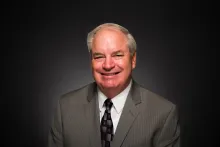
Robin Webber was born in Chicago, Illinois, in 1951, but has lived most of his life in California. He has been a part of the Church of God community since 1963. He attended Ambassador College in Pasadena from 1969-1973. He majored in theology and history.
Mr. Webber's interest remains in the study of history, socio-economics and literature. Over the years, he has offered his services to museums as a docent to share his enthusiasm and passions regarding these areas of expertise.
When time permits, he loves to go mountain biking on nearby ranch land and meet his wife as she hikes toward him.
