

Robin S Webber
This transcript was generated by AI and may contain errors. It is provided to assist those who may not be able to listen to the message.
Brethren, I'd like you to open up your Bibles, please, and I'd like you to turn to Psalm 23. Psalm 23. It's a psalm that is, in one sense, very familiar to us, but I would like to begin the message with reading this psalm to you, and then I would like to conclude the message by reading this psalm to you, and in the middle be able to share some thoughts.
In Psalm 23, the Lord is my shepherd I shall not want. He makes me to lie down in green pastures. He leads me beside the still waters. He restores my soul. He leads me in the paths of righteousness for his name's sake. And yea, though I walk through the valley of the shadow of death, I will fear no evil. For you are with me. You're a rod and your staff, they comfort me. You prepare a table before me in the presence of my enemies.
You anoint my head with oil. My cup runs over. Surely goodness and mercy shall follow me all the days of my life. And I will dwell in the house of the Lord forever. Words, beautiful words, but at times you have to remain on the spiritual journey that God has set before us. Not only to be able to read these words, but to experience these words, and then to come to fully understand what God is doing in our lives.
Perhaps that's the reason why God gives us the book of Ruth, found in the Old Testament. It's one of my favorite books to go through. I got up very early this morning to read through it. And I don't know if you're a little bit like me, but there are certain books in the Bible that you just can never get enough of. I think of Ruth, I think of the book of Philemon, I think of the book of Esther, these little nuggets that are in the Bible.
And each time you read through them, you kind of go through a different facet, or you see something that you didn't see before. And my study this morning was so rich, and I'm looking forward to sharing it with you this afternoon, that will then magnify what these words that we just read about, that were written by her relative, by her ancestor, down the line known as David. It's a very interesting time that we're in. Here we are between the days of Unleavened Bread and Pentecost. I like to refer to it as the season of Ruth. The season of Ruth.
Because this is exactly the time that the story of Ruth takes place. It's a story between not leaving Egypt, but leaving Moab. And in that sense, going to a place of promise in the land of promise. But we're going to find a transition, a transition that brings the days of Unleavened Bread and Pentecost together. It's a time of turning from where you are or were, and going in a new direction, headed towards a new destination. But just changing and turning around is not enough.
Ultimately, you have to come to a place of trust. And in that place of trust, then you are placed into the family of God, which is, after all, the lesson of Pentecost. So join me if you would. Let's open up the book of Ruth. And it's a family scrapbook.
A lot of people think that the book of Ruth was put in the Bible to kind of just give credence for the life of David, who would come along and to give some background. But I think what you're going to find in all of this, friends, is it's not just a scrapbook of King David's family. It's a scrapbook of the family of God. And what an amazing family that we're going to find this to be. And what's so very neat is that it really just centers around three people.
It's like a stage play. That's the way to set it up. Three people. One of them is a widow. One of them is a foreigner. What we might call an other. Somebody from not around here that was not normally welcome. And the third individual was the son of a prostitute. Now, isn't that a great group of people to have one of the most marvelous stories in all of the Bible come our way?
But that's the story of the book of Ruth. So let's pick it up. Now I've got your attention. Okay, so let's pick it up. Maybe some of you didn't know Boaz's background. But we'll talk about that as we go along. Now, chapter one and verse one. Now it came to pass in the days when the judges ruled that there was a famine in the land. And a certain man of Bethlehem, Judah, went to dwell in the country of Moab.
And he and his wives and his two sons. Now, it's just one of the most interesting phrases that you ever find in the Bible. Now it came to pass. Life is what's happening that you haven't necessarily planned for. We all have our one-month plans, our one-year plans, our five-year plans. We have plans for some of us. What are you going to do after you retire? What are you going to do when you retire?
What are you going to do? And so you have all of these plans. Then now it came to pass. Reminds me of my neighbor right across the street the other day. He was going over McCall Boulevard, over into Sun City. And real quickly, boom, boom, boom, boom, boom. And thought somebody was going to do this. They didn't do that. Technically, it's his fault. And there was a three-car smash-up. And his vehicle was totaled. He was just going over the bridge, to Sun City.
Now it came to pass. Things that you think are going to happen to everybody else, like death and taxes. But then it comes your way when you least expect it. Now it came to pass in the days when the judges were ruling. Let's remember the tone set at the end of the book of Judges. This was a time in which every man was doing that, which was right in his own eyes.
It wasn't everybody being necessarily the same spiritual page.
And that's what makes this story all the more interesting. And how often is it that God pulls his people out of where he first establishes them, when there's a famine and they go down to Egypt, or they escape to Egypt, as was the example of Jesus' family when he was born. And in this case, rather than going southwest, they go east to Moab. And the name of the man was the limilec. The name of his wife was Naomi. And the names of his two sons were Malon and Chileon, Ephratites of Bethlehem, Judah. And they went to the country of Moab and remained there. And then, a limilec, Naomi's husband died, and she was left, and her two sons.
So her husband died.
And now they took for themselves the boys' wives of the women of Moab. Now, it's very important as we begin to develop this story, if you're daring enough with your Bible, you keep on circling Moab, because there's a point that we're going to bring home. It's very specific. The tale keeps on coming back that these people were from the women of Moab. The names of the one was Orpah, and the other was Ruth. And they dwelt there about 10 years.
Now, let's understand that Naomi's husband died.
And that's hard enough for any individual to experience. But then, in verse 5, then both Malon and Chilean also died.
And so the woman survived her two sons and her husband. We have to remember back then in that socioeconomic cast, what the plight of a widow was. There was no Social Security. There was no Medicaid. There was no Medicare.
A widow was, in a sense, at the lowest rung of society.
And kind of what Stephen was talking about, had to rely on the largesse of the community that are around. And here you had a man by your side, a husband, and then your two boys. And I'm sure she still called them boys in whatever language that she used. And then they die. And she is alone. And guess what I got? I got two daughter-in-laws. So where does the story pick up from there? Remembering all the time what we started with in Psalm 23. Then she arose with her daughter-in-law, that she might return from the country of Moab. For she had heard in the country of Moab that the Lord had visited His people by giving them bread. And therefore she went out from the place where she was, and her daughter-in-law was with her. And they went on the way to return to the land of Judah. Now this is a very... If you've never read through the book of Ruth, this is a very interesting set up, because all you normally hear about is Ruth, the Wonder Girl, the wonderful person that's mentioned in the Bible. But let's read the story here for a moment.
And I only said to her daughter-in-laws, Go return each to her mother's house. The Lord deal kindly with you, as you have dealt with the dead and with me.
And the Lord grant that you may find rest, each in the house of her husband. And so she kissed them, and they lifted up their voices and wept.
They must have had a deep close bond as a family, that there was a mutual respect, and that there was a love, and circumstances had drawn them together. Notice verse 10. And they said to her, Surely we will return with you to your people. Both Orpah and Ruth did not budge at this point. But Naomi said in verse 11, Turn back, my daughters. Why will you go with me? And there are still sons in my womb, that they may be your husbands. Turn back, my daughters. Go, for I am too old to have a husband. And if I should say I have hope, if I should say I have a husband tonight, and should also bear sons, would you wait for them till they were grown? Would you restrain yourselves from having husbands? No, my daughters. For it grieves me very much for your sake, that the hand of the Lord has gone out against me. Now, everything had been taken away from this lady named Naomi. And you notice that when you're somewhat down, the emotions are triggered, and she becomes very sarcastic at this point. She knows where she is in life. She knows where they are in life. And being ahead of life, she wants them to get on with their life. And so she makes this statement of sarcasm. Oh yeah, you're going to hang around for another 20 years. Okay, yeah, sure. Now, notice what it says, verse 14. Then they lifted up their voices and wept again.
And Orpah kissed her mother-in-law.
It took two times for Orpah to go. Orpah had a measure of fidelity.
She was to that degree a person of integrity and compassion for this older woman. But now, this is where the story begins to change. Because moving beyond that next hope or that next hurdle can make all the difference in the world. And we find that as we move here, then to the end of verse 14. Notice this, a beautiful phrase.
But Ruth clung to her.
Now, whether that's metaphorical or whether that's literal, let's start with metaphorical. But let's think of the literal. Here are three women. What is a stage play carried out on a small dusty road from Moab back to Bethlehem?
Not at the Amundsen. Not at the Riverside Playhouse.
But the greatest plays of life happen sometimes in a very lonely spot. And the audience that's looking down is God.
And here is Ruth at the end holding on to this older woman's arm. And she clung on, and she would not leave her go.
And this is the beginning of the story of Ruth. I have a question for you. What would have happened if she had not clung on? Would we have ever heard of Ruth?
Would we have ever heard of Ruth?
Just this small statement begins God's continuing investment in this lady. And notice what happens in verse 15. And she said, Look, your sister-in-law, Naomi speaking, has gone back to her people and to her gods. Return after your sister-in-law. And then comes what we call the song of Ruth. But Ruth said, can treat me not to leave you or to turn back from following after you. For wherever you go, I will go. Wherever you lodge, I will lodge. Your people shall be my people. And your God, my God. And where you die, I will die. And there will I be buried.
The Lord do so to me, and more also. If anything but death parts you and me.
Reading this this morning, I found it very interesting if I can make a comment. Just a thought. It's called a Robin Weber thought.
Because we recognize that the book of Ruth serves several vehicles of moving forward with the people of God. First of all, it was most likely set down by the man Samuel to give a scrapbook of David's past. To instill him as it were, as he became king. Understood that. And to the Jewish community, they would read this and understand this as one of their matriarchs of faith. But as I began to read this this morning, I'll just share a thought with you. I began to say, you know, this was just more than a statement. This was a vow that was being taken.
This was a vow that was being taken. And Ruth was going to... Excuse me. Naomi was going to go back to Bethlehem, and Ruth was going to follow her. And I began to thinking of what we call the Christology.
Moving it forward now from the Jewish community to what we understand, because this is also our scrapbook. That this is the covenant, in a sense, that we took with God Almighty through Jesus Christ. Let's go back for just a second and read it through. And treat me not to leave you. Isn't that where we all were when God's Spirit began to work with our mind? And we want it more, not less. And we recognize that, just like Abram, the journey was beginning.
And don't turn back from following after you. For wherever you go, I will go. The first words that Jesus tells any disciple, any disciple, is follow me. That's what he told Peter when he met the see- Okay, follow me. And the last words that Jesus spoke to Peter, as John was listening, said, don't worry about that man. You follow me. And so we find this.
And forever you go, I will go. And wherever you lodge, I will lodge. Wherever Christ abides, we desire to abide. Your God will be my God. Where you die, I will die. Just what we've gone through with the Days of 11 bread, as we renewed that vow of covenant with God Almighty, that as Jesus Christ died, we choose to die in Him, figuratively as it were. Your people shall be my people. We'll talk about that later on as we go through the message. And there will I be buried.
We were buried with Christ.
That's what baptism is. And that's the covenant that we renewed at the New Testament Passover. And with all of that said, understanding what you've done for me, the Lord also do to me, and more also, if anything but death, part you and me. We've said this is for life like marriage.
The institution of marriage is for life. It's until death do you part. And it's patterned after the ultimate covenant that when we become a Christian and when we are baptized, it's for life.
Notice verse 18.
And when she saw that she was determined.
Have you ever met a determined person? You just know one when you meet one.
You know, like a bull.
You know, ready to... You know you've met somebody that's like a brick wall on two lakes. They're not budging.
They're determined.
Remember what the book of Daniel opens up with? Where the king wanted to serve him the vittles.
He was determined in his heart.
It's good to be determined when you're determined for the right things. And this determination moved her from simply enduring to becoming endearing to Naomi.
Now, the two of them went until they came to Bethlehem. And it happened when they had come to Bethlehem that all the city was excited because of them. And the women said, is this Naomi?
Is this Naomi?
Now, you got to understand some of you younger people that are out there. You think that you're changing. Well, sometimes when you get older, we all change. And sometimes when you haven't seen a person for 10 or 15 years, you can walk right... I hate to bring this up. You can walk right by them and sometimes not even recognize them.
People change as they get older.
We get skinnier. We get more hair on our head. No, I'm just teasing.
We all change some. They said, is this Naomi? And they were so glad that it was.
But she said to them, don't call me Naomi. Call me Mara, for the Almighty has dealt very bitterly with me. I went out full and the Lord has brought me home again empty. Why do you call me Naomi? Since the Lord has testified against me and the Almighty has afflicted me.
This reminds you and me that no matter who we are or where we are right now, that current events in our life are not always the best read as to what God is doing in our life.
You stop right now here on Sabbath morning. Maybe there is some gigantic challenge that has occurred to you this day, this week, this month, or is pending or has altered and changed your whole human landscape. And God understands that and He can understand that you're going to go through every phase of emotion, anger, bitterness, feeling that the God of Abraham, Isaac, and Jacob is the God of the Norse. It's like Thor. He's throwing thunderbolts down at you.
I can understand that. I can appreciate that. But remember the psalm that we began with, and we're going to go back to it at the end, because it's going to make a whole lot more sense from reading it to this experience, to understanding what God is doing in our life. So, Naomi returned and Ruth the Moabiteus.
Remember, Ruth the Moabiteus keeps on hammering home that point. Her daughter-in-law with her, who returned from the country of Moab, now they came to Bethlehem at the beginning of the barley harvest. So this is right during this time of year. Remember, Mr. Sharp was just in Los Angeles speaking about the wave sheath. We spoke about it here, that the wave sheath was about what? Taking that first sheath, that first shock of the what? The barley harvest, which was the first of the harvest. There's going to be another harvest, and therefore we're going to see how this comes together. And it comes to Bethlehem. Now, this is very important. Do any of you know what the word Bethlehem means?
The house of bread.
Isn't that interesting?
The house of bread. And we're going to build upon that as we go along. And there was a relative of Naomi's, a man of great wealth. And that's very important in the family of Olimlec. And his name was Boaz. He was a man of exceeding means. He had everything.
And his name was Boaz.
Boaz was the son of Solomon.
Solomon, who married Rahab. Rahab the lady on the wall that helped the spies. Yes, a lady who was a prostitute.
You ever had that question? Well, what did your mommy do when she was young?
I wonder if that ever followed him around.
But nonetheless, so Ruth again noticed the Moabitis said to Naomi, please let me go to the field and glean heads of grain after him, whose sight I may find favor. And whose sight I might find favor. And she set her a goal, my daughter. And then she laughed and went and gleaned in the field after the Reapers. And she happened to come to the part of the field belonging to Boaz, who was of the family of Olimlec. Now Boaz came from Bethlehem and said to the Reapers, the Lord be with you.
And look what the Reapers said in return, and they answered, the Lord bless you.
What a wonderful management employee working relationship.
You see Boaz coming into the field and what's on his mind is God.
And he's offering forth God's blessings. The Lord bless you.
And they return that blessing saying, the Lord be with you. You know, if you are negative as an individual, and you want to sit down by Naomi for a while, and we have already said that's reasonable, we understand that, but negativity will be responded to with negativity.
Positivity will normally be responded with positivity.
It depends the bar that you set, the target that you put in front.
You walk into church doors. How's your day going? Oh, it's been terrible so far.
Oh, really? Mine's been a drag too.
Rather than starting out, and I'm not talking about being a Pollyanna, because all of us have challenges, and we bring those challenges at a time to church or into one another's lives. But I'm just saying as a factor, you rise to the level of what comes your way. It's like this morning when Mr. Carlisle got up here and said, good morning!
And you just answered back, good morning!
It just fills the environment. It changes the stage of life. Even if you're kind of felt like Naomi in the morning, you begin to get some breath and spiritual environment in your lungs. Let's pick a picture. And then Boaz said to his servant, who was that in charge of the Reapers? Whose young woman is that? So the servant who was in charge of the Reapers answered and said, it's the young Moabite woman who came back with Naomi from the country of Moab. And she said, please let me glean and gather after the Reapers amongst the sheaves. So she came and has continued from morning until now, though she rested just a little bit. And then Boaz said, you listen, daughter. So this tells us that Boaz was an older man. He said, listen, my daughter, will you not? Don't go to glean in another field, nor go from here, but stay close by my young women.
Remember what Stephen's message was just about? Generosity. And a giving hand is a gathering hand. And that is such a living principle that's in this book of Ruth. And then it goes on to say, let your eyes be on this field, which they reap, and go after them. Have I not commanded the young men not touch you? And when you are thirsty, go to the vessels and drink from what the young men have drawn. So she fell on her face, but she was not a good man. And she was a good man. So she fell on her face, bowed down to the ground, and said to him, Why have I found favor in your eyes that you should take notice of me since I am an alien?
I am a foreigner.
Why are you doing this?
And then you begin to see more and more in the book of Ruth how this love story begins to unfold between these two, but also the love story that it represents between Christ and His Church.
His Church made up of individuals called you. When you go back up to verse 2 for a moment, you might want to circle it with your little red pencil if you have one, that I may find favor, that I might find grace. I'm going to step out that I might find favor, that I might find grace. And then when you do that, be prepared to receive it, because she comes back in verse 10 and says, Why have I found favor? There's no reason to find favor. I'm from out of here. I'm from those pagan people on the plains of Moab. I'm from the enemy of your people. I don't deserve your favor at all.
And Boaz answered her and said to her, It's been fully reported all that you've done for your mother-in-law since the death of your husband, and how you left your father and your mother in the land of your birth and have come to a people whom you did not know before.
Remember what Stephen just shared with us in the first message?
That's not just about a 15-minute message. That's a living law of life. That a giving hand is a gathering hand. And people take notice.
And that our reputations do go before us. This was the first time that he had met Ruth.
But it's as if he already knew her.
Sometimes people note you before they have even met you because your reputation goes before you. And Ruth was known as an individual of integrity and of compassion.
And the Lord repay your work, and a full reward be given to you by the Lord God of Israel. Notice, under whose wings you have come for refuge.
Now, in the old King James, you might want to jot this down. The word there, under whose wings you have come to trust.
And this is the entire field of play that the book of Ruth is about. You go from changing your direction.
You go from changing your direction.
It starts with repentance.
And as you change, and as we give ourselves to God, something begins to develop in us. It's called faith. It's called belief. It's called trust. Even when we don't see it.
Just as it says at the end of the 23rd Psalm, for surely goodness and mercy shall dwell with me as I dwell within the house of the Lord. There becomes a confidence.
Then she said, Let me find faith in your sight, O Lord, for you have comforted me and spoken kindly to your maidservant, though I'm not one of your maidservants. Now Boaz said to her at the mealtime, Come here and eat of the bread, and dip your piece of bread in the vinegar. And so she sat beside the reapers, and he parched grain to her. And she ate it and was satisfied. And kept some back. Now that's very interesting. Share a thought. That's why we have to keep on reading these great stories of the Bible over and over and over again.
I see Isis here today. I see Kyle here. So we're young folk in the back. I have been reading the book of Ruth for 60 years. And every time I get something different out of it. And this may surprise you. That's why we need to read the whole story and not just go all over the Bible and hear a verse, there a verse, everywhere a verse, verse. Get the flow of the story. Something I had never noticed before here. Verse 4. And it got me excited. So she sat behind the reapers and noticed now. And he passed parched grain to her.
I had never noticed that Boaz Boaz was at the table. It was Boaz that individually and personally passed that bread to her. Remembering again that Boaz is a type of Christ.
In Bethlehem, the house of bread.
The same one later on, her descendant, Ruth's descendant, Boaz's descendant, that would say that, I am the bread of life. I am the bread of life.
And you begin to get this infusion of integrity, of compassion, of, again, as Stephen brought out in his message today, not shuffling it off to somebody else. Somebody else will come by and help this guy get out of the sand. Oh, no, somebody else will come by and, you know, fill this guy's gasoline tank up. Oh, no, somebody else will go take the time to go into the store and get this guy a sandwich and a cup of cup. Oh, there will always be somebody else. Here is Boaz, who is a man of great means.
And he was at the table.
Brethren, I'm just trying to... I was stunned this morning by the personalization that occurs in the book of Ruth and the loving tenderness of this man called Boaz as a type of Christ. And to recognize that that goes on in that second Boaz, that greater Boaz today, that just as Boaz ministered to Ruth at the table, so that greater Boaz, the one that is in heaven today, looking down on you and me, also ministers to us and gives us the nourishment that we need. In verse 15, when she rose up to glean, Boaz commanded his gentlemen saying, let her glean even amongst the sheaves. Now notice verse 16, and also let grain from the bundles fall purposely for her.
Leave it that she may glean and do not rebuke her.
Now, Boaz understood that she was a hard worker. This was one determined lady. And God does His part, and we have to do our part. And Boaz could understand that she was doing her part. She was doing everything that she could to support Naomi. But isn't it interesting that she said, you have to look up here a second, it's like this.
Guys, come over here.
She doesn't know this.
But let some of it drop.
Put a little bit out there.
How often does God do that with you and me?
Where the finger of God reaches down into our life? We think it's just a circumstance, or it's a coincidence, or how did this happen?
Can we be surprised by God and His generosity and understand where it comes from sometimes?
To recognize that God is looking ahead of us. You know, you and I here in the Inland Empire, we have this opportunity to live in sheep country. I love living in sheep country. I'm surrounded right now by sheep. And it is so neat to watch the shepherd go ahead of the sheep. A shepherd never stops. He said, what does a shepherd do? He just kind of stares at about 150 sheep and just looks at them and they look at him. Or what? No, he, they're feeding. And then you always see the shepherd. He's over at the next part of the pasture. And he's, he's fencing it in. So they're going to be protected. And he brings in the water. And he brings in the salt lick. And he brings in this or that. And he's checking the ground. And he's, he's, he's, he's, he's looking ahead. Now the sheep don't think about this because that, that wire opens. And they go from one part of the pasture, which now looks like a desert.
And then they go into the next part of the pasture. Because as remember in Psalm 23, the confidence, a table is laid before me. And that's what shepherds do. They, they, they set the table. And Boaz, as a type of Christ, was setting the table for this woman who should have gained no attention from Boaz, but gained every attention from Boaz. And he was caring for her just like that greater Boaz. Christ looks after his church today.
And so she gleaned in the field until evening, beat out what had gleaned. And it was about an epi of barley. And then she took it up and went into the city. And her mother-in-law saw that she gleaned. And so she brought it and gave back what she'd get back after she'd been satisfied. And her mother-in-law said to her, Where have you gleaned today? And where did you work? And blessed be the one who took notice of you. And so she took her mother-in-law with whom she had work and said, The man's name with whom I work today is Boaz. And the Naomi said to her daughter-in-law, Blessed be the Lord, who has not forsaken his kindness, To the living and the dead.
And Naomi said, This man is a relationship of ours, one of our closest relatives.
And I thought that was just a fascinating phrase as I was going through my study. I just want to share this with you. Again, recognizing that, as we understand it, as Christians, That Boaz is a type, a human type, of Christ. And it says, His kindness both to the living and the dead.
I got to thinking this morning, That just sounds like it's coming out of the book of Revelation. Jesus holds the keys.
He holds the keys. He owns both worlds. He owns the world of the living, and He owns the world of the dead. He holds the keys. He is the resurrection, and He is the life.
And it's interesting that Boaz is saying, He has an interest both in the living... Excuse me. That Naomi gives this phrase, He has an interest both in the living and the dead.
And the one that we serve, that we came to worship this morning, Has an interest both in the living and the dead. He doesn't forget. His father doesn't forget.
Ruth the Moabiteus. He also said to me, You shall stay close to my young men until they have finished my harvest. And I only said to Ruth, her daughter-in-law, It is good, my daughter, that you go out with these young women, and that people do not meet you in any other field. So she stayed close by the young women of Boaz, until the end of the barley harvest and wheat harvest, and she dwelt with her mother-in-law. Now, let's understand. The barley harvest began... While we're reading this story, the barley harvest began in the spring season, around the time of the days of 11 bread. And there was that that wave shape of barley that was taken, the first of the first fruits of barley. Now, time has gone by. Now we're moving into the wheat harvest coming up, and that is again about Pentecost. And so we're seeing the barley and the wheat harvest kind of crossing over amongst one another. Then, Naomi chapter 3 verse 1, her mother-in-law said to her, My daughter, shall I not seek security for you, that it may be well with you. Now, Moaz, whose young men whom you are with, isn't he irrelevant? In fact, he is winnowing barley tonight at the threshing floor. Therefore, wash yourself and anoint yourself. Put on your best garment and go down to the threshing floor. But do not make yourself known to the man until he has finished eating and drinking. Naomi, being an older lady, is saying, spruce yourself up, young lady. You're going out tonight.
That thought had not probably been on Ruth's mind.
And she said to her, All that you say to me, I will do.
That's kind of always in it. I have to always smile at this one, ladies. Thinking to all of you that have been married, ladies, always just tell your mother-in-law, everything you're telling me to do, I'm just going to do it. Thank you. Yes, ma'am. Just kind of interesting.
Just interesting.
I know sometimes we can say, Well, yeah, but I didn't have Naomi.
And so she went down to the threshing floor and did according to all that her mother-in-law instructed her. And after Boaz had eaten and drunk, and his heart was cheerful, he went to lie down at the end of the grain, and she came softly, uncovered his feet, and lay down. There they were in the threshing area. And now it happened at midnight that the man was startled and turned to himself. And there a woman was lying at his feet.
I would be startled, too. Basically, hello? Where did you come from? And he said, who are you? And so she answered. Remember, they didn't have— Mr. Edison was not yet alive. They didn't have electricity, and they didn't have a flashlight to grab. It was very, very dark. And he said, who are you? He said, I'm Ruth, your maidservant.
And it says this, Take your maidservant under your wing for you as a close relative.
And then she said, Blessed are you of the Lord. Then he said, Blessed are you of the Lord, my daughter, for you have shown more kindness at the end of the beginning, and that you did not go after some young man, whether poor or rich. And now my daughter, do not fear. I will do for you all that you request. For all the people of my town know that you are a virtuous woman.
Now, what was happening here is interesting.
Keeps on a little bit longer.
Now, it is true that I am a close relative. However, there's a relative that's closer than I am. Stay this night, and in the morning it shall be that it will perform if he will perform the duty of a close relative for you. Good. Let him do it. But if he does not want to perform the duty for you, then I will perform the duty for you. As the Lord lives, lie down until the morning. And so she lay at his feet until morning, and she arose before anyone else could recognize her. And then he said, Do not let it be known that the woman came to the threshing floor. And also he said, Bring the shawl that is on you, and hold it. And when she held it, he measured six ephas of barley, and laid it on her, and then she went into the city. And when she came to her mother-in-law, she said, Is that you, my daughter? And then she told her all that the man had done for her. And she said, These six ephas of barley he gave me. For he said to me, Do not go empty-handed to your mother-in-law. Then, verse 18, she said, Sit still, my daughter. Until you know how the matter will turn out. For the man will not rest until he has concluded the matter this day.
Now, what was occurring was a ritual and a rite. We only understand a part of it, because none of us were a fly on the wall in the threshing barn.
But what happened was a writing of the circumstance in which the young lady placed herself at the foot of the man, who was sleeping perhaps on hay or barley or whatever it was, and it was a symbolism that she was there, he was there. And what he had to do then was, in a sense, to put a cover over her. And what that was did, this was not some steamy, exciting romance in the haystack some people have made out in movies.
This was a ritual, and this was a circumstance that she asked to be covered, and he in that sense accepted that and put that shawl, that covering over her, that I will be your protector, I will be your kinsman redeemer, I will care for you. And then to recognize, he says, the bottom line is, it says here, don't worry about it. Everything is going to work out all right. For the man, verse 18, will not rest until he has concluded the matter this day. I read that this morning in my easy chair, and it just reminded me of what says about Jesus Christ and God the Father, where Jesus was saying, I work and my Father works. They never stop. And Jesus on that last night of his life said in John 16, verse 33, be of good cheer. Be of good cheer. It's going to be okay. I'm going to take care of you, and I will be there for you. Now, let's go to chapter four very quickly. Now, Boaz went to the gate and he sat down there and behold the close relative of whom Boaz had spoken about came by. So Boaz said, come aside, friend, sit down here. So he came aside and sat down and he took 10 men of the elders of the city. Sit down here. So they sat down. And then he said to the close relative, Naomi, who has come back from the country of Moab, sold the piece of land which belonged to our brother, Elimelech. And I thought to inform you, saying, buy it back in the presence of the inhabitants and the elders of my people. If you will redeem it, redeem it. This was a part of what is called the levorate law. It was God's socio-economic security net that those that in a family could not take care of themselves be taken care of by the next of kin. There was no Medicare. There was no Medicaid. There was no Affordable Care Act. There was no this. There was no that. This was it. It was family. And the family had a responsibility. And there is a redemption. The very word redeem means to give something or to help somebody in which they have absolutely no means of and by themselves to care for themselves by a kinsman. But if you will not redeem it, then tell me that I may know for there is no one but you to redeem it. And I'm in line after you. And he said, I will a land deal. That sounds good. But then notice what it says in verse five. Then Boaz said, on the day you buy the field from the hand of Naomi, you must also buy it from Ruth the Moabite, as the wife of the dead, and to perpetuate the name of the dead through his inheritance.
And he said, the close world has said, I cannot redeem it for myself, lest I ruin my inheritance. You redeem my right of redemption for yourself, for I cannot redeem it. Now this was the custom in former times in Israel concerning redeeming and exchanging to confirm anything. One man took off his sandal and gave it to the other, and this was the confirmation of trust. Join me if you wouldn't do it on me 25 very quickly. We're going to wrap this up. Deuteronomy 25. But maybe you've never read the fullness of Deuteronomy 25, because this is most likely what happened in Deuteronomy 25 in verse 5.
If brothers dwell together and one of them dies and has no son, the widow of the dead man shall not be married to a stranger outside of the family, and her husband's brother shall go in to her, take her as his wife, and perform the duty of a husband's brother to her. And it shall be that the firstborn son which she bears will succeed in the name of his dead brother, that his name may not be blotted out of Israel. But if the man does not want to take his brother's wife, then let his brother's wife go up to the gate of the elders. Remember they're in the gate of Bethlehem at this point and say, my husband's brother refuses to raise up a name to his brother in Israel. He will not perform the duty of my husband's brother. Then the elders of the city, and that's why they were gathered, shall call him and speak to him. But if he stands firm and says, I do not want to take her, then his brother's wife shall come to him in the presence of the elders, remove his sandal from his foot, spit in his face, and answer thus, so shall be done to the man who will not build up his brother's house. And his name shall be called in Israel the house of him who had his sandal notice removed. Now, I was not a fly on the wall of the gate of Bethlehem. But if Boaz was carrying out his part, and the elders of the city were carrying out their part, I would suggest, and it's only suggestion, knowing how much that Boaz was going by the law, that Ruth would have been a part of this. You know what's very interesting is that the man that is mentioned here, you know what his name is? What's his name? You don't know his name.
He comes down to us nearly 3,000 years later, just as Mr. He. That's all you know about this individual. He. That's it. He. You know about Naomi, a widow. You know about Ruth, the Moabite damsel. You know about Boaz, the son of a prostitute. And you know them by name, and you think you kind of know them, but you don't know he. You only know what he didn't do. Each and every one of us, brethren, have been called to be more than a he and a her. All of us have been called to be people of integrity, people of compassion. And it's very interesting when all of this came out about Boaz being a man of inheritance, being a man of wealth, and then to recognize that his role says, now this is just going to jam up things. This is just not going to work down here. I'm going to lose everything. Again, think of the typology of the Christology. That Jesus Christ owned everything underneath God the Father, and he did not think it Robert to be equal with God. He was in heaven. He was the creator of all, and he gave up everything that he might be our, what? kinsmen, redeemer. Join me if you would for a very powerful verse over in 2 Corinthians 8. 2 Corinthians 8 and verse 9.
This was one of Paul's very favorite themes in Scripture. 2 Corinthians 8 and verse 9. Let's notice. For you know the grace of our Lord Jesus Christ, that that greater Boaz, that second Boaz, that though he was rich, though he was rich yet for your sake, he became poor, that through his poverty you might become rich.
As it says again in the book of Hebrews 2 and verse 10. He's not ashamed to call us brethren. And because he's not ashamed to call us brethren, it isn't to him that we develop trust. What do we learn through this whole story?
We know that at the end of this story that Ruth, one who was called from another people, is grafted into Israel. Is grafted into Israel. It's incredible. She's given a name.
She's given identity. She's given a future.
And I think the most important story that is in the story of Ruth that I want to leave you with is simply this. This time setting of the season of Ruth between the days of Unleavened Bread and Pentecost. It's not where you start, but it's where you're headed. It's not where you start, it's where you're headed. God's not looking at the baggage. He's watching you if you're going towards the right destination. And that's the important part. How incredible that the very line of our Savior is laced with individuals like a Boaz and like a Ruth. You know, sometimes, we have this human pride of where we come from. Some fifth cousin has looked up a bunch of research and made a family tree. And you know, I come from this prince, or I come from this Viscount, or I come from this Duke of Eastern Lachatania and Dubigia, some little Eastern European principality that has one mountain and one castle.
Jesus Christ, his family line, has a prostitute in it, has a gentile in it, has a Moabite in it, has humanity in it. And that's why he's the Son of Man. And that's why he's our Savior and why he can look down and be that great Boaz to each and every one of us. And to give us a name, to give us worth, to give us our daily bread.
Isn't it interesting that we began with Psalm 23? The Lord is my Shepherd I shall not want. For surely I know that goodness and mercy shall dwell with me all the days of my life.
And we know where we wind up dwelling. I hope that encourages us as we move towards Pentecost.
Song of Ruth, season of Ruth, repentance to faith, Ruth's story, our story.
In the book of Ruth we always see something we missed before
Between ULB and Pentecost, it is "the Season of Ruth"
Traditional time of going in new directions and destinations and trust
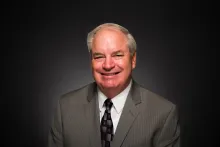
Robin Webber was born in Chicago, Illinois, in 1951, but has lived most of his life in California. He has been a part of the Church of God community since 1963. He attended Ambassador College in Pasadena from 1969-1973. He majored in theology and history.
Mr. Webber's interest remains in the study of history, socio-economics and literature. Over the years, he has offered his services to museums as a docent to share his enthusiasm and passions regarding these areas of expertise.
When time permits, he loves to go mountain biking on nearby ranch land and meet his wife as she hikes toward him.
