
Robin S Webber
This transcript was generated by AI and may contain errors. It is provided to assist those who may not be able to listen to the message.
I want to say thank you very much for the beautiful music presented to God today by our men's ensemble. Well, today we are going to begin a new three-part series. That does not mean that we are not going to conclude the other series, but we're just going to put that on the shelf until after the spring holy days. But as your pastor, I want to bring you a three-part series that is going to be, hopefully, God willing, guiding all of us towards the New Testament Passover that's coming up next month. Webster's dictionary defines what we will be discussing for the next three messages as this. A red fluid circulated by the heart throughout the body that carries oxygen and nutrients to all parts of the body. Simply put, we're talking about blood. Over the ages, men have shed blood aplenty. As young boys and young girls, we did it by accident. Others over the years have done it by design. It's something that we are familiar with, but at the same time, it makes us tend to withdraw and to step back. When we see it, we go, oh, there's blood! But at the same time, to be able to live, we need that same supply of it. Bottom line is, with it, we live. Without it, we die. Rapidly. We know of its vital importance, and boy, you and I right now are really glad that we've got that red stuff circulating throughout our system. But nonetheless, the sight of it, sometimes just the thought of it, can repel us. I know I've gone into hospitals before, as I'm ought, as a pastor, going to rooms, going to ICU, going to emergencies. I've had people with me, and they've almost fainted at the sight of blood. Let me, for a moment, describe blood, not like Mr. Webster did, but allow me just to throw a few thoughts out here. How would you describe blood? Well, I would say that it's red.
It's warm.
Have you ever noticed? It spreads. Kind of comes down, and it covers.
Now, I'm not really here to gross you out. I don't want to provide you a biology class, and this is not going to be an episode of Fear Factor. But we are going to nonetheless talk about blood. The intro was designed to hopefully grab and arrest your attention to understand what we are going to be discussing, because blood is one of the most powerful themes in all of the Scriptures. Simply put, if I pick up this Bible, and if I were to page through it like this, I would find basically the topic, the theme, the subject of blood flowing all the way through the book. Some people refer to the Bible as a book about love, others about a book about life, others a book about covenants, others a book of law. It's really blood that ties all of those thoughts together. So we might actually, in one sense, say that the Bible is a book about blood. Now, there are many other thoughts, and I just don't mean to peg it, but I'm trying to bring us all into this topic to understand the importance of the subject of blood in the Bible. Whenever we do open up the Scriptures, as my Bible is open and as you open up your Bible, we must ask ourselves, what is God saying? What is God telling me as an individual as I read His Word? Because what you and I might call Revelation is simply God sharing what's in His heart and what's important to Him. It's interesting that at times in His Word, God comments on things loudly. Sometimes He comments on things quietly. Sometimes He does not make comments about things that are happening here below. I think it's always very important to look at what He says loudly, what He says quietly. I think it's very important to also understand that what He says again and again and again and again. I know if God says something once, that's important. But when He continues to repeat a word or a thought, we need to take notice and understand what He is trying to communicate to us. So that's what we're going to do as we go through this series. We're going to focus on the topic of blood. My purpose for discussing this with you is to guide you through the Scriptures in a systematic manner to bring us to a certain outcome that will not simply be fixed in your mind, but also lodged in your hearts that blood is one of the most fundamental facets that is constantly and prominently always before the reader's view in the Scriptures. It is not marginal. It is central to our understanding as we go through the Bible because it will deal with another subject that I'm going to bring out that is not marginal to the human condition, but is central. And we must come to acknowledge it. As we begin this series, join me if you would. Let's open up our Bibles here on the Sabbath day and come with me, please, to Hebrews 9. Hebrews 9. Because this will be the cornerstone of Scripture that we will come back to again and again and again. Hebrews 9 and verse 7.
But into the second part, the high priest went alone once a year, speaking of the Holy of Holies. And it says, And not without blood, which he offered for himself, and for the people's sins committed in ignorance. If you want to take notes and if you want to know where we are going, you might just want to simply jot this down because this will be the title of each of the three messages that I'm going to bring you. It is simply this. We come to understand that we do not appear before our God, not without blood. And we're going to come to understand why. Now, I'm going to be framing our journey through the Scriptures with guiding material from a book. It's entitled, The Practice of God's Presence. And it was written by a gentleman named Andrew Murray, who lived in South Africa over 100 years ago. Our journey will entail, over the next three messages, this. Today, we're going to examine several accounts from the Old Testament that will set the parameters for everything else that we will be moving towards. Next time, in two weeks from now, we're going to be discussing Jesus Christ's thoughts about blood. And whose blood was he talking about? Finally, the third message, we're going to be talking about what the apostles said about blood, their experiences, and what God reveals from above through a book that maybe you've never thought about dealing with blood and dealing with the preciousness of the Lamb, but will take us right up to today. We begin our trail of blood back to the very beginning, to Adam and Eve in the garden. Join me, if you would, to Genesis 3. In Genesis 3, and let's pick up the thought in verse 6. So when the woman saw that the tree was good for food, that it was pleasant to the eyes, and a tree desirable to make one wise, she took of its fruit, and she ate. And she also gave to her husband with her, and he ate. And then the eyes of both of them were opened, and they knew that they were naked. And they sewed the fig leaves together and made themselves coverings. Here we find sin enters humanity.
And it's interesting that as they broke God's law, because God had said, of all the trees of the garden you may freely eat, but of the tree of good and evil you will not eat. They did not trust God's sufficiency. They thought that somehow God was unfair. God was leaving them out of the loop of opportunity, and thus they did take matters into their own hands, and they sinned. And notice what they did after they sinned. They sewed fig leaves together and made themselves coverings. You might say it was indeed the first cover-up ever mentioned in the Bible. What is fascinating, friends, while there's humor to this, Adam and Eve covered their nakedness. That which was clearly now before God, they covered their nakedness with vegetable matter. But it was a vain attempt, and they did it by the works of their hands. Through their works, they were in some form trying to atone for what they had done, as if it might simply go away, and that God would not notice that. Perhaps sin was not a big deal with God, as perhaps He had first made them think that it was.
Additionally, it's noteworthy that they were merely dealing with the externals, trying to cover up the outside of their actions, rather than dealing with the internals, rather than dealing with their heart. They were dealing with their outer self. They were moving beyond and outside their epidermis, their outer skin, rather than dealing with the heart, the motive, the issues of why they do, what they do, how they do. God made a dramatic statement in Genesis 3. I like to point it out to you. Genesis 3, verse 21. God's ways are not our ways. We know that Adam and Eve card themselves up with the proverbial fig leaves. But notice what God did. And also, for Adam and his wife, the Lord made tunics of skin, and He clothe them.
Now, why did He do that? Why was the vegetable matter? Why were the proverbial fig leaves not enough on the outside? God was making a dramatic statement, not only to them, but to you and me today, as New Covenant Christians.
And it is simply this. It is the echo of God's voice down through the ages that it is magnified in the book of Leviticus. I am holy, therefore you be holy. That's it. I am holy, therefore you be holy. Holiness has an impact.
But I am here today to remind you that sin also has an impact. God despises sin. God must separate Himself when people do not believe that He is holy, when they don't believe in His sufficiency, when they don't believe that He is the Shepherd in whom I shall not want. And then they take matters into their own hands. They are outside then of the realm of holiness. Join me if you would in Ezekiel 18. Let's pick up the thought in verse 4.
Israel had rejected the holiness of God. They thought that they could get by with the rest of the nations that were in the further waters. They could get along with the rest of the group that was in the way of the sea. I want to be like our neighbors. I want to be like the kid down the block. And God won't mind if we step outside of His holiness in His way. But notice what God says in Ezekiel 18.4. Behold, all souls are mine. I see everything. All are mine. The soul of the Father, as well as the soul of the Son, is mine. And then notice what it says.
And the soul whose sins shall die.
So God was making a statement back here in Genesis 3 and verse 21.
When Adam and Eve sinned, green leaf vegetable matter was not going to be enough. But apparently God took an animal and it died.
Blood was shed, and in that sense there was a kapoor, or there was a covering, that was supplied to Adam and Eve to make a point. That they will not determine their wake. They will not determine how bad sin is. That sin brings about sacrifice. Brings about blood.
That banana leaves, fig leaves, Brussels sprouts, cabbage leaves are not enough. A life must die. And what God required now was an innocent animal had to be slain for the guilty party. And it is right at the very beginning that we see substitution, substitution in developing form. Here God is saying, friends in Los Angeles, that sin has a price tag. Join me if you would in Romans 6. In Romans 6, and let's pick up the thought if we could, in Romans 6 and verse 23.
For the wages of sin is death, but the gift of God is eternal life and Christ Jesus our Lord. We don't like to think that. We like to think when we take matters into our own hands that one and one does not necessarily equal two. We will consider with human reasoning and self-justification and perhaps in our own self-righteousness that one plus one will equal three. We will equal something else other than what God says apart from His holiness.
And that we can work our way back by halfway measures. The reason why God was calling for sacrifice is simply this, friends, to show us the magnitude of sin.
The magnitude of what is rejected when we reject God's holiness in His perfect ways.
It is here that we find the first biblical hint of the framework of a future covenant relationship that moves us to a very important point, that to have relationship with God, it is not without blood. Which takes us up to the second point. This theme of blood now flows outside the Garden of Eden to the gates of Eden on the other side. All that occurred in Eden can be philosophized, it can be speculated about, but on the other side of the gate, the story is simple and clear. And that's why I want to point us to the story of Abel. Join me if you would in Genesis 4. In Genesis 4, we're going to find some fascinating things here about sacrifice and blood. We're going to find that the story of Abel is one of a pleasing sacrifice, and it's plain, and it's loud, and it's clear. Now Adam knew Eve, his wife, and she conceived and bore Cain and said, I acquired a man from the Lord, then she bore again, and this time the brother Abel. Now Abel was a keeper of the sheep, and Cain was a tiller of the ground. And in the process of time it came to pass that Cain brought an offering of the fruit of the ground to the Lord. But now notice verse 4. Abel also brought of the firstborn of his flock, and of their fat. And then notice what it says, And the Lord respected Abel and his offering. From the very beginning of the book we see the thought of the firstling, of the firstborn. It's offered to the Lord as a sacrifice. What you and I are seeing, and maybe you've never thought about this before, friends, we are seeing the very first act of true worship recorded in Scripture. Have you ever thought about it that way? We are seeing the very first act of true worship that is ever recorded in Scripture. And in that act of true worship, interestingly, blood is shed. Of the flock of the firstling. Where does that lead us? Join me if you would in Hebrews 11. And let's notice God's comment through the author of Hebrews.
In Hebrews 11 and verse 4, By faith Abel offered to God a more excellent sacrifice than came, through which he obtained witness that he was righteous. God testifying of his gifts, and through it he being dead still speaks. We find the comment by God thousands of years later that he had not forgotten what that first act of worship was like. It was a pleasing sacrifice, and his name is first in a record of those that God calls a believer. You ever thought of it that way? He is the first in a record of those that God calls a believer, and it is a sacrifice that includes blood. From God, through his holy word, Abel receives witness of righteousness, of a relationship with God, closely connected to sacrificial blood. We've seen what happened in Eden, we see what has happened just on the outside of Eden, and what happened on the outside of Eden was not without blood. That takes us to the third story that I'd like to share with you, as we see this flow of blood move through the story that God provides us, and that is Noah and the new earth. When we think of Noah and the new earth after the flood, you might call it a new Eden, and there are parallels. 1600 years basically passed between the time of Abel and the time of Noah, and God passes judgment upon the earth. And in a sense, there's a frightful type. There are good types of baptism, and there are frightful types. The frightful type is baptism means to be immersed, to be covered over, to inherit the world in that sense as swamped with water. Why is that? Join me, if you would, in Genesis 6. And let's notice God's comment on prenoation society. In Genesis 6 and verse 5, Then the Lord saw that the wickedness of man was great in the earth, and that every intent of the thoughts of his heart was only evil continually.
I have a question for you. I wonder if the inhabitants of that time woke up in the morning and looked in the mirror and said, I'm going to be evil today.
Perhaps they had come to a point where they did not understand that sin, and being apart from God and opposing God, is not marginal to human nature, but is central in the story of man apart from God.
But God makes his comments here about these people. And the Lord was sorry that he had made man on the earth, and he was grieved in his heart. And so the Lord said, I will destroy man whom I have created from the face of the earth, both man and beast, creeping thing and birds of the air, for I am even sorry that I have made them. As I mentioned, the inhabitants of that pre-noation world probably didn't wake up the morning and look in the mirror and say, mirror, mirror, on the wall, who is the most evil person of all? I hope it's me. They were ignorant, or they were self-deceived, or they were self-righteous. They did not realize how far they had come apart from God. And what holiness is, and what God initially desired for Adam and Eve, their forefathers, that relationship of walking and talking and being in that garden open and with nothing in between God and His creation, and that God wanted to give humanity every good thing, nothing apart from humanity that would not be good for them, that might not bring them into total and full relationship with God. And yet, their ancestors had not followed Abel, but had followed the way of Cain. Sometimes, friends, and I speak to myself, we don't really always grasp the magnitude of sin. And when we sin, what it does, and how we are apart from God.
Holiness is a beautiful and it's a wonderful thing. It's incredible. And holiness is what God offers those that are in the body of Christ, through His Son and through His Spirit, by His grace, through forgiveness of coming back again and again, but we must recognize what He is and the world that we have been a part of. We know that one man did find grace. His name is Noah, verse 8, but Noah found grace in the eyes of the Lord. And it's interesting as you go to 8 and verse 20, join me over there in Genesis 8 and verse 20, notice what it says here. Then Noah built an altar. This is after they'd debarked from the ark.
Then Noah built an altar to the Lord and took of every clean animal and every clean bird and offered burnt offerings on the altar. And the Lord smelled a soothing aroma and then the Lord said in His heart, I will never again curse the ground for man's sake, although the imagination of man's heart is evil from his youth, nor will I again destroy every living thing as I have done. What we find in this chapter is a transitional world. The age before is now past. The transition now moves into this new age.
And in this transition, in this moment of new beginnings, from the world of man to the world that God now presents to Noah, who takes in a sense the role of Adam at this point, there is sacrifice. Noah and his family enter a new world that God sets before them and says it is yours. But notice again in Genesis 8, it is not without blood. Sacrifice is given.
We then come to another part of the story that I'd like to share with you for a moment, and that is the man of faith and the great sacrifice. I think you know who I'm talking about, Father Abraham. The preparation for God's kingdom took a new and expanded form that would now come not by simply individuals, but by family. When we move into the story of Abram, later Abraham, we understand that Abraham, when it comes up to the story of Isaac and that sacrifice, Abraham was already in covenant with God.
He had already humanly been challenged, he thought at least, to the hilt in belief towards God. And because he did believe, it was accounted righteousness. But that was only the chapter he had been through. God was about to provide him a new chapter. There is Isaac, and Isaac is that son of promise.
Isaac is he that wholly belongs to God, for he is God's miracle. It's not about Abram, it was not about Sarai. They could not do it by the works of their bodies. But it was God's miraculous intervention that this son of promise came to this earth. His name was Isaac. For Abraham, he had to come to a point and to understand something. That to fully belong to God and to fully have relationship with God, he had to surrender Isaac to the death, to the sacrifice.
Before God. God said, Abraham, Abraham, your son Isaac is to be sacrificed. In Abraham's mind, that was to die. For Abraham, as well as Isaac, it would only be by death that there could indeed be true freedom from the self-life. Only through that sacrifice that the chains of the self-life could be broken. Sometimes, and I say this, and there are messages that I want to bring to you in the future about the self-life. And sometimes we say to ourselves, why is it, God, that it is taking so long?
And we don't recognize sometimes the chains and the bonds of the self-life to where we have not fully sacrificed yet to what God would ask of us. That was brought upon Abraham. He was asked to sacrifice his son. And he was given that directive in Genesis 22. And this command had purpose. It was to be a revelation of a divine truth that only through death can a life to God be fully consecrated. It would only be through the giving of death through this life that a life can be consecrated to God.
Now, with all of that, we don't have time to go through Genesis 22. It'd be a really good thing to go through as we're coming up to Passover. But let's just bring it to this point. Scripture tells us that Isaac's life was spared. And he was spared. And he and those people that sprang from him, as he sprang off of that altar, were spared. But it was still not without blood. Join me in Genesis 22. I do want to focus you on one verse here in Genesis 22. And let's pick up the thought in verse 13.
You can just imagine how happy Father Abraham was. And by the way, Isaac was not just a baby. He just wasn't a little guy. When you understand the story, Isaac was probably a young adult being offered up as a sacrifice. I think you had two happy campers on the top of the mountains of Moriah. But notice what it says here. Then Abraham lifted his eyes and looked, and there behind him was a ram caught in a thicket by its horn. So Abraham went and took the ram and offered it up for a burnt offering instead of his son. And Abraham called the name of the place, the Lord will provide. As it is said to this day in the Mount of the Lord, it shall be provided. Fascinating when you understand the story of a father and a son of promise, to recognize that there were others that were watching that day. There was one that would later on be revealed as the Father above. And there is one that had lived forever with him that would become to be known as Jesus, and he would be the sacrifice. Here we are in the land of Moriah, on the hills of Moriah. Moriah is no less than in the environs of Jerusalem. And even as God told his angel to pull Abraham back, and even as God allowed that ram to be provided for a sacrifice, nonetheless they knew, for they could see the future. And to recognize that there would be a greater sacrifice, there would be another father involved, there would be a greater Isaac, there would be a greater son of promise, and that God would provide. Do you know why the Jewish community blows the shofar? The shofar being the ram's horn? Because it always takes them back to this story and to this mountain, and to God's grace, favor, visit upon Abraham, because he was willing to give all that God would provide. But the story of Abraham and Isaac, even at this point, reminds us that they did not leave the mountains of Moriah, not without blood. That picks us up, then, to the next story that I'd like to share with you, and that's Israel and the Passover. Israel and the Passover, that very first Passover, what blood accomplished for one person now had to be broadened and experienced by many, as God went from dealing with a family now to an entire family. An entire nation of people. By command of God, regarding sprinkling door frames with the blood of a pashal lamb and the institution of the Passover, there is a clear focus that we need to understand. It's found in Exodus 12 and verse 13. Join me there, please. Exodus 12 verse 13. Imagine, as Moses had shared with the elders, and the elders shared with the people, go and take that lamb. And that lamb was to be killed. And the blood, remember the blood? Remember how I had to find blood? It's red. It's warm. It spreads. And it covers. And we notice what it says here in Exodus 12 and verse 13. Now the blood shall be a sign for you on the houses where you are. And when I see the blood, I will pass over you. And the plague shall not be on you to destroy you when I strike the land of Egypt. Have you ever thought about this way, friends? We so often talk about the Passover, and we do recognize that one set of people were passed over, but another nation was passed through by the destroyer and by the death angel. Not because of their holiness, but because of their sins. The cries of Israel had come up to God. That man, thinking he was alright, man enslaving his fellow man. Man that was made of the image of God.
Treating people as if they were chattel, as if they were cattle, as if they were just property. And that the leader of that nation considered himself a god. God has something to say about that in the book, doesn't he? He says, I am God, and there is none like me, and you shall have no other gods before me. Egypt was steeped in its sins. Egypt was apart from holiness. And it was only the blood that was on those doorposts. Doorposts as real as this doorpost over here.
To recognize that blood was put down on doorposts, and up here at the top, and over here. And all that were within, you're not within by the way right now. Just woke you up. All that were within, that were covered by the blood, were spared, were for that moment reconciled in that sense to God. All those that were apart would face the death angel. I have a question for you. How many of you are firstborns? Firstborns? Okay. Would all the firstborns just please stand up for a moment? Services are not over. You see that? Okay. Beyond that, how many of you keep on standing, how many of you have firstborn parents? Would you please rise? How many of you have firstborn parents? And how many of you, being parents that have not risen yet, have firstborn children? Would you please rise?
Do I make my point? Do I make my point? And to recognize what sin brought upon the nation of Egypt, please be seated. Why was there such a whale that went up from Egypt? Can you begin to understand the impact? But when God saw the blood, it was indeed the difference between life and death.
An entire nation was offered an object lesson that life for them can only be obtained by the death of a substitute of that tassel lamb. Again, a life would be given in their place and through a sprinkling on their household. Israel would come through the siege of God's wrath on Egypt. But just like the book of Hebrews tells us, it was not without blood. Let me take you to one last story, and that is Israel at Sinai, if you'd like to jot that down to stay in the message. A couple of months later, this lesson was enforced in a striking manner. Israel had reached Sinai. God had given His laws the foundation of a covenant relationship. That covenant now had to be established, but it was expressly, expressly had to be that it could not be without blood. That's remember what Hebrews tells us. Join me if you would in Exodus 24. I want to show you something that perhaps you've never seen before. And if you have, that's well and that's fine, but you talk about an interactive session and God being the master teacher. This will bring you home. In Exodus 24, verse 3, after everything is laid out there, notice, So Moses came and told the people all the words of the Lord, and all the judgments, and all the people answered with one voice, and said, All the words which the Lord has said we will do. So far, so good. And Moses wrote all the words of the Lord, and he rose early in the morning, and built an altar at the foot of the mountain, and twelve pillars according to the twelve tribes of Israel. Then notice verse 6. And Moses took half the blood and put it in the basins, and half the blood he sprinkled on the altar. Sacrificial blood had to be sprinkled. First on the altar, representing God's side of the covenant. Then, let's notice something further. On the people with the decoration. Notice verse 8. And Moses took the blood and sprinkled it on the people, and said, This is the blood of the covenant which the Lord has made with you according to all these words.
Fascinating. As we've seen this stream of the story of blood come down through the Bible, we start with a lamb, a firstling on an altar. Later, we find the blood of a lamb, of an animal, of a substitute, on doorpost. Can you imagine now, you're out there, can you imagine blood literally being sprinkled on you? Now, you think about that for a moment. I hope I'm not too chauvinist here, but I know women probably like blood less than men. And you see blood goes like this. Hope I'm not too chauvinist. You know what I'm saying.
Blood and bugs. But can you imagine that here's Aaron or Moses, didn't quite see them, but they're spraying blood. They're spreading blood and it's literally, I've got a white shirt on by the way, and in a sense impact me. The blood of the covenant, a covenant that offers relationship, that brings a people into a realm of holiness. It is not without blood. Fascinating. All else before and Eden, after Eden, on Mount Ararat, on Mount Ararat, Moriah was but a foreshadowing of this epic moment by Sinai when that blood is spread over the people. And they say, we will do these words. The contact was close. You know you have this expression, you know, up close and personal. This was very up close and personal. Very interactive. In that blood, the covenant had its foundation and its power. It is in blood alone that God and man can be brought into a covenant relationship. God is sovereign. He is judge of the universe. He is absolutely holy. And as the holy judge of all, He condemns sin and judges it worthy of death. We continue to see that God accepted the death of an animal as a substitute for the sinner because the animal's shed blood was proved that one life had been given for another. Remember what Moses said. You might want to jot it down on Leviticus 17 verse 11. Life is in the blood that makes atonement. So the lesson of sacrifice is twofold. The animal's shed blood symbolized the death of a living creature. Life for life. But it also symbolizes the life that was spared as a result.
I want to share that with you again.
The lesson of substitutional sacrifice is twofold. The animal's shed blood symbolizes the death of a living creature. Something that's breathing. Something that's warm. Something that's moving. But it also symbolizes the life that was spared.
But such covenant, such practice, was a temporary provision pointing to a greater sacrifice yet to be. And I think I know you know where I'll be taking you in the messages ahead. It is at this juncture with covenant blood in place that God declares something beautiful. I want to share it with you. Join me, if you would, in Exodus 25. The blood has been on the altar. God's part of the covenant. The blood is on the people. They're part of the covenant. Now notice Exodus 25 and verse 8 with all of this accomplished.
And let them make me a sanctuary.
That I might dwell among them.
Isn't that the story of God throughout the Scripture? Think of Eden. Think of Eden. God wanted relationship to dwell amongst Adam and Eve. To walk, to talk, to enjoy His creation, to love them. And He made Adam and Eve as He's made you and me to wake up and to worship Him. And to love Him and to give it right back to Him. What all that He has given us.
But Adam and Eve rejected that.
Israel and type now had a part of that. Later on, we'll find in the book of Revelation, isn't that where Revelation 22 winds up? Where God is once again in the midst of His people. But I'll save that for the third message and I'll get ahead of myself. But drawing near to the earthly physical manifestation of that heavenly throne is and was, when you think of Israel, the way that the tabernacle was set up was never without blood. The first item, I'm going to bring you a video in two weeks that I'm going to show of you about the tabernacle. We're going to do that before the next message. The first item that was visible as you went into the tabernacle complex was the altar of the burnt offering, where sprinkling of blood continued without ceasing from morning till evening. Can I tell you something? It's a lot of sheep. It's a lot of bullocks. It's a lot of turtledoves. But what we've got to come to contemplate, friends, is not the magnitude of the offering and numbering the offering alone, but to recognize that there was so much offering and there was so much bloodshed to show the people the magnitude of their sins and what they were apart from God.
And to show them and to remind them that sin is not marginal to human nature, but is central. Central. And to understand that. As you pass by that burnt offering, you would then enter the holy place. And within it, you would notice the golden altar of incense, which also with the veil is continually sprinkled with blood. Blood on the altar, blood on the veil, blood on the golden altar of incense. And you could never see because you could not go in. It'd be like right this being the veil behind me. You could not go in there. Only those of the house of Aaron, the high priest, could only go in once a year to what was called the mercy seat, which was above the Ark of the Covenant, which was in a sense the type of the throne of God where the Shekinah presence would come down. And that too would once a year be sprinkled with blood. Blood was always to be on the conscience of a covenant people.
If you would ask the priest, or maybe the Levite in attendance, as to how God might be approached, probably the Levite or the priest would say, not without blood. The experience of Israel at Sinai in the wilderness reminds us that God desires an up-close and very personal relationship with those whom he chooses. We just discussed the Old Testament today.
It is of note that we are not of the Old Covenant. We have the blessing by God's grace to be of the New Covenant. In the Old Covenant, in that powerful story of the blood being sprinkled, it was but on the outside of a people when it's all said and done. That is fascinating. It was a start, but that's not where God wants to finish. I think all of you begin to understand where I am taking and guiding you to because on that night ahead, you and I have the privilege of partaking of a symbol of the blood of the ultimate sacrifice. One would die that we might live, but that symbol is not something that is sprinkled upon us, but that we take internally. Because God does not just simply want our externals. Remember how Adam and Eve tried to just deal with the outside? Get rid of the fig leaves. We're going to have some spiritual surgery in the weeks ahead. We're going to go down deep. We're going to come to understand what the blood of Christ was like. We're going to deal with that next time. And then after that, we're going to deal with the Lamb of God that is ever before us in the book of Revelation. So often we think of sacrifices either being in Leviticus or the book of Exodus, but perhaps you've never thought of the book of Revelation as being a proclamation and a declaration about the Lamb of God. To be able to do that, you've got to come back in two weeks as we continue the second part of this series entitled, Not Without Blood.
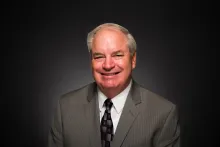
Robin Webber was born in Chicago, Illinois, in 1951, but has lived most of his life in California. He has been a part of the Church of God community since 1963. He attended Ambassador College in Pasadena from 1969-1973. He majored in theology and history.
Mr. Webber's interest remains in the study of history, socio-economics and literature. Over the years, he has offered his services to museums as a docent to share his enthusiasm and passions regarding these areas of expertise.
When time permits, he loves to go mountain biking on nearby ranch land and meet his wife as she hikes toward him.
