


Robin S Webber
This transcript was generated by AI and may contain errors. It is provided to assist those who may not be able to listen to the message.
I am looking forward to giving this message to all of you this afternoon, and I certainly hope for God's blessing and grace that it'll be encouraging and hopefully make a difference in your life as we move forward from this Sabbath day and the moments that follow and the days to come and the weeks ahead as God gives us life and grace to be able to serve Him. I'd like to talk about something that's very familiar to all of us to begin with, and that is the Grand Canyon. When I mentioned the Grand Canyon, your mind's probably automatically light up, and you've got that picture in the mind, because once you've seen the Grand Canyon, you can't forget it, whether by picture, by video, or especially when you're coming up to it, coming up to it, and you kind of see the highest part, and it gets bigger, and then you look down, and you look down, and you look down, and you see that little blue strip of stream down below, called a river, the Colorado, and you have in your mind what the Grand Canyon looks like. It's a marvelous sight to behold.
People come, they sit, and reflect on all the multiple forces that have created that hole in God's dirt. Multiple forces like sun and rain, snow, wind, and the river that I just mentioned has created such a picture before our eyes. What I want to share with you and to begin to develop on all of those forces are a matter of cause and effect. The Grand Canyon didn't just happen, and didn't just necessarily happen in a moment. Cause and effect that is indelibly, then, etched into our minds. Because when I say those two words, Grand Canyon, you know exactly what I am talking about. But I'm not here to talk about topography or geography today. I'm here to talk about God, and I'm here to talk about you and me. You and I are very much like those cliffs that we have seen that comprise the Grand Canyon. What I want to share with you this afternoon is we too are sculpted by elements that over time, surely, slowly impact us. That seemingly create indelible impressions like the Grand Canyon that are on display for all to see from God above and Christ at his right hand, to us looking in the mirror, to our families, to our co-workers, to our neighbors, to our church family right here. But as Christians, unlike the Grand Canyon, once God initiates his call to us, we do by his grace, by his doing, and the accompaniment of his Spirit residing and living in us. We have a choice, a choice as to what ultimately shapes the contour of our hearts, even, even as the remains of non-obating, relentless, natural forces. Mr. Miller spoke to those that continues to swirl around us and strives to eat up our time and to shape our hearts just as much as that wind and the rain and the snow and the ice and the river down below shape the canyon that I talked about. That is, that is, if, that's a big word, isn't it? If we allow them to continue eroding what God has chosen to perform in us, what God has chosen. Because let's remember something, you and me, we have something in common with the Grand Canyon in type. I realize that's a different stone structure, but let's remember something down here below what God had. We are also made out of earth. We're dust. We're clay. We get muddy sometimes, but God's calling has asked us, in spite of our human frailties of what we're composed of, that we might stand on the rock of His truth and that we might stand on that greatest stone that He has given us, and that is the rock and the stone of Jesus Christ. What better time to reflect on all of this than on the Sabbath day?
God's time out for us. A time out from what Mr. Miller was talking about today. All of the, all of what's happening out there beyond these doors, or maybe even still what's kind of happening inside of you, even as we haven't allowed the the word of God to to kind of settle us yet as we go through this services. I never take that for granted. We have an opportunity on this half of the day not only to distance ourselves from His physical creation out there that has gone astray, but something much more importantly, which is what I will be speaking to, is we have the opportunity to embrace His spiritual creation, His spiritual creation that is being developed in us. I want to share something with you. Remember I talked about that we live a life of decisions and choices. Join me if you would in 2 Corinthians 5. In 2 Corinthians 5, and let's pick up the thought if we could, in verse 17. In 2 Corinthians 5, therefore when when that is mentioned in the scripture, this is God's news alert. Listen up as they would say in the Marine Corps.
Add attention out of all of this book. This is what I want you and me to understand. This is God's invitation of understanding. Therefore, if anyone is in Christ, He is a new creation. A new creation. Old things have passed away. Behold, all things have become new.
Now, all things are of God who has reconciled us to Himself through Jesus Christ and has given us the ministry of reconciliation. Doesn't that speak to what Mr. Miller was just talking about? What it is telling us here, brethren, sometimes the world around us doesn't understand this. God didn't stop working after the sixth day. Did you know that?
That sounds sacrilegious. Didn't he read Genesis 1, Genesis 2? No, he didn't stop working.
He stopped his physical labors. He stopped his physical work.
God doesn't get pooped out like you would meet or like Mr. Miller was talking about. He still can't do what he did when he was 21, just 10 years ago. Skip.
God doesn't get tired. All of this was a part of something greater that he is molding, that he is sculpting, that he is fashioning after the image of the great stone, the great rock, the one that he has given us to model after. I'm not speaking about the Grand Canyon, but none other than Jesus Christ.
We recognize that God is still dynamically at work. Join me if you would in Ephesians, if you would for just a second, in Ephesians, another one of Paul's writings to whet your appetite as we get into this message. In Ephesians 2, let's notice verse 8. I'm familiar, but I'm going to center on something here. For by grace, not about us. It didn't start with us. We're not the engine of God's spiritual creation. He is. For by grace you have been saved through faith, and that not of yourselves. Notice it is a gift, the gift of God. Not of works, lest anyone should boast for we. Now notice this. This is really an incredible verse. For we are His workmanship. Oh, I thought His creation was over after the sixth day. No, no. There's a spiritual creation. God blessed the Sabbath to show what He was going to do next. That was going to be the creation to start with. Now He's in the process of a new creation. And notice then again what it says. For we are His workmanship created in, here's the model, not the Grand Canyon, but this image of Christ Jesus. Notice for good works, which God prepared beforehand that we should walk in them. Sometimes, so over the years, we have Church of God jargon of doing what? Doing the work. Has anybody ever heard that phrase? Am I the only one? Maybe I grew up too long, too far ago. It's got to do the work. I heard that often, but what is an initial part of that work other than what God is doing now with the firstfruits of His creation following the first fruit, Jesus Christ. God is molding and God is shaping. You say, well, have Mr. Weber. How do you know that? Join me if you would in Isaiah 64. In Isaiah 64, and let's pick up the thought if we could in verse 8. In Isaiah 64, verse 8. And we're probably familiar with this verse, but let's look at it. In Isaiah 64, verse 8, this is God speaking, but now, O Lord, You are our Father. Notice, we are the clay. We are the clay. We're the building material, but He's the master architect, and He's given us the master carpenter, the master stone builder, Jesus Christ, to help shape us and mold us in His image. And we are the clay, and You are our potter, and we are all the work of Your hand. That's kind of interesting, isn't it?
Now, sometimes I think about the Grand Canyon and how did it start? You know, sometimes I'll be in certain parts of the creation. I'll say, you know what? God must have spent some time there. This is pretty spectacular. Maybe He just kept on. Maybe He just stopped. He just lingered a little bit longer and made something even more incredible towards His glory, that we might know that there's a Creator, that there's a God, that this didn't just happen just by sheer evolution. Maybe He just, you know, lingered. I'm just using His metaphorically. Maybe He took His thumb and did that wide canyon. They say, you know, I'm just kind of alluding to that. You know, some people say, well, do you know how the Grand Canyon was formed? They say, no. A Scotsman lost his nickel. That means he kept on digging for it, being very frugal like they are. But God is doing more than that because we're not an accident, and you and I are not a joke. We're not here to just joke and riddle around today. You are a part of what God is doing, and this is leading us to a very important part. And it takes a time out, and it takes us on this day to reflect on what's shaping us.
What is shaping us? What voice is shaping us? What externally is coming our way, even after our surrendered allowance that we would listen to the voice of God? And if that's the case, what forces are shaping us by how then you and I are shaped and contoured?
What are we projecting on others? What do we project on others? Scripture tells us that we are to be agents of light, but that light can sometimes get a little scattered. You ever seen a light bulb going out, kind of flickering, and wondering if it's alive or not? Then finally, they just go, poof! So we're here to discuss these things, to understand that God has called you and me, again, to be a new creation. What does that mean? You know, new Creole? What does that mean? That literally means by the indwelling, by the calling of the Father, because no man can come into me unless God the Father calls him, Jesus speaking. Then at the new birth, we are given that new spirit. We are given the spirit of the Father. We're given the spirit of the Son, the indwelling that allows us then, not just to be a human being, but as Paul says, in a sense, we are a temple of God dwelling in us, his spirit, 1 Corinthians 3, 16, 17, and in there. So we're a new creation. It's a new way of being. It's a new kind of man. It's a new kind of woman that then, as Skip was talking about, in working together and listening to the voice of God rather than others, we become a new kind of community. We become a ahead-of-time kingdom of God in sharing what God's Word and God's Spirit can do. With that said, in that we are to be a new creation, that we have this wonderful invited relationship by God the Father. With this said, there are also other ongoing forces that are coming at you and me today like a tsunami. Skip began it. I'll speak to that some on our way like a tsunami that asks you and me to listen to different voices, different voices, and we cannot minimize the strength and the power and the saturation that these voices bring with them. They're there. They're powerful. And these voices have incredible impact on us as much as the sun, the moon, the stars with the tide, with the stars, with the forces that I talked about in the Grand Canyon. And they sculpt. Stay with me a second. See these flowers? I'm not going to break them up too much. Suzanne, whoever brought them, Rosie brought them. But they sculpt. They begin to shape. A certain contour begins to develop by all the voices that come our way. And they want to, if you're taking notes, they just leave their mark. They leave their dent, not just on our epidermis, but our endodermis and in our heart, because that's where these voices ultimately go. They go into our heart. They sculpt our view of ourselves. And if they sculpt our view of ourselves, and they sculpt our view of God, and they sculpt, they shape, they mold, they configure how we think, how we consider those that are around us. Let's consider how those voices come to us over a period of time. Not just in a day or night, but over a period of time, just like the Grand Canyon didn't just become. It took time for some of those eroding forces to develop. Let's consider for one the voices that come your way, my way, that we have in common from the womb.
A little one, that is a one, that is a baby, that is a life, can be affected by the forces that are outside the womb, the voices, the stress load that is around that baby in that family with that mother, with that father, with maybe what they've even endured physically. Voices can affect us from birth and begin to shape us. We then go to, and if you remember kindergarten and first grade, depending on where you started, we go to the the jungle gym world, to the playground of the education of hard knocks, being shaped by the alpha males, being shaped by the ladies, young girls, the pecking order that begins to develop at such an early age, telling us what we are, what we're not, perhaps acceptance, perhaps rejection, to the classroom, to our parents' voices, to our parents' expectations that sometimes just continue to roll at us through the years and even over the decades, even as adult children, to the voice of a boss, to the voice of a pastor, to the voice of brethren who may speak a trace, a trace of the accent about the kingdom of God, but have not really rolled out the entire language and vocabulary that God wants to have us share with others from our heart. Important. Today, with the intrusion of technology, we have multiple voices entering our lives, telling us what to think, how to be, some voices telling us what to become, even though we thought we were a man, we thought we were a woman until the last five or seven years.
And the language becomes fluid because it's talking about the fluidity of a society that doesn't have God at its center and doesn't hear the voice of God, doesn't hear the voice of God, and then becomes a God to themselves of redesigning themselves based upon how they feel rather than what God says. And this can be multiplied over into so many, many other areas. The intrusion, when many of us in this room were growing up, we basically were happily confronted with just three network stations on television. Remember that?
Just three. NBC, ABC, and CPS. Oh, and yes, and we also had those rabbit ears on top of the television with that little black ball and the little thing. You're going like this sometimes, you know, pushing them down and doing this. Spent more time doing that than watching a program.
And that's what we had. But that was the beginning of allowing strangers to come into our life. You know, when we think of our grandparents, when we think of our grand- and of course they had radio, but that when we think of our great grandparents, how many people affected their lives? Basically, who affected the life of a person is people that they knew. People that you met at the door and said, oh, come on in. Welcome. You knew them and they knew you, or you got to know one another and said, these are people that I can... These are good people. These are good folk that have moved into the neighborhood. But today, I ask you, we that have children or grandchildren, how many voices are coming through the walls of our home from strangers that we would never let in if we met them at the door to protect our children from what's going on? These are very real voices. And that is to say that there are not good things with technology. There, you know, the internet is an instrument. All instruments can either be used as a tool for good or a weapon to inflict harm. So we took a life. But what are some of the voices that you and I have maybe picked up that have shaped us? Let me just throw a few that... Then what happens is that these voices come into our first our ear, then our mind, then go down to our heart and just kind of swash around in our heart and then get hardened, hardened, and then they begin to bang on our hearts like a drum. And there's a drum beat. And we can begin to hear these voices that we create our own voice inside of us that we carry with us, just like a comfortable purse or a comfortable wallet that feels comfortable because we've carried it so long. Voices like, it's impossible. I'm too tired. Nobody loves me. I can't go on. I can't figure things out. I can't do it. It's not worth it. I can't forgive myself. I can't manage. I'm just afraid. I'm not smart enough. I feel all alone. We can transpose those voices and that phraseology, those voices of negativity, despair, and judgment on ourselves and on others to those that are around us. And it becomes our voice. I want to share a verse out of the book of Job. Join me if you were there in the book of Job. Job 19. Job 19. Let's pick up the thought if we could. In verse 1, this is Job. Remember Job, when he had his three friends? With friends like that, you don't need enemies.
Then Job answered and said, How long will you torment my soul and break me in pieces?
With your words. Remember when we were growing up, one of the first things that we, one of the first songs that, or one of the first phrases that we learned as a kid? Sticks and stones will hurt my bones, but words will never hurt me. Not at all. Untruth. Bad advertisement for life. Words do hurt. Words do shape. Words do mold us. Whether they be positive, God willing, or negative, they're going to shape us.
Unlike the Grand Canyon, and this message that I'm giving to you, I realize that God initially created the Grand Canyon. Of course, it's been contoured ever since that time.
You and I do not have time on our side. I do not have time on my side to be molded. I've got to go to work today, this minute, every minute, every hour, every day. I've got to come to the realization that my remaining time is limited. And in saying that, I am increasingly jealous of my time, jealous of my time. I thank God for my time, and therefore, because He grants me more time and suzy more time, we have become more jealous of that time on His behalf, because we are His tabernacle of His Spirit dwelling in us. So, we become more cognizant of the exterior and the interior voices that we choose to allow to impact our witness of God's calling, of God's development in our life.
And thus, that we might be a witness in what we have pounding down in our hearts and coming out of our words to you, our dear friends here in San Diego, those that are listening to our community, wherever we are, that we worship a good and a loving God. Now, let's understand something then.
In this, that we only have, as Paul says in Ephesians 5, 15 through 17, to redeem the time. When that term is used to redeem the time, that means it speaks of a time that comes and may be passing. It's only here for a while. It's speaking in a sense of harvest time, that when something is ready to come to be ripened, we only have so much time to bring it out of the field that it might be productive.
Our time on earth is a time for each and every one of us to redeem that time. Therefore, in that concept, I'd like to give you the title of where we're going, and that is simply this, the only voice that matters. The only voice that matters. I want to point to that voice, if you'll join me, please, and let's turn over to John 10. With the only voice that matters, the voice that God the Father granted us to be able to follow. In the Gospel of John, Ken, and take a look at this.
Excuse me just a second, I'm just looking at my notes here. It went somewhere.
Okay, so we're going to look at that. What I want to do for just a few minutes is just read through some scripture. Okay, is that all right? Let's listen to the call of the shepherd that we are to follow, and we are to follow that shepherd. You know, it's interesting. Let me just go back a second. Let's go to John 10. Yeah, good. Let's take a look at John 10 verse 2.
But he who enters by the door is the shepherd of the sheep. To him that the doorkeeper opens in the sheep, hear his voice, hear his voice, and he, that is the shepherd, calls his own sheep by name and leads them out. That's what God says. Sometimes he'll repeat something a second time. One is enough, but let's now look at number two, and we find that in verse 7. Then Jesus said to them again, Most assuredly I say to you, I am the door of the sheep, and whoever came before me are thieves and robbers, but the sheep did not hear them. I am the door, and if anyone enters by me, he will be saved and will go in and out and find good pasture. Let's go down to verse 11. I am the good shepherd. The good shepherd gives his life for the sheep. In verse 3, going back to this, it says, the sheep hear his voice. Let's talk about for a second, may we? That's when you're supposed to nod that we can continue this for a little bit longer. Sheep learn their master's voice, and they learn to follow their own shepherds and not others. In the Middle East at times, two shepherds with their flocks will meet. And you know, there's not a lot of people out in the pastures of the Judean highland. You get a little lonely, so you kind of want to talk. So two shepherds will get together, and they would start chatting then, as they probably still do today, and you know what happens after a while? You know, the flocks are all mixing. You know, it just looks like a muddle. You know, red and brown have gathered together and created a different color in the middle. And the guys are chatting, but then it's time to go. And then each of those shepherds has a specific voice, or they have a specific whistle, some guttural sound, whistled this or that. And all they have to do is use that, and you know what happens within just a few seconds? It's like the Red Sea. It opens up, and those different flocks are going. Because why? Because the sheep know the shepherd's voice. That's incredible, and that's beautiful.
So when we look at this, this is one of the reasons why David, back in the 23rd Psalm, let's just think about this for a moment. David said, the Lord is, what? My shepherd.
Of course, David had been a shepherd himself. He says, the Lord is my shepherd. And notice the claim. How dynamic. The Lord is my shepherd. And then what Jesus says is that those that are in that flock are going to follow him. Now, when David said, the Lord is my shepherd, everything else that is in the 23rd Psalm, including the green pastures, the still waters, the paths of righteousness, the valley of the shadow of death, but the staff, the rod. And I know that I know that all things are going to work out at the end. But that starts by what? Claiming, not only claiming, but recognizing the shepherd's voice. Again, I submit to you, thinking about this, that God the Father and Jesus Christ, let's combine those voices because they are together in unity, that those are the voices that we need to hear that rise above all the separation, all the disunity that Skip talked about today, and to be doing that. I'd like to share just a few words with what that says. Join me if you would in John 3. In John 3, let's pick up the thought here, if we could please, in verse 9. In John 3, verse 9. I want to give you some good news today.
Good news! This is the voice of the shepherd, and I want to direct it to each and every one of you. This is the voice of the one that is my shepherd, and I'm happy to claim that, and honored, because it was God the Father's invitation that we follow this shepherd. It says here, Jesus answered and said to him, speaking of Nicodemus, are you the teacher of Israel, and you do not know these things? He's talking about, can a man be born again? Most assuredly I say to you, we speak what we know and testify what we have seen, and you do not receive our witness. If I have told you earthly things, and you do not believe, how will you believe it if I tell you heavenly things? No one has ascended to heaven, but he who came down from heaven, speaking of himself, that is the Son of Man who is in heaven. And Moses lifted up the serpent in the wilderness, even so must the Son of Man be lifted up, speaking later of his crucifixion. Now notice verse 16. I've got good news today. This is the voice of God to each and every one of us. For God so loved the world that he gave his only begotten Son, he didn't have to, but he gave his only begotten Son, notice, that whoever believes in him should not perish, but have everlasting life. For God did not send his Son into the world to condemn the world, but that the world through him might be saved. And he who believes in him is not condemned, but he who does not believe is condemned already, because he not has not only believed in the name of the only begotten Son of God. Here is the one that created the Grand Canyon, the one that God made all things through, and the one that is going to be the king of the wonderful world tomorrow.
He comes with a message of hope. He comes with a message of encouragement. He comes with a message of love of what his Father is doing.
Not like our politicians today that have words of saber and verbal grenades at one another.
Both sides in America.
And people wonder why we are where we are today.
Jesus is projecting—it's a big word these days to project—he's projecting what his Father is like. He's projecting what he is like. He is projecting the kingdom of God that has become that he himself put skin in the game for his life and his death. And his Father offered that up. Can I make a comment? That's good news. I'm going to share something else. Share with me if you would in Luke 19. In Luke 19. In verse 10 it says, For the Son of man came to seek, and to save that which was lost.
And one of the things that he came to seek and to save and to rescue is the voices that are inside of us that continue to jingle and wringle and jam our ability to be that living sacrifice that God desires for us to be. He came to rescue us from the verbal abuse, the voices that have created a contour in us that we have picked up ourselves that sorts our witness to the Father's glory and what his Son has done for us.
That's our witness. That's what Mr. Miller was talking about. That should be our projection. Turn me in another verse, John 6, 35. In John 6, verse 35.
In John 6 and 35.
More good news. This is the voice of my shepherd.
And Jesus said to them, I am the bread of life. He who comes to me shall never hunger, and he who believes in me shall never thirst. But I said to you that you have said to me, excuse me, but I said to you that you have seen me and yet do not believe. All that the Father gives me will come to me, and the one who comes to me I will by no means cast out. For I have come down from heaven not to do my own will, but the will of him who sent me. Now notice verse 39. This is the exciting part. This is the will of the Father who sent me, that of all that he has given me, I should not, I should lose nothing, but should raise it up the last day.
God the Father and Jesus Christ are not butterfingers. To lose nothing. And we were nothing. And then we became something. We became part of this new creation as we accepted the voice of God, as we accepted the Word of God, that he is a creator, that he is a sustainer, that he is a life giver, that he is a law giver, that he heals, that he tells what's coming in the future, and he says, I've said it and it will be done. Period. And we came to believe that and we surrendered ourselves to him. Let me let it news. Jeremiah 29.
In Jeremiah 29, going back to the Old Testament, Eric is here for the first time. Eric, I want to share something with you. So that is simply that, is that we look at all of the Bible as the Holy Word of God. We don't put the Old Testament against the New Testament. It's all God's revelation. So we learn from the Old Testament as well because it's one expanding story of God's redemption for humanity. And it started with Israel, but now it's kicked into the Israel of God, which is the body of Christ. Understood? He understands. Now, do you understand that I've heard this for years?
Let's notice what it says here in Jeremiah 31. And this is spoken, and this is spoken as a prophecy and as a hope gesture to people that went into captivity because of their voices that they heard that changed Judah, that changed Judah from being the people of God to being compromised because of what they internalized from the outside, that took away the shape, the contour of God that he had designed to the pagans that were around him. And it says here in Jeremiah 29 in verse 10, it says simply this, Jeremiah 29 verse 10, For thus says the Lord, after seventy years are completed at Babylon, I will visit you and perform my good work toward you and cause you to return to this place for I know the thoughts I think towards you.
You ever ask yourself, what is God thinking about? What's he thinking about? Well, the thoughts that I have towards you says the Lord, thoughts of peace and not of evil, to give you a future and a hope. And then you will call upon me and go and pray to me and I will listen. He wants to hear our voice too. Listen. And you will seek me and find me when you search for me with all of your heart and I will be found by you, says the Lord.
And I will bring you out of captivity. As just today, he has allowed us, we that are that Israel of God, that elect, that chosen, the body of Christ, recipients of God's grace, that he has allowed us then to escape the captivity of the voices that shaped us and created a contour. And he says, I'm going to go through that with my spirit and we're going to have a chiseling job for the rest of your life.
We're going to go to work and I'm going to make you, in that sense, a masterpiece of the new creation in my hands. Even as I share these words of joy and truth and goodness, we recognize that there are other voices that are around us today. In Ephesians 2 and verse 2, again, let's recognize, to recognize that we are still in a world of which Paul says in Corinthians is ruled by the God of this age, the God of this world, cosmos, the God of this age, the God of this society.
And notice what it says here in Ephesians 2. Join me if you would there in the pistol of Ephesians now. In Ephesians 2. And let's pick up the thought in verse 1 if we could together. So simply this, with all the good news that I just shared with you about our great and loving God and your shepherd and my shepherd, collectively my shepherd, it says, and you he made alive, which we've been talking about, especially by his grace and the love and the language and the voice that he shares, welcome!
Come through the door that Adam and Eve went out the other way in. Come on in! I'm with you! But then notice he made a lie who were dead and trespassed in sins in which you once walked according to the course of this world, according to the prince of the power of the air, the spirit who now works, and the sons of disobedience.
We need to recognize that we still are in a world that's apart from God and has been since Eden, and to recognize that Satan, the adversary, here is called the prince of the power of air. The best way to explain this is to recognize that you, ladies and gentlemen, gentlemen, I can do the coffee thing in the microwave, you put an object in a microwave, you close that door, you push that button, those rays begin to come in, don't they?
And it kind of heats up that roll or heats that coffee from the inside out, doesn't it? It has to soak in. Well, we're kind of in this microwave. We're in this microwave of this world. And it says here that Satan is the prince of the power of the air, just like analogy could have been used in the 50s and 60s of TV or radio waves bouncing back and forth and being transmitted.
But I think today the microwave kind of really makes it. This is the world that God has called us in to stand up for his way and not listen to any other voice. God never said it would be easy. He says, I will be your shepherd, I will be your deliverer. Listen to my voice.
Don't listen to the other shepherds. Even sometimes some shepherds that even use God talk, but it's to their advantage. And it's not the voice of God that comes through the scriptures.
Important to understand. How does that voice work?
Today in our life, it simply recognizes that at times we would like to, in a sense, think that we could hear the voice of God like Adam and Eve walk and talk with God or hear the voice of God like Moses. That hasn't happened to most of us at this time. But God does tell us something very rewarding here in Hebrews 3. Join me in Hebrews 3.
And I think as I turn to Hebrews 3, I'm going to try to abbreviate everything down here for a second. In Hebrews 3, this is kind of parallels with and speaks to the story that we find in 1 Kings 19, which I'll just paraphrase for a moment. We all know about Elijah. We know that Elijah had become overwhelmed. He was listening to the voice inside of him rather than staying connected to God.
And in 1 Kings 19, he's by a log. He says, get it over with, let me die. But then God sends him some sustenance. But about 10 chapters, 10 verses down, it doesn't take long to disconnect from God, right? Just 10 verses. And where do we find him? We find him in the cave. He's in that dark cave with the mushrooms and the bats. That's basically what inhabits caves other than prophets that have stopped listening to the voice of God and the people of God today that did not learn the lesson of Elijah and what I'm about to share with you. And so we all nestle into our little dark cave because nobody loves us anymore. And God has forgotten us. And we forget that he is a sculptor, that we are the pot, and that he is shaping something not just for the moment, not just for our own personal happiness and our, but is shaping us for eternity to be a kingdom, a priest. So we find Elijah, God says this, Elijah, come out. I want to show you something. And so we have this, the forces.
We have the wind come by, but it says God wasn't in the wind. We have the earthquake come by, but God wasn't in the earthquake. Then we have the fire come by, but God's not in the fire. And then it says in 1 Kings, the chapter there, it says, but a still small voice, a still small voice spoke to him. I'd like to build upon that today for those that are looking for wind, fire, and earthquakes. God's not always going to come to us that way. He will in the future, big time when we read prophecy. But maybe we're looking for wind and fire and earthquakes when God speaks to us through a still small voice. So I mean, Hebrews 1 verse 1, God, who had various times and in different manners spoke in times passed to the fathers by the prophets. And you can think of the Old Testament. You can even think of the great miracle in the book of Acts, Acts 2, with the coming, which spoke and used types out of 1 Kings 19 too with the wind and with the fire and an earthquake that kind of shook up the place just even metaphorically of what happened that day with 3,000 people baptized. God at various times and in various ways spoke, uttered his voice and time passed to the fathers by the prophets, has in these last days spoken to us by his son, whom he has appointed heir of all things. Through him also he made the world. He speaks to us through his son today. Let me share something here for a moment.
See this? I want to share something with you.
I've got some wind going up here right now, which is nice. It's a little warm up here on stage. Okay, here's the wind.
Jesus is the light of the world. He's in this book.
And when you know you start getting a windstorm through your Bible and you're studying it, and you realize that our shepherd is also the light of the world, you're going to begin to have an earthquake happen in your heart.
You're going to begin to be contoured and molded in the image of Jesus Christ. You're going to be in the hands of the Father by his Spirit dwelling in us, and things are going to happen. Absolutely. I'd like to just share a few thoughts. I'm just going to go a few minutes here. I'd like to share some thoughts from a wonderful book that Susan introduced me to. I think it was yesterday morning to begin with. It's called From Beautiful Battlefields by a lady named Bo Stern. It's from chapter 3. It's called Catching Manner.
To know the background of this individual recognizes that, in what's occurred in her life and the life of her family, this scripture is like an oxygen tank to her.
It's a support system. It's a life support system because of what her family has been through and yet what they face.
It's very interesting in this concept. I'll just try to share it.
When God took Israel and moved them into the wilderness, they could no longer go down by the banks of denial and grab a leek, a cucumber, or an onion. They were in the wilderness, and God provided for them, each day, they will provide it, bread from heaven. They will provide it what we today call manna. In other words, what is it?
They were required to go out every day, every day, and collect that manna. What God provided would be enough to do what? To sustain them through the day.
That was it. Every day, they had to go out and pick up the manna, except the sixth day, which was the preparation day and moving towards the Sabbath.
Then God gave them some extra to get through the seventh day, thus to suffice them. They had to go out every day, but here's the point I want to share with you. But they had to go back each day. They had enough on that day, but they had to go back the next day. It never stopped. It wasn't, well, I got it on Monday. I'm good for the week.
Got it on Thursday, ready to go for the weekend. No, they went back each day. Why was God doing this? God, as this lady, Bo Sternbrock, said God was weaning them, taking them off the life support of a false voice, the voice of Egypt that they had been under for hundreds of years. How is that for contour shaping? When you're in that system, and what does you just think about? John talks about the seven churches in Revelation 2 and 3, and about the forces that came to each and every one of those churches. They were affected by the voices. They were affected by the society, not only from the outside, but some of the voices of those that God had called that had stopped picking up their daily portion of that which comes from above.
They were being weaned from Egypt, from that call to a voice that was worthy, his voice alone.
He would be their deliverer. He would be their provider. He would be their sustainer.
He would be their life force. He who is, and that same one that led them to the wilderness, the Apostle Paul says, and they followed him, and that was Christ the rock.
The same one, that same creator, the same one that allowed the bread of heaven, the initial bread of heaven, to come down to where they had to go out every day. And then it's interesting that when Jesus was in the wilderness, he said when he was offered by a false voice, the voice of the prince, the power of the heir, the adversary, he said, go ahead, just take those stones. They kind of look like bread anyway. Let's put some whole grain in them. Maybe just a dash. No. And what did Jesus say? Man shall not live by bread alone, but by every word that proceeds from the mouth of God. Are you with me? Did you hear that? That's from the voice of my shepherd and your shepherd, which gives us an incredible point to this is the voice that matters.
Susan and I were discussing this. It's kind of been just so profound the last two days when she started sharing this book with me. And it just goes to show that we need to, as it says in Hebrews 1, that God speaks to us today, not in earthquakes, not in this, not in that. But we have the living. Jesus is the living Word. His words became the written Word, and that written Word can be baked in our hearts and become alive on Mondays and Tuesdays and Wednesdays. But here's the encouragement. Here's the homework assignment. I'm speaking to myself. Let's be like God's instructions to Israel of old.
Daily open the Word of God. This bakery of the kingdom of God with shelves of love and wisdom and understanding as if our life depends upon it in this wilderness. That God keeps us, and even though we'd like to beam me up right now, Scotty, but Jesus said what?
Father, I'm not asking you to deliver them right now, but you keep them in here.
I want to share a thought with you in Deuteronomy. In Deuteronomy, we'll conclude with this. In Deuteronomy 1, God had delivered Israel 40 years before. Now they were going to go into the land. And you know what? When they went into Canaan, let me tell you something about Canaan. Canaan was like little Egypt. It was like Egypt on steroids. With a God-God here and a God-God there, here a God, there a God, everywhere a God-God. On their necklaces, in their ears, in their altars, with their human sacrifices of their children. That's kind of interesting thinking about today's society, how our children are being sacrificed. God will not uphold a nation.
That takes their children lightly. You can see it through human history.
And sometimes he uses one gentile nation against another. Because of that abominable practice.
Just think of the Punic Wars. The Romans were aghast of what the Phoenician Carthaginians were doing. As they would place a child on the altar with the arms of a God, and let that wiggle off those arms as babies are given to do, and fall into a fire. This was the world that Israel was going into. But notice what God says here in Deuteronomy 1, verse 29. Then I said, The Lord your God who goes before you, who goes before each and every one of us today, Paul Smith, Rosie Gonzalez, Judy Brown, David Beatty, Lance McCartney, April, with her hand up in the air, victory, warrior, right? Moving forward. It says this, The Lord your God goes before you, and he will fight for you according to all he did for you in Egypt before your eyes.
And in the wilderness where you saw how the Lord your God carried you, as a man carries his son in all the way that you went until you came to this place.
We that are parents, remember when we'd go to Disneyland or maybe we were in Yosemite and we'd have our little ones. I see Lauren out here right now, and Lauren, you'll have that experience. Probably already have. They're going to get bigger. It's going to get heavier. And they're going to get worn out. We that are grandparents and parents know that with our children. And sometimes the dad will just come along, and you know what? Go like this.
Or like this. I was telling Laura, we're talking about Laura, our oldest daughter, Susie and I about. When we were talking about this verse yesterday, I was thinking, yeah, that one time any of you ever been up to Vernal Falls in Yosemite, taking that hike up Vernal Falls? Anybody? Yeah, Susie, you can reach your ear with me. And Laura was two and a half years old, and all of her children were kind of born not tiny, okay, at birth. So at two and a half, she's a big girl, and she was just worn out. And I remember putting that that that first up to the bridge, that first bank is about like this. And I remember putting her on my back and getting her up there. It's just a personal thing. That's what our Father does with each and every one of us, even in this wilderness, in this wilderness that we live in, this modern day Canaan, with the adverse voices that are coming to us. Listen to our God. Listen to His message. Convey His message. This is the big message of unity. Don't major in the minors. Don't bring in the voices of this world, not only here in church, but in your living room, in your dining room, in your bedroom.
Go zone free from those voices. They're not here to serve you, but to take you down. Because our great God, my shepherd, my shepherd, of whom I shall not want, that is the voice that our Father above has given. All else is alien and of this world. The theme of this message is simply this. There is no other voice. Listen to the voice of the shepherd.
Open up your Bible daily. And if you're down and if you're out and you have that sinking feeling, you ask God to direct your fingertips, the reach of your heart into that Scripture, and ask Him to open up a door. Our shepherd is the one that opens doors and says, come on in.
I know I'm not supposed to talk about Susan. She told me I'm going to talk about Susan just in this one regard. It's good. Okay. It's good. So often what happens is in moments when we need that special touch, it's just amazing that, again, God doesn't work with wind and fire and earthquakes necessarily day, but that does not dismiss the power and the might and the in-reach and the outgo of His Holy Spirit in us and the prompting of His Spirit to guide us to a verse, to guide us to a reality check of where people have been, where they are now in God's good graces, and where we can be to join them, to recognize that, allow God to guide us to our shelf, to open up the literature, and sometimes just land right on it exactly what we need. I think that's some of the greatest miracles that happen in our people's lives today. Don't negate that. Don't dismiss that. That's God's Spirit prompting you, being with you, saying, I am with you. Now, pick up that daily bread and eat it. And after all, there is no other voice.
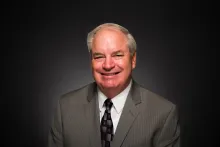
Robin Webber was born in Chicago, Illinois, in 1951, but has lived most of his life in California. He has been a part of the Church of God community since 1963. He attended Ambassador College in Pasadena from 1969-1973. He majored in theology and history.
Mr. Webber's interest remains in the study of history, socio-economics and literature. Over the years, he has offered his services to museums as a docent to share his enthusiasm and passions regarding these areas of expertise.
When time permits, he loves to go mountain biking on nearby ranch land and meet his wife as she hikes toward him.
