


Robin S Webber
This transcript was generated by AI and may contain errors. It is provided to assist those who may not be able to listen to the message.
I have a message that I want to get right into with you, then based upon that. And in all of this, to recognize that I just simply kind of want to talk with you today. Try not to preach at you, because I'm looking in the mirror at myself right now. I see my image. I'm looking at myself just to make sure that I smile more at you and not frown.
But what I'm going to say to you is what I'm speaking to myself, and it's that great story, the ageless story that God wants to bring back to each and every one of us, and to look up to Him and to recognize how we have access to Him and to whom we go through. Every day of our lives, we are confronted with an assortment of doors. Doors that come our way that in a building and or not just simply in a structure of entrances or exits, but the different chapters that we go through that lead us into new rooms and new compartments of our life.
One thing I kind of wrote down in my notes today was simply this. Not all doors are created equal. Have you ever noticed that? Not all doors are created equal. Not how they look, not how they function, and frankly, not the outcome that each and every one produces as we go through them.
Allow me just to stretch your mind for a moment to bring you into this message, to think of the different kind of doors. You might want to jot them down. I've got six or seven just to start off with. But to think that we have at times we go to a mall, we have automatic doors. Like those, you don't seemingly have to do anything.
Automatic doors. There are also revolving doors. I remember especially in the old days, the old buildings, not that I've bored them, but the buildings were insistent. Used to go into an old department store like a Woolworth. That's a five and dime for those that don't know what five and dime stores are, where they would have the doors that were revolving. You'd go around and around. Of course, when I was six or seven or eight, like all boys, I just kind of wanted to keep on going around and around and around and around and create a windstorm and never wanted to go. And I thought I was going places, but I wasn't really going anywhere at all, just like Hammy the hamster on his hamster wheel.
So we recognize there are automatic doors that sometimes see us coming and just open up for us. There are those revolving doors. There are also swinging doors, like in an old front porch or a back porch that you would go out to on a summer day to sit. And it's kind of nice when you're going up, but sometimes you've got to be careful because sometimes they can slam you on the rear on the other side. There are also trap doors that sometimes seem very firm, seem very bounded, and you don't even really know that they're there.
They're firm and they seem like they're going to be able to stand the weight of you or your life's experience, but they crumble and they snatch you. I remember growing up in San Diego when I was growing up in Emerald Hills for you that are in San Diego by the 94 in Federal Way. My brother and I, we used to go out and we'd get these trapdoor spiders for some of you that know what a trapdoor spider is. And they have a trapdoor and it looks very peaceful and very quiet.
It's kind of made out of the silk or the webbing and then you just kind of poke it, you knock on it, you knock on it, and all of a sudden that little thing would come up and grab you down. That's why it's called a trapdoor spider. So there are trapdoors in life. Also, at times, we will see shuttered doors. Unfortunately, right now, we're seeing shuttered doors of mama and papa and or small businesses that are going out of business.
And their doors are shuttered. The blinds are down. The doors are locked. People can be like that, too. People can seem like a shuttered door. They've got a sign on them. Going out of business. Have no more to give. Have no more to share. There's nothing on the shelves of my life. We also then recognize that at times that there's also locked doors. Sometimes, doors that have been locked from the outside where opportunity has been denied. And sometimes we've just simply locked ourselves in. We have the key. And we've locked ourselves in. Do you think that we're all alone?
That's a very lonely place for a Christian to be, to think that they're all alone. There's nothing lonelier than a lonely Christian that's forgotten that there is a God and that he will show away in his time and for his purpose. I want to talk about that in the course of this message. Sometimes there can seem like there's no off-ramp, no off-ramp on that road of despair, that road of seemingly no end.
And we've locked ourselves in. And we've forgotten that there is a God. And we have forgotten that he is a deliverer. And we've sometimes forgotten that God has chosen us out of his great love, not because of who we are, but because of who he is. And that in this process of pilgrimage, of this exodus that we're on, we've always got to remember that God's not making trinkets. He's making jewels. And jewels are made by design. And they come under pressure. We've all been there.
We've all experienced these doors. And all of us at one time or another have been on that road where there doesn't seem to be an off-ramp from the freeway of despair, of frustration. And that's why we're here today for these high days, to hear, to read, to share with one another, and allow God's Spirit to share with us, to realize that we're not alone.
What is the festival about? Why do we come on these feast days together before God? Because we follow His command. It's where we gather the family. It's where we break the bread. Now, right now we're breaking unleavened bread. And remember what Jesus said, that man shall not live by bread alone, but by every word that proceeds from the mouth of God.
So we gather the family. We break the bread. And we tell the story. And that's what I want to do this morning, is to share a story with you. And it's a story worth repeating. Today is the story of open doors. It's the story of open doors, of openness. Not going out of business. Not being shuttered. A door that is open, but we have to be willing to go through it.
Let's think about the Feast of Unleavened Bread right now, two of the great openings that we come to. And number one is to recognize that our Savior, Jesus Christ, rose during the days of Unleavened Bread, as Mr. Helge shared with us on the Sabbath. The stone was rolled away. The light came in. But that greater light, the light of the world, the light of God, came forth from that tomb. And it mattered. God the Father interrupted human history once and forever. And now we're a part of that.
The second great opening during this, the days of Unleavened Bread, is the opening of the Red Sea. And to recognize that a people that were not a people, a people that had been nurtured and birthed in slavery for hundreds of years, went through a gulf, came up on the other side, and God opened up a door to them. The third opening is the opening that God is going to work in your life today, if you'll allow Him to. And that is for Him to open up your heart more than ever. But it's a relationship. He does this part.
You do your part. He is more than willing, and we'll talk about that at the end of this message, but you've also got to be willing to open up your heart, even though it might hurt. Even though it might sound strange. Even though it might seem difficult. Even though others will lampoon you, or tease you, or say, well, what happened to you?
Is to recognize that you've been called on a pilgrimage. The Exodus story continues. The Passover, the Passover, Days of Unleavened Bread, Exodus story, is the great story of the Scripture. And it moves down into our time and into our age, and we are about the current edge of that storm that moves towards the kingdom of God.
And we can learn lessons from it, and I hope that we can. For us to understand the opening of the tomb, for us to understand the opening of the Red Sea, and for us to be able to open our hearts, will be a challenge. It's a decision. It's an interruption that God will come back again and again in our life. I think what happens sometimes, and what we've learned with the interruptions and the disorder to where we need to reorder our lives now in this time, is to recognize that God's going to keep on tapping us.
It's not just a one-time get on and get off. God is going to continue to interrupt our lives as He molds and He shapes us. And He's going to take a decision. He's already made the decision. He wants us. David said that we are the apple of His eye. So He wants us. That's not where the decision is, but will we in faith be able to open ourselves up? Allow me to share a thought for you in this, and the choice that is before us.
I'd like to read from Robert Frost for a moment. Robert Frost was a very famous poet at the beginning of the 20th century. He wrote a whole poem, and it's very long. I'm just going to extract it from a moment. It's called The Road Not Taken. And it speaks of a time when he's out and he's walking around, and there's two roads that are before him. And he just simply says this, two roads diverged in a yellow wood, probably like in the autumn time. It must have been glorious and beautiful. And he's out there, and one road was going one way, and one road was going the other way.
And the other road seemed to be the one that everybody was traveling down. He said, so two roads diverged in a yellow wood. Then at the end of the poem, he simply says this, I shall be telling this with a sigh, somewhere ages and ages hence, two roads diverged in a wood, and I, I took the one less traveled by, and that made all the difference. Our Father above and through his Christ have called us in this day and age, on the pilgrimage that is before us, and the doors that await us to mold and to shape us. They have called us to travel that road that is less traveled. How do I know that?
I can turn to Scripture. Tell me if you would. In Matthew 7, would you join me, please? Let's open up the Word of God if you're at home. Let's open up the Word of God because an open Bible is telling us that we've got an open heart that we want to learn. Matthew 7. And notice what it says here in Matthew 7 in verse 13.
It says, Enter by the narrow gate. Enter by the narrow gate.
For wide is the gate, and broad is the way that leads to destruction, and there are many.
Who go by it, who travel down that road. That's the highway of most people's lives. Because narrow is the gate, and difficult is the way which leads to life, and there are few who find it. Our Father, that's called you and me, to follow in the footsteps of Jesus Christ.
Christ was surrounded by the world and surrounded by people. But in one sense, He, as He came into the paths of so many, yet lived a lonely walk. But it was a walk that must be taken, and it's a walk that His followers must take to follow in His footsteps. And it is in that, in that new and that living way, to follow that great Passover, that makes all the difference. I want to share the title of my message with you today. That will keep me on track, and hopefully bring you along. It's simply this. Opening up the door of eternity through life's interruptions. Opening up the... Remember when we were elementary school or junior high, where we learned we had that little straight line above the E? To make it thee. Opening up the door, the ultimate door, the one that God has given us. Opening up the door. Not every door. Not automatic doors. Not revolving doors. Not trap doors.
Not swinging doors on a porch out in the summer. Not locked doors, but the door of eternity through life's interruptions. The story of Scripture is the story of doors opening and closing of entrances and exits by God and by man. God opened up a door in the very beginning to Adam and Eve. Paradise. That's what Eden really means. Paradise. It's a Middle Eastern term. Open up an incredible door and say that it's all yours. Half of the having. Only. Only. Here's the instruction. See that tree over there?
No.
Man was invited in to the door of Paradise. That walk and a talk with God. Can you believe it? Is that not incredible? And yet, he exited because of his own choice. Of his own decision. And they laughed.
God ultimately called a people. And as I said earlier, the story of Scripture is the story of another interruption and an involvement of a people who were not a people. Slaves. A very, very loose confederation of people that were kind of alike. They had a great, great, great granddaddy that they all shared in common. But boy, there was a lot of friction there.
And God decided to send them into the wilderness to sandblast them for 40 years before they went into the Promised Land. I want to talk about that. Because, again, the Exodus story is our story. Just in different times. Now come upon us. I'd like to share just a broad note here for a second. If you want to take notes, and I'll send this out to all of you. But what do I mean by the Passover story and the Days of Unleavened Bread story? I'd like to borrow from a gentleman named N.P. Wright for just a moment. It's just going to go for about two minutes.
So if you want to take notes, fine, and if not, let's just see the commonality of the book. Just like Mr. Garnett the other night discussing the Passover of old and what the Passover that Jesus brought us is all about in the commonality. Let's understand the story. The story needs to be told. That's why we come to the Days of Unleavened Bread. When we stop telling the story on these days and give the meat and or give the Unleavened Bread or the bread, we will forget them.
We'll forget the Passover story, the great story, the ongoing pilgrimage and deliverance of God. And to recognize it's not over because God has, I think, mightily interrupted this world. And I think He's also mightily interrupted the lives within the body of Christ to reorder, to re-examine, and to realign our lives.
And to recognize that the process remains the same. Let me give you six great things of the Passover story. Number one, is simply this. There's a wicked tyrant. There is a wicked tyrant, a world that is held in bondage. Just as Egypt was held in bondage, we recognize that today that Satan is the prince of the power of the air. Ephesians 2, 1-2. So number one, there is a tyrant.
Number two, there's a chosen leader. There's a chosen leader. They didn't even, in that sense, choose themselves. They were asked. But in the Old Testament, there is a Moses. There is a Moses. But in the New Testament, we find that second Moses and or that greater Moses. As it says in Deuteronomy 1815, Moses himself thinks there's going to be a prophet that is going to come like me in the future. One that would be what? He would be a leader. He'd be one that would be a lawgiver, and he would be a deliverer. So number one, there's a tyrant.
Number two, then there is a chosen leader that is given to us by God. Number three, we are rescued by a sacrifice. We are rescued by a sacrifice. Absolutely. We think of that by the Lamb's blood that was put on the doorpost of Goshen, that the death angel might pass by, that they might be passed over as an entire empire was passed through. We then recognize that Jesus, the Lamb of God, was also, in a sense, his blood came down another piece of wood on that altar of Golgotha, the Lamb of old, the Lamb of God now.
Number four, we have the victory of God. The victory of God. We're going to talk about that in a moment where the Egyptian army was swallowed up in the sea.
Swallowed up! But remember what it also says in 1 Corinthians 15, about 53 or 54, that death, the ultimate and final enemy, is swallowed up. Number five, we have the presence of God. Number five, in ancient times, on that pilgrimage, it was the cloud by day and the pillar of fire by night. And we're going to talk about that in a few minutes. But to recognize that today, that Christ is in us, that same one that was in the cloud, that was in the pillar, that was amongst the people, before and behind, as we'll find out, to recognize that that who is, was, the word, it was Jehovah, now known as Jesus the Christ, who was in us and guides us.
Not just before us, not behind us, but in us. I kind of want you to think about that one for a moment. Number six, the last great theme is that there is a promise that God will bring about. Not necessarily in our time, not always in our way, but it is a sure and more sure than the sunrise tomorrow that He's given us a promise, just as He gave the children a visual promise of a land of milk and honey, that God is going to grant us that ultimate promise of the kingdom of God, of experiencing eternity.
And as it says in Revelation 22 and verse 4, that we are, Susie and I, I think we're talking about that yesterday, about the promise that we are going to be able to see Him face to face and experience Him and be with Him. You talk about, just thought about this, there's going to be no social distancing between us and the Father and the Lamb.
It's going to be up close and personal.
And I'll tell you what, they can breathe out of me all they want.
And I think you feel the same way. And they are as they usher forth their words and guide us. So I just kind of want to bring that out for a moment and to share that with you.
But with all that happened, stay with me with the Exodus story. Here, Israel had gone through all of those interruptions with that ancient empire of Egypt, as God brought down Egypt as He took on the gods of Egypt one by one by those plagues. Go get them!
Go get them! Go get those slave masters!
Go get those know-it-all Egyptians with their pyramids and their hieroglyphics and all the math that they know and mapping out the stars.
We're ready, God!
It's always good when God's interrupting somebody else's life. Have you ever known this? Am I the only one? Woo-hoo! Right?
Because you think we're on God's home team. Something about human nature. It's always just God and us. But what happens when God interrupts our life and begins to go to work on us, not just our externals, not just simply what we know up here, but begins to shape in the mold? I don't know if you can see it. The heart.
Enough already, please. No, no, no, no, no, no more. But that's where God does His most important work.
Not simply explaining who He is, but sanctifying us and working with our heart to move us towards being able to exist in that Promised Land that yet lies ahead. And Israel found this problem in Exodus 14. Join me if you went over in Exodus 14. In Exodus 14, join me there for a moment because all of a sudden, big interruption. Change of plans. Hey, whoa, whoa, whoa, whoa. I thought we were going to that way. I thought we were going to go northeast. And now we're going southeast. Northeast would be great because that's just the Sea of Reeds. I think we can kind of slog ourselves through that. But that's not what God had in store for two purposes. I'll try to remember them as I get to them. So they went south. They came up to, again, this challenge where their backs were up against the wall. They were on the road of despair. Here the mightiest army in that part of the earth with over 600 chariots was on its way to drag them back into slavery. And there they were. There was no door. There was no off-ramp of this exit, no exit on the road to despair. There was the Red Sea. What is God doing? What in the world is going on? We always ask that when it's affecting our world.
But man's extremity is just the beginning of God's opportunity to knock on our door and to get our attention. And we know what happened there. We know what happened. God created a great miracle. Number one, when you go to Exodus 14, you notice that what happened here—there's a couple of things I want you to draw out for you, one that you haven't seen before. And if you do know about it, that's fine. We'll repeat it again. Repetition is the best form of emphasis. The Israelites complained. The Israelites complained. The Israelites. But how often have we complained when it seems like there's no way out? There is no door. There is no opening. God, why this? Why now? Why me?
Israel's back was up against the door. What did God do? Number one, he told Moses to do something very important. Point number one, I want you to—and if you want to join me, this is something that we all need to do when God interrupts our life. Number one, he told the people to stand still. He told the people to stand still. Isn't that what God says in Psalm 46 and verse 10? Stand still and know that I am God. Moses, you tell them for me. You tell them to stand still. Who, me? Stand still. But let me get my feet running or let me do this on myself. Not good.
Number two, he moved in between his chosen people, the Israelites and the Egyptians. That cloud, and it was a cloud on one side, and it showed to them as a pillar of light and fire on the other side. He separated the enemies of his people from his people. And what did he do? That says 14. Then he said, get the people moving. And Moses said to them in Exodus 14, and Moses said to the people, Stand still, see the salvation of the Lord, which he will accomplish for your day. For the Egyptians, whom you see today, you will see no more forever. And the Lord will fight for you, and you shall hold your peace. But later on, he says that, get the people moving. One thing that we find out about this story in the Red Sea, then we're going to be moving to the New Testament, it's simply this.
There are only certain doors that God can open. Never limit God, and never limit the door that he can open. Come to expect the unexpected from a God who is uncreated.
So we come to do that. Number two, then, we stand still. We analyze, we look at the door that is open. But we need to recognize that sometimes doors only remain open so long, and they can close. And then number three, and we're going to go through some of this a little bit later. Once we understand the will of God, and then when he says to move, move. Just like I've been sharing with you with Abraham, get up, get out, get going. It's not enough just somebody to get up. You got to get out. And you got to get to going.
You must move, or you will be paralyzed. Or you'll be caught like that fly in the spider web. This is the lesson that we have. We also recognize, then, that when Egypt went into the water, is to recognize that God can open doors and he closes the door. And he closed the door on the army of Egypt as a witness. Now I have a question for you. Why did God take them down to that part? Well, number one, because he wanted to really impress on them forever that ultimately he is the deliverer. And by tradition, that happened on this the seventh day as they left Egypt after seven days. He wanted to instill in their minds forever that he alone is sovereign and above all the nations. Also, he recognized he didn't take them up in the northern route because if he had just taken them north, they would have been over in Canaan very, very rapidly. And they weren't ready to take on the Canaanites and their ways. God was trying to get them out of Egypt to begin with, with everything that Egypt was, and to go into little Egypt, and also a very ferocious and very vicious and very warlike group of confederation of tribes. They would have been ready for that.
Why then does God sometimes open doors and close doors? Because it's God alone that sees them of the future and knows what you and I are ready for, what we can handle even with him. And so we look at that. Wonderful story. But let's take it further into our lives. Join me if you would in 1 Corinthians 10. In 1 Corinthians 10, I'm going to open up my Bible for a moment.
Let's take a look here in 1 Corinthians 10.
And we pick up the story here in verse 1. More of a brethren, I do not want you to be unaware that all of our fathers were under the cloud and all passed through the sea, and all were baptized into Moses and the cloud and in the sea, and all ate the same spiritual food and all drank the same spiritual drink, for they drank of that spiritual rock that followed them, and that rock was Christ.
That rock was Christ.
It's interesting when you look at the construction from the Old Testament, the New Testament, from the first Exodus, to the Moses that God has given us since that second Moses or that greater Moses, to understand that the one that was in the pillar that led Israel is the one that leads us today and dwells inside of us. Let me take it back for just a second and think about this. About that pillar of that cloud during the day and that pillar of fire at night, what was that all about? I hear my good friend John Garnett in his expressions. What's that all about? What was that all about? Let me share some thoughts with you, and maybe you want—here's a few notes for you to take down. It's simply this. What was that about? That the cloud and the pillar of fire were a theophany. That's a God appearing.
The one that became Jesus Christ, ultimately. The word. There was a theophany. It's called a God appearing, and he was in that cloud. He was that messenger. What did he do? I want you to think about this for a moment. Number one, he lighted Israel's path. He lighted Israel's path.
He is the light of the world. Number two, he protected them from their enemies.
That pillar of cloud by day, that pillar of fire at night, had to be very, very reassuring. Israel's out in the wilderness, away from civilization. It had to be a comfort to them, a security to them, that they were not alone. Here's one. Here's one. Are you with me? It controlled their movements. But we want to go this way. Oh, God. The pillar went that way, and the job was to follow the pillar. It controlled their movements. Now, you know Adam and Eve didn't want their movements controlled. There's a little bit of Adam and Eve and all of us, maybe a lot.
We don't like our movements controlled.
I was just talking to myself.
Big God, little God. And what we said at Passover this year, as we partook of the bread, we partook of the wine, we're pushing that little God out of our heart and giving our lives and surrender unconditionally to that same God that was in that pillar and in that cloud. And also, that presence inspired God's demonstrable love towards His people, His zealousness to carry out His promises of going from slavery to going to a land of promise. And also to be an example and an inspiration of returning that zeal and returning that rightness and returning that love to Him in that bondedness of a relationship. Now, join me, if you would, in John 1. Because this is about the door of eternity. And I want to share some thoughts with you, dear friends. It's kind of really exciting when you go through John 10.
In John 10. And let's pick up the thought if we could. In John 10. Just stay with me here for a few minutes. I'm going to read this to you, then I'm going to... Let's just allow the Word of God and the revelation of God and understand the love of God as I read through this. Then we'll define it. Okay? You with me?
Most assuredly, I say to you, this is Jesus speaking in the first person.
That's why He could say that they said they were in awe because He came speaking with authority. The authority was that He was speaking in the first person. Prophets of old, rabbis of them, teachers of them, always spoke in a different person. They spoke of what Moses said or what Jeremiah said or what Isaiah would have said.
Jesus would say, assuredly, I say unto you, first person.
Moses surely say to you, He who does not enter the sheepfold by the door, but climbs up some other way, the same as a thief and a robber. But He who enters by the door is the shepherd of the sheep.
To Him the doorkeeper opens, and the sheep hear His voice, and He calls His own sheep by name, and leads them out in transits and exits. And when He brings out His own sheep, He goes before them, and the sheep follow Him, for they know His voice. If you ever read Keller's book on a shepherd's look at the 23rd Psalm, even today, either with the Jews or with the Bedouins or with the Arabs over in that part, when they have sheep, they have a certain whistle, and you hear the whistle, and the sheep respond to the whistle or the call. They know succinctly the call of that specific whistle or call of the shepherd. Yet they will by no means follow a stranger, but will flee from Him, for they do not know the voice of strangers. Jesus used this illustration, but they did not understand the things which He spoke to them. So He goes deeper. You ready? We're going to go deeper now. Then Jesus said to them again, Most assuredly I say to you, I am the door of the sheep. All who ever came before Me are thieves and robbers, but the sheep did not hear them.
I am the door. First night, if anyone enters by Me, he will be saved, and we'll go in and find pasture. Later on, verse 10, He says, I have come that they might have life and that they might have it more abundantly. I am, verse 11, the good shepherd. The good shepherd gives his life for the sheep. A hireling doesn't. Not at all. And the sheep get scattered. Verse 14, I am the good shepherd and I know my sheep and am knowing the good sheep. Verse 14, I am the good shepherd and I know my sheep and am knowing by mine. As the Father knows me even so, I know the Father and I lay down my life for the sheep.
Verse 17, Therefore my Father loves me because I lay down my life, that I may take it again. No one takes it from me, but I lay down myself. I have power to lay it down and I have power to take it again. This command I have received from my Father. Okay, let's put this all in context. What is Jesus talking about here? Let's understand that there were two different kinds of pens. There were sheet-folds or pens, cages, that were in the village itself. And those had gates and those had doors. But we're talking about being out of the wilderness, might say the wilderness of life. And that there would be a sheep-pole. And there would be a very, very narrow slip to where the sheep could come in and out, entrances and exits. But there was no gate. There was no door.
What would happen is, at nighttime, the shepherd would literally lay down, kind of fit. I almost feel like I should have two posts and laid down. So I'm going to go sideways looking at Susan now. But it's like you're laying back this way. You're actually offering yourself, and you are becoming the door. You're becoming the gate.
To keep out the stranger, to keep out the bearers, to keep out the lions back then. To keep out the bad shepherds. To give the sheep a security. When you recognize where it says, you lay down your life, we understand that because Jesus was crucified for our sins. We understand that. But there's a greater significance that beyond that, that laying down his life was not only his death, but his life, his love.
When you hear the term good shepherd, when you hear the term good shepherd, the good shepherd is, it's not talking about efficiency. It's not talking about Johnny on the spot, having everything, you know, in order. It's talking about a quality of heart. It's talking about a love for the sheep, that he will always be there, that he will never leave us nor forsake us, that we will always be there. And for the sheep then, the sheep at times would actually go over the shepherd back and forth because that gate of the sheepfold, if you want to put this down in your notes, was the worldview of the sheep and of the lambs, the worldview. It was not only a gate, but it was their window on the world as they went over the shepherd and they went through the gate. It's how they walked and they approached into the world itself through him and by him and founded on him. And then as they would come out of the world, they would come into the sheepfold at night and they would have that safety, they would have that same security, just like the pillar of fire and the cloud by bay that we find in the Old Testament. Hmm. He is the door. I want you to think about something for a moment. In John 10, it's telling us three things. Number one, that he is the door.
Number two, it expands that he is the good shepherd. And number three, allow me to make it plain. He is also the gatekeeper. Join me if you would in Revelation 1. In the book of Revelation 1.
And let's pick up the thought here. And, well actually I'm going to go up a little bit further. It's speaking about Jesus being right in the midst of the—yeah, I like that. I didn't see that before. That's why we have a blessing on the message, okay? We're expanding here, okay? Then it says here, verse 12, chapter 1, to see the voice and spoke to me, and having turned, I saw seven golden lampstands representing the church, God's people. Then, wherever they might have been and down through the ages, and in the midst of the seven lampstands, one like the Son of Man, clothed with the garment, down to the feet, and girded about the chest with golden band. Right in the middle, right at the entrance of Revelation, which gets a little frightening, humanly speaking. Jesus, right up front, says, in a sense, I'm the Good Shepherd. I will be that door. And I'm going to be right in the middle of all of this. And notice in what it says in verse 17, And when I saw him, I fell at his feet as dead, but he said, and he laid his right hand on me. This is John speaking in this vision.
What kind of social spacing is that? Jesus was very tangible in that vision at that moment. He laid his hands on him. And when I saw him, he said to tell him, do not be afraid. I am the first and the last. I am he who lives and was dead, and behold, I am alive forever. And I have the keys. I'm the gatekeeper. I am the gatekeeper of life and death.
And I have the keys of the grave and of death.
Interesting. Let's think about that for a moment.
He does because he's been in both worlds.
He's been in our human existence, and he was put away in a tomb. He's known life. He's known death. God, Emmanuel, God with us, but in the flesh. And that door opened during this, the days of 11 bread, that we didn't have to look back, but that we could look forward and recognize that there is no stone, no stone too heavy, that it can't be rolled back. To recognize that every day that we wake up, no matter what the challenge, that it's not just a pillar of fire or a cloud by day, but that Christ lives in us. And our Father that is above is watching over us and caring for us. And to have that confidence, Psalm 121. I want to encourage all of us. These are our thoughts. Psalm 121. I want to encourage all of us. These are challenging times that we're going through, dear brethren. And each and every one of you are dear. I know Susie and I, we can't, like the old days, be with you every week, back in Pasadena days or every other week when we had Redlands in San Diego. But never, never, and I say this quite sincerely, never do not think that we don't care, that we know that you're out there. We know you by name. We know many of you by the pilgrimage that you're on. And if we know you in our human sense, to know how much our loving Heavenly Father knows us, as he told David, you're the apple of my eye. In Psalms 121. I will lift my eyes to the hills, from whence comes my help? My help comes from the Lord who made heaven and earth, and he will not allow your foot to be moved, and he who keeps you will not slumber. Behold, he who keeps Israel, shall neither slumber nor sleep. The Lord is your keeper. He is the gatekeeper. He is the keeper of the sheep. The Lord is your shade at your right hand. You think of that in the Middle East, the shade at your right hand. The sun shall not strike you by day, nor moon by night. The Lord shall preserve you from all evil. He shall preserve your soul. The Lord shall preserve. Notice you're going out, and you're coming in, as we strive to take that road less traveled. And we understand—are you with me? And we understand that Jesus the Christ is the door, and he laid his life down for us.
And he continued to lay his existence down for us, not only as our Savior, but as our High Priest, and opens up another door that says in Hebrews that we can come before him through the veil of his flesh, and that that door has been opened, that we have access to God, the Father, through him, and through that name. And not just a name like a signature, a name that you may pronounce, but understanding the totality of that name, that he is the keeper, he is the shepherd, he is the gate, he is the door. The door that was locked from humanity by our own decision back in Eden is open for business, for those that will heed the call of the Father when it comes to them. And yes, take that road which is less travel, not by our might or by our power, but by his Spirit.
Sometimes, I want to kind of finish up with this thought. Join me if you would in Revelation 3. In Revelation 3, that's where I want to go to. I would say that this is, I think, the great lesson that we've all had during this days on 11 bread. As challenging as the world situation has been, dear friends, I think that, I don't know if I'd trade in on this experience of being in our homes for the Passover, or the night to be much observed, or even communicating the way that we are right now. Just how God has not only interrupted human society, but I know that he's interrupting me. This noggin, knocking on my door. Revelation 3, verse 20, notice this, Behold, I stand at the door and knock. If anyone hears my voice and opens the door, it says, I will come into him and dine with him and he with me.
It's interesting in the scripture that there's really the significance of what we call a double knocking. Jesus in Matthew 7, 7, that's kind of easy to remember, because 7, 7, first Gospel. Matthew says, ask and seek and knock. But as we ask and seek and knock, sometimes God is not necessarily going to open up the door. And there are reasons for that, and we have to trust him. After all, he's one that's laid down his life. And sometimes he's going to get up and just, no, not now. Just a little bit like, remember when Paul wanted to go to Bithynia and he wanted to go to Asia? And he was doing God's work and he's Mr. Apostle and here I go, go, go, go, and this is God's work. But it wasn't. And God moved him and the door was opened in Troas, which is Troy, of Homer fame. He not only opened up a door, but he opened up a window to preaching the Gospel over in Europe for the first time. There was a time, you know, where Paul and Silas Silvanus were preaching and they got thrown into jail.
And the jail door slammed on them.
What's that all about? What's that all about? But they didn't give up knocking and asking God. On that night, in the darkest spot behind a jail door lock, the key was on the outside with the Roman jailer, Paul and Silvanus were praising God through the Psalms. They were singing. They were proclaiming. They were, in that sense, understanding that the pillar of fire and the cloud by day was not just out there, but in them.
And it burned inside of them just as much as the pillar of fire had burned as a light to Israel. And they praised God. Earthquake time, door opened, jailbreak, God designed a jailbreak, for a purpose.
And sometimes we just have to recognize that we have to sing to God on the side of, on the shore of slavery sometimes, rather than just singing on the other shore with the women of Israel and Miriam when the door has been opened. It's just as vital to praise God in tribulation and in trial, and when we don't see the off-ramp on the road of despair, to take that road which is less traveled and pray to God. Understand the story of the Exodus. Understand how he stood by his people at the Red Sea. Understand how he raised up Jesus Christ and that stone was rolled away and the tomb was empty. That's the God that we worship. That's the God that we go out to during and after the days of Unleavened Bread. And it says that if somebody will open the door, now maybe we've opened up the door. Maybe we have a little bit. Maybe we've opened up the door. You ever open up a door in a hotel room where you have the little latch and you kind of do that? You know?
Who's knocking? And or maybe we just use that peephole. God does not want to be locked out. He wants us to open up the door. He wants us to take off that latch in faith. He wants us to not use the peephole, but use the window of his love to understand how much he wants to be involved in our life and be in union with us, in relationship with us, and to experience his love. Part of the challenge that we have today, and I'm going to conclude with this. So, Mr. Fish, please be ready. It's simply this.
I believe that sometimes that we as Christian folk in the Body of Christ, and do I dare say in our Church of God culture, we have a lot of truth. God has granted us a lot of knowledge by his grace. We can sometimes look at God in just simply black and white and in print and be a truth factory.
God has called us to worship him in spirit and in truth. Not just truth. Not just an understanding of beginnings and endings and Sabbath and feast days and this and that and this and that and this and that. Look, I know this and this and this and that. God is more than just simply explanations. God is about sacrifice and about surrender. It's about knowing what it says in Philippians 1, 6-7, that if God has begun a good work in us, at the beginning of this road less traveled, he will be there with us at the end. Are you with me? And to recognize the beginning and the end are words out of the Greek that were often used for sacrifice. To recognize that the road traveled by Christ was one of sacrifice. And he said to us also that if I bear across you, also as my disciples will need to bear across.
Oh, I forgot that one. No, God wants us to know that one. That's the spirit of the matter. That's the spirit of the matter. God has called us, dear friends, to respond to his ongoing knocks on the door of our heart, on this pilgrimage which is not in it as long as we breathe, on this pilgrimage that began at Passover of old through the Passover of Jerusalem, 31 A.D., to that which lies ahead of us of eternity. And it is Jesus, the Christ, that God the Father has appointed as the door and the entrance, as the framework of which we enter into the world and as we come out of the world, and that Jesus' world is our world. His life is our life. His death is our death. His resurrection is our resurrection, as Paul brings out, that we might know Him. Here's what I want to conclude with. Number one, today, ask God to release you from the shackles of fear, to remove any spiritual paralysis so that you might cross that buffer, that sea that lies ahead of us, and to know that God will make a way in His way. Not your way, but His way, that you might be released on this day and in days to come from the shore of slavery. But you're going to have to go through that door that God provides. And, ultimately, that door is not just an open sea, but is the open testimony of the life, the death, the resurrection, and the example of Jesus Christ. Know that, dear friends, that God loves us.
Loves us. God so loved the world that He gave His only begotten Son, that whosoever believed on Him should not perish, should not perish, and should not perish with their living. God has not called us to be the walking dead, but to be alive in this new and this living way, this new man, this new lump.
And that you and I can go to the throne room of God and experience Him, not in the fullness of Revelation, but right now through the doorway and the gateway of Christ. Know then that God loves us. Know that God loves you individually. Know God loves you individually.
And you say, well, how do we know that God loves us? Because He gave us His Son.
That was Paul's answer. People come to, well, how do I know, you know, whether it's a Bethanyan or a Cappadocian or a Thracian?
Whether it was a Syrian? They'd say, well, how do we know that this God loves us? And Paul would always come back to because of His Son.
Jesus of Nazareth is the love of God for Son of Zion. And God, when you think about it, traded His Son for you and me for a moment in time and for a purpose on Gogotha. He traded us for His Son, and that His Son received our judgment upon Him. That only today and in the future we might receive a life that we don't deserve, but because of God's love. It's called grace. Grace, not just explanations, but the understanding of grace that comes through this sanctifying force in our life of molding and shaping of God's interruptions and disruptions in our life. So that we just don't remain a trinket but a jewel in His hands. Grace is ultimately the door of eternity that opens up on the other side. The handle is on God's side. It's on Christ's side. But they bid us welcome. They want us to be there. They want to see us, while the handle is not on our side, they want to see us leaning on the door. They want to know that we know that they will always be there for us. So, dear brethren, friends in Christ, and before our common Heavenly Father, let's move from these days with 11 bread, with confidence, with hope. As you and I continue on this pilgrimage to take that road which is less traveled, but we're not alone. No, no, no, we are not alone. We are on a road that is less traveled. But as we move on this pilgrimage, and we recognize who's on that road with us, who says, this is the way. Walk you in it. And not only that, but to follow Me. To recognize that as we do, that indeed will make all the difference. May God bless you. May God keep you.
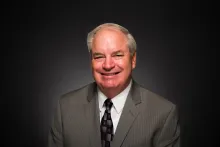
Robin Webber was born in Chicago, Illinois, in 1951, but has lived most of his life in California. He has been a part of the Church of God community since 1963. He attended Ambassador College in Pasadena from 1969-1973. He majored in theology and history.
Mr. Webber's interest remains in the study of history, socio-economics and literature. Over the years, he has offered his services to museums as a docent to share his enthusiasm and passions regarding these areas of expertise.
When time permits, he loves to go mountain biking on nearby ranch land and meet his wife as she hikes toward him.
