
Robin S Webber
This transcript was generated by AI and may contain errors. It is provided to assist those who may not be able to listen to the message.
Well, I really appreciate following Mr. Windling in the first message, because he offered you something to go home and practice. And I do hope that this will be in the same vein that today, what I'm going to share with you, is something that we can immediately put into practice. Sometimes, after many, many years, nearly 35 or 40 years of speaking in the Southern California area, I sometimes prod myself or ask myself, what is it that I can share with the people of God on this Sabbath day? Where is the need? Where do the people need to be led? What light can be shown on what given matter that is in the Scriptures in front of us? And after much thought about it, this is what I have brought to you, especially because we do have some folks coming up from San Diego, Redlands, Bakersfield, some of our garden grove friends. We're all here together. And I think this is something that we need to really think about. There are many things that we look around today, and we can only commit to God and say, Father, above, your kingdom come. We cannot necessarily, at this moment in our lives, deal with everything that's happening in Europe or the Middle East, much less what is happening in America. And we can commit that to God. That's the only way, the only thing that we can do.
But there are some things, just like moderation, or what I'm going to bring up today, that is very well within our sphere of influence. And I think more than ever, that's what we as Christians need to understand. There are some things that we have to leave to God, and there are some things that He does ask us to hands-on, hearts-on deal with.
And that is a subject that I'm going to bring with you today, to you today, and say, okay, what is the subject? Well, I'm going to tell you a story first to bring you into that subject. There were two brothers, and they went to a rabbi to settle a long-standing feud. The rabbi got the two to reconcile their differences finally, and eventually the two brothers shook hands.
As they were about to leave, he asked each one to make a wish for the other, because Rosh Hashanah was coming up. The Jewish New Year, a time of new beginnings and new starts. So the first brother turned to the other and said, I wish you what you wish me.
At that, the other brother threw up his hands and said, see, rabbi, he's starting up again.
He knew exactly what his brother was thinking, because he was at that same spot. Now, why do I share this story with you, friends? This story challenges us to ask ourselves, why is it so easy to see an unforgiving spirit in others, but not ourselves? Which leads to another important question. What kind of forgiveness do you offer to other people? I'm going to make this personal. What kind, what brand, what style of forgiveness do you offer other people? That is, if offered at all, that is the question. Again, why is this question so important? Do we fully comprehend that every day and every way we live with the results of our decisions to either forgive or not to forgive? It's really that simple. Over the years, and nearly, I think, being a minister for nearly 40 years now, most of my time, when spent in sharing and talking and counseling people, revolves one way or another around the matter of forgiveness. Now, our actions and answer to that challenge of forgiving, what happens is, depending upon what decision we make, it can either grant us a new lease on life, which was the rabbi's hope, and or the other decision makes us remain spiritually and emotionally paralyzed. And over the years, I've seen many, many people literally taken out of commission spiritually, because of the decision that they've made, or don't know how to unmake that decision, or know how to forgive another individual, or even realize it is their ultimate responsibility to forgive. God wants us to be decisive, friends. I'm going to make my point right up front. God wants each and every one of us, as followers of Jesus Christ, to be decisive when it comes to the issue of forgiveness. It's not apart from our calling. It is, in one sense, the essence of our calling.
Not only to be forgiven, but to be forgiving. Many folks are very happy to be forgiven. And that's an essence of understanding the Gospel. But just as importantly is the aspect of forgiving others.
That's why today I look forward to speaking to both young and old on this topic. That is so vital to our spiritual being, to our mental states, to our physical health. It comes down to this issue of forgiving. Because forgiving often times goes hand in hand with the aspect of worrying.
And remember what the phrase is? You look like when you see somebody that's got a frown on their face, they're not feeling the joy, Scott, but they've got the frown on their face. You say, you look like you're worrying yourself to what? To death? Tied up in knots. And we are people that sometimes for decades, for scores of years, have been tied up in knots.
That can be the cause of the inability or the lack of desire or seeing the need to forgive another person. That can be their father, that can be their mother, that can be their grandparents, that can be an employer, that can be an employee. That can be an individual that really, really did something very, very wrong to you. Even an injustice.
And yet we hold it. And we hold it in that safety box in our heart that nobody else can touch. Because somewhere, somehow, it gives us a little comfort in a world that seems out of control that at least we're going to control this matter. Because we're not going to allow anybody ever again to hurt us. What I want to share with you, and one of the reasons I'm giving this message, because I knew we'd have a lot of young people here today, is simply this. I know sometimes the matter of anger, the matter of beginning at the boiling point of not letting go of a grudge or a hurt begins very, very young in life. Life impacts the young. You don't have to be middle-aged or old or you'd be 21. You have to be 16 to get a license, 21 to vote, 21 to drink, I believe, in most states. But you know what? You don't have to be 21 to be hurt. You don't have to be 21 to begin to nurse something that goes so deep that you don't know how to get rid of it. But I do want to share with you, as you are here in an assembly of Almighty God. We have the example of Jesus Christ to feed upon today, and that's exactly what we're going to do. Another thing I want to share with you, whether you're 16 years old, or 66 years old, or 86 years old, is simply this. As Christians, and that's how I approach this, as Christians, as people of the covenant, we have no time, we have no space, and we have no person to waste when it comes to the matter of forgiveness. Allow me to repeat myself to make my point. As Christians, we have no time, we have no space, we have no person to waste when it comes to the matter of forgiveness. And thus, the title of my message today to all of you is simply this. Here it goes. The Spiritual Call to Forgive. The Spiritual Call to Forgive. It's not a human desire of and by itself, it's got to come from up above through God working with us and His Spirit working in us. It's not natural to forgive. If somebody pokes you in the eye, you want to poke them right back in the eye. You're saying, oh, Mr. Weber, you really want to do this? Well, I'm saying human-like.
I'm following Scott on the 210 freeway that he was mentioning, and he's not driving moderately.
As we move into this message, let's appreciate something about forgiveness. It's more than one more biblical word or concept. But for all practical purposes, it's the language of the Bible. Forgiveness. Understanding that we are forgiven, and because we have been forgiven, as we talked about the baptism this morning that occurred, because we have been forgiven, we in turn, our spiritual reflex, is to come to forgive others. With God, forgiveness is not an afterthought. Forgiveness is not an event. It's a way of life. It's one thing that I remember as a boy coming into this way of life, that I wasn't walking simply into a building or into a church.
The ecclesia, those that are called out, are to practice a way of life. And one of the pillars of that way of life is because we have been forgiven, thus in turn we are to be forgiving. Let's see how this works by turning to Psalm 86 and verse 5. I mentioned to you that with God, forgiveness is not an event. It's not something that he bumps into, but in Psalm 86 and verse 5 we see that it is what he is.
In Psalm 86 and verse 5, Now why is he good?
The psalmist is going to tell us, I think it emphasizes it just a little bit more by just a few of the small words that it puts in there.
He is so ready to forgive, so full of unfailing love for all who ask for your help. God is so good and so loving that he is patient.
He is waiting for some of us to grow and mature and grow through the threshold of learning to forgive somebody that we have not yet forgiven. What we find here in Psalm 86 and verse 5 is forgiveness is not what we will do. Forgiveness is a state of being. It's what we are. I want to ask you this. I don't want to be up here just spinning my wheels and going through a few minutes and then we are going to have a dance. There is a reason why I have all of you here today. Got you captive for a few minutes. Have you considered with the issues that are facing you with some of the characters that I mentioned, do you look at it that you are going to get to it sometimes, some way, somehow, some who?
Is it a project that you put off to another time when it's going to be more convenient? Or do you recognize that God and His sovereignty is looking down from heaven above just as much, if not more, than wondering if you are moderate or not, which is very important, but how forgiving you are?
This is important, brethren. This is essential. Sometimes a church can get off on this or that or try to figure out things that God has not yet revealed to us. Between now and when His kingdom comes back to this earth, and we can put all of our attention on things that are really in the realm of God.
We have enough to consider, and when He is ready, we will comprehend it. But forgiveness and being forgiving is literally within our sphere of influence. It is the class that God is wanting us to go through every day to understand whether or not we understand that He sent His Son to this earth for a purpose.
You know, there is no greater touchstone in understanding this present reality of needing to be forgiving in the high spiritual calling than it is in Jesus Christ when He was on the cross. Join me if you will to Luke 23 and verse 34. In Luke 23 and verse 34, Here we are. It is in Jerusalem. He was beaten all night. Then He was led to Golgotha. And here He is now, a piece of human flesh, as it were, nailed to a piece of wood.
In the most humiliating death that has ever been devised by a mortal man. And here is, in that sense, God in the flesh, the Son of God, fully God and fully human. But at that time, fully embraced in that human tent with nails that are in Him. And what does He say in Luke 23 and verse 34? Notice what it says.
Then Jesus said, Father, forgive them. Forgive them, for they do not know what they do.
You know, just reading this doesn't quite make you understand it. You have to understand. You almost have to. It would be like this if I can come over here for a second. I know I'm off while I'm on the microphone. But here's a piece of wood. And I've got my hand down here. You have to almost visualize it. And some burly guy coming up with a big rusty nail. And nailing my hand in this piece of wood. I think that makes it more visual. And I'm sure, not just quiet, but screaming out in physical agony and pain. But then the next thing that is said by the one who's the head of the church, the one that lives inside of us today by the will of the Father is, Father, forgive them.
And in this sense, the language behind it is, Father, forgive them for if they really knew what they were doing, if they really got it, if they knew who I was, they would not have been doing this. Well, brethren, it's one thing to read it in the Psalms, but the one that was the Word, the one that inspired the psalmist, practiced what he preached.
And he had an approach, he had a way of life, he had an immediacy of being desirous of forgiving. How about you? How about me? How about you? And how about me? We see this, and we understand, then, a very basic thing. Christianity 101, let me put it simple. Christianity 101 is this. God does not ask us to do what he hasn't done and to remember what he has done for us on our behalf. You will hear many things.
You can hear many sermons. You can read many books on religion. You can read a whole volume in a library on Christianity. Christianity 101 is simply this. God does not ask you to do what he has not done himself in persona of his Son, Jesus Christ of Nazareth. And he remembered that he also did it on our behalf. Let's go to Psalms 103 for a second. Psalms 103. What has he done for us on our behalf?
We need to remember, before we can be forgiving, that we need to recognize that we ourselves, in spite of ourselves, have been forgiven. Psalm 103 and verse 1, O my soul, and all that is within me, bless his name. Thank you, Father. Thank you, Jesus Christ. Bless the Lord, O my soul, and forget not all his benefits, who forgives all our iniquities, who heals all our diseases, who redeems, that means makes good, in that which we could not make good ourselves, redeems, notice, your life from destruction, who crowns you with love and kindness and tender mercies, who satisfies your mouth with good things, so that your youth is renewed like the eagles.
The Lord executes righteousness, justice for all who are oppressed. And he made known his ways to Moses, his acts to the children of Israel. The Lord is merciful and gracious, slow to anger, abounding in mercy. He will not always strive with us, nor will he keep his anger forever. He's not dealt with us according to our sins. We don't have coming to us what we have richly deserved brought upon us by ourselves, nor punished us according to our iniquities. For as the heavens are high above the earth, so great is his mercy towards those who fear him.
When we look at that, if we truly believe that this was our case apart from God, we believe it. And we recognize that the Son of God died for you and for me, as the Father offered him up as that sacrifice, the one that they did not call upon Abraham to sacrifice Isaac. But he sacrificed his own Son on another mount for you and for me. That changes the whole equation, doesn't it?
That changes the equation. That changes the filter to our mind, to our tongue, to our hearts of what God has done and his great mercy. There's a cemetery, it's not far from New York City. And there's a headstone. And in that cemetery, not far from New York City and on that tombstone, is an engraving. There's only a name. There's not even a birth date. There's not even a death date.
There's only a name and one solitary word. Forgiven. That is what that individual desired to be inscribed on his tombstone. That would be the testimony of his life. And he knew it. And he wanted to proclaim it, even in death, that he had been forgiven. Now, I've got some good news for all of you. We don't have to wait until we die. To have our name with one word on a tombstone.
Our life should every day show that we are dead to self and alive for the Father and alive for Christ. And that we approach every human being that we come into contact with, whether they have done as good or whether they have done as ill, for you and I to understand... Are you with me? To understand that we have been forgiven.
Is that profound? It is that simple. And when you understand that and you embrace that and that is saturated at your heart, your decisions will follow. If your heart is not right with God, if you believe God with your eyes when you read the word or you say something with your lips, but your actions don't follow, you've made your decision.
In decision about living a life of forgiveness towards others is a decision in itself. Am I saying it's an easy thing that I'm asking us to do? That I am imploring myself to do? No, it's not at all easy, humanly speaking, because it's of the Spirit. It comes from heaven above. It comes by us saying that we will follow Jesus Christ. And Jesus said to Peter, follow me at the beginning of his ministry. And later on, one of the last recorded words that Jesus says to Peter is, follow me.
This was a part of it. This was a part of the deal. When you were baptized either this morning in the lovely ocean off of Malibu, or whether you were baptized in a deacon's tank in a basement, or whether you were baptized over here in Pasadena in one of the pools on the Ambassador Campus, that's the deal that you made. That because you were forgiven, you would grow in this aspect that might be a little foreign to all of us, humanly speaking, but that we would also be a forgiving people.
As Christians, it is well that we keep a certain spiritual state of mind. One of our own today, and we rejoiced before God, was baptized. But every day of our life, I think our decisions would be better if we remembered and stayed a little wet, a little buried, and recognized that in baptism we also rise to a new life. A new life of not only being forgiven, but forgiving. When that happens, what does this priceless privilege bequeath to us? There are three great realities. Allow me to share them. They're brief. When we have been immersed in the water, when we become wet, when we have repented before God of our sins and sinned against Him only, not only for what we have done, but for what we are apart from Him, and then we are, in that sense, taken up in a form of resurrection as we come up out of the water, that new man, and we're still wet and we're still dripping. These things come upon us. We realize three great realities. Number one, our own imperfection. Our own imperfection apart from God, even as we strive to emulate God, even as we no longer willfully sin. It's not our desire to practice sin, but yes, we too will stumble. Number two, even so, even so, even when we stumble, we remember that we have been forgiven. And number three, and because we have been forgiven, we therefore must be forgiving. We must be forgiving. On whose authority do I state this? Join me if you would in the book of Matthew, Matthew 6, verse 9.
Into the Gospels.
Have you ever tried to find Matthew in the Old Testament? That's kind of an adventure. I'm back in the New Testament with you now. Matthew 6, and let's take a look at verse 9. This is what is commonly called the Lord's Prayer. Let's understand the sense of this. Jesus teaching we, His disciples, down through the ages to pray. In Matthew 6, it says, notice in this manner, therefore, pray, verse 9, Our Father in heaven. Thus, we begin by yielding ourselves up to something beyond ourselves. We're addressing a power beyond us. Notice then what it says, Hollywood be your name. Hollywood be your name. We're not just talking about a name as a signature, but everything that God is. Drawing us back to Psalm 86, verse 5. Lord, You are good because You are ready. Ready to forgive. I'm sure some of you today were at your house because of the potluck and the dance tonight. You thought you were ready to go. You got in the car and He said, what? Oh, you've got to go back in the house. Then He got in the car and kids were all, Oh no, we forgot this. You've got to go back in the house. You know what, folks? You weren't ready to come. You weren't ready. You had to keep on going back to find something, right? Are you with me? God doesn't go and try to find forgiveness. You wouldn't have to keep on going and finding some room up in heaven above to get it right. It says He's ready. He's leaning forward. This is what He is. This is why we worship Him. This is why we love Him. This is why He gave His Son for us. Your kingdom come. Your will be done. On earth as it is in heaven. Now, this draws you and me in because His will in heaven is to forgive. Now, we have an opportunity as instruments in His hands to be forgiving as well. Give us our daily bread. Give us this, our daily bread. Often times we ask God, Father, please bestow upon us this, or bestow upon us this, with our daily needs. We think of physical nourishment. But I think we remember in the book of Matthew, it says, Man shall not live by bread alone, but by every word that proceeds out of the Word of God. With that thought, then, let's look at verse 12, more about the Word of God.
And forgive us our debts, as we forgive our debtors. And do not lead us into temptation, but deliver us from the evil one. For Yours is the kingdom and the power and the glory forever. Amen. For if You forgive men, their trespasses, Your heavenly Father will also forgive You. But if You do not forgive men, their trespasses, neither will Your Father forgive Your trespasses, My trespasses. This stunning statement brings us into a spiritual ground reality. That once called, once called, that God's forgiveness for us is proportional and conditional, based on our actions towards others. Allow me to repeat that. He said, well, I didn't realize Christianity was this serious. Yes, it is. And it is also this joyful. Because when you have come to the realm of forgiveness that God wants us to experience, you are no longer a prisoner of your past. You're no longer stymied in the present. And the future's horizon is clear. And you know where you're going. You know who you are. And you don't have the chains of bondage that have either been placed on you by others and their misactions, or your own misactions, and your own stubbornness. And your own, nobody is going to take this feeling I have about this person away from me because they hurt me. This is very clear. This is not hard. There are some things, like some of Paul's writings, as even Peter said, are hard to understand. Brother Paul, this is one plus one equals two. Did I say we're going to get to that in one moment or one day to be able to do that? No, but that's the goal. That's the goal. It's just like Mount Wilson over here. Like Mount Wilson up there, you see the mountain pop. You see where God wants you to go, and you start moving in that direction. Even though there's challenges, even though you'll take a wrong trail, even though you may not be able to fore to stream immediately, emotionally, you see the mountain top. You see where God wants you to climb in the example and in the mode of Jesus Christ on that cross who said, Father, forgive them. That's the goal. Tomorrow, I know some of you are going to be watching the Super Bowl. And when somebody gets the football skin, I hope it is inflated, but when somebody gets that, they're going to start on the five-yard line. And they're going to start taking that down the field, play by play. They're not going to make the goal immediately. No, not at all. They're not. It takes work. It takes everything that is in you to get there. But you see the goal. The goal is not here. The goal is there. And the coach is going to work with the team as much as God, the Father, and Jesus Christ are going to work with us to do some heart work in us, to come to the realm to fulfill the example of Jesus Christ. That's what we need to do. Absolutely.
Why is forgiveness so difficult? Why is forgiveness so difficult? Forgiveness is cutting off the price tag of what it's costing you and placing that matter ultimately into God's hands. There is a real price for forgiving, and it costs you. In some of these matters, brethren, I know there are some things that burn deep inside of us. I'm not speaking of this in any way as a Pollyanna matter. But this is the spiritual calling. This is the spiritual calling to be forgiving. It doesn't mean you will perhaps ever forget the offense, or the pain, or the slight. But that you have purposely and by choice removed the penalty and the judgment from the act and separated them. We were just over here in Psalm 103 speaking about you and me experiencing God's grace and being forgiven. It says over here in Psalm 103 that what God does with our sins is that in that sense He removes them as far as east from the west. So far He has removed our transgression from us. I have a question for you. May I ask you? That is simply this. I know we call God the Ancient of Days, but do you think He has dementia? Does He have spiritual Alzheimer's? Does He somehow forget what's happening down here? No, not at all. He's omniscient. He's all-knowing. He never slumbers. He never sleeps.
What He does is He removes, because of Jesus Christ, He removes the penalty from the sin. The sin goes that way. The penalty goes that way. And He deals with us right here as His loving child. That's what He wants to see in each and every one of us.
But, Mr. Weber, there are some things that are too hard to forgive. I'd like to share a story with you, because I'm not just talking about things that will come and go at times. I've talked about some things that people have experienced in their life, and I'd like to share a story with you. Remember how I shared the story of the man who has the tomb outside of New York City? He has one word. What is the one word? Forgiven. Changed his life. Allow me to share another story. How many of you have ever heard of Cory Tinboom? Cory Tinboom. I'd like to tell you a little bit about Cory Tinboom, because I'm not talking about the California Highway Patrolman that gave you a ticket on the 210 freeway that you didn't deserve, and forgiving him. Even though you deserved it six times before when you drove that freeway.
Here's the challenge. To forgive what we perceive as the unforgivable. That's what Jesus did on the cross. He forgave the unforgivable. Allow me to share the story of Cory Tinboom. Let's go back to World War II. We know how valiant many of the Dutch and the Danish were in protecting the Jewish community that was in their midst.
Good Dutchmen. Good Danes. And also good Germans. That did the same. Cory Tinboom and her family were trying to move the Jewish community through. They were finally caught. And here's what happened to Cory Tinboom. Years afterwards. Years after she was put into a concentration camp.
Years after her concentration camp experience in Nazi Germany. Cory Tinboom met face to face with one of the most cruel and heartless German guards that she had ever contacted. He had humiliated and degraded her and her sister. He had jeered and visually raped them as they stood in the delousing shower.
Now he stood before her with hand outstretched and said, Will you forgive me? She writes, I stood there with coldness clutching at my heart. But I know that the world can function regardless of the temperature of the heart. I pray Jesus help me.
Woodenly, mechanically, I thrust my hand into the one stretched out to me and I experienced an incredible thing.
The current started in my shoulder, raced down into my arms and sprang into our clutched hands. Then this warm reconciliation seemed to flood my whole being, bringing tears to my eyes. I forgive you, brother. I cried with my whole heart. For a long moment we grasped each other's hands. The former guard, the former prisoner. I have never known the love of God so intensely as I did in that moment. To forgive is to set a prisoner free and to discover that the prisoner was me.
Several years ago, Susan and I were wandering through Old Town Orange in North Santa Ana. We knew that Corey Tenbun was resting in the old cemetery in Santa Ana. We went over there and were looking for her tomb because she had moved us so much by her example over the years. We looked around and now you know what Susan and I do on weekends. We go into graveyards and look around. I know what you do. No, anyway. It's so quiet in there. We finally stumbled upon Corey Tenbun's grave.
It said Corey Tenbun. Birth date, death date. There are only three words. Sorry, not one word. Not forgiven. But the reason why she and you and I can be forgiven, there were just three words that were on her tomb. Christ is Victor. Christ is Victor. Latin. Sovereign. Absolute. Conqueror. Working in us. Working through us. Showing that great light, when he said, I am the light. To recognize that there would be other lights down through 2,000 years of human time that got it. And allow the sovereignty of God Almighty and the life of Jesus Christ in us. To be willing to forgive, to forget, and to distance people from what they have done in the past.
I'd like to share another story. It happened several hundred years ago. Some of you have heard of John Wesley. John Wesley was one of those great evangelists during one of those great religious movements, what we call the great religious awakenings that occur every so often in America and or England. John Wesley was over here in the early to middle 1700s. He came as an evangelist from England and came to America for nearly two years in the early 1700s. And he was a missionary in the colony of Georgia. You have to recognize Georgia was kind of an interesting spot at that time. They needed a lot of work and a lot of help because that's basically where England was sending a lot of their prisoners at that time. Now, if any of you are from Georgia, don't worry. We all have a family tree. That's not the point. But that's where he was. He was in Georgia. And one day, while talking to General Oglethorpe, who was the founder of the Georgia colony, he was talking to General Oglethorpe about a very corrupt individual that was in that community. And Oglethorpe said, I never forgive. Whereupon Wesley said, Then I hope, sir, you never sin.
Hmm. Very interesting. Let's go to Matthew 18. Matthew 18, verse 21. A story about forgiveness. Then Peter came to him and said, Lord, how often shall I shall my brothers sin against me and I forgive him? Up to seven times. Good question. Good number. That was the going rate amongst the Pharisees at that time. That you had to at least allow seven times and then proceed to further action. And then verse 23 comes along. Therefore, the kingdom of heaven is like a certain king who wanted to settle accounts with his servants. And when he had begun to settle accounts, one was brought to him who owed him ten thousand talents. Ten thousand talents. That would be like ten million dollars. But as he was not able to pay, his master commanded that he be sold with his wife and children and all that he had. And that payment be made. The servant therefore fell down before him saying, Master, master, have patience with me and I will pay you all. And then the master of that servant was moved with compassion, released him and forgave him the debt. What a wonderful story. Isn't that just great? But there's more to it. But that servant went out and found one of his fellows who owed him a hundred denarii. That would be like about twenty dollars. With inflation, maybe it's up to thirty-five or forty now. And he laid hands on him and took him by the throat, saying, Pay me what you owe. And so his fellow servant fell down at his feet and begged him, saying, Have patience with me and I will pay you all. And he would not, but went and threw him into prison till he should pay the debt. And so when his fellow servant saw what had been done, they were very grieved and came to their told their master that all that had been done. And then his master, after he had called him, said to him, You wicked servant, I forgave you all that debt because you begged me. Should you not also have the compassion on your fellow servant, just as I had pity on you? And his master was angry and delivered him to the torturers until he should pay all that was due to him. Wow! That's kind of dramatic to the torturers. But you see, what the master did was only bring out to the external world what was going on in the individual that was non-forgiving.
The non-forgiving individual is wasting energy. They are tortured. They're tying themselves up in knots. All of their creativity, all their God-given being, all the moments that they have in this whole life, are focused on an individual that may not even know that they offended them.
So then, that's the end of the story. Jesus makes a comment, So, my Heavenly Father also will do to you if each of you notice, from his heart, from his heart, does not forgive his brother, his trespasses.
Wow! That's a lot of homework.
Yes, it is. But that's the calling. The calling is not only to be forgiven. The calling is to be forgiving. To simply being forgiven and not being forgiving is living Christianity on the fifty-yard line and going nowhere.
Let's remember something about the way of life that you and I are a part of. It's twofold. One goes up, it's vertical. Our praise, our prayer, our thoughts to God.
But it's also horizontal. It goes out to those that are around us. Sometimes people that we haven't asked for in our life. Sometimes people that we haven't asked for.
But that very much is the people that God has allowed to come into our sphere of influence to see something different than what they see in the world.
That's our calling, brethren. That's what allows God to be special in us. To look beyond ourselves, to surrender ourselves, and to allow God to be working in us.
When I say all of this, I do want to make something very, very plain here. And that is simply this. Does that mean then to continually subject yourself to bad behavior and just keep on taking and taking and taking things? No, I don't say that at all. The book of Corinthians says that God has called us to peace. Yes, He has. We say, yes, but Mr. Weber, God says to turn the other cheek. Well, last time I saw that, we only have so many cheeks. So wisdom takes hold that there is a time to take it. And there may be also a time to space yourself from a situation. Space yourself from an individual. Maybe even have to remove yourself from the presence of an individual.
We're not just talking about taking verbal abuse or mate abuse or person abuse. To just take it and to take it. Biblical wisdom dictates otherwise. To be wise as serpents, harmless as doves. Even Jesus at times removed Himself from crowds. Even at times Jesus said, the time is not now.
But there are things that we can do. There are things that we can do. Number one, the first thing, brethren, is always to start with ourselves. If you have right now an issue inside of you that you have not dealt with, you have to start with yourself. It's a sphere of influence. And like David said, God, show me the things... Show me the things that I don't even see about myself in this matter. Show me. Teach me your ways, O Lord. We sing that today. Teach me your ways. Then you might say, but I don't have the courage to take the next step. That's why God gives us His Holy Spirit. That's why He gives us the example of Jesus Christ. Then we can begin to pray and fast for the individual that we're having... Almost what you've gone through far now. You don't know them. Now you are trespassing. You pray about that. You fast for your own spiritual well-being. And you fast that... And I'm speaking to myself on these matters. Fast that God who created the heavens and the earth, who moves the orbs, who creates satellites to go around the solar system and moons to go around the planets, that God will work with the mind of the individual that you have ought against, or has ought against you. If God can change the mind of the Babylonian king, if God can change the mind of the Assyrian, if God can somehow move the mind of Pharaoh to say, Oh, let's chase him after all and bring him to the Red Sea, how much do we live it, our God, in moving the hearts of those in whom we have become separated from? Be it our adult parents, be it our adult children, be it a minister, be it a pastor, be it a pastor to a member, be it a member to a member, be it an employer to an employee, be it an employee to another employee, be it to neighbor to neighbor, be it to some of you young people that are in university or some of you young people that are in high school, which is really challenging these days. Sometimes it's not just getting an education, it can be survival in some public schools. And there's a bully out there. There's a real bully, some guy or some pack of young ladies bullying you. Don't wait till you're 66 to start this, kids. You can begin now to practice not only asking God to forgive you of your sins, but to be forgiving. And you ask this God of the universe to shape the minds and the hearts of both full and yourself. Then I've got something to tell you. Then watch Him go to work. You watch Him go to work.
And you might find out, like Corey Timbundet, the prisoner was not the one in the jail cell, but it was actually you that was the prisoner after a call.
Before we kick up our heels tonight, I just want to remind you, I say this in love.
We all have some homework. We all have some heart work. We have some homework that we put off for many, many years that is affecting our lives and our relationship with God Almighty.
You say, Mr. Weber, it's not going to be easy. Well, Jesus never said it was going to be easy. He did say it's going to be worth it.
And I know that He has a coach. That we have a coach in Him. Just as I alluded to Mount Wilson, I believe in my heart of hearts that the one that was the Word that became Jesus of Nazareth came from the top of the mountain and came down to us in the valley to live our life, to suffer the things that you and I are suffering in part. And yet He was able to say, Father, forgive them, for they know not what they do. He came from the mountain. He came to the valley.
He's now back at the top of the mountain. And He knows all the twists and He knows all the turns of what His Word is asking us to do. Trust Him.
Pray to His Father. Pray to our Father.
Recognize that when you watch the Super Bowl tomorrow, recognize we're in a spiritual bowl. We're on the five-yard line. We have 95 yards to go. God knows exactly how to set up the plays. I've shared some of them today.
If you're really, really serious about not only being forgiven, but be forgiving. Because many a person can be forgiven. That comes from God.
But it is in the forgiving that people are able to see a glimpse of God. See a glimpse of God. Even if they don't understand it, they see that glimpse of God in us to be that witness. Brethren, the title of my message was, The Spiritual Calling of Forgiveness. Let's heed the call. Let's go out and do it.
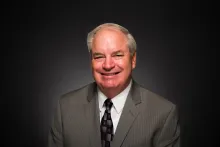
Robin Webber was born in Chicago, Illinois, in 1951, but has lived most of his life in California. He has been a part of the Church of God community since 1963. He attended Ambassador College in Pasadena from 1969-1973. He majored in theology and history.
Mr. Webber's interest remains in the study of history, socio-economics and literature. Over the years, he has offered his services to museums as a docent to share his enthusiasm and passions regarding these areas of expertise.
When time permits, he loves to go mountain biking on nearby ranch land and meet his wife as she hikes toward him.
