

Gary Petty
This transcript was generated by AI and may contain errors. It is provided to assist those who may not be able to listen to the message.
Well, I have a sermon which is fitting the time of year. It's right past Mother's Day and right past Pentecost. We actually made five changes to the schedule for Pentecost. That had to do with Mr. Jones being ordained.
That was scheduled for Pentecost, but we couldn't tell anybody because the Council had to meet and approve it. So we had to wait for that. So we changed it one time for that. Then they decided to jump the gun, which is their decision, but jumped our gun on our schedule.
Anyway, we went back and forth, and there were a couple of other things. So it ended up that my wife and I went north rather than being here on Pentecost. So I would like to say a couple of things concerning Pentecost and Mother's Day and motherhood in general. The symbolism here, because a lot of this, the idea of the Church being a mother and so on, this comes straight from God Himself. It's His analogy. It's one of the reasons we have motherhood.
One reason is to have babies, because God wants more people. But why did He do it this way? We could have had apple trees, pear trees, baby trees, whatever. He could have done it however he wanted to and created new people. But we have marriage and family, and we have fatherhood and motherhood, and it's wonderful.
But it has its beautiful roses have their thorns. God has put us into this, and we have the Church described as the mother of us all and as the bride or wife of Christ. We have both of these analogies, how the Church is described. We're all children, but all together we're the wife and mother. It is an analogy, and it deserves our understanding, because it's for understanding. The Church is the mother of us all. Galatians 4, 26.
But Jerusalem, which is above, is free. So there are two Jerusalem's, and I can't remember where I've said things that I've told you. I may have mentioned this point sometime recently. But Jerusalem means the city of peace, and you can go there, buy a ticket, take a slow boat, and go there, walk around Jerusalem or drive around, and be careful, because the peace is just rolling down the mountainside in the form of bullets.
It's not the city of peace. Not now. But it means city of Shalom, Jerusalem, or Salim, the city of peace. So there's a Jerusalem which is above, and that is free. And then, of course, he goes through the analogy of the Old and New Covenant with Hagar, the bondwoman, representing Jerusalem, which is Israel today. Jerusalem uses a symbol and prophecy of all of Israel, and by extension, all of the earth.
And it's just in bondage to sin. We can see that by just traveling to the city of peace, Jerusalem, and seeing that, no, this isn't the true Jerusalem. This is a physical place. It's one of the worst places in the world in terms of cities which have been conquered. It may be the city that has been most conquered in all history that we're aware of. It's quite the opposite, and it's like the Old Covenant and Hagar, the bondwoman, and all that analogy. We're children of the New Jerusalem, which is above. Hebrews 12, 22, and 23. But you are coming to Mount Zion and under the city of the living God and the heavenly Jerusalem.
So this is... He's listening to several things that we have come to. By coming into the church, by him placing us in the church, it says you have come to Mount Zion and into the city of the living God. Instead of Mount Sinai and the old Jerusalem, which is still in bondage to sin, the heavenly Jerusalem, which is free and sinless, and to a huge company of angels innumerable to the general assembly and church of the firstborn.
Some of them have long been dead. They're just waiting, you know, on the side of the stage, the staging area waiting. They've already lived and died, and they're prepared for the kingdom until the resurrection, when all of us are joined together. The general assembly in the church of the firstborn, which are written in heaven. And that has to do with... there's written in the book of life, those who are, we say, converted, called to be in the church, given the Holy Spirit, they're registered.
Our citizenship is registered in heaven. We just haven't... we have to wait until the resurrection to go there. And to God, you are also come to God, the judge of all, into the spirits of just men made perfect, those people who go before us, and so on.
This business of citizenship being in heaven is in Philippians 3, verse 20, and Colossians 3, 1. You can find those easily enough with the concordance, but it's Philippians 3, 20, and Colossians 3, verse 1. Even though we're physical and bound to this earth, we are citizens, we have dual citizenship, and that takes the priority if there's a conflict.
Now, the mother of us all, what does the mother do? Well, she fills needs. This role speaks of the individual believer, church member, being nurtured and protected and fed and educated and trained and guided and accepted by the church, Christ being the head of the church. Well, if you as a believer are comforted and accepted and served and guided and trained and educated and so on, that means that everybody else has to serve you. It does mean that others in the church that you interact with are supposed to be accepting and edifying you and exhorting in all those things. But it also means that each of us is responsible to everybody else for doing all those things, because, and this gets into the other role, and that is, the church is also the wife of Christ.
So, if the church is all of us together, and we're part of the wife, and we are part of the mother, and we're also all the kids, it's an analogy, you see, and God is showing us our different responsibilities, then we have responsibility individually to follow Christ, to make decisions, to seek and find the answers and seek out the guidance and the direction of God, and follow Christ individually and cooperate with everybody else. We also have all the responsibilities, or many responsibilities, as part of the mother to serve and help each other and to give.
So, we wouldn't have had to have this delineation with the fact that you are part of the mother and you are part of the wife, and have responsibilities in both ways. He could have just said, serve each other and follow me, but he's done this to show that there's this unity between all these responsibilities. Like there is when Christ talked about the unity between him and the Father and us.
John 17, his prayer before he left this earth, was a man before he was killed. And he said, give them the glory, give me the glory that I had with you beforehand, and also give it to them that they may be in you, and I may be in you, and you and I, and they in you, and you and I in them.
And he goes around a couple or three verses there and just says it every which way, showing that, like a physical family who shares the actual DNA, the actual instruction of what, you know, how your nose is shaped and what color your hair is, and many, and many, many other properties, even how you think, what your tendencies are going to be. We share the DNA, as it were, of God. And so God actually is in us, like a parent is in his or her child.
The song, Leader of the Band, I don't know if you recall that, Cat Stevens, I think. Maybe not Cat Stevens, but he talked about his dad, who was a band leader, and all the kids were musical. I always think of Mr. Myers over there, Norma and Donna, and I've had these four guys, four boys, the Myers brothers, of course, sing, and they play everything else, most other instruments. And the song is an honor towards his father.
He says, he's long gone, but he's still the leader of the band. He says, because your blood flows in my veins. And I don't know about you, but I've looked at myself in the mirror, and of course, after astonishment, disappointment, frustration, and misery pass. You see your dad and your mom, I can look in there, even in my face, and general build physically. See evidence of my parents, and the way I talk, and the way I think, and the good things I do, kind of automatically, that come easy, and those stupid things I do.
I can see both of my parents. So you can too, I imagine, if you try. But the point is that God really is in all of us. He is in our minds, our thinking, and in everything about our life.
If we spend the time to get to know him, and put the energy into really trying, not that we can do it, but that's required for us to do the best we can. And if we do that, God comes into us. But the same exact spirits are DNA, parental. Well, actually, the right word to use here is the Spirit of God, which is his essence, what he is, DNA being a physical symbol, comes into us, and makes us all unified, and together it takes a lot of work on our part, and we have people speak of bumps in the road, and that is a real euphemism.
We have real problems, and we're hard-headed, and God is merciful, and he has a lot of time, and he takes the time to change us. Then, some scriptures for the wife of Christ, Revelation 21. Actually, the whole chapter, scattered through the chapter, talks about the bride of Christ, a bride adorned. But then it talks about the bride is also the city. So it's the church-made Spirit that he's talking about, glory, light, spirit. Using God's Spirit means having a right spirit and attitude, in general, because we get it from God and humble ourselves, and specifically having a right attitude in this specific area, towards God's church, which means it includes everybody.
So this is a very complicated thing, or it's very simple. It doesn't really have to be that complicated. We get the general idea. But the church, then, is adorned and prepared for Christ. Revelation 1.13, you ask, where is Christ today?
And here's the picture of the church through the ages, and the church around the world, both. It has to do with time and circumstance. And he is standing in the midst of the church. That's where he works. He works through everybody in the church who is truly in the church.
That's Revelation 1.13. Again, once again, that's a symbol, but it shows where Christ is. And, of course, Ephesians 1, verses 22 and 23, and also 4, verse 16 of Ephesians, and then chapter 5, about marriage. So, Ephesians has a lot of information. That's chapter 1, and 4, and 5. And it says that in 1.23, it says the... or 22 and 23, it's, The church is Christ's body. Now, what does he teach us by this analogy? Because already we've had several analogies or comparisons. So, we're going to ask a simple question. Or maybe just give you an example from a TV show I saw several years ago.
And, you know, these robots that attack each other, they're remote control robots, and they have big saws and hammers and slings and so on. It's the destruction derby, actually. And it's kind of interesting, because kids do projects, remote control and engineering and so on. But the idea is to destroy, so that's not so hot, but still it's done. And I had this one guy who committed murder, and that was the theme of the investigators, was to find what happened.
And what he did was he messed with somebody else's robot and changed the frequency so that he, from a remote place that couldn't be seen, could work the robot. And so this fellow who owned the robot was working in his workshop, and he was controlling it. It wasn't quite working right. All of a sudden, he didn't have any control, and this robot that he had built ran right toward him and killed him.
He had a big sling blade and a saw, and it was just awful. Fortunately, they didn't have that, but they proved that he had done it from a remote control location. So this is not true, however, on a natural basis. This is, again, an analogy, teaching by analogy today, I guess. But how does your body work, or how does your head work? Well, do you think a thought? And then your arm reaches out and grabs a cup of coffee, or whatever it is.
Now, it would be pretty cool if you had your arms full or you're just lazy, and you had telekinesis tell us something or other. And you wanted a cup of coffee, and somebody else just involuntarily reaches over and grabs the coffee and just perfectly gives you a sip of coffee. It doesn't work that way, because your head only works through your body, fortunately, and everybody else.
And so this is the analogy. Christ works through His church. He is in His church, and the head works through the body. And that's what He's teaching us. That's how He is our head. He's certainly our leader, our captain, our savior, and all those things. But He works through us. If we submit ourselves and are humble, then it will be Christ that inspires and moves us so we have the wisdom to think of things at the right time and serve others in a way that He directs and so on. In other words, Christ works through the body, and we're part of the body. So He'll work through each of us. So these are layered analogies, if you noticed. One leads to another, but Christ is teaching us through His Word here. So the wife becomes a part of her husband. We have songs like Two Hearts That Beat Us One. I like that song. It's 20 years old, probably. I heard it when I was around 30, I think. Remember where I lived? Anyway, I like that song. And a lot of others, too. Two Hearts That Beat Us One. Love songs that talk about being in unity, and everybody earnestly desires this. And of course, you get married, and everybody's happy, and then some conflict comes along. Pretty soon you realize, well, yes, we do love each other, but we have a lot of conflicts. And so it begins, and your character improves, and you mature, and you have understanding, and all those things that God has built into this system of dividing us into two genders. God doesn't have two genders. He's just a whole person of Himself. But He split us up and made us want, and really strongly desire each other to be with each other. And then, that was His trick, you see. And then when you do, then you have to get along, so that He gets His work done, which is A, to produce babies, and B, to improve our character, and get us trained, and so on. So it's perfect, but it's hard. So life does become part of our husband, and you work on the same projects. Having children is the perfect example, or one, and then there are other examples, so on.
So as one who is called into the Church, you and I have responsibilities, personally, in both the mother and the wife roles of the Church. Because we're part of the wife, we're part of the mother. We're supposed to mother each other. What does a mother do? She supplies all kinds of needs, and serves, and comforts, and helps, and what we're supposed to do. And what does a wife do? Well, she supports her husband, and she bears the children, but the wife role is different. So each of us are focused on Christ as our leader, and it's what it says in Revelation that the definition of the Church, the firstfruits, the firstborn, are that they follow Christ wherever he goes.
As a part of Christ's wife, he just comes first, and we put ourselves second, and we put everybody else behind. And that's what Christ said in Luke 14, verse 26, anybody who doesn't love me first, and put his father and mother and sister and brother and everything else, and even his own life in second place, after me, can't be to my disciple.
That means he won't give you the Holy Spirit, you can't learn, he will not make the covenant with you. That's absolutely necessary to put him this absolute loyalty to Jesus Christ first. Okay, I gave a sermon a while ago on Mother's Work as God's work. This is several years ago here, and I keep trying to review it, but I don't get it all done.
And so I'm rather than try to squeeze that in here to explain further what it just said. I'm going to leave that stand as it is what I said. That is only what I said. I'd like to go to Psalm 87, because this is one of the greatest Psalms there, although when you understand them and get studying them, they're all so absolutely great. Our attitude toward the Church, I mentioned, is just because Christ is ahead of the Church, that means our attitude toward each other and toward him together as the Church.
It's profound. Our attitude should be a profound respect and love and even sacrifice. I would like to read before we go to Psalm 87, Psalm 122.9. This is one of the Psalms of a sense or a degrees. I was glad when they said to me, Let us go to the house of the Lord. It's referring to a Holy Day, and specifically the fall Holy Days. Our feet have been standing within your gates, O Jerusalem. Okay, that's the Church. We've been in the Church, and now we have come to the Church. So I was glad when I was called and went and said, Come to the house of the Lord.
God's call. Jerusalem, again, this is the comparison of the present Jerusalem and the Jerusalem above. It's built as a city that is bound firmly together to which the tribes go up, the tribes of the Lord, as we decreed for Israel.
Bound firmly together, this is the physical construction is brought into view, but it replies to how the Church is organized and bound together by the Holy Spirit. It was decreed for Israel, that is, the Israel of God. God planned it, and he decreed this as his will. To give thanks in the name of the Lord, there, thrones for judgment were set, the thrones of the house of David. There is a governance or an organization that's through the Holy Spirit, and this is a big subject, but it's an entity that is organized by God, and Christ is the head of it, and at any one time, he is directing the Church in the way he wants it to go.
And now it says, this is our attitude towards the Church, pray for the peace of Jerusalem. May they be secure who love you. This is those of us who are in the Church, and our love for the Church. Now, I had a District Superintendent, Tony Hammer, one time, and there were certain issues that came up. They always come up in the Church, because the Church always has humans in it. And if it only had holy angels, we wouldn't have any problems, but the plan of God wouldn't be going forward.
So, he said, people say there are problems with the leadership of the Church. He says, the leadership of the Church doesn't have any problems. It's just the men under the leadership of the Church. It's Jesus Christ, and it's necessary for every one of us to do this, to look away from the men, one of the humans, and look to Christ.
And whatever probably you have, he said this, and also others said this. I don't know who said it first, but I liked it. If you have a problem, you can go over the head of whoever it is, go right straight to the complaint department. And that's Jesus Christ who listens carefully and answers our prayers. Pray for the peace of the Church.
Verse 6, May they be secure who love you. May they be secure who love you. Interesting. Who love you. These are fellow Church members, because they have the Holy Spirit, and maybe they have a beef with you, but still love you.
There are times, what Carne Catherwood said this one time, he said, people ask me, do I have a good marriage? That's a pretty invasive, serious question. Well, do you have a good marriage? Perfect marriage, of course, naturally, because I'm me. And he said, well, yeah, most of the time, honestly, most of the time we have a pretty good marriage. Sometimes it's just great. Other times, we have to work through things. Okay, and honest man, I appreciate that answer. Pray for the peace of the Church. May they be secure who love you. Ever say, well, I'm mad at you, but I still love you.
And then it becomes, well, I love you, honey, but I'm still mad at you. And it's just, I love you, honey. If you're using God's Spirit, and that's the same, it's just the principle of how the Spirit changes your mind. And you read that in many other Psalms, where he's mad at God, or upset, or mad at other people. And by the end of the Psalm, three or four steps, he's solved it.
Psalm 73 is outstanding in that. To give you an example of a frustrated man and a bad attitude, namely David, and there are four steps, he goes through, and by the fourth step, he has resolved his attitude. It's a summary prayer, and it's what we go through. So, this happens to us. If you have a bad attitude, ever said this, well, I'm in a bad attitude, and I know it, and what's more, I don't really want to change my attitude now, because that's the way it is, with resentment, or whatever it is.
And I know this, because I have great experience with myself, my own attitude. So, I'm telling you true. May they be secure, who love you, these people, that do care for each other, because they have God's love. Peace be within your walls, and security within your towers. It would have to do with the great pillars on the corners, you know, of the different places on the city walls. The ones who looked out for trouble, and alerted everybody, and so on the leaders, in other words.
Peace be within your walls, and security within your towers. For my brothers and companions' sake, I will say, peace be within you, because we love our brothers, and our companions.
We have relationships that go back many years. For the sake of the house of the Lord, our God, I will seek your good. So, this is, for two people's sake, if you notice, for each other that we care for, and for God. It's for God's sake, in the end, that we seek the good of the church. And I, once again, am going to put off the other psalm. I said, 87, I'm not going to, because of time. We had this excellent video, and I don't want to delay the potluck in the Young Adults Bible class, which is, boy, we have some of the best possible young adult education and preparation for life in these booklets that we have.
We're going to start into another one. We've gone through, does God exist? Seven proofs, and there are actually, I think we found 10. And then the question was, you know, if we need seven, which ones do you think are the most important? There are a lot of proofs, but there was an article in time that, seven proofs. So we discussed that, then into the proof of the Bible.
And there are many proofs. I actually just discovered another proof of the Bible for me personally, about three weeks ago. I've studied the subject before, and then I realized, well, now just a minute, this is a super interesting and very valuable study way back in the Old Testament, in Genesis, proof of the Bible. The proof that the Bible is true, in a way that I hadn't realized. So we're discovering that. We'll review that and go into the next booklet. The next logical thing is to say the Sabbath and the Holy Days, and narrow it down so you can find the Church, but we already have.
And that's very important, but I wanted to go and jump right to the next subject which is family, and that which leads to it, dating, and preparing for marriage. On this basis, I'm sure I've mentioned this before, but I mentioned it again, that the time to tell people and teach people how, and to really learn about it, preparing for marriage is not 19, or 20, or 22, when they really fall in love and they're hopelessly goners, you know, over the hill, over the cliff, and then they say, oh, duh, I guess I better know something about this subject. It's a really poor time to start learning.
Time is around 12, 13, just to begin this process, so that's why. So we're going into that. We have, I have a lot of material on this, and that's always the problem. But we have a book called, Marriage and Family, The Missing Dimension. And the way this booklet was brought into being, instead of in the class, I'm just going to tell everybody here, the way this booklet was brought into being, just like so many of our other booklets, we have some of the most outstanding collections of Bible studies and Bible principles in these booklets, was that we had a series of booklets and articles, starting in, Mr.
Armstrong probably wrote things in the 30s and 40s, but certainly the 50s, Plain Truth, Good News, and Tomorrow's World magazines. And then others joined in and wrote some outstanding articles on insights for marriage. One I remember, I just thought was outstanding, was How to Improve Your Marriage.
Well, look at the fruits of the Spirit. So are you providing those fruits for your spouse? Love, joy, peace, long suffering, goodness, and so on, your attitude towards your spouse. And, which is another way of working, another angle to consider it. But as a result of hundreds, I don't know, three, four, five hundred of these articles and principles that were presented in a disorganized way, because there was a sermon here and an article here, and then finally a booklet, and then another booklet that kind of covered it differently.
But they've been boiled down over a process of 60 or 70 years, and now for 20 years we've been working. We have an unusually talented man. His name is Tom Robinson. He was just ordained.
He's in Fulton, Missouri. Or he goes to that church. I don't know if he lives in that town. But he wrote the commentary that we have, Old Testament, up to, pretty much, I don't know if he's finished the Old, and he's the main writer now in the last three or four years who has been updating his booklets. And he's just unusually talented. But I was reviewing this this week, the booklet Marriage and Family, and it is just absolutely outstanding.
If everybody here would take it and read that booklet and use that for a Bible study guide and go through it, it might take you a couple of months, I don't know. It might take you a couple of weeks if you're really hungry. And mark it and read the Scriptures and think about the principles your marriage would have to improve, or else you're just a bad person. It would improve your marriage. Just so good. And then review it in a year. Go back and if you did that every year, even this booklet without future changes where it will be improved more, it would just give you a grasp of all the collected wisdom from the Bible and from experience and so on, just some of the top and best marriage advice there is, just right from the Bible.
Would you call that a promo or an advertisement? I would just call it trying to be a good pastor and saying, this is really a good study. So we're going to go into that and the assignment is to read the book, just like the other two. Not all at once. And then I have a couple of assignments for discussing certain things with your parents. Because it's marriage and sex, there's certain things we're not going to discuss in class. But I have you read the book and then discuss that with your parents.
And so that means the parents will have to take part in the discussion. So it's kind of a back door to get you to read it, I guess. But it's meant for doing the very best we can by our children. And of course, they're not my children except in the faith. You could say it that way and so on. I'm very concerned that the church help you parents. And so that's why all this. Okay? Thank you for your kind attention. We'll close it with that and get on with other important things. Eating and then the other Bible study.
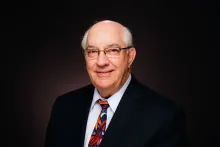
Mitchell Knapp is a graduate of Ambassador College with a BA in Theology. He has served congregations in California and several Midwestern states over the last 50 years and currently serves as the pastor of churches in Omaha, Nebraska, and Des Moines, Iowa. He and his wife, Linda, reside in Omaha, Nebraska.
