

C Mitchell Knapp
This transcript was generated by AI and may contain errors. It is provided to assist those who may not be able to listen to the message.
Now, I sent out a letter. I've sent fewer in the summer. These weekly letters that come every three weeks, possibly, or something like that, on Friday night. And the Psalms, you know, the reading program through the Psalms has been... I had to leave off. We're up to 118. I'll start with that right after the feast and go from there. But, 120 through 134 are called the Psalms of degrees, or the Psalms of a Synth.
And the literal translation of this 15 Psalms, this little Psalter, Psalm book, which was originally a separate Holy Day Psalm book, or Psalter. I forgot the first part of that sentence. Which was... Anyway, these 15 are about the feasts. They're about the Holy Days. And the idea of goings up, literal translation, is that they were going up to Jerusalem.
It was the highest point in the land. And so, if you went to the temple, you were going to the highest... No matter from what direction, you were going up. So, we talk about, at least I do, about going up to the Dells or going down to Branson. That's because of north and south. In this case, it was true.
If you're on the south side, but it didn't matter where you are, Jerusalem was the highest point in the land. And the temple was there, and that's the symbolism. So, I sent one of these letters out. My last one, before the feast, I was hoping to get these done. All before the feast, and it wasn't possible. So, I did send out just a summary of each of the 15. And, like I say, I'll come back and do those more thoroughly, starting right after the feast.
118, 119, and these. What I want to do for today, since these are about the feast, I've given a full sermon on all 15 of them at the feast. I didn't want to attempt that today. In the first place, it's really squeezing a lot into one sermon. But I wanted to go over to start into it. The first ones, because the first ones, as I mentioned in the book, that is in the letter, just by way of summary, 120 is number one in this festival psalter.
Distress in this world and peace at the feast. 121, protection and preservation of the righteous. 122, the things that cause peace at the feast and in the millennium. And 123, the suppliance, worshiping at the feast. It shows the attitude towards the feast. It goes on with protection and deliverance and survival and faith in God's protection and so on, all the way through the psalms. Two of them are dedicated to family life. As a picture of the world tomorrow, that's 127, 128. We sing songs about those in our hymnal. But I just wanted to, because of the first as we get started in these, it gives us an approach.
And there are just many, many attitudes that are connected with the teaching of the feast. And so, that's the sermon this morning. The psalms and the grieves in general are specifically for the meaning of the fall holy days, although they were used for all the holy days to some extent, but they are specifically for the fall holy days.
I won't get to that, but two of them are dedicated to, or, let's say, associated with and have the lessons of atonement and one of trumpets. And then, of course, of the major festival, and then the last one is a farewell hymn. So, it's a good thing to do before the feast.
So, now I mentioned the ascents are going up. It's an odd title, of course, but there are, I just gave one of the main things. Jerusalem was the highest place, highest elevation, but also it has to do leading right, too, because the temple was there with going up before God's presence in a spiritual sense, of course. And the question would be, if you weren't familiar, well, when? And the answer is the feast days, mentioned internally in the description.
And also, there's an interesting scripture in Psalm, I mean, pardon me, in Isaiah 30 verse 29. And this is a prophecy. Judah is being exhorted to trust God and not make alliance with Egypt and Sennacher. And even there's a reference here, referring to God here.
And his breath, like an overflowing stream, shall reach to the mitzvah neck and sift the nations. And I'm sorry, this is not of God. This is what is, this is the Assyrian, and then God is going to sift him, of course. But verse 29, you shall have a song. This is a prophecy then. As in the night when a holy solemnity is kept. So when do we have a holy solemnity at night?
Well, every Sabbath, Friday night, you know, but there's no particular Friday night ceremony on the Sabbath. Usually that's in your home, and you know, generally home at sundown, for the most part. But what this is talking about is when there's a holy day, and there's a night service in the evening. And traditionally, we have had, and we do this in the Dells this year. My wife and I aren't used to this, because at Branson, since we meet in a theater, and they have a show every night, they don't use it at night at all.
So we have two services on the first day, instead of the opening service at night. And I'm going to really enjoy this in a way that, you know, at Branson, we don't have this night service. And I grew up with this, you know. But usually, well, not always, but certainly at the Dells, there's a musical tradition. And usually there's a big fanfare with the orchestra. They have generally had a large orchestra, the choir, and I get the privilege of singing in the choir under my old choir director, and the band leader.
Gailen Morrison and John Barbus, of course. Some of you know them, of course. Anyway, so that's going to be a lot of fun. But the idea of going up to the feast and then beginning the feast in the evening, it's just a tradition, and especially when it comes out of the Bible, specifically Isaiah 30 verse 29. You shall have a song as in the night when a holy solemnity is kept.
And this you can blame on the people, the 70 scholars who were working on the King James Bible back in 1611, who wrote holy solemnity, which is an awful sounding term, when a holy day, a convocation, when a worship service is kept with gladness of heart and getting into the thing. We'll see a lot of music. As when one goes with a flute to come into the mountain of the Lord to the mighty one of Israel.
This is a reference to coming up to Jerusalem, going to the mountain.
These 15 psalms were sung. We have the traditions. I don't, anyway, have a lot of information about this. But they were psalms that were sung as a part of the processions, families, family groups, several families together, maybe. As they went up to the feast, the tradition was that anybody from three years old and up that had any kind of an instrument could join in the parade and be a part of it. This is also true at the water ceremony, which I'm familiar with to some extent. Any kid who could carry an instrument, could halfway play it, could join. They had this big procession led by the priests. They went, I think, out the city gates and down around the hill, down to the pool of Siloam, gathered water, and then carried it back in this big fanfare, playing different songs, among which were, in terms of the first ceremonies coming to the feast, these 15 psalms. Isaiah 3029 speaks either absolutely mysteriously, it just kind of comes out of nowhere. As in a night season when they had all these solemnity and everybody had flutes, and you wonder, what is it talking about? But if you know what the customs were, then you know what was going on. So that's what it's talking about. This is the background of these 15 psalms.
They were also sung by, in more of a, that would be folk songs with everybody playing, but the Levitical choirs, the great Levitical choirs, I can't, oh, I would love to hear to have heard them, but they would sing these 15 songs as a welcoming ceremony at different times. Things changing over the ages. It wasn't always the same, but there were 15 steps between the court of the women and the court of the Gentiles, or vice versa, and because it went up on about three levels, and then finally to the tabernacle itself, and it is said that the Levitical choir, with all the instruments, all the orchestra surrounding them, must have just been astounding to hear that, could be heard for miles, they say, would sing first 120, which would be number one, and then they move up one step, there were 15 steps, and I don't know if it was the, maybe the back row of this huge choir, or whatever, was on the first step, but anyway, they moved one step up, and when they got to the 15th, they would sing 134, and since that's a farewell song, I suspect it wasn't, you know, I don't know how they did it, but anyway, that's another reason why it was called the songs of degrees, or a sense, or songs of going up, songs of goings up.
So you had the processions, and then there's one other meeting that is generally stated, and that's the pilgrim that was called, they were called pilgrim songs, because of the travel, and because of the meaning of the feast, with temporary dwellings being a picture of this physical, temporary life. A pilgrim is one who makes a pilgrimage and is therefore dispossessed for religious reasons, so in going to the feast, there is this tie-in that we're temporarily dispossessed for religious reasons, being a pilgrim then, but by choice, as it were, in Satan's world, and that's the introduction that leads right into the 120th psalm, which is psalm one of the the holy day psalter here. In my distress I cried unto the Lord, and he heard me, deliver my soul, O Lord, from lying lips and deceitful tongue, and you say, now just a minute, this is a feast of joy. Why is he starting out in distress?
Well, for one thing, travel was much harder than now. Arduous circumstances were encountered in keeping the feast, certainly parallels with today. It's easier now than it was.
As a child, we had, first of all, a 40 Plymouth, and then we really moved up in the world in 1954 when we got a 48 shivvy. We were moving up. And Dad liked it so well, he bought another one, and then he bought a station wagon for the 48 shivvy, an old woody. So, but traveling then was just different. It was much harder about every three miles or so you can stop and get a candy bar at a Stukies or something. You know, I mean, it's just businesses are all over the population, is much higher, the engines are much more powerful. What's more, you don't have to, you know, they don't need the maintenance that they do. I mean, they needed a lot more maintenance. We don't have to do the maintenance that we did then. Tires wore out. What's more, most of the church, as probably most of the population, wasn't nearly as well off, and there were many more bald tires.
What's more, tires weren't as good. So, there's a lot of flats going across the desert. They got way, way hotter than usual. And I just use those few examples. Travel is harder even 50 years ago. Actually, I'm talking about 60 years ago, come to think of it.
But in the 50s, it was different, even in this blessed land. But if you didn't have a horseless carriage, and of course, back then in Israel, you wouldn't even have a horse-drawn carriage, because they didn't really have horses until, except for in the military.
They used other animals, and mainly donkeys, or little guys. Burrows, I guess. At any rate, travel is very hard. Most people in history, they say, at least in early America, most people didn't get more than about 25 miles from their home in their lives.
The exceptions were politicians, and traveling salesmen, or something, and the army.
And normally, you wouldn't be more than seven miles from your home. And this is over millennia, multiple millennia of times. People just didn't get that far. So, anyway, travel was hard, and so that's one part of the answer here. But there's a lot more. The spiritual meaning, and just the meaning in general.
We start out with distress, and essentially, it's talking about just the fact that the world is not a pretty place to be. It is. There are many blessings. And remember, in America, we lose a lot of this just because we have it so nice. And that seems to God, has prophesied He will take it away from Americans, because we haven't... Americans and other modern Israelite nations, we haven't appreciated it. We've wasted it, and we've gone corrupt. So, the distress of life in this world, and looking forward to rest and relief at the feast, parallels with the rest of the millennium, this prophesied. So, the world tomorrow will begin on the rubble of a burnout world at war, pictured by the Feast of Trumpets. And rebel governments are crushed by Jesus Christ, and His army, which includes the firstfruits. It's just God's judgment on this filthy system of the world, which Satan has just foisted off on man. The millennium begins like in Genesis chapter 1. It says, He made it without form or void, or in chaos and confusion. Tohu and Bohu, or Tohu and Bohu, possibly, in the Hebrew. Meaning chaos and just confusion and a royal mess.
And so, God brought the recreation out of that mess in Genesis 1 and verse 2, following that creation week. But the prophecies talk of cities of the earth lying in rubble, food supplies destroyed, enormous disease pandemics, less than a tenth of the people are still alive. And to tell you the truth, it could be less than a thirtieth, because it talks about one-third, you know, dying of different things before that. And it's not clear whether that's just Israel or that's the whole world. But if, at least it's one tenth, then it may be much less. It might be a third of a tenth.
But people say, well, how could God be so mean? And the point of the whole thing is that God isn't going to step in and give His punishments to wake people up so they'll stop and think, and think about maybe we could, you know, obtain God's blessings. He's not going to do that until what man would do to himself would be far, far worse. Worse than death and destruction and disease and so on are, or is, the system. In Revelation, it talks about this great economic system and it talks about the effect on the mentality of men and it describes the system as those who chew up and spit out. That's my words. It's not Revelation. But just to destroy mankind, the souls of men, just grind the souls of men. So when you see then the prophecy is coming true throughout the world, we're just, we're dangerously close to a lot of this happening where governments of absolute control, rather than freedom growing and expanding, the absolute controlling heavy fist and boot of the governments around the world are just poised. And interestingly, the idea is to, the way you do this, if you want to control, is you stir up the masses who really are taken advantage of and who really have something to complain about. You stir them up so that they'll rebel against their governments. And then you can destroy those governments and you take control and people will gladly give up freedom for safety and especially for food. And you got them. You control the food source and you control by military force and that's what dictator after dictator after dictator has done through history, including some very large empires that God has saved different parts of the world out of. And if you stand off and look at this, this is happening at this point. So this, considering this is written for all ages as an approach to the feast, this is really starting in the very right place, the perfect place. This world, even though at this point we're enjoying a temporary respite in the last maybe four to five hundred years with the growth of freedom and the renaissance, starting with the renaissance and things in Europe mainly, and then Europe and America, the western world, westernized world, including the nations of the East like Australia, South Africa, which have really grown economically with the blessings of Abraham. This is a temporary change-up. This is not the standard. This is not what has gone on in history and yet Americans, I'm picking on ourselves, but it's anybody who has plenty. That's basically what it is. We haven't appreciated this and we just think this is the norm. While everybody thinks like me, I want to be, wouldn't want to hurt anybody, wouldn't want her to fly, and we certainly want to be fair.
People are, of course, very naive because of how good things are. So this is going on, but back to verse one here. In my distress, I cried to the Lord. This is a person beginning to go to the feast and there is distress. The question is why, and that's to highlight the contrast between man's way and God's way and to focus our thoughts. We're keeping a feast which pictures the solution to all this mess that we have in the world to the agony and the trouble and just all those things. There's plenty of trouble and I don't want to place a bummer on you because there's a lot of good stuff, especially right now. We've just come through the worst kind of trouble, which is starvation. We pictured with the torment. If you don't get food, you die. We're miserable. We weren't near death, but miserable to some extent. Some years are better than others. Other people take it better than others. But we come through that as a picture. The idea is that we want to look at the feast as a picture of the world tomorrow which solves the problems of the world, which are very real. So we cry in distress out of the midst of distress to the Lord. He hears us and we cry, deliver my soul, Lord, from lying lips and from a deceitful tongue. That's fairly deep, but basically dishonesty or lying is at the very root of all the rebellion against God and all the trouble in the world. Because that's the foundation is God's truth. So if you have deceit or the lack of it, then you lose God's knowledge. This is why people are destroyed for lack of knowledge. So the specifics of this aren't so important as understanding the overall principles. The very foundation of the world is built on deceit. Human nature, we deceive ourselves. We think that getting is better than giving. But if you work hard and give, you get so much more and you still get what you would have gotten. So God's way is what's being highlighted here. And our attitude toward the feast is being described. But there are times that sometimes you have gossip and persecution that people endure because we keep the feast. We live in the last post-World War II years. So more than half a century now.
At least in the Western world has been very liberal-minded. As a boy, I remember, some of you might remember these things, that Catholics generally didn't mix with Protestants. And Protestants generally wouldn't let their daughters date a Catholic, you know, a Ptooey Catholic. There was real animosity. And there were a lot of books written. You can buy them if they were written between, well, in the first half of the last century.
And it was a Protestant book. There would probably be a few swipes against Catholics and Popish things. Polymyx against Catholics. And not so much the other way, because they're in the minority in the United States, but definitely in England, because, of course, they had rebelled directly from the Catholics. But we have an over tolerance, or a false sense of tolerance, and false tolerance nowadays. But if you've noticed, anti-Semitism is growing like crazy. And there are a huge number of people that really don't like Romney because of his religion, even though it's just about right on par with an awful lot of the other Protestant religions. What's more, they tend to, you know, put teeth in their religion and actually do it. So, there's just a tremendous amount of prejudice under the surface. And what happens, then, when God just says, okay, like to Job, okay, you may, to Satan, you can persecute the church now.
Well, anybody who is a Sabbath keeper is going to be in the line of fire.
I suppose you might have heard that beforehand. I've been hearing it all my life because I've been in the church. But there's a persecution against Sabbath keepers, against Christians in general and Sabbath keepers. That is coming. We need to have that as a part of our mentality because it's part of the truth.
God says it's true, and therefore it's a prophecy because it's going to happen and so on. But it's also specifically a prophecy. So, sometimes, gospel persecution and resistance happens because we keep the feast. It just happens to be rare now for us, but it's not rare worldwide. I mean, there are places that you just simply could not have a public meeting. You'd have to meet quietly in somebody's home and possibly at night, places in the world right now. Or they would kill you because of just the lack of rule of law. So, even though we're in considerable better circumstances than this, the principle is certainly true. Verse 4 is, sharp arrows of the mighty with coals of juniper.
Actually, this can refer to the sharp arrows of the mighty one, God. It's not clear. It can be just strong people shooting at people that are trying to obey God.
Better try to calm this thing down.
Or else we might have an even shorter sermon than I planned.
Verse 5, then, woe is me that I sojourn in Meshach that I dwell in the tents of Kedar. Of course, we sing this. You're possibly familiar with the song. We're in the... we're in enemy territory in this world. And we are on a collision course. If you are going to keep God's laws, you're on a collision course with the world in general. Because most of society really, when tolerance is in style and it doesn't affect them much, then people allow things to go. But when it gets tighter and they are affected more directly, pretty soon there's a hate to the develops for God's... certain of God's laws. And people don't even know, you know, that it's just the spirit of the age. You hear that term, but people sometimes don't even know, but they're just against something. It can happen actually to everybody. But this speaks of a time of alienation and tribulation for national Israel, certainly here, but also for the church. The book of Esther was a precursor, by the way, of the beast power. You know, there are several things actually of Balaam, of the great false prophets. And the book of Esther shows what the aim at the end will be to snuff out the people in the work of God.
And so we're enjoying wonderful prosperity in the church and wonderful protection and wonderful peace. It's a time that we need to really try to learn as much as we can and grow as much as we can, because there'll be a time when we'll be tested and things will be very bad. Verse 6, then, My soul has long dwelt with him that hates peace. Interesting that this talks about through the ages, the called-out ones, the first fruit struggle against spiritual captivity. Meshach and Kedar, by the way. Meshach means Russia. It's a related etymologically, an early form of Moscow. That's how it's just a direct relationship there. Kedar, that's a tribe of Aravians. Bedouins, I believe. But these two are symbols of oppression for God's people. The lesson is that we're in enemy territory as we come out of this territory and keep the feast in this world. Satan's world, where the way of peace isn't known, and we're thankful that we can come out of it for a short while. It seems almost ungrateful in the prosperity that we're enjoying in this wonderful land. Usually, a lot of times, we mention the opening closing prayers, freedom to meet in peace. But that freedom isn't all around the world, and it won't be forever. It's coming to an end as a punishment from God, actually. So this is really relevant to all of us and has great and deep meaning to our lives. The key difference between this world and the millennium is... what would you say? Anybody?
Well, there's several ways you can look at this. This is, by the way, a terrible test question. Horrible, because you don't know where I'm coming from. So anybody?
I'll just say, the result of Jesus' ruling course is it be a world of peace. And when you say peace, that's kind of a word that covers several other things. So that's what I was saying. But that was a valiant guess, and also true. But the key difference in terms of just a snapshot of the world is peace. And of course, that's the theme of the feast.
And so verse 7 says, For I am for peace, but when I speak, they are for war.
When the church speaks loudly enough, and our head kind of pops above the level of, we're on the radar now, then we start, every time we start getting resistance. And we've had only a little bit of that in United recently because we're reaching a lot of people. So we're seeing a little bit of resistance.
It's just something that is going to happen no matter what, and so it's good for us to understand that. So it's good for us to understand this psalm. This is the beginning of a journey. This is the first one here, first psalm of ascents.
For the beginning of the journey to the fall holy days, and mainly it has in mind the Feast of Tabernacles, speaks of the right attitude or orientation for anticipating the feast. You know, you wouldn't say, oh man, I sure hate to leave and go up to the dels or down to Branson or Hawaii, wherever somebody might be planning to go, you know. Oh man, I just really hate to hate to leave. I guess I've run into that, but it's been rare. I've not had that in my experience. But if your orientation was different, and you didn't understand the meaning of it and the importance of it, and the truth of God, well, you might say, what? Take the kids out of school and be totally against it. And maybe you've heard that. I've heard that a lot.
So the right attitude or orientation is, let me out of here. I need some relief, change of pace, a little peace. It's going to be great to go to the feast.
That's the attitude that is put forth here. So this psalm is an instruction at the beginning of the feast. We should shake loose the stress of the rat race, leave the problems behind, throw ourselves in keeping the feast. The experience of the feast is intended to be a little taste of the millennium in the Kingdom of God. The thing is, there's a tremendous advantage of going somewhere that's different, having different surroundings. That really helps. But there are some, just about every feast I'm aware of, that can't travel. For some reason, have to stay at home. And the spiritual lessons can certainly still be appreciated and experienced. It's not just the going physically leaving that does it. It's mainly in the head. It's a real, I mean, it's a real blessing. But if you are not going, I have a few that won't be.
I thought about this last night, working on this. I sure don't want to be, you know, discouraging to anybody. The feast is the feast, no matter where you are. The place of God in the Old Testament was Jerusalem as the place where the Lord shall choose. Well, he explains in John, Christ explained, that to the woman at the well, he said, she was talking about whether it's Jerusalem or Mount Gerizim. She was Samaritan. And she brought that kind of testily, bringing this up to Christ. And he said, well, you know, the time will come where the place won't matter. God's looking for people who worship Him in spirit and truth. So it matters, and we are physical, and it's a tremendous help. It's a wonderful time and just an enhancement to keeping the whole thing. But if you can't, then don't be discouraged and just keep it the best you can, which is, you can. This psalm explains that. And then there's another year or another time or another situation. So now Psalm 121, before I do this, could I ask the song leader and the piano player, would you lead another song? I'm going to go have a cough drop, and I'll then maybe be able to keep talking.
Thank you very much for the extra song.
Well, 121 continues the next lesson here. I'm encouraging those who aren't able to come to the feast.
The other side of it, if we can at all, we are supposed to go.
And for the faint-hearted, I guess, or I guess real timid people, I've run into a few. We're kind of scared to go, or we're worried, or for some reason.
But if you can at all, it is a command. It's not like a strong suggestion or a hint. We're supposed to go to the feast, but there are circumstances where you can't.
One of the most common is that when you're first in the church, you haven't known about it, so you couldn't plan for it. So that happens. Whenever we're growing, that happens. That's a great thing.
Let's see.
As a matter of fact, that happened to my parents. I was three.
They had just been baptized in August.
Because of a follow-up with the male, my dad was working and traveling out of town, coming back. They were notified, and he got the letter notifying or just explaining the feast and when it was, and so on.
On the next to the last day of the feast.
So he calls up his wife, my mom, and says, you know, Phyllis, I'm hearing my dad say this, you know, Phyllis, what are you doing tomorrow? Well, I'm going to do laundry. Well, don't do anything. I'll be home tonight. Why?
Well, it's the last great is the Feast of Tabernacles. What? They've been baptized, but they didn't know a lot about the Holy Days or the word tabernacle, I guess they'd heard. But anyway, so the first year, they kept a little bit of the last day of the feast and the last great day, and didn't go anywhere. And that was the most extreme case I can think of.
Psalm 121, I will lift up mine eyes unto the hills from whence comes my help. That can either be an explanation or a question. It's written as a question right here in the King James. But the hills refer to as a refuge from the war of the plains. The Shephala or the maritime plain saw many invasions and incursions in that part of the world. Much chariot warfare, many armies over and over and over. I think Jerusalem may have been the city of peace, may have been the most conquered city in world history. I'm not sure that there are others. But just, you know, it was like almost every few years. It wasn't actually every few years. But they were just conquered by anybody with an army that came along, because they weren't strong unless they had had God helping them, which they did for a reasonably short time. Jerusalem wasn't captured by David until, well, it wasn't captured until David, about 1000 BC. And the Jebusites, it was very easy. It was almost an impregnable fortress. And they said in some cases little girls could defend the place. All you had to do is stand up on the high ledges and throw rocks down, gaunts down there. It was just almost impregnable. And so they were able to, if you remember the story of Joab, figured out, or David did, that they could go into the pool of Siloam and swim through the water, and then come up into the well and climb out, which I think they did at night and open the gates. So, fascinating story.
But this would be like, see we've been in America as a nation for a shorter time than we had the colonies. But this would be like Washington, D.C., having only been captured in the last 50 years. They went a long time without having their capital city somewhere else, different places. So, it was a place of war, and it was after the Israelites were gone, of course, take it out, Jerusalem just got stomped and overrun repeatedly.
Because there's the wars, everybody was always coming through there, and it was a tempting spot. And when God wasn't protecting them, it was an easy target. Just go up the road and take what they had, go on. Army after Army did this. So, while God was with us, Israel, though, the maritime plain was the place of invasions and the threatenings of wars and so on. And the hills represented protection because the chariots couldn't go there, and they had better defenses and so on. But in general, God just was protecting them. So, the geography of the place has a little bit to do with the symbolism. But spiritually, it's talking about the fact that God dwelt in the temple in Jerusalem. So, to the hills, I'll lift my eyes.
If this is a statement, from whence comes my help, it's fine if it's a question. Here's the answer. Verse 2, My help comes from the Lord, who made heaven and earth. He will not suffer your foot to be moved. He who keeps you will not be moved. Behold, he who keeps Israel shall neither slumber nor sleep. There's a beautiful song. He watching over Israel. Perhaps you've heard that. The Lord is your keeper. The Lord is the shade upon your right hand. Sometimes shade is the difference between life and death and a barren and desert wasteland, which, of course, in the south they have some very hot areas there. And our keeper is one of Christ's names or titles, our preserver or our keeper. Verse 6, There's never a time when we're unprotected. The sun shall not smite thee by day nor the moon by night. And that pretty well covers it. There's day and then there's night and there's not too much else. Always. He doesn't sleep. The Lord shall preserve you from all evil and he shall preserve your soul. Protection of your life and home, possessions, crops, and so on is implied here in the ...
I just can't think of the right word. It happens more often these days. In the context of keeping the feast. And there's another scripture in Deuteronomy 14 referring to the feast that also parallels this where God says, you know, keep my holidays and I will protect you in your obedience.
Verse 8, The Lord shall preserve your coming in and your going out from this day forth and even forevermore. God is, when he gives you a blessing, doesn't take it back. He's watching after you. He does allow trials. He allows time and chance. And we definitely have problems because we would be a bunch of real weaklings if everything just always worked out. Then if everything did, something did go bad, we'd fall apart. And so it's really important to have things go really bad. You've probably seen movies and maybe actually been to boot camp where the sergeant was not only difficult but just a regular and we can't say words to describe what the soldiers would say to describe their sergeants, right? Their drill sergeants. So we wouldn't want to, certainly in church. But do you know you get the idea? Just a real bad person to be very charitable. Right. Okay, have you ever read of Hell Week? We probably don't have any maybe seals, former seals here, no hands. You've heard of Hell Week where they have to go through this incredibly hard, it's like nine week course, maybe 15. And I read a book that described this, it described everything that happened. And what they do is they try to, this reason for, there's a reason behind the madness of it, try to get you to not like them. And they do little things, little digs to drive you over the edge. Because they have to build into these soldiers the ability to think and remain calm and self-controlled if they're mad as blazes and about ready to kill something. They have to remain calm and in control. And that's the reason for it. He described one particular time where they were just exhausted, they trained on the beach. And of course, sand was everywhere. So every day inspection, they had to have every grain of sand out of their small little dorm. So that was enough of a trial. And they would be penalized heavily and have to do extra, just exhausting, just very little sleep. And they had, these were strong young men in their mid-20s of unusually strong constitutions. And this one fellow, he just got every grain of sand out, just perfect, and locked the door. And went on to the daily activities, came back, and there was sand all over the place. But his door was still locked. The sergeant, or somebody, he crawled in through a vent and thrown sand all over, reached him. So he had to stay up like till 3 a.m. He was just exhausted at midnight when they got in. He had to stay three more hours and clean it up. And he was in a bad attitude. I think it's safe to say. There's a real important lesson here to learn. God gives us these promises as far as caring for us. But there are things that we have to endure that are really hard. And it's designed that way. And he has a regular blankety blank of a drill sergeant. But in this case, the drill sergeant really does hate us. This is Satan. We have an enemy. And God allows access of this enemy to us. And that's so that we can build up such strength that we will not ever be overwhelmed. You know, how long do you have to have strong enough character to be absolutely faithful and trustworthy and in control of self, and dedicated to God and His truth for 100,000 years? You know, how stupid! At 101,000 years, many can go ahead and you might be tempted to hate and steal and lust and murder and whatever else. No, no, no, no. It has to be so deep that it just is the way you are. And you're a finished product in that sense. And you would never go back because that's who you are. Not only do you believe it to your toenails, you have become that way. God, the truth and the values of God. So, we do have.
We are allowed to be persecuted, but He said He would preserve us through all the trials.
Even, we have the example of Christ, even to death. Sometimes there are some martyrs that God will allow. And this is for examples to others. Usually they are the leaders. This fact never made me comfortable. They're the ones that are public that would do the official speaking for the church. And so, you know, we have to face that. There might be some pain involved.
And that's for everybody. So, this is a serious proposition. You don't get glory with unlimited power. See, God has in mind, He wants us so converted, we're so dedicated, that He doesn't have to say, well, you can have security clearance at this level. But, you know, you're not qualified for these two security clearance. You have two more. Somebody else's smarter, has a better record or something. He's allowed here. And then, the rare few. No, no, no. If you're in the family, you get 100% security clearance for everything. And you don't have limitations on you. Because you are so dedicated to God. And that's where your heart is, that that's just not going to change forever. So, in this life, we always have temptations. And we will. And we're always going to sin. And we're going to mess up and so on. But there needs to be a bounce back principle that gets faster and faster. You don't get overwhelmed. But we have a real good example of a bad example in David. You know, he had this affair with Bathsheba. It must have been, you know, two or three months, anyway. Long enough for him to figure out that she was for her to get pregnant and tell him. Know about it, for sure. And so, there's a while involved there. Well, that means before that, he must have not been praying very well for a long time. For months. Have you ever done that? You know, find yourself, say, man, my prayer life stinks! I've got to get back to where I was. This is awful. You know, I'm headed the wrong way here.
So, there are a lot of really serious lessons. But he says he'll preserve us through all the trials. We have to have, we must have trials. But, actually, this is part of the, this is a festival lesson that is connected with the feast that God preserves his people. It's part of learning to fear and worship God. You know, it says we are to, we keep the feast, that you may learn to fear the Lord always. I've explained, fear develops into, that is not hatred fear, but fear or respect, deep respect develops into this deepened respect and appreciation. And the end result is just dedication, devotion, and just plain love. You just love God, and you don't want anything else, and so on. And so, we're supposed to learn to fear slash love God always at the feast. This is part of it. Understanding we will have trials, but that God will be with us throughout, and never slumber asleep, and be aware of our trials and help us through them. How do we know that God's church will survive? Because Christ asked the question, will the faith survive? Will he find the faith when he comes back? Well, one of the answers to this question that Christ asked is that the Feast of Tabernacles shows how God is preparing us as leaders and teachers and saviors. Obadiah 2 says that we, as a part of Christ's administration, responsibilities with him and his government will be considered saviors, not the Savior. But we will have a work, have a part in that work of saving, Obadiah 21, in the world tomorrow. The Feast of Tabernacles shows him preparing us for this. This feast celebrates the preservation, the saving, the fact that God keeps covenant. He remembers when all seems lost. So just keeping the feast was a trial many times in the history of the church. The dangers, I talked about that, just physical danger, historical meaning, was probably more profound because it's such a time of peace right now. But it's also contemporary. There are a lot of people who haven't known whether to have a job when they got back from the feast and had to say, well, I'm going.
That has to be. I'm not going to disobey God. I am going. My dad did that several times and sometimes didn't have a job when he got back. He was a plasterer and he had such a reputation that he was sought after by other contractors. Not in the early years. Sometimes you really had to scratch. There were actually quite a few weeks, I remember, periods of time where Mom would cook a great big old pan full or kettle of beans on Sunday because he had gotten paid on Friday. That was about all that was left over and that's what we eat all week. We generally had some bread because we had rykrisp. Dad liked rykrisp. But there were plenty of times when there weren't butter. I complained bitterly as a spoiled little kid. Shame on me. But this is not terrible trouble. This is not having a lot. We had enough. I managed to survive in pretty good health, you know. So I just had just a touch of this. So when it came a long time in 1995 when I was challenged and said, you either preach this new doctrine or we wish you will. Goodbye. Well, actually, the statement was either you preach this, the new doctrines of the church which were not new, they were very old. They were, as one man said, old as the hills and twice as dirty. Very old pagan doctrines. And he said either you did or we checked with your elders. You got three elders there and anyone would be glad to preach these new doctrines. So I said, not on my watch. If I approve of the elders preaching heresy and I'm the pastor, then what does that tell the brethren? Well, it tells them that heresy is just fine and God really isn't serious.
So I wasn't about to deny Jesus Christ and his truth and so I quit.
I think my letter was a little bit angry. If I had to do over, I'd try to take a little bit of that out of there. But I was delighted in that. I didn't enjoy being unemployed, by the way.
But I was delighted because my dad had, I'd never had to prove that I would put God ahead of my job.
But I was able to, so I was glad. And I didn't know. We didn't know if there would be anything. We didn't know United would start at all. I knew I was going to keep the Sabbath and the truth.
But anyway, I was really happy about that. That was one of those things in life I did good.
And of course, it can't make up for all the bad things. You just have to be forgiven for your bad things. But I was truly pleased about that. But there have been a lot of people. I knew a family in California. He was on the fire department. He said, you can't do that. It's not allowed. You can't do this. You know, you'll be here tomorrow or else you're fired. You can tell this job goodbye or whatever. Every year he went to the feast, and he came back. And he said, well, do I have a job? Yeah, sure. What are you talking about?
It was his boss. It was strange. Well, actually, that didn't always happen. That happened one year that he told me about. His boss forgot about it. I guess he got used to it. But he just had a crisis every year. And it was his whole career. It wasn't just his job. Well, anyway, we have some really strong, good examples in the Bible. We have a lot around here. You know, if we were able to know them all. But just keeping the feast can be a trial in this world.
One other thing on this, the keeper psalm, this can be called the keeper psalm, one of Christ's titles. The word keep, keep, keep. Verse 3, he who keeps thee will not slumber. Verse 4, he who keeps Israel will not slumber asleep. Verse 5, the Lord is the keeper, is your keeper. Verse 7, the Lord shall preserve you from all evil. He shall preserve your soul, and the Lord shall preserve thy going out and thy coming in from this time and forth and far more.
The two English words, keep and preserve, here are translated from one word in Hebrew. It's actually, so it mentions it six times that God will preserve you. And of course, you wonder now, six is the number of man. So why would it be written, you know, why would, you know, it be written six times? Well, we're talking about man in this world.
There's trouble in this world, but God is our keeper. He will preserve us or keep us.
And so that's just kind of an interesting sidelight. But the Psalm, the keeper Psalm meant a lot to the Old Testament pilgrims. It means a lot to us, too. So the summary is that Psalm 121 explains one reason that we keep the Feast of Tabernacles. It's as a memorial and remind you that God always preserves and looks after the best interests of his people. Christ is our vigilant, our faithful, our loving keeper who never slumbers or never sleeps. And that's how you start off Feast of Tabernacles. Typically, I prepared to go, I was prepared to go over the first four, but there's not time for that. I don't want to keep you over. But it just continues building as I sent in that letter. And then, as I say, we'll finish out the Psalms 118 through 150 as soon as we get back in. Should start that one week at a time thing, get that going again, and finish out the Psalms. Well, this is the start of the orientation. The lessons of these 15 Psalms are just, they're just truly astounding and they're absolutely wonderful also. So at least we have those two to begin. Now, we're about ready to leave, so I'm supposed to give some kind of comments. I feel like, what do I say besides this goodbye? See you later. There'll be some who are, well, we're going to scatter the different ones. A lot of people are going to the Dells, but we're going to different sites, Branson and Steamboats, and maybe flying even farther than that tonight or tomorrow. I don't know.
But then, several of you will be staying here. And of course, we have two that have stayed in previous years and are going to be able to go this year. And that's Sharon and Lila. And so, we're really happy about that. Now, we're aiming for Fran next year.
Where is she? There she is. I looked over there for some reason. Well, anyway, I just, I don't know why I looked over there. But, you know, if it's possible, we love to do that. If we can, then we will. I appreciate the veils providing transportation and helping out. I just really appreciate that. Those of you who are staying, we understand you'll be able to have a couple of meals together anyway and on the Holy Days. That'll be excellent. And just, we'll be thinking about you. Some people say that. And actually, one man told me, he says, well, we'll be thinking about you precious little, so have a good time. But that's not the way I'm saying it. He was actually serious. Howard Clark, and he was kind of a crusty old guy. He was going on a working trip, you know. And he was serious. But we will be thinking about you. And just praying for a real fine feast here, even though you don't have the opportunity to go. So enough of that, I guess. Anything you can get me on my cell phone. And we have that printed in the bulletin, which we don't have a bulletin day, but just grab one of those thousands of other bulletins we've had, you know. And otherwise, I can't think of anything. Should I say, is there anything else to cover? Anybody have any announcement? Lastman announcement? Small crowd here. Okay, have a wonderful feast, and we'll see you when we get back.
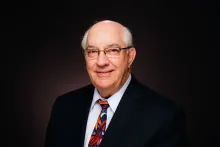
Mitchell Knapp is a graduate of Ambassador College with a BA in Theology. He has served congregations in California and several Midwestern states over the last 50 years and currently serves as the pastor of churches in Omaha, Nebraska, and Des Moines, Iowa. He and his wife, Linda, reside in Omaha, Nebraska.
