
Don Ward
This transcript was generated by AI and may contain errors. It is provided to assist those who may not be able to listen to the message.
The title of today's sermon, The Four Passovers of Christ's Ministry. The Four Passovers of Christ's Ministry. The Gospel of John is a most remarkable book. Vocabulary in the Book of John may be sixth, seventh, eighth grade at the most, but the structure, the syntax, is unsurpassed in any kind of literature. In the beginning was the Word, and the Word was with God, and the Word was God. God is light. God is life. The power of these simple words throughout the Book of John are among the most powerful words ever penned. The beauty, the power, the simplicity of these words are unparalleled in literature. The Book of John presents Jesus Christ as the Son of God, the Lamb of God, the one in whom is light in life who dies for the sins of the world, yet is victorious in resurrection. The Gospel of John reveals to us the very nature of God in Christ. God is Spirit, and those who worship Him must worship Him in Spirit and in truth.
The Gospel of John tells us that the Word existed in eternity, the pre-existence of Christ. John is inspired to tell us that God sends us the Comforter, the Holy Spirit, and through the Holy Spirit the Father and the Son will abide in us. The Book of John shows us that we are to eat the bread of life every day of the year. In the Book of John, Christ is revealed as—I don't know if you want to write these scriptural references down, I'm not turning to them— giving you an overview, trying to give you a feel of one of the most powerful pieces of literature ever penned, yet so simple in vocabulary, yet so beautiful, wonderful, and powerful in its structure. In the Book of John, Christ is revealed as the Word, as we have already quoted John 1-1, and John 1-2 brings us out. In John 1-17, it says that the law came through Moses, but grace and truth came through Jesus Christ. John 17-17 says, Your Word is truth. In John 8-12, we see that Christ is light. In John 14-6, we see that He is life. He is light, and He is life. In John 1-29, He's the Lamb of God, takes away the sins of the world. In John 3-16, He is the only begotten Son. John 3-16 and 3-18. In John 3-29, He's the bridegroom.
In John 6-32, He is the bread of life, the true bread. In John 6-51, He is the living bread. In John 9-35, He's the Son of man.
In John 10 and verse 9, He is the door to the sheepfold. No one can come in except they come through that door. In John 11 and verse 25, He is the resurrection and life. In John 15-1, He's the true vine.
So you begin to get a feel of, this book is so much about the Son of God. The first three gospels, the synoptic gospels, synoptic means seeing through the same eye, focuses on different aspects of Jesus Christ. But this one focuses on Jesus Christ as the Son of God, who gives His life for the sins of the world and is resurrected and appears to the disciples and teaches them off and on for a period of 40 days. Most of the events in the book of John are recorded around four Passovers. Four Passovers, also John 7, 8, and 9 focus on Feast of Tabernacles. John 10, it's the Feast of Dedication. And from John 12 to the end through chapter 21, it's events surrounding Palm Sabbath, a Passover, unleavened bread, His trial, His death, His burial, and His resurrection. So let's notice the first Passover in Christ's ministry in John 2 and verse 13. John 2 and verse 13. The first chapter of John focuses on that He was the Word and He existed in eternity. John 1, 14 tells us the Word was made flesh and dwelt among us.
Some of John 1 tells us about John and his work, John the Baptist and Jesus Christ appearing and calling to some of His apostles, disciples who became apostles. The first part of John 2 is Christ's first public miracle where He turned the water into wine and cana. Then we come to John 2, 13. And the Jews Passover was at hand and Jesus went up to Jerusalem and found in the temple those that sold oxen and sheep and doves and the changers of money sitting. And when He had made a scourge of small cords, He drove them out of the temple. The sheep, the auction, poured out the changers' money over through the tables. And He said unto them, the soul doves, take these things from here, make not my Father's house and house of merchandise. Remember in the tabernacle that was reared up in the wilderness that the presence of God filled that tabernacle. It was so bright that when Moses came out, his face was shining like the sun. Then when Solomon's temple was built and dedicated, if you read about in 2 Chronicles 5, that the glory of God filled that temple. So the temple was where God had placed His presence. Now, the Restoration Temple, and the Restoration Temple is the temple that was standing during Christ's ministry. That temple that was built after Judah returned from captivity was built under the leadership of Joshua and Zerubbabel. Joshua the High Priest, Zerubbabel the Governor, and also the two prophets, Zechariah and Haggai. So that's the temple that was standing during Jesus' day. Of course, Herod had greatly embellished that temple. It's been about 40 years embellishing the temple.
We know that under the New Covenant that we are the temple of the living God, that God's presence is now in us. So the parallel that we want to get from this with regard to Passover Unleavened Bread and Pentecost that is coming up 50 days after the first Sabbath within the Feast of Unleavened Bread, you start counting 50 on that Sunday, has to do with cleansing the temple. You see, before this Passover, Christ came and He cleans the temple. He drove out the money changers.
In verse 17, John 2, 17, and His disciples remembered that it was written, The zeal of your house has eaten me up. Then entered the Jews and said unto him, What sign show you unto us, seeing that you do these things? Jesus answered and said unto them, Destroy this temple, and in three days I will raise it up.
Then said the Jews, 40 in six years was this temple and building. That's talking about the embellishment that Herod did. And will you rear it up in three days?
But he spoke of the temple of his body. When therefore he was risen from the dead, his disciples remembered that he had said this unto them, and they believed the Scripture and the Word which Jesus had said. So, as we will be sitting down to watch one another's feet and observe the Passover in about 30 hours from now, more like 29 probably, we ask ourselves, what about our temple? Has our temple been cleansed? One of the main things that Passover and the Feast of Unleavened Bread prepares us to do is to be prepared to keep Pentecosts, wherein, of course, in that temple, in our temple of our bodies, God places his presence today. So, are we ready to receive God's Spirit? Has our temple been cleansed? Our temple should be cleansed in every aspect of our being. Let's go rehearse this Scripture once again, 1 Corinthians 3, verses 16 and 17. 1 Corinthians 3 and verse 16. 1 Corinthians 3, verse 16.
Know you not that you are the temple of God, and that the Spirit of God dwells in you. If any man defile the temple of God, him shall God destroy, for the temple of God is holy, which temple you are. We know that we, as human beings, we are physical, but we are also social beings. We have mind. We have mental capacity, faculties of mind akin to God, but of course, not on that same level. But no other part of the creation can think and reason the way that man can have an idea of eternal life, living forever. We are psychological beings. We are emotional beings.
We have the potential to be spirit beings. In our being, we need to put all of the various elements of our being together, and all of these things would comprise, in essence, the temple.
So how are we, first of all, treating the physical? What about diet? What about rest? What about exercise? Are you lying to yourself and saying that it's just a physical matter? Excusing yourself, you are the exception. Are you overeating, drinking, smoking, using drugs? How important is it? Your body is the temple of the Holy Spirit, and we've just read here from verse 17. If any man defile the temple of God, him shall God destroy, for the temple of God is holy, which temple you are? So we all need to take stock of our physical being, our physical bodies. And are we taking care of those bodies? Because it is the temple of the Living God.
We are social beings. You become as the people you interact with. Birds of a feather flock together, as they say, and iron sharpens iron. Let's look at some verses back here in Proverbs that relate to that. You are known by the company you keep, and that's just the way it is. And there's no way really to shake that from people's minds. Birds of a feather flock together, you're known by the company you keep. And to a large degree, your ideas, the way you are, the way that you come across, and so on, are shaped by the peer group and the people that you company with. In Proverbs 13 and verse 20, He that walks with wise men shall be wise, but a companion of fools shall be destroyed. You want to be wise, or you want to be a fool? Choose your company carefully. In Proverbs 22 verse 24, Proverbs 22 and verse 24. In Proverbs 22 verse 24, Make no friendships with an angry man, and with a furious man you shall not go, lest you learn his ways and get a snare, get a snare to steal or to snare your very life essence, your soul. Also, in Proverbs 27 and verse 17, Proverbs 27 verse 17, Iron sharpens iron, so a man sharpens the countenance of his friend. One of the great difficulties in Corinth, if you would turn to 1 Corinthians 5, evidently Paul wrote the epistle to the Corinthians during the days of unleavened bread, because it surely has an unleavened bread theme to it in some ways. Paul talks about being puffed up. He talks about keeping the feast with the unleavened bread of sincerity and truth.
But in Corinth, they had an incestuous fornicator among them, and instead of taking the action they should have, they were like, what he does doesn't bother me. It doesn't bother me that he's doing this. That's his business. And then Paul writes this famous line about, don't you know that a little leaven leavens the whole lump? 1 Corinthians 5, 1, it is reported commonly that there's fornication among you, and such fornication is not as much named among the nations, the Gentiles, that one should have is father's wife. And you are puffed up, and if not rather mourned, and of course that's what leavening does, symbolic of sin, it puffs up, that he that have done this deed might be taken away from among you. So remember, we're social beings. You're known by the company you keep, and the company you keep will influence the way you think and the way you behave, and the way you formulate your philosophy of life, your ideas, and the way that you come across ultimately. Verse 3, For I verily as absent in body, present in spirit, and judge already, as though I were present concerning him that's done this deed in the name of our Lord Jesus Christ, when you're gathered together in my spirit with the power of our Lord Jesus Christ, to deliver such a one to Satan for the destruction of the flesh, so the spirit may be saved in the day of the Lord. So there's a purpose behind it. And to do that oftentimes gets a person's attention, brings the person to his senses so that he will examine himself and do what he needs to do.
Verse 6, Your glorying is not good. Know you not that a little leaven leavens the whole lump.
Purge out therefore the old leaven that you may be a new lump as you are unleavened. It is so easy to become unleaven physically. Oh, you might say, well, I left a sandwich somewhere back there in the back seat or in the trunk, or I forgot about a place to here or some something like that. It might be humorous. I left some crumbs in the refrigerator. But generally speaking, it's fairly easy to throw out the leavening, vacuum the house, sweep it or whatever you do. And would that that would change the heart and mind that that would make us unleavened in the spiritual sense? It is a reminder about the spiritual, but it does in and of itself, it does not unleaven one. Evidently, the Corinthians were unleavened in the sense of putting out the physical leavening, but they had great spiritual leavening in them.
Purge out therefore the old leaven, that's the spiritual leaven, that you may be a new lump as you are unleavened, for even Christ our Passover sacrificed for us. Therefore, let us keep the feast, not with the old leaven, neither with the leaven of malice and wickedness, but with the unleavened bread of sincerity and truth. Now forward please to 2 Corinthians chapter 6. Remember, we're talking about your social life and cleansing the temple before Jesus Christ kept that Passover. He came to Jerusalem. You just think about somebody showing up from the Hinterland, from Nazareth, going into the temple area, taking this little frayed whip of cords or whatever it was, and driving the money changers out and quoting Scripture at the same time, turning over the tables. Of course, in today's world, they would call the police and the straitjacket and all that and haul you off. But it shows the boldness, the courage, the commitment, the passion. And all of those things that consume Jesus Christ and the Apostle says, well, we remember it's written, the zeal of your house is eating us up. I mean, we're just consumed with this. And one of the great tragedies, of course, in this world, and it's been going on now for decades, is that there is a tyranny of the peer group in the youth, and they, to a large degree, are socialized by the peer group. And generally speaking, there are some exceptions. Whatever the values, the culture, the behavior, the views of the peer group is basically what eventually are embraced. Oftentimes, youth try to resist it, but they are continually hammered. And eventually, most of them break if they're in the wrong group. So they wind up trying to alcohol the drugs. Some dinner dared to commit a crime, and they commit the crime to be accepted, and it just goes on and on. The world that we live in.
In 2 Corinthians chapter 6 verse 14, Be you not unequally yoked together with unbelievers, for what fellowship hath righteousness with unrighteousness, and what communion hath light with darkness? What concord hath Christ with Belial, the devil, or what part hath he that believes with an unbeliever? And what agreement has the temple of God with idols? Which temple you are?
And where to cleanse the temple? For you are the temple of the living God. As God has said, I will dwell in them, walk in them, and I will be their God, and they shall be my people. Wherefore, come out from among them, and be you separate, says the Lord, and touch not the unclean thing, and I will receive you. See, that is one of the great challenges of all time. To be able to stand in the face of the peer group, the culture, the society. See, when Christ was here on the earth and in Judea at that time, everybody that was a Jew, basically, they were enmeshed in that culture. Now, the Pharisees sat in the seat of Moses and had tremendous power in the social sense, and was able to impose a lot of things on the people at that time that were really wrong. Traditions of the fathers, that is, traditions of the Pharisaical fathers.
You'll read in the Gospel of John, for fear of the Jews. They were doing such and such and such and such. Basically, it was the Pharisees who were imposing this. This is one of the reasons why, having virtually every religion that is not mainstream, in order to really survive and thrive, has to have some kind of educational program for their youth. And you will see these schools. The Seventh-day Adventists did have nine universities in the US, and they have some abroad. Of course, the Mormons have Brigham Young University. They have a campus in Hawaii, and I don't know what else. The Jehovah's Witnesses have a big school in Brooklyn, New York, and many others. Of course, the Catholics, the Jews, also have a lot of universities. And of course, some of the other religious schools do as well. But basically, the religious schools in the US today that were initially founded, of course, Harvard initially, which is now the, I guess you would say, the epitome of liberalism, was founded as a religious school. But the Universalists eventually took over Harvard, and the Universalists essentially do not believe in anything that has to do with God and the hereafter.
Very difficult to come out from among them and be separate, touch not the unclean thing, and I will receive you, verse 18, and would be a father unto you. You shall be my sons and daughters, says the Lord Almighty. We are also mental beings, thus you become what you put in your mind. Proverbs 22, 6, or 23, better turn there. I don't want to misquote it. Proverbs either 22 or 23, somewhere long in there. Let's go there.
As a man thinketh in his heart, so is he. It says, 23, 7. For as he thinks in his heart, so is he. The old gecko garbage in, garbage out. And basically, our culture is being fed garbage today, and because of that, they are shaping the thought, the worldview, the social view, the values of a generation that you cannot understand how people could possibly think that way. How could they do that? And you say, you scratch your head, you hear some of the things every day on the news. How could they think that? What makes them think they can do that? Where do they even get the idea? In Matthew 12, please, Matthew 12, 34, the words of Jesus here. Matthew 12, 34.
Matthew 12, 34. Oh, generation of vipers, how can you being evil speak good things? For out of the abundance of the heart, the mouth speaks. Now in Philippians 4, 4, 4, in Philippians, we are instructed on what to think, how to think, so that our minds can be clean. Don't lose sight of what we're talking about. We're talking about that Jesus Christ, when He came the first Passover of His public ministry, He went to Jerusalem, He went in the temple area, and He cleaned out the temple. So for us, if we're keeping and walking in the same mode and model as Jesus Christ, then we would want to have that temple cleansed in every facet of our being when we take it. And we're talking about how it can be cleansed, and how it can stay that way. In Philippians 4, verse 6, Be careful or anxious for nothing, but in everything by prayer and supplication with thanksgiving let your requests be made known unto God, and the peace of God which passes all understanding shall keep your hearts and minds through Christ Jesus. Finally, brethren, to top it all off, whatsoever things are true, whatsoever things are honest, whatsoever things are just, whatsoever things are pure, whatsoever things are lovely, whatsoever things are of a good report. If there be any virtue and if there be any praise, think on these things. To use your mind constructively, to focus it, you know, it's amazing the work that people will do to get out of using their minds.
We're also psychological and emotional beings that need love, affection, approval, recognition, achievement. To a large degree, we need other people. We need other people for a lot of these needs to be met. And as a true disciple of Jesus Christ, we of course should be trying to help other people meet these needs. But if others do not supply these needs, God has promised that He'll never leave us nor forsake us. And He will also promise that He will supply our needs. Let's go to Psalm 27. We sang this in the song service. In Psalm 27, beginning in verse 7, this Psalm, of course, has been set to music as well. The title of the Lord is My Light and My Salvation in Psalm 27 in verse 7. Hear, O Lord, when I cry with my voice. And sometimes we feel psychologically, emotionally beaten down. Nobody loves me. Nobody cares. Sin drone.
But God has promised never to leave us nor forsake us. Hear my cry, hear my voice, have mercy upon me, and answer me. When you said, seek you my face, my heart said unto you, Your face, Lord, will I seek. Hide not your face far from me. Put not your servant away in anger. You have been my help. Believe me not, neither forsake me, O God, of my salvation. When my father and my mother forsake me, and of course, that would be very difficult to face, then the Lord will take me up. Teach me your ways, O Lord, and lead me in a plain path because of mine enemies. Deliver me not unto the will of mine enemies for false witnesses are risen up against me, and such as breathe out cruelty. I had fainted unless I had believed to see the goodness of the Lord in the land of the living. So if you are psychologically beaten down and emotionally wrung out at this time, wait on the Lord. Be of good courage, and He shall strengthen your heart. Wait, I say, on the Lord. Now let's go back to John 2 and verse 23. So that first Passover of Christ's public ministry, he came and the first step that he took, first action, was to cleanse the temple. Now in John 2.23, now when he was in Jerusalem at the Passover, in the feast days, many believed in his name when they saw the miracles which he did. But Jesus did not commit himself unto them because he knew all men, and he did not that any should testify of men, but he knew what was in man. In essence, he could read their minds. The events of chapter 3, Nicodemus coming to him, Jesus telling him what he had to do, receive new life from above to be in the kingdom. That evidently took place in and around this Passover season. Now we come to John 4. In John 4, after Jesus left Jerusalem, after this Passover, he went back toward his homeland back in Galilee. Also, he went down in the land of the, or you could call it up from Jerusalem, into Samaria and had this encounter with the Samaritan woman at the well. One of the things that this chapter 4 shows is that Jesus Christ is the Savior of all humankind. Let's read a few verses here. John 4, verse 9. John 4, verse 9. Then said the woman of Samaria unto him, How is it that you, being a Jew, ask drink of me, which am a woman of Samaria? For the Jews have no dealings with the Samaritans. And they begin to talk back and forth, and Jesus Christ begins to tell her her life story. And, of course, apparently the first time he'd ever met her about her having five husbands and so on. Then we come down to verse 19. The woman said unto him, Sir, I perceive that you are a prophet. Our fathers worshipped in this mountain, and the Samaritans, remember after the death of Solomon, the kingdom was divided with ten tribes going to the north, and they built a temple on Mount Gerizim in Samaria that rivaled the temple in Jerusalem. So she says, Our fathers worshiped in this mountain, but you say that in Jerusalem is a place where men ought to worship. And Jesus said, And her woman, believe me, thou, where comes when you shall neither in this mountain, nor yet at Jerusalem, worship me. It's not the place. And he says in verse 22, You worship, you know not what. We know what we worship for salvation is of the Jews.
God had to start somewhere. He started with the nation of Israel, and Jesus Christ sprang from the tribe of Judah. But of course, it doesn't mean that salvation is exclusive to the Jews. But the hour comes, and now is, when the true worshippers shall worship the Father in spirit and in truth. For the Father seeks such to worship Him. God is spirit. Shouldn't be an A there. No indefinite article in Greek. God is spirit. They that worship Him must worship Him in spirit and in truth. Notice the simplicity, the beauty, the power of the language. Nothing complicated here. No highfalutin vocabulary. The one that said unto Him, I know that Messiah comes, which is called Christ. When He has come, He will tell us all things. And Jesus said unto her, I that speak unto you, am He. And upon this came His disciples, and they began to talk to Him about, well, you haven't eaten in a long time. You need to eat, and so on. He says in verse 34 that His meat is to do the will of the Father and finish His work. Then He talks about the fields being white unto harvest.
Then we come to verse 39. And many of the Samaritans of that city believed on Him, for the saying of the woman which testified, He told me all that ever I did. So when the Samaritans were coming to Him, they besought Him that He would tarry, wait, and stay there with Him, and He abode two days. And many believe because of His own word. Notice this, and said unto the woman, Now we believe, not because of the saying, for we have heard Him ourselves, and we know that this is indeed the Christ, the Savior of the world. So He went into this area, the non-Jewish area, and He preached the gospel. He had an encounter with them. Many believed, and it shows that He is the Savior of the world. Now we come to chapter 5. Now, this is the only place where it doesn't just clearly say that it's the Passover of the Jews.
It does say, A feast of the Jews as we shall see. But the language, just leaving out the word Passover or tabernacle, is the same as we read from John 2.13, the Passover of the Jews was at hand, and so on. Now in these verses, what we're going to see here is that Jesus Christ, through this miracle of healing this person, shows that it is through Him that sins can be forgiven, and we can be healed in every sense of the word. So let's keep this in mind as we read through this in John 5 in verse 1. After this, there was a feast of the Jews, and Jesus went up to Jerusalem.
Now, all of them didn't generally go up to Jerusalem on the other feast days. For example, in John 10 and verse 22, it talks about Jesus being in Jerusalem at the Feast of Dedication, which was in December. There was a feast of the Jews. Jesus went to Jerusalem. Now, there is at Jerusalem by the sheep market a pool, which is called in the Hebrew tongue, Bethsaida, which have five porches. In these lay a great multitude of impotent folk of blind, halt, withered, waiting for the moving of the water. Verse 4, for an angel went down in a certain season in the pool, trouble the water, and whoever could get in the pool first while it was being trouble was healed. Verse 5, an a certain man was there which had an infirmity 38 years.
And when Jesus saw him and knew that he had been now a long time there waiting, hoping to be healed, he said unto him, do you want to be made whole? Verse 7, the impotent man said, Sir, I have nobody to put me in the water. What a trouble! But while I am coming, trying to get there, somebody steps in before me. Verse 8, Jesus said unto him, Rise, take up your bed, and walk. And immediately the man was made whole, took up his bed, and walked. And on the same day was the Sabbath.
The Jews therefore said unto him that was cured, it is the Sabbath day, it is not lawful for you to carry your bed. He answered them, He that made me whole, the same said unto me, take up your bed, and walk. Then ask they him, What man is that which said unto you, take up your bed, and walk? And he that was healed was not who it was, for Jesus had conveyed him away, had just sort of sneaked away in a multitude being in that place. Afterward Jesus found the man in the temple and said unto him, Behold, you are made whole. Notice this, sin no more. Placing a link between, he had the power then to heal, and in some cases, remember that healing is forgiveness of sin, as in James 5, 15, and if sins have been committed, they shall be forgiven him. Notice the instructions, sin no more, lest a worse thing come upon you. The man departed and told the Jews that it was Jesus who made him whole.
And therefore did the Jews persecute Jesus sought to slay him because he had done these things on the Sabbath day. So Christ shows here that he has the power over life and over death. Notice further in this chapter, verse 24, Jesus said unto him, Behold, you are made whole. And therefore, he had the power to kill him, for as the Father hath life in himself, so has he given to the Son to have life in himself, and he hath given him authority to execute judgment also because he is the Son of God. Marvel not at this, for the hours coming in the which David had done evil, and to the resurrection of judgment.
So that feast day, and cannot dogmatically prove, you'll look at the commentaries. The commentaries will not say, because it doesn't say for sure that it was a Passover, but it seems to be in keeping with the Passover regard to healing, making whole, forgiving sins, everlasting life. Now, in John chapter 6, the third Passover in Christ's ministry.
In John section, verse 4, And the Passover of the Jews of the Jews was nigh. When Jesus then lifted up his eyes and saw a great company come unto him, he said unto Philip, How are we going to feed all of these people? And he said this to prove him, that is Jesus proving Philip, for he himself knew what he would do. Of course, we tend to think first of all in physical terms, and Christ was thinking in spiritual terms. Philip answered, Two hundred penny worth of bread is not sufficient to feed this multitude. And one of the disciples, Andrew Simon Peter's brother, said unto him, There is a land here with five barley loaves and two small fishes, but what are they? So, you know the story of how he blessed that and multiplied, and he fed the multitudes. The multitudes, after having eaten, after this took place, Jesus and the disciples slipped away and they followed him. But remember, the Passover is nigh.
Then we come to where they caught up with him, verse 26. Jesus answered them and said, Verily, verily, I say unto you, you seek me not because you saw the miracles, but because you did eat of the loaves and were filled. And he tells them, Labor not for the food which perishes, but for the food that endures unto everlasting life, which the Son of man shall give unto you. For him hath God the Father sealed. Then said they unto him, What shall we do that we might work the work of God?
Of course, I gave a sermon on this recently. And Jesus answered and said unto them, This is the work of God that you believe on him whom he hath sent. They said therefore unto him, What sign do you show that we may see and believe what you do, what your work is? Our Father did eat manna in the desert, as is written, he gave them bread from heaven to eat. And Jesus said unto them, Verily, I say unto you, Moses gave you not that bread from heaven, but my Father gives you the true bread from heaven.
For the bread of God is he which comes down from heaven and gives life unto the world. Now, recently in a sermon, we meticulously went through several of these verses, showing that Jesus Christ is the true bread, that he is the bread of life. And then we come to verse 49. Your fathers did eat manna in the wilderness and are dead. This is the bread which comes down from heaven that a man may eat thereof and not die. I am the living bread which came down from heaven.
If any man eat of this bread, he shall live forever. And the bread that I will give is my flesh. So we're using a figure of speech here. Jesus says, which the Jews were familiar with, because it says back in Deuteronomy, man should not live by bread alone, but by every word that proceeds out of the mouth of God. I will give my flesh, which I will give for the life of the world. The Jews, therefore, strove among themselves, saying, how can this man give his flesh to eat?
Then Jesus said unto them, Verily, verily, I say unto you, except you eat the flesh of the Son of man and drink his blood, you have in you. And of course, we come to the Passover. And the bread represents Jesus Christ's body that was bruised, beaten, and broken, that his body, but not a bone of him, was broken. But his flesh was flayed and frayed as that cat of nine tails went out and shredded his flesh and ripped it off his back, and he began to bleed, and his blood was shed, and we drink the wine, symbolic of his very life essence, his life's blood, that was poured out for us.
So whosoever eats my flesh and drinks my blood, hath eternal life, and I will raise him up at the last day. My flesh is meat indeed, my blood is drink indeed. He that eats my flesh and drinks my blood dwells in me, and I in him. So we see here that it was the Jews Passover. Jesus Christ winds up in the area of Jerusalem. He instructs them about the true bread and also about his sacrifice. And the oft quoted scripture that I quote every Sabbath, John 663, because after Jesus said these things, they said, well, how are we going to, I mean, many were offended.
How are we going to eat his flesh and drink his blood? And a lot of them left from following him. And Jesus turned to the disciples and said, well, boy, are you going to leave too? And they said, where shall we go? You have the words of life. And then the famous 663, it is the spirit that quickens the flesh, prophets, nothing. The words that I speak unto you, they are spirit and they are life. But there are some of you that believe not, for Jesus knew from the beginning who they were that believe not and who should betray him.
And he said, therefore, said I unto you that no man can come unto me, except it were given unto him of my father. Brethren, because you and I sit here today, it is not because of anything that we have ever done with regard to our own works, because some reason for God's grace and his mercy.
He called us out of this darkness and out of this world, opened our minds and gave us an opportunity to know God at this time and to know the source of life and light in eternity.
And of course, those of you who are have, quote, grown up in the church, what a blessing that is that you have come in, as it were, through the front door the right way. As in the millennium, when the knowledge of God shall be as the sand that fills the seashore, and the knowledge of God is going to be everywhere, your teacher will not be removed into a corner, but there will be a voice that says, this is the way, walk you in it. And what a blessing it is for those of you who have grown up in the church. As they call it, second, third, fourth, we maybe even have some fifth generation Christians here today. I don't know, but I would say surely we probably have fourth generation. Now, in chapter 7, after these things, Jesus walked in Galilee, for he would not walk in Judea, because the Jews sought to kill him. Now the Jews' feast of tabernacles was at hand. See, all of these events basically center around the feast. We've dealt with three Passovers. Here's the feast of tabernacles. His brethren therefore said unto him, depart hence and go into Judea, that the disciples also may see the works that you do. For there is no man that does anything in secret, and he himself seeks to be known openly. If you do these things, show yourself to the world.
Now this was his flesh, his physical brothers, for neither did his brethren believe in him.
Jesus said unto them, my time is not yet come, but your time is always ready.
The world cannot hate you, but me it hates, because I testify of it that the works thereof are evil. Go you up to the feast. I go not up yet under the feast, for my time is not yet come. And when he had said this unto them, he stayed there in Galilee for a while. Verse 10, when his brethren were gone up, then went he also up to the feast, not openly, but as it were, in secret. So he goes up to the feast, and this is where he utters those famous words in John chapter 7.
See, on the last day of the feast, the last day of the Feast of Tabernacles, verse 37, the Jews held a water ceremony in which they brought the waters from the pool of Siloam, and they marched around the altar, I think it was, for seven, made seven circles, in the water festival. And then Jesus stood up in the midst of what was going on, and he uttered this, verses 37-38. In the last day, that great day of the feast, Jesus stood and cried, saying, If any man thirst, let him come unto me and drink. Now, we do have a study paper. We still refer to the last great day, and some read this verse as proof of it, but we do have a paper. It was written several years ago, I believe you can access on the member's website, showing that this probably refers to the last day of Feast of Tabernacles, not the last great day, but the last day of the feast, or the eighth day, was kept. In fact, after the Feast of Tabernacles was over, they began to take down the booze and to return to their homes. We have an article that will appear in the ministerial journal. Well, I think that journal came out last night about some scholars have tried to take John 8, and have taken John 8, the encounter of Jesus with the woman who has taken an act of adultery, and tried to take that out of the Bible, or some versions of taking it out. But anyhow, you don't want to get bogged down in that. If any man thirsts, let him come unto me and drink. He that believes on me, as the scripture has said, out of his belly shall flow rivers of living water. But he spoke of the Spirit which they believed on him should receive. For the Holy Spirit was not yet given, because Jesus was not yet glorified. You notice in verses 52-53, they answered and said to them, Are you also of Galilee? Search and look, for out of it rises no prophet. And every man went unto his own house. They began to return to their houses, but they did keep a last day, the eighth day of the feast. And that's, if you want to look at his dad as a technicality, you can. Now, chapters 8 and 9 center around these events that took place during the Feast of Tabernacles, while Jesus was in Jerusalem at the Feast of Tabernacles. Then in John 10, Jesus Christ has left Jerusalem for a while, but he comes back and he talks about that he is the Good Shepherd and he is the door to the sheepfold. In John 10, verse 18, No man takes it from me, that is, his life, but I lay it down of myself. I have power to lay it down. I have power to take it again. This commandment have a receipt of my father. There was a division, therefore, among the Jews for these sayings. And many of them said, He has a devil and is mad. Why hear you him? Others said, These are not the words of him that hath the devil. Can a devil open the eyes of the blind? And it was at Jerusalem, the Feast of the dedication, and it was winter. So once again, nearly all of the events center around the temple in Jerusalem and various feasts, but mainly Passover. And Jesus walked in the temple in Solomon's porch. Then came the Jews round about him and said unto him, How long do you make us doubt? If you be the Christ, tell us plainly. Jesus answered them, I told you, and you believe not. The works that I do in my Father's name, they bear witness of me, but you believe not because you are not of my sheep, as I said unto you. My sheep hear my voice, I know them, and they follow me.
Now we come to chapter 11. The principal event in chapter 11 is raising Lazarus from the dead. They sent for Jesus because Lazarus was sick. Verse 1, a certain man named Lazarus of Bethany was sick. Now Bethany is in the area of Mount of Olives, not that far from Jerusalem, and the Passover is drawing nigh, in fact, the last Passover of Christ's ministry. So Jesus comes to that area, and this event of resurrecting Lazarus from the dead reveals this great truth. Let's go to John 11 and verse 24. John 11 verse 24. Mark 12 verse 24. Martha said unto him, I know that he shall rise again in the resurrection at the last day.
And Jesus said unto her, I am the resurrection and the life. And he that believes in me, though he were dead, yet shall he live. And whosoever lives and believes in me shall never die. Do you believe this? And so this event, this man being dead, Jesus raises him from the dead. He reveals to them that he has the power over life and death. And when we come to the Passover, we need to understand that it is only through that Passover that we have accepted that Passover, and that apart from that Passover, we are going to die.
And if we die in our sins, of course, that's it.
But if we remain faithful and accept that sacrifice, Jesus Christ says he is a resurrection and the life. Now we come to Jesus's last Passover, chapter 12. And from here to the end of John, the Gospel of John, the events focus on Paul's Sabbath, the Passover, his betrayal, the mock trial, his crucifixion being raised from the dead and appearing to the disciples.
John 12, verse 1, Jesus, six days before the Passover, came to Bethany, where Lazarus was, which had been dead, whom he raised from the dead.
And there they made him a supper and Martha served, but Lazarus was one of them that sat at the table with him. Then the story of his feet being anointed, and the discussion about that, which I'm skipping over, is now we come to verse 12.
So this is what is called poem Sunday by nominal Christianity. It is really poem Sabbath, and last year at this time, I gave you a handout and I gave a sermon about poem Sabbath. And that was on the 10th day of Nicene. That's the day that the sacrificial lamb, as you read in Exodus 12, was set aside. So at this time, Jesus is set aside. He knows that he is going to be crucified. He is the lamb of God that takes away the sins of the world. But yet, at the same time, he is going to be raised, and was raised, to newness of life, a glorious radiant spirit being who now sits at the right hand of the Father, making intercession for us. He is King of kings and Lord of lords. And he is coming back to this earth.
Now we go to chapter 13.
And now we're only like 28 hours away from when we'll be sitting down to do this.
Now, before the Feast of the Passover, when Jesus knew that his hour was come, that he should depart out of this world under the Father, having loved his own, which were in the world, he loved them unto the end. And supper being ended, the devil having now put into the heart of Judas, his carrieth, Simon's son, to betray him, Jesus, knowing that the Father had given all things into his hands, and that he was come from God and going to God, he rose from supper, and laid aside his garments, and took a towel, and girded himself, poured the water into the basin, began to wash the disciples' feet, and to wipe them with a towel wherewith he was girded. And so Jesus washed the disciples' feet, setting us an example that we're willing to lay down our lives for the brethren, the ultimate sacrifice. Greater love hath no man than this, than he lay down his life for his friends. And that's what Jesus did for us at this last Passover.
Now we go to John 18. Of course, much of from John 13 through 17, we'll be reading tomorrow night, much of it. It's about the betrayal that Judas betrayed him, the mock trial, him being turned over to the soldiers to be crucified. The Jews said, release unto us Barabbas.
We come to John 18, verse 28, first part of John 18, where Peter denies Jesus Christ three times. John 18, 28, then led they Jesus from Caiaphas into the Hall of Judgment. It was early, and they themselves went not into the Judgment Hall. This is apparently before than just before daylight, or at least very early in the morning, lest they should be defiled, but that they might eat the Passover. This shows very clearly that the Jews were keeping the Passover during the daylight time of and toward between the two evenings on the 14th.
Whereas Jesus had instituted the, already instituted the emblems, the emblems of the New Covenant Passover early on in that evening at the beginning of the 14th.
And so we see that the Jews, some of them wouldn't go in where Jesus was being tried in this mock trial because they did not want to be defiled so they could eat the Passover. Pilate really didn't want to have anything to do with this, but eventually he, out of fear, because of the Jews saying what they said, turned him over to the Romans to be crucified. In John 19, John 19, verse 34, but one of the soldiers with the spear pierced his side, and forthwith came there out blood and water. And he that saw it bear record, and the record is true, and he knows that he says it's true that he might believe. For these things were done, that the Scripture should be filled, a bone of him shall not be broken. And again, another Scripture says they shall look on him whom they pierced. Of course, they came to Jesus, and he was already dead, so they didn't have to break his legs. And the reason they were so anxious, of course, it was the preparation day before the Great High Day, the first holy day of the Feast of Unleavened Bread. And they took Jesus off the stake, and Joseph of Armathea was able to get his body and to bury it in the traditional manner. Now we come to John 20. And the first day of the week came Mary Magdalene early when it was yet dark under the sepulcher, and saw the stone taken away from the sepulcher.
Then, of course, the other disciples came, went into the tomb, saw his burial clothes lying there, and Jesus was gone. And amazingly, verse 9, For as yet they knew not the Scripture, that he must rise from the dead. Special music that you heard today. Not only did Jesus Christ rise from the dead, but as you heard in the special music, we shall rise. Each person in his own order, as it talks about in 1 Corinthians 15, Then the disciples went away again under their own home.
He's not here, but Mary Magdalene hung around, and Jesus appeared to her, and told her to go tell the rest of them that he had risen.
Then later that same day, look at verse 18, Mary Magdalene came and told the disciples that she had seen the Lord, and that he had spoken these things unto her. Then the same day at evening, this would be toward dark sunset on Sunday, being the first day of the week when the doors were shut, where the disciples were assembled for fear of the Jews, came Jesus, and stood in the midst, and said unto them, Peace be unto you.
And when he had so said, He showed unto them his hands and his side, then were the disciples glad when they saw the Lord. Then said Jesus unto them, Peace be unto you, as my Father has sent me, even so I sinned, I eat you. And when he had said this, he breathed on them and said unto them, Receive you the Holy Spirit. Now, some people, it depends on how you punctuate this, some people get the idea that at that point they received the Holy Spirit, but that is not the case. I'm not going into all the proof there. You could put, this is really written and should be punctuated as a question. Are you ready to receive the Holy Spirit? They were not. They were not. So we'll read a little more. Whosever sins you remit, they are remitted unto them, and whosoever sins you retain, they are retained. But Thomas, one of the twelve, called Didymus, was not with them when Jesus came. The other disciples said, Therefore unto him we have seen the Lord. Thomas, you know the doubting Thomas story. Of course, Thomas apparently redeemed himself. And Thomas said, Unless I see everything, I'm not going to believe. Then you look at verse 26. Eight days later, disciples were gathered together, and Jesus stood in their midst, the doors being shut. Yes, he can come through the walls. Peace be unto you. And then he said to Thomas, Reach here with your finger, hold my hands, reach in here to my side, be not faithless but believing. And Thomas answered and said unto him, My Lord and my God. Jesus said unto him, Thomas, because you have seen, you have believed. Blessed are they which have not seen, and yet believed. And many other signs, truly, that Jesus do in the presence of his disciples, which are not written in this book. But these are written. Here's a message for us, that you might believe that Jesus is Christ, is the Christ, the Son of God, and that believing you might have life through his name.
After these things, Jesus showed himself to the disciples by the seashore. The disciples said, Well, you know, I go efficient. Were they yet ready to receive the Holy Spirit? No, but they finally got it. And finally, on the day of Pentecost, they were all gathered together, and the Holy Spirit was sent, and their temple was ready to receive the Holy Spirit. Their physical bodies, their mind, their psychological, emotional being, their social being, they were ready to receive God's Spirit. So, brethren, here we are on the eve of Passover, and hopefully we are ready for the receiving of the Passover. Through the power of God and Jesus Christ, we can live the resurrected life. Jesus Christ says in John 16, 33, Be of good cheer, I have overcome the world. He says in 1 John 4, verse 6, Greater is he who is in you than he who is in the world. See, not only through the Passover can we have remission of sins, but as it says in Romans 5, 10, we have life because he lives in us.
And so, brethren, I hope everything is set for us.
So let's take the Lord's Passover before God and Christ with each member of the body of Christ in full assurance that he is the life and the light, and he is the resurrection. And through the power of him, we too will rise.
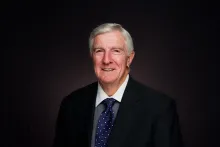
Before his retirement in 2021, Dr. Donald Ward pastored churches in Texas and Louisiana, and taught at Ambassador Bible College in Cincinnati, Ohio. He has also served as chairman of the Council of Elders of the United Church of God. He holds a BS degree; a BA in theology; a MS degree; a doctor’s degree in education from East Texas State University; and has completed 18 hours of graduate theology from SMU.
