
Roy Holladay
For the video presentation please see our YouTube channel under UCG Cleveland.
This transcript was generated by AI and may contain errors. It is provided to assist those who may not be able to listen to the message.
Well, as I mentioned a few minutes ago, we are absolutely delighted to have a baptism today. Another one is scheduled in a couple of weeks. And with the baptism on my mind and Passover just a few weeks away, I think it might be good for us to compare some of the aspects that they both have in common. For years, we have reminded ourselves that the Passover is an annual renewal of the covenant that we made at our baptism. We once again examine our lives as we should before our baptism, and we repent of our sins, and we take a good self-examination of how we're doing, how far we've come, all those wonderful qualities of the aspect of Christian life and discipleship. And we come here prepared to take the Passover. And there are many parallels between preparing for baptism and also participating in the Passover. You know, God isn't trying to improve us. He's working hard to transform us. He's not interested in us going from carnality 1.0 and growing all the way up to carnality 1.2. He's interested in a transformation in our life. And he knows it's a process, changes the process, not an event. God understands that, but he's trying to transform us from one level of existence, which is carnal, of the earth, selfish, but only about me, and transform us into a complete spiritual mindset. And we see the incredible example of Jesus Christ for that. As I mentioned a few weeks ago, just imagine him hanging on that cross with all the pain and throbbing in a headache and everything else, and he's bleeding out. And he looks down and he sees his mother, and he makes sure that his mom is taken care of by the Apostle John. Now that's someone who went far beyond selfish carnality, which we all have because we're human, and was spiritual and thought spiritually and conducted his life in a spiritual way. Let's begin by going to 1 Corinthians chapter 11 and verse 23 and see what Paul said. 1 Corinthians chapter 11 and verse 23.
Paul says, For I received from the Lord that which I also delivered to you.
That's an interesting statement because Paul wasn't called until long after Jesus had ascended to heaven. So Paul obviously either was instructed by Jesus Christ in a vision early on in his training in Galatians. He said he was in Arabia for a while. Maybe Jesus Christ literally instructed him face to face. But he said, I received from the Lord. It's a pretty bold statement. That which I also delivered to you, that the Lord Jesus, on the night in which he was portrayed, took bread. And when he had given it, thanks, he broke it and said, Take heat. This is my body which is broken for you. Do this in remembrance of me. And in the same manner, he took the cup after supper, saying, This is the cup of the new covenant. We don't keep the old covenant Passover. Those symbols were different. That Passover always looked back. It reminded everyone of Egypt. It was always backward looking. Moses in Egypt, Moses in Egypt, Moses in Egypt. The new covenant Passover is the kingdom of God and eternity. The kingdom of God and eternity. It doesn't look backward. It looks forward. And that's what the symbols help us to understand as well.
See, this is the cup of the new covenant in my blood. This do as often as you drink it in remembrance of me. For as often, and that's annually, that Jesus, by his example, observed the Passover, taught his disciples, and his disciples taught us through his word. As often as you eat this bread and drink this cup, you proclaim the Lord's death until he comes. That word proclaim is the Greek word katangelou, and it means to declare or preach that Jesus Christ died and he shed his blood for the sins of humanity. That's what it proclaims. That's what it reminds us. That's what we declare when we come to the Passover. We say, I acknowledge once again, I accept Jesus Christ as my personal Lord and Savior, and I acknowledge that his death forgives me of my transgressions and gives me the opportunity to have a healthy relationship with God, have additional purpose and meaning in my life. We know that Jesus instituted the new symbols for the New Covenant Passover. They're mentioned here, the bread and the wine, and for those of us who have been baptized for many years, these symbols remind us of the profound vow or commitment that we made at our original baptism. We have a number of individuals who have been baptized for well over 50 years in this congregation. So in contrast to that, I'd like to read to you the wording for our baptismal ceremony. It's not that complicated. It's actually very short. It might be the shortest ceremony that we have, and it hasn't changed much in 50 years. A few words here and there, but it's basically the same ceremony that the Church of God has used for 50 years. So I'd like to read it to you. The minister asks, have you repented of your sins? The person says yes.
The minister asks, have you accepted Jesus Christ as your personal Savior? And the person responds yes.
And our duty as we come here preparing for the Passover this year is that we have repented of our sins, that we've taken a good look at our lives as we'll get to that. Paul will talk about that.
And that we come and we arrive here having repented of our sins, taking the time to look at our lives, areas where there may need to be some more change, some more transformation, some more growth.
And we've accepted Jesus Christ, acknowledged Him as the Lamb of God, and that's why we symbolically partake of His broken flesh and His shed blood, because we accept Him as our personal Savior.
Then the minister says this after asking the person their name, since you have repented of your sins, which are contrary to and against God's holy, righteous, and perfect law, and since you have accepted Jesus Christ as your personal Savior, your Lord and Master, your high priest, your soon-coming King, I now baptize you not in any sect or denomination of this world, but into the name of the Father and the Son and the Holy Spirit. I do this in, by, and through the name and the authority of Jesus Christ for the remission of all of your sins. Amen. Same thing that happens at a personal baptism is the same approach that we should have when we come here for the annual Passover. That's part of the process of preparing sincerely to observe the Passover every year. When an individual comes to the point of baptism, they are asked to confirm that they have repented of their sins. They accept Jesus Christ as their personal Savior, their Master, their great high priest, and because of their faith, demonstrated by living godly values as a disciple, all of their past sins are forgiven forever. Now, when we come to the Passover, our past sins were forgiven, but throughout the previous year since the last Passover, we may have stumbled in serious ways. We may have attitudes. We may have habits. We may have things that we're struggling with. So we have that opportunity once again to come to the throne of grace and to share by participating that broken bread. Again, it represents the beaten body of Jesus Christ hanging in that stake and his shed blood, and that gives us the opportunity to renew ourselves, once again to become new creatures in Christ. This means we at baptism, we acknowledge that the broken body and the shed blood of Jesus Christ, the Lamb of God, removes our sins forever from us. What does it really mean to have our sins forgiven? We see an example of how powerful and how important that is in our lives, whether we're going to be baptized or whether we're coming this year to observe the Passover. Let's go to Psalm chapter 103 and verse 12 and see a scripture that talks about transgressions, talks about sin. Psalm chapter 103 and verse 12. If you'll turn there, please.
It says, according to the great psalmist, as far as the east is from the west. That's far. You can't even tell the difference. It's so far apart. Two opposite extremes. As far as two opposite extremes, so has he removed our transgressions from us. He doesn't just wrap them up in a box, ready to open the box every time we make him see these. See these past problems you had? No. It says he removes them as far as the east is from the west. He's removed, taken away. He chooses to forget and forgive our transgressions. Verse 13. As a father, pitys, or as a Hebrew word can also mean, has compassion on his children.
So the Lord pities those who fear him. Now why would he pity us? Well, it's kind of obvious, for he knows our frame. He remembers that we are dust. As for man, his days are like grass, and as the flower of the field, so he flourishes for a short time, as most flowers have a flowering season, and they just flower for a short time. For the wind passes over it, and it is gone, and its place remembers it no more. Just walk through any cemetery. Walk up to a gravestone. Ah, this person died in 1850. You know, the only proof we know that person ever really existed is on their headstone, and maybe if there's some DNA that's still down there that can be dug out, that person's gone. Just like this scripture says, they're completely, totally gone, and it is gone. Everyone who lived when they lived is dead. Any remembrance, anyone living on earth doesn't remember that that person ever walked the earth, had hopes, had dreams, had a life, because they're dead, and after this period of time, there probably aren't much of it remains left, and they're gone, and the memory of them is gone. From this living generation, like I say historically, or on the headstone, we may see their name, we know nothing about them. A whole lifetime, we have known nothing about what their hopes and dreams are. Why? Because they're fragile, because they're dust, because they're gone. And the same would be true of us if God had not called us and offered us eternal life because we accept Jesus Christ as our personal Savior and in faith believe that His death on the cross, shedding of His blood, the breaking up of His body, forgives us of our transgressions as far as the east is from the west. Verse 17, but the mercy of the Lord is from everlasting to everlasting on those who fear Him.
Do we have a deep sense of awe and respect for God? He doesn't want us to fear in some quaking or cowering way. He wants to have a healthy relationship. He wants us to do things, not because we're terrified of Him. He wants us to do the right things because we develop to be like Dad, because we want to be just like our Dad. That's why, not because we're terrified to do something wrong. And His righteousness to His children's children. When we have a right relationship with God and when He has compassion on us, He blesses our descendants, even our children and our grandchildren are blessed because of the choice and decisions that we made. Verse 18, to such as keep His covenant. And again, when you're baptized, you're making a covenant.
When we come back here for Passover in a few weeks, we will be renewing the new covenant Passover together. And to those who remember His commandments to do them, that's our lifestyle. That's the complete faith that James talks about, a faith that not only is a deep belief, but is also reflected in the way that we act, how we think, how we conduct our lives, what our values are, who remember His commandments and do them, the Lord has established His throne in heaven and His kingdom rules over all. So God purposely removes our sins out of His sight or awareness. Again, He just doesn't lock them up to pull them out again someday, but He removes them as far as the east as from the west. They no longer stain our presence in God's sight. When He views us, He sees the righteousness of Jesus Christ applied to Him because we are making that covenant with Him and accepting Jesus Christ for who He is. God knows our physical existence is fragile, and it's very short. Maybe we're lucky and we make it a hundred years.
In the realm of how long man's just already existed on this earth, that's just a drop in the bucket.
In the realm of eternity, a hundred years is like taking an eyedropper, walking out to the Atlantic Ocean from Panama City Beach. Take that eyedropper, squeeze one drop into the Atlantic Ocean. That's what a hundred years of existence is like compared to eternity.
Not long is it? It's not long at all. God knows our physical existence is fragile. He knows that our life is short, and He has great compassion on His children because of our fragile, temporary existence. But He's called us to a colony of hope. Let's go back now to 1 Corinthians 11, and we'll pick it up in verse 27. Pick up Paul's theme here, where he was going next before we left 1 Corinthians. 1 Corinthians 11, verse 27. Paul continues because he is discussing the Passover and things that were concerning him about the way Corinth was keeping the Passover. He says, Therefore, whoever eats this bread or drinks this cup of the Lord in an unworthy manner will be guilty of the body and blood of the Lord. This word worthy is the Greek word anexiones, and it means to do something in an irreverent way, meaning not to take it seriously or sincerely.
The truth is that Jesus Christ is the only one who can make us worthy for His reason and His sacrifice, or even for Him. So He's the only one who can make us worthy, but we are, and our responsibility is to take a close look at our lives to see where there are still needed areas of repentance and change. His righteousness, that is, the righteousness of Jesus Christ, maintains our relationship with Him and God the Father in spite of our flaws and our sins.
But we do have that responsibility before we come to the Passover to make sure we've done some self-examination, make sure that we've done some reflection. From the Rheri Bible notes, here's how it defines this phrase in an unworthy manner. Quote, "...unconfessed sin, this may result in judgment, even sickness or physical death. Therefore, each one is to examine himself before partaking." First verses 28 through 31. Again, that's from the Rheri Bible notes. Just like someone who's going to be baptized needs to repent, that's one of the questions they're asked before the ceremony even happens. We need to come here and Passover, having looked at our lives and repented of our sins and renewed our commitment to walk God's way of life. Verse 28, "...but let a man examine himself." It's not my job to examine my wife.
It's not my job to examine you. It's not your job to examine the person sitting next to you.
It's our job to examine ourselves, period, with a sincere and honest period of meditation and reflection on many pieces how far we've come because it's been a long time for many. And where do we need to go from here? What is that hindrance that's holding us back from the next step, the next positive stage of growth in our lives? So, "...let a man examine himself, and so," meaning afterward, after he's examined himself, "...let him eat of the bread and drink of the cup, for he who eats and drinks in an unworthy manner eats and drinks judgment to himself," not discerning the Lord's body.
Now, that's really no one else's problem but ours. If we come to the Passover and we aren't taking it seriously and we're not doing that reflection and we're just showing up at the last minute, I'm not going to judge you. I don't know how much you've prepared for the Passover. I'm certainly not going to judge you, but it's fully possible that we are bringing judgment on ourselves. He says, "...for this reason many are weak and sick among you, and many sleep," meaning many had died, because they hadn't been taking the purpose of the Passover seriously to just become a ritual.
Or maybe it degenerated into just one big smorgasbord, one big meal. He'll talk about that in a few minutes. For if we would judge ourselves, we would not be judged. It's just that simple. If we're, if we take a look at our lives and we say, yeah, I need to repent of this and this and this, and I need to start doing this and this and this, then God doesn't need to judge us.
We've just done a self-examination. There's nothing more than He needs to do. We're on the right track. That's exactly what He desires. If we would judge ourselves, we would not be judged. But when we are judged, in other words, if we didn't judge ourselves, then we are going to be judged. And when we are judged, we are chastened by the Lord that we may not be condemned with the world, that we're not in the same situation.
The world is unsaved. Until they accept Jesus Christ as their Savior, the world is condemned. There's no way we can sugarcoat that. You need a Savior. And if you don't have a Savior, then you're condemned. Continuing here, but when we are judged, we are chastened by the Lord that we may not be condemned with the world. So this period of reflection and preparation is important for us, just like it's important for someone who's preparing for baptism to look at their life and say, I'm ready for a dramatic change.
I'm ready for becoming a new creature. I'm ready for a new reason and a new purpose for living. I'm ready for the gift of God's Holy Spirit to be given me so I can begin to transform my life in a spiritual way. So again, if we spend some needed time to look at our lives and repent of our sins, the Lamb of God will make us worthy to participate in the Passover in spite of our flaws, our present weaknesses.
And if we don't take preparation for the Passover humbly, seriously, and in profound thanksgiving for God's love, we run the risk of condemning ourselves. No one else is doing it. In that case, we would be doing that to ourselves. And Paul goes on from these verses to discuss some examples.
We won't read the actual verses, but here's some examples of things that were bothering Paul and what he meant. Some were coming to the service in a rush, and they're not waiting for everyone else to arrive. Well, I've come to the Passover service, and wow, let's see, the Bugs Bunny marathon starts today. Let's get this over with. I need to get on. I need to get out of here.
They're not waiting for the other brethren to show up. This is a time before everyone has these little timepieces like you and I do, and he condemns them for that. You're supposed to... this is reflecting unity. What kind of unity is it if some show up and they're in such a rush, they want to get the Passover over before other people have a chance to come and participate? Something else had bothered them.
Some were coming to the service very hungry. They weren't eating at home, so they come to the Passover. They're starving! And he says, don't you have homes to eat in? What am I missing here? Paul says. These are just some examples of showing a lack of respect and decorum and appreciation and sincerity for the Passover itself and what it represents and our participation in it. I'm going to read verses 31 and 32 from the New Century version, but if we judged ourselves in the right way, God would not judge us, but when the Lord judges us, he punishes us so that we will not be destroyed along with the world.
The right way to judge ourselves is with humility and recognizing the areas of repentance and growth that are yet needed in our lives. I don't care if you've been baptized a hundred years. We are still human. We're still carnal.
We still have those areas of our lives that we need to overcome. It's a battle every day. I think I told you the story of the little boy talking to the Indian chief, his grandson, and the Indian chief says, my son, he says, within every human being are two wolves. One is kind and one is nice and gentle and loving, and the other one is voracious and it's evil and it's selfish.
And the little boy says, well, grandfather, which wolf wins? And the great chief says, and the great chief says, the one we feed, my son. You see, we've got to stop feeding the dark angels within our nature. We need to stop feeding the selfishness and the carnality and the carnal thoughts, and it's all about me and my feelings and everything else tied to that.
We need to stop feeding that, and once we do, then it's not as powerful as it used to be in our lives.
Once we start feeding the fruits of the spirit, the fruit of the spirit, that becomes dominant, that becomes strong in our lives. That's the right way. Self-examination avoids the need for harsh chastisement upon ourselves or for God to harshly chastise us. God doesn't want us to beat ourselves up, beat ourselves down. He wants us to take a mature, spirit-filled look at our lives, our strengths, our weaknesses, our challenges. And where are we going to go from here? That's what God desires from each and every one of us. And if self-examination is neglected, then the Lord judges, and the result is his chastisement. But we don't want that kind of chastisement, even though it's for our benefit. God will do it so we don't suffer like the world. So in both baptism and Passover observance, we see the need for accepting Jesus Christ as our personal Savior, our high priest, our King. We see the need for repentance from violating God's law.
We seek forgiveness from God. We also prepare ourselves in advance for the ceremony. I just thought I would quickly mention how we prepare for baptism here in the 21st century. It always wasn't this good. I personally know people whose complete baptism counseling was, well, you ready? Okay, let's do it! That was their complete baptism counseling.
Now, in their defense, the ministers who said that, and they're long gone, deceased in some cases, the church had exploding growth. Baptisms were 12. 18 people. Not one! 12! 18 people in a session.
So these people, these ministers, were overwhelmed with things to do, new visit requests, and other counselings, and people's everyday problems. And so maybe it wasn't what it should have been. But we're doing much better now. Here's just some of the things we discuss. We have six sessions together. Prepare for someone for baptism. There are 45 minutes per session, on an average. The first one is on faith. Why we must believe. What true godly faith is, and of course, godly faith is also accompanied by the works that demonstrate and show that faith is real and legitimate, not just idle words. Then we have one on repentance. What is true repentance? And compared to worldly sorrow, what is godly repentance? And why is it important? And how it helps us to change. Then we have another one on the whole idea and symbolism of baptism. Why is it important? And we take a look at Paul's scriptures, and look at what the body represents as just going down into the tank, coming out of the water. That's a watery grave, and going into the water, picturing the death of the old self. And as we come out, we reflect a new creature. We also look forward to a resurrection that we hope to experience when Jesus Christ returns. And in that session, we go through all of the complexities and the beautiful metaphors that are tied together with baptism. Then we have a session, two sessions, actually. Fundamental doctrinal beliefs, part one and part two. That was created about four or five years ago. As some people were being baptized, who didn't understand all of our doctrines, and we try to make sure they fully understand what our teachings are. And then the last one, number six, is called frequently asked questions about baptism. Why is the laying on of hands different, separate from the actual baptism? What does the laying on of hands mean? How should I dress? How should I prepare that day physically for baptism? So we answer all of those questions. What if I get cold feet? Sometimes people have doubts before their baptism. I wonder if they're ready. Sometimes they're thinking of delaying it, or they're having self-doubt. We cover that in the frequently asked questions about baptism. And the purpose of these sessions is to help the attendee to examine their sincerity and their motives to seek baptism. And brethren, in a similar way, as we just read what Paul said, we should examine ourselves for Passover, looking for areas that we still need to change. What are our motives? And how can we continue to grow as individuals?
So what is our aim at baptism? What is our ultimate goal? And as I said earlier, change is a process, not an event. And God doesn't expect us to transform into spirit being overnight. We're incapable of doing that. We have to wait for the return of Jesus Christ, part of God's plan before that could happen. But what does God really want from us? Let's go to 1 Peter chapter 1 and verse 13. 1 Peter chapter 1 and verse 13. He says, Therefore gird up the loins of your mind. And what he means there is that's a metaphor from the fact that they wore long garments and they would gather and fasten up their long garments so that they could walk freely. If you're going to go to work, you can't have this garment clinging to your legs, sometimes maybe causing you to even stumble. You have to be able to move quickly and freely.
So they would gather up and they would fasten their garments to prepare to get to work.
So Paul is saying, prepare to get to work right up here. By the way, the best sermon that I ever heard that gave detail in this and explained it was given by Mr. Lee, and it's available on our website called What to Wear, given by Mr. Lee on May 30th, 2020. It's an excellent sermon, and he goes into great detail about what it means to gird up the loins of your mind. Be sober and rest your hope fully upon the grace that is to be brought to you by the revelation of Jesus Christ.
Undeserved favor, that's what God's grace is, that he looked down on us and said, I want you. I draft you in this lifetime. Right now, will you respond to my calling? That's God's grace. He gives us that great favor. Verse 14, as obedient children, not conforming yourselves to the former lust, not going backward, not going back to the way you were before you were baptized, selfish, carnal, but, and he says, as in your ignorance, in the past you had an excuse. You did those things because you were ignorant. We don't have that excuse anymore. We know what God's law is. We know what God's values are, so therefore we should not be going back to our former lusts, not conforming yourself to your former lusts, to your ignorance, but as he who called you is holy, you also be holy in all your conduct. Now, that's a pretty high bar, and as I said, God understands that change is a process and not an event, but are we continuing that process?
Are we steady and committed to that process? Every year, God gives us a wake-up call that we call the Passover, in which God specifically asks us to stop and think about our lives, and if you're stalled out, to start that process farther. Because it is written, Be holy for I am holy, and if you call on the Father, who without partiality judges according to each one's work, conduct yourselves throughout the time of your stay here in fear, again in deep awe and respect for the grace that God gives us. Again, Peter knows that change is a process, not an event. Jesus himself said, knowing that, in Matthew chapter 5 and verse 48, therefore you shall be perfect just as your Father in heaven is perfect. And until we are perfect, we need to do our part, and the righteousness of Jesus Christ, who dwells in us because of the presence of his Holy Spirit, will do the rest, while we continue to grow, while we continue to become new creatures in Christ, while we continue that metamorphosis from carnal and selfish to spirituality. Again, that's the process of growing from carnality to spirituality. It doesn't completely happen until we are immortal spirit beings resurrected at Christ's return. Verse 17 from the New Century Version, so while you're here on earth, you should live with respect for God. And the greatest form of respect that we can show to God is to prepare to come here for the Passover. Having examined ourselves, having looked at our lives in a similar way to what a person does through their sessions of preparing for baptism, of which we'll be having one today. Let's go to 2 Corinthians chapter 5 and verse 17. 2 Corinthians chapter 5 and verse 17, something that never ends.
By the way, Paul making the statement in context is not talking to people who were recently baptized. He's talking it to converted church members in the congregations in Corinth. He says, therefore, if anyone is in Christ, he is a new creation. Old things have passed away. Behold, all things have become new. Is that the way we live our lives or because we're carnal and human?
Has the sheen kind of worn off of God's calling? Are we now in a rut, kind of doing the same old, same old groundhog day, every day, and have lost that zest and that zeal that comes from something that's brand new? Rising from the water after baptism, as I mentioned a few minutes ago, has two metaphors. Leaving the carnal dead person buried in the water and rising to a new life and purpose. And the second metaphor is the hope and faith of the first resurrection when Jesus Christ returns. Again, God isn't trying to improve us. He's working to transform us into something totally new, like a butterfly. And as I've mentioned before, if you ever study the metamorphosis, that exact Greek word that is used for a butterfly, that caterpillar, when it spins that cocoon, is literally and completely transformed. Every cell in that caterpillar is liquefied and repurposed. Everyone. And what breaks out of that cocoon as a result of metamorphosis doesn't look anything like that slow, chubby little caterpillar that was there before it entered that cocoon. God is creating something new and wonderful in us.
At conversion, we became a new creature. But what was so new about us? Well, when we received God's Spirit, we acquire a new added dimension to life. We now have a new purpose. We now have a new reason for existence. We now become a unique spiritual being with a fresh attitude, a new approach to life, a new purpose, a new direction to guide us every day. Our marching order should be the fruit of the Spirit. This is what I want to be. This is the transformation process, the fruit of the Spirit that Paul mentions in Galatians. And none of those fruit focus on criticism, correction, negativity, putting things down or negative in our lives. Every one of those fruit is positive, upbeat, and that's what we need to be focusing on. The old way of living, selfish and destructive, is intended to disappear, and I know that's hard, but we made a commitment to change our lives, our lifestyles, and follow Jesus Christ. Paul also mentioned in Romans chapter 4 and verse 6 that after baptism, we should walk in the newness of life. So do we need to rekindle what it means to be a new creature in Christ? Get out of the rut, get out of the ritual, and realize that God doesn't expect us to do this alone. When you were baptized, you had hands laid on you, he gave you the most powerful force in the world. Infinitely more powerful than all the nuclear weapons of mankind put together, he gave you his Holy Spirit. So powerful that at the creation of the earth, Jesus Christ had let there be light, and this spirit that had been hovering upon the waters, just waiting for instruction like a hummingbird, immediately did exactly what the Creator told that powerful force to do. And you know what? That resides in us. That's how powerful it is.
Now what isn't new about us is the carnal human nature we retain throughout our lives, something we all struggle with. And even though we have God's Spirit and we are new creation, we still have the personal struggle and the capacity to sin each and every day, and we certainly have the capacity to stagnate. But we're instructed by God's Word to work at growing and changing ourselves for the rest of our physical lives. And God understands we all have our own cross to bear.
As I read earlier from the book of Psalms, he's very compassionate towards us.
For some of us, the cross that we bear are bad childhoods, highly dysfunctional childhoods.
For some of us, it's the lack of education that held us back from making a good income, that's held us back from having a really comfortable and great retirement.
For some of us, it's just a rotten, stinking attitude that we've struggled with our whole lives, judgmental, self-righteous. For some of us, it's physical health. We have a physical, chronic condition that hinders us, and that's our own cross to bear. For some of us, we're just not really good at relationships, whether with spouses or anyone else. We're just not good at that, and that's caused problems throughout our lives. We all individually have our own crosses to bear, and God is fully aware of that, but He's given us a power and a strength that we can use to overcome and bear any cross, no matter how much of a burden that it happens to be.
Today, we've looked at the comparisons and similarities between the ceremony of baptism and the New Covenant Passover. The annual observance is taught by the example of Jesus Christ and also referred to by the Apostle Paul. In both, we desire forgiveness. We desire to acknowledge Jesus as our Savior. We examine ourselves in preparation for the events and humbly acknowledge our need for repentance. It's something we all need to do. We have faith in Christ as our High Priest for the remission of our sins. We make a personal commitment to diligently observe God's commandments so that we can become more like God the Father and His Son, the Lord Jesus Christ. God's commandments are His value system, so if we want to know who and what God is, how He lives, and how He thinks, then we need to focus on the commandments, the spiritual aspect of the commandments. And we should desire daily to become new again and grow more spiritual, casting off the carnality that we struggle with each and every day because we are physical beings. So today, as you witness a baptism, always a very joyful event, I want you to think about how far you have come.
Some, maybe over 50 years, it may be a couple years. It varies among us. But think about how far you have come. Thank God for His grace and His mercy that are of billions and billions of people.
He said, I want you right now. Got our attention. Some way, some means, some method. He got our attention, and that began a string of events that led to our conversion in our baptism. We need to be very thankful to God for His grace and calling. And ponder the areas of growth still needed in your life. Praise God for His precious calling and for His promise of eternal life. So let's enjoy the baptism today. I think it's going to be a wonderful event.
And at the same time, let's think about the upcoming Passover and the parallels between preparing to be baptized and becoming a new creature and starting all over again.
And the opportunity we have with this year's Passover to do the same thing, no matter how many years it's been since we were baptized. Have a wonderful Sabbath!
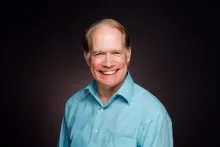
Greg Thomas is the former Pastor of the Cleveland, Ohio congregation. He retired as pastor in January 2025 and still attends there. Ordained in 1981, he has served in the ministry for 44-years. As a certified leadership consultant, Greg is the founder and president of weLEAD, Inc. Chartered in 2001, weLEAD is a 501(3)(c) non-profit organization and a major respected resource for free leadership development information reaching a worldwide audience. Greg also founded Leadership Excellence, Ltd in 2009 offering leadership training and coaching. He has an undergraduate degree from Ambassador College, and a master’s degree in leadership from Bellevue University. Greg has served on various Boards during his career. He is the author of two leadership development books, and is a certified life coach, and business coach.
Greg and his wife, B.J., live in Litchfield, Ohio. They first met in church as teenagers and were married in 1974. They enjoy spending time with family— especially their eight grandchildren.
