

David Schreiber
This transcript was generated by AI and may contain errors. It is provided to assist those who may not be able to listen to the message.
I have used the preacher's outline in sermon Bible commentary as well as Barkley's Daily Study Bible and Life Application commentary in preparation for the message today. Brother, today we're not going to go through any new truth. Nothing new. That's a good thing. If you're going through new truth, you're probably going to have heresy. And we don't want heresy. But even though we aren't going to be getting into any new truth, the truth we're going to look at today reveals a great deal about our loving God. The truth we're going to get into today are eternal truths and certainly very special. You know, year after year, we go through the very same Passover ceremony. We go through the identical scriptures year after year. And you know something? Year after year, people come up to me or whoever's conducting the service and say, wow, that was so inspiring. Yep, same scriptures. Same scriptures you've heard ever since you've been baptized. And so it's not a matter of something new, but something that really touches our spirit. And certainly the information that we're going to go through today, I think, will do just that. Let's begin by turning over to 1 Corinthians chapter 11.
1 Corinthians chapter 11.
And verse 28. 1 Corinthians 11, 28.
Which says, But let a man examine himself, and so let him eat of the bread and drink of the cup. And so we are told to examine ourselves. So Passover, brethren, is a time when we reflect on our walk with God, and we do so in a very special way. It says to examine ourselves and let us eat of the bread and drink of the cup. I think it was Wayne last week or the week before was talking about how the Passover is a very special time, and God very much wants each and every one of us to be here. The purpose of our examination is not to reinforce how sinful we are and then stay away. The purpose of our examination is to reinforce in our mind that we have got a tremendous spiritual need, but that that need has been taken care of by Jesus Christ and his sacrifice. So Passover is a very encouraging time, and we should view it that way. Now let's turn over to 1 Peter 2 and verse 21. 1 Peter 2, 21. For to this you were called, because Christ also suffered for us, leading us an example, that you should follow his steps. Jesus Christ set the bar. He set the bar very, very high. And we want, as we're examining ourselves this Passover season, we are not to compare ourselves among ourselves. We are to look at Jesus Christ and the example Jesus Christ set for us. That is the standard. That is what we aim for. That's what we want to be. And it says here, he left us an example. And you've heard me over the 19 years I've been your pastor here. You've heard me go through the Scripture. I don't know how many times, but you know what? We're going to do it again. We're going to do it again. The word here, example, is the word for a template. Jesus Christ is our template. And just as when you were a kid and you went to school, or maybe at home with your mom and dad, as a kid, they'd give you a piece of paper. You'd put your hand on that paper, and then you'd draw an outline around your fingers. And you pull it away, and there you've got your hand. Well, spiritually speaking, it's the same thing. Jesus Christ is the template. We want to trace the life of Jesus Christ so that when you take a look at, you know, you pull away, you take a look, oh, there's Jesus Christ. But that's your life. That's your life. You are following His example. And it says we should follow His steps. And you've all seen the little beach scene where there's one set of footprints in the stand.
And basically the idea is Jesus Christ is paving the way for us. He has those footprints. But we are following. We're putting our right foot where His right foot went, our left foot where His left foot went, so that when you're looking at that picture, you don't see several sets of footprints. You see one set of footprints. That's so closely that we want to follow Jesus Christ. Now, Jesus Christ set us an example of commitment and dedication. And if there's one thing to pass over represents, there are so many things to represent, but one thing for sure, it is a time for us to renew our commitment to walk as Christ walked. It is time for us to rededicate ourselves to be just as Jesus Christ was at every level in every way.
The same chapter, 1 Peter 2, was dropped down to verse 23.
Verse 23, who when He was reviled, did not revile in return. In other words, Jesus Christ was an example of commitment and dedication under the harshest possible circumstances. Those who He loved, those who He shared a campfire with every evening, swore that they didn't know Him, one betrayed Him, they all fled and forsook Him, and yet He was going to die for each one of them, just like He died for each one of us. He was going to go through three trials by the Roman government, three trials by the local religious governing people. He was going to be severely tortured, and He knew all of that. And yet, knowing all of that, He was deeply committed and dedicated to the task at hand. When He was reviled in that revile in return, when He suffered, did not threaten, but committed Himself to Him who judges righteously. So, brethren, this Passover season lets you and I remember the tremendous example of Jesus Christ and lets you and I make sure we commit ourselves not to any individual, unless that individual is following Christ, we commit ourselves first and foremost a God the Father of Jesus Christ, verse 24, who Himself bore our sins in His own body on the tree, that we, having died to sins, might live for righteousness. That's what we're dedicating ourselves to, to living righteously, to living by what every word of the Scriptures have to say. Not what we think the Scriptures have to say, but what the Scriptures actually do say. And that, brethren, is the work of the bread. Last week we talked about the foot washing, a lesson in humility. Today we want to take a look at the aspect of the Passover service, that that spotlights the bread. The bread, Jesus Christ, and all that He is to us. Turn please to Galatians chapter 2, verse 20. Galatians chapter 2, verse 20.
Galatians 2, verse 20, I have been crucified with Christ. Crucified with Christ. Crucifixion is a horrible death. In the Roman world, there's the worst way that they can kill somebody to crucify them. A lot of pain, a lot of discomfort. And yet, there's an interesting story there for us. We are told we are to crucify ourselves.
You know, what is it in your life? What is it in mine? A bad, you know, bad attitude about this, or a bad attitude about this, or a wrong way of thinking, or a wrong way of reasoning, a wrong way of living, a bad habit. What is it in our life? Those things need to be crucified. And it's tough to crucify those things in our life. You know, there's going to be a real battle. There's going to be a real death struggle to get rid of the things in our life. You know, our anger, or whatever it is that we have that is in us. You know, some people have issues, let's say, with smoking or whatever that they have an issue with. You know, all sin is sin. None is any greater than, you know, as human beings sometimes we want to think some sins are greater, but any particular sin that we commit, we don't repent. We're not going to be in God's kingdom. So every sin is deadly. So Paul says, I have been crucified with Christ, is no longer I who live, but Christ lives in me. And I pass over evening. We have the ushers pass over those past to you, those trays that have pieces of unleavened bread. And you take a piece of that and you put that in your mouth and you crunch that up. You need to be thinking about the symbolism there, that you're going to ingest that piece of unleavened bread. Just as Christ is supposed to live in us, we want Christ to live in us and work that miracle working power to help us the person God has called us to be. It is no longer I who live, but Christ lives in me. And the life which I now live in the flesh, I live by faith in the Son of God.
Brethren, if we are not overcoming, if we have been dogged by a problem in our life, and we're not overcoming, you or I, any of us, nobody gets a free pass on this. If we are not overcoming, the problem is not God. The problem is not God's power. The problem is not God's word. The problem is not the guy or the woman sitting next to you or in front of you or behind you. The problem is us, because we're not living by faith. We worship a God, little Samantha Brock. In bed for eight months, hardly move. Legs atrophied. People are praying. Legs are no longer atrophied. Feet are no longer shriveled. Now she walks. That's the power of Jesus Christ. That power can be enough to accomplish great things and to overcome great things.
We were in Peter a moment ago. Let's go back to 1 Peter chapter 1.
1 Peter chapter 1 and verse 10.
1 Peter chapter 1 and verse 10. Of this salvation the prophets have inquired and searched carefully who prophesied of the grace that would come to you. You know, those wonderful Old Testament prophets. We went first by verse through the book of Isaiah. We've gone through other portions of Mitre prophets. We're halfway through the book of Daniel. All these men searched diligently the word of God.
They realized there was going to be a Messiah that would come. Verse 11. Searching what or what manner of time the Spirit of Christ who was in them was indicating when he testified beforehand the sufferings of Christ and the glories that would follow. What I want to point out very specifically, brethren, is this phrase, the Spirit of Christ. Now, is there a Spirit of Christ and a Spirit of God? Are they two different spirits? Of course not.
Same Spirit. Holy Spirit of God. It could be called the Spirit of God, could be called the Spirit of Christ. But when we're thinking about the Passover, there's nothing wrong with using this phrase, the Spirit of Christ. We want the Spirit of Christ in us.
We want the Spirit of the bread in us so that we can live and do the things that God has called us to do. So today, what I want to do, brethren, is take a look at the life of Jesus Christ. Take a look at that very high bar. We want to examine ourselves, and we don't want to examine ourselves so that we can be like one another here. We want to examine ourselves because we want to be like our Savior. We want to be like Jesus Christ.
We want to dedicate ourselves. We want to commit ourselves to being just like He is. The followers example to walk in His footsteps. And if we take that frame of mind, and you know, we'll never be perfect in this flesh. Never, ever will we be perfect in this flesh. But if God sees the fact, Christ sees the fact, the Holy Angel sees the fact, that you and I are in the battle, we're in the struggle, that we're not, we're going to wrestle with sin, we're going to wrestle with our wretched attitudes or the things that beset us.
And we're just not going to settle for just, well, that's the way I am. I'm an angry person, or I've got this problem, or I've got that. No, we're going to fight on that. We're going to chip away at those problems. And as we chip away at those problems, God says, I'm so proud of them. Now, we may go to our graves never having totally overcome some of those problems, but God says, you know, that person's a fighter. And the only thing that person lacked was my spirit totally. If they had my spirit totally, they would just simply do everything properly. It was just a matter of degree.
When God sees that in us, He says, that person's going to be in my kingdom because they hate sin. So now let's take a look at the life of Jesus Christ. And there's something interesting. Here in Peter, let's stay here in 1 Peter chapter 1. Let's drop down to verse 18. 1 Peter chapter 1 verse 18. Knowing that you were not redeemed with corruptible things like silver or gold or from your aimless conduct received by tradition from your fathers.
No, we were not redeemed. I mean, there is a very large church in the world today where, you know, years ago, you can buy yourself out of sin, they said. You give the church so much money, you give us the indulgence, your sins are wiped clean. The more money you give, the more sins can be wiped clean.
You know what church that was. It wasn't this one. Verse 19. But how were we redeemed with the precious blood of Christ as of a lamb without blemish and without spot? We believe and obey the law of God. That's what the Days of Unleavened Bread are all about, aren't they? We get rid of sin, we bring in, we start living by God's law. But God's law was never designed to wash away sin. The only thing that washes away sin is the shed blood of Jesus Christ.
Now, this is very important. Now, look at verse 20 here. He indeed was ordained before the foundation of the world, but was manifest in these last times for you, for you. Before there was a physical universe, there was a plan of redemption, and you put your name in that blank.
So many times you think, God is first creator, then redeemer. That's backward. God says, here was first redeemer, and then he brought the creation. So what we're looking at is Jesus Christ, his dedication, his commitment to us predates the universe. Now, that's a tremendous thought. That's an encouraging thought. That's an inspiring thought to me, that his love for us predates the universe. Let's take a look at 2 Timothy chapter 1. We'll look at the same thought a little more in depth. 2 Timothy chapter 1 verse 9, talking about God who has saved us and called us with a holy calling. Your calling is a holy one. God has separated you as a very special individual, not according to our works, but according to his own purpose and grace, which was given to us in Christ Jesus before time began. Now, let your mind kind of grasp that. What is time? Time is the earth rotating around the sun as the moon rotates around the earth. It says, before time began, before there was a sun, before there was an earth, before there was a moon, and there was no time and there was no universe, God had a plan for you. He was dedicated to you back then. And, brethren, again, sometimes people get a little overcome with the past overseas and we think about our faults and failings. But, brethren, let's think about all the wonderful things that God has for us, all the tremendous love that he has for us, the intervention he has for us. We have here the vision of a God who was a Redeemer before he was a Creator. His redeeming purpose was not an emergency measure. We're not an afterthought where, you know, Adam and Eve, well, they made mistakes. We've got to repair this. Let's put a patch on this. That's not the way it worked. That is not the way it worked. We have a God who was a Redeemer before he was a Creator. His redeeming purpose was not an emergency measure to which he was compelled when things went wrong. He's got a plan for you because of his great love for you. Let's keep on looking at Jesus Christ. We see his dedication to us before time began, before there was a physical universe. He was dedicated to us and our salvation. Let's turn over now to the book of Luke.
I read this, I think, last week, but we're going to go to it again. Luke chapter 2.
Luke chapter 2, starting in verse 40.
And the child grew and became strong in his spirit, killed with wisdom, and a grace of God was upon him. You know, brethren, that phrase can be said of you or me. You know, we can become strong in the spirit. We can become filled with wisdom. The grace of God is upon us. God is no respecter of persons, but we're reading about Jesus Christ here. Verse 41, his parents went to Jerusalem every year at the Feast of the Passover. Pause. Some of you are old enough into faith to remember, not that we did it.
I don't think those of us in this room did it. But years ago, generations ago, people kept the Feast of Unleavened Bread just like we keep the Feast of Tabernacles. Back in the 40s and 50s, people would take off all seven days of Unleavened Bread, and people would go someplace and meet. And then in the fall, they would take off seven days and go someplace and meet.
Now, we've not done that in a long time. Can you imagine doing that now, going to your player, hey, it needs seven days in the spring and another seven days in the fall? And there's some days in between! Oh, wow! employers enjoy that! But this is what they are doing. During the days of Unleavened Bread, they packed up lock, stock, and barrel. They went to Jerusalem. They kept the Feast. And as I was preparing the message, I couldn't help but think.
As I had various ones, I had a fellow who called me just this last week. Mary was in the car with me when he called. The phone comes over at the intercom, and the guy said, you know, I've stopped believing in the God. Stopped believing in the Bible. Why? He says, because my sainted grandmother, she wouldn't follow him. And this person I loved, you know, they wouldn't follow him. And this person I loved wouldn't follow God.
Therefore, I don't want God, and I don't want the Bible. And I said to him, he said, well, wait a minute. That's not really following. That's not tracking. Just because people are disappointing you doesn't mean you throw the Bible out, or throw God out the window. And I wasn't able to continue the conversation. We had to do some things, and I had to stop, and I asked him to call me back, and he didn't.
But that's the way the world looks at things. And yet, here we have an example of Jesus Christ. Jesus Christ, our ultimate example, keeping the Passover, the days of unleavened bread. And you've got people out there that laugh you to scorn, because you keep the Passover, the days of unleavened bread. And what do they keep? Is it in here what they keep? Can I go to some place?
Some place in the scriptures here. Oh, Christmas! Yeah, there it is. No. Easter! Well, there's a place in the King James that talks about Easter, but it's a mistranslation. No, you're not going to find Easter in here, but you will find the holy days of God rich with meaning in here.
A plan of God rich with meaning in here. So, anyhow, Jesus Christ and his family are going up to keep the Feast of Unleavened Bread, Passover and Unleavened Bread. Verse 43, when he had finished the days as they returned, the boy Jesus lingered about in Jerusalem, and Joseph and his mother did not know it. Of course, we read this last week. I'll go cut to the chase here. They finally find him after a number of days. Verse 48. So when they saw him, they were amazed, and his mother said to them, Son, why have you done this to us? Look, your father and I have sought you anxiously. And he said to them, Why did you seek me? Did you not know I must be about my father's business?
Now, brethren, that is a story for us. We must be about our father's business. We are to be dedicated to our father's business. And part of that dedication is studying the Word of God. Jesus Christ was so... Now, of course, he inspired the writing of the Word of God. But he wants us to know this Word so well that we can sit with learned people who were supposed to be great teachers of the Bible and ask them profound questions about the meaning in the Bible, meaning of the Scriptures.
And you may think, Well, I can't do that.
I was relating to the folks over at Ann Arbor earlier today how when I was first being called into the church, my first piece of the tabernacles, a small feast site in Squaw Valley, California, back in 1970, first feast site captain, Squaw Valley, California, small feast site, 9,500 people. That was small back in those days. You know, we would have 15,000 people, Wisconsin Dells, Ozarks, Poconos, 15,000 people strong. Always a two-lane road going in.
One lane in, one lane out. 15... Imagine what that was like, traffic? You built character back in those days. I remember sitting in the audience, 9,500 people, Squaw Valley, California. I remember men getting up there and giving sermonettes and sermons and talking. I was a freshman at Ambassador College and talked to the man who knew so much the sophomore.
Sophomore and Ambassador College. I said, Boy, I wish I could knew the Bible like those guys know the Bible. My roommate, Glenn, said, Randy, you think those guys woke up one day and God just poured it in their ear? No. You spend time with the book. You study. And you get to understand. You compare principles. And you look at this over here and that over there, and you put them together. It's a wonderful thing, but it takes work. It takes effort. Just like playing a piano or any instrument. You like to hear somebody do that? You like to watch an artisan at work? Well, again, they put work into that. And so we need to be dedicated, brethren, to putting work into this book. Jesus Christ set the example for us. Put work into this book. I was remarking earlier today over in Ann Arbor that what I've got here is called a pulpit Bible.
A pulpit Bible is like this. No margins. Just your typical Bible, something you read out of. But as we were moving, as we were getting ready to move, I was showing a young man that was helping move boxes. I said, well, here's my study Bible. And I whipped out this huge Bible. It's got the openness thing up, and it's got the wide margins, and it's got writing all over every place, and coloring here and there. I said, if you really want to know the scriptures, you invest in a wide margin Bible. Take every piece of literature we have. As you study it, if you don't understand a section, and you come to an understanding, take those notes and stick them in your Bible. And you go through every piece of literature we have, and we've got tons of literature. In every sermon, in every sermonette, in various things you listen to in your own personal study, you'd be surprised what you'll have after you enter one year. At the end of five years, you will have the equivalent of a college education.
Now, those Bibles aren't cheap. Somebody asked, well, how much one of those things cost? And I looked it up. Things have really changed. Now, if you want a wide margin Bible, it's a better part of $200. $200 bucks. So, you're going to have to pay something, but it's worth the investment. If you're interested in something like that, they've got them where their Bible's kind of like this, this kind of paper. You've got them where you've got them in binders that have that little snaps, really heavy paper. They're monstrous. You won't take them to church with you. They're just monstrous. But if you want to study, you open that thing up, and you've got wide margins on the outside, wide margins on the inside. You can put all sorts of notes all over the place. And that, it's almost like a cardboard. It's so thick. That's going to last you forever. But that's an investment. You might want to consider that. But Jesus Christ invested His time. He was dedicated to the Word of God. And we must be dedicated to the same thing. You know, brethren, when we're studying the Bible, we're not studying the Bible just for our sake today.
You know, I really enjoy watching the videos of our summer camp kids. But those sweet, young teenage kids, fresh-faced, you know, in so many ways so naive to the world, it's like looking at the same kind of a kid back in 1930s Europe, annoying what's going to happen to this world. You and I have got to do our part so that God's kingdom comes soon. Because there's going to be awful things taking place, and those poor kids are going to go through it. But we want to look toward what's beyond that. And what's beyond that is our helping people. Because when the kingdom of God starts, when you and I have been resurrected, we're spirit beings, everybody who's still alive on planet Earth is going to be a highly dysfunctional person. Highly dysfunctional. Going through world war, famine, pestilence, disease, nuclear activity, germ warfare. One person, only one person in ten will be alive by the time Jesus Christ walks this Earth. 90% of the world's population will die. So we need to be really dedicated to understand what is coming and what we need to be doing to prepare for it. Okay, let's take a look now at Matthew chapter 4. Again, this is nothing new. We've gone through this in times gone by.
Matthew chapter 4 verse 1. Jesus was led up by the spirit into the wilderness to be tempted by the devil. Jesus was led up by the spirit. He wasn't just kind of walking around minding his own business and the devil decided to attack him. No, Jesus Christ is on the offensive here. He was led up by the spirit. He was motivated by the spirit. It's kind of like Gary Cooper, high noon. Let's meet Satan on Main Street there. And we had fasted 40 days and 40 nights after he was hungry. Amen, brother! I can have a pretty good meal that Mary makes me, and 40 minutes later I might be hungry. But 40 days, 40 nights he was hungry. So, again, appreciate how Satan comes at us. Appreciate how the demonic world comes at us.
Sometimes people ask themselves, why do I get all the trials? Why, you know, some people seem not to have so many, and why do I get all these trials?
Are you getting your sleep? Are you eating properly? Is your health not so good? In the world, let's say you go over someplace like Africa where there's beautiful animals, but it's also kind of a doggy-dodge society among the animal kingdom. What do the animals do? When they see another animal, it could be a large elephant. But if that elephant is hobbled, if the lions see that that is weak, or even a young one, or one that gets off by themselves, what do the animals do? The predatory animals? They say, that one's by itself. Now, there's a lesson for us there spiritually. If we get off by ourselves, we can be attacked. If we're hobbled, and we don't get our sleep, or we don't eat properly, and we allow our health to go down to drain, then we're hobbled. And as we're hobbled, Satan realizes they're vulnerable. I can get at them. I can get on their attitude, because their attitude, if they're hurting, their attitude will be really iffy. And so, again, this is what we see here. Just some food for thought for you. You know, we are physical people, but Satan will work against us as he attacks us.
Verse 3, Now when the tempter came to him, he said, If you are the Son of God, command these stones to become bread. And notice, but he answered and said, It is written, Man should not live by bread alone, but by every word that proceeds from the mouth of God.
Physical bread is not the main thing. The spiritual bread is. Jesus Christ is the main thing. We are to live by that spiritual bread. Turn over to John 6.
John 6. Something we'll be reading Passover evening. John 6, starting in verse 48. Read letters in my Bible.
John 6, verse 48. I am the bread of life. Your fathers ate manna in the wilderness and are dead. This is the bread which comes down from heaven, that one may eat of it and not die. So Christ draws a comparison between physical bread and him as spiritual bread. Verse 51, I am the living bread which came down from heaven. If anyone eats of this bread, he will live forever. And the bread that I shall give is my flesh, which I shall give for the life of the world. Verse 55. My flesh is food indeed, my blood is drink indeed. He who eats my flesh and drinks my blood abides in me. Abides. As you and I dedicate ourselves and commit ourselves, we dedicate and commit ourselves to abiding in Christ, allowing him to live in us.
And again, when we take that 11 bread during the Passover service, we're showing that we want the bread to live in us, to be a part of us. That's all a part of the lesson.
We go over now to Mark 10. Mark 10. Mark 10.
Then James and John, the son of Zebedeez, came to him, saying, Teacher, we want you to do for us whatever we ask. That's a tall one, right? These guys are at Pikers. And he said to them, What do you want me to do for you? They said to him, Ah, nothing much special. Just grant that we may sit one on your right hand and the other on your left hand in your glory. Just teeny tiny little things. Christ, verse 42. Jesus called them to himself and said, You know that those who are considered the rulers of the Gentiles lorded over them, and their great ones exercise authority over them. Yet it shall not be so among you, but whoever desires to be great among you shall be your servant. Whoever desires to be first shall be a slave of all. For even the Son of Man did not come to be served, but to serve and to give his life a ransom for many. So one of the aspects of Christ's life that he dedicated himself to, that he committed himself to, was a life of humble service. A life of humble service. And bread in verse 45 is so packed with meaning. Jesus Christ, his life wasn't taken from him.
Jesus Christ gave his life. Notice there at the end of verse 45. And to give his life a ransom for many. He gave. He served. He was God. He emptied himself of that to come to this planet, to be a physical, fleshly, sweating human being who got tired at night and who had to sleep.
So here we see Jesus Christ as a humble servant. Mark 14. I'm sorry, I hear him in verse 32.
Mark 14, 32. Then he came to a place which was named Gethsemane, and he said to his disciples, Sit here while I pray. And he took Peter, James, and John with him, and he began to be troubled and deeply distressed. In Luke's account, Luke says that it appeared that Christ was actually bleeding great drops of blood. And people say, well, picturesque language. I don't know about that, brethren. I would tend to think that's quite literal. I would tend to think that Jesus Christ, knowing the weight that was on him, literally the whole world and all who would ever live, all that weight was upon him. He realized that he didn't succeed. None of us have eternal life. I'm believing he was very intense here in his prayers. So intense that, you know, perhaps little capillaries were breaking in his skin, and the blood was starting to ooze out a little bit and mixed with the sweat and coming down looking like drops of blood. I have no doubts that this is probably what took place. This is verse 34, my soul is exceedingly sorrowful, even to death, stay here and watch. He went a little farther and fell on the ground and prayed that if it were possible, the hour might pass from him. And of course, as a church, I think we've come, we've grown, you know, years and years ago back when I was in college. Well, Christ didn't want to face crucifixion. Well, who in their right mind does? Nobody wants to be tortured to death. But I think it goes much deeper than that. Jesus Christ didn't want to be separated from God for one instant. He didn't want that relationship he had known for all eternity. And our mind doesn't grasp all eternity. But for all eternity, he wanted to be just as close as possible to the Father. And that, brethren, is one of the lessons that we learn from this section of Scripture here. That we want to dedicate ourselves, we want to commit ourselves to having this mindset. We don't want anything to separate us from God the Father and Jesus Christ. And we know that sin will do just that, which means we have to dedicate ourselves not to sinning and to doing what it says here, verse 36. He said, Abba, Father, all things are possible for you. Take this cup away from me. Nevertheless, not what I will, but what you will. Again, something easy for us to say. Hard to do. Hard to desire. How many times have we said, God, whatever you desire, whatever your will is, and then God shows you his will, and we say, well, God, you have a second will.
Is there door number two or door number three? You know, I don't really don't like that will. There's got to be another will here someplace. No? Christ said, whatever your will is, that's what we want to do. And again, this is what we're dedicating ourselves to. This is what we're committing ourselves to. Living like this. Now, I would bet that all of us in this room come pretty short of that, because we can be pretty self-willed, can't we, as human beings? You can, I can. Luke 23. Luke 23, starting in verse 33.
And when they come to the place called Calvary, this is Luke 23 verse 33, there they crucified him, and the criminals, one on the right hand, one on the left, and Jesus said, Father, forgive them, for they don't know what they're doing.
Brethren, there have been a lot of things happening to you and to me in our life, not nearly as severe as this. And if we had this frame of mind, if we had this frame of mind, Father, forgive them, for they don't know what they're doing, it's, you know, well, Father, you know, if they had an accident, or if something happened to them, and you allowed them to wait for the resurrection that much sooner, so be it. No. Father, forgive them, for they do not know what they do. And of course, when Stephen was being murdered, he said much the same thing. He said much the same thing. So here we see, you know, dedication to a way of thinking where we don't want to get at other people and get revenge. We want the very best for other people. Okay, let's begin to wind down here and conclude. John 4. Let's go to John 4.
John 4, verse 34.
Jesus said to them, My food is to do the will of him who sent me, and to finish his work.
Finish his work.
Brethren, you know, we here in the Detroit church, we're not just looking to make the Detroit church the nicest little church we can have. It's great we want to work toward that, but that's not the ultimate goal. The ultimate goal is that we want God's kingdom to fill this whole world. And our food, it says here, is to do the will of him, and to finish the work. To finish the work of God. Not just corporately, but also individually. What is the work of God in your life? What is God's plan in your life? What does God want you to accomplish? Let's notice now John chapter 19. John chapter 19, verse 30.
John 19, verse 30. So when Jesus had received this sour wine, he said, it is finished, and bowing his head, he gave up his spirit. So in John chapter 4, we saw Christ at the beginning of his ministry, saying that he wanted to finish the work. In John chapter 19, we see him at the end of his ministry, where he said, I got it done. I got it done. It's one thing for us to be committed to God when life is going well, when we're full, everything is great, our family is doing well. But when our family isn't doing well, we maybe don't have work, we maybe don't have this, we don't have that. It can be a different matter, can't it? But Christ wants us to look at the overall, the big picture, and to see that we've got some submitting to do to his will, to dedicate ourselves to that. And lastly, brethren, one last scripture I wanted to turn to is Jude verse 24. Jude verse 24.
We saw how Jesus Christ has been dedicated to mankind since before there was a universe, since before there was a universe, way before any human being was ever born. And here in Jude verse 24, we're to see where Christ is there for us even after we're dead.
Jude verse 24. Now to him who is able to keep you from stumbling and to present you faultless before the presence of his glory with exceeding joy, to present us faultless at the time of our resurrection, at the time that we are face to face with the Almighty, as our intercessor, as our advocate, Jesus Christ is standing beside us, talking about how we have accepted him as a personal Savior, how we had overcome in his life, and how we need to be in God's kingdom. So, brethren, today we've taken a look at Passover in terms of Christ being the bread and our dedicating ourselves to be just like Jesus Christ. Let's take it upon ourselves to think deeply upon this and to allow this Passover to be very special to us in terms of our rededication, our recommitment to God and to Jesus Christ.
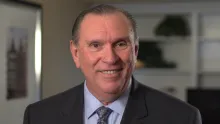
Randy D’Alessandro served as pastor for the United Church of God congregations in Chicago, Illinois, and Beloit, Wisconsin, from 2016-2021. Randy previously served in Raleigh, North Carolina (1984-1989); Cookeville, Tennessee (1989-1993); Parkersburg, West Virginia (1993-1997); Ann Arbor and Detroit, Michigan (1997-2016).
Randy first heard of the church when he was 15 years old and wanted to attend services immediately but was not allowed to by his parents. He quit the high school football and basketball teams in order to properly keep the Sabbath. From the time that Randy first learned of the Holy Days, he kept them at home until he was accepted to Ambassador College in Pasadena, California in 1970.
Randy and his wife, Mary, graduated from Ambassador College with BA degrees in Theology. Randy was ordained an elder in September 1979.
