


Jorge de Campos
This transcript was generated by AI and may contain errors. It is provided to assist those who may not be able to listen to the message.
The day you met your future spouse is clearly to you a very memorable occasion. And you probably can't forget it.
The day you attended your first feast, it's probably a memorable occasion that you can't forget it. The day when God's Church was founded on Pentecost was also a memorable occasion, and it's recorded in the Bible for us never to forget.
It was when God's Holy Spirit was first given as a special event. And indeed, it was when the promise of the Father was first received by the apostles, and that promise of the Father will ultimately be given to whole mankind. And I appreciate the sermon, because it addresses that very point of the need of God's Holy Spirit. Because God's Holy Spirit is the key component of what makes a difference in our growth as children of God. And so today, brethren, we're going to see, and we're going to talk more about the promise of the Father, which was the giving of the Holy Spirit, how that was fulfilled on the day of Pentecost in A.D. 31, and how that enables the process of our regeneration and renewal. And so we're going to cover those three areas.
How the receiving of God's Holy Spirit fulfilled the meaning of Pentecost. The meaning of Pentecost is now fulfilled. Two, how the receiving of the Holy Spirit regenerates us. And three, how it renews us. And so let's go to start in Acts chapter one. So we're going to start in Acts chapter one, because right there in Acts chapter one, Christ is speaking to the apostles, and He says to them, as they were assembled together, and that is in Acts chapter one, verse four, after He being with them for 40 days, speaking about the things pertaining to the kingdom of God, He told them to wait in Jerusalem. You read that in verse four, for the promise of the Father. And He says, because you read that in verse five, because John the Baptist truly baptized you with water, but you shall be baptized with the Holy Spirit not many days from now.
And then a little later in verse eight, it says, you shall receive power. You shall receive power when the Holy Spirit has come upon you. And you as apostles will be the witnesses to Me in Jerusalem and in all Judea and Samaria, and to many other parts of the earth, as it says, to the end of the earth. And so that's what happened, because if you go to chapter two in verse one on the day of the Pentecost, you see in chapter two, verse one, it says, and when the day of Pentecost had fully come.
Now, it doesn't say the day of Pentecost had arrived, and so the expression had fully come, deserves a little bit further digging into it.
That comes from a Greek word 4865, some play rau, which means like if you have a glass of water, you fill it completely till it overflows. It folds completely. Or or in this case, it was completely fulfilled. The meaning, the symbol of that day, in that AD 31, the symbolism of the day of Pentecost was completely fulfilled.
And so they were all with one accord, and then suddenly they came, a sound from heaven as of a rushing wind, and it filled the whole house. Now, which house was that? As you see, there were people from different nations there, as you read in sections from verse nine and ten, and even eleven, they were from many other regions. So there were many people out there, and in that day, there were as many as 3,000 people baptized. So there were many people there. Clearly, it was not a house like my house or your house. It could fit all those people. That was the temple. And indeed, if you read in verse 46, it says there, continue daily with one accord in the temple. So that house they were in was the house of God, was the temple. So they were in the temple. And so we read here that something very special, which made it very meaningful and memorable, happened because God's Holy Spirit, the promise of the Father, was then given first to the apostles and is given to us as the first fruits and is given, ultimately will be given, to whole mankind.
And then you read in verse two and verse three, it talks about, and they appear to them divided tongues as of fire, as of fire, and one sat upon each of them, and they were filled with the Holy Spirit. And so the tongues of fire, it symbolizes, for instance, it points and reminds us of the time when Moses was in the midst of a bush that was burning with fire. And he says, why isn't it burning? And he was intrigued. You read that in Exodus 3 verse 2. And also, you see the Israelites when they left Egypt. At night, they were guided by a pillar of fire. And so fire indicates, symbolizes, God's presence. And so it is very meaningful because God's presence was there through his Spirit, and they received God's Holy Spirit. Additionally, fire also represents, as you read sections of John the Baptist and Peter and Paul, fire represents the final judgment. There will be a judgment. And so God's Holy Spirit is given to us to change us. But if we don't respond, ultimately there will be a judgment. Now, God is very patient, willing and wanting everyone to come to repentance. But there will be a judgment in the end. There will be a judgment. And so it was made memorable because there was a miracle. One of them is that, as we read, they start speaking. And at the end of verse 6, it says, everyone heard him speak in his own language. It says, the way people from different areas, Pargians and Medes and Elamites and people from Mesopotamia and Judea and Greece and Libya and Rome. And they all heard in their own language. And so there was this miracle of understanding what they were preaching. And that was a miracle required at that time for everybody to understand what was being done there. You see, they didn't have Google Translate or something like that. And so it was required to have that gift at that time. And you read in verse 11, it says, we hear them speaking our own tongues in our own languages, the wonderful works of God. You see, so the gift of languages, of hearing and understanding different languages, was for the good for people. It was not confusion and Babylon and hearing meaningless words. No, it was for the people to understand what was being spoken. And you see, and they were hearing the wonderful works of God. That is basically what it means prophesying when we talk to one another, and we talk about the blessings that God has given us, or we talk about positive things, and we're encouraging one another with positive things about God. We are prophesying. You see, that's one of the meanings of prophesying. It's not just telling you the future, which quite often we think of, but it's actually professing. The word prophesying comes from the word professing or speaking about and encouraging one another. And so the first outpouring of God's Holy Spirit was memorable. And it came with this gift of people understanding what the apostles were saying, and most specifically Peter that gave that sermon on that day, so that the gospel of Jesus Christ, which is part of the gospel of the kingdom of God, in other words, the news, the good news that through Jesus Christ you and I can be washed, forgiven, reconciled, and finally begotten as children of God could reach all people of different languages that they would speak, so they all could understand. And so what it basically means is that you and I now we have, which we have God's Holy Spirit, we are now the first fruits. We are now the first fruits, the first begotten.
Not born yet, but we are begotten. However, we gotta overcome till the end. And that means we need the power to renew our minds and hearts and as we are hurting the sermonette to have our minds and our hearts healed. And so Peter was emboldened by God's Holy Spirit to give a very strong message. And we read about his sermon starting in verse 14, where he says, Peter standing up with the leaven raised up his voice and he started preaching this good news.
And he said, you know, you can hear the apostles talk and you can understand in your own language. It's not because they drunk, because it's only nine o'clock in the morning. See, it was only the third hour, which is basically nine o'clock in the morning. And that's the time when that offering, that offering, the daily sacrifices that they did would be done around about that time. And then he says, and in now, in verse 17, look at verse 17, and it shall come to pass in the last day, says God, that I will pour out my Spirit on all flesh. Ultimately, God's Holy Spirit will be poured out on all flesh. But this was just the first fruits, the first upon which God's Holy Spirit was being poured out. And ultimately, your sons and your daughters shall prophesy. In other words, shall speak about the wonders of God. Young men shall see visions, and old men shall dream, and in other words, they will see positive things, they'll be encouraged, and they will encourage one another.
You see, we now have the first fruits of the Spirit. I will show you that in a moment, because that comes from Romans 8 verse 23. I'll come to that in a moment. And so he continues, because he's saying, look, the final end result, the final outcome of what today is a beginning is that God's Holy Spirit will be poured out on all flesh. That's what we read there in verse 17. I will pour out my Spirit on all flesh. And so that time is still to come when Jesus Christ comes back. And then he goes on to explain, starting in verse 32, further down in the sermon, saying that this Jesus was raised up, was resurrected by God the Father, and we as a apostles are witnesses of it. We saw it. We saw him resurrected. And many other people saw it as well. That's why Christ was there for 40 days to make sure that everybody really that was in that circle of disciples really understood what happened. And then in verse 33, they say, therefore being exalted to the right hand of God, Christ was exalted to the right hand of God. That is symbolized by the wave sheaf that he was exalted as our high priest, and is now sitting at the right hand of God. And so it goes on. And he poured out this, which is the Holy Spirit. In other words, he fulfilled the promise of the Father. Remember how I read a little earlier on in Acts chapter 1, Christ told them, Christ told them, wait in Jerusalem until you receive the promise of the Father, which is power, which is the power of God's Holy Spirit. And so that is the promise of the Father. And then we read in verse 34 and 35. And he says, for David did not ascend into the heavens, but he says, the Lord says to my Lord. See, there's two Lords. There's the Father, and there's the Son. Sit at my right hand till I make your enemies your footstool.
Now, what do you mean, I'll make your enemies your footstool? Because that means when he makes his enemies your footstool, then that means when Christ will return. You know, sit at my right hand till I make the enemies your footstool. So Christ will come back when the enemies are put at Christ's feet. What does that mean? According to Bullinger's commentary, let me quote and read it directly as it says, it was usual with conquerors to put their feet on the necks of vanquished leaders as emblemical to the state of subjection to which they were reduced and the total extinction of their power. In other words, it means that when it comes to the point when Christ comes back and is going to put his foot on the necks of those people, they are subject. Their power is gone.
And so that basically means when Christ comes back, there'll be war.
And that's when also there will be the resurrection. And then he continues in verse 37 and 38. He says, now when they heard this, they were cut to the heart and said to Peter and to the rest of the apostles, men and brethren, what shall we do? In verse 37, it basically says they actually got to a point that they realized, as we read at the end of verse 36, that they had crucified both the Lord and the Messiah. In other words, Christ is the Lord, the Messiah. They had killed. They had suddenly clicked.
They had realized they had killed the Messiah. They had killed the Lord. So that first point is they believed that Christ, Jesus Christ, was a Messiah. And secondly, they then said, you know, as they realized, what else are you going to do? What have we done?
And then Peter says, repent. And so the first thing is we got to believe. We got to have faith. And the second, we got to repent. We got to change. And thirdly, he says, you'll be baptized in the name of Jesus Christ for the remission of sins. And then you will receive the Holy Spirit. So Yah is this three-stage process, believe, repent, and be baptized.
And granted, this is just two verses explaining a long process. But what we see, Yah, is that after baptism, they were to receive the Holy Spirit. Now in Acts chapter 8, it explains a little bit more about when you receive the Holy Spirit. If you read with me in verse 16 through 18, it's talking about when the Gospel had been preached in Samaria. And then in verse 16, it says, and as for a year, the Holy Spirit had not fallen upon any of them because they had only been baptized in the name of the Lord Jesus.
So there is a little bit more than just being baptized by Christ's authority. And in verse 17, then they, that's the apostles, and today means God's true ministers. Not somebody that self-appoints himself and says, I am now a minister and I'm now a pastor. No, it's going to be those that have the authority of Jesus Christ that have been appointed by Jesus Christ's authority through that lineage as ministers of Jesus Christ.
They have the authority from Jesus Christ to lay their hands and ask and pray for Jesus Christ to honor the promise of the Father and give them the Holy Spirit. That's why they say, in verse 17, and they, the apostles, laid hands on them and they received the Holy Spirit. And then you know the story that Simon Magus says, oh well, this is a great way of making money.
Give me that power. But that's a whole different story. So the point is God's Holy Spirit was first given and you and I can receive God's Holy Spirit upon faith, repentance, and baptism. A true minister of Jesus Christ then prays for you after baptism, asking God to honor His promise, and then Christ, as our I priest, exalted in heaven, baptizes us with the Holy Spirit. And so that is the process. When we receive God's Holy Spirit, we are then begotten children of God. This is really important for us to understand. When we receive the Holy Spirit, we are begotten the children of God.
That's also a big subject, but let me just summarize it by looking at Romans 8. I'm going to start reading in verse 14. For as many as are led by the Spirit of God, these are the sons of God. In other words, they are led by God's Holy Spirit. They are living according to the guidance of God's Holy Spirit, tying in with the sermonette, which is what basically heals our sick heart. That's what it is. And therefore it says, continue in verse 15, For you did not receive.
So it's clearly talking about being led because you have received the Holy Spirit, because you have been begotten by the Holy Spirit. And it says, you do not receive the Spirit of bondage, again to fear, but you receive the Spirit of sonship. I prefer the translation sonship. The Greek word is heotheseia, which means placing as a son. Granted, it could be translated as adoption, but a better translation is sonship. We become really children of God, because God's Holy Spirit is like a seed.
You read that in 1 Peter and in 1 John. God's Holy Spirit is a seed, is a divine seed. And it says, because of that, we receive the Spirit, we receive that seed, and we become begotten again.
And because of that, by whom? By through that, we cry, Abba, father. Abba basically means, in today's language, would mean something like daddy. It's a very close relationship between us and our dad. Our spiritual dad is God the Father. He is really our dad. We are not just adopted. I have nothing wrong against adoption, please.
But an adopted child does not have a genetic code. We receive God's spiritual genetic code through God's Holy Spirit, beginning us. And God's Holy Spirit merging with the spirit of man. And it's like now we become a new man, a new person. Our genetic code, spiritual genetic code, with God's spiritual genetic code to merge, and we are now begotten again. The first time you were begotten, when the physical seed from your human dad, called sperm, entered the womb of your physical mom, and at that moment you were conceived, you were first begotten. From that moment, you became the son of your physical dad. That's it! But not yet born. You still had to go through a growth process in the mother's womb for nine months before birth. But from that moment, you were the child of that dad, which gave you the seed. That is an analogy of what happens spiritually when you and I receive God's Holy Spirit after baptism. We are begotten. We are re-begotten. We are re-conceived, but now spiritually, and we are now really children of God. Again, nothing wrong with adoption. Does it to adoption? Bless you, because you do a great deed in many cases for children that need it. But the point is, we are real children of God. He is our dad. He loves you. He loves us, because we are His real children. That's why we pray our Father.
He's making, building a family, and we are Christ's brothers. That's why God's Holy Spirit comes from the Father through Christ.
It's just such meaningful and important understanding that we are begotten again. We're not yet born again. We will be born again at the resurrection when we really become like Christ. And so let's continue reading in verse 16. The Spirit that is God's Holy Spirit bears witness with our spirit, that is the spirit of man in man, that we are the children of God. Yeah, because our spirit with God's spirit have now become a new person, spiritually speaking. And that is a witness that you and I are indeed children of God. Verse 17, and if children then heirs, heirs of God.
How many times have you read through this and you just did not think deeply about it? Your children are heirs of you because they look like you. How many times says, hey, like father, like son, you know, you can see, well, there's certain characteristics. They run in the family. They've inherited characteristics of their parents. You and I have inherited characteristics of our heavenly dad through the Holy Spirit, which is what heals us, heals our hearts and our minds as we are in the sermonette. And it says, and joint hairs of Christ, because whatever Christ is going to inherit, we're going to inherit. And you know, there's a very big English word, enormous English word, called if.
It's a big word. It's only two letters, but it's a big word. If, indeed, we suffer with Him, with Christ.
We are to suffer like Christ suffered. What did Christ do?
Oh, that's mighty unfair, isn't it?
But thanks God for His suffering. You and I can have eternal life. We are to suffer for our brethren.
How many scriptures have you read that He set as an example of suffering that we suffer like Him did? If, indeed, we suffer with Him, or it is difficult when we suffer, and particularly when it's our loved ones, it's painful. It's difficult. We ask questions. Why have you forsaken me? Even Christ did that at the cross. Oh, God has abandoned me. No, He hasn't, because if you read, that's a quote from Psalm 22, you read a little later in Psalm 22 that it says, He heard me. But it just proves that Christ, as a human being, had feelings like you and I have.
And when you and I go through some trials, you and I may say, why? Why? Why, God, have you left me? You promised I'll never forsake or leave you? But, you see, brethren, we don't understand God's mind, which is so far bigger than our mind.
If, indeed, we suffer with Him, we may also be glorified together. That's deep, brethren. That's deep. And then continuing a little bit later in verse 23, it says, Not that only, but we also... So He's talking about that we have this great hope, and we're looking for the whole creation, subject to futility and all that, but we also, we who have the first fruits of the Spirit. We have the first fruits of the Spirit.
We have God's Holy Spirit. We are the first fruits of the Spirit. But we're not changed yet. You see, the day of Pentecost, which is next weekend coming, has got a great meaning. It was completely fulfilled because it's the first fruits of the Spirit. It's when we begotten as children of God. We are the first fruits of God, but not yet born again.
Look with me to 1 John chapter 3. 1 John chapter 3. In 1 John chapter 3, it says, What blessing do we have that we are the children of God now? What love God has for us that we should be called the children of God? Why? Because He's begotten us.
And then in verse 2, he says, 1 John chapter 3 verse 2, Beloved, Now, now, today, you with God's holy Spirit are the children of God. You are the first fruits.
And it has not yet been revealed what we shall be. But we know that when He Christ is revealed when He comes, and He comes when He puts His foot on top of the neck of His enemies, which is symbolized by the Day of Trumpets, yes, there'll be war. Yes, but that's when we'll be resurrected, because when He comes, when He's revealed, we shall be like Him.
For we see, for, beg your pardon, for we shall see Him as He is. And so, when will we finally be changed to spirit beings when Jesus Christ is revealed at His coming?
And that is clearly a time of war, because He's going to put down His enemies.
And that is symbolized by the Day of Trumpets.
So the Day of First Fruits, Pentecost, is when the promise of the Father was fulfilled, God's power was released that begets us as His children and helps us to renew our lives. So you and I now are the first fruits of the Spirit.
But you and I have to overcome till the end.
We have to overcome till the end. And when is the end? When is Christ coming? Or when?
We die.
Because if we die before Christ coming, that's when we have to overcome till then, and then we'll be at resurrection. But we have to overcome till the end.
If we are alive, then we'll be changed into spirit beings. If we are dead, we'll be resurrected as spiritual beings at His coming, what we call the first resurrection. And then we will be really the first ones in the kingdom.
So now, what are we now?
We are the first fruits, but not yet the final kind of first fruits that we will be. You see, a resurrection will be really spirit beings, the first fruits. Now we are kind of first fruits, but it is subject to us overcoming till the end.
And that explains James chapter 1 verse 18. James chapter 1 verse 18. James chapter 1 verse 18.
Of His own will, He has brought us forth.
In other words, He has begotten us, as it's in the King James Version. He has brought us forth. He has begotten us by the word of truth. Yeah, because that's the promise of the Father. And that promise, His truth, God does not lie.
So He has begotten us by the word of truth, and He gave us His Holy Spirit. That's the promise of the Father.
That we might be a kind of first fruits. We are a kind, not the final kind, but we're kind of and at the resurrection will then be the first fruits, if we overcome till the end.
James, forces and Brown commentary puts it this way. We are the first of God's regenerated creatures, and the pledge of the ultimate regeneration of creation. In other words, the whole creation will be changed ultimately, but we are the first ones, the first fruits of the Spirit.
You see, so that's what it means. God's Holy Spirit begets us again. It's the promise of the Father. It begets us again, and it is what helps us to overcome from the old man to the new man. To be renewed, to be healed, our hearts to be healed.
We are begotten of the Father, and now we need to grow and learn and learn till we are mature, ready. Like a baby in the womb is begotten of the physical Father, and has to grow and grow in the womb until it's mature, nine months about, so they can be born.
Now, there is obviously the possibility of an abortion.
But God will never abort you.
God will never abort you.
He says, I'll never leave or forsake you. You are His Son. He will not abort you.
But you and I can self-abort ourselves if we turn our backs on God.
It's all dependent on you and I not giving up.
I know it's difficult. I know there are days and times and trials and challenges that you and I go through, and that you may get tired and weary. That's why it says, do not be weary.
You and I have to keep going.
But you see, God's only Spirit is what helps us, number one, to be regenerated. It was begotten again. And two, it helps us to renew our minds.
It was through the sanctification of the Spirit. There's a wonderful scripture that, again, probably you read over it, and you may not have considered it deeply. And that's in Titus chapter 3, verse 4 and 5. Titus chapter 3, verse 4 and 5. Verse 4 and 5.
But when the kindness and the love of God, our Savior, when the kindness and the love of God the Father, our Savior, oh, isn't Christ our Savior? Yes, it is, because He died for us. But God the Father is our Savior because He gave us His Son so that you and I could have eternal life. So both are working together as a team. They're both part of this teamwork to be our Savior. But when the kindness and the love of God, the Father, our Savior, towards man, appeared, what is the kindness and the love of God towards us that appeared? That's Christ. When the Father gave the instruction and Christ willingly emptied Himself and became a human being, that's when He appeared. And that is the kindness and love of God the Father to us that appeared at His physical birth.
Verse 5. Not by works of righteousness which we have done. Christ did not come as a physical human being nearly 2,000 years ago because I or you are such goody-goody boys or girls.
He came because of the kindness and love of God our Father towards us.
Because, it says, but according to His mercy, towards us, He saved us.
He saved us from this miserable world, but ultimately He will save us.
For God, the final end result, it is as if it's done already. How? Through the washing of regeneration and renewing of the Holy Spirit. And that's what I'm talking about. God's Holy Spirit, the promise of the Father, washes us, regenerates us, begets us again, and renews our mind by having His laws written in our hearts and our minds, He renews us by the Holy Spirit, which He poured out on us abundantly through Jesus Christ, our Savior.
Verse 7, that having been justified by His grace, you and I are made right with God because of God's graciousness. We should become heirs according to the hope of eternal life.
This is a faithful saying.
God doesn't lie. This is a faithful saying. And these things I want to affirm constantly. I want to affirm constantly. Repeat. Constantly affirm that those who have believed in God should be careful. You and I must be careful not to self-abort ourselves. We must be careful to maintain good works.
These things are good and profitable to man. We must be careful to bear fruit. You can read in John 15 about the vine. And we need to bear fruit, much fruit. You can read in Matthew 7, and it says, you shall know them by their fruits.
God's Holy Spirit, as God, various characteristics, love, joy, peace, long suffering, kindness, goodness, faithfulness, meekness, self-control. And through those attributes of the fruit of God's Holy Spirit, you and I need to produce good works. We need to bear fruits. As we read in Matthew 25, in the parable of the talents, some had 10 talents, some had five talents, or two talents, some had one. It doesn't matter how many talents you have. What have you done with what you've got? If you only have one and you end up with two, you've grown 100%. If you had five and end up with ten, you've grown 100%.
Equal percentage growth. It does not matter how much you've got. It matters what you do with it. We need to use our talents and our spiritual gifts. You read, for instance, in 1 Corinthians 12, there are different gifts. Some people have a gift of encouraging others. Some people have a gift of helping other people. Whatever gift you have, use it to edify the body, which is the Church of God. But the greatest gift is love, God can concern for one another.
You see, so we need to use God's Holy Spirit, the promise of the Father, which helps us to renew ourselves. It helps us, begets us as children, and helps us to renew ourselves.
That is His divine power. That is His divine power, that if we use it and we grow—and you can read that in 2 Peter 1, verses 3 through 11—if we use those attributes, we'll never stumble. We will never stumble. That means we'll never leave the Church of God. We will never lose our eternal life. In other words, that is your spiritual life policy.
Stay close to God and use God's Holy Spirit. Stay close to God and use God's Holy Spirit. So, as Peter said at the end of his epistle, our responsibility is to grow in the grace and knowledge of God using God's Holy Spirit. May God give you the strength to use His Spirit so that you may truly grow and renew so that you will become a son and daughter of God in the world tomorrow in the kingdom of God.
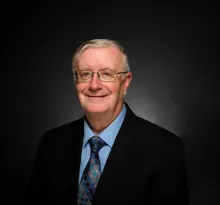
Jorge and his wife Kathy serve the Dallas (TX) and Lawton (OK) congregations. Jorge was born in Portuguese East Africa, now Mozambique, and also lived and served the Church in South Africa. He is also responsible for God’s Work in the Portuguese language, and has been visiting Portugal, Brazil and Angola at least once a year. Kathy was born in Pennsylvania and also served for a number of years in South Africa. They are the proud parents of five children, with 12 grandchildren and live in Allen, north of Dallas (TX).
