
Don Ward
This transcript was generated by AI and may contain errors. It is provided to assist those who may not be able to listen to the message.
Will God speak to you directly today? In Hebrews 1, verse 7, it says that God makes his ministers a flame of fire. We've reached a period of time in church history in which the baby boomers are retiring and Generation Y is coming to the front, sometimes called the millennials. And we're talking about preparing new leaders from Generation Y or from the millennials.
The irony of this is many of our retirees are devoting more and more time to Bible studies, searching the web for news items, things that relate to the Scriptures, and the end times, whereas Generation Y is encumbered with survival. And so we are in a very unique time in human history. The ministry would be severely in his challenge to keep up with everybody else. Of course, the ministry has so many different duties that you could only imagine. It's sort of like they talk about you don't know what marriage is like until you're married.
So is God going to speak directly to you today? I hope he will. And he will if you let him.
The great miracle on Pentecost, as you heard in the offatory, was that it was in the speaking and the hearing. The apostles were the ones that were they were the ones doing the speaking, and then the people from all the various countries and languages of the world heard them in their own language. So indeed, it was a mighty miracle. And in the midst of this, if you turn to Acts chapter 2, the apostle Peter stands up and begins his inspired sermon, some saying, well, they're drunk and this, that, and the other. And Peter says they're not drunken, as you suppose, but it's only the ninth hour of the day, nine o'clock in the morning.
And he preaches one of the most important sermons that's ever been given. I guess the only sermon that would surpass or equal that would be Christ's Sermon on the Mount. At the conclusion of that sermon, you look at Acts 2, verse 37. Now when they heard this, they were pricked in their hearts and said unto Peter and to the rest of the apostles, Men and brethren, what shall we do? They were convicted from the head to the toes. They were ready to move.
Then Peter said unto them, Repent and be baptized every one of you in the name of Jesus Christ for their mission of sins, and you shall receive the gift of the Holy Spirit. And as we talked about yesterday, you see here it is conditional that you must repent. In addition to that, you have to exercise faith in the sacrifice of Christ for remission of sins that are passed, for the promise is unto you and to your children and to all that are afar off. The all that are far off were the Gentiles, as we shall see later. Even as many as the Lord our God shall call. And in the special music you heard composition title, The Call. So God is calling out now the firstfruits.
And with many other words did He testify and exhort saying, Save yourselves from this untoward generation. What would they say today if they should be resurrected and look at CNN for about a day or FOX or whatever news network you want to name? And then they gladly received the word more baptized. In the same day there were 3,000 souls added to the church. And so begins the spiritual temple of God. God's dwelling place not made by hands. All of God's works are done in truth. And which one of God's works is most important to you?
I'm not asking of all of the qualities and characteristics of God which one is most important. Qualities and characteristics have to do with God is righteous, God is love, and of course the most important quality from which all things stem with regard to our existence of God is love. And because God wanted to share who He is and what He is with humankind, He created human beings.
So that through a process of physical birth and then spiritual beguetal and eventually resurrection born into the family of God. So of all of the works God has, which one is most important to you? We used to play games with our granddaughters who made the trees, the water, the sun, the moon, the stars. I'm sure you have done the same thing with your children and grandchildren.
And then the answer would be God did. God's principle work is creation, both physical and spiritual. In John chapter 1 verse 3, we see that Jesus Christ, if you'll turn there, John chapter 1 verse 3, we see that Jesus Christ was the agent of creation. Of course, creation continues. The spiritual creation continues, and that's what we want to focus on today, the new mind, a spiritual creation. So if you wanted a title, it would be Pentecost, the new mind, a spiritual creation. In John chapter 1, in the beginning was the word showing existence. The word, the one who became Jesus Christ, exists in eternity without father, without mother, without end, or beginning of days, as it says in Hebrews chapter 7. In the beginning was the word, the word was with God showing relationship, but there was not a father-son relationship at that point because both the Father and the word exist in eternity. So neither one were created. Neither one came into being as a result of any act.
They've just always been. That's difficult to wrap the mind around that.
And the word was with God, the relationship, and the word was God. The same was in the beginning with God. All things were made by Him. So this act of creation. All things were made by Him, and without Him was not anything made that was made. Everything was made. You look at Colossians chapter 1 in the physical realm and also in the spiritual realm because there were spirit beings created before human beings came on the scene. In fact, thousands of years, maybe even millions of years before human beings came on the scene, these spirit beings existed. So, Colossians chapter 1, you see that all things created by Jesus Christ, who was the agent of creation. Colossians chapter 1 verse 16, for by Him were all things created that are in heaven and that are in earth visible and invisible, material, physical, both inanimate matter and also living organisms, beings, visible and invisible, whether they be thrones or dominions or principalities or powers. All things were created by Him and for Him, and He is before all things and by Him all things consist. And He is the head of the body, the church, who is beginning the firstborn from the dead, that in all things He might have the preeminence. When Jesus Christ was resurrected became the first fruits, first of the first fruits and the firstborn of those who slept. A new order of being came into existence. One who had lived in the flesh, one who had God's Spirit, the only begotten Son, and upon death was resurrected by the Father back into the glory that He shared with the Father before the world began. So, I would say God's principal works has to do with creation. First of all, this physical creation, and of course at that time also the Spirit world of angels was created, which we'll talk about a little bit later. As we noted on the Sabbath, the Holy Spirit is the essence of God. John 4, 24. God is Spirit. Those who worship Him must worship Him in Spirit and in truth. John 4, 24. Just as you are flesh, that is your composition. We probably wouldn't say it's your essence, because we can see you when God is invisible, but there is an essence. It's just as real as the physical. And through God's Spirit, He does works of power. Just like through your flesh, you can do works of power. You can pound the podium or pound the streets or do whatever else through your flesh. The Holy Spirit is the very essence of God.
God created Spirit beings, as we noted earlier, millions of years ago, and after that, He created the earth. So you look at Job, Job just before the book of Psalms, and Job 38 and verse 6.
So God is a physical creator, and He's also a spiritual creator, as we see here. And Job 38 and verse 6, Whereupon are the foundations thereof fastened, talking about the earth, or who laid the cornerstone thereof, when the morning stars sang together with all the sons of God, when all the sons of God shouted for joy. In other words, the angels saw this magnificent creation, the physical creation, when God hung this planet out in space. And of course, how can anyone possibly believe it was a result of some kind of accidental act? The things that are are what things created, as it says in Hebrews chapter 11, from things that are not seen.
And scientists are trying to get down to the various minute smallest part of matter to try to find out maybe how this big bang was ignited. Yet, even if you do, it still doesn't account for the existence of matter in the first place, or the laws that govern it. It's just ridiculous for anyone to think otherwise, but that's the way the world is headed. Of course, we're going to stand in the gap and proclaim the truth as long as we possibly can.
But God's principal work of creation began 1973 years ago on the day of Pentecost. He began the marvelous restoration of the human condition and providing the power to overcome the ruler of this present evil age. You look at Acts chapter 3, the prophets from Moses up until the time that Jesus Christ came on the scene prophesied of the time in which Jesus Christ would come, the Messiah would come. Of course, the Messiah came to restore human beings to favor with God. It says in Romans 5 that when we were enemies of God, Jesus Christ died for our sins and made reconciliation for our sins. In Acts chapter 2, verse 19, and I will show what this is. Actually, I want chapter 3, sorry. In Acts chapter 3, and verse 19, dating all the way back to the Garden of Eden when a Redeemer was promised in Genesis 3.15, then the great messianic prophecies, Moses' prophecy of a prophet, would come on the scene.
Samuel, the other prophets prophesied, especially Isaiah, of the Messiah who would come on the scene.
See, that restitution of all things has begun with you, the Church of God, the temple not made by hands God's dwelling place today. Verse 24, verse 16, And men must be saved. Acts 4, 12. On that day of Pentecost 31 A.D., God began to call out sons and daughters to be members of his family, even though there was already a spiritual creation, as we read from Job 38, 6, and 7. The angels and other spirit beings, some described as being around the throne of God. The process of creating them was not the same as it is with us, as we shall see. Let's go to Hebrews chapter 1. Hebrews chapter 1, beginning verse 8, I quoted part of the scripture earlier where it says, He makes His ministers a flame of fire, and we do need ministers who become preachers and preach the Word of God. I'm going to talk a little bit more about that later.
In Hebrews chapter 1, verse 8, But under the sun, He said, Your throne, O God, is for ever and ever.
A scepter of righteousness is the scepter of your kingdom. You have loved righteousness and hated iniquity, therefore God, even your God hath anointed you with the oil of gladness above your fellows. And you, Lord, in the beginning, have laid the foundation of the earth, and the heavens are the work of your hands. And He created angels. You look at verse 13. But to which of the angels said, He at any time set you on my right hand until I make your enemies your footstool? When, where, He never did.
What was the purpose for creating the angels?
Are they not all ministering spirits sent forth to minister for them who should be heirs of salvation?
The angels played no part in the creation process. They were created to whatever rank, and they were created perfect at that juncture. And then they were given free choice to have their character seal with the righteousness of God. The logos, the words spoke, the angels were created. There they are. They are what they are. They were not aware that they were being created.
We are created physical, subject to sin and death. And after being called or given the opportunity to participate in the act of creation, we work hand in glove jointly with God the Father and Jesus Christ and their essence, the Holy Spirit, to become the righteousness of God, the spiritual creation of sons and daughters. It's not done by fiat, as you heard one man say, named Herbert Armstrong many, many times.
In the creation of angels, he spoke and it was done. There they are.
But we need the Holy Spirit for life, and we have to be active participants. Now, you look back at Ezekiel 28. I referenced there the angels being created and they were created perfect.
It says here that the one who became Satan, who initially was at the throne of God, one of the archangels, Lucifer, will begin in Ezekiel 28, 11, Moreover, the word of the Eternal came unto me, saying, Son of man, take up a lamentation upon the king of Tyreus, speaking simile, where one thing represents another. Cyrus is a type of Satan the devil, and say unto him, Thus as the Lord God, you seal up the sum full of wisdom, perfect in beauty. You have been in Eden the garden of God. Of course, he surely was there as he seduced and deceived Eve into sinning, and Adam followed along. Every precious stone was your covering. It names all those stones. I'm not going to read them. Then it says the workmanship of your tabards and of your pipes. And pipes generally refers to the ability to make music, and of course, Satan has used music. Music has an uncontrollable effect on the human nervous system. You cannot control it. It can put you down in the dumps. It can raise you to exhilarating heights.
And your pipes was prepared in you in the day that you were created.
You are at the anointed carob that covers, and I've set you so. You were upon the holy mountain of God. You walked up and down in the midst of the stones of fire at the very throne of God. You were perfect in your ways from the day that you were created till lawlessness was found in you.
So the angels were created to that state without their awareness.
He spoke, it was done, and there they were. But with us, we're created physical, subject to sin and death, and we need the Holy Spirit for life that is life eternal. We have to be aware of the creation that is going on within us, and we must earnestly desire that spiritual creation to take place. Since 31 A.D., the day of Pentecost, God is calling out the first fruits of the spiritual creation because on that day, God made his great creating spirit available to mankind.
Now let's notice back in Leviticus 23, the origin of command to observe these days. These days are the festivals of the Eternal.
They're not man's doings. They call them Jewish holy days. No, the Bible calls them the Eternals.
You look in Leviticus 23. Verse 2, Speaking to the children of Israel, saying to them concerning the Feast of the Lord, which ye shall proclaim to be holy convocations, even these are my feasts.
They're not the Feast of Men. They're not the invention of men.
Then he talks about the Feast of the Weekly Sabbath and then lists the annual festivals.
The Feast of Weeks or Shabbat or Pentecost.
In verse 9, The Eternal spoke unto Moses, saying, Speaking to the children of Israel, and saying to them, When you come into the land, which I give unto you, and shall reap the harvest thereof, then you shall bring a sheath. And that word sheath, I remember way back in the old days when I used to read this, I would think about, well, they went out into the grain field, and they cut the wheat and literally brought the sheath of grain, the wheat, and waved the stalk and the grain on it. This word sheath in the Hebrew, you can look it up as an omer. It represents a measure. So what they did was that they would pluck the grain, they grinded into fine flour, and they made two loaves. And these loaves of the first fruits were way before the Eternal. So we're a little bit ahead of the story there, but anyhow, we continue here. Speaking of the children of Israel, and said to them, when you come into the land that I give you, you shall reap the harvest thereof, then you shall bring a sheath, an omer, of the first fruits of your harvest under the priest, and he shall wave the sheath before the Lord to be accepted for you on the moral after the Sabbath, the priest shall wave it. Now, in the spiritual sense, as you heard in the sermonette, that Jesus Christ is the first of the first fruits, and he was waved, as it were, before the Eternal, and his sacrifice was accepted by the Father. Oh, your place there will look quickly at that. 1 Corinthians 15. 1 Corinthians 15. We have so much today. We want to communicate and try to teach in 1 Corinthians 15. One of the big things in Corinth was that there were some there saying that there is no resurrection. I mean, why are you going to... why pretend to have any religion if you don't believe in life hereafter? But anyhow, there were some in Corinth saying there's no resurrection. And Paul says, verse 16, for if the dead rise not, then is not Christ raised.
And if Christ be not raised, your faith is in vain, you're yet in your sins. Then they also, which are fallen asleep in Christ, are perished. I mean, that's just all there is to it. Three score and ten, and that's it. If in this life we have hope in Christ only, we are of all men, most miserable. But now as Christ risen from the dead, become the firstfruits of them that slept. For since by man came death, by man came also the resurrection of the dead. Verse 23, but every man in his own order cries the firstfruits afterwards, they that are Christ, at his coming. So Jesus Christ fulfilled the the wave sheaf offering. You look at John 20 and verse 17, and we have those who argue and say, well, you know, Jesus didn't make a quick spirit trip to the Father and come back. Well, let's see what the Bible says in John 20 and verse 17.
Of course, they went down to the tomb after Jesus Christ had been lying there for quite some time. After three days, they were down there on a Sunday morning, and they found out that the tomb was empty. And when they came down there, we're breaking in on the thought in the interest of time.
It's Mary Magdalene, verse 16. Jesus said unto her, Mary, and she turned herself and said unto him, Rabboni, which is to say, Master, Jesus said unto her, Touch me not, for I'm not yet ascended to my Father, but go to my brethren and say unto them, I ascend unto my Father and your Father, and to my God and your God. And so Mary Magdalene did what she was told to do. She went to the disciples and told them that she had seen the Lord and that they should meet him in a certain place. So you look back at Matthew 28, verse 9, and we'll see what took place later that day in Matthew 28 and verse 9.
And as they went to tell the disciples, Behold, Jesus met them, saying, All hail, and they came and held him by the feet. Whereas he just told Mary Magdalene in John 2017, Don't touch me, for I'm not yet ascended to my Father. I cannot be defiled by anything human.
And they held him by the feet and worshiped him. Then said Jesus unto them, Be not afraid, go tell my brethren that they go into Galilee, and there shall they see me. And so that took place. Now you look at Hebrews chapter 9. Remember that Hebrews compares and contrasts elements of the Old Covenant with the elements of the New Covenant. So look at Hebrews chapter 9, verse 20, saying, This is the blood of the covenant which God hath enjoined unto you. Moreover, he sprinkled with blood. This is talking about Moses and when they entered into the Old Covenant, the tabernacles and the vessels and so on were sprinkled with blood.
Verse 22, Almost all things are by the law perched with blood, and without shedding of blood is no remission. It was therefore necessary that the pattern of things in the heavens should be purified with these, but the heavenly things themselves with better sacrifices than these. For Christ is not entered in the holy places made with hands, which are the figures of the true, but into heaven itself now to appear in the presence of God for us. So evidently that he was that wave sheaf who appeared in the presence of God on that morning after he was resurrected. Of course, he ascended back and is seated at the right hand of God now making intercession for us. Nor yet that he should offer himself often as a high priest entered into the holy place every year with blood of others.
Now we go back to Leviticus 23. And so they were to wave this wave sheaf. We see how this has been fulfilled through Jesus Christ. The Feast of End Gathering, pictured by the Feast of Tabernacles.
We shall be gathered together, the resurrection at the last trump. Continuing here, verse 11, he shall wave the sheaf, this omer before the eternal to be accepted for you on the morrow after the Sabbath. The priest shall wave it. So you count 50 after the first weekly Sabbath within the days of unleavened bread. And that's why the date varies as much as it does. And not like you heard in the sermonette, the way the Pharisees do it, counting from the first holy day, 50 days, and it always falls on the same savant. Now verse 15, you shall count unto you from the morrow after the Sabbath, from the day that you brought the omer of the wave offering. Seven Sabbaths shall be complete even unto the morrow after the seventh Sabbath shall you number 50 days, and you'll offer a new meet-off. You shall bring out of your habitation two wave lobes.
Of the tenth deals, they shall be of fine flower. So this grain that has been picked, this omer, has been beaten up into fine flower, and it could symbolize all the things that Christ went through to pay for our sins. They shall be of fine flower. They shall be taken with leaven. See, at the feast of unleavened bread, leaven is forbidden. Here these two lobes are with leaven. They are the first fruits unto the eternal, and you shall offer with the bread seven lambs. Now the two lobes, what it represents, have been often discussed. I'm very convinced it represents Jew and Gentile as one body, as we'll read from Ephesians 2 later, that Jew and Gentile, this is a great mystery that Paul talks about in Ephesians, have been joined together, and they both are of the first fruits because God is calling out people from all nations, races, kindreds, and tongues to those who are near to your children and those who are afar off.
Also in the sermon at you heard that Peter went to the house of Cornelius, Acts 10, and the Holy Spirit fell upon the house of Cornelius. They spoke in tongues. They were baptized, and they received the Holy Spirit. So you see there both Jew and Gentile.
Now on the day of Pentecost, the Jews that were assembled there in the proselytes, they really had no idea that the Gentiles were going to be grafted in, in the way that they were. So God is calling representatives from all nations, kindred, peoples, tongues, to help him establish the new world in which dwells righteousness.
God is not a respecter of persons. The church, the first fruits of his salvation, made immortal, will rule and reign as kings and priests with God and Christ forever and ever.
According to, go back to Exodus chapter 19, according to Jewish tradition, Israel received the law, the Ten Commandments, and later the statues and judgments, but the Ten Commandments on the day of Pentecost.
So it's sort of the, in the Old Testament it talks about, oh, that they were such a heart in them, they would keep my laws. And now on the day of Pentecost, when the spiritual fulfillment came, the Holy Spirit came, making it possible to have your conscience purged, that you have a new sense of right and wrong, a spiritual mind that can rule over the fleshly mind. In Exodus 19, verse 4, you have seen what I did unto the Egyptians, and how I bear you in eagles' wings and brought you unto myself. Now therefore, if you will obey my voice indeed and keep my covenant, then you shall be a peculiar treasurer unto me above all people, for all the earth is mine.
And you shall be unto me a kingdom of priests and an holy nation.
These are the words which you shall speak unto the children of Israel.
And so they received the law, and according to Jewish tradition, on the day of Pentecost.
Now they failed. God wanted them to be the model nation, and through them to bring other nations into relationship with Him. But they failed. There was not such a heart in them. Now you go to 1 Peter 2. You see how this has been transferred to the church because of their spiritual idolatry.
As you read about in Hosea, God sent them into captivity, and He gave them a bill of divorcement.
And He said, you have become Lo Ami, not my people, and Lo Ruhama, not having obtained mercy.
And so now this, Exodus 19 verse 6, you shall be a kingdom of priests and a holy nation.
That has passed on to the church. As we read here in 1 Peter chapter 2 and verse 9.
1 Peter 2 and verse 9. But you are a chosen generation, a royal priesthood, and a holy nation, a purchased people that you should show forth the praises of Him who has called you out of darkness into His marvelous light.
See, once again, this restitution begins with that spiritual temple, the church of God, the holy nation. God's active presence is in the holy nation, which in times past were not a people. You were Lo Ami, but are now the people of God Ami, which had not obtained mercy. You were Lo Ruhama when He put them away, but now have obtained mercy.
Dearly beloved, I beseech you as strangers and pilgrims, that stain from fleshly lust, which war against the soul, having your conduct honest among the nations, the ethnos, the gentiles, that whereas they speak against you as evildoers, they may by your good works, which they shall behold glorify God in the day of visitation.
There's been a powerful witness from the church of God sent out to other nations through various projects, and the people who were there on the scene, and I've talked to some of them, Mr. Dean, who sits here today, talked to scores of them, and the thing that they impressed on me was, we need your leadership, we need your example. They knew, they saw, that there was something there. They wanted it, they could taste it, but they could not quite get there, because God was not calling them them.
But they will be visited in the day of visitation, and the example we set is and has been so very important.
Continuing now, what we're talking about is this Israel of God, the temple not made with hands, God's dwelling place. See, from the very beginning, when Adam and I were created, and through his dealing with the people, and calling out of Israel, he always, God wants to dwell with humankind. I mean, you read that great summary scripture there in Revelation 21.4 that we usually read at the end of funerals, and the tabernacle of God is with man, and he shall dwell with them, and there should be no more crying or pain and all of that.
Now, we look at this in the historical sense. We look at Exodus 15. Israel had just come up out of the Red Sea, had been saved from the forces of Pharaoh.
They had observed Passover and leavened bread.
The miraculous crossing of the Red Sea where the waters were parted and they walked across.
But after they got across, the waters came back together and drowned the host of Pharaoh.
And they sung the victory song of Moses. It would be very easy to overlook one of the verses here.
Next is 15.1. Then sang Moses and the children of Israel, this song under the eternal and spoke, saying, I will sing under the eternal for he hath triumphed gloriously the horse and the rider, hath he overthrown into the sea. The Lord is my strength and song. He has become my salvation.
He is my God, and I will prepare him an habitation, a place for God to dwell.
My Father's God, and I will exalt him. Now you look at Exodus 25, not long after they had left Egypt, God revealed to them that he wanted them to build him a tabernacle.
Next is 25. The eternal spoke unto Moses, saying, speaking to the children of Israel, that they bring me an offering of every man that gives it willingly with his heart, you shall take my offering. And so they did. Verse 8, and let them make me a sanctuary, a place for me to dwell, that I may dwell among them.
And it took about a year to build that tabernacle. You look at Exodus 40. After about a year, they raised up the tabernacle. And what happened? In Exodus 40, verse 33. Exodus 40, verse 33.
And he reared up the court around about the tabernacle in the altar and set it up on the hanging of the court gate, so Moses finished the work of the tabernacle, the sanctuary, a place for God to dwell. Then a cloud covered the tent of the congregation and the glory, which is another way of saying the presence of the eternal field, the tabernacle. Moses was not able to enter into the tent of the congregation because the cloud abode thereupon in the glory, the presence of the eternal field, the tabernacle. And when the cloud was taken up from over the tabernacle, the children of Israel went onward in their journeys. But if the cloud were not taken up, then the journey not to the day that it was taken up. For the cloud of the eternal was upon the tabernacle by day, and fire was appointed by night in the sight of all the house of Israel throughout all their journeys. So they had this powerful witness and testimony. How could you deny such a testimony? Yet, as we read Sabbath before last, how that Israel worshipped the sun, moon, and stars, even on their journeys in the wilderness. We read a verse from Acts chapter 7.
After Israel got in the Promised Land, the tabernacle was pitched at Shiloh and in Ephraim. And then eventually that was destroyed. And for a time, the Ark of the Covenant was in control of the Philistines. And David decided, well, I'm going to build a dwelling place for God on Mount Zion. And so David built a tabernacle, and he went forth to secure the Ark of the Covenant and bring it into the tabernacle. And so he did. You look at Psalm 78, and this tabernacle was built on Mount Zion. And 2014, David, of course, is a literal physical place, and Mount Zion symbolizes the Church. David was a type of Christ, in some ways. You look at Psalm Matthew 17, 78, which is a great summary chapter of the history of Israel. It's ups and downs. This is so important here. Verse 67, Moreover, he refused the tabernacle of Joseph and chose not the tribe of Ephraim. The tabernacle was first pitched in Ephraim at Shiloh. But chose the tribe of Judah, the Mount Zion, which he loved, and he built his sanctuary like high places, like the earth, which he has established forever, and chose David, his servant, and took him from the sheepfolds. From following the ewes great with young, he brought him to feed Jacob his people and Israel his inheritance. So he fed them according to the integrity of his heart and guided them by the skillfulness of his hands. And of course, Jesus Christ is what I call the true David in that he is the fulfillment of the Messiah. But see here, he chose the Mount Zion, which he loved. So Solomon built a tabernacle of temple, humongous, a wonderful temple. And the glory of God filled that tabernacle. We look at 2 Chronicles, 2 Chronicles, chapter 5, the dedication of this temple, 2 Chronicles, chapter 5. Then all the work that Solomon made for the house of the Lord was finished. Solomon brought in all the things that David, his father, had dedicated. The silver, the gold, the instruments, the measures, the house of God. Then Solomon assembled the elders of Israel and all the heads of the tribes, the chief of the fathers, the children of Israel unto Jerusalem to bring the Ark, the covenant of the eternal out of the city of David, which is Zion. Wherefore, all the men of Israel assembled themselves unto the king in the feast, which was in the seventh month, verse 5, and they brought up the Ark and the tabernacle of the congregation. Now you look down in verse 13, it came to pass as the trumpeters and singers were as one to make one sound to be heard in praising and thanking God. And when they lifted up their voice with the trumpets and cymbals and instruments of music and praised God, saying, He is good for His mercy and dearest forever, that the house was filled with a cloud, even the house of the Lord, so the priests could not stand up to minister, by reason of the cloud. For the glory, the presence of God, filled the temple. Now, Israel went into captivity at the hands of the Assyrians. Then Judah went into captivity in the hands of the Babylonians. And God directed Cyrus to make a decree, a Gentile king, that Israel could return, actually Judah. Judah could return and build what's called the Restoration Temple. Now, when that temple was dedicated, the glory of God did not fill that house. That house symbolized that which was to come. That is the temple of God.
I'll show you a look now at Haggai chapter 2. Cyrus made the decree in 538 AD. The Jews basically were spinning their wheels for several years. They came down to 520 BC, and the house of God was still not built, the Restoration Temple. So God raised up two prophets, Haggai and Zechariah, to be on the scene to help in building that Restoration Temple.
It's one of the few times that God's people really responded to the prophets, and they built this Restoration Temple. In Haggai chapter 2, verse 3, who is left among you that saw this house in her first glory? Solomon's Temple. How do you see it now? Is it not in your eyes in comparison of it as nothing? Yet now be strong, O Zerubbabel, says the Eternal. Be strong, O Joshua, son of Joseph, be strong. All you people of the land, says the Eternal, and work, for I am with you, says the Lord of Hosts.
According to the word that I covenanted with you when you came out of Egypt, so my spirit remains among you. It was not in them, in the Begettles sense. My spirit remains among you, fear you not. For thus, says the Eternal Hosts. Yet once in a little while I will shake the heavens and the earth and the sea and the dry land, and I will shake all nations, and the desire of all nations shall come.
And that desire of all nations, whether they know it or not, is the only way whereby you can attain unto salvation. And that is through Jesus Christ, and I will shake all nations. The desire of all nations shall come, and I will fill this house with glory, as the Eternal Host. So that temple, when it was dedicated, the glory of God did not fulfill that temple. But this prophecy was pointing forward to the time of the Church of God, the Temple of God.
That temple, that Restoration Temple, lacked five things that were in the tabernacle in the wilderness in Solomon's Temple. It lacked the Ark of the Covenant. They're still searching for the Ark of the Covenant today, just a news item this past week, saying that there's a group that claim now they found the Ark of the Covenant, another claim. The Sacred Fire. See, the Ark of the Covenant today, we have the Word of God written on our inward parts, as it says in Hebrews.
And I will write my laws on their hearts and minds. The Sacred Fire, they offered the sacrifices. Today, we are to offer up spiritual sacrifices acceptable unto God. It did not have the Urim and Thummim that they would consult. The light would flash yes or no.
But today, we have a more sure word of prophecy, the Word of God that we can consult. It lacked the Spirit of Prophecy. There was no continuing prophet on the scene after Malachi until John the Baptist. But once again, we have a more sure word of prophecy whereunto we do well to take heed, as in 2 Peter chapter 1. And the Shekinah Glory. The glory of God did not fill this tabernacle. But today, we have the Shekinah Glory, the Spirit of God, the presence of God dwelling in us.
See, the new civilization, the wonderful world tomorrow, the Kingdom of God, will emphasize the things that are spiritual, the things that are eternal. Whereas this world emphasizes physical things, vain things that are temporary. And God wants us to be active participants in building this spiritual temple. It is a building not made by hands. You look now at Acts chapter 7. This is another great summary chapter that I've referred to once already in the sermon. We're turning now to Acts chapter 7, the Stevens-inspired sermon. When he was called into the question, Stephen, who was a deacon, you read the last part of Acts chapter 6.
Here's this deacon. All kind of miracles and healings were being performed at the hands of Stephen, and they called him before the council. How are you doing all of this? And he gives his testimony. Verse 44 says, Our fathers had the tabernacle of witness in the wilderness. Verse 47, but Solomon, well, we skipped one there. Verse 46, who found favor before God and desired to find a tabernacle for the God of Jacob. So David built that. Verse 45. Verse 47, Solomon built him in a house. We've talked about all three of those. How be it that most high dwells not in temples made with hands, as says the prophet.
Heaven is my throne, earth is my footstool. What house will you build me? Says the eternal. For what is the place of my rest? hath not my hand made all these things? Look quickly at Hebrews chapter 8. Hebrews chapter 8. In Hebrews chapter 8. Now the things which we have spoken, this is the sum. We say, I have such a high priest who has set on the right hand of the throne of the majesty in the heavens a minister of the sanctuary and of the true tabernacle, which the eternal pitched and not man.
And you look across the page in Hebrews 9 and verse 11. But Christ being made a high priest of good things to come by a greater and more perfect tabernacle, not made with hands, that is to say, not of this building. See, this is a temple that we have been called to. On that day of Pentecost in 31 A.D., that was the temple that began to be reared up, the church of God.
So we are to be active participants in becoming a new creation. I believe at times we take the spiritual creation for granted, even forgetting about how it is and thinking that we will become a new creation by fiat. Just, oh, we have this culture in the church, and we're all brothers and sisters, and so that's good.
But we can serve and we can do all kinds of things. But if we're not becoming a new creation and becoming love as God is love, it profits us nothing. We are not osmotic Christians. We're not assembly-line Christians. The tendency of a fluid usually watered to pass through a semi-permeable membrane into a solution where the solvent concentration is higher than at the other site. Your joints are surrounded by what's called a synovial sac. A membrane surrounds the knee, and that membrane is synovial fluid. Through a process of osmosis, it passes through that membrane into the joint cavity, lubricating your knee.
So we have a built-in grease gun. It's being lubricated right there. We can get caught up in the church culture of doing whatsoever and whatever we're doing so that we are too busy to become the righteousness of God. We don't really think about just going through the form. We'll automatically develop a new heart and mind and become a new creation.
But I'm saying we need to be actively involved in the process, meditating, thinking about the deep things of God, being grounded and founded in the truth, the things that you are hearing here today. You will not hear in other churches. There be in the Church of God you will hear it. You should stand where I stand for about one and a half hours each week, counting announcements, watch the body language, response of people.
I've been actively teaching in the formal sense for 56 years. You think I haven't seen quite a number of students and audiences. How many papers have I read? How many papers have I written? And so on it goes. So you're a pretty good observer of human behavior. And I think we all, and I include myself, and one of the things that's really motivated me and encouraged me in recent times has been this online class with a ministry.
And it seems that they are turned on, and more and more it seems that we are beginning to generate the kind of energy, spiritual energy, that Paul talks about in 2 Timothy 1, 6, and 7 to stir up the gift of the Holy Spirit that we receive by the laying on of hands. We should ask ourselves, have I become dull of hearing?
What would you rather hear? A somewhat tedious slogging through the scriptures, teaching on a particular doctrine or somewhat like we did yesterday, or a sermon in which the speaker tells stories, uses a lot of humor with a little scripture thrown in for good measure. Which one you rather hear? Which one takes the least amount of energy? Which one has the greatest lasting effect? If the words I speak, they are spirit and they are truth.
If we obey what Paul says, preach the word, be instant, end-season, out-of-season. Well, we could be Joel Osteen, who tells eight or ten anecdotal stories of people who overcome great obstacles and throw in a little bit about, this is God, what God has for you. You just have to stay in there. People love it! 20,000 people show up for services at Lakeland. But the gospel of the kingdom of God is not preached.
Repent, for the kingdom of God is at hand. Do you know there's a contrast between types of speaking and teaching in the scripture that you might be amazed at to some degree, and it seemed to lead to people choosing sides and becoming divided over men. Look at Acts 18. See the kind of stirring up of the spirit and the preaching and building this spiritual temple. And of course, we're hoping and praying that God will call more laborers into the field.
Acts 18, after Paul's conversion in Acts chapter 9, pretty much the rest of the book of Acts, not altogether, is taken up with Paul's ministry. In Acts 18, we'll read verse 1, after these things Paul departed from Athens and came to Corinth and found a certain Jew named Aquila and also his wife Priscilla. They had come there because all the Jews had been ordered to get out of Rome, and they were tent makers, and Paul had an affinity with them, and he dwelt with them, and they accompanied him on some of his journeys. It winds up that Paul would always go to the synagogue first, and a great fear of the Jews got upset, so he went to the house next door.
God even spoke to Paul in a vision. Verse 9, then spoke the eternal, then spoke the eternal, this is Acts 18-9, then spoke the eternal to Paul in the night by vision, be not afraid, but speak and hold not your peace, for I am with you, and no man shall set on you to hurt you, for I have much people in this city. He continued there for 18 months, teaching the Word of God.
Now you can drop down to verse 24, and a certain Jew named Apollos, born at Alexandria. Alexandria is in Egypt. There were three great learning centers in the Mediterranean world at this time. Alexandria, where a large contingent of Jews, they had a tremendous library at Alexandria, which was burned at one time by the Moslems. A certain Jew named Apollos, born at Alexandria, Alexandria is where the Old Testament was translated into Greek, called the Septuagint, and Tarsus, where Paul was born, and Athens, Greece.
An eloquent man, and mighty in the scriptures, he came to Ephesus. This man was instructed in the way of the Lord, and being fervent in the Spirit, he spoke and taught diligently the things of the Lord, knowing only the baptism of John. He wasn't at Jerusalem on the day of Pentecost. He didn't know about the Holy Spirit. But he was fervent.
He was zealous. He was eloquently. He was well educated. Verse 26, he began to speak boldly in the synagogue, whom when Aquila and Priscilla had heard, they took him unto them, and expounded unto him the way of God more perfectly. And after being there for a time, he was opposed to pass into Achaia. Now, Achaia is the name of the province in which Corinth is located. And so they wrote letters of recommendation for the people in Achaia to receive him. In verse 1 of 19, and it came to pass that while Apollos was at Corinth, Paul, having passed through the upper coast, came to Ephesus, and finding certain disciples, he said unto them, Have you received the Holy Spirit since you believed?
And they said unto him, We have not so much as heard, whether there be any Holy Spirit. Verse 5, Paul taught them the way. And when they heard this, they were baptized in the name of the Lord Jesus. And when Paul had laid hands upon them, the Holy Spirit came upon them, and they spoke with tongues and prophesied, similar to what happened the day of Pentecost and also when Peter went down to the house of Cornelius.
Now, what happens in Corinth? You turn to 1 Corinthians, 1 Corinthians chapter 1, the point I want to make here. The purpose of this, this spiritual temple that we are involved in building, the building sounds physical kind of thing, but we're active participants. We are in this temple not made by hands. We have God's presence dwelling within us.
These precious truths have to be preserved and passed on. It requires serious study, lying upon line, precept upon precept, here a little, there a little, meditating, thinking about it. It's not just sort of a, we meet here, we have a good time, and sort of spiritually uplifted. That's a part of it, but it's much more than that. So we read where Apollos, he goes to Corinth, and 1 Corinthians 12, I mean 1 verse 12. Now this I say every one of you says, I am of Paul, I am of Apollos, and I of Cephas and some of Christ.
I mean, so there are four factions, Paul, Peter, Apollos, and those who are above it all of Christ. Is Christ divided? Was Paul crucified for you, or were you baptized in the name of Paul?
I thank God that I baptized none of you but Crispus and Gaius.
Of course, I from time to time, not so much anymore, but I used to visit around in the area, and some would say, oh, I was baptized by Mr. Armstrong down in Big Sandy Lake. Well, good.
But, lest any should say that I had baptized in mine own name, and I baptized also the household of Cephas, besides I know not whether I baptized any other. For Christ sent me not to baptize, but to preach the gospel, not with wisdom of words, lest the cross of Christ should be made of non-effect. For the preaching of the cross is to them that perish foolishness, but unto thus which are saved the power of God.
So you look at chapter 2, and you come to understand more fully, after you understand about Apollos, why Paul writes what he writes, and why I'm saying what I'm saying with regard to all of us and preserving this precious truth and building this temple of God not made with hands.
And I, brethren, when I came to you, came not with excellency of speech or wisdom, declaring unto you testimony of God. We have a task force now, and to me it's grown too large, I think we've got 12 or 15 men on it, Mr. Dean's on it, I'm Don, and I don't know who all.
But anyhow, to do a study of ABC, is it fulfilling its mission, purpose, and one person writes about, well, is it doing this, this, and this? Well, I mean, even the graduate schools of theology and this world are not doing that. But anyhow, what Paul writes here, for I determined not to know anything among you, save Jesus Christ, and him crucified, and I was with you in weakness and fear and in much trembling, and my speech and my preaching was not with enticing words of man's wisdom, but in demonstration of the Spirit and of power.
Now you look at 1 Corinthians chapter 3, verse 2, I fed you with milk. Why? Because you weren't able to bear the strong stuff. Verse 3, you're a carnal because you're a division. Verse 4, for while one says, I'm a Paul, and another says, I am of Apollos, are you not carnal? Who is Paul, who is Apollos but ministers, by whom you believed, even as the Lord gave to every man I have planted Apollos watered, but God gave the increase. Verse 21, therefore let no man glory in men, for all things are yours, whether Paul or Apollos or Cephas, or the world or life or death or things present or things to come, all are yours, and you are Christ and Christ is God's. See, the Corinthians really had a problem eventually with saying, well, Paul won't come visit us. He is weak in appearance. His speech is contemptible. I don't think he's even an apostle. I doubt he's even seen the Lord, whereas Paul says he has. But it was very interesting. You look at chapter 16, chapter 16, where Paul tells them and he wants to visit them.
Verse 10, it says, Now, Timothy, come see that he may be with you without fear, for he works the work of the Lord, as I do also, let no man despise him, but conduct him forth in peace, that he may come unto me, for I look for him with a brethren, as touching our brother Apollos. I greatly desired him to come unto you with the brethren, but his will was not at all to come at this time, but he will come when he shall have convenient time.
You know, here's the apostle, the one who founded them in the faith, and he implores Apollos to come, but Apollos says, I'm not coming. We don't know exactly why. He thought, well, maybe if I come, it would just cause more division, or I don't want to be a distraction, whatever the case might be.
So brethren, here we are on the day of Pentecost, about 1973 years later, after the Holy Spirit was sent, and we need to stir up the Spirit within us. We need to continue to build this spiritual temple.
One of the greatest duties of church leadership is to preserve the truth and grow in grace and knowledge.
Paul writes in 1 Timothy 3.15 that the church is a pillar and ground of the truth.
Peter writes in 2 Peter 3.18 to grow in grace and knowledge of our Lord and Savior Jesus Christ.
God's tabernacle is spiritual. The church is a spiritual organism.
God does not dwell in buildings made by hands. We're living stones in that tabernacle not made by hands.
We have been personally placed in this spiritual temple by God the Father.
The attitude necessary for God to dwell with you, sort of like Zacchaeus, the wee little man who climbed up in the Sycamore tree for the Lord, he wanted to see, because the Lord was going to pass that way that day and he wanted to see him.
So he climbed the tree to see him.
Contrast that with a rich young ruler who could not give up his goods so that he could be in the kingdom of God.
I wonder if we have lost our identities. I mentioned yesterday of who we really are.
One of the things that Mr. Armstrong continually did, he reminded us of who we are, what our identity is, and what our purpose is.
And so we have to get back to the things that really count and really matter.
And that's going to require us really digging into the word of God and growing in grace and knowledge.
And we will be filled with the Spirit of God, that spirit that came to dwell with men, that spirit that is now in each one of us.
One final scripture here, 2 Corinthians 6, these verses here, and we will close.
In 2 Corinthians 6, verse 15, And what concord hath Christ with Belial, or what part hath he that believes with an infidel?
And what agreement has a temple of God with islands?
For you are the temple of the living God, as God has said, I will dwell in them and walk in them, I will be their God, and they shall be my people.
Wherefore, come out from among them, and be you separate, says the Eternal, and touch not the unclean thing, and I will receive you, and will be a father unto you, and shall you shall be my sons and daughters, says the Lord Almighty.
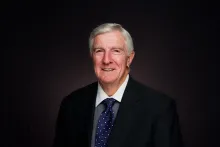
Before his retirement in 2021, Dr. Donald Ward pastored churches in Texas and Louisiana, and taught at Ambassador Bible College in Cincinnati, Ohio. He has also served as chairman of the Council of Elders of the United Church of God. He holds a BS degree; a BA in theology; a MS degree; a doctor’s degree in education from East Texas State University; and has completed 18 hours of graduate theology from SMU.
