

Robin S Webber
This transcript was generated by AI and may contain errors. It is provided to assist those who may not be able to listen to the message.
It was still with the Passover crowd that was in town. Peter got up on that Pentecost day and brought a message. It was powerful, it was dynamic, and it was convicting. We come to a point in that message in Acts 2, verse 36, where Peter just basically let it all hang out, as we say in today's modern vernacular. Therefore, let all the house of Israel know assuredly that God has made this Jesus, whom you crucified both Lord and Christ. Peter just told it like it was. He said, do you really realize what you have done? You did it! You did the big one! You crucified, and you put to death the Son of God. Now, when the audience heard this, they were cut to the heart. They knew they were convicted. God's Spirit was working with them, as Mr. Helmut brought out. They recognized that they had done a dastardly deed. That in a sense, they felt completely cut off, completely hopeless, completely out of the ballpark, with no way to get back in.
And they asked a question. Men and brethren, what shall we do? One of the darkest moments, if not the most, in these people's lives, completely cut off. No hope! Then notice what happens. Then Peter said to them, here's what you can do. Repent, and let every one of you be baptized in the name of Jesus Christ, for the remission of your sins, and you shall receive the gift of the Holy Spirit. Here we find one of the great mantras of Scripture, and one of the basic foundational principles of Christianity. Allow me to share it with you.
Where there is no hope, God gives hope. Where there is no hope, a Christian, like Peter, shares hope. Why was Peter so effective in connecting with this audience? It's been put like this and other commentaries, and it simply goes like this. That Peter spoke to dying men as a dying man. Peter spoke to dying men as a dying man.
He knew exactly where they were, because he himself had been there. He himself had been lost. He knew that he was lost. He knew that there were times in his experience with Jesus Christ that he had, in a sense, cut off hope from himself. Not by what Christ was doing, but by what he did. But each and every time Christ came back, and where Peter was either helpless or hopeless, Jesus Christ offered hope.
I want to share something with you today, friends. Let's get it. Pentecost is about hope. Pentecost is about hope. Being a first fruit is about sharing the hope of the Gospel message. Just as much as Peter did, oh, maybe in your life, you'll not draw 3,000 people down the corridors, as did Peter. But nonetheless, as a first fruit, we have a responsibility to convey hope where there is no hope. How did, if I can ask you a question, how did Peter come to this understanding? That is the gist of the message that I want to share with you today. I want to focus on several examples out of Peter's life of how God worked with him, molded him, and developed him to be the first fruit that he did become on the day of Pentecost.
We're just going to go through some of the very basic stories dealing about Peter. I hope by doing this that I can encourage you to help you understand not only what God did with Peter, but what God is doing with you today in 2009, to recognize that God never changes his demands and or his expectations of what he wants to bring us to as a first fruit. And I'm going to give you six specific steps, keys of understanding what it means to be a first fruit. And how God brings us to this point allows activity to occur in your life and mine, to bring us to this point to understand that no matter what we've done, that God can use us as long as we stay with him.
Join me, if you would, in Luke 5 to begin with. The first story that I want to share is shares right in the beginning of Luke's experience with Jesus Christ. Now, Luke 5. Verse 1, So it was, as the molotud pressed about him to hear the word of God, that he stood by the lake of Genesra Re. Now, Genesra, that's just another term for the sea of Galilee.
And saw two boats standing by the lake, but the fishermen had gone from them and were washing their nets. Then he got into one of the boats, which was Simon's, and asked him to put out a little from the land. And he sat down and he taught the multitudes from the boat. In other words, Jesus just got a little bit offshore, had the boat turned around, because of the amplification that can happen on a body of water, and he held a service, as it were. But when he had stopped speaking, he said to Simon, launch out into the deep and let down your nets for a catch. But Simon answered and said to Master, I have toiled all night and caught nothing.
Nevertheless, because you're saying this at your word, I will let down the net. Now, it's very interesting. Here's Jesus, who is a carpenter, and he's talking to Peter, who was a fisherman. And Peter was probably at this point, you know, just going, oh, come on, you know, okay. But because you say so, I'll do it. After all, everybody else is watching. You know, the audience is still there. And so he says, okay, I'll go ahead and do that just as you do. And when they had done this, they caught a great number of fish.
And their net was breaking. So they signaled to their partners in the other boat to come and to help them. And they came and they filled both the boats so that they began to sink. Now, Jesus cries sometimes, and you can see some of the humor. You can just see, you know, Jesus did have a smile. Have you ever thought about him just smiling?
That's kind of neat. You know, he was all human. And there he is. He's watching, I'll go out. You know, this carpenter's out of his mind, but I'll go out. I've been out there all night long, and, you know, I'll go out. One more for the get-burner. Go out and go do it. So he goes out and does it. And then, you know, there's so many fish, and then you see the boat sinking.
Doesn't that kind of sound... You know, Peter and the rest of the gang had to keep on learning this for about three and a half years. Remember when they said, yeah, there's no bread in that town. Remember that story? And remember, at the end of the day, they had to go around and collect all that was left over? Basket by basket, just to get the point. So here, this is happening. And they caught a great number of fish, nets breaking, bring everybody over, began to fill the boat, so they began to sink.
The boat's sinking! Have any of you ever been out in a boat that's got water, taking on water? Taking on water, going, as we say, going down? And when Simon Peter saw it, he fell down at Jesus' knees. And he said, depart from me, for I am a sinful man, O Lord.
For he and all who were with him were astonished at the catch of the fish with which they had taken. And so also were James and John, the son of Zebedee, and their partners, with Simon. Now, what's happening here? At the beginning of the story, before Christ really began working and molding with Peter, Peter at base said, oh, come on, my life, my boat, my life, my boat.
He had not really yet surrendered his vessel to God. And that's when Christ began working with him through this lesson of the fish. When we come now to verse 8, we see this hopelessness, and this helplessness overcome Peter for the moment. He knew where Christ was. He knew where he was, and he saw the gap. As we move to verse 11, as Christ is about to tell him something, what we have are a couple of things going.
Peter only saw distance between what Christ wanted and Christ asked, and really what he was willing to perform. At the same time, the crowd they saw were fish all around. But what God saw in now is this point, is verse 11.
Or actually in verse 10, notice what happens. Do not be afraid. From now on you will catch men. And so when they had brought their boats to land, they forsook all and followed him. While the crowd that was all around that boat saw the fish, there's one specific thing that God saw, and it's a beautiful thing.
He saw Peter surrender to the will of God and what God wanted him for. And I want you to notice something else. Very important. I hope you'll listen to this as we go forward. He not only surrendered, but upon that surrender he gave Peter a job. From now on you will catch men.
Christianity is not just simply a philosophy. It is not just simply a theology. It is an action. And for all of us that are here, when we have people come into our church, and I'm not here, and we begin to have people come into this church and they surrender themselves to God the Father and Jesus Christ. I want you elders and deacons to think about this. Give that individual a job.
Put them into action immediately. Get them involved. Christ never came just simply to share theory. He always gave people something to do. Very important. Now, when we look at this, we understand something then. As we come up to the day of Pentecost, thinking of Peter as a first fruit, thinking of ourselves as a first fruit, the first item that we see happening in the life of Peter, to where eventually he could help those people on the first day of Pentecost, is simply this.
Is that we have got to surrender our lives to God. And that's not just simply an event. That is not just simply a one-time activity. It is a process. It is an existence. It is an ongoing occurrence in which we are going to find more and more we're going to have to surrender. Early on in my Christian life, that I thought I had surrendered to God. And I didn't realize that I was just at the first peel of the onion. Are you like that in your life, in your journey, in your walk?
You thought, well, God, I'll give you one peel of the onion. You get the outer skin. I feel pretty good about myself. I've given one peel of the skin. I've surrendered. Oh, no, no, no, no, no, no, no. That's not how God works. He wants to get right down into our core until we have not only given Him just the outer peel, but we've given Him every bit of what we are. We notice, then, that the first thing that I would like you to consider is we come up to Pentecost. So that you can be as effective an instrument for God as Peter was is simply this.
What is your surrender quotient? What is your surrender quotient? Do you continue to find ways to surrender yourself to God, to His living Word, to the Word that is here, that when we find that God asked us to do something, to cast our net, to go out further than we've ever gone before, or to go back again and again and again, when we think we've done it again and again, do we surrender ourselves to God? Surrender is a term that we're not used to today. Basically, in today's world, we have all these negotiations going all the time.
To understand surrender, you have to basically go back to 1945. Unconditional surrender. We have not seen unconditional surrender since 1945. When both the German Reich and the Japanese Empire laid everything down. Everybody in the world knew they had been beaten. They knew that they had been beaten. And they completely laid everything before and said, we're through, we are conquered, we unconditionally surrender ourselves to you. It's really hard in our 2009 mindset to get that through, especially some of our younger people, to understand what unconditional surrender means.
But please understand that's not lost on the Lake of Galilee and or 1945 in your grandparents' time. We need to understand as first fruits if God is to use us. If we can be purveyors of the hope that Peter was, we need to first understand what it means to surrender.
Let's go to the second story, Matthew 14. Matthew 14, and let's pick up the thought in verse 22. And this is just following the story after he had fed the 5,000 people. You know, a whole lot was happening in those hills around the Sea of Galilee when you understand the story. And immediately Jesus made his disciples get into the boat and go before him to the other side while he sent the multitudes away. And when he had sent the multitudes away, he went up on the mountain by himself to pray. And now when the evening came, he was alone there. But the boat was now in the middle of the sea, tossed by the waves, for the wind was contrary.
And I've given messages on this before. You have to understand, for those that have never really understood what the Sea of Galilee is like, we often think of it being in the Galilee or up in the hills, but those very hills in the Sea of Galilee is actually below sea level. And so what happens is those winds rush out of the Mediterranean, they go deep down into this basin, and just like the powerful Santa Ana winds that we have here, just in a moment or two, powerful winds can come up, dash into the Sea of Galilee, and there can be turbulence like you and I can't understand.
And so we recognize that this is what had occurred. But the boat was now in the middle of the sea, tossed by the waves, and just stormy. Now in the fourth watch of the night, Jesus went to them, walking on the sea. And when the disciples saw him walking on the sea, they were troubled, saying, I don't believe in spooks.
I don't believe in... No. They said, it is a ghost. And they cried out for fear. Let's remember, this was not during daylight. This was at night, and this was also in the middle of the storm. And they cried out for fear. But immediately Jesus spoke to them, saying, Be of good cheer. It is I. And do not be afraid. You know, when you look at that verse, you can go to your computer, or you can go to your concordance, Julie, some that don't have a computer, and you look up this terminology.
Do you recognize that in Scripture, over 350 times in the Scripture, you know what it says? Do not be afraid. 350 times. Why do you think God mentions that to you and to me? 350 times in His Word. Because we take our eyes off of Him, we take our hearts off of God's promises, we begin to think that there is distance between us and God, and or that somehow our Father has gone asleep at the switch, and therefore God reminds us again and again and again, just like that, just like that, you know, hammer on the anvil of a blacksmith.
Just keeps on, just the rhythm of the Bible is, don't be afraid. I am here. And notice what happens then. And Peter answered and said, Lord, if it is you, come, Mammy, to come to you on the water. And so he said, come. And when Peter had come down out of the boat, he walked on the water to go to Jesus, but when he saw that the wind was boisterous, he was afraid, and beginning to sink, he cried out, saying, Lord, help!
Save me! And immediately Jesus stretched out his hand and caught him and said to him, O you of little faith, why did you doubt? And when they got in the boat, the wind ceased. Interesting story. What did we learn about? What did we grasp as firstfruits from this individual that was a first fruit in the making? Let's understand something that I take away from this. I'd like to share the word with you if you'd like to jot it down in your notes.
Peter, as a first fruit, had incredible desire. He had a desire. You find this throughout Scripture that wherever Christ was, he wanted to be there too. That's what I take out of this. I know you've heard other messages and other renditions of this story.
What I see in Peter is almost a childlike attitude that there's my older brother, and there's going to be nothing that's going to separate me from my older brother. If that's where Jesus is, that's where I want to be. He had a desire that was contagious, and he popped out of that boat.
Then he walked on the water as he focused on the eyes of Christ, and he looked at Christ. As long as he was looking at Christ, guess what? He stayed afloat. It's only when he looked down and he looked around that his bearings got off. You know what? He began to sink again. Peter always had the sinking feeling about him, especially when it comes to water, and he began to go down.
But that's only when he looked up, because Christ was still on top of the water, still walking on the water. I want to share something with you to offer you an encouragement as we go to Pentecost. Notice what it says in verse 31. And immediately, Jesus stretched out his hand.
One of the most powerful conveyances that we can receive from God's Word is that when we stop looking down, when we stop looking around, and we start looking up, and we start focusing in all the right directions. I want to share something with you. The hand is always stretched. The touch is always real. The hand is always open. It's up to us to grab it. Notice what happens then. And he caught him and said, Oh, you have a little faith, why do you doubt?
And when they had gotten up into the boat, the wind ceased. Now, I'm going to speculate for a moment. When they got into the boat, I would suggest let's just allow our heart to run a little wild in a beautiful way, that Peter got back up, but he was no longer walking alone.
I don't think that Jesus sank down to where Peter was and swam into the boat. It says, and when they got into the boat, it says that Jesus stretched out his hand. Peter's down in the brink, down in the water. I would suggest the power of Scripture says that he lifted Peter up and together they walked and got into the boat together. If you don't like that story, you write a different one.
But that's what I get out of the Scripture. I don't think Jesus all of a sudden did a lifeguard hold on Peter. I'll get around... Come on to me! We'll get this one together. What did we learn from this? The most important thing was not Peter's last step where he sank, but his first step of getting out of the boat. And that's something that we've got to recognize as firstfruits as we go into Pentecost. If we give God nothing, and even our little, and even our tiny, tiny little faith, he has nothing to use, nothing to mold, nothing to work with.
But if we even just give him our little, just like Peter did, with that childlike desire... There's Jesus! There's the Christ! And you want to be as close as possible as you can be, either in similitude or by following the Word, trying to live like he does in your life. And even when you fail, and even when you flounder, and even when you sink, God's already working with us. God's already beginning to mold and to shape and to form us into that firstfruit. Never dismiss another individual's enthusiasm and desire to be as close to Christ as possible.
Let's understand that as we come up to the Day of Pentecost, allow me to plant another word into your mindscape. Simply this word, desire. Do you have the desire to be a firstfruit? Do you have that desire to help those who are helpless and hopeless, that see no way out just as much as those men in the square in Jerusalem? The way that you do that, the way that you convey that, is to understand of where you've been, what you are, because you can share no more than what you are with other people.
Let's go to the third story, Matthew 16, 13. Matthew 16, 13. I never get tired of... Did I say Matthew 16, 13? Pardon me, Matthew 14. Never gets tired of reading the stories of the Bible. Matthew 14, verse 22. Nope! That's the one I just did. That was right the first time. Matthew 16, verse 13. When Jesus came into the region of Caesarea Philippi, he asked his disciples, saying, Who do men say that I, the Son of Man, am?
Well, some said John the Batter, some said Elijah, and others Jeremiah, or one of the prophets. You could not really peg down this Messiah. Just when you thought you knew, he just completely confounded the audience, and he came out a completely different way. You know, as amazing as people would hear and watch the Messiah, they came to understand something interesting about this individual. He was conservative with God's law.
Yeah! But then he was liberal with God's love. Oh! Ah! Oh! They couldn't quite peg him down. Here is the same individual said that not one jot, not one piddle of the law will pass away until. But then he would exercise the Spirit of the law in a way of love that the church folk of his day couldn't understand.
So they really had a hard time nailing down, who is this Jesus? But he didn't really care about what everybody else said, or what everybody else thought. He wanted to know, what did they think? And it always comes down, Christianity, again, is not just simply about a theology or philosophy. It comes down to one on one.
Who do you say that I am? And Simon Peter answered and said, you are the living Christ. You are the Son of the living God. Jesus had to smile. You know, Jesus had all sorts of smiles for Peter. Sometimes it was a smile of, oh!
And sometimes this smile was, you got it! That's right! And notice what he said. That he said, Simon Bar-Jonah, for flesh and blood has not revealed this to you, but my Father, who is in heaven, and I also say to you that you are Peter, and on this rock I will build my church, and the gates of the grave shall not prevail against it. And he goes on to talk about what will happen. Now verse 20, And then he commanded his disciples that they should tell no one that he was Jesus to Christ. Well, because the timing was not right.
But from that time Jesus began to show to his disciples that he must go to Jerusalem and suffer many things, from the elders in the chief prison describes, and be killed, and to be raised the third day. Now, there was a time when he was not talking about this. That was not a part of his ministry at that time. The timing was not right. But there came a time in his ministry when he began to focus on what his sacrifice would be, and where he would be going, and how he would yield himself to the Father, and be our sacrifice.
Then Peter, when he heard this, Peter took him aside and began to rebuke him. Now we say rebuke, and we say rebuke. Sounds like Shakespeare. Let's put it this way. Then Peter took him aside and got on his case, had an issue, saying, Far be it from you, Lord, this shall not happen to you.
That's amazing. He thought that he was really showing love to the one that he'd been following. But we learned something about a first fruit and what God wants a first fruit to understand. Jesus Christ is not the private property of any one man.
Jesus Christ is not ours alone. He's not our private property. We cannot be selfish with him having come into our life, or how we share him with others, or what he chooses to do, how he chooses to do it, or where he will go with it. We don't tell him what to do. We watch and we follow. And he turned and said to Peter, Get behind me, Satan. You're offensive to me, for you're not mindful of the things of God, but you're only mindful of the things of God.
Now, Peter thought he was doing a really good job here. He thought he was being a really good friend and showing, you know, outgoing concern.
But let's remember, God was working with Peter, molding and shaping him for that moment on Pentecost Day, and he was peeling those onion layers slowly to help Peter to really understand what the spiritual life was all about. Then Jesus said to his disciples, If anyone desires to come after me, let him deny himself and take up his cross and follow me. For whoever desires to save his life will lose it, but whoever loses his life for my sake will find it.
For indeed, what profit is it to a man if he gains the whole world and loses his own soul? What will a man give in exchange for his soul? For the Son of Man will come in the glory of his Father with his angels, and then he will reward each according to his works. Jesus was teaching Peter one on one a cardinal understanding about a first fruit. And that is simply that. It entails sacrifice. It entails sacrifice. It entails denying yourself. And Jesus, very interesting.
Mr. Helmuth turned to different scriptures on first fruits. Join me if you would just for a moment in 1 Corinthians 15. Join me if you would. Let's go over to the Pauline epistle and notice 1 Corinthians 15. For we alone are not the first fruits. There's somebody else who is the first of the first fruits. And notice what it says, There's men that were there listening to Peter on Pentecost Day in their helpless moment, in their hopeless environment, when they felt completely cut off from God could be offered hope.
Let's understand, friends, as we look at this, that Christ was teaching this first fruit in the making something very important. You don't get something for nothing. Jesus Christ suffered as an example. And if Jesus Christ suffered, we too will suffer. If Jesus Christ was sacrificed, we too must be willing to sacrifice. Do you remember, may I ask you a personal question? That's when you're supposed to nod.
Do you remember when you first became involved in the way, when you first started your spiritual pilgrimage, when you got involved in the journey, how different your life became, how much you were willing to sacrifice, when you were confronted with the Word of God, with the teachings of the Father, with the words of the Son, with this voice that you heard challenging you perhaps over the airwaves or in a magazine, and you looked at what you read and you looked at what your life story was about, and you sacrificed that which you thought had been precious, and you were willing to give it up and to change.
Are we still on that same journey? Are we willing to sacrifice as we were in 1965, 1975, 1985, 1995? Do I hear 2005? Or has it all become oh so stale, oh so trite, comcee, comsa, so-so?
Or are we continuing to be refreshed and excited with the power of the Scripture that just as much as Jesus Christ reached out to Peter, he is reaching out to you and me today as we get our eyes away from that which is down or that which is around and to look up. But the lesson is of sacrifice. Luke 22, let's look at another story. Luke 22, verse 24. Now there was a dispute among them as to which of them should be considered the greatest.
Now you've got to understand this was long before Muhammad Ali came along and solved that one. Because as we know, Muhammad Ali was the greatest. But here's this question at the time. Well, who is the greatest? Now, for those of you that are just becoming acquainted with the Scriptures, and maybe you've heard this story, you don't recognize that this whole conversation was going on the night before Jesus was to be sacrificed.
As we say, not good timing. Not good timing. But they were still under training to be firstfruits. And notice what it says here in verse 24. So this dispute came up and he said to them, The king of the Gentiles exercised lordship over them, and those who exercise authority over them are called benefactors. But not among you, on the contrary, who is greatest among you, let him be as the younger, and he who governs as he who serves.
For who is greater, he who sits at the table, or the servant? Is it not he who sits at the table? Yet I am among you as the one who serves. Which was incredible in the world of Judaism at that time, because rabbis, and that's what Jesus was called, teacher or rabbi, it was kind of like, you know, as we say, like the Yoda.
You know, you just kind of, the venerable one. And then there'd be all the students and all the teachers, and it'd be kind of like, Oh, there's rabbi. There's rabbi. There's just kind of this veneration that you and I don't understand in our Western world. And yet here is Jesus out serving them and washing feet.
Just as a common servant would on that night.
But you are those who have continued with me in my trials. And I bestow upon you a kingdom, just as my father bestowed upon me, that you may eat and drink at my table in my kingdom, and sit on thrones judging the twelve tribes of Israel. But you have to first learn what it means to be involved in a life of service to others, to think of others beside yourself, and to recognize that God will place you where He feels that it is best. And then notice what happened here.
And the Lord said, Simon, Simon, indeed, Satan has asked for you, that he may sift you just like so much wheat.
What we come to understand through all of this is simply this.
God is not calling celebrities.
He's calling servants.
He's not calling people to be stars. There's only one star in the Bible. It's Jesus Christ. He's not calling us to be a celebrity. He's calling us to be a servant for Him. When you really think about it, if you want to think about it, the fruits of the Spirit, as we come up to Pentecost, God doesn't want any big bananas.
And what was happening with those twelve is that there were two big bananas. With Satan's Saul, there were two big bananas. Two guys that were going head-to-head to be right at the top of the banana list.
One's name was Simon, known as Peter, and the other's was Judas.
Two big bananas.
And yet, what Satan saw was a big banana, but what Jesus saw in Peter was the making of a first fruit. Notice verse 31. And he said, Simon, Satan has asked for you that he may sift you just like so much wheat.
Basically, what he was telling Peter was, you're going down. You are going to sink again.
But I have prayed for you that your faith should not fail, and when you have returned to me, strengthen your brethren.
Think about this again, that whenever God deals with us, He gives us a job. He gives us a job, and He gives us a task.
Jesus, who was God in the flesh, saw what Peter was going to do, was ahead of Peter, and yet even knew what Peter was going to do in the return.
And He was offering Peter a return.
Can I ask you a quick, may I? You don't think that was not on Peter's mind when he was up there before those 3,000 people on that day? When they felt helpless, when they felt hopeless, when they said, what have we done? We just killed God!
And what Christ had done for Peter to allow him to return is only what Peter conveyed to that audience, that they too could return, and He gave them a task.
Repent, believe, and you shall receive the Holy Spirit.
What we find here in Luke 22 is that firstfruits are being molded and called to a life of service, not to be celebrities, not to be on the marquee.
That's already been established. But we're to learn, we're to serve, we're to be there. John 18.
I've got 2 more stories for you.
Romans 18. Did I say Romans 18? No such thing. John 18. Who's turning to Romans 18 out there?
Okay. John 18. Here we go. See Mr. Helmut, you got me started. You did that. Okay. John 18 in verse 10. Then, this is where they're in the Garden of Gethsemane on that night of nights, on that evening before Jesus is sacrificed. They are in the Garden of Gethsemane. They are in the woods. The mob is coming towards them. Here are the disciples, and this crowd is milling around Christ, and they don't know what's going on. They're scared for their Master. Then, Simon Peter, having a sword, drew it and struck the high priest's servant and cut off his right ear, and the servant's name was Malchus.
You know, when Peter did this, he added a whole new meaning. Romans, lend me your ears, because that's what happened.
He struck. He was impulsive. He took that which was available, that which was familiar in his heart, and when the moment came, he reached for that which was familiar. Now, he thought he was doing God a wonderful thing. He thought, again, he was doing one for the gipper. He was doing one for God, the ultimate gipper, the heavenly coach. And here's his rabbi being taken. And he thought he was exercising proper righteous indignation.
And yet, we know what happened. So Jesus said to Peter, Put your sword into the sheath. Shall I not drink the cup which my Father has given me?
Peter did that which he felt good about doing. I think he felt good about cutting off Malchus's ear. I think he felt good of taking the moment and the matter in his hand and somehow being in control in an uncontrollable situation. That often happens when you feel like everything is racing by you and going out the door and you don't know what to do. People will take control of their lives, control of a situation, even when it is uncontrollable because it still gives them something. And what we notice here is what Peter reached for. Peter reached with that which was familiar in his heart, rather than what Christ wanted him to do.
Interesting. Again, let's go back to that classic Scripture. I'd like to go back to that here for a moment. Let's go back to Matthew. Let me read Matthew. I'll pick up the verse here in a moment.
Yeah, Matthew 16, verse 20.
These points kind of come in the same. Matthew 16, verse 24. Then Jesus said to disciples, If anyone desires to come after me, let him deny himself and take up his cross and follow me.
This fits into this story, I think, as well. That Peter was being taught that he had to deny that which comes natural.
And there's things that we're going to do. You think about this. You think about how you interact with one another here in San Diego or in your families. There are sometimes things that we think that we're really doing God a favor, and he is really pleased.
But it's not really what God wants at that time. He wants us to step back, and he wants us to deny ourselves and allow his perfect will to be done.
Very important to understand. I know it's interesting that great philosophers over the years have said things like, Know thyself. Others have said, Be thyself. Others say, Give thyself. Some even say, Love thyself.
Think about this as we're coming up to Pentecost. Jesus said, Deny yourself.
Now, why don't we do that too often? May I ask a question? Because that's the last thing on our mind, isn't it?
Give thyself, love thyself, be thyself.
Sounds like something out of Shakespeare.
But to deny thyself? That goes against the very grain of our human experience and our human nature. But it is in the denying, and it is only when we do deny, that God then can step in and make up the difference.
We need to understand that a very important part of being a first fruit is selflessness. That comes by denying ourselves. Let's finish the story in Matthew 26.
Just very quickly, Matthew 26.
Powerful story. Verse 31.
Then Jesus said to them, All of you will be made to stumble because of me this night, for it is written, I will strike this shepherd, and the sheep of the flock will be scattered, but after I have been raised, I will go before you to Galilee. Peter answered and said to him, Even if all are made to stumble, all of these other guys go down. I want you to understand something, Rabbi. I will never be made to stumble. Jesus said to him, Surely I say to you this night, before the rooster crows, You will deny me three times.
Jesus had something that all of us have. It's called pride. Pride issues.
And he made a mistake that all of us have done. I've done it myself. We say, Oh, never me. I will never do that. I know oftentimes over the years, when I've counseled young people, older people, young people in the faith, and we're going through the matter of repentance, I basically say, Have you come to the point of recognizing your human nature and what it is capable of?
Oh, I would never do that. I could see me breaking this commandment, or I could see me breaking that commandment, Well, you know, I've been raised in the church, so I would never do this commandment or that commandment. I say, No. Never say never. Understand human nature, that each and every one of us in this room, apart from grace, apart from Christ, are capable of anything, of and by ourselves, left to ourselves, unless we keep our eyes on Jesus Christ, read the word, and live by that spirit in us, and draw close to God.
People, we get this pride thing going in us, thinking that everybody else is going to do it, but not us. Well, Jesus took this home to Ruth, literally, verse 58. But Peter followed him at a distance to the high priest's courtyard, and he went in and sat with the servants to see the end. Now, again, amazing about Peter, wherever Christ was, he always had to be there. Now, that's the good part. You don't read this, that all the other apostles are there, but Peter always had this desire, had this thing happening in him, that he had this desire to be by Christ, but even so, we know what happens here as it goes forward. He does all the denying of the three times, which I don't want to get into right now. It follows him. Verse 69 then.
Peter sat outside in the courtyard, and the servant girl came to him, and he went through that, and he denied it before them, saying, I do not know what you are saying. And when he had gone out to the gateway, another person, we denied him again. I want to kind of speed up the story here for sake. Verse 75. And Peter remembered the words of Jesus, who said to him, Before the rooster crows, you will deny me three times. How many of you had a rooster? Who's had a rooster's hair?
All my roosters were named Isaiah, because they cry aloud and spare not. I had a whole dynasty of roosters. Susan was co-owner. Can I tell you how quickly a rooster crows three times? And you remember that a rooster starts, you know, when it were conditioned in America to watch cartoons, and you know, the sun goes boing in a cartoon, and the rooster, no, no, no, no. The roosters usually start crowing about, mmm, about 3.30 to 4.00, 4.30 in the morning. It doesn't take long. You don't get a lot of sleep when you have a rooster. And they crow very, very rapidly. And that's what Jesus is really saying. Oh, you that think that you stand on your own, with your own righteousness, you're going to go down just like that. And Peter did do that, and we understand that. Join me in Luke 22.61, one of the most powerful stories in all the Bible. One of those heart-locking, eye-locking scriptures. Luke 22, verse 31.61. Luke 22.61. Same account. Peter has denied Christ three times. Crow. And the Lord turned and looked at Peter. And then Peter remembered the words of the Lord, how he had said to him, Before the rooster crows, you will deny me three times. And so Peter went out and wept bitterly. Now, I want you to understand something. Luke, Luke did not see that. This could only be told by a witness to Luke, who later came along 30 years later to write down the different writings. Who was the witness? Who was the witness that said that Jesus looked into his eyes as this was occurring? It was Peter. Peter was the only one that was there. Peter had to convey his own story and how he had eyeballs, just like I'm looking at Brenda right now, that as, and not that you've denied anything, but you're in good shape right now, but I'm just saying, I have to give somebody, it's you, Brenda, I'm looking, I'll look at your wonderful, I'm looking at Doug, I won't pick on the women, but you're locked in. And Peter Brewer denies it and is at that moment that eyeball to eyeball, person to person, individual to individual, nothing in between. The eyes tell it all. It's all body language, powerful scripture. The pride had been there all along. Remember, pride is not something that you catch like a cold.
Pride works itself from the inside out, given the opportunity and given the occasion. And there's nothing that's more notable in human nature than the carnal worm of pride that will work its way out.
What Jesus was teaching this first fruit in the making was the lesson of humility. The lesson of humility of really coming to understand what we are. So where did we end this message? Well, isn't it wonderful that God works with you and me just like He does Peter?
David and Peter are kind of those two individuals in the Bible that have all these snapshots of their life. Peter is kind of interesting because you have these...we've all seen before or after pictures in newspapers or magazines. You have this kind of before and after scenario happening with Pentecost in between. Here was Peter before and then we see Peter after because he got the lesson. That doesn't mean that there weren't a whole lot of lessons along the way in the book of Acts that he had to understand.
We've seen how Christ molded and worked with this first fruit.
We even, maybe this week, can read the positive things that Peter did in the book of Acts or the other epistles. And you say, well, that's Peter's story or those are the stories of those incredible individuals that are in the book of Acts. That on that day, 3,000 people changed their lives. And sometimes we look at the original scriptures and rather than just simply spiritual people, we almost think of them as mythical people.
Mythical people, people that are in marble, people that are to be gazed at afar and wondering how we might ever be like them. No, no, they were people just like you, just like me. As Paul and Barnabas said as they rushed into a crowd, we're nothing special. We're men of like passion, like you. They're men. The difference was God's Spirit and Christ's patience in working with them.
Let me leave you with this thought as we come to Pentecost about our importance to be molded by God and his desire to see us change. And not to stay where we have been, but to go where he wants to take us. Allow me to read this. It's called The Miracle of Change. Mr. Helmus started it in his message. I'll just complete it in my message. The Miracle of Change, and that's what Pentecost is all about. See, Peter always felt, he didn't get what Christ was doing, he always felt that somehow Christ was trying to leave him behind, that there was some distance between him and the Son of God, when all that Jesus ever was really telling him is, follow me. I want you to go where I want to take you, but you've got to do it a different way. And the most beautiful thing that happened is just before he left, he said, by the way, guys, I'm not going to leave you alone. I'm not going to leave you as orphans. There will, Peter, be no distance between you and me. I am going to send you a comforter, and that's the power, and that's the miracle of what Pentecost is about. And Pentecost is about change and the ongoing development of a first true. The Miracle of Change. Hear me as I say this. I'll conclude. When we tell ourselves, I can never change, or that will never happen, we presume too much. We believe too little. In Jesus Christ, God renders all of our final conclusions premature, and all of our talk of determinism as simply bad faith. In Christ, God opens, closed doors, brings resurrection, reveals possibilities, reclaims the lost, liberates the cursed and possessed, and changes the unchangeable. It's from Don Shelby. It's about Pentecost. It's about being a first true. Look forward to seeing you next Sunday.
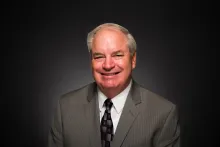
Robin Webber was born in Chicago, Illinois, in 1951, but has lived most of his life in California. He has been a part of the Church of God community since 1963. He attended Ambassador College in Pasadena from 1969-1973. He majored in theology and history.
Mr. Webber's interest remains in the study of history, socio-economics and literature. Over the years, he has offered his services to museums as a docent to share his enthusiasm and passions regarding these areas of expertise.
When time permits, he loves to go mountain biking on nearby ranch land and meet his wife as she hikes toward him.
