
Robin S Webber
This transcript was generated by AI and may contain errors. It is provided to assist those who may not be able to listen to the message.
Here we are, just a couple of Sabbaths, before the Feast of Weeks. And what I would like to do is, I would like to begin by reading a letter from a group that maybe you've never heard from before. Their name is the Jordan Management Consultant Firm. I don't believe you'll find them on Wilshire Boulevard. You won't find them down on Grand, and you probably will not find them over in Westwood Boulevard. In fact, probably you will not find them on the internet. But I'd like to share some professional advice that they gave to Jesus Christ. This is from this management company. It says, To Jesus, Son of Joseph, Woodcrafter, Carpenter, Shop, Nazareth, 25822. And it is from the Jordan Management Consultants from Jerusalem. And they begin the letter to Christ by saying, Dear Sir, thank you for submitting the resumes of the 12 men that you have picked for management positions in your new organization. All of them have now taken our battery of tests. We have not only run the results of these tests through our computer, but also arranged personal interviews for each of them with our psychologist and vocational aptitude consultant. The profiles of all tests are included, and you will want to study each of them very, very carefully. As part of our service and for your guidance, we make some general comments. Much as an auditor will include some general statements. This is given as a result of staff consultation and comes without any additional fee. It is the staff's opinion that most of your nominees are lacking in background, education, and vocational aptitude in the type of enterprise that you are undertaking. They do not have the team concept. We would recommend that you continue your search for persons of experience in managerial ability and proven capability. Allow us to tell you why. Simon Peter is emotionally unstable, and he is given two-fifths of temperament. Andrew has absolutely no qualities of leadership. The two brothers, James and John, the sons of Zebedee, place personal interest above company loyalty. Thomas demonstrates a questioning attitude that would tend to undermine morale. We feel it is our duty to tell you that Matthew has been blacklisted by the greater Jerusalem Better Business Bureau. James, son of Alphaeus and Thaddeus definitely have radical leanings, and both register very high on the manic depressive scale.
One of the candidates, however, shows great potential. He is a man of ability, of resourcefulness. He meets people well, has a keen business mind, and contacts in high places.
All of the other profiles are self-explanatory, and we wish you every success in your new venture. Jordan Management Consultants.
Interesting story. I heard a few laughs out there, but I hope to take this story and to, again, build upon the very fine foundation that Mr. Opichka laid in the first message. Not only what a Christian is, but also how our Father and his Christ are molding and shaping those Christians, shaping those firstfruits. Because what we find here from this notice from man is that those that Christ selected would be rejected. And yet, I beg you to remember that these were the very same individuals by name that Jesus prayed through through the night. He not only prayed about their selection, but then he chose them. He not only chose them, but he mentored them for three and a half years. And stay with me, please, if you would, because through all of this, then, yes, we read about their story in the Gospels, but at the very end of the book, in the book of Revelation, when that vision of the New Jerusalem is shown to John and thus shown to us, we find 12 names, etched into the foundation of the New Jerusalem forever, 11 of them plus the Apostle Matthias. Thus, the question actually arises. What happened between when they were chosen? Because some of these attributes, when we think about it, were humanly extant. What happened from the time that they were chosen to that picture and that mention of them as the 12 apostles of the Lamb in the book of Revelation? I can draw you to no other scripture than to Isaiah. Join me if you would. Let's go to the book of Isaiah, and let's pick up the thought if we could in chapter 55. In Isaiah 55, it begins to give us the key of what God has not only done with those 12 in the past, but what and why and how He is dealing with the firstfruits of this day and this age. Notice Isaiah 55 and verse 8, for my thoughts are not your thoughts, nor are your ways my ways, says the Eternal. For as the heavens are higher than the earth, so are my ways higher than your ways, and my thoughts than your thoughts. God does not think like man. That's very important to understand. In fact, the whole book that we were just told is so important to read and obey and hear from is the opposite of what man would put in front of us today. God's ways are not our ways, especially when it comes to the here and the now of how He is choosing His family. The Jordan Management Company, the story that I mentioned to you, which to a degree is fictitious, but it does bring home a point, and also a gentleman that was in business science named Lawrence J. Peter, they do have something in common. Some of us that are a tad older, might remember back in the 70s and even into the 80s, that the Peter Principle was often talked about when it comes to business management and probably still is in some schools of thought. The Peter, stay with me, please, the Peter Principle is a concept in management theory formulated by, yes, Mr. Peter, in which the selection of a candidate for a position is based upon the candidate's performance in their current role, rather than on abilities relevant to the intended role. Are you with me so far? Thus, employees only stop being promoted, in theory, once they can no longer perform effectively as managers, because they rise to their level of, and some of you can probably fit in the word, they rise to their level of incompetence. And that's basically what the Jordan Management was saying here. You don't, Jesus of Nazareth, you don't want to even think about this. You don't want to even go there. These guys are going to basically evaporate before too much longer. Thinking about resumes and thinking about abilities, join me now in Matthew 10, as we build towards what we're going to talk about in Matthew 10.
Because this is going to build upon where Ward left off. Matthew 10, verse 2. Looking over this audience, I realize that we have professional people. We have department heads, we have operation managers, we have faculty, department heads of colleges, etc., etc. And how often when you are selecting somebody, does a resume come before you that you scan and carefully look at to see if these individuals are qualified. Let's look at Matthew 10 and see what is said here. In verse 1, and when he had called his twelve disciples to him, he gave them power over unclean spirits to cast them out and to heal all kinds of sickness and all kinds of disease. One thing about Jesus and his management style, he gave incredible opportunity. He also gave, at the same time, responsibility. And there would be an accountability to come back to him to share about who and what they had done. But then, what is so fascinating that I want to draw your attention to is verse 2. Here come the resumes. Here come the credentials. Here comes the schooling. Here's why anybody would want to hire these individuals. Now, the names of the twelve apostles are these. First, Simon, who is called Peter, Andrew, his brother, James, the son of Zebedee, and John, his brother, Philip, Bartholomew, Thomas, Matthew, the tax collector, James, the son of Alphaeus, and Labias, whose surname was Thaddeus, Simon, the Canaanite, and Judas Iscariot, who also betrayed him. These were the gentlemen that he would choose. He prayed about it. He selected them. He would mentor them. Did you notice the extensive resumes that are here? Just how they pour all over the Scripture? A, B, C, D, E. What was Jesus Christ doing at that time? And what is he doing in this day and in this age as he continues to call firstfruits? No resumes. Thus the big question comes, so why did God call folks like the disciples that didn't have a resume and or folks like you and me that with the world around us do not have the resume? What is God doing here below? Join me if you would in 1 Corinthians 1. In 1 Corinthians 1 and verse 26, we find what God is doing. And it's not that his thinking is not just our thinking, but he has a purpose that is above our thinking. In 1 Corinthians 1, and let's pick up the thought if we could in verse 27, but God has chosen the foolish things of the world to put to shame the wise, and God has chosen the weak things of the world to put to shame the things that are mighty.
Those that basically the world has looked past, some there knows at, won't even give a passing glance, and the base things of the world, and the things which are despised, God has chosen, and the things which are not to bring to nothing the things that are. Okay, that's a lot of words, but where is it all leading? That no flesh, no flesh, should glory in his presence. No flesh should glory in his presence. What makes a Christian, not only what a Christian is, but what makes a Christian and continues him on the journey of faith, the path of pilgrimage, and heeding the invitation of Jesus to follow me is simply this. It's not where they have been. It is not who they are. It's not their story. It is not about them. Jesus chose these original disciples that in time that they would understand that his story had to be bigger than their story. The life special, the one that was filled with this spirit that came to earth, that stayed on him and was with him and was laid upon him, as it says in the book of Isaiah, and that did not depart. That they had come against a holy one. They had entered space that no human being had ever entered. And now that that story, the story of God, the story of Christ in us, had to be greater than their story. Interesting. Why do I speak to this and why do I offer this introduction? Today I'd like to place before you, then, especially as the Feast of Weeks, the Feast of First Fruits. In the Greek we call it Pentecost, because it directly affects us as followers of Jesus Christ. We who are the first fruits of God, as the Apostle Paul mentions in Romans 823, the term, the first fruits of the Spirit that Paul uses in Romans 823, enables us to understand what God is doing in this process of bringing many, many, many sons to glory.
The one thing I want to share with you is we're going to go through this message of simply this. Being a first fruit is not just simply a singular event. It is an experience. It is an experience that continues all through our life as God shapes, as God molds us. Today's message is simply entitled this, the Peter Principle versus God's first fruits. We're going to come to see that what is it that enables God to disable the Peter Principle when it comes to selecting and molding and enabling the first fruits that are so beloved to him. Interesting. And we're going to find again that God's ways are not our ways, even as first fruits that we have to understand the molding process because the way that we would do it and the way that God does it are completely different. But that's why he is God. Before we go any further, I'd like to anchor you into three incredible promises that Jesus Christ gave to his disciples then and now. It's always very important to anchor ourselves in the Church of God with what comes out of the Scripture. The word of God is word mentioned. I'd like to just share these three because this will make the difference. I'm going to share three right now. At the end of this message, I'm going to add a fourth one. But it's going to be very important for you to know these three promises. They're like signposts on the journey. They are like a GPS for us on this pilgrimage towards the kingdom. The first one is simply in John 14, 18. I'm just going to mention very quickly, but it's going to help you kind of see the framework that I want to share with you today. John 14, 18. I will not leave you orphans.
I will come to you. That's not only what we read, the word of God. It's what we are to come to believe from the word of God as we go through life's experiences. Number two, John 10, 29. Nothing, this is Jesus speaking, nothing shall snatch them out of my Father's hand. These are promises that are directly related to each and every one of us here today. They're a promise of the covenant that I'll be speaking about next week to you about the new covenant and what that means. Number three, Matthew 28, verse 20. And lo, I am with you always, always I am with you even to the end. So three promises, three anchors for us now to move forward. Now, who better to discuss the Peter principle about other than the Apostle Peter? Because the Apostle Peter humanly would qualify so good and so well with what Dr. Peter said 40 or 50 years ago. What I want to do is draw our attention to Luke 5 to begin with. Let's go to Luke 5. This is, you might say this was Peter's job interview. The first full discussion that we find that he has with Jesus of Nazareth. And Luke 5, and we're going to kind of find Peter's tool of the trades, as we say, and his are not too different than ours in our toolkit of human nature. Instead of a screwdriver, pliers, and a hammer, it's just simply this. Ifs, ands, and buts. And we come here to Luke 5, Luke 5, and we pick up the thought in verse 1, and it says simply this.
So it was as the multitude pressed upon him to hear the word of God that he stood by the lake of Jenezure and or Sea of Galilee, and he saw two boats standing by the lake, but the fishermen had gone from them and were washing their nets. This was probably earlier in the morning because the fishermen went out at nighttime, or very, very early morning while it was dark, to do the fishing. They had come in, and they were basically cleaning up the shop, as it were, and putting everything away. Then he got into one of the boats, which was Simon's, and asked her to put out a little from the land. And he sat down, he taught the multitudes from the boat, because voices carry over waters, and that was the microphone of that day and that age. And when he had stopped speaking, when he had stopped speaking, and it's very interesting that sermons are sermons, messages are messages, and then that's where the real homework comes in. What are you going to do with that? And when he had stopped speaking, he said to Simon, launch out into the deep and lift down your nets for a catch.
But, first introduction, first introduction, you've made it to be mentioned in the Bible. And what's the first word that is the front porch of your existence? But Simon answered and said to him, master, we've toiled all night and caught nothing. Nevertheless, at your word, I will let down the net. And when they had done this, they caught a great number of fish, and their net was breaking. So they signaled to their partners and other boats to come and help them. And they came, and they filled both the boats, so that they began to sink. This is one of those humorous moments in Scripture. You can actually almost see the smile on Jesus' face, that here they'd been all night, had not captured any fish. He tells them to go out. He tells them where to throw the net. And so many fish are coming on, that more boats are coming, and everybody's sinking all together. If you're sinking, it's always good to sink together. And when Peter saw it, he fell down at Jesus' knees, saying, Depart from me, for I am a sinful man, O Lord. For he and all who were with him were astonished at the catch of fish which they had taken. And so also were James and John, the son of Zebedee, who were partners with Simon. And Jesus said to Simon, Do not be afraid, from now on you will catch men. So when they had brought their boats to land, they forsook all, all, and they followed him. What do we learn from this escape for a moment? Allow me a little bit to fill in the blanks, as perhaps you're filling in your own blanks.
Here were men that all their life had caught fish on the Galilee. They came, they came home dry, they came home empty, their nets were not full.
Jesus got out on a boat, gave a message, just like I might give a message here to all of you today along with Ward. But then, really, that's just the beginning of God dealing with us in real human life. And it is interesting that there was a hesitation by Peter, but then he did put down the net. The boats began to sink. And what happened was, and it's a very human thing, that Peter began to feel distance from Jesus. He began to feel like, what am I, what am I even doing on the same boat with him? This is awful. He just kind of wanted to melt, kind of wanted to disappear. And where Peter, in his human mind, saw distance, it was the beginning of Jesus working with the first fruit, beginning to mold and to shape him, beginning to show that, apart from him, he could do nothing. But as Peter did his little and did that which was human, that the Christ would do what man could not do, and that a partnership was beginning. Very interesting.
At the end, even with that distance and even with that embarrassment, how did Christ look at this? I ask you. What he saw at the end is that Peter, along with the others, forsook all, forsook all, and began to follow him. What did we learn from this, friends, as we move towards Pentecost, as we move towards an anticipation? Because the very festival of Pentecost is all about anticipation. It's a great countdown, isn't it? Remember when we were kids, 10, 9, 8, we'd have the little toy rocket go up or try to go up at least and fizzle? The bigger ones in Cape Canaveral did go up. But Pentecost is about anticipation. 50, 49, 48. And we'll talk about that a little bit later towards the end of the message. But the one thing that we learn here is that, and I share this thought with you, is that Peter not only surrendered, are you with me? Not only surrendered his boat, but he began to surrender his life. That's what makes a Christian. You begin to understand that it's not about you, it's not about me. It's not my story, it is God's story that is being written in my hearts and my mind through the covenant that God has allowed you and me to participate in. And thus, the first step, the first bloom of a first fruit, and we think of being in Southern California with all the orchards, the first bloom of when you begin to see the fruit develop, the first bloom is simply this, allow me to share it with you. It is called surrender. We see that Peter begins to surrender.
Before I was born, lest you think I look older than I am, World War II was before I was born. You're supposed to not at this point agree with me that I was born after World War II, okay?
World War II, though, was the last time that we have what is called unconditional surrender. It occurred during World War I, and then it occurred also during World War II, that in 1945 both the German Reich and the Japanese Empire completely surrendered There were no ifs, there were no ands, there were no buts, there were no list of negotiation. Well, if you do this, then I'll do that. If you do this, I'll do that. If you put in one, I'll put in two. No. Their energy, their power, their thoughts of what they would do, that the German Reich might last a thousand years, was finished, and they unconditionally surrendered to the Allies.
That's a very foreign, two foreign thoughts today in our modern world, our number one, World War, and what that means to an entire globe, and number two, unconditional surrender. But I bring it to your point of thought, because I remember hearing this as a young teenager, as I was growing up in the Church of God, because it was still on the minds of many men that had been in that experience.
And that is exactly what we need to be doing as Christians. Not only reading the Word, but when we read the Word of God, the Word of life, in turn, we unconditionally surrender. And that great story, the story of the Father, and the story of the Son, begins to shape and to mold our story that begins to evaporate in turn. Matthew 14, 22. As you're all turning there to Matthew 14, 22, I just have a question as we're coming up to Pentecost.
Simply this, some of us have been in this way on the pilgrimage, on the journey, for 45, 50, 55 years. Has the thought of unconditional surrender to the mighty hand of God and the loving hand of God as you create situations for us to learn from just like Peter, and rather than seeing the distance of where we are versus where he is, have we somehow in our quote-unquote longness in the way forgotten what it means to unconditionally surrender when we come and we bump up to the heart of Christ that is mentioned in the scripture and say if that's where he is and that's if that's what he is like, I'm going to stop negotiating.
I'm going to stop looking at the distance as Peter felt between he and me, but I'm going to forsake all of my good thoughts, all of my good plans, and my story, and I will forsake all and give myself to God the Father and Jesus Christ. We have eight days to think about that as we anticipate Pentecost. Matthew 14, 22, another story. Immediately Jesus made his disciples get into the boat and go before him to the other side while he sent the multitudes away, and when he had sent the multitudes away, he went up on the mountain by himself to pray. Now, when evening came, he was alone there, but the boat was now in the middle of the sea, speaking of the Sea of Galilee.
The disciples are out there, tossed by the waves, for the wind was contrary, and there are actual geographical reasons why storms do come up so quickly in the Sea of Galilee. Now, in the fourth watch of the night, Jesus went to them, walking on the sea, and when the disciples saw him walking on the sea, they were troubled, saying, well, it's a ghost, and they cried out for fear.
But immediately Jesus spoke to them, saying, be of good cheer. It is I. Don't be afraid. And Peter answered him, said, well, Lord, if it is you, I want you to put yourself in this. Can you imagine yourself? You're in a boat, you're standing up, and you're talking to somebody in front of you that's on water. You just have to kind of get real with these scriptures for a moment. And Peter answered him, said, Lord, if it's you, command me to come to you on the water. And so he said, come. And when Peter had come down out of the boat, he walked on the water to go to Jesus.
Have you ever thought this one through for a moment? We just kind of read over it. This is the PowerPoint. This is the film here for a moment. When Jesus said, come, what did Peter have to do? Think it through. Over the boat, not just one foot, because that's cheating. You're still not walking on water. Then he had to go like this over here. Then what have I done? Not sinking yet. And then he had to start walking towards Jesus. Kept his eyes on Christ. But then you know what happened?
He took his eyes off of Christ and he petered out. That's where the phrase comes from. He petered out. He literally had what we might call that sinking feeling. But there's a reason why this is so very important to grasp when it comes to the shaping and the molding of firstfruits. I know that some of us, as we came into this way of life, we did unconditionally surrender and we gave up so much behind. We gave up religious cultures. We gave up religious cultures. We gave up cultural cultures that we'd come from, that our families had lived in for years, regions of this earth, regions of this country.
We gave up family ways because we did want that God's story in Christ would be bigger than our story. And that's where we started. But here's the lesson when it comes to firstfruits and the development thereof. We're going to be on deep water more than once. Jesus began his lesson with the disciples on water.
He continued on water with his disciples, with Peter. God will continue in our life, in our life as a covenant people, to develop his greatest lessons for us yet to yield to him and to grow in the stature of Christ in deep water. Not where we can touch the bottom. Have you ever been in a swimming pool? Gone to a hotel, gone to a motel, and you get in the pool, it's been hot, you get down there, and you know, you kind of really feel good. You kind of bounce up and down, you know, you can kind of feel, oh there it is, I feel it, it's there, that's good. No sweat, as we say. But it's when we're in deep water that we cannot touch, when we do not have all of the answers, when it's not about us, but we're going to have to lean on God to help us. That is the great molding that continues in the pathway of the first fruit until we die. Until we die. It's not just follow me at the beginning, but till the day we die, that Jesus Christ is going to ask us at times to be in deep water and to trust on Him, to trust in Him. I just cannot wait so much. Can I share? I cannot wait until we have that great video when we're resurrected and we can see all these scenes in the past because we so often think of Peter sinking, oh I'm drowning, you know, going down, and he's thinking, how often do we reflect the arm of Christ reaching down and holding on to Peter, bringing him back up, and restoring him?
And that's exactly what God and Christ want to do with us.
They will, at times, allow us to sink based upon our decisions. God will always honor and respect decisions. He may not agree with them, but that's he's given us free moral agency, and he will allow us to continue to sink at times because our ways are not his ways. We will take our eyes off of God, but he is always, always, always there to restore us, and I have a wonderful story to tell you at the end of this message. What we do recognize is that the most important step, the most important step, was not when he sank. We often think of his last step in the water. The first step was just getting out of the boat. Getting out of the boat.
He got out of the boat while everybody else was watching. And that's another thing that we learn about being a first fruit and being molded and shaped. It's simply this, first fruits go first.
That's what a first fruit is. That's why we, guess what? That's why we call it a first fruit. It's a first fruit. It's the first to face the heat. It's the first to face the cold. It's the first to face the birds picking away at it. It's the first, do I dare mention, the first to be covered by bugs and hope it survives. But we're not alone. Because we have that great gift that came in 31 A.D. to the body of Christ. Matthew 16, 13.
Matthew 16, 13.
Join me there, please.
Unique story. When Jesus came into the region of Caesarea, he asked his disciples, saying, who do you say that I am? And finally, through this discussion, because everybody was saying he was this or that, Peter nailed it. He said, he said simply this, you in verse 16, you are the Christ, you are the Son of the living God. And Jesus answered and said, blessed are you, Simon, Barjona, for flesh and blood has not revealed this to you. And so at this point, you see, Peter, and it's not a lesson about what he didn't do right, but what he nailed through the revelation of God. You are the Christ. That's really neat. So at this point, it might go like this. Peter one, score. But then as we go down later, right after this, in this sequence, verse 20, then he commanded his disciples that they should tell no one that he was Jesus the Christ. From that time, Jesus began to show his disciples that he must go to Jerusalem and suffer many things from the elders and the chief priests and the scribes and be killed and be raised on the third day. Then notice verse 22, showstopper. Here goes Peter again, showing that our ways are not God's way apart from him. Then Peter took him aside and began to rebuke him, saying, far be it from you, Lord, this is not going to happen to you. But he turned and said to Peter, get behind me, Satan, you are an offense to me, for you are not only mindful of the things of God, but you are mindful of the things of men. What's going on here?
Peter's day can kind of be like our day, all in 24 hours, or maybe sometimes in an hour. One moment we're hot for God, and the next moment we're off target. Here Peter is saying, you are the Christ, you are the anointing, you are Messiah, and no, you can't do that. You are, but you can't.
I want you to think that through for a moment. Okay, I'm watching your eyes. I believe, but I don't believe that you can do this. I am your servant. I am being molded by you, but I don't want to be molded this way.
You know why God spends so much time in the Gospels about Peter? Because he's us. He's us apart from the Spirit of God.
Each and every one of us have that Peter down inside of us.
But you know what, in spite of all of that, God looks at us, not like man looks at us. Sometimes people, maybe the other disciples, would say, failure. There goes Peter again. Oh boy, what's he going to do this time? But the one thing I want to share with you, and a thought as we go to Pentecost, is simply this. Despite all of Peter's issues and problems, there was something that was overriding in God's heart towards Peter. Couldn't get enough of him. And that is simply this. Wherever Christ was, Peter wanted to be there. If Christ was on water, he wanted to go to him.
Later on, we're going to find another story. If Christ is on shore, we want to go to him. If Christ is in the courtyard, if Christ is in the courtyard on that night of his betrayal, even after Peter, stay with me, even after Peter denies him, he still is one of the two that are mentioned in that courtyard. Join me if you would for a moment in Matthew 26. In Matthew 26.
And we pick up this story in Matthew 26, verse 33.
But after I've been raised, I will go before you to Galilee. Peter answered and said to him, even if all are made to stumble because of you, I will never be made to stumble.
And Jesus said to him, Surely I say to you that this night, before the rooster crows, you will deny me three times.
Peter said to him, Even if I have to die with you, I will not deny you. Death will become before denial. And so said all the disciples. But you notice there's no more verbiage from Jesus. He didn't change it. He said, This is going to go so quickly, Peter. You're not going to believe it.
You see roosters, having had roosters for about 26 years, they do not crow at 6 in the morning. They do not crow at 6 30 in the morning. Oh, they do crow, but that's not when they begin. A rooster that is not boxed or put up will normally start crawling about 4 o'clock in the morning.
And the early bird rooster will crow a little bit before that. How do I know that? Because of the experience when I forgot to box my rooster.
That's how clicky it was going to be.
A lesson for all of us as we come to Pentecost and we anticipate and we consider where we are as first fruits. The one thing that we don't want to do as a first fruit is simply this, never say never. Oh, that happens to everybody else. That's everybody else's issue.
I will never do that. No, no, no, not me. Allow me to say something to each and every one of you. Never say never. Some of you have probably done that and been burnt by it for one reason or another. Never say never. One thing about a first fruit is simply to recognize this. One thing that will destroy a first fruit of God quicker than anything else is the carnal worm of pride. Have you ever been to a store, ladies, and you say, oh, worms got into this? You look at the apples and you say that the worms got into the apple. No, no, no, no. The worms didn't get into the apple. The worms are, those worms are laid early on in the spring during the blossom season. The worms work themselves from the inside out, not from the outside in. And the handle that fits every sin to one degree or another is the handle of pride. It is the original sin. It is the original sin. And we need to be wary of that. We know that Peter went down. That's why I have to pick up the story in John. Join me if you would in John now. John, as you go to John, just allow me to share something. You can jot down Luke, Luke 22, 31. I'll just paraphrase it. Because Luke inserts a little bit that Matthew does not share on that evening when Peter says, no, no, no, everybody will deny you but me. And can you imagine Jesus looking at you individually, eyeball to eyeball, and saying, you're going down. You don't understand this. You are going to fall. You are going down. But when you return, when you return, you feed my sheep. You strengthen my people. You see, Jesus, that's what makes some God in the flesh, knew what the future was going to rot. And he told Peter that Satan is going to come after him and going to cut through him just like we. But that did not deter Jesus because he had prayed all night for this disciple, this special one, to be with him. And had worked with him on deep water, had worked with him through his pride, had worked with him through his arrogance, that he was going to take his spot and tell him what to do, whether he could die or not. Because up to that point, Peter did not recognize how important sacrifice is to a first fruit.
Jesus was going to stand by him. But now comes the lesson. They're on the lake again. They're back where it all began. They're back where it all started, where the journey began, where the fellowship of the Spirit began, where he said, follow me. But Jesus had to, one more time, be oh so careful and know that he knew that this first fruit, this man that was going to be a very dominant force in the early church, truly understood his role. And the ultimate molding would be here. And we find this story that is spoken here in verse 15. So when they had eaten breakfast, Jesus said to Simon Peter, Simon, son of Jonah, do you love me more than these?
He's beginning to taunt, lovingly, precisely, surgically, the man that had basically said, I will love you more than everybody else. Do you love me more than these?
And he said to him, yes, Lord, you know that I love you. And he said, feed my lambs.
Jesus used the term in the Greek, he would be speaking Aramaic, but has been translated into the Greek, of agape. Outflowing, outgoing, godly concern. Peter answers back with simply, you know that I love you. But he does not use agape, he uses filia. You know, you know that I'm with you. I have this affection. Even at that level, stay with me, please, even at that level, Jesus gives Peter a chore. He gives them a job.
He says simply this, feed my sheep, excuse me, feed my lambs. Verse 16, he said to him again a second time, Simon, son of Jonah, do you love me? Again, using agape. And he said to him, yes, Lord, Peter answering, you know, you know that I love you. And he said to him, tend my sheep.
Now Peter knows what is being laid. And he knows, and knows that he knows, that there's no running away. No running away. He must confront this final answer. And he said to them a third time, Simon, son of Jonah, do you even just simply have any affection for me?
He does not use the word agape. He uses the word filia. He says, do you even like me? Not the values of the kingdom, not my teachings, but me as a person. One that you can follow.
Do you even like me?
Peter, who is always so glib, always the first guy with the answer, the life of the party, is stunned into silence. He can say nothing. Then finally he says to him, Lord, Lord, you know all things. It's no longer my story.
It's no longer my story. I'm going to throw my resume out the door. For indeed, it says here that you know all things. You know all things. Just as Job would say in chapter 42 of Job, God, there are just some things that are above me that I do not completely understand. And it is at that point. There's no Job 43.
God uses Job actually to minister to all of his friends that had all the ideas.
It is only when we throw out our story, it's only when we throw out our good answers, it's only when we stop thinking as man would think, when God thinks a different way, and that we can be used and feed my sheep.
One thing that Jesus always did through all the Gospels, and I'm always fascinated when you read his miracle stories, or he's calling somebody to him, he would always give a disciple a job. It's interesting. The job would vary depending upon the timing of his ministry and depending upon the disciples. Sometimes when he healed somebody, he said, go and tell.
But that's where he was then. Another time he might heal somebody and says, don't tell anybody. So that means you have to be really careful in listening to Jesus because the mission can change from person to person. But he always gave somebody a job. When that man came down through the roof to be healed, lowered by his friends, he gave that man a job. The man that had to be lowered on the mattress, he said, take your mattress and go. He gave him a job.
Firstfruits are not on the easy seat. They're always going to be given a job. They're always going to be given a task. We heard a little bit of that today through Mr. Opichka's message. Our job is to read the Word of God. Our job as firstfruits is to revere and respect from where that Word comes from and change our lives. Faith comes by hearing and hearing by the Word of God. And the Word of God is like a sword. It's a discerner of the Spirit, and it goes deep and deeper than deep water. That we might surrender ourselves selflessly to the one that has chosen you to be here today. You're here for a purpose.
Oftentimes, I think as Christians, we think that by having the Spirit, the Spirit is always going to lead us into green pastures. It's going to lead us by still waters. I love the green pastures. I love the still waters. But Psalm 23 goes a little bit longer, doesn't it?
And I want you to think about this, that Jesus, the Christ, is the first of the firstfruits. That's his title. That's one of his titles. And yet that Spirit that we hold so near and dear that is given to us at baptism. Remember what it happened in Matthew 4 and verse 1.
That that Spirit led Jesus into the wilderness. Have you ever noticed that? It didn't lead him out of the wilderness. It led him into the wilderness to reveal his heart. That even as the Son of Man, having been the Word, having been uncreated, yet in that wilderness, it was not his story alone, but directed his attention and directed Satan, the adversary's attention, to the God that was above both of them. When we are distanced from God, understand that it is just the beginning of the return. This book is the book of return.
Sometimes it's called the book of the law. Sometimes it's called the gospel. Sometimes first part's called the Torah. The one thing that I understand through reading this book is that it is about return, that God is always ready to make up that distance with his incredible, unbelievable love for you and for me. And that leads me then to the final promise that God gave to us through Christ. Join me if you would in John 14. I'm going to go real quickly here, John 14. Notice what it says. Verse 18, I will not leave you orphans, I will come to you a little while longer and the world will see me no more, but you will see me because I live, and you will live also. And at that day you will know that I am in the Father and you in me and I in you. On the night of his betrayal, Christ gave an incredible promise on the other side that I will come to you. I'm not going away. I'll be away for three days, but I'm not going away, because he says here in verse 16, and I will pray to the Father and he will give you another helper that he may abide with you forever. The Spirit of truth whom the world cannot receive, because it neither sees him nor knows him, but you know him, for he dwells with you and will be in you.
Now, why did all this happen to Peter? Join me if you would in Acts 2 and we'll conclude. In Acts 2.
Famous story of Pentecost. I'm not going to touch upon, I think Mr. Garnet's going to touch on it next week, but I'm just going to pop in here real quickly. Here is Peter, no longer running, but he's standing on stage with the other 11 men. He's no longer running away. He's no longer sinking in deep water, because God and Christ have been shaping and molding him in this wilderness experience of sinking. But the sinking was only to get his attention, and that he might be used forever. Now, here are these men in Jerusalem, and they have this sinking feeling themselves, because Peter is witnessing to them about the Christ. And therefore, let the whole house of Israel, in verse 36, know assuredly that Christ has made this Jesus, whom you crucified, both Lord and Christ. Now when they heard this, they were cut to the heart, and said to Peter and the rest of the apostles, men and brethren, what shall we do? They thought it was over, and they didn't have any more human answers. They felt horrible. What have we done? We have killed Messiah.
We've killed God in the flesh. There is no hope. Verse 38, Then Peter said to them, Repent, and let every one of you be baptized in the name of Jesus Christ, for the remission of sins, and you shall receive the gift of the Holy Spirit.
This first fruit had been worked through all these different chapters of the Gospel to come to this point. Stay with me. Why was the message of Peter so effective that day? Was it because he quoted the Old Testament, which is all they had back then, it was the Old Testament, okay, which led people to salvation? Was it just because he quoted all the right scriptures? Was it simply because he stood in front of everybody? No. Peter had come to see that of and by himself, the nets that he were casting on the lake would go empty. The steps that he would take on the water would sink, and the one that he loved the most, he would not be there when he needed the most in the garden of Gethsemane and in the courtyard. And yet through all of that, and yet through all of that, Jesus said that when you return, feed my sheep. But he was a different man now. What allowed Peter to galvanize what occurred at Pentecost was not just simply what he said, but literally the aroma, literally the feel, literally what emanated from his being, in his passion, and doing to others what Christ had done to him to give him a job. What allowed Peter to be effective was he spoke as one man dead, dead man walking, restored by his friend and by his master, pulled out of the drink, pulled out of the verbal tilt of, do you love me? Do you not love me? Et cetera, et cetera. And he spoke as a dying man to dying men. And they knew that there was the real deal. And that's what God is doing with all of us right now through the challenges and the trials. He's not done with any of us. He's not done with me. And all of these things that we are going through are for a greater and a grander purpose that moves beyond the moment, moves beyond our despair, that God says, I will never leave you nor forsake you.
We come up to Pentecost seven, eight days away. Countdown is underway right now. Will you please consider the message that Ward and I have shared today with you as to what a Christian, as to what a first fruit is and how our loving Father and His beloved Christ, the Lord of our life, the Head of the Church, the Head of the body, is working with us just as intimately, just as sensitively as He did with this first fruit of 2,000 years ago. So I just encourage you, just like that message I mentioned earlier, remember when Jesus was on the boat and speaking?
And then the real homework came in after the sermon over the water. He said, now Peter, I want you to do something that you've never done before.
What will God ask you to do this coming Monday, Tuesday, and Wednesday that you've never done before and that you will do because He's given you a job to surrender, to know, to love, and always recognize that we serve and we live before the author of the return.
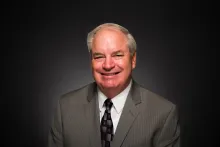
Robin Webber was born in Chicago, Illinois, in 1951, but has lived most of his life in California. He has been a part of the Church of God community since 1963. He attended Ambassador College in Pasadena from 1969-1973. He majored in theology and history.
Mr. Webber's interest remains in the study of history, socio-economics and literature. Over the years, he has offered his services to museums as a docent to share his enthusiasm and passions regarding these areas of expertise.
When time permits, he loves to go mountain biking on nearby ranch land and meet his wife as she hikes toward him.
