
David Dobson
This transcript was generated by AI and may contain errors. It is provided to assist those who may not be able to listen to the message.
Brother, I have used the Preacher's Outline and Sermon Bible commentary for the sermon today.
There are a lot of things that divide us as human beings. There's the in-group, and there's the out-group. Over the years, you probably know which one you fit in.
There's the haves, there's the have-nots, there's the cleeks of groups of people that some want to be a part of and others won't let them be a part of. There are differences determined by race, by skin color, by nationality, by money, by background, by education, by religion, by sex, by ability.
You name it, human beings are very good at dividing themselves, at categories in one another. But Jesus Christ came to break down barriers. He came to break down barriers and divided one human being from another human being. And we've got a book in the Bible that is a case study intact. It's a case study in diplomacy. It's a case study in how we can break barriers down between one another. Now, explicitly, the book deals with Christians. But as we go through this book today, and it's a very small little book in the New Testament, you probably know which one I'm talking about.
As we go through the book today, we're going to see a number of principles that all of us can use in our daily life. You might have somebody not in a church, it might be an employer, it might be a next-door neighbor, it might be a family member, it might be any number of people that you want barriers broken down between you and that individual or individuals. And this book will help us do just that. The book I'm talking about is the book of Philemon.
So let's turn over there. It's right just before the book of Hebrews. In my Bible, it's one page, just one simple page. And you know, it's interesting, I was telling Mary prior to eating dinner last night, I finished my notes. Normally, my notes go about six pages. My notes for this is 10 pages. I've got almost as many notes as there are scriptures here in the thing.
But 25 verses, but I got 10 pages of notes. There's a lot here in this book. And we're going to wade through this, and hopefully you will come to a better understanding of what's happening here, but also learn some principles that we can use in our daily lives. So we want to go through the book of Philemon. Let me give you a little bit of a background about the book. The very first word tells you who the author is, the Apostle Paul. Paul is the writer of this book. He probably wrote this book at the same time he wrote the book of Colossians. The setting was probably late 50s, early 60s AD. Paul's in jail.
Paul's in prison in Rome. So he's writing this book about the same time the other prison epistles were written. Philemon, Colossians, Ephesians. He's a prisoner, and that's going to have a bearing upon what he writes to Philemon. The audience is Philemon. Philemon is a well-to-do slave owner. A well-to-do slave owner. And, of course, the audience is not only Philemon, it's the church that meets in his home.
Now, as I was remarking earlier to the Ann Arbor congregation, Mafilemon was a fairly substantial man. Maybe he had a fairly substantial house. He had at least one slave, Onesimus, because this is what the book is about. The relationship between a runaway slave, Onesimus, and the slave owner, a Christian, well-loved, whose name was Philemon. Now, because Philemon was a man of means, maybe he had many slaves. Because he was a man of means, he might have had a big house. The church might have been a relatively good-sized church.
On the other hand, we realize, going a little aside here, that many of the churches in the New Testament times met in people's homes. People in general weren't wealthy in those days. And so it gives us an idea about the size of many of the churches.
You know, we think our Detroit church or our Windsor church are just small little churches. Well, compared to some of the big cathedrals of the world, yes. But when we take a look at Christ's little flock, and that's what Christ called his church a little flock, that met in modest people's homes, this church might have been very large by comparison to a lot of New Testament churches. So the setting is that we were looking at Philemon, a slave owner.
The audience is the church in his home. Now, the purpose for the writing of the book, the slave, Onesimus, has run away from Philemon. He makes his way to Rome.
Somehow he meets the Apostle Paul. He's converted. Paul can use him, even though Paul's in jail, Paul can use him as a courier. The man was very beloved by the Apostle Paul. This message is very much loved by the Apostle Paul. Paul can use him in any number of ways to bring messages back and forth between the local people in the church in Colossae, to encourage Paul there in prison, and so forth. So that's why Paul is writing this book. Now, there's three major themes running through these 25 verses. And when we take a look at the themes, brethren, these themes help us to appreciate the kinds of things, the kinds of principles you and I can employ if we want to break down barriers between us and other people. Between us and other people. The three major aspects of this book are, number one, respect. Respect. Number two, the challenge. And number three, forgiveness.
Paul begins by showing Philemon a great deal of respect. You know, if you want to try to win somebody over in a positive way to Christian principles, and this is what Paul is wanting to do. He's appealing to Philemon's Christian principles, his conversion. Because obviously, Philemon was hurt financially by his runaway slave. And we'll get into some other ways. You know, he probably had some anger issues because of his runaway slave, and there were other things.
And so you have respect that is needed first. And then we've got to look at the barrier. What's the barrier? What's the challenge? And then lastly, forgiveness. Now, let me say a word about slavery in the Bible. This is not God's world. This is Satan's world. Jesus Christ did not come and establish a church to do away with slavery. And back in these days, you not only had black folks that were slaves, you had white folks that were slaves. You had people all over the world of every every race that were slaves. Jesus Christ did not come to stop slavery. Jesus Christ did not come to liberate Israel from the Romans. There's a lot of things that Christ did not come to do when he came.
And so I just want to make that point. The Bible here is nowhere trying to say that slavery is a good thing. Slavery is a very bad thing. And it's going to be certainly outlawed in the world tomorrow. There are forms of slavery today. Again, we're not going to get into all that, but I just want to make that point. The slavery has affected every race, virtually every peoples. It's been in every country. Of course, our country paid a dear price. Many of our people of color have paid a very dear price because of what took place to their families back in the past. And our nation paid a price with a bloody civil war, which was the bloodiest war we ever fought. God spanked us real good for our practice of slavery. Spanked us very, very good. And we deserved all of that spanking.
Okay, enough of that. Let's get into the book now. The first three verses of the book deal with...
it's an introduction. Then you go verses 4 through 9.
4 through 9. And verses 21 through 25 that deals with respect. Okay, if you want to take this down. Verses 4 through 9. Verses 21 through 25 with respect. The book basically starts and ends with the idea of respect. If you're going to deal with somebody and you want to win them over to Christian principles, they have to know you respect them. Now it doesn't mean, and I may mention this over in Ann Arbor, it doesn't mean that you respect everything the person does and everything the person is. You may be at work and your boss may be a total rascal.
But maybe your boss really works hard and you can respect that aspect of your boss. And you can have common ground with that aspect of your boss and discuss things along those lines.
So respect is a key issue. The challenge, if we're going to be taking notes, will be verses 10 through 16.
The challenge here, the very big challenge, is the issue of slavery.
And then the book toward the end gives this discussion about forgiveness. That's verses 17 through 21. Verses 17 through 21. Okay, having said all that, let's get it to the book.
Paul, a prisoner of Christ Jesus, and Timothy, our brother, to Philemon, our beloved friend and fellow laborer, to the beloved Aphea, our kippus, our fellow soldier, and to the church in your house.
Now here we see Paul, and it's an interesting introduction. So many times the Apostle Paul starts by talking about his apostleship. He starts by talking about how God has called him to this particular calling. Paul is so close to Philemon. He doesn't feel a need for any of that. This is a personal, intimate letter. A personal, intimate letter between two brothers in the faith.
And as we're going to see, this is a master stroke. This is a masterpiece of tact and diplomacy.
How strong are you in tact? How strong are you in diplomacy? This book helps guide us along those lines. And it's inspired by God. We realize that every word Christ came and said, you know, I've given them the words you've given me. Every word, whether it be from Genesis to Revelation, is inspired by God that's in the scriptures and in a place just the way God wants them to be placed. So there's a great deal of meat in this tiny little book. Paul, a prisoner of Jesus Christ. So we see here, right at the very beginning, Paul starts talking about the fact that he can't come and go as he please. He's a prisoner in Rome. And there's a reason Paul brings this message out to the people there in Colossae. He wants the people in Colossae to realize because he realizes he's going to talk about a runaway slave here in just a couple of sentences. But Paul wants the man here who loves him so much, Philemon. Paul wants Philemon to realize, look, I'm not a slave, but I can't just come and go as I want. I'm in jail. Because I'm in jail, I don't have control over my own life.
So Paul was wanting Philemon to realize his circumstance. And he was wanting Philemon to really be thinking about things, maybe a fairly well-to-do man with a lot of money, perhaps, that he might not normally think of. So Paul, a prisoner of Christ Jesus, and Timothy, our brother, to Philemon, our beloved friend, our beloved friend. How would you like if you were living in those days and one of the greatest men of the Bible referred to you as beloved? That the Apostle Paul would look upon you as a friend. That he would be willing to stand with you shoulder to shoulder, no matter what. I think we would all feel pretty good about that. You know, we would have the warm fuzzies, so to speak. The Apostle Paul feels that strongly about us. Verse 2, to the beloved Athea. I think some translations will say our sister. Athea, we think, the scholars believe, Athea was Philemon's wife. And she was also beloved by the Apostle Paul. They were a marvelous couple, it appears. And to Archippus, our fellow soldier, and to the church in your house.
Now, who's Archippus? Archippus is the son. Let's turn over for a moment over to the book of Colossians, because the people here we're referring to, whether we're talking about Philemon, his wife, his son, or Onesimus, they all were residents of this city of Colossae.
Colossians 4, verse 17.
Colossians 4, 17. And say to Archippus, Take heed to the ministry which you have received in the Lord that you may fulfill it. So Archippus, Philemon's son, is a minister. There are some scholars who would say, maybe he was the pastor there in Colossae. We don't know, there's not enough detail for us to say explicitly. But at least it says here, he's a minister. So here you've got a leading member of the church, Philemon. He's got a... and he and his wife are greatly loved by the Apostle Paul, and their son is a minister, and the church meets in their home.
So Paul here, even though we're not to the place where I say it's man of respect, Paul here is showing this man a great deal of respect, because this man is deserving of respect.
This man here is a man who is dedicated totally to God and the things of God.
And Paul wants that principle to be ringing in his ears, that you're a man of God, that you're greatly loved, because there's going to come a point where Paul is going to make some requests of this man. And Paul wants us at the stage properly. Paul wants this man to lean to the nature of God inside of him to make a decision. What am I going to do with that runaway slave? Verse 3, grace to you at peace from God our Father and the Lord Jesus Christ. There were two things that Paul needed a lot of... not Paul, Philemon needed a lot of, he had a great deal of it, but he needed even more of it. He needed God's grace. He needed the grace of God so that he can... and the power of God, the wisdom of God, so he can make a proper decision about what to do about this man who was a runaway slave. When you make decisions, you want the grace of God in your life fully. And something else he needed was peace. When this runaway slave left, Philemon suffered loss. We're not going to talk yet about Onesimus the slave. You know, obviously, he didn't want to be a slave, but Philemon himself, he suffered loss, and it appears that when Onesimus, who was not converted at the time, when Onesimus left, he stole from Philemon. And so, perhaps Philemon is an angry man in some ways. He certainly feels hurt. Maybe he was a very beneficent slave owner. Maybe he was really, as slave owners, go over very nice. I don't know. The Bible would tend to indicate that by the fact that with having character he had. Okay, now starting in verse 4, we've got this idea of Paul showing him respect because of the man that he was. Verse 4, I thank my God, making mention of you always in my prayers. Paul knew an awful lot of people, but he carved out a niche for Philemon.
There was something special about that man. And Paul made it a point to say that, you know, you are special. You're a leader there in a church in Colossae. I know that in Colossae there are many things that you have to fight. The ascetics and all the other issues that you've got to fight there. And you stood tall. Hearing of your own... Verse 5, hearing of your love and faith, which you have toward the Lord Jesus and toward all the saints.
Hearing of your love and faith. These are qualities that any Christian needs to have. But Paul says, you know, you're known for. You're respected for the fact you're a loving man.
Now Paul is writing these words to this man because he wants those words to get into ringing his ears.
You're a loving man. You're about to make a decision. Hopefully it's going to be a loving decision about what you're going to do with this runaway slave. But you're a loving man, and as a loving man, there's going to be something that you're going to be called upon to do with this man, this runaway slave. So remember that you're a loving man. Remember what the love of God means. Remember that you were a slave to sin, and God sets you free.
Of course, he's a man of the faith. And as the faith is... you would go to church, you would hear sermons about we're all one in Christ Jesus. Now see, at this point, Philemon doesn't know that this runaway slave has been converted.
Breaking into the story here a little bit, Paul, when he was in Rome, he got an elder, whose name was Tychicus. He said, Tychicus, I want you and Onesimus, the slave, want you to go back to Philemon. If I send Onesimus by himself, Philemon might get upset, might clap Onesimus in irons, and that would be the end of the story. But I want you to go, and you kind of run some interference here, I want you to go and be a liaison. Let Philemon know that the two of you have come from me. And when Philemon was given this letter, the page that you've got in your Bible, the person who gave Philemon this letter was that runaway slave. Was the runaway slave? There's a lot happening here in this letter.
Verse 6, that the sharing of your faith may become effective by the acknowledgement of every good thing which is in you in Christ Jesus. Now, the things that were in him were the things given him by God's Holy Spirit. And once again, Paul will say, I want you to think about who you are as a Christian and the way Christians are to love one another and respect one another and deal with one another. So Paul over and over is making these points. He's wanting to fill Philemon's heart and mind with the scriptures of God and the principles of God so that Philemon would make a just and a right decision. Paul gets nothing out of this. Paul's not doing this because he's going to get it. He's trying to sell something here. Paul's doing this because he loves Philemon and because Paul loves Onesimus. He loves them both. He wants the best for them both. He doesn't want Philemon just kind of lashing out in anger. Verse 7, for we have great joy and consolation in your love because the hearts of the saints have been refreshed by you, brother. Paul's indicating there he wants his heart to be refreshed. He's in prison in Rome. Studies have shown that where they've had the back in a day when Paul lived and they had those prisons, you know what it was like in those prisons? They were underground. They had thick walls. The light of the sun didn't shine in them.
Almost all year around the temperature never got much better than 55 degrees. They weren't given, there's not a lot of rights for prisoners in the prison. Can you imagine what it's like just wearing what you've got on right now or less? It's 55 degrees or less all the time, 24 hours a day, seven days a week, as long as you're in there. That'd be tough conditions, probably damp, maybe leaking. And so Paul wants to be refreshed by this man who can make a proper decision.
Verse 8, therefore, though I might be very bold in Christ to command you what is fitting, yet for a love's sake I'd rather appeal to you being such a one as Paul the aged and now also a prisoner of Jesus Christ. Now Paul says he could command Philemon. Now that's language we don't like in the church today. No one commands me. But the scripture here is very plain, though I might be very bold in Christ to command you. It was his right as a minister to say, Philemon, here's what you need to do. Why would that be right for a minister to do something like that? Number one, because what Paul has in mind is a godly principle. It's the right thing to do. We always do those things that are godly principles that are the right thing to do. And Philemon, hearing it, should be wanting to do it because it is a godly principle. Paul's asking Philemon to love somebody, to forgive somebody. That never goes contrary to the will of God. We always are to love people and to forgive people. So Paul's not asking to do some hair-brained thing. It's a questionable gray area. This is something that's very much within the bounds of the will of God. But Paul says, I'm not going to command you. You're a free moral agent. I want you to make a decision based upon your love, based upon your faith, based upon the character that you have. That's why it says, for for loves that could rather appeal to you. And this whole letter is one large appeal from Paul to Philemon. But notice, brethren, the way he's done this. He's shown respect to the man. And we want to, if we want to appeal to our brothers and sisters, especially in the faith, and I would dare say that there are many in this room who have issues with somebody else in the faith. I would dare say all of us in this room have issues with somebody. Probably all of us have issues with somebody who is outside of the faith, could be a boss next to their neighbor, you name the person, family member, who's not in the church. I think all of us probably can picture somebody in our mind's eye that we need reconciliation to. Right? I don't think anybody gets a free pass on that.
And yet here we've got the Apostle Paul, who very much is appealing to Philemon to make a proper decision. And that proper decision deals with reconciliation. And notice verse 9, how he appeals the respect for this man. He says, Paul, you know me. I counseled you for baptism.
We don't know. Paul may have baptized the person. He may not have baptized the person, but Paul brought him into the faith. There was a real bond, a kinship between Paul and Philemon. So Paul said, you know, you know me. And as we're going to go through the rest of the chapter, the book here, we see that Paul vouches for the runaway slave. Paul puts his neck out for the runaway slave. And so that meant a great deal from Paul going to Philemon. He says, I'm the aged.
You know, we might be as late as 61 AD here when this book was written.
Paul died in 67 AD. He's going to die in six more years. Paul is in his late 50s, early 60s right now in this book when he's writing this. He doesn't have a whole lot of life left. He's aged.
What has aged him? What has aged him is being true to the Gospel and doing the work of God, being the kind of Christian that God wanted him to be. And why is Paul saying that to Philemon?
The message is very strong. Philemon, Paul says, I've suffered for the Gospel's sake.
And you need to suffer for the Gospel's sake. Maybe you're upset. You're angry. Maybe you feel even wrong. Probably you have been wrong. But this man is now a member of the church. This man is a true brother in the faith. And you need to accept him. We all have our crosses to bear.
And this is one that you need to bear, that just bury the anger that you have.
Okay, so the first section here, we've talked about respect. Can you respect? Can I respect the people we've got issues with? We won't all reconcile with everyone that we have in our minds' eye. Some of the people that you may have in your minds' eye, they may even be dead. It may be impossible for you to reconcile with some people in your life. There are other people in your life who don't care if you reconcile with them. They don't care. They don't care if they hurt you. They just don't care. But the Bible is very plain. It says, as much as Peter said, as much as lies within us, we need to do everything we can do to have an open door, and to be willing to be vulnerable, and to work with somebody toward reconciliation. Now, if they won't work with you, that's on them. But we have to have the heart and mind where we're willing. Okay, starting now in verse 10, we see the challenge, and the challenge is this thing called slavery. Verse 10, I appeal to you from my son, Onesimus, whom I begotten while in my chains. Now, in verse 1, Paul referred to Philemon as being a beloved friend. But in verse 10, Paul talks about this runaway slave as my son. Who's closer to you? A son or a friend? And so Paul here is now saying, I love this man. I see the worth of this man. And I'm coming to you, Philemon, and I want you to know that I, the Apostle Paul, who worked with so many people over so many years in so many areas, I've seen so much of humankind. I've seen the worst of humankind. I've seen the worst of humankind being brought to me as I've been beaten and thrown in jail, and so forth. Yet, Philemon, I want you to know that this man, this Onesimus, he's my son. Now, can you respect somebody as Philemon respects Paul? That's going to mean a lot. That's going to be an awful lot. And notice, he says, who am I begotten while in my chains? Now, how did that happen? Obviously, Onesimus is standing before Philemon, so Onesimus is not in jail. Could he have done a short stretch in jail? Maybe. But the chances are what took place, and most scholars would say what probably took place here, is when Onesimus left Colossae, he found his way to Rome. And when in Rome, he somehow found the church. And when he found the church, people started telling him about this man who was in jail, a great man in jail, a spiritual man whose name was Paul. And at some point in his life, Onesimus says, I want to meet this Paul. Everyone talks so highly about him. I want to meet him. And so Onesimus began seeing Paul in prison and eventually became a part of the church, as baptized became part of the church. It's an interesting thing when you work with somebody in jail. I'm working currently with Edward Taylor down in Toledo. You know, here in Michigan, you're not allowed. If I were working with a prisoner here in Michigan, I could not baptize somebody. It's against the law. If we wanted to be baptized somebody here in Michigan, I'd have asked the local chaplain, the chaplain of the prison, to do the baptizing for us.
That's just the way it is. It's a state law. But in Ohio, it's different. In Ohio, I was able to go down there first week of September, two days before the Feast of Trumpets. And, you know, I had to get special permission because I was going into the bowels of the prison.
And, you know, when you do that, that's very sobering. They put a stamp on your hand, and they check everything you're wearing. You only have certain things in your pockets. You can't wear a wash. You can't have your wall. And there's all sorts of metal objects you just simply can't have. And after they process you, you go into the prison. A disquieting thing is, after you walk into a room, there's big old thick door closest behind you. And then you're in this room, and that's all locked up. And then the one side door will open, you walk in, and that door closes. So you keep going into these series of rooms, and they keep on shutting these doors behind you.
And you're thinking, you know, I hope they still see this thing in my hand. I don't want to spend too much time here. But, you know, going in, I've been visiting people in prisons for years and years.
But, you know, if you're going through others, I walked past the dental office. There's three guys getting teeth, their teeth worked on. After I walked past, I walked past the library, and their library was more extensive than I've seen a lot of small towns. Then we went to the place where I was able to baptize Edward. So, you know, I could appreciate what Paul sang here about my son Anismus. Paul says, I love this man. I've begotten him while in the chains, while in my chains.
Verse 11, who once was unprofitable to you. Well, when a slave runs away, he doesn't do his work, so that's unprofitable. But now is profitable to you and to me.
So, Paul wants Philemon to look at this from a whole new perspective, his perspective. And, brethren, that's something that you and I need to think about when we're thinking about reconciliation. It's not just looking at things from our own point of view. What's the other guy's point of view? What is somebody else's, a totally objective person? What's their point of view on the issue? Verse 12, I am sending him back. You therefore receive him. That is my own heart.
Notice the terminology Paul's using here. Paul's going to send this slave back to his owner, because there's a reason for this. That was the law of the land.
But notice Paul says, he's my own heart. It shows you the love that Paul has for Onesimus.
Verse 13, whom I wish to keep with me, that on your behalf he might minister to me in my chains for the gospel. Onesimus could have run letters to the various churches in the area. He could have brought back news from the churches. He could have brought back, well, you know, Paul, this person's having this issue, and that person's having this issue, other issue. Can you write them a letter?
And Paul probably could have done that. So Paul, and certainly Onesimus could have encouraged Paul while he was there in jail. Verse 14, but without your consent, I wanted to do nothing that your good deed might be by, not by compulsion, as it were, but voluntary.
Yet Paul's not saying here that I want to do this and make you do something against your own will.
I want you to see the value of making a godly decision based upon godly principles.
And brethren, when you and I are working with especially people in the faith, and there's a whole lot of hurt that goes on in the church, there's a whole lot of offense that takes place within our own walls.
If we were to use the example of Philemon, this book of Philemon, and the principles Paul's sending out and bringing forward, I think a lot of the things that separate us as brothers and sisters in the faith would be avoided. Verse 15, for perhaps he departed for a while for this purpose, that you might receive him forever, no longer as a slave, but more than a slave, a beloved brother, especially to me, but how much more to you, both in the flesh and in the Lord.
Brethren, think as those two verses, verses 15 and 16, think about the fact that you have Joseph.
His own family sold him into slavery. But what happened? It happened for Israel's good.
You've got Esther, who was put in a position, and Mordecai said, Esther, you know, you don't want to say anything because you're afraid that you might get killed, but perhaps God has brought you and I to this position, brought us to this place for this time. And it might be that Onesimus ran away when he did, and that God was working in his life and brought him to Rome, brought him to church, brought him to Paul, brought him to conversion. And what is Paul getting at here? I think Paul's trying to say to Philemon, you know, Philemon, God has been working very powerfully in Onesimus' life.
We want God to work powerfully in your life.
Maybe Philemon, God has brought you to this place where your love can be demonstrated, where your faith can be demonstrated, where, you know, all these high principles we've talked about, you can put into practice, as we heard today in the sermonette.
Okay, so that's the second portion of the book. We've talked about respect. We've talked about the challenge. The challenge was, here's a runaway slave that hurt Philemon, stole from Philemon. But here's a man who's converted that Paul loves, that Paul calls him his own heart, and Paul wants him to go back. And Paul doesn't want him to go back, I don't believe, brethren, as a slave. Paul doesn't say it here in so many words, but I don't think that was in Paul's heart. I think Paul was hoping that by discussing various principles with Philemon, that Philemon would come to a decision to free the runaway slave. Okay, verse 17 starts talking about forgiveness here. Verse 17, If then you count me as a partner, receive them as you would receive me.
Over and over, Paul goes out of his way to stick his neck out, if you will, for this runaway slave.
Over and over, Paul says, look, if you count me as somebody worthwhile, I want you to count this other man, Onesimus, as worthwhile. If he is wronged you or owes anything, put that on my account. Now, here's where we scholars would say, well, maybe Onesimus stole some things when he left. He probably left and didn't leave empty-handed. He probably felt that he had a right to back wages. You know, we're not going to get into all that right now, but Paul says, if he is wronged you, put that on my tab. Do you recall someplace else in the scriptures where the same sort of thing happened?
How about the story of the Good Samaritan, where the Samaritan said, you know, this guy is really beat up. He was left for dead. The Samaritan puts him on his own animal, takes him into a city, takes him to a place where he can convalesce. He tells the innkeeper, says, look, take care of this man. If there's any other bills that come due, wait till I come back. I'll make it good. I'll pay for it. So not only do you have the Good Samaritan, you've got Paul here acting as a Good Samaritan.
Again, all this is showing Philemon something about the man that maybe Philemon came to be so angry with, feel so heard about. And when he sees what Paul is doing, this has got to be muting a lot of that anger. This has got to really be mitigating a lot of the feelings that he had and causing him to think, yes, I am a Christian. And as a Christian, here's the sort of, here's the kind of way I need to think toward this man. Look at the way Paul talks about him. I should be thinking about him along those lines. Verse 19, I, Paul, am writing with my own hand. Now we can read over that and not understand. Paul wrote a good part of the New Testament. But when we say Paul wrote, Paul normally had a secretary. Paul normally would have somebody like John Mark or somebody with him, Luke or somebody, that would actually, Paul would speak and somebody else would actually write the words down. There are very few cases where Paul said, I'm writing with my own hand. But this is one of them. Paul was so into this, he felt so strongly about the situation. He's saying, look, I'm writing this with my own hand. Now, of course, he could, even in jail, he could have had somebody come and take dictation. You know, here, you know, when this is or wherever. Let me say these words, you write them down. Paul says, no, I'm going to get some parchment. I'm going to get some materials to write with. I'm going to write this myself. So Paul, I'm writing with my own hand. I will repay, not to mention, and this is the part of the book I always find interesting is Paul says, well, I'm not going to make mention. Then he makes mention. Not to mention to you that you owe me your own life besides. You own me, even your own self, besides. What he's getting at there is Paul helped Philemon to conversion to a new way of life. And basically, Paul's saying, pass it along.
If I helped you to a new way of life, can't you help this runaway slave to a new way of life? Yes, brother. Yes, brother, let me have joy from you in the Lord. Refresh my heart in the Lord. Twice now he's not talked about. Please refresh me. I know who you are. I know the character you have. I know that the quality of man you are. Refresh me. Help me to see it again. Help me to see your love as you forgive your brother and treat him with respect. Verse 21, having confidence in your obedience, I write to you knowing that you will do even more than I say.
You think about it, brethren. Maybe in your life you've had somebody who meant a great deal to you, your mentor, could have been your mother, could have been your father, could have been a minister, could have been a fellow believer in the faith, somebody who you really thought extremely highly of. And when that person comes and they make a case before you dealing with nothing but godly principles and they look you square in the eye and say, you know, I know you're going to do the right thing. Paul's putting a little bit of pressure on Philemon here, and that's not a bad thing.
He's putting pressure on Philemon to do a godly thing, and there's never anything wrong with that.
Okay, so we've gone through a discussion about respect, a discussion about the challenge, a discussion here about forgiveness. Now we're going to end the book. These last several verses, starting in verse 22, going to verse 25. But it's interesting. Again, Paul's not done yet.
Paul is not done making a case for the runaway slave. He does it in a very interesting way.
Verse 22. But meanwhile, also prepare a guest room for me, for I trust that through your prayers, Philemon, through your prayers I shall be granted to you.
Paul's the eternal optimist. He's writing to Philemon. He's got Onesimus delivering, hand-delivering the letter to the man. And he says, you know, Philemon, I know you're a man of faith. I know you're a man of love. I know you're a man who gets your prayers answered.
And I know that I will be released from jail because you're praying for me. And you know that took place. Paul was released. Now, starting in verse 23 and verse 24, Paul gives a listing of people he knew and respect he had for these people.
And each one had a very special and unique quality. And Paul's wanting Philemon to think, you know, as Paul says to Philemon, you're in that list. And so this is causing Philemon to think, you know, I've got a family here, a spiritual family. I've got to live up to the family standards.
The family, the bar is really high here. Verse 23, Epiphras, my fellow prisoner in Christ Jesus greets you. Epiphras was a charter member of the church there in Colossae. He was a minister. He was a servant. He was a believer who fervently labored and toiled in prayer. He stood shoulder to shoulder with God, with Paul and the people there in Colossae. Epiphras was known as a man who believed in the will of God. Let's go to Colossians for a moment. Colossians chapter 4.
Epiphras, Colossians 4 verse 12, Epiphras, who is one of you, a bondservant of Christ, greets you always laboring fervently for you in prayers that you might stand perfect and complete in all the will of God. There's a reason Paul chose this man, the Philemon knew. This Epiphras would come to church services in Philemon's home. He knew the man, knew him really well.
One of the characteristics of Epiphras is he always wanted to do the will of God.
This is something that Paul wanted to be ringing in Philemon's ear, the will of God.
Go back to the book of Philemon. Verse 24, As do Mark. Which mark is this? This is John Mark. This is the writer of the gospel of Mark.
Why does Paul mention this? There's any number. There's dozens of people Paul could have mentioned here. He mentions five people. He mentions John Mark. Why? Remember the story about John Mark, how he went with Paul to do the work? We don't know the exact set of circumstances, but for whatever reason, Mark said, you know, this is not my cup of tea. I'm going home.
You know, going home to mama. I'm going home. And Paul was really upset about that. In the last part of Acts chapter 15, Paul and Barnabas were going to go on a second missionary journey to visit the various churches they had started. Barnabas wanted to take John Mark, who was his blood relative. Paul says, we're not taking Mark. He showed his colors. We're not taking him at all.
And the division between them was so strong that Barnabas took John Mark and Paul took Silas.
But here we see that Paul talks very favorably about Mark. So what we see here, and the reason why I believe Paul mentions Mark, is because Mark redeemed himself. And again, Paul wants that to be in Philemon's mind. Here's a man who redeemed himself. Isn't Onesimus capable of redeeming himself? If we made mistakes in life, aren't we? Is it impossible for us to change and to grow and to be the people God wants us to be? Go on in verse 24. Aristarchus. Aristarchus.
Aristarchus was there in Ephesus where the mob grabbed Aristarchus and the Apostle Paul in Silas.
He stood shoulder to shoulder with Paul in some of the worst times. Some of the best times, some of the worst times. The whole idea behind mentioning Aristarchus, I believe, is that he was a true friend. And I think Paul was wanting to get across the Philemon. You know, you accept Onesimus as a brother in the faith. You're accepting a brother and you're accepting somebody who can be one of your best friends. Difference in relationships, but a very good friend. Then he goes on to mention here in verse 24, Demas. At this juncture, Demas is a fellow co-worker.
The whole idea there is, well, you know, Onesimus, I would love to have Onesimus with me. I see the value in the man. I love the man. He's my heart. He's my son. But, you know, he can be a value to you as a co-worker. Notice the word co-worker. Of course, you and I know that later on in life, sad story, Demas left the church. We don't follow him throughout the course of his life, but there came a point in Demas' life where it says there in 2 Timothy where Oedemus left because he loved the world. He loved the world. He left the church.
And then the last person mentioned here is Luke, my fellow laborer.
Luke was a physician. Luke was a, the common term would be a healer. Luke was a healer.
I believe very much Paul wanted Philemon to act in the capacity as a healer. So, when you look at the five names that are mentioned here, Epiphras, Mark, Aristarchus, Demas, and Luke, what do we see? We see men who are known as loving the will of God, redeeming themselves, true friends, co-workers, and healers. I believe very strongly there's a reason why Paul included those men in this letter because those men in their lives stood for something that Paul wanted Philemon to stand for. Verse 25, The grace of our Lord Jesus Christ be with you, your spirit. Amen. I wish I could tell you how this story ends. After services in Ann Arbor, a couple of people said, what's the, like Paul Harvey, what's the rest of the story?
What happened? And we don't know. I would say this, knowing what Paul wrote about these two men, Philemon and Onesimus, I would dare say that they put their past behind them, they move forward.
Whether Philemon granted Onesimus his freedom, we don't know. We'll have to wait for the kingdom to ask that. But at the very least, I'm sure if I would think Philemon would be a very Christ-like friend, more like an employer as opposed to a slave owner to Onesimus. But, brother, let's each think about the principles we've seen here. There's a reason why God put this short book in the Bible to teach us about tact, to teach us about diplomacy, to teach us about the bringing down of barriers and the fact that if we use the principles of God, they are so very powerful that they can bring two people who have grown apart back together again.
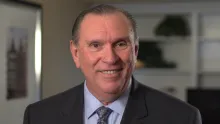
Randy D’Alessandro served as pastor for the United Church of God congregations in Chicago, Illinois, and Beloit, Wisconsin, from 2016-2021. Randy previously served in Raleigh, North Carolina (1984-1989); Cookeville, Tennessee (1989-1993); Parkersburg, West Virginia (1993-1997); Ann Arbor and Detroit, Michigan (1997-2016).
Randy first heard of the church when he was 15 years old and wanted to attend services immediately but was not allowed to by his parents. He quit the high school football and basketball teams in order to properly keep the Sabbath. From the time that Randy first learned of the Holy Days, he kept them at home until he was accepted to Ambassador College in Pasadena, California in 1970.
Randy and his wife, Mary, graduated from Ambassador College with BA degrees in Theology. Randy was ordained an elder in September 1979.
