
Robin S Webber
This transcript was generated by AI and may contain errors. It is provided to assist those who may not be able to listen to the message.
I would like you to turn over to the New Testament just so you'll get close to where we're going. I'll keep a few surprises here for a moment. But we're going to be going through a book of the Bible this afternoon. You know, in the New Testament there are certain epistles that have been argued over for 2,000 years. Some messages that are, shall we say, to some controversial. And people are even willing to go to verbal war over them. You can go to the book of Romans. You can go to the book of Galatians. And there can be a lot of controversy as to what did Paul really mean when he wrote that. Even the Apostle Peter had some concerns about our brother Paul with things that are hard to be understood. But we're going to leave those books alone today. Isn't that good? We're going to talk about something that is loud and clear in the writings of Paul. In fact, I've often called it the jewel of the New Testament. Because basically it deals with Christianity 101. It's very basic. And it basically just takes three primary actions. I'd like you to write them down if you'd like to follow along. If you don't, that's fine. Just three items. Faith, love, and action. Faith, love, and action. Oh, that sounds so simple. Not. To recognize, especially when we are in this human tent. Allow me to set up a picture here for you for a moment. I'm going to pull this over so I will be in mic range. Unless it falls down. Okay, that's good. And to recognize something here, we're going to do some math. Did all of you pass math in school? Talking to the right crowd? Okay, well, Fred raised it. All the rest of you flunked, other than Fred. Okay, we'll join the... I know Mr. Sharpe did not. I think he's a mathematician knowing what he went into. He's smiling too much. But the one test that I passed in geometry in 10th grade, which there were about 50, ISIS don't lose heart, is that I do remember this. A basic geometrical theory. And what we have before is for two dots. Just two dots. And the basic theory of this goes that the shortest distance between two dots is a straight line. Oh, that human relationships are that simple. Because here we have person A, and here we have person B. So far, so good. This is not complicated. We only have two people here so far. But what happens is, is person A, and we could switch places if you want to, rather than doing that, person A does... maybe person A did not take geometry. I'm not sure. But what happens is... Redlands has a much better ratio than San Diego. That what happens is, person A, who has issues with person B, rather than going to the person and talking with that person, does this.
Does this, and talks to everybody else. And this person down here, too. And people that they don't even know. And people that they meet at Denny's at 3 a.m. in the morning. And talking. And look how much they fill their life up with, because they have not followed a very basic principle.
The shortest distance between two dots is straight line. Now, I have a question. How am I ever going to erase this? But the question comes down to this simply. Why does not person A talk to person B? Even though they really want to, they know that they ought to. What's happening down here?
Well, the reason why this line remains at least this way, they want to, and so they're wanting to, makes it a broken line, there's something that remains between that discussion. Do you know what it is? It's this. There's a wall. And what is the wall? What is the wall? The wall is panic.
They're afraid. They're not quite sure what is going to happen. But here's what I want to share with you.
Ultimately, all of us are person A and or person B, and all of us are going to have to go through this. What is that? It's panic. Panic. We panic. It's so much easier to talk to everybody else other than the person that we need to be talking to. It's easy to talk about the person that we ought to be talking to rather than dealing with that individual. And thus we don't because we have this panic in front of us.
But here's the point I want to share with you. You think about where you are in any relationship that you have, whether it is your relationship with God, whether it is your relationship with your spouse, whether it's your relationship with your adult children, your boss, please, let's open our mind. Think wide. Whoever you are dealing with right now, we need to recognize something. Recovery lies on the other side of the panic that you feel.
Recovery never lies on this side. Recovery means that you have to go through the panic that you feel and have the faith and have the love and love is not just a feeling, but it is an action. And we must be able to do that. In other words, let's understand something. Many of us like to reside over on this side of panic.
You know why? Because after a while we become secure in our insecurity, just like an old comfortable shoe. We've been wearing it so long that it fits. And why would we want to put some new walking shoes on, even though they are the walk of righteousness, when we are so used to things just being the way that they are, because that's how we wake up. But recovery lies on that side. Now, I'm going to introduce you to one more factor here.
And then we're going to go through a short story. And that is simply this. Now, keep your eyes on this whiteboard, or it was white a little while ago. We still have person A and person B here. And person A and person B, they're on the same board, but they don't know how to connect. I want to now introduce you to another character on the board. Just one more. Aren't you glad that it's three or it might get complicated? And that is person C. Person C. Person C, who's on the outside of the goldfish bowl, looking in, who can be a help, who can be a mentor.
See, all of us, to a degree, can be person C. We can be a healer of the breach. Isaiah 58 speaks of a healer of the breach. It speaks of those that, once again, restore paths to walk on. Thus, with this introduction and this background, would you please turn to the book of Philemon? It's a very short story, but never discount the shortness of a story for how important it is. For indeed, Philemon is often called the jewel of Christian diplomacy. And the book of Philemon basically runs a little bit like a Broadway stage play.
Some of the most intriguing stage plays basically boil down to two or three people, almost one-man shows. And basically, we have three people here in the book of Philemon. Would you allow me for a moment, if I could, to kind of set up the scenario of what is happening here? Would you allow me to introduce you to the players? Okay. Number one, there's a gentleman. He's a preacher. And his name is Paul. And he knows both of these individuals. And Paul ultimately is going to be what we call the Isaiah man. He's going to be the healer of the breach, at least offering solutions.
Then, other than Paul, we only have two more characters, so we won't complicate this. Then, there is a gentleman named Onesimus. We can just call him Mr. O to make it simple. Onesimus. And Onesimus is a runaway slave. He's a runaway slave. And he's run to Paul. Now, allow me to introduce the third person. We'll make it simple. And that gentleman's name is the name of the book. His name is Philemon. And Philemon is a slave owner. Now, just imagine this, because this is where it gets complicated.
And that is Paul, the slave, and the slave owner are all in the same church. Now, we've got something to talk about. And Philemon is the story of this gentleman up here, person C, a healer of the breach, showing the way of return between person A and person B, who happens to be Onesimus and Philemon. Now, when we go through the story, allow me to use certain 21st century thoughts regarding something that we look back in the Bible and we can stand aghast at. And that is the subject of slavery. But it was a very real item back in the first century A.D.
Rome, its empire, was built on the back of slavery. At the time of this writing, one out of four individuals in the Roman Empire, under the sway of Caesar, was a slave. They were white, they were brown, they were black. Many, many different peoples were slaves. They held a very low position in society. We're going to discuss more of that as we go along, but that will show you a little bit of what's happening here.
And it is one man's exquisite appeal to another man to bring another man back into their life. Perhaps all of us, to one degree or another, at one time or another, have been there. And if you have not been there, you will be there. And may I share something with you? It is a beautiful thing. And again, it speaks of what I spoke about a couple of weeks ago, and asking you a question, and it goes right back to this.
How big is your box? And to remind you again that the story in the New Testament is to tell us to always, as Christians, to come to expect the unexpected. And one more thought before we go, because once we move into it, it's going to go quickly. And that is, how willing are you to stretch where you never thought you had to stretch? Because Philemon is full of surprises, especially for Philemon. Now, this beautiful jewel, just like any jewel, is divided, or it can be thought of as being in different facets.
And that's going to help us understand this brief, because... So we're going to go through that. The first thing that I want to deal with here is simply what we call the intro. You might want to jot that down if you want to stay with me. There's only going to be five facets, and we call that the intro. Why is the intro to Philemon so important in regards to relationships? Allow me to be simple in this explanation, and liken it to jet travel. It's often been said that with jet travel, and I think about this as I'm about to fly next Friday, is that most accidents happen on takeoffs or landings.
Not a lot happens at 37,000 feet in the air. Most of it occurs on takeoffs and landings. Have you ever recognized that as a husband and a wife? Maybe as parents and children and friends, that so often it's our intros and our exits that get us in trouble, because we're not prepared for entry. Paul shows us the way. Let's begin it as we begin to look at verse 1. Paul, a prisoner of Christ Jesus, and Timothy, our brother.
So Paul introduces himself to Philemon, our beloved friend, and our fellow laborer, and to the beloved Athia, our fellow soldier, and to the church in your house. Fascinating. There's a mouthful and there's something to think about here. Very interesting as Paul introduces this letter. It's unlike any of the other epistles' introduction. Many times he will introduce himself as an apostle, but you do not find that in this letter.
He does not state his ministerial credentials. Rather, he identifies himself and he says, I am a prisoner of Christ Jesus. He likens himself to be restricted. He is a gentleman in bonds, whether he was shackled or whether he was tied to a Roman soldier during house imprisonment, and or just simply under house arrest. We do not really know. You can read the commentaries and so can I. Just take your choice and you don't want to be there.
You have a restricted life and most things taken away from you. He reaches out to Philemon and he calls him a beloved friend, the slave owner. He's in the church. He says, and not only that, but guess what? The church is meeting in his house. Paul validates that and recognizes that. I find this is most interesting. A situation had come to Paul and he had to deal with it. There were two people that he loved very much.
He loved the slave and he loved the slave owner. And they were all in the same church family. Here is Paul, and Paul is at this time in a restricted existence. Basically, everything has been taken away from him other than the truth of God. And why is it, and I ask you, maybe wherever you are on this day in your life with your relationships, why is it that it is only at times when everything comes down around us? When we're on our last heel, when everything has been stripped away, that it is only then that we really come to our life senses as to what is really important.
And we see lives being frittered away, human existence melting before us. Sometimes people are torching their own candle thinking that they're doing God a favor and or just being resolute in their own determination to be right. That person A does not step over and talk to person B. Paul is an older man. He's a seasoned Christian. He's now in prison. He has a few things to share with younger men. That's just the opener. Now we come to the second one.
The second, and this is the approach, the second facet of this jewel of the book of Philemon. Let's talk about that as we enter verse 4. I thank my God, making mention of you always in my prayers, and hearing of your love and faith which you have toward the Lord Jesus and toward the saints, that the sharing of your faith may become effective and by the acknowledgment of every good thing which is in Jesus Christ. For we have great joy and consolation in your love because the hearts of the saints have been refreshed by your brother.
Now there are some things that are happening here, and I'm going to take you back to verse 3 for a moment, because it's interesting what the Apostle Paul lays down at the feet of Philemon in this letter. Paul has nothing. He's been stripped bare. He can't send a box with gift wrapping and a big bow with something fancy in it that buzzes and twirls and that has batteries. That's not the gift that he presents. The gift that he presents are simply two things. Powerful. Grace and peace. Why is he doing that? Why does that start out the book? Number one, here Paul says, I am chained.
So you can kind of see where this is going with his discussion about a slave. And he offers the best of gifts, which is to remind Philemon that each and every one of us experience God's grace. Grace is something that we can't afford on our own. We cannot buy it. It is God's gift. All of us were slaves to sin. All of us were bonded and in bondage to unrighteousness. We could not provide our own release. We could not punch our own door in the wall and escape.
Grace is the long arm of God coming from afar and saving us from ourselves and saying, I am your father and you are my son. I am your father. You are my daughter. Beyond that, then he offers another gift.
It's a beautiful gift. It's peace. It's peace. Grace and peace. What do you mean peace? It's the same piece that's mentioned in Philippians 4, 6 through 8. It's a peace that passeth understanding. It's a peace that's better than knowledge. It's a peace that is better than facts on the ground, because sometimes what can happen, friends, here's person A and person B up here again.
We don't have that straight line. Why? Because the facts, that's the F, the facts on the ground are not good stepping stones of and by themselves. If you just look at the facts, there can't be any reconciliation and or restoration. That is why Paul says, I bring you the best gifts. I bring you grace and I remind you of peace. Peace is better than facts.
Notice verse 4, I thank my God. It says, I pray for you all the time. How do you argue with a guy that comes up to you and says, you know, by the way, I'm praying for you.
How can I ask you, ladies and gentlemen, how mad can you get somebody when they say, I am praying for you. I'm taking your life to God and sharing our relationship and our issues between one another with Him. I've heard about your love. I've heard about your faith. I've heard about you sharing your faith. But now we're going to open up to something here big, because here's the point, friends. Sometimes, allow me to make this comment.
May I? Yes. It's simply this. Christianity is dealing both with the many and the few. It is dealing with the masses and it's dealing with the one-on-ones. You know, and I know, if we can truly be honest, that oftentimes it's easier to deal with the many rather than the one.
And you know the one that I'm talking about, the one that you're thinking about right now. Your person A and or your person B. And where there is not reconciliation and or there is not restoration. Now, let's understand here what we've got so far. We have the intro. We have the approach. We have Philemon being reminded of all the wonderful and beautiful things that he is doing. But God isn't worried about what you have done. He's concerned about what you are yet to do. Let's understand something. Christianity is not a past act. Christianity is living. It's not fossilized. It's not what you have done. It is what we are yet to do in the future.
And now Paul draws that out in verse eight because now we come to the third passage. You may want to jot this down to stay with me. Paul's going to make an argument. Not an argument in the sense of the fist in someone's face, but a case for the slave owner to consider the slave. Therefore, though I might be very bold in Christ to command you what is fitting, yet for love's sake, I rather appeal to you, being such as one as Paul the aged, and therefore now also a prisoner of Jesus Christ. Actually, one of the most important words in verse eight is that you might want to circle it if you're daring enough.
Therefore, why do I focus you on therefore? Because normally when I have issues, not with anybody in this room, when I have issues, I start verse one with therefore. Boom! Therefore, I state my case. But do you notice how Paul has an intro, how Paul establishes approach, how Paul validates not what the person is doing wrong, but what they are doing correctly? It is only in verse eight that we begin the next discussion. You think about your relationships and where you are at as an individual.
How often do you, in verse one, start with just simply therefore, rather than being cognizant of your takeoffs and landings? You know, we have already in this discussion, before we get to the argument, we've talked about grace, we've talked about peace. It's very interesting that Paul has brought up Jesus Christ. That is the center of the discussion.
The Word of God, what the Word of God has revealed, and Jesus Christ become the focal point. Jesus Christ brings people together. When you're focusing on what the Master is or what He has done, that is going to be a drawing point. Now, let's move forward. Therefore, though I might be very bold in Christ to command you what is fitting, yet for love's sake, love's sake, love is not a feeling, it's an action, I appeal to you. I'm not going to tell you what to do.
You know, those convinced against their will are of the same opinion, still. Paul wanted the slave owner not only to own the slave, but to own the solution. And he's going to describe that. And he kind of puts in a little wording there because he's careful with his words. I'm an old man. It's almost like, why don't you do something for an old man? And after all, I'm a prisoner of Jesus Christ, and I appeal to you for my son Onesimus, whom I have begotten while in my chains, who was once unprofitable to you, but now is profitable to you and to me.
Now, what is very interesting in this discussion, in this story, this makes Philemon so fascinating as a book, is simply this. In the Greek, Onesimus does mean unprofitable. It's a play on words. Can you imagine growing up with a name? Unprofitable. Unprofitable! Come over here. Oh, unprofitable! Look what you did again. That was an Onesimus life story. What is interesting as we look at this, it says that whom I have begotten while in my chains.
We don't know the full story of what happened here. We do know that Philemon was a slave owner. He was a Christian. The church met in his home in Colossae, the Book of Colossians. Was Onesimus a believer before he ran away and joined Paul in Rome? I do not know. Neither do you. Is it possible that Onesimus was a house slave and he saw Paul come and go? He would open the door for this older man and that the man might even look him in the eyes.
He might even call him out by name. These were not things that were common back in Roman society. You did not validate a slave's existence because they were not human. You know, it's like a pet. You know, if you're on the farm and you're going to slaughter animals, you don't give them names. Why? Because they become near and dear. In antiquity, you did not really address slaves by name. That was to distance them. That was to dehumanize them. Did this man named Paul come in through the gate?
Did he come in through the doorway? Did he come through the atrium and into the doorway and say, Hi, Onesimus, look him in the eye? Wish him well? Maybe Onesimus was not a believer, but he saw a light. He saw an example. And when he did spring and when he did run away, he went to a man that had treated him kindly. I don't know. You don't know. But what we do know is it seems by what is mentioned here is that he came to conversion when he came to Paul in Rome and was ministering to him in the cell. Notice what it says.
I am sending him back. You therefore receive him. That is my own heart. Fascinating. Now, Onesimus had done wrong. He had run away. He was an escaped fugitive, as it was determined in that day and age. But Paul was not going to abandon him. Paul was going to stand up for him. Paul was not going to disown him. You know, I've been in conversations, and I bet you have too, if I were a betting man.
Where somebody's name is brought up that is in trouble. And all of a sudden, you begin to see people distance themselves from that individual. They begin to... I haven't seen him for months. I haven't talked on the phone. I didn't know that about him. No. Do tell.
And you begin to see people move away. What is fascinating about Paul is he does not move away. He moves in. And he adopts Onesimus as his child, as his son. He becomes family. He will not move away from him. Fascinating. Let's remember this principle as we go through this part of Philemon. It is not our job to choose God's family.
It is our job to accept the family that God brings into our life. We then proceed to verse 13. Paul says, I wish to keep him with me, that on your behalf he might minister to me and might change for the gospel.
But without your consent, I wanted to do nothing. That your good deed might not be by compulsion, not because you have to, as it were, but voluntarily. Not out of duty because of me, the man of God telling you what to do, but because you own the solution. You desire to do it. You know, it's been said oftentimes that two different peoples look at the Ten Commandments two different ways. There are people that look at the Ten Commandments in the law of God as the Ten Don'ts.
But that's not how the converted mind looks at the Ten Commandments. The converted mind looks at it as the Ten Do's, D-O. The Ten Do's. They don't do it just simply out of duty. They do it out of desire because they not only fulfill the letter of the law, but they live with the Ten Commandments in the spirit of the law. They own it because they recognize that they have been owned by God.
That's the spirit that is being mentioned here. For perhaps He departed from you for a while for this purpose, that you might receive Him forever. Oh, you've been missing Him? Well, guess what? You're going to be with Him forever. And no longer as a slave, but more than a slave, a beloved brother, especially to me. But how much more to you, both in the flesh and now in the Lord? Oh my, what a difference a day can make.
Here was the runaway slave. He's a fugitive. And now Paul is saying, he's going to be your brother. He's going to be a part of your family. You're going to be blood brothers because both of you have accepted Jesus Christ. And His blood covers the sins of both of you. You were both slaves of unrighteousness. You have been freed from that.
You have been released from that. Now let's understand something as we move to verse 15 and 16. We have some things going on. Again, allow me to use the chalkboard here for just a second. I hope you have these down right here because we have two more items to deal with. But let's understand something. Person A, who needs to have a straight line to person B, and of course we have the healer of the breach down here, C, working with both of them.
Let's understand all three had a responsibility here. As do you and the relationships that confront you. First of all, Paul points the person in the right direction. Onesimus, you're going to have to go back. Paul did the right thing. My question to you, the Redlands congregation today, is that life is what's happening that you don't expect or have planned for.
But to recognize that we must have values as issues come up in life. How committed are you to do the right thing and to point people in the right direction? Or do we just simply commiserate with them and allow them to remain secure in their insecurity? Paul pointed the person in the right direction. Number two, Onesimus had a responsibility. See, love is not just a feeling, it's an action. Onesimus was to respond.
Onesimus himself had to go back. Now what did that mean for Onesimus? This is where the book of Philemon gets exciting when you understand what was the penalty for a fugitive slave. We need to recognize that any time any society is tied into slavery, there is always a tension and there is always a fear of the slave. Thus, the slave must be kept under control. And to recognize that in that day and age, that if a slave ran away, you had to make an example of him. White, black, and or brown at that time. That would mean perhaps that a nose be cut off.
That might mean that an ear be cut off. That might mean that a tongue be cut off. That might mean many slaves at that time were just, in general, slavery were branded on the forehead or on the wrist, which brings the Book of Revelation to light when you understand the Mark of the Beast and what slavery is. But oftentimes, when there were runaway slaves beyond that, they would have a special brand which was called the Stigma.
It was to be stigmatized and or to set them apart for having run away. And or at times, they might be crucified right on the doorpost of the house that they'd run away from. Crucifixions were not always on a hill outside a city. Why? To be an example. Remember what I told you? Faith, love, love demands action, courage. Let's talk about Philemon for a moment.
What about Philemon? Philemon was being asked to accept Onesimus the slave back as a brother. What did that mean for Philemon as a member of the Chamber of Commerce of Colossae? Because everybody on the block was going to see what he was going to do with, what, the slave. Imagine the cultural pressure, the societal pressure that was on Philemon to save face, to put that slave in his place.
That reminds us that Christianity is radical. The solutions are different than the solutions that are in this world. Paul had a job, Onesimus had a job, Philemon had a job. That leads us to the fourth of the facets of this jewel called Philemon, and that is the appeal. Very simple. The appeal. If he has wronged you or owes you anything, put it on my account.
Put it on my account. I'll take it. I'm going to put my money where my mouth is. We've been talking about the trunk of the tree here, but now I'm willing to go out on the limb for this slave. I, Paul, am riding with my own hand. I will repay, not to mention, by the way, there's a little story going on here, by the way, not to mention that you owe me even your own self beside. Whether that was physical, physical, whether that was Paul reminding him that where Philemon was going in this world before the Gospel came to him through Paul, I do not know, neither do you.
But Paul just kind of puts a, shall we call it, a lien on Philemon here for a second. Yes, brethren, let me have joy from you in the Lord. Refresh my heart in the Lord. Very key. The word refresh is mentioned here the second time in the book of Philemon. It begins in the beginning. We're now coming into the end. Refreshing the Lord is not something that you just do at baptism. It's not just something that you do in your 20s, your 30s, your 40s, or your 50s.
Hello? Anybody older than that? Yes. Refreshing the Lord and being refreshed and refreshing the hearts of others in the Lord is a continual activity. It is over the next valley, the next hill, the next mountain, the next relationship that is in our life. I have in confidence in your obedience, I write to you, knowing that you will do even more than I say. You're going to take it to the limit. For to just simply do what you are asked as Christ said, you are but an unprofitable servant.
I'm not going to put any boundaries on you. I'm not going to put any limits. I'm not going to put a period down and limit what you might want to do. Surprise me! Now verse 22 is kind of interesting, though. But meanwhile, also prepare a guest room for me, for I trust through your prayers that I shall be granted to you.
Remember what President Reagan used to say about the Russians? Trust, but verify. Paul was saying, there's going to come a time when I'm going to... Hello? I'm here? By the way, where's Onesimus? How are you guys getting along?
Paul was just kind of giving a gentle nudge here. Verse 23, Epaphras, we're coming to the conclusion now. The fifth gym, we're coming to the conclusion. Epaphras, my fellow prisoner in Christ, greet you. As do Mark, Aristarchus, Demas, Luke, my fellow laborers. Verse 25, let's center on it and conclude, then.
The grace of our Lord Jesus Christ be with your spirit. This is very important to understand. When you look at the construction of most of the epistles that are found in the New Testament, be it Paul, be it John, be it Peter, you will notice something very profound. They begin with grace, and they end with grace. Grace is not something that you have to go looking for in the New Testament. And or for that matter, actually, in the Old Testament, but that's an entirely different sermon.
I would like to say that grace is the word in the New Testament that is used as the bookends to keep the story together. That even allows us to approach our God to be able to deal with some of these relationship situations that we see. Interesting. He begins with grace, and he ends with grace. Now let me review very quickly the five facets of this jewel, in case you didn't get them. There is an intro. There is an approach. There is the argument. There is the appeal. And there is the conclusion.
Those five facets are held together. Grace to grace. As we conclude, friends here in Redlands, let's ask ourselves, as we look at this whiteboard and are honest with ourselves, where we stand before the Lord on this Sabbath day. Are we person A? Do we have a person B situation in our life right now? Do we remember, if it's good for math, it's good for Christianity, that the shortest distance between two dots is a straight line? And or, are we talking to everybody else other than the person that we need to go to and to talk? What is it that lies between us? Is it that panic button that makes our legs shake, our knees shake, and our hearts shake? And or, can we be firm in heart and recognize that recovery lies on the other side of the panic that you and I feel in our relationships? Maybe right now, you're not person A, and you're not person B. But where you are right now in your life, God has called you to be a part of what we might call the C-factor, the role of Paul, to be a healer of the breach, to be a builder of straight roads between brethren. Oh my, there's no arguing over the message, is there? Of the book of Philemon? You can say that sometimes for Romans or Galatians, but it's very powerful what comes through. Take them home with you and think about it. Faith, love, and action. Look forward to seeing you after church.
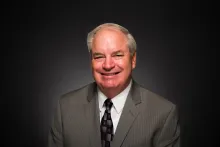
Robin Webber was born in Chicago, Illinois, in 1951, but has lived most of his life in California. He has been a part of the Church of God community since 1963. He attended Ambassador College in Pasadena from 1969-1973. He majored in theology and history.
Mr. Webber's interest remains in the study of history, socio-economics and literature. Over the years, he has offered his services to museums as a docent to share his enthusiasm and passions regarding these areas of expertise.
When time permits, he loves to go mountain biking on nearby ranch land and meet his wife as she hikes toward him.
