
Frank Dunkle
This transcript was generated by AI and may contain errors. It is provided to assist those who may not be able to listen to the message.
I just wanted to share before I started the sermon, I printed out an article that, you know, I didn't see this and I, you know, I followed, I'll admit, so I follow Fox News, CNN, and New York Times. Those are my three primary, you know, I do like to watch the PBS News Hour. I think that's really good, but I don't have an hour often to watch that. But this was in The Guardian, and I didn't see this anywhere in the US News. Maybe you've seen it. This was yesterday. It said, EU leaders announced intention to collectively rearm in the face of Putin threat.
It says, EU leaders have announced their intention to collectively rearm and become autonomous in food, energy, and military hardware in a Versailles declaration that described Russia's war as, quote, a tectonic shift in European history.
I mentioned this in the French speaking service last week, but there was a phrase going around Brussels last week at the headquarters of the European Union, and the phrase said, the phrase was, certain weeks, decades happen.
Certain weeks, decades happen. And so now I feel like we are really living that, that we have essentially, we see things that would have taken decades to occur. And this was the point. Things that would have taken decades to occur have occurred in a matter of days or even in a week. The amount of European unity that we're seeing in response to this war is absolutely stunning.
And to now see that Europe has officially declared that it is going to develop its own military, its own military equipment, it's going to be autonomous, it's not going to rely upon NATO or the United States in the same way. And of course, this is the EU we're talking about. It doesn't include Britain. This just falls right into the prophetic discussions that we've been having for many years.
And so I hope you pay attention, because there's like very serious prophetic events going on right now with Europe coming together. And by way of introduction to the message I wanted to share today, I think it's been really heartbreaking to see the images coming out of Ukraine.
More than 2 million refugees. I heard one statistic yesterday from a general who was mentioning the Russians have likely lost in two weeks about half as many soldiers as they lost in their entire 10-year occupation of Afghanistan.
So the losses that Russia is sustaining in this, and yet they seem to be completely bent on proceeding, are staggering. And of course we have the threat of now chemical weapons being used, nuclear weapons being used. But I was listening yesterday to an interview that was done with a mayor of a Ukrainian city.
And he was sharing this comment about how I think President Biden said we didn't want to start World War III. I think there was some sort of quotation coming out from President Biden on that. And this mayor responded by saying, we're already in World War III.
And his viewpoint was that the Russians are quite indiscriminate in terms of their targeting with respect to just about anything, including nuclear power stations. And if you have a nuclear power station hit in this war, you will have devastation on a scale we've never seen in human history.
This was very much on the minds of your brothers and sisters in France during last week's service. We, after church, we have church every morning on Zoom, and then we fellowship afterwards. We fellowship for like an hour and a half afterwards last week. And a lot of brethren in France are quite concerned about this because of the nuclear fallout.
The winds come, and the rates of thyroid cancer in Europe have been off the charts in the last 20 years. And they attributed a lot of it to the Chernobyl accident back in the 80s.
So that's one man's opinion that something bad is going to happen.
I didn't know this. Maybe you know this, but the name of the Russian intercontinental ballistic missile, maybe you've heard this name before, the ICBM. The name of the missile is Satan. I didn't know that. I learned that from the French brethren last week. And they named their ICBM Satan back in the 70s, but they developed a new missile they're calling Satan 2.
And it is even more devastating. It was actually announced by President Putin in 2018 as being quote-unquote invincible. In other words, it cannot be detected by anti-missile technology.
So there's quite a bit of concern. If he were to use nukes against Europe, what would the United States do?
And the view is probably nothing, which is part of why the Europeans are so worried and why they're focusing on rearming themselves. So we're seeing these things right before our eyes, just play out right before our eyes. If you saw that missile attack that nearly hit the nuclear power station last week, pretty scary, pretty scary stuff. And they've got basically the operators of the nuclear plant saying, please don't fire on us.
We have to maintain this nuclear power plant here. So we know from prophecies in the book of Revelation and from Matthew that Jesus' return will be after the culmination of a lot of events. And we see those events laid out there. But we know that there will be devastation on a scale that the world has never seen when that happens.
I was reminded this week that, of course, there have been two nuclear weapons used in war in the history of nuclear weapons. We know that the United States dropped those two on the Empire of Japan. At that time, there were two nuclear weapons that had been created. I think there might have been a third ready, but anyway, there were two.
Today, there are an estimated 13,000 nuclear weapons. And according to ICANN, which is a Nobel Peace Prize recipient, if only 1% of those weapons were actually used, just 1% were used, it would be either the immediate or slow death of over 2 billion people.
Immediate in the sense of those would be the people who would be killed in the actual attacks. But the climatic changes that would come from that in terms of food production would leave millions more and up to 2 billion more starving. And of course, the cancers and stuff that would come from that. And that's just 1%.
If more than 1% is used, most estimations, and we've heard this, is that the life support systems of the Earth itself would actually shut down. So you would see the end, certainly the end of human civilization, and perhaps the end of human life itself. We're told in Matthew 24, verse 22, that unless those days would be shortened, no life would be saved.
That's what Matthew 24, verse 22 says. So we shouldn't be surprised that this is what we're living and what we're experiencing here as we see these events unfold. But it says, for the elect's sake, those days would be shortened. And that means the implication is there will be survivors.
Now hopefully we, as God's people, are going to be protected from this. We've always speculated, will we be taken to a place of safety? Will we all be taken? Who will be taken and not be taken? We've talked about these things over the years. But in any case, at the return of Jesus Christ, our hope is the hope of the resurrection.
Our hope is the hope of being caught up in the clouds. That's our hope. So at that time of Jesus' return, when those days are shortened, that people will survive, will be in a different state. So that's good for us. But for the people who are left, those people are going to be in a pretty bad way. You know, what we're seeing in Ukraine, you can imagine the trauma, the stress. We see this. It brings tears to my eyes to hear about it. So these people are going to be in a very bad way. There's an expression that I hear a lot in Africa when I travel. It's the French version of every man for himself. And that's kind of the mentality when you get into a very difficult economic, social, political situation. It's very much of a response to a lack of agency. So you pretty much quit worrying about your neighbor, and you just make sure that number one is taken care of. Do I have food? Does my family have food? Do I have food tomorrow? These types of things. And so I think we're going to see when we are turned into spirit beings, and Jesus returns and establishes his kingdom on this earth, we're going to have the responsibility to work with people who have been devastated by conflict and war and climate change and so forth. So my subject today is, are we going to be ready to help those people?
Because it's actually pretty complicated. It's one thing to walk out, to go down to places in San Jose where you have homeless, and maybe open a soup kitchen or provide some help to people. And there are certain challenges. We know that a lot of people have mental issues, and that's why they're on the street. We know that there's drug addiction. We know there's lots of reasons why people have fallen into a state that they're in. But those people that might be in San Jose here or in this Bay Area, they haven't necessarily suffered war. And they certainly haven't suffered nuclear war. I'd like to read you an article from the New York Times magazine. It tells the story of the liberation of many of the concentration camps at the end of the Second World War. This article is dated from April 2020. The article is titled, For some Holocaust survivors, even liberation was dehumanizing. It says here, On April 10, 1945, the 84th Infantry Division liberated Hanover-Alham concentration camp.
Confronted with walking skeletons and cadavers piled in bins, many service members cried and vomited. After inspecting the squalid camp hospital filled with men, he described as catatonic, Captain Haggard, Jr. William J. Haggard, Jr. wrote in a letter to his wife, You can't think of the adjectives. We weren't in the place two minutes before our eyes filled with tears. The liberation of the camps involved more than 30 American military units. These soldiers were responsible for organizing medical care, supplying food, and eventually repatriating the freed prisoners, and so served as primordial architects of the survivors' journey from camp degradation to the postwar search for their lost humanity. At first, the presence from the outside world, the Allied liberators presented a dual reality for detainees in concentration camps.
Jorge Sempran, a prisoner at Buchenwald, wrote in his memoir that prisoners attained long-awaited freedom, but the way some liberators treated them reinforced the idea that they had become less than human.
"'It's the horror in my eyes that's revealing the horror in theirs,' he wrote." Of his first encounter with British soldiers, he wrote, "'If their eyes were mirrors, it seems I'm not far from dead.'" Sempran's brush with his liberators echoed Primo Levi's description of his interactions with the Soviets at Auschwitz in January 1945.
"'They did not greet us, nor did they smile.
They seemed oppressed, not only by compassion, but by a confused restraint, which sealed their lips and bound their eyes to the funeral scene.' Some liberators treated the surviving prisoners this way not only because they were disgusted by the reality of the heinous crimes committed upon them, but also because they were poorly prepared for what they would find." Survivors said, though, that through social connections, especially talking with soldiers, it helped them restore their sense of self in the days and months following liberation.
Robert Antelm, a French survivor of Dachau, suggested in his memoir that the need to communicate competed with the need for proper nutrition.
"'We wanted at last to speak, to be heard. We were told that by itself our physical appearance was eloquent enough.' However, he added that even when they could speak, "'It was impossible to bridge the gap we discovered between the words at our disposal and that experience.
What we had to tell would start to seem unimaginable.' Survivors were afraid that they wouldn't be heard and also that no one would believe them.
Before telling the story of their dehumanization in the camp, some survivors needed liberators to first see them as they had been before the war, as people with passions and professions.
Examples included Ervin Lissman, an ambulance driver.
He had fabric and sewing supplies imported to the Bad Gaston camp so its inhabitants could make neckties, which was a sign of respect.
Captain Hoggard wrote to his wife requesting lipstick because he reported up to ten women would share one tube collectively reclaiming their femininity." I find it an interesting discussion because we might think that, oh, we're going to show up and these people are going to be in bad shape.
But you know, it's kind of like homelessness in San Jose. You're going to help them through their issues.
But these people are going to have been so dehumanized. They're going to have lost so much dignity.
They're going to be so traumatized by that experience that we're going to need to be prepared to help them in a way that we're probably not prepared right now.
And so these skills that we can learn today might help us on that journey.
Today we're going to look at biblical principles that we're going to need in that future time that we should be developing now.
That really, frankly, will serve us well as we help one another, even today, and certainly people in our communities.
How will we handle this transition that these people are going through?
You see, the Russians, when they came into Auschwitz, they liberated the camp, but they didn't know how to deal with the people who were actually alive.
They were disgusted. They couldn't handle it. Of course, they had their own issues, but their ability to be compassionate, their ability to understand what those people had gone through, was not there.
What are the biblical principles that we need to follow in order to assist our elder brother in healing a very sick and war-torn world?
To take the survivors of the age of man and invite them into the kingdom of God.
I want to go through a couple principles here today. Some of these we've heard before. One is to learn to teach. Another is to learn to listen. Another is to be patient. One of them is to be rude to us.
Finally, how to build trust. I think that encapsulates a lot of what we're talking about here, is building trust.
The title of my message today is, A Picture of the Beginning.
I think this is the picture of the beginning of the kingdom of God that we're talking about today.
We might think about us being at the end. A lot of times we talk about the end times and the end of days.
I think if we can make that transition that it's the end of the age of man, it's the beginning of the kingdom of God.
This is a picture of the beginning. The first one is learning to teach. If you turn with me to Isaiah 30, verse 19.
I have my Bible on my computer, so I'll pull that up here. I have it in my notes, too, but I want to see more context here.
Isaiah 30, verse 19. We'll read verses 19 and 20. A somewhat familiar verse from the book of Isaiah.
If you didn't see Mr. Kubik's write-up on the book of Isaiah, I really encourage you to read that.
On Thursday this week to the church, about the discovery of the dead sea scrolls and the book of Isaiah.
Isaiah 30, verse 19 says, He's setting a stage here. Just like the people in Ukraine are weeping.
He says, You will weep no more. He will be very gracious to you at the sound of your cry. There's a compassion. There's an ability to understand what these people have been going through. When he hears it, he will answer you. God is going to be there. He's going to answer.
And though the Lord gives you the bread of adversity and the water of affliction.
There are different interpretations of this, but one interpretation is that this is what they have been through. They have had great adversity and great affliction. It says, Yet your teachers will not be moved into a corner anymore, but your eyes shall see your teachers.
So these people are going to be met with compassion. They're going to be met with being heard. And they're going to be met with teachers. And we've often said that we are going to be those teachers. We're going to be those people who are going to be hopefully role-modeling that comfort, role-modeling that compassion, role-modeling that sympathy, and yet maybe even empathy. We're going to be providing for basic needs at the beginning of the millennium. Certainly, there's going to be infrastructure that's going to have to be rebuilt, and roads, and cities, and water, and all these types of things. We will be involved with that, and that's important. But we're going to also be involved with actually rebuilding that trust through teaching and giving comfort.
And so we have to learn how to do this. We have to learn how to comfort. We have to learn how to teach.
Some of us maybe have skills of teaching, and some of us don't. Teachers have to be patient. If you think about an example of somebody learning to play the piano, and then somebody taking a ruler and hitting your hand when you hit a wrong note, which used to happen, maybe probably still does, that's not necessarily the best technique to get across what you want to get across. You might get that student to hit the right note, but they're going to really resent playing the piano, and you at the same time when you do that. Look over at 2 Timothy 2, verse 23. Those who come out of this time are going to be basically filled with a lot of distrust and a lot of strife and a lot of violence just to survive. We can see a mention of this here. 2 Timothy 2, verse 23, it says, It says, It's interesting that this gentleness follows a precursor to being able to teach. Gentle to all, able to teach, patient, in humility to correcting those who are in opposition. These are the things that we should be learning now, and these are the skills we will definitely be using at the beginning of the Kingdom of God. If God perhaps will grant them repentance so that they may know the truth and that they may come to their senses and so forth. We have to be patient and in humility correct those who are going to be coming out of the Great Tribulation. This direction is to pastors, but I think it's to all of us as God's children in general. We need to begin to develop this capacity today. If you look over to Hebrews 5 verse 12, we see that we're told here that we ought to be teachers. Hebrews 5 verse 12 says, It says, I've often thought if we had to have small group Bible studies in our homes because the situation society had degraded to that point. Maybe we couldn't afford the hall. Maybe the hall wasn't available. Would you be able to host a Bible study in your home on the Sabbath and teach and lead that discussion? Because that time may come where we're going to need to be in that position where we're leading these discussions in our home. Not in some sort of crazy direction and conspiracies and our own pet ideas, but solidly grounded in Scripture. And this is what it says, for this time you ought to be teachers. You need someone to teach you again the first principles. Would we say, no, no, I couldn't lead a Bible study in my house. Yeah, no, I mean, I don't do that. I don't have those skills.
Well, it says we ought to be teachers, and we're going to be teachers in the kingdom of God. Are we ready to be teachers? The second point that I want to share here is learning to listen. Learning to listen. We have to be ready to listen. And that means taking steps now and studying listening. Listening is actually a real skill.
When we listen, we have to do something that is very contrary to our natural nature. We have to take our minds off ourselves, what we want to say, what we're thinking about, and we have to look at the other person and pay attention to what they're saying and digest what they're saying. But even more so, we have to digest what they're trying to tell us.
I don't know if you've had that conversation where it's like, they're saying certain words to me, but the message they're saying is something else. And they're trying to get across something to me. And sometimes we call that reading between the lines. I think we know body language composes something like 80% of the communication that people want to give us. So listening is words. It's what you see. It's how you're processing. It's like, where is this person coming from? What's the context of this conversation? Are they trying to be direct? Are they trying to be gentle? Are they beating around the bush? Are they afraid to say what they really want to say? Do I need to encourage them to say something else? Listening is a very complicated subject.
Turn over to Philippians 2 and in verses 3 and 4. The first thing that we learn about listening is it's very much about getting our minds off ourselves. Philippians 2 verses 3 and 4 says here, Let nothing be done through selfish ambition or conceit. So you can't listen if you have some sort of selfish thought, but in loneliness of mind let each esteem others better than himself. See, the problem a lot of times we have with listening, and it happens in families a lot, is you think you know what the other person is going to say before they say it. Sometimes we can actually take that approach with our colleagues at work or other people. If we don't know the person, then maybe we're going to turn our brains on. But we have habit thinking and then we have actual thinking. A lot of times we're in habit thinking. So we're at home, maybe we're with our parents or with our wife or with our kids, and they run up or somebody comes over and they start. And we already think we know what they're going to say, and so we just go into habit thinking. And a lot of times what that means is the other person doesn't feel heard. They don't feel like you're listening to them. In fact, some people will even sort of cut the other person off and answer the question before they even finish asking the question. That's not a steaming others better than ourselves. That's not acting with lowliness of mind.
Verse 4, let each of you look out not only for his own interests, but also for the interests of others. So listening means getting our minds off ourselves, letting the other person finish what they're saying, and actually thinking about what they're saying and what they're really trying to communicate with us.
You don't need to turn there, but you can note in your notes Proverbs 12 verse 15.
The New Living Translation says, This New King James language, heeds counsel, kind of obscures this word listen. That's why I wanted to quote that New Living Translation. If you say, I heed counsel, that's another way of saying, I listen to advice. I listen to advice. Sometimes we can listen to somebody because they're asking us a question. Sometimes we can listen to somebody because they're giving us advice, or they're giving us some sort of direction.
Are we listening to one another? Are we listening to advice? Are we listening to our friends? Are we listening to those that rely on us? Are we listening to people who can give us advice about things? This has been quoted many times. Stephen Covey famously said, Most people do not listen with the intent to understand. Most people don't listen with the intent to understand. They listen with the intent to reply. You listen. The only reason you're listening is because you want to say something. Yeah, I hear you. And let me tell you, if you can start by listening to understand, that goes a long ways. One thing I've learned about being a pastor is that many people want to tell you what they know. What they know about this or that, or maybe they want to talk about prophecy or whatever. But rarely do people want to listen to you when you discuss different things. I find listening is a hard skill for me personally. I'm really, really, really trying to listen as a pastor. But I find in general that most people don't listen well, if I can just be honest. Most people don't listen well. Most people listen because they want to tell you something, or they're not even listening at all. They're just waiting for you to finish, and then they're going to tell you something. So let this not be said about us. You can mark in your notes James 1 verse 19. Very famous scripture as well. It says, So then, my beloved brethren, let every man be swift to hear, slow to speak, and slow to wrath. Swift to hear or listen. It's a hard commandment. Learning to listen can be very, very hard. I want to quote to you from Janet Dunn's book called Discipleship Journal. This is a chapter entitled, How to Become a Good Listener. She says, quote, Good listening often diffuses the emotions that are a part of the problem being discussed. It diffuses the emotions. Sometimes, releasing these emotions is all that is needed to solve the problem. The speaker may neither want nor expect us to say anything in response. I thought that was interesting. So listening may mean that after you're done listening, you don't say anything. Just nod your head. That was probably hard. Or, yeah, and you're just quiet. Because just the fact that you listened and let that emotion come from that other person allows that person to release whatever that tension or issue was. I believe there will be days between now and the coming kingdom of God when we will be called on to just listen. To just feel the other person's pain and emotion. I think we could all benefit from asking God how we could be prepared to listen to all those people who are going to be coming out of the Great Tribulation. Because they just need to talk. That's what that prisoner said. He said we had this competing need to eat and to talk. It was really competing. They were literally dying of starvation. And yet, they wanted to talk just as much as they wanted to eat. Because they had so much to express about what they had been through. And we need to be able to be there and listen. Are we ready to listen so we can understand, be compassionate, and support those who will be coming out of the Great Tribulation? My third point here is learning to be patient when others respond harshly.
It's one thing we know we have to teach. Teach, teach, teach. Listen, listen, listen. And the response we get is praise and honor and thankfulness. No. The response we get is, how dare you? And who do you think you are? And where do you get off trying to tell me this stuff? I'm done with you. So how do we respond to that when that's the response? You can note in your notes Proverbs 15 verse 1. A soft answer turns away wrath. But a harsh word stirs up anger. And this is a dynamic we could fall into if we're not careful.
I've worked so hard to teach you. I've listened to you. And yet this is what I get. That's not going to work. That's a harsh word and that's going to stir up anger. Instead, a soft answer. And this is very hard to do. And this is something that we're called to do at this time. Are we learning to speak to one another kindly?
Or do we speak the first thing that comes out of our minds? Yeah, that's a lot of times what I do. The first thing that's going to come to our mind will likely come from our heart. And our heart is deceitful of all things and desperately wicked. So if we just let our human nature come out, it's probably not going to come out in the way that we're going to like. We're probably going to regret what we say. So our heart has to be right. Turn with me to Luke 9, verse 51.
And let's look at an example of how the disciples reacted to people who didn't listen to them. People who didn't respond well to their teaching. Luke 9, verse 51. We'll read to verse 56. Luke 9, verse 51. Now it came to pass when the time had come for him to be received up that he steadfastly set his face to go to Jerusalem. Verse 52. And sent messengers before his face.
And as they went, they entered a village of the Samaritans to prepare for him. But they did not receive him because his face was set for the journey to Jerusalem. And when his disciples James and John saw this, they said, Lord, do you want us to command fire to come down from heaven and consume them? That's how we respond. Just as Elijah did. But he turned and rebuked them and said, You do not know what manner of spirit you are of.
See, this is our human nature that will come out. This is our natural inclination. How dare you? I've sacrificed for you. You don't know what I gave up for you.
That's our sort of inclination. Verse 56, For the Son of Man did not come to destroy men's lives, but to save them. And they went to another village. When we're mistreated, especially if we've done nothing wrong, our reaction is often to punish people.
When we feel that people have shown disrespect to us, well, we have a certain, quote-unquote, righteous indignation. And this is what happens here. So, the millennium begins, tribulation has ended, and these people are traumatized. And we come in, we do our best, we're compassionate, we listen, and what we get is a lot of harshness in response to that. I had an experience that really it took me... I don't think it was really as an adult that I processed this. It was in fourth grade. So, you know, first grade, second grade, you might remember that, kindergarten, you remember certain things.
By the time you're in fourth grade, you're remembering things. People can remember fourth grade, right? Okay, I'm looking at people who remember fourth grade. Okay, so I'm in fourth grade. And our teacher announces to us one day that we're going to be having some new kids join us. There are going to be two kids that are going to be coming into class the following week.
And this is the middle of the year, and I think there were 35 of us. I was down in... I was in Arcadia, in Southern California. And these were two kids from Vietnam. This was 1975. And these were kids who had... Their families had fled Vietnam after the collapse of the South Vietnamese government to the north.
And reunification. And so we got a little bit of a lecture, and I remember. We got a little bit of a lecture. Well, these kids, you know, they're going to join us, and you really need to be nice to them, and make them feel welcome. This is their first time in the United States, and their English may not be as clear, but be patient, and so forth.
And so, you know, I thought in my little 10-year-old brain that I was going to be nice to these kids. And everybody was kind of excited to have these two kids come. They were the meanest, nastiest kids you could ever imagine. They cussed. They were violent. I mean, it was rough. It was rough. These kids were mean. And, you know, it took me a while to kind of process. Oh, well, you know, their families had fled Vietnam.
How many of their family members were killed? You know, were they on boats? Were they rescued from boats? You know, what did these kids go through? And no wonder they were mean. They were in difficult straits. I actually have a friend here. He goes fishing, and when he does, he gives me some of his fish. He owns a door company here. If you want a door, I'll recommend. He's a great door locksmith guy. His name is Kong.
He's Vietnamese. There was a missile that came down, and he almost was killed. He went to a French hospital, and they saved his life. When he found out Maurice was French, he was so happy he loves the French. This was like 20 years ago we became friends. He has a lot of trauma, my friend Kong here in San Jose. He has a lot of trauma from those days in Vietnam, and fleeing. He was on a boat, and how he landed in this country with nothing.
So, you know, I had this experience as a 10-year-old. We're going to have this experience. These people are probably going to be mean and nasty, and we're going to have to learn to deal with that. They're going to be traumatized. I've worked with people who have post-traumatic stress syndrome. The people I've worked with, they don't really want to be mean to you, but there's a triggering that goes on. When that happens, they just do stuff. They can be irrational at times. It's going to take time for many of these people to overcome the trauma that they've been through. It doesn't mean that they're bad people.
It doesn't mean that they can't listen to what we're saying. It doesn't mean that they're hopelessly lost. It just means that we're going to have to endure that. Maybe some of you endure that even now. Maybe some of you know people with PTSD. It's not easy.
I think the statistic is that more American servicemen die of suicide than die in conflict. I think that's the statistic from the last 20 years with the invasion of Iraq and Afghanistan and so forth. More American servicemembers have taken their own lives than have died in Afghanistan and Iraq. Because of PTSD. Because of the isolation that comes from that. So we're going to have to go through that. We're going to have to deal with that. And this is our vocation. We have a certain vocation.
We have certain jobs that we do now. But this is going to be our job going forward. Now, dealing with emotion and anger coming at us, we have to deal with our own emotion and anger going back. I came across a very interesting book. It was recommended to me after my mother had her first stroke. You might have heard of this book. It's called My Stroke of Insight. People have heard of this book. It's a really great book. It's written by a Harvard-trained neuroanatomist. Her name is Dr.
Jill Bolton. You can get it on books. You can listen to it. It's a really interesting book. She is a neuroanatomist. That is, she's a neurologist of types. She was teaching at Harvard, and she had a stroke. So here is this expert on the brain and strokes having a stroke herself. It took her seven years to recover from this massive stroke that she had. There is a whole journey associated with that. But after she recovered, she wrote a book about the entire experience. She actually wrote a book about the moment she was having a stroke, and what was happening, and everything going on in her mind.
In this book, she talks about the circuitry of emotion and anger. This is what she writes. She says, Your anger should only last 90 seconds. I don't know if you realize that, but it should only last 90 seconds. She says, to feel an emotion, we need to think a thought, which then stimulates an emotional circuit in our brain, which in turn creates a physiological response in our bodies. So this is kind of the process. You have the thought, and then that stimulates an emotion, which stimulates a physiological response in our bodies. The time from thought to triggering the brain to a physical response to releasing the response is less than 90 seconds.
The whole circuit. So, thought, emotion, maybe there's like this, maybe your heart races, maybe there's sweat, maybe there's a clench, and then it's a release. That whole process is a 90-second process. If you have anger more than a minute and a half, it is because you are replaying the story in your mind.
Every time you replay the story, you re-trigger the circuit and the response. Every time you choose to think painful thoughts, you create a physical response in your body. By replaying the story, you not only keep your mind in a negative space, but your body experiences the pain created by the anger again and again.
Dr. Bolton also says that no one can make you angry. It's not possible for somebody to make you angry. No one is able to stimulate our emotional neurocircuitry without our permission. The brain is stimulated by our thoughts, not somebody else's thoughts. It's our thoughts. No one can make you angry without your permission. No one is able to get into your brain and make you feel anything. That's a quote from her book. I thought it was very, very powerful because I've been angry more than a minute and a half. I've definitely been angry. But according to the neuroscience of this, you can't be angry for more than 90 seconds because the thought and the whole process, that's it. So if you're angry for more than a minute and a half, an hour and a half, or more than a minute and a half, it's because you're working on something. You keep thinking of thought. And then the fact that no one can make us angry. And I think we've experienced that probably, where we're not in a good space, we're hangry, maybe. We're hangry, we're tired, it's the end of the day, blah, blah, blah, and then somebody says something and it explodes. And then other times, we might be very much at peace. We're feeling very good, and the same thing happens, and we're like, yeah, whatever, whatever. The final thing I want to share with you, we've talked about teaching, we've talked about listening, we've talked about responding in an appropriate way to the people we're with. And I think this wraps it up, is learning to build trust with the people that we're going to be working with at the beginning of the millennium. People who, every man for himself, this is, people are going to be just focused on how they're going to survive. There's going to be a great deal of suspicion, a great deal of mistrust on the part of these people. They've been hurt, and they are not sure about us. We're going to need to earn their trust, and while we earn their trust, we're going to need to actually do something. We're going to be rebuilding communities. And I think this is interesting because in my experience, and from my reading, trust is not built by sitting around a table and talking. You can start building trust that way, but it's not built by sitting around a table talking. Trust is built by working together. It is built by doing things together with somebody, learning to rely on the other person in some way, or they're relying on you. I think trust is built as people work on shared goals and as people learn to rely on each other. So if we're going to build trust with the people that we're going to be working with, we're going to need to work with them side by side. There's a great tweet that came out yesterday. It was a picture of Vladimir Putin meeting with his Defense Minister and a picture of Vladimir Zelensky meeting with his Defense Minister. Vladimir Zelensky has his arm around the guy like this, and they're both smiling, wearing t-shirts. The picture of Putin is in this ginormous room with this very long table. Putin is on one end, and his Defense Minister is like 20 feet away, and he's having a meeting. You can see the difference in trust between these people. Trust is going to be learned and built as you work together, as we work with people. I think this is really about putting faith in action. This is what Christianity is about.
What we need to be learning today is how to build trust among brothers and sisters in the Church. A lot of that comes down to actually being together, doing things together. It's great to talk at Church. For years and years, we used to go over to Sweet Tomatoes after Church and continue the fellowship into 7 and 8 at night. But there's a certain skill of learning to build trust that we need to develop now. Let's turn over to Romans 8, verse 28. Romans 8, 28 is a very famous scripture as well. Most of the scriptures I've mentioned today I think we know. The reason I'm asking you to turn to Romans 8, 28 is I think the key question that we need to ask ourselves is when people see us, both now and in the millennium, do they see the image of Jesus Christ? Do they see something different about us? Because if they don't see anything different about us compared to other people, why would they trust us? They've been burnt. They've been burnt. So we're just another person coming along with some story. But if they see something different, if there's a little spark of something different, then perhaps they would give us a chance. Now, that's today. Certainly as spirit beings, they're going to see something different. But still, we're going to have to behave in the way that we should behave. Romans 8, 28, 29, it says, And we know that all things work together for good to those who love God, to those who are called according to His purpose. And it's been a difficult two years. It's great to be here without masks and just be in this room. It's so good. But it's been a difficult two years. And now we've got crazy inflation. I was talking with a representative from one of the banks in the area. And she was saying that inflation, of course, is the highest it's been in 40 years. I think it's 7.something percent. But she was saying if you take out a lot of things that kind of cause that number to be lower, the actual rate of inflation is probably closer to 17 percent right now, which is going to crush us if it just keeps going. And it's more than just high gas prices. I think the way they say it is most people drive about 400 gallons of gas a year. So we see the prices are really high, but in general, I think in this area people use more because they drive so far. 400 gallons of gas, $2 a gallon more, you know, do the math. You know, it's more money, but it's not the end all be all. But gas is just the beginning. The things that really are getting us are food prices because we spend way more on food than we spend on gas. And housing prices and these types of things. And then the uncertainty of this war. This war is going to create a lot of uncertainty. And so as we are under duress, as we're under stress to make ends meet, how are we going to respond to that? And are people going to be able to see that we're different today? And we've had to cancel our plans. But the fact is, what it says here is that all things work together for good to those who love God, to those who are called according to His purpose. So whatever plans we had, we had to scrap in the last two years, whatever plans we have this year, maybe we need to change them because things are going to be getting rough. But God has plans for us, and we can have confidence in that. And we learn to trust God, and we're going to be like God in the millennium. And people are going to have to learn to trust us in the same way. And God is going to have to learn to trust us.
We have to put our plans in His hands. Verse 29, We're called to become the image of God, the image of God's Son, so that we can teach the nations of God's way, so that we can make a difference for those people as they come out of the trauma that they're coming out of.
You know, right now we hear from President Kubik that he's in contact with relatives in Ukraine, and there's one of the students who was at Ambassador Bible College in previous years, who's in Ukraine now. He, along with his dad, are helping refugees in the west of the country in Lviv.
You know, we have to be prepared for these things in the same way. And we have to put our hope in God and know that whatever plans we have, those plans might change, but that will be okay. That will be fine. And we're going to be saying the same thing to the people who are coming out of the millennium. I know you had plans. I know you had a life. And remember, this is... I thought it was interesting in The New York Times Magazine.
These people who were in these concentration camps, they wanted to be seen as people the way they were before, not by the trauma they experienced. And another good friend of mine, whose parents were Holocaust survivors, they wanted to put that behind them. They wanted to be seen by who they were before, not be completely identified as the war victim or the person at Dachau or the person who experiences. They wanted to be known as the musician or the artist or the person who had the talent in this. And so learning to see people the way they were and be able to connect with that and say, well, you know, God has a plan for your talents. He has a plan for your capabilities, despite what you've been through. And to know the same way about us, despite what we're going through, God has a plan for our talents and our abilities.
So are we ready to teach? Are we ready to listen? Are we ready to be patient when people are upset with us? And are we ready to trust God and are people going to be ready to trust us? I don't think we need to be so focused on all the craziness around us. I think we've got work to do in our own characters, in our own mind, and we'll have plenty of chance to practice that. So I'm glad I had a chance to come down and share this with you and look forward to talking.
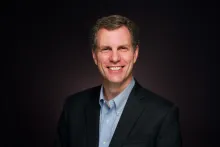
Tim Pebworth is the pastor of the Bordeaux and Narbonne France congregations, as well as Senior Pastor for congregations in Côte d'Ivoire, Togo and Benin. He is responsible for the media effort of the French-speaking work of the United Church of God around the world.
In addition, Tim serves as chairman of the Council of Elders.
