

Tim Pebworth
This transcript was generated by AI and may contain errors. It is provided to assist those who may not be able to listen to the message.
In April of this year, Jeanette Winterson presented a TED Talk in Vancouver, BC. It was entitled, Is Humanity Smart Enough to Survive Itself? Ms. Winterson is a British author and thinker, and she argues that we are in unprecedented times. She posits that human beings are the success story of evolution. She's agnostic. And in fact, we are the only known success story in the universe, but the real question is whether we are smart enough to survive how smart we are. According to her, we as a species have reached a point where, unless we make some difficult decisions, our inclination for war, an unsustainable appetite for resource sources, is going to render us, in her words, a suicide species. We as humans, in her view, are not fit for purpose. Something is missing. Something must change. But she is hopeful as she begins her talk. She is hopeful because she believes that the next step in our human evolution is emerging with artificial intelligence. Something she likes to call alternative intelligence. She argues that AI is not racist, egocentric, or violent, as we are as human beings. And if we can harness the power of AI to tame our nature, we have a chance to continue on this minute. If we don't, in her words, we may choose the apocalypse. She actually grew up in an evangelical household. I find it interesting that around the world, people like Mrs. Winterson see humanity as being at an inflection point, a fork in the road, as it were. And they see the decisions that we make in the coming years either leading to complete annihilation or upwards towards another level of evolution. And again, I'm speaking here in terms that she describes. And it is this inflection point that we actually heard read at the very end of what the sermonette discussed. If you turn with me to Matthew 24, verse 22, Mr. Diggins read this, and he finished with this verse, and we're going to spend time. In fact, the focus of this message is going to be on this verse, Matthew 24, verse 22. Matthew 24, verse 22, you were just there, it says, and unless those days were shortened, no flesh would be saved. But for the elect's sake, those days will be shortened. And so in just over two weeks, we're going to observe the Feast of Trumpets, followed by the other fall holy days. And we're going to celebrate the return of Jesus Christ and the establishment of God's kingdom on this earth. But we must also accept that those events, the events ahead of us carry with them unimaginable destruction and chaos. And with this in mind, I want to talk through the two parts of this verse. The first part is that unless God intervenes in world events, we as humans will not survive. And this is talked about frequently, as we'll see. And the second part of this verse says this doomsday scenario is not going to happen.
And that doesn't mean it's not going to be difficult. It just means that we have hope, and we should not walk around anxious or worried about our future. And my desired sort of outcome, the takeaway, I hope that you take away from the message today, is that we must learn to live with a certain amount of uncertainty. And certainly a certain amount of uncertainty in our human and governmental institutions. And we have to develop a certain resilience, a certain grit, a strength that comes from knowing that God will protect us. Because that's what it says in the second part of the verse. He will protect us. He will protect his people, and he will lead events at the pace of his own choosing. And so the title of my message today is simply preparing for the fall feasts, preparing for the fall feasts, and we're going to cover these two parts. Part one, part two. Two phrases in one verse. So let's begin with the first point, Matthew 24 verse 22. Unless those days were shortened, no flesh would be saved. So Miss Winterson's TED Talk is popular. About a thousand people view it a day.
There have been about 600,000 views on this 18-minute TED Talk, which if you've ever watched the TED Talk, may not be that much. You can see 5 million, 7 million views, some really remarkable numbers, but it's only been posted a few months. Our culture is actually filled with movies and books, even music, which speak to an anxiety about the end of the world. There's actually even one phrase. What is it? It's the end of the world and I'm okay or something like that. It's, we speak of the apocalypse, Armageddon, and the rise of a totalitarian fascist state, and really some of the greatest minds on the planet are focused on suggesting solutions for this and pointing out the risks. Few, though, in my view, have gotten closer than Miss Winterson's point in her TED Talk because she's proposing a change in our nature. She's actually getting to the real point in her view, which is that our very nature is the problem. General Omar Bradley, commander of the First Army on D-Day during World War II, gave a speech on November 11, 1948. This is a little while ago, so this is not part of the current discourse. And this is what he said. You might have heard this speech, 1948. He says, we have men of science, but too few men of God. We have grasped the mystery of the atom and rejected the Sermon on the Mount. The world has achieved brilliance without conscience. Ours is a world of nuclear giants and ethical infants. We know more about war than we know about peace, more about killing than we know about living. If we continue to develop our technology without wisdom or prudence, our servant may prove to be our executioner. 1948. Interesting words. General Bradley, a professed Christian, and Jeanette Winterson, a professed agnostic, can both agree that something is not right with human nature. Turn with me to Ezekiel 36.
I think this is the key point. Sometimes people can poo-poo Christianity or religion or organized religion or whatever it might be, but someone like, I think, Jeanette Winterson puts her finger right on the issue, which is that there's something quite not right. In her words, we're not fit for purpose. Ezekiel 36 verse 26 says, I will give you a new heart and put a new spirit within you. I will take the heart of stone out of your flesh and give you a heart of flesh. I will put my spirit within you and cause you to walk in my statutes and you will keep my judgments and do them. And so there will be a change in our nature. There will be a fusion with a different kind of intelligence, the true intelligence. And Isaiah 2 verse 4 adds that we as human beings, after this change, will not learn war anymore. Let's look at what this means in Hebrews 8. Hebrews 8 verse 11. Hebrews 8 verse 11.
It says for this, Hebrews 8 verse 11.
We'll actually start in verse 10. Hebrews 8 verse 10. For this is the covenant that I will make with the house of Israel after those days, says the Lord. I will put my laws in their mind and write them on their hearts, and I will be their God, and they shall be my people. None of them shall teach his neighbor and none his brother, saying, Know the Lord, for all shall know me, and from the least of them to the greatest of them. So the Protestant world understands that the new covenant begins with the death and resurrection of Jesus Christ, but according to them, the church of God would believe that the new covenant would begin with the second coming of Jesus Christ. I don't know if you've ever heard that criticism of us, but of course that's not true. It's just a characterization. That's not true. The church of God understands that we are new covenant Christians. We live under the new covenant. We are disciples, as are the disciples in the first century, under the new covenant, but we understand that God is writing in our hearts now, and will write in the hearts of those in the future His law. But that's not the case today. That's not the case today. That's the reality we read here. It says in verse 11, None of them shall teach his neighbor, and none his brother, saying, Know the Lord, for all shall know. So if you have a chance to go to India on business, or you have a chance to go to China, if you had a chance to go to certain countries in the world, you'll realize that they don't have the law of God written in their heart. They don't accept the God of Abraham, Isaac, and Jacob. They don't accept this new covenant. They don't accept Jesus Christ. So we can't get around that. There's a concept of firstfruits that's in here.
It's not yet fulfilled. And so that's how it is today. The church is being made ready. Even those us in God's church, we have some difficulty sometimes, don't we, allowing God's law to be written in our hearts, and for our nature to change. That nature comes out.
So up to this point, you may be thinking, okay, yeah, I'm with you. Seems like a little bit of a review. Probably heard this before. And it's true. But given these truths, then, why would we expect our leaders within our government, or people in general, to suddenly change? The prophecy from Jesus Christ is that unless those days would be shortened, no flesh would be saved. Jeanette Winterson is right in that sense. As human beings, we are not fit for purpose. Something is missing from us and in us. There's something that God can do. He created us in His image, and He put that tree there, and He said, go take that tree, the tree of life, and receive that life. And we rejected it. And throughout the millennium, we've been cut off. We haven't had that full experience that we should have. And we may wish that our government would make better decisions, and we should certainly pray for our national leaders to make good decisions.
But we should live our lives knowing that something is fundamentally wrong with the way we are as humans, whether it's us or our leaders, and a change has to take place. So that change, according to Jeanette Winterson, is going to be emerging with AI.
Elon Musk doesn't even worry about that. He just says we need to be an interplanetary species so that when we destroy ourselves here, we have someplace else to live. The richest man in the world, right? These people are influential now. So we can put our faith in those things, or we can put our faith at the word that Jesus spoke concerning this transition from the age of man to the age of God is going to play out this way. If our faith is in the age to come, then let us not become ensnared in trying to save our world today. It's very easy. We really wish things wouldn't be so bad. We really wish that people would make better decisions.
We can make our corner of the world better as God's Spirit leads us. We should certainly be influencing the world for good. God can use us to do beautiful things, and we should do that. But if we start involving ourselves in the politics of the world, pushing others to do as well, trying to hope that things are going to be different, we can lose sight of Matthew 24, verse 22, that no flesh would be saved alive. And we can also bring divisions in among us.
I'd like to read something that I think is very interesting. It's from the March 1976 edition of The Plain Truth magazine. March 1976. Imagine. That's quite a while ago. This is from a personal that year. It was written by Herbert Armstrong. And I'm going to quote from it because I think it's very interesting to think that, you know, this is nearly 50 years ago. This is what Mr. Armstrong wrote. A United States senator preached a sermon in a Methodist pulpit in Los Angeles a few years ago. Of all things, imagine a well-known senator saying that patriotism is a false god to many people. And he's right. Love of country can descend the love of God, he said. And we must, in time of stress, avoid making patriotism a religion. He said a number of other things I could have said myself among the idols professing Christians worship. He cited prosperity, science, patriotism, peace, and some people actually make an idol of the Bible, strange as that may sound. Some, he said, worship the Bible itself, not as containing truths necessary for salvation, and I add, as a guide to a way of life. Mr. Armstrong concludes that little section by saying, what is your idol? I think it's like he could have written it for today, 45, 46 years ago, about our national, social, and political climate. How many make patriotism into a false god?
Turn with me to 1 Samuel 8, and let's see a time when God's chosen people took their eyes off God and really wanted God to save them from difficulty. 1 Samuel 8, verse 5. Speaking of the elders of Israel, they gathered together and they said to Samuel, look, verse 5, you are old and your sons do not walk in your ways. Now make for us a king to judge us like all the nations. But the thing displeased Samuel when they said, give us a king to judge us. So Samuel prayed to the Lord, verse 7, and the Lord said to Samuel, heed the voice of the people and all that they say to you, and the Lord said to Samuel, and the Lord said to the people, and all that they say to you, for they have not rejected you, but they have rejected me, that I should not reign over them. So when the people seek a person to save them, they're really looking like, go, go, go fix these problems that are in front of us. And instead of looking to God, they look to a person, and they make an idol out of that person. And that leader can engender a false religion and become an idol in themselves. Hitler was going to save Germany. That's why they followed him. Mussolini was going to save Italy. That's why they followed him. Why do you think the Russians are doing what they're doing? Because they love what Vladimir Putin has done to turn around Russia. The support is very strong. Verse 9, "...now therefore heed their voice. However, you shall solemnly forewarn them and show them the behavior of the king who will reign over them." And so in verse 10 to 18, God describes what kings will be like and how, you know, it's a very interesting discussion. And so finally, he summarizes things. And then the people reply as they reply today in verse 19. Nonetheless, the people refused to obey the voice of Samuel, and they said, no, but we will have a king over us, that we also may be like all the nations, and that our king may judge us and go out before us and fight our battles. That's what we want. We want somebody to come in and fix things. And we are going to be subjected to that in this country as things get worse and worse and worse. And we ourselves could get wrapped up in this. Oh, man, if this person could just fix this. The truth is that God will lead and address the root issues that impact our lives. And nobody's going to fix human nature except the death of Jesus Christ that covers our sin and reconciles us to God. That's the only solution. My problems are not going to be solved at the national level. They're going to be solved at the local level in my prayer closet. That's where my problems are going to be solved. My nature and my neighbor's human nature is not going to be solved by an executive order or the repeal of law or some great person that's going to lead us to save whatever situation we're in. So let's go back to Matthew 24 verse 22. Matthew 24 again in verse 22. And let's read that.
And unless those days be shortened, no flesh would be saved. I think Jesus makes it clear, and the great thinkers of our modern age agree that human nature must change, otherwise there is no hope. Without a change, even an agnostic like Jeanette Winterson will conclude we're not going to make it. We're not going to make it. That's a prophecy. This is a truth.
We need to develop the resilience and the grit to understand that, that as things get more difficult, we have to be prepared. Part two of this verse says, but for the elect's sake those days will be shortened. So when Jesus says that no flesh would be saved, the amplified Bible translates, no human being will endure and survive. But those days are going to be shortened. Those days are going to be shortened. The destruction of manatee is not a foregone conclusion. It's not a foregone conclusion. The doomsday preppers and those who want to spread fear about the future take note. Take note. So what does this mean? Well, it means at the simplest level that we can infer that unless God intervened, even the elect would die. That's what we can infer. That something so terrible, something so bad would happen, that even wherever we were on earth, as flesh and blood as human beings, we also would be killed. But that's not going to happen. We're going to be saved. God is not going to allow that to happen. Turn with me to Daniel 12. We're going to read verse 1 this time. We read the end of Daniel 12. But the first part of Daniel 12 is pretty important in this regard.
Daniel 12 verse 1, it says here, Daniel 12 verse 1, At that time Michael shall stand up, the great prince who stands watch over the sons of your people, and there shall be a time of trouble, such as never was since there was a nation, even to that time. And at that time your people shall be delivered, everyone who is found written in the book of life. Everyone who's found written in the book of life. Now we we speculated over the years about the level of protection that God's people will be provided as things start getting difficult. And some have said, well, we don't know for sure. Some may be spared. Some may be not. And it's sort of in my mind, it's kind of become a little ambiguous. But I look at Daniel 12 verse 1, and to me it's almost mathematical. It's that level of precision.
Name in book of life equals people delivered from trouble. That's what it says. It says book of life right here. Everyone who is found written in the book of life shall be delivered. So it feels pretty clear. Now there's always some exception. There's always something. And God has plans. We know, for example, that the two witnesses discussed in Revelation 12, they're going to be martyred. So there's always, you know, after church we can talk about those exceptions. But this is the rule. This is the rule that we just read in Revelation 12 verse 1. This scripture should give us a great deal of peace. It should give us a great deal of confidence. It should take away a certain anxiety as we see things getting more and more sort of messed up. To know that we're going to be protected no matter what happens. No matter what happens, that we can take comfort as God's people. We're going to be protected. In a previous sermon I made reference to Revelation 12, which spoke of God taking the church into the wilderness to her place. We often say a place of safety. We heard about this in the sermonette. So in terms of spending mental cycles, I really hope we can avoid a lot of churn and anxiety around this. And we can put our minds at ease. But the question then is, how should we behave then as we approach these times? Right? So now that we know this, what does this mean? How should we approach the fall holy days? How should we be living our lives? And I remember as an 11-year-old sitting in church on the Feast of Trumpets, and the person up there was saying, well, you know, we don't know when this is going to happen. It could happen in five years, or 10 years, or 15 years, certainly in 30 years. Well, 30 years has come and gone. And you know, I don't know how many 11-year-olds we have here. But if you walk up to nine, or 10, or 11-year-old here, and you say, you know, in 30 years, you're going to be a millionaire. It just doesn't compute. They're like, well, can I have the money now? You know, the concept of 30 years just does not exist with an 11-year-old. That is just like, well, if I don't have it now, I'm never going to have it. You know, it's just forever in the future. So for me, I thought, well, I guess it's going to come. And here we are. It has not come yet. And so we can, to some degree, say, well, you know, what do I do?
We're waiting and waiting and waiting. Well, let's go to Mark 13. And again, I think it's interesting that we spend time in both these verses, but in different parts of them. Mark 13, verse 32. Let's see what Jesus says about this, because it's actually described. What do we do? While we wait. So, you know, in verse 14, we heard about the abomination of desolation. In verse 32, we kind of see what to do about it. Mark 13, 32.
But on that day and hour no one knows, neither the angels in heaven nor the Son, but only the Father.
Take heed, watch and pray, for you do not know when the time is. Okay, we've heard this. But verse 34 is interesting, because now he's actually going to give a very specific example. He says, it's like a man going to a far country, who left his house and gave authority to his servants, and to each his work, and commanded the doorkeeper to watch.
Now, the Living Bible translates verse 34 this way. So, we have work to do while he is gone. That's what we're supposed to be doing. We're supposed to be doing the work that he's laid out for us to do. And there's many ways. And sometimes we can think about these things sort of maybe in terms of what other people might do, or maybe abstractly. Well, you know, the work of the church is to preach the gospel. Well, that's true. But I'm the church, and you're the church. So, okay. So, clearly we've got that responsibility. But there's more, and there's analogies, and there's the parable of the talents, and there's various other biblical discussions about what we should be doing right now. And it relates to the work that God has begun in us as we grow into Jesus Christ in all things. So, there's the development of character, there's the development of a connection to God, and understanding, and allowing His Spirit to work in us. It relates to, of course, preaching the gospel. It relates to using our talents and developing those talents to do good in our communities, in our areas around us.
And all these metaphors and analogies, what they do is they attempt to show that God has called us to engage in this life, to engage in the life that He's set before us, to embrace this life, and to grow through the individual trials that we face. And so, sometimes we want to think, well, okay, what can we do to sort of stop these things in motion? And I see things kind of deteriorating around me. What can I do? Well, that's great. But when that crosses the line to, I'm going to stop this stuff, well, then now we're just kind of going against the prophecy of Matthew 24 verse 22, because there's no way to stop it. It's going to happen. So, let's kind of learn to deal with that. Let's learn to roll with the punches. Let's become resilient. Let's develop the grit we need. Let's have the confidence and faith that we can connect with God the Father and Jesus Christ and allow ourselves to move forward in faith, despite what might be going on around us.
Now, I had a chance to talk to Mr. Kubik this week, and he was talking a little bit about Ukraine and how they had a summer camp in Ukraine this year. It was a summer camp for two months. They basically transported a hundred kids, and instead of having a summer camp for a week, they took them out of a dangerous area in the north of Ukraine, and they transported them to the western section of Ukraine where it was safer. And they just said, well, we're just going to make it a summer camp, instead of like trying to, you know, just sort of, oh, woe is us, and there's a war, and people are dying, and I don't know what to do. They're like, we're going to have a summer camp. And so they moved on with their lives for two months and just focused on having a nice summer camp for the kids, and the people worked around the summer camp, and they did that. And I think that's an interesting analogy, that if we were living in a war zone, would we think to have a summer camp? Probably not. But that's how they reacted. That's how they dealt with it. And now he was explaining that, well, summer's over, so the kids have to go back, and so they're going to go back into more dangerous situations. And as we know, millions of people have fled. Not everybody can flee, and there's people that are still there. But I think it's an interesting sort of response to that. And to some degree, we can learn from that, that as things degrade and chaos ensues, well, maybe we're going to proceed to have some fun. Maybe we're going to proceed to deal with what's in front of us and make the best of those things. That's grit. That's resilience. And then we're going to be lights. We're going to serve our communities. We're going to show a new and better way of life. We're going to serve one another in the church. We're going to look for ways to help. We're going to support our families, whether in the church or out of the church. And when we begin to consider these facets of our work, we realize that just as in a household with gardeners and cooks and maids, you know, we love to live in a household like that, right? Have all those people around.
Everyone has individual talents, and each one is going to need to follow the direction of the Master, as it says in verse 34, and to each his work, to each his work. And so the question is not to Jesus Christ and God the Father, what's taking you so long? And sometimes I kind of feel that way. You know, it's I was 11 years old, and I heard this, and it's been more than 30 years. The question is not what's taking you so long. The question is from Jesus Christ and God the Father to us. How are you doing on the work I've given you to do? Can I see in you the reflection of my son? Now, on the other hand, our society wants to pretty much suck the life and energy from us through monopolizing our time. I'm sure most of you will be on your phone sometime this afternoon or tonight, tomorrow, and every time there's a downtime, it's, you know, we pull out the phone, and we look and see what's going on there. You know, that's kind of how we cope. Distraction, essentially, is the, you know, scrolling or swiping. And I don't think God wants us to spend all our time swiping and scrolling. Maybe there's just a little bit of time of meditation about some of these things on how we can support one another, the work that we have to do. What is our work? And then verse 35 says, Watch therefore, for you do not know when the master of the house is coming in the evening at midnight, at the crowing of the rooster, or in the morning, lest coming suddenly, he finds you sleeping or scrolling.
And what I say to you, I say to all, watch. Watch. Okay, so we've got some work to do. Watching is not being a spectator, though. See, a lot of times we associate watching with, like, watching sports. We're a spectator. We're looking at the game. Now, I think watching means being connected to God's purpose for our lives, because that's the context of what it says, to each his work.
So again, let's go back to Matthew 24.
And we're going to just read a couple passages past this, because there's an aspect to this that Mr. Silicom brought out recently that I want to mention here in this context. Because we're going to go from verse 22 over to verse 45, because when we don't keep our eyes on what we should be doing, and our spiritual efforts focused on Christ, something happens. Verse 45, Who then is a faithful and wise servant, whom his master made ruler over his household, to give them food and do season? So this is the same concept in Mark 13 we talked about. So each of us in the household has work to do. We all work together to ensure that there's food and do season. That's how it used to work. The family used to work together, everybody doing their part. In verse 36, Blessed is that servant, whom his master, when he comes, will find so doing.
We have our work to do. We're doing that work. The master arrives. He says, okay, you've got five talents. How'd you do? And he says, well, here's the talents. Well done, good and faithful servant.
I'm sure that I say to you that he will make him ruler over all his goods.
Verse 48, But if that evil servant says in his heart, my master is delaying his coming, and begins to beat his fellow servants and to eat and drink with the drunkards, the master of that servant will come on a day when he is not looking for him, and an hour that he is not aware of, and will cut him into and appoint him his portion with the hypocrites. There shall be weeping and gnashing of teeth. In this case, what happens when we don't keep our eye on what we should be doing is we can become abusive. Now, why would we become abusive? We're nice people, right? Why would we do that? Well, we just came through a pandemic, and I think we saw a lot of stress. People were experiencing a lot of stress in that pandemic, and when people are under stress, they do things. They get irritable. They get frustrated. They get maybe even a little abusive because things are not going the way they're supposed to go. And why are we making this decision? Why are we doing that? You know, if we don't have enough to eat, if our job's on the line, if we're going to lose our house, you know, that puts a lot of stress on people, and they start doing things they wouldn't otherwise do. So what's hard about this verse is we don't see ourselves in this verse because we don't think we're abusive people, but given enough stress, given enough stress, we're going to do things that we're going to regret. Maybe you've already experienced that in your life. Maybe you've already experienced things and said things where you're like, oh, I shouldn't have said that. I was under stress. I didn't mean to say that. I thought something was going to happen. Well, when things get rough, it's going to be rough. That's why we need to develop that resilience, that grit. We need to be able to work with one another and learn from one another and get through these things. Otherwise, we're going to get off track. We're going to lose our way, and our eyes need to be refocused, then, on the upward call of Jesus Christ.
You know, after I was baptized in the margin of my Bible, I created a little box in my Bible where I wrote the year and the location where I kept every feast day from the time I was baptized. That way, I can look back and say, well, where was I in the feast in Acts number of year?
Well, I ran out of space in my margin. I don't know how many years. I have to go back. I look in Leviticus 23. I'll go back there and see how many years I've got in there, but I put it in the margin next to Leviticus 23, where I have a record of every year. I encourage you to think about doing something like that. I think it's great to look back on where we kept each holy day and to have fond memories of the various feasts and so forth. So maybe something, if your margin is empty, you might try that and put down, you know, 2022 feast of tabernacles and where you were and so forth so you can remember and you can picture what it's like to be there.
But until that day comes, we've got to learn to work with one another and to grow spiritually and mature and let God build His divine character in us. Ironically, as I've said, I think Jeanette Winterson is right, but it's not going to be a fusion with artificial intelligence.
It's going to be a connection with a true intelligence, and we have that opportunity right now to have that connection with a true intelligence. Are we ready to repudiate our own human nature? That's really the question. Are we smart enough to survive how smart we are? I think we, as God's people, have to start by recognizing we have to repudiate our own nature. If it feels like we should do it, it's probably not what we should do.
We have to ask, is that God's Spirit leading us or is that my own fear? Is that my own desire? Is that my own pride about what we should be doing? This fusion has to take place, and we are God's kingdom in that sense now, and that has to change with us. And this is our only hope of us avoiding destruction by becoming abusive one to another and then being thrown out and missing our chance.
You know, General Douglas MacArthur, in his famous speech aboard the USS Missouri during the when he accepted the surrender of Japanese forces, and again, this is 1945. This is a quote from 1945. We've got to get out of our head that somehow human nature is different. Human nature is human nature. He says September 2nd, almost, what is that, 70 years ago, he says, 1945, I can't do the math on that, what is that, 75, 77 years ago, he says, we have had our last chance.
We've had our last chance. If we will not devise some greater and more equitable system, Armageddon will be at our door. When Vladimir Putin invaded Ukraine in February, many observers were shocked because his actions resembled that of a 19th century dictator. And we're in the 21st century. We, countries don't invade other countries in the 21st century. We, we have the United Nations.
We, we've somehow changed. And that illusion was shattered. That illusion was shattered in Europe and in the United States, that we live at a time where someone will take an army and march it across the border of a sovereign nation to subdue it and make it a vassal state.
That's the age we live in. And that's going to happen again. You've probably heard about China and Taiwan. It's going to happen in other places. We've moved beyond that post-war, that post-World War II era. We should not imagine in a time like this that our help is going to come from our governmental leaders or some mass repentance.
Human nature can only be changed through divine intervention and our create, by our Creator, by accepting the sacrifice of Jesus Christ and making changes. That change is not going to come from an evolutionary progression. And it's a very interesting TED Talk, if you want to see it, but it's not going to come from a fusion with artificial intelligence. It's going to come from a fusion of our human intelligence with something far superior to ours when God's law is written on our hearts.
That's the true fusion that's going to deliver us. Our hope and our help will come from responding to that calling. I hope by describing this this Jeanette Winterson discussion that you can see that this is not something the Church is just talking about. This is something that the greatest minds in the world are talking about.
How do we solve this problem of our own survival? And in the Church we have something we can hang on to. The question is, do we have the faith and the belief to know that it's true and to live our lives accordingly? Not just some academic truth, but to truly live our lives accordingly. And I hope we can be thinking about these things as we prepare for the Feast of Trumpets, as we go to the Feast of Tabernacles. That what we're celebrating, what we're thinking about with God's return, with Jesus Christ's return, the putting away of Satan and the establishment of his kingdom, is going to be accompanied by a lot of difficult things.
And we can go and we keep the Feast and we can have a great time and we can celebrate and we should, but are we really prepared for the events that are going to come that those day picture? And I hope this has been helpful for you and for me to understand better.
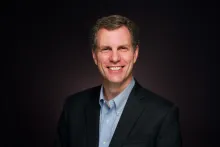
Tim Pebworth is the pastor of the Bordeaux and Narbonne France congregations, as well as Senior Pastor for congregations in Côte d'Ivoire, Togo and Benin. He is responsible for the media effort of the French-speaking work of the United Church of God around the world.
In addition, Tim serves as chairman of the Council of Elders.
