

Steve Shafer
This transcript was generated by AI and may contain errors. It is provided to assist those who may not be able to listen to the message.
Mr. Shafer.
Good afternoon, everyone. I'll go over on this side so I don't knock over my prop. Just so you know, I've got three. I'm gonna do it about... I guess it's probably a powerless point rather than a PowerPoint because it's drawings and not computer. No power here, but just... but I do want to give special thanks to three assistants, two here today, and Mr. Jim Mazzell. I mean, Mr. Michael Rose, first of all. Excuse me. Mr. Michael Rose, who, as you might know, taught drawing many years ago and before he retired. And he does professional drawing. And so he did all the drawings here. I have 16 drawings I'm going to show as kind of part of the presentation to illustrate something. But he did all the drawings. I want to especially thank Mr. Rose for the wonderful artwork he did in putting this together for me. I also want to thank Alex, who's going to be my assistant today, and saved me from having to do the day I turned the pages, but she's going to turn the pages for me when the time comes. So I appreciate her assistance. And Jim Mazzell assisting back there with the camera. What he'll do for those of you who are online, he'll focus in on this one. I get to each slide for about 30 seconds or a minute. You know, I'll be speaking a little bit between the different drawings. So I want to thank Michael Rose and Alex and Jim Mazzell for being my assistants here today.
I want to show you something today which I think is quite amazing. I got introduced to ancient Hebrew about eight, nine, ten years ago. Dr. Frank Seakins. He is an instructor of a teacher of Hebrew at, I think, the University of Arizona. And he got into studying ancient Hebrews. Well, he doesn't teach that. He's a modern Hebrew, but he studied into that, spent many years researching that, and has put together a lot of information on that about what ancient Hebrew is and what kind of wonderful language it was. And so I went to one of his lectures here, I think, about 10 years ago, up in Bertrand. And I was amazed by that particular language and how it works. But today I want to show you something which I think is quite amazing, formed by ancient Hebrew word pictures. It's going to be out how ancient Hebrew relates to marriage and to the marriage covenant and to the marriage relationship between a husband and wife. And how ancient Hebrew gives the key to the success or failure of any given marriage relationship. We'll also see, interesting, the amazing role that fire plays in any and all marriage relationships. In ancient Hebrew, it was just a very, very revealing and interesting language, which most people don't, aren't aware of.
Some feel that, in fact, I went, you online, do a little research, some feel that maybe ancient Hebrew might have been the original language that God gave to Adam and Eve. There's no way of knowing that, and who knows if that was the case or not. But when you understand ancient Hebrew a little bit about the way it was formed, you can see that that might be a possibility.
I don't have time to illustrate this, but I just want to mention this, just to start with. I don't have any drawings on this or anything, but it's interesting. You know, it talks about how Adam and Eve were placed in the Garden of Eden.
And was that just a nice name that God picked for that garden, or does it have some meaning? We know in the Garden of Eden there was a tree of life, and we know there was also the tree of the knowledge of good and evil. But why was it called the Garden of Eden? See, the word Eden in ancient Hebrew is a very interesting word, and it gives a very interesting word picture.
Eden in ancient Hebrew is spelled with three letters, An, Dalit, Nun. You'll be acquainted with Dalit, Nun a little bit later in the lecture. An was drawn to picture a person's eye, it became our letter O, which also, as you can see, you could picture a person's eye. And it portrayed to see something. Dalit, Nun, Dalit was a door we'll see a little bit later. Nun is picture's life. So Eden, the word picture meaning of the word Eden is to see the door to life. And the tree of life was there. The door to eternal life was there. That's why it's called Eden, because that was where you could see the door, the doorway, the pathway to eternal life.
There are 22 letters in the ancient Hebrew language, or just in the Hebrew language, modern Hebrew has 22 letters as well. 22 letters in the Hebrew alphabet, I should say. In ancient Hebrew prior to the fall of Judah. In Hebrew, there was, well, the Old Testament was originally written, we know it was written in Hebrew. It was originally written actually in ancient Hebrew. Today you see it in modern Hebrew, but it was originally written in ancient Hebrew.
Each of those 22 letters of the ancient Hebrew alphabet were drawn to picture something. It was called an ideogrammatic language, because each letter of those 22 letters was drawn to picture something. It was drawn as a picture of something. So when you could get the letters together in a word, that word then had a word picture meaning based on the pictures of the letters used in that word.
So it's amazing thing is, you know, if you understood that and you had that, which wouldn't, it's not hard to learn at all. I mean, you could learn all 22 letters and commit it to memory within a very short period of time, because it's visual. And once you understood that, you could readily see the meaning of some of the words without ever needing a dictionary, because they would give you a word picture meaning.
I want to give two examples of that in just a little bit. But today I want to focus on three particular Hebrew words as we get on to the lecture a bit later on, and at their ancient Hebrew word picture meanings. And we'll look at these three Hebrew words, how they relate to each other, and how they reveal the key to either the success or failure of any given language. And it will show why many marriages fail, why there's so much divorce today, it's a part of the reason, a major part of the reason why so many marriages fail, and they'll show what the key to success of any given marriage is.
And what it will take in order for a marriage to be successful or for marriage to be restored. The title of my presentation here this afternoon is Men, Women, and Fire. Men, Women, and Fire. Those are three Hebrew words we're going to look at here a little bit later. And I wanted to give you the source of a lot of the information. This is a book that Dr. Seekens wrote many years ago. This is a revised updated one, Men, Women, and Fire, by Dr. Frank Seekens, S-E-E-K-I-N-S. And his website is livingwordpictures.com.
I want to first look at how Hebrew, Greek, and English, how those three languages all relate to one another. It's really quite amazing.
Again, as we all know, the Old Testament was originally written in Hebrew, and the New Testament was originally written in Greek. But what you may not realize is, I kind of hit it at already, is that most of our English alphabet were derived from the ancient Hebrew alphabet. Almost all of our letters, with just very few exceptions, are derived from the ancient Hebrew alphabet. And they're drawn very similar to the way the letters were drawn in ancient Hebrews. We'll see as we go on into the lecture.
It's interesting also that Christ himself emphasized both Greek and Hebrew as being important languages. For example, in Revelation 22-13, I won't turn there, but in Revelation 22-13, he said, I am the Alpha and the Omega, the beginning and the end, the first and the last. Of course, as you know, Alpha and Omega were the first and last letters of the Greek alphabet. They were the beginning and the end, and the first and the last letters of the Greek alphabet. As far as Hebrew goes, we have Christ saying this in Matthew 5.18. He said, Assuredly I say to you, till heaven and earth pass away, one jot or one tittle will by no means pass from the law till all is fulfilled. Jots and tiddles were used exclusively in the Hebrew alphabet.
Jots were used in reference to the Hebrew alphabet, as were tiddles. Now, the jot referred to the letter Yod, which is the smallest letter of the Hebrew alphabet. To show you what it looks like in modern Hebrew, turn to Psalm 119 verse 73. Every letter of the Hebrew alphabet is used in Psalm 119. I'll explain that a little bit later, why that is and how that breaks down. In Psalm 119 verse 73 and above verse 73 you see Yod, Y-O-D. To the left of the word Yod, that particular letter of the Hebrew alphabet, is a little insignificant. It looks like an apostrophe. That is actually how the letter Yod is drawn in modern Hebrew. This is modern Hebrew that they show here, not ancient. That is always like an apostrophe. It was called a jot, because that is what it was. It is like an apostrophe. It is the smallest letter in the Hebrew alphabet.
The tittle was the smallest part of a Hebrew letter.
Like the dot over the I would be in English. You want to say, what is the smallest part of an English letter? Well, probably a dot over an I.
Some Hebrew letters have little tiny dots and little things like that, marks that were very, very tiny. So the jot was the smallest letter, and the tittle was the smallest mark that had to do with the letter of the Hebrew alphabet. So Christ himself authenticates and emphasizes both the Greek and Hebrew alphabets. Now, I want to note here, Alex, you can go ahead and turn this to the first drawing here if you want to. I just want to note our English word alphabet, because it's an interesting word. We don't think about it too much, but alphabet actually consists of two words. Alpha, which you've already learned is the first letter of the Greek alphabet, and bet. Alpha, bet. Greek, Hebrew, because bet, the letter bet, is the second letter in the Hebrew alphabet. Alpha, first letter Greek, alphabet, bet's the second letter in the Hebrew alphabet. When you think about that, this ties our English alphabet to both Greek and Hebrew, because that word consists of a Greek word and a Hebrew word.
And as I already mentioned, nearly all of our English letters, English letters in our alphabet, tie in directly and were derived from ancient Hebrew letters.
Now, after the Babylonian captivity, after Judah fell, and after Babylonian captivity, the Hebrew letters were changed into what we now have as modern Hebrew, and they then lost their ancient Hebrew word-picture meanings and drawings, where they were drawn, because modern evil is not an idiomatic or a word-picture language, as was ancient Hebrew. So that then is just a small sampling of how Hebrew, Greek, and English all relate to one another. There is a relation that most people probably don't realize. I want to ask a question. I mean, we already know the answer, because Christ created all things, so he undoubtedly created the original language, whatever it was. But did Christ understand ancient Hebrew word-picture meanings? I want to show some scriptures that illustrate that indeed he certainly did. There is no doubt of that in my mind. And we can illustrate that by looking at one particular word in Hebrew, which we'll lock on in just a minute. Alex, you can go ahead and change it to the next one, the second one. We're going to look at the Hebrew name and the Hebrew word for judge.
The Hebrew word for judge is spelled with two Hebrew letters. It's spelled with letters Dalit and Nun, which is spelled D-A-L-E-T-H in Psalm 119. It's spelled N-U-N in Psalm 119, verse 105. Dal-E-T-H in Psalm 119, verse 25. Dalit Nun, or D-N in English, spells the Hebrew word Dan. And that's the Hebrew word for the name Dan, and it's the Hebrew word for judge. Dan in Hebrew means judge, as in Danielle, for example. Now, we have a son named Danielle. A lot of you might not have somebody who named Danielle, but maybe some of you have some of the Danials here, and we know there is one at least, for sure. And L is a Hebrew name for God. So now, if you know that Dan is a Hebrew word for judge, and L is a Hebrew name for God, what would Danielle mean? It would mean God is judge. So you see, you understand Dan is a judge, and L is God. All of a sudden, you've got a meaning of a word. God is judge. Danielle means God is judge, or it could be someone who would look at God as my judge.
Now, I want to just explain a little bit about Psalm 119, which is a very interesting chapter, as you may know and realize. It's the longest chapter in the Bible with 176 verses. Why does it have 176 verses? There's a reason for it. Psalm 119, as you go through, if you look at it in your Bible, because all the Hebrew letters are emphasized there, above certain verses, Psalm 119 features and displays all 22 letters of the Hebrew alphabet, but only as they are in modern Hebrew, not ancient Hebrews I've mentioned. The eight verses after each Hebrew letter all feature that particular letter, in that the first word of each of those eight verses following that letter begin with that particular letter. In other words, you look at Psalm 111. It says, Ayleph. A-L-E-P-H. And then it's got eight verses under there. If you had Hebrew there, each of those eight verses, the first word of each verse begins with the letter Ayleph.
Verses 9 through 16 says, B-E-T-H. The first word of each of those eight verses begins with the letter B-E-T-H. It does that through all 22 letters. Eight verses featured with one, emphasized by one particular letter. And you have 22 letters times eight verses. That equals... I've said that wrong. You have 22 letters featured eight times. Eight times 22 is 176 verses. That's why it has 176 verses in Psalm 119. Just one additional note real quick on ancient Hebrew. Ancient Hebrew, as many of you might know, was the words and the sentences were written from right to left. Not like... not left to right, like we do. But I'm not doing them here in my diagrams. I had Mr. Rose do them the way we read, from left to right, rather than right to left, because I did want to confuse our minds. I'd rather be grammatically incorrect in Hebrew, but be able to give the concept across. So I'm not writing the way they did in ancient Hebrew. I'm doing what we do in English from left to right. But my original question was, did Christ understand ancient Hebrew word picture meanings? What is the ancient Hebrew word picture meaning of Dan, the Hebrew word for judge? Okay, Alex, go ahead and turn to number three. And we'll look at the each of those two letters. It's two letters in the word for Dan, Dalit and Nun. Dalit, the first letter pictured, as you see here, this is the first letter in the word. It was drawn in ancient Hebrew. Dalit, or Dalith as it is, well it's pronounced Dalit, but it has an H in it in Psalm 119. And here's what it looks like. It pictured a door or a doorway, or an entryway. Now you might say, how does it picture a door or doorway? It's drawn here, it shows this is a horizontal rod with a curtain, because that's the way back in ancient Hebrew times, that's the way most entryways or doorways were. They were a rod with a curtain, so it's drawn like a rod with a curtain. What letter do you suppose Dalit became in English? It became our letter D, which is pretty obvious. Okay, Alex, you can go ahead and go to number four. The second letter in the word for Dan, the word for judge, is noon, spelled n-o-o-n, or n-u-n, as it is in Psalm 119. 105 is spelled n-u-n. And this is the picture of this way it was drawn in ancient Hebrew. I say, what's that? How many of you have ever been swimming and had goggles on in a lake where there's little tiny fish and you've seen fish? I used to fish swimming in lakeshine land, we have little fish sometimes, and you try to reach out and touch that fish, what does it do? It darts away. That's what this is. It's like a darting fish. And as a fish that darts, it has very vibrant life, unlike a fish that's dead and floats on the surface of the water. So the letter noon pictured life. That darting fish pictured vibrant life.
The fish darting through water pictured life.
In fact, what letter did that become? Well, you compress it this way and spread it out just a little bit. It became our letter N, which is very similar. So the letter noon became our letter N in English. Now, since Dalit pictured a door or an entryway, and since noon pictured life, what would the word picture meaning be for the word Dan, the Hebrew word for judge? The next drawing will show you.
Dalit noon. Door life. So judge means door to life. Now you think about that.
Door to life. Sometimes you think about, boy, I'm gonna have to stand some day before the judgment seat of Christ. And Christ is going to be my judge. And we worry a little bit about that.
But what does Christ as judge mean? It means that he is the door to life. He doesn't want to. He wants us to have life. He wants to give us eternal life. He wants to judge us in a positive way, not in a negative way. He wants all of us who have faith in him, who live by faith, regardless of how imperfect we are. He wants to give us the gift of eternal life because he wants to be that door that he's going to open up life through him. Give us the door to eternal life.
Of course, you can go ahead and take this on. Who is the judge of all mankind? Yeah, because my original question was, do Christ understand ancient Hebrew word picture means? As a judge, would he know that he was the door to life?
You know, Christ said, as far as the judge goes, Christ said, for the Father judges no one, but has committed all judgment to the Son. John 5, verse 22.
As the judge of all of mankind, did Christ understand what that pictured in ancient Hebrew? Do you understand? Did Christ understand that he was the door to life? Well, let's go to John 10. Let's get into Scripture for a moment. John 10. That's what Christ said here. Gives us a clue. He understood this. John 10, verse 7.
Then Jesus said to them again, most assuredly I say to you, I am the door. I am the door of the sheep.
Verse 9. I am the door. He understood it. He was the door.
The door to what? The door to what? If anyone enters by me, if he goes through me, because I'm the door, it's the only way you can go, and anyone enters by me, he will be saved. He is going to be given the gift of eternal life. Christ understood that he was the door to life. As the judge of mankind, he understood what that meant in ancient Hebrew. And then we'll go in and out and find pasture. I'm dropping down to verse 27. My sheep hear my voice, and I know them, and they follow me.
And I will give them eternal life. He didn't say he had to be perfect. He said, they strive to follow me. They stumble, they fall, they're impervious, but they're striving to follow me. And I'm going to give them eternal life. I give them eternal life, and they shall never perish.
Neither... notice how positive Christ is about this, about your future and my future, if our attitude is right. Neither will anyone snatch him out of my hand.
Hang in there. Don't ever give up. Because as long as you are living by faith, and Jesus Christ and his promises, no one will ever snatch you away if you hold on to that faith.
So Christ clearly understood that as the judge of all mankind, that he was the door to life, the door to eternal life, was what the ancient Hebrew word judge pictured in... what the word judge, I should say, pictured in ancient Hebrew. Now, I want to look at one additional Hebrew word. Alex can go ahead and change it to the next drawing. And that's the word AB. Aelif Bet were the first two letters of the Hebrew alphabet. Aelif Bet.
And the word ab, pronounced ab, pronounced like it was spelled AV but it's spelled AB. But the word ab, spelled with Aelif Bet. This is the first letter of that word for... is Aelif. Now, that AAB or ab is a Hebrew word for father.
It's pronounced A-A-A-B but it's pronounced ab. B becomes soft. Ab is a Hebrew word for father. It's spelled Aelif Bet. Aelif is the first letter in the Hebrew word for father. And you can find that one, of course, at the very beginning of Psalm 119. Psalm 119 verse 1 has the letter Aelif there. Now, Aelif was drawn like this. And this, to the ancient Hebrews, pictured the head of an ox.
The head of an ox. It's also, Aelif is also the Hebrew word for ox.
Pictured the head of an ox with a yoke. As you know, of course, the ox is a very strong animal. And it was the work animal of the ancient Hebrew culture. They lived in a grammarian society. They farmed. And the ox was the most valuable animal they had. It was the work animal of the ancient Hebrew community. As such, it symbolized strength or leader. The ox plowed first. You followed the ox. It was the strength and the leader that tiled the field. What letter do you suppose this became? Well, let's just turn a little bit and see. It became the letter A. If I'm holding that halfway straight.
Aelif became our letter A. Okay, now I'll let you go ahead and turn it to the next slide. And we can get the second letter in the Hebrew word for father, which is the Hebrew letter bet. Bet was a picture of a tent or a house. Of course, a lot of places, especially the ones that lived in tents. But a picture of a tent or a house. And bet is also the Hebrew word for house. In fact, we can think of some words that we are familiar with in the Bible to relate to that. Okay, what about the word Bethel? Bethel. There's a city in Israel called Bethel.
L, we already know, L is the word for God and A word for God in Hebrew. There are several, but it's A word for God in Hebrew. Bet is the word for house in Hebrew. So what would Bethel mean? A picture of Bethel would mean house of God. That's house, L, God, house of God.
I want to give you another one that's interesting.
Where was Christ born? He was born in Bethlehem, wasn't he? Why was he born in Bethlehem? Bethlehem is only a short distance from Jerusalem. You know, Jerusalem is a central part of the Bible. Why wasn't he born in Jerusalem? Where he's going to return as king of kings and lord of lords? Why was he instead born in Bethlehem? A little tiny village about five miles outside of Jerusalem. Very insignificant little city. Why was he born there? Well, we know Bethe, we've seen that Bethe means house. What does Lahem mean? He was born in Beth, house, Lahem. House of what? Lahem is a Hebrew word for bread. Bethlehem means house of bread.
Beth, Lahem, house of bread.
Why was Christ prophesied to be born in Bethlehem as he was in Micah 5 verse 2, which I'll just quote, Micah 5 2, but you, Bethlehem, though you are little among the thousands of Judah, yet out of you shall come forth to me the one to be ruler in Israel, whose goings forth are formed from old and from everlasting. Micah 5 2. So Christ was prophesied to be born in Bethlehem, as we know he was. Why was Christ prophesied to be born in Bethlehem? Why was he prophesied to be born in the house of bread? I think there's a reason. I think there's a connection.
Because I think it was because he was to become the bread of life. John 6 48. He was born in a house of bread because he was become the bread of life. Lahem, Kahih in Israel, in Hebrew, I should say. He was born in the house of bread because he was to become the bread of life. And what did he say in John 6 48 and 51? He said, I am the bread of life. If anyone eats this bread, he will live forever. He was born in a house of bread because he was to be the bread of life. There's a connection, there's a tie there. I think there's a reason why God does everything, and they all tie together and make sense and have meaning. Now, since Aleph, the first letter in the Hebrew word for father, pictured strength or leader, and since Bet, the second letter in the Hebrew word for father, pictured a house or a household, what is a father pictured as being in Hebrew? Well, the next drawing will show you. Father, A-B in English, or Aleph, Bet, in Hebrew, ancient Hebrew, Aleph, Bet. Aleph is strength or leader or head. Bet, pictured a house or a household. So a father in ancient Hebrew is pictured as being the strength or the leader of the household or the house, the strength or leader of the house. When a household loses a father, that weakens the household. It's stronger. God is stronger with the father. He's the strength of the household, pictured as being the strength of the household. But I want to give equal opportunity here to mothers. I'm not going to go into the Hebrew word for mother, but the word picture meaning for mother is even far more amazing than this. That's one of the most amazing word pictures I've ever noticed, but it needs a whole lecture of it myself, so I'm not going to go there. But the Hebrew word I've mentioned is the Hebrew word for mother also begins with the letter Aleph. It's spelled with two letters, mother, Aleph, mem. This is Aleph, Bet, mother is Aleph, mem. Pronounced M. M is the Hebrew word for mother. It also begins with letter Aleph, with picture strength. What is first? So mother is also pictured as being something very strong, something that's first. The letter mem, if you would draw a cursive, small case cursive M, that's about what the main portion of the letter mem, part of it, was drawn very much like our cursive M. And in fact, the letter mem became our letter M, and was drawn very similarly. What might you use your imagination? What might an M, small case cursive M, picture? It pictured a wave of water. It pictured water. So a mother and agent Hebrews pictures being first strong water, strong water, or first water. Now you might say, well, that's strange. What in the world would that mean?
Well, it might not mean a whole lot until the last 50 years. The last 50-year, science has made an absolutely astounding discovery about the human body, about mothers. And it's absolutely confounding, amazing what strong water means for a mother. I won't have time to go there, but I may give an electron later on sometime, Mother's Day, maybe. But I'll just mention this as well. There's something we say after a prayer. When we have a closing prayer, what do we say? We say, Amen. What are you saying when you say Amen in Hebrew? Who are you honoring when you say Amen? We've already seen Aleph Memm. I just mentioned Aleph Memm. The first two letters, Amen is Aleph Memm noon.
Aleph Memm is the Hebrew word for mother. So the word for mother is in the word Amen. And we already saw and looked at what the letter noon pictures. A picture is life. A picture starting through water. Life. And Aleph Memm is mother. So when you say Amen, you're saying a mother's life. You are honoring the life of a mother every time you say AM. You're saying, Amen. Let it be so. Let it be like a mother's life. Let it be so. Let it be as faithful and strong and as dependable as a mother's life for her children, to give life to her children, to be with her children, watch over her children.
Every time you say Amen, you are honoring mothers. And you're honoring the life of mother. And the devotion that God gave her to her to watch over and protect her children.
Let's see, where am I? My note's here. Okay, with that background in mind, then, that's interesting something to think about when you say Amen. You're honoring mothers. You're saying a mother's life. But with that background, let's go and get to the main part of the lecture here that I want to give, and that is men, women, and fire as they relate to marriage relationship. Now, those three words in Hebrew are very similar. They sound a lot alike. The Hebrew word for men, women, and fire are ish, isha, and ish. Ish is men. Isha is woman. And ish is fire. Let's begin with ish, the Hebrew word for fire. You can go ahead and turn that if you want to, Alex.
The Hebrew word for fire is spelled with two letters, alef, which is already looked at. Alef means strong. The second letter is sheen, alef sheen, is the Hebrew word for fire. Ash, E-S-H, or alef sheen.
Alef, again, in his pictures, what is strong? Sheen was drawn similar to our letter W.
And it didn't become our letter W, though. It became something else. It became another letter. It sounds more like sheen. W doesn't sound like sheen. But it was drawn like our letter W. What is that kind of picture? In ancient Hebrew, they do that to supposed to picture teeth.
It was drawn similar to our English letter W, but it pictured teeth. It has a picture of teeth that showed what consumes and devours. Alef, strong, sheen, devour.
So fire, thanks, Mike, for the wonderful drawing.
Fire, the word picture meaning a fire is a strong devourer. And that's what a fire can do. It can devour. It can consume and devour. So the ancient word picture meaning of ash describes fire as being the strong devourer. Which is what fire can do. It can consume or devour a house if it catches on fire. It can consume or devour a forest if you get a big forest fire.
Or it can consume the entire earth and all the works that are in it, as we're told in 2 Peter 3 10, the earth and the works that are in it can be devoured by fire. So fire in ancient Hebrews pictured as being the strong devourer can also be so strong as to be unquenchable as John the Baptist proclaimed.
Referring to Christ in Matthew 3 12, we said of Christ, his winnowing fan is in his hand, and he will thoroughly clean out his threshing floor and gather his wheat into the barn, but he will burn up the shaft with unquenchable fire. But when it comes to our lives, fire can have different meanings, some positive, some negative. It can warm us at night, or on a cold day. You know, a lot of us have been out camping, and we've had a campfire, and that's wonderful. It's warm, and we've worked with marshmallows and so on. It can warm or heat up food for us.
Help us eat us in cooking a meal. It can even add light and beauty to our lives, like the old song that came up many years ago, the old lamp lighter. They would light up the night, they would light up the night.
Or, fire can destroy everything that's near and dear to us. It can just catch our house and destroy all of our everything in our house. It can even destroy somebody's life if they're in the house and can't get out. But I want to look at it more on the point of the story. The point of a marriage relationship. Fire, strong emotions. The fire of strong emotions can also destroy a marriage relationship. And as I said, this letter, Sheen, here, did not become our letter W. Go ahead, Alex, you can go ahead and change it to the next drawing. In the vertical position, if you take this and put it in the vertical position, it became the Greek letter sigma, which rounded off, became our English letter s, which has the same sound as Sheen. So, it became the Greek letter sigma here, rounded off, it became our letter s, and has the same sound as Sheen had in ancient Hebrew.
Now, today we're looking at men, women, and fire and the relationship of those three Hebrew words which they have with each other when it comes to the marriage relationship. So, I want to next go to the Hebrew word for man or husband. I'm going to read the scripture first. Again, the Hebrew for man or husband is very similar to the Hebrew word for fire. It's ish, I-S-H. Let's go back to Genesis 2.
Genesis 2, verse 20. So Adam gave names to all the cattle and the birds of the air and every beast of the field, but for Adam there was not found to help her comparable to him. And the Lord God caused a deep sleep to fall on Adam, and he slept, and he took one of his ribs and closed up the flesh in his place. And then the rib which the Lord God had taken from the man he made into a woman, and he brought her to the man, and he said, this is now a bone of my bones and flesh of my flesh. She shall be called a woman, ishah, because she was taken out of man, ish.
Therefore a man shall leave his father and mother and be joined to his wife, and they too shall become one flesh. Now, verse 23 that we just read, the Hebrew word for man, as I said, who became a husband when they married God married them, is the Hebrew word ish, ish, is formed. The interesting thing about this particular word ish is we'll see here in just a minute. I'll bet you go ahead and go ahead and turn it out if you want to. We're going to look at the first letter first, ish. The word ish is formed in Hebrew by adding one letter to the Hebrew word for fire. By adding this letter here to the word for fire, the letter yod, which is the 10th letter of the Hebrew alphabet. Again, you can see Psalm 119.73, which you've already seen. That was the smallest letter in the Hebrew alphabet, like a little apostrophe. In ancient Hebrew, the letter yod was drawn to picture a man's arm with a hand or fist at the end of the arm, like a man drawn with a hand or fist. Men work with their hands and their fists. Though the letter yod then was drawn in ancient Hebrew, pictured a hand which symbolized work. Symbolized work, because that's what men do. They work with their arms and their hands. Symbolized work. By adding this letter, by adding the letter yod to the Hebrew word for fire, the Hebrew word for man as a husband is formed. Go ahead, Louch, you can change it to the next drawing. You slide this one letter to the word for fire and the word for husband is formed. What is fascinating is where this letter is added to the word for fire to make into the word for husband. A man as the husband is the word ish, ish. Fire is ish, esh in English. Aleph, sheen, the word for fire. Yod, the word, the letter added to fire that makes this word into the word for a husband. Aleph, yod, sheen. What is this? She was a picture. A picture is a hand working in the midst of fire. Of course, Michael drew a hand with fire there.
So a man as a husband is pictured as having his work in the midst of fire.
You know, there's emotions involved in things coming to marriage where there's emotions, the fire of emotions, and it's the husband's duty as the leader to work something positive out of that. To have his hand at work in the midst of emotional, emotion things that come up in a marriage with his wife. Now, what was God's original intent on all this? Why did he create us that way? And how can a husband work in the midst of a marriage to ensure nothing will ever destroy his marriage relationship with his wife? He'll never be fired. He'll never be destroyed by the fire of emotions, if you will, or negative emotions. Let's look at the Hebrew word for a woman or wife. Just a minute. I'm not writing yet. Let me read the scripture first. We just know the Hebrew word for man is ish or husband. The Hebrew word for a woman as a wife is isha. Again, we'll go back to Genesis 2, verse 23, because it ties in directly with this verse. This is now Adam said, this is now a bone in my bones and flesh in my flesh. She shall be called woman or isha because she was taken out of man. As in the Hebrew word for man or husband, the Hebrew word for woman as a wife is also formed by adding one letter to the Hebrew word for fire. Okay, Alex. The Hebrew word for a woman as a wife is formed by adding the letter he, spelled he or he, as is spelled he in Psalm 119, verse 33. But the Hebrew word for woman is formed by adding the letter he, which is the fifth letter, the Hebrew alphabet. This is the letter he, here. What letter do you think this became? It became our letter e. And I didn't show you when I was there, I'll just mention the letter bet, which was like a tent. If you rotate that 90 degrees, I was going to do it when I was there, but I didn't. It would be like this. It became our letter b, as you can see. This became our letter e. Letter hey became our letter e. Similarity is obvious. And it's symbolized to behold something.
It was drawn to picture a latticework or a window, an open window. And we look out of a window, we behold something, don't we? We hold about what is outside. But in this case, the Hebrew word for wife, a woman as a wife is formed by adding the letter hey at the end of the Hebrew word for fire, as we'll see in a moment. When added at the end of a word, as it is in the Hebrew word for wife, it means what comes out of. Symbolize what comes out of. As even as you see here in verse 23, because she was taken out of man, the wife was taken out of the man. Go ahead, Alex, you can change this to the next one. She came out of it. And when the letter hey is added to the end of the word for fire, it pictures describes a wife as the one who comes out of the fire, even as it's insinuated there in verse 23 of Genesis 2. Here's the word for fire, aleph sheen, and there's the word hey. And a wife is spelled aleph sheen hey, isha, the one who comes out of the fire.
And I think wives can probably really understand that. Maybe experience that in their relationship sometimes with marriage relationships. Sometimes those things can happen. They can be kind of a fire relationship for a while until you think settled down. And sometimes the wife has to walk through that fire and come out of it. And when I say come out of it, I mean as a refined product, as it does the husband also. They both have to work with fire. Fire is incorporated in both of the husband's name ish and the wife's name isha in Hebrew. And all wives who endure that fire, they will come out of it as a refined product, as will the husband. And that's the intent. They're both husband and wife work in that situation to be refined so they come out as more valuable, as a refined product that's far more valuable. Now I want to take this to a spiritual relationship because marriage is a spiritual playing relationship.
And it can refine a relationship and make it stronger and more valuable, or it can consume and destroy a relationship as it often does in some marriages.
But it doesn't have to be a destroying fire. It can be a refining fire.
Now I just want to show you, the Bible shows that marriage is a spiritual playing relationship, but it's very interesting what roles we as members of God's church, as Christ's church, what role do all of us play, men and women, what role do we play in the relationship to Jesus Christ as a marriage covenant relationship? We men take the role of the wife. The whole church is pictured as being the wife, the bride. Christ is the husband, the husband to be. Revelation 19 verses 7 to 9 and Revelation 21 9. In those verses, the church is portrayed as the bride of Christ and as the lamb's wife. So the church is portrayed as in the role of the wife.
Christ is in the role of the husband.
So that ultimate relationship between Christ and the church is portrayed as a marriage relationship, a marriage covenant relationship, with the church being the role of the wife. And I'll just turn there and read this one scripture, Revelation 19 7. You can turn if you want to. I'll just read it real quickly. Revelation 19 7. Let us be glad and rejoice and give him glory for the marriage of the lamb, the marriage of Jesus Christ has come, and his wife, that's the church, that's all of us, has made herself ready. In order to make ourselves ready to become the bride of Christ, we must go through and come out of fiery trials. Trials come along. We have to work through those trials, all of us. In Christ himself, in order to make us ready, he must have his hand and have his work in the midst of those trials, which is what a husband is pictured in ancient Hebrew, somebody who has their hand in the work of the fire, in the midst of the fire, and that's what Christ is. His work is in the midst of our trials. He is working in us through those trials to refine us and make us into a product of silver and gold. That's how husbands portrayed in ancient Hebrew, that's Christ's role. Christ works with us in the midst of fire, if you will, and that fire will either consume us or refine us and make us stronger in purer products and much more valuable products, so we may come at one with Christ as our husband to be. Both types of fires are described in the books of Zechariah and Malachi. Let's go to Zechariah 13 verse 9. I will bring one third through the fire. This is how a woman or wife was pictured in ancient Hebrew as the one who goes through the fire. Christ wants this to be a fire that refines, but not a fire that destroys. I'll bring one through the fire, and I'm going to refine them through that fire, as silver is refined, and I'll test them as gold is tested, and they will call on my name, and I will answer them, and I will say, this is my people, and each one will say, the Lord is my God. See, Christ wants our trials by fire to refine us, so he can say, this is my people who have been refined, and so we can say, this is the Lord is my God. Let's go to Malachi 3 real quick. Malachi 3 verse 1. Behold, I send my messenger, and he will prepare the way before me, and the Lord, whom you speak, will suddenly come to his temple, to all of us. Even the messenger of the covenant in whom you delight, behold, he is coming, says the Lord of hosts. Then it's asked the question, though, in verse 2, is it, but who can endure the day of his coming, and who can stand when he appears? Well, it all depends on the fire. Will the fire we go through and come out of be a refining fire or a consuming fire? Will it refine us or destroy us?
Who can endure the day of his coming? Who can stand when he appears? For he is like a refiner's fire, and like launder or soap, and he will sit as a refiner and a purifier of silver. He wants to purify his church. He wants to refine us to make us like himself. And he will purify the sons of Levi. He's going to purify the leaders in the ministry as well. They're going to have to be refined and purified and purge them as gold and silver, that they may offer to the Lord an offering in righteousness. And we know that fire can either refine or destroy it, it can refine a relationship, or through the fire relationship can be destroyed. But is there a missing word picture we have not yet looked at that shows us what makes the difference? It determines whether the fire we go through, the trials we go through, whether they will be refining fire, or whether they will be a consuming and destroying fire. You have to ask the question, why did God create man and woman or husband and wife as he did? Why did he create the marriage relationship as a potentially at least volatile relationship? What's the solution?
What is the solution to marriage relationships which are struggling in the heat of emotional turmoil sometimes? The answer is found by combining the difference between the Hebrew words for husband and wife. Combining the two letters that make the difference, you find the answer. So, let's combine the difference between the Hebrew words for a man as a husband and woman as a wife. Go ahead, Alex, and go turn to the next drawing. So, let's now combine the difference by looking at the ancient Hebrew words for man and woman as a husband and wife by looking at those two words together, both of which, as we have seen, contain the Hebrew word ash, the Hebrew word for fire, husband, alef, sheen, fire, hand, arm, and the work, and the mystifier, woman, isha, alef, sheen, fire, hay, coming out of the fire. Both husband and wife contain the word fire.
But here, then, you can readily see the additional letters added to each of these words. In the case of a husband, the extra letter added is the letter yod. In the case of a wife, the extra letter added is the letter hay, yod, hay. Those two letters are the difference between husband and wife.
When you combine those two letters, the difference, when you combine the two letters that differentiate a husband from a wife, when you combine those two letters, what Hebrew word is formed by those two letters? Go ahead, Alex. The two letters that differentiate the letter yod and hay, as we saw right there, when you combine yod and hay, it spells the Hebrew word yah, the Hebrew word for God.
God is the difference. When you combine the letters yod and hay, you get the Hebrew word yah, the Hebrew name for God. The Hebrew words for man and woman are nearly the same. Two of the three letters are identical and spell the word fire. But what is incredible is when the two additional letters are combined. When the difference between men and women and husbands and wives is combined, you get a word that's both unique and awesome. It spells and reveals the name of God. It spells yah. When God is added to a husband and wife relationship, to a marriage relationship, their marriage can become complete. They can then become one with one another and one with God. And the fire that is incorporated into their names can then become a fire that refines. They can refine them into the image and likeness of God. But now what happens? Go ahead, Alex. You can turn it back to 15. What happens when the letters yud and hay are removed? What happens when God is removed from a marriage relationship? What do you get?
If you remove yud and hay, or yod and hay, I should be renouncing yod, I'd be renouncing yud as yod, when you remove yod and hay, all you have left is fire. You take God out of relationship. You've got the potential for destruction because all you have left is fire. Not only that, you have fire doubled. And when a Hebrew word is doubled, the phrase or word describes either the best, as in the King of Kings and Lord of Lords, or describes the worst, as in the expression, fool of fools, or fire of fires. Without God in the marriage relationship, all we have left is fire, which can impotentially destroy the relationship as it does in many marriage relationships today, because God is not there. But united together, husband and wife can combine and proclaim yah, they can proclaim God, and be made into God's image and likeness, and show God in their relationship.
Because when you combine the difference between husband and wife, God is revealed that marriage is being refined, as God wants it refined. We'll remove God from a husband-wife relationship, and all you have left is fire and the potential for emotions that will destroy the relationship. So that then is how the Hebrew words for men, women, and fire relate to each other, to reveal a fourth word, how they reveal God, and what it takes to ensure the success of a marriage relationship. So that then is the story of men, women, and fire in ancient Hebrew.
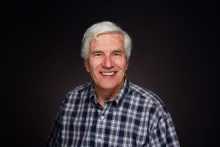
Steve Shafer was born and raised in Seattle. He graduated from Queen Anne High School in 1959 and later graduated from Ambassador College, Big Sandy, Texas in 1967, receiving a degree in Theology. He has been an ordained Elder of the Church of God for 34 years and has pastored congregations in Michigan and Washington State. He and his wife Evelyn have been married for over 48 years and have three children and ten grandchildren.
