
Steve Shafer
This transcript was generated by AI and may contain errors. It is provided to assist those who may not be able to listen to the message.
Wow, thank you, Cadence. That was beautiful. Great job. Keep that up. Keep practicing.
That was all by memory, too. So, very, very, very excellent. We really, really enjoyed that. Thank you so much for giving that to us.
That would be a very valuable way you can contribute in the years ahead, too, being able to play the piano that well. As I mentioned briefly, we were down in Springfield, Missouri, this past February. Actually, the reason we were down there is, Evelyn and I were both. They had a women's weekend around the middle of February, and they'd asked Evelyn and I to come down and give presentations there. They wanted Evelyn to give a presentation to the women, and then they wanted me to give a sermon relating to the women as well on that particular Sabbath. So, I was out to speak there, and so was Evelyn. Also, back in 2011, I was also asked to speak at a women's weekend in LaConor, Washington, where they have theirs every year out there. Both times, I spoke on something that isn't spoken on very often.
I spoke on what is the biblical role of a woman? What is her worth? What's her value? What is her role? What is the role of a woman and her wife? I also gave a version of this back in 2005 in Flint and Saginaw Wolverine, but this is a much different version of it, but they did give a version of it back then. But over the years, there have not been very many sermons or Bible studies focused on the two biblical roles of a woman.
What is a woman's role? Is it comparable and as important as the role of a man? Tomorrow is a day of Pentecost, which portrays and looks forward to when all of us, both men and women, will become the bride of Christ. The bride, we're going to have to start and become a bride when Pentecost is going to be fulfilled. We're striving to be the bride of Christ, as portrayed and pictured by the day of Pentecost, regarding its ultimate fulfillment. And yet, becoming and preparing for the bride is really a role of a woman. But all of us, men and women, have to prepare for that.
So understanding the role of a woman is extremely important for all of us to understand.
Today, then, I want to take us on a little bit of an adventure in discovering the true biblical role of a woman, the role for which God created all women to fulfill.
And all of us men will have to fulfill that as well, spiritually speaking.
So it's important for all of us to understand.
That it's crucially important. It's a crucially important role which does relate to Pentecost, as we'll see towards the end of the sermon, or at the end of the sermon.
But, you know, it's amazing if you really look into the Bible deeply. There's a lot it says about this, but today I'm just going to touch on the tip of the iceberg.
I'm just going to examine two scriptures, because two scriptures are all you need to understand. Two scriptures and two words. One word from each of those two scriptures will tell you what the true biblical role of a woman is. I'll give my title towards the end of the sermon.
I want to start off by asking this question. How did the Apostle Paul describe the calling that God gave to each and every one of us? How do you describe it? It applies to all of us. It applies to men and women. Let's go to the book of Ephesians to find the answer of how the Apostle Paul described the calling that God gave to all of us. Ephesians chapter 6, a fairly familiar chapter for many of us. But Ephesians chapter 6, let's go look at a few verses here. Three verses, actually. Three or four. Ephesians 6, and let's begin verse 10. Ephesians 6 verse 10. It says, Finally, my brethren, be strong in the Lord and the power of his might. Now, he says, my brethren, but he means, when he says my brethren, he includes men and women.
We're all brothers and sisters of Christ. So, my brethren is a general term referring to all that God has called men and women. So, all of us, both men and women, need to be strong in the Lord and the power of his might. What else must we do and why must we do it? Verse 11. Put on the whole armor of God. Why? That you may be able to stand against the wiles of the devil. See, all of us must stand against the wiles or schemes of the devil who seeks to destroy us.
So, we're all then, in a sense, we're in a life and death struggle against Satan and his cohorts. We'd like to wipe us all out if you could. And if we don't understand and fulfill the role of a woman, we may very likely lose that struggle or that battle. That's how important a woman's role is. Now, first, let me ask this question. Who do we not struggle against?
Verse 12. We do not wrestle or struggle against flesh and blood, which is where Satan wants the battle to be. That's why he wants the battle to be fought. He wants us fighting against flesh and blood against one another. He wants men pitted against women and husbands pitted against their wives. Above all, he doesn't want any of us to understand the two biblical roles of a woman.
And if we're not to wrestle or struggle against flesh and blood, who or what must we struggle against? Verse 12. We do not wrestle against flesh and blood, what? But we wrestle against principalities, against powers, against the rulers of the darkness of this age, against spiritual hosts of wickedness in the heavenly places, all of whom are out to destroy us. Now, since we're all in a life and death struggle, to whom then does the apostle Paul liken us? What must we like if we're in a life and death struggle? Let's go to 2 Timothy for the answer to that question. 2 Timothy, of course, what Paul wrote, probably one of his last letters, maybe his last letter, he wrote to Timothy.
2 Timothy 2. 2 Timothy 2, verses 3 and 4. 2 Timothy 2, verse 3. You therefore must endure hardship as a good soldier of Jesus Christ. No one engaged in warfare entangles himself with the affairs of this life, that he may please him, who enlisted him as a soldier.
So what does Paul liken us? He likens all of us to soldiers engaged in warfare. We have all been called to be spiritual soldiers who have been enlisted in God's spiritual army to fight a life and death struggle against Satan and his cohorts. That's where we are. That was true 2,000 years ago. It's true today. It's even more true today. Satan knows this time is short. He doesn't have much more time left to accomplish this purpose.
What qualities must soldiers who are engaged in battle possess? Well, they have to be strong. They have to be courageous. They have to be willing to lay down their lives. They have to be selfless, I should say. And they must be powerful. Of course, in our case, our strength and courage and power must come from God. But does this reality that Paul describes here, and applies to all of us, does this reality tie into the role for which God created women?
If so, how does it tie in? To discover the answers to those questions, we will primarily look at, as I said, just two scriptures. And at two Old Testament Hebrew words. Not modern Hebrew words, but ancient Hebrew words. There's a difference. First thing I want to give just a little background on ancient Hebrew. And I don't know if I've ever done that down here. I did that up in... I've done that for a time or two. I might have given you a little bit here in one sermon. But just a little bit, about 12 years ago... Because I'm not an expert on ancient Hebrew.
I learned about it in a lecture I attended about 12 years ago. Up in Birch Run, given by a Dr. Frank Seekins, who was an authority on ancient Hebrew. So what I will give here as background is from what I learned through his sources. He spent much time and research discovering the ancient Hebrew alphabet. And that was not easy to do. You had to look very closely to try to find it. But his sources include the Encyclopedia of Judaism, scripts found on ancient inscriptions, ancient Hebrew letters found on certain Jewish coins, and some in the Dead Sea Scrolls.
But his book, called Hebrew Word Pictures, provides a necklace source for understanding ancient Hebrew. And he has a website called livingwordpictures.com. But don't know, just give you a little bit of background here. Because this is key to understanding the role of a woman in the Old Testament. The Hebrew alphabet, of course, as you know, has 22 letters. In ancient Hebrew, each of those 22 letters was drawn to picture something. Each letter pictured something. Which made ancient Hebrew what is called an idiomatic language, or a word picture language.
So, since each letter pictures something, each word had a word picture meaning from those letters. And what those letters pictured. You could have a word picture meaning for that particular word. I'll illustrate that a little bit, a little bit later. But a word picture is a word that can be defined or described by the pictures of the letters that spell that word. Ancient Hebrew is an amazing language.
But all that was lost after the House of Judah went into captivity to Babylon. And modern Hebrew is not like ancient Hebrew. Totally different. Modern Hebrew letters were no longer drawn to picture something and the original word picture meaning was lost. But I'll tell you something that's amazing. You can learn a lot about ancient Hebrew letters from English. Because most of our English letters can be traced back to ancient Hebrew letters. And they're drawn in a very similar fashion as I'll illustrate a little bit later.
But let's just think about something. We got a word that we think about. We think about letters and language. We think about alphabets, right? Hebrew alphabet has 22 letters. Our English alphabet, I think, has 26 letters. But just look at the word alphabet. Let's look at that particular word. What is the origin of our English word alphabet? Alphabet is actually made up of two words. Alpha is the first letter of the Greek alphabet, which Christ made reference to four times in the book of Revelation, saying, I am the Alpha and the Omega, the beginning and the end.
Alpha being the beginning letter of the Greek alphabet, and Omega being the last or end letter of the Greek alphabet. But think now of the word alphabet. The second word in our English word alphabet is the word bet.
Bet is the second letter in the Hebrew alphabet. First letter is aleph. Second letter is bet. Aleph bet. So in Hebrew it wouldn't be alphabet, it would be aleph bet.
So our English word alphabet links our language and our culture to both Greek and Hebrew to the original languages of both the Old and New Testaments.
In the first letter of the Hebrew alphabet is aleph, a-l-e-p-h, which is drawn to picture the head of an ox.
It's also the Hebrew word for ox.
As such, it symbolized strength. You know, there was an agriculture community back in the Old Testament. They had to plow the fields by hand. They had to use animals, and they used an ox, because an ox had strength. A lot of strength in an ox, dependable, strong, used to plow in the fields. It symbolized strength. It became our letter A, and if I could draw it for you, I could show you the similarities, the way it was ancient.
Aleph was drawn, and A-r-a-a is drawn. They're very similar.
Second letter in the Hebrew alphabet is bet, as already stated. Bet was drawn to picture a house. It is also the Hebrew word for house. As in Bethel, the house of God. And in Bethlehem, lham is a Hebrew word for bread. Bethlehem means house of bread.
Isn't that interesting and fascinating? Where was Christ born? He was born in Bethlehem, the house of bread. What did He become? He became the bread of life. Christ, the bread of life, was born in Bethlehem in the house of bread. So out of the house of bread came the bread of life. Maybe that's why Christ was born there.
See, all 22 letters can be found in Psalm 119. You want to go to the Psalm? Sometimes we can find the Hebrew alphabet. Go to Psalm 119. The only thing is, they're drawn there, too, but they're drawn in modern Hebrew, not in ancient Hebrew. It would be nice if they were drawn in ancient Hebrew, but they're not. They're pure as they do in modern Hebrew. But all 22 letters can be found in Psalm 119, which devotes eight verses to each Hebrew letter, which is why Psalm 119 has 176 verses. Eight verses to each letter, being 22 letters, eight times 22 equals 176 verses. Also, the first letter of the eight verses under that letter begin with that letter.
In other words, Psalm 119 verses 1 through 8 all begin with the letter Aleph, the first letter, the Hebrew alphabet. Psalm 119, 9 through 16 all begin with the letter Bet, the second letter, the Hebrew alphabet, and that continues all the way through Psalm 176.
And all the eight verses following each Hebrew letter relate to what that letter pictured as meaning to each of those verses, if you were reading it in Hebrew. Aleph, the first letter of the Hebrew alphabet, was also the number one in Hebrew.
So in addition to symbolizing what is strong, it also symbolized what is first. And the first eight verses, I'm not going to go down and read it, but just to give you an idea, the first eight verses of Psalm 119 talk about blessings. And since each verse begins with the letter Aleph, it tells us that blessings belong to the person who books God first in their life and who turned to God and to God's word for their strengths.
That can tie into the meaning of those eight verses, strengthen plus first.
Aleph. Now, just to illustrate, just a brief illustration here.
I think the word father. In Hebrew, the word father is ab, A-B, Aleph bet.
Father is the first two letters of the Hebrew alphabet, Aleph bet, ab.
Ab is the Hebrew word for father, as in Abram, father of an exalted father. Abram means exalted father. Abram, ram is the word for exalt. And then Abraham. Raham is a word, Hebrew word for multitude. So, Abraham means father of a multitude. That Aleph symbolizes strength and bet pictures a home or household. Thus, the ancient Hebrew word picture, meaning of ab, of a father, would be that a father is the strength of the household. Aleph, strength, bet, house, household. That was the role of a father, being strength of a household. Households who don't have a father don't have quite the same strength. Mothers can be very strong, they can leave every strong household and fill that role as well. But it's meant by God for a strong household to have a father. What about the word for mother? You know that the word for mother in Hebrew also begins with the letter Aleph, which symbolizes strength. And first, the Hebrew word for mother is spelled Aleph-mem.
Letter mem in ancient Hebrew was drawn to picture a wave of water, like a breaking wave of water, became our letter M. M kind of pictures a wave of water as well. Let me think about it, a small M, cursive. So a mother is pictured as being strong water.
Now, there's a lot of ways you can look at that, but water, of course, is essential for life. So a mother is the is pictured as being a strong giver and sustainer and protector of life, which she is, and a strong protector of the life of her children. I could go into something else here. I'm just going to mention it briefly. This is fascinating. It's only modern science has discovered.
You know, when a little tiny embryo is conceived in the mother's womb, within the first few days, what happens? An embryonic sac forms around that little embryo. And then what does it fill with? It fills with a fluid that's like water. It's over 80% water, watery-like fluid. And that little embryo grows into a fetus, and it grows in the mother's womb in that sac of water. Water.
Strong water. Mother's strong water. And here's the thing. Do some research.
That little embryonic sac surrounds that little baby that forms in that liquid, and it develops in over nine months. That embryonic sac is about one of the strongest substances mankind has ever known. It's also one of the thinnest. It's so thin, so thin, excuse me, it's so thin, it's transparent. And if it held up like this, you couldn't see it.
This is how some of the molecular bond is so strong that that baby can kick as it grows, and that sac will not break, even though it's extremely thin. It's extremely strong.
A mother is literally strong water. Of course, finally the time comes, God has it come to a point where the water breaks. The baby can be born.
But with that brief background on ancient Hebrew, let's now discover the true biblical role of a woman. ...or of a wife. As I said, a true biblical role could be summed up in two Hebrew words, three English words, which will also be the title of a sermon, which I'll give you towards the end of the sermon. But it's a very awesome and critically important role. Now, where might we find the first aspect of a wife's role?
Is there a chapter that focuses on the role and qualities that God intended a woman or a wife to strive for? And you have to come in mind, yes. Proverbs 31. How about that? Proverbs 31. Let's go to Proverbs 31. Let's go to verse 10.
Proverbs 31.10 says, Who can find a virtuous wife? For her worth is far above rubies.
Now, before delving into verse 10, I'd also like to point out something else.
Between verse 10 and verse 31, if you count those verses 10 through 31, you have how many verses? You have 22 verses. 22 verses. Verses 10 through 31. Each of those verses begins with a letter of the Hebrew alphabet. In other words, verse 10 begins with aleph. Verse 11 begins with bet.
Verse 31 begins with tau, the 22nd and last letter of the Hebrew alphabet. In other words, there's alphabetical order there. They're all in alphabetical order. Begin with a letter of the Hebrew alphabet, those 22 verses. That continues all the way through. Now, I have to ask the question then, why does each verse in this final section of Proverbs begin with a certain letter of the Hebrew alphabet? I think for two reasons. One, to make them stand out, to draw special attention to these verses is being extremely important. And number two, because of what each letter pictures, an ancient Hebrew has meaning to that particular verse.
Again, chapter 31 verse 10, you read that and I'm going to show you more to that verse than what meets the eye. A lot more. That's the main verse we're going to focus on. Proverbs 31.10, who can find a virtuous wife or a worth as far above rubies? But to all you wives and you women that realize how valuable your role is. Here, God says it's more valuable than rubies.
A better worth as far above rubies or other precious stones.
Since verse 10 here begins with the letter aleph, the role of a wife here then has to do with strength, doesn't it? Aleph pictures strength. Who could find a virtuous wife? Who can find a wife who has a great deal of strength? Who has strength of character, strength of mind, strength of purpose, strength of resolve, strength of determination, strength to carry and bear heavy burdens? Who has spiritual strength and who has a strong personal relationship with God? And who strives to maintain a strong relationship with her husband for her worth as far above rubies?
Now, the old King James Version also uses the word virtuous here, as does the new King James Version that I'm reading.
But that's not what this verse means. It has far deeper meaning than that.
Because today, the word virtuous means having moral virtue, having moral excellence, and having strong righteous character. And a woman or wife with those qualities does have a great worth.
But that's not what this is really saying.
That is not what the word virtuous means. If you go and do some research, words change. And what the word virtuous means today is not what the word virtuous means. The word virtuous meant in 1611 when this word was translated to virtuous. Didn't mean that back then, 1611, 400 years ago. In 1611, the word virtuous meant powerful.
This is really saying, who could find a powerful wife? Who can find a powerful woman?
That's the correct translation of Proverbs 31.10.
Because in 1611, the word virtuous meant strong, powerful, mighty, and having valor and courage.
Especially when it came to fighting battles in warfare.
Why would a woman want to fight battles in warfare?
And why would a husband want that kind of a wife?
Because we're all engaged in spiritual warfare. We're all in warfare. We're in a life and just struggle spiritually with Satan, his adversaries.
But to illustrate the word virtue meant power back in 1611, we can turn to Luke chapter 8, and to a woman who was healed by Christ in a very unusual manner. Let's go to Luke chapter 8.
Have dual research to figure this out, but it's worth noting. Luke chapter 8. Let's begin in verse 41.
Luke chapter 8. Let's begin in verse 41.
The New King James version here that I'm reading from correctly translated is, I perceive power going out for me. That's correct. New King James. I perceive power going out for me.
The Greek word translated power in the New King James is dunamis, from which we get our English word dynamite. So it's power.
However, I want you to note this. I don't know how many you have in Old King James. How did the 1611 Old King James version translate the word dunamis?
Now here's what it says. I'll read it to you.
And Jesus said, Somebody hath touched me, for I perceive that virtue is gone out from me.
In 1611, the word virtue meant power. That's the Proverbs 31, virtuous woman is in reality the Proverbs 31, powerful woman.
I'll go back to Proverbs 31.
Proverbs 31, verse 10. Who can find a virtuous or should be a powerful wife or woman for her worth is far above rubies. For her worth is far above rubies.
Now the actual Hebrew word translated virtuous here is hayil, C-H-A-Y-I-L, pronounced hayil, I believe.
In Hebrew, it is spelled with three letters with the letters hay, spelled C-H-E-T, would pronounce hay.
Yod, Y-O-D, and lamad, L-A-M-E-D, which became our letters H-Y and L in English. The first two letters spell the Hebrew word for life.
The third letter, the letter lamad, was drawn to picture a shepherd's staff by which a shepherd controlled his sheep. Thus the Hebrew word hayil in ancient Hebrew pictured a powerful woman as being a woman who controls life, a woman who controls life. A powerful woman is a woman or a wife who shepherds or controls life, as pictured in ancient Hebrew by the word hayil.
You know, there are many problems we all face in life. A weaker woman can be controlled or overcome by life as many problems as all of us can be, but a powerful woman does not allow what happens in life to control her. Instead, she faces life problems with godly confidence, with a powerful woman with courage, conviction, of gaining wisdom, and spiritual strength.
See, a powerful woman thus strives to control circumstances rather than allowing circumstances to control her. That's not all you need to do. With God's help, it's possible for all of us.
But in addition to that, the Hebrew word hayil, translated virtuous here in Proverbs 31.10, is translated, you look it up, it's translated army or armies 59 times in the Old Testament.
59 times. Thus it is power, might, and courage, and valor as needed in warfare.
It's frequently associated with warfare, that particular word. Translated virtuous right here.
Other places translate army or armies, associate with warfare. Who could find a powerful wife who was like a mighty warrior in times of warfare, especially in times of spiritual warfare, like we're all in right now? See, why should every man and every husband want a powerful woman or a powerful wife? Well, as good soldiers of Jesus Christ engaged in a life and death struggle, what do all of us need? Now, you think about it, you're in warfare. You're in a life and death struggle. You've got anything who wants to destroy you and take you out. What do we all need in that kind of a situation to help us to be assured of victory? Well, that brings us to our second scripture and to our second word, which in turn adds tremendous meaning to God's view of the true biblical role of a woman and a wife, which every man and every husband also needs to understand, because it's wise to all of us. Now, I want to ask this question, and where do we find the true role for which God created women? Where do you find it? Where did God begin to give us a clue as to what it is?
We might expect to find it at the very beginning of God's word, and indeed, that's where we find it, right at the very beginning of God's word. He tells us. It's just that we can read it today and not see it, because you have to dig a hole that surfaced. God tells us the role for which He created the woman in Genesis 2.18, which is our second scripture, which also is where we find our second word. Let's go there. Genesis 2.18. You probably know what it is before you turn there.
I want to take you a little deeper, though, to understand what it really says.
Because it tells us the true book or the role of a woman, right here.
Genesis 2.18, the Lord God said to Adam, It is not good that man should be alone. I will make him... I'm reading the New King James. I think, oh, can you just help me? Help me. I'm reading the New King James. It is not good that man should be alone. I will make him a helper comparable to him. I will make him a helper.
So the question then becomes, what kind of a helper? What kind of a helper? Now, if you understand Hebrew, and you look at the Hebrew word, it would tell you. English, you can't tell. What kind of a helper to God intends for a wife to be to her husband? And what kind of a helper to God intends for a woman to be to mankind in general? This isn't applied just to her husband, it applies also to mankind. Because if you look it up in Hebrew, there are two words which could be used for a helper, but they each portray a very different kind of a helper. Which Hebrew word for helper to God inspires to be used here in Genesis 2.18. What kind of a helper? Think about this. You know what happens in the next chapter, don't you? Chapter 3. Who comes on the scene?
Satan comes on the scene. What's Satan's purpose? He wants to destroy them.
So what kind of a helper did Adam need at that point? What kind of a helper did Adam need as Satan is about to come on the scene to try to destroy the relationship with God, and to try to destroy the relationship with one another, and with their future children? And Satan was pretty successful, wasn't he? See, Satan was plotting spiritual warfare to destroy God's first family.
What kind of a helper is needed in times of warfare?
See, one Hebrew word that could have been used here for a helper is Obed. O-B-E-D. It is the Hebrew word for servant, as in the name Obediah, which means servant of Yahweh, or servant of God. But that is not the word God inspired to be used in Genesis 2.18.
And that is not the kind of a helper Adam needed. And that is not the kind of a helper God intended. He didn't intend for her to be a servant helper. Because a woman and a wife's role is far more important and far more vital than that of being a servant helper. As it says here in this same verse, her role is comparable to that of her husband. It's equally important. But God here inspired a different word for helper, a word with a crucially important meaning. Why is this meaning so crucially important? Because no major warfare can be won without this kind of a helper.
The Hebrew word for helper here in Genesis 2.18 is the word EZER, E-Z-E-R, which is from a prime word which means to aid. To aid in the sense of being an ally helper, not a servant helper, but an ally helper. See, to win major battles in the time of warfare requires a powerful ally helper, as it did for Britain in World War II, for example.
The United States began to begin with in the First World War, the United States to begin with in 1930s leading up to World War II. The United States wanted to follow an isolationist policy, and they wanted to stay out of the war. Other than providing materials and supplies, you could say that at the beginning of World War II, the United States wanted to be Britain's servant helper. Then the Japanese bombed Pearl Harbor. Fortunately, the United States, into World War II, and to then help Britain fight their common enemies together as powerful ally helpers. That totally changed the course of the war and the outcome of the war, and it changed the course of history. Because you've got the United States and Great Britain fighting together as ally helpers. They had a strength so strong that they could defeat the enemy knowing they could defeat them, especially with God helping them as well. But the same is true in marriage.
Satan is a war against marriage, and he wants to destroy all marriage relationships, and he's been very successful in doing that. In fact, if you had a marriage that'd take place today, there's over a 50% chance that marriages that take place today will end in divorce. That's how successful Satan has been in destroying marriages.
But to get an even clearer picture as to... and to connect this, I should say, with Proverbs 31.10, let's once again go to ancient Hebrew. What is the ancient Hebrew word picture meaning of an ally helper? What does the word easer, if I said helper in Genesis 2.18, what is that word picture in ancient Hebrew? Easer in Hebrew is spelled with three letters. Three letters it's spelled with are A-N-A-Y-I-N, Z-A-Y-I-N, and Resh, R-E-Y-S-H. A-N, Z-A-N, Resh spelled the word easer in Hebrew.
A-N is the 16th letter of the Hebrew alphabet, and you can see it in Psalm 119 verse 21, as it's spelled there, was actually drawn to picture an eye. It became our letter O, which is an English letter which also could be used to picture an eye, drawn very similar to ancient Hebrew letter A-N. A-N is also the Hebrew word for eye.
It thus symbolized seeing or understanding something, to see or understand something. Z-A-N, the second letter in the Hebrew word easer, and the seventh letter of the Hebrew alphabet, Psalm 119 verse 49, was actually drawn to picture a weapon. It is also the Hebrew word for weapon.
It became our English letter Z, which also almost like pictures a weapon. You take a Z like this, you grab the bottom of it, and chop somebody. It also could picture a weapon. You want to take an English letter closest to that. Rish, the third letter in easer, and the twentieth letter of the Hebrew alphabet, Psalm 119, 153, was originally drawn to picture the bust of the head of a man.
It became our letter R. Think of that, capital R.
You know, I hear, bust of a man. R pictures the bust of a man, doesn't it? Drawn very similar.
It symbolized what it pictured. It symbolized a man.
What then would the ancient Hebrew word picture meaning be for the word easer, translated helper, in Genesis 2.18. What would an easer, what would an ally helper picture in ancient Hebrew, spelled aan zan rech, or O-Z-R in English? Aan means to see or to understand.
The zan is the weapon. Rech pictured a man. So the ancient Hebrew word picture meaning of easer, or an ally helper, is to see and to understand the weapon man. To see or understand the man with a weapon.
Now, what is a weapon man?
The last two letters of easer, zan and rech, spell the Hebrew word zar, Z-R in English. Pronounced like the tsar of Russia, T-S-A-R or C-Z-A-R, tsar of Russia. Now, it's the same way.
Also, tsar, the Hebrew word tsar, the last two letters there, easer, is the Hebrew word for enemy.
It's one of two Hebrew words for enemy, actually. So a tsar in Hebrew was an enemy. So an enemy in ancient Hebrew was pictured as being a weapon man. That makes sense.
Thus, the ancient Hebrew word picture meaning of easer, or an ally helper, is to see and to understand the enemy.
So here in Genesis 2.18, we find the true role for which God created the woman or the wife. To be an ally helper who can see the enemy, who has certain perceptions as they... Tell her, no, don't go there. No, stay away from that. That's going to be harmful.
See, how's all this tied together? How does it relate to all of us striving to become the bride of Christ, as portrayed by the Day of Pentecost, which we'll be observing tomorrow?
In pursuing the Hebrew biblical view of the woman, or the role of a woman, we have primarily looked at two scriptures and at two Hebrew words. We've looked at Proverbs 31.10, the Hebrew word Hieyo translated virtuous, and we looked at Genesis 2.18 at the Hebrew word ezer translated helper. The woman and the wife were created to be an Hieyo ezer, to be a powerful ally helper.
And that's the title for my sermon. My title is a powerful ally helper. See, she was created to be an ally helper, both to her husband and to mankind in general.
And you can give a whole sermon just on Proverbs 31 verses 10 through 11, but those verses there, verses 11 through 31, after verse 10, actually shows us many of those ally helper roles, both to her husband and to mankind in general. I'll just quote a few of those scriptures for you. Verse 17, she gurged herself with strength and strengthens her arms.
Verse 20, she extends her hand to the poor. She reaches out to the needy. She could be an ally helper to mankind as well and serve mankind in many, many ways. And women have done that very amorphous in too many wars as well. Strengthen on her clothing, verse 25, many daughters have done well, but you excel them all. Verse 29, charm is deceitful and beauty is passing, but a woman who fears the Lord, she shall be praised. Verse 30, let her own works praise her in the gates. Verse 31, who can find a powerful ally helper. Again, in chapter 31, verse 25, which I quoted says, she is clothed with honor, and strengthened honor are her clothing. Strengthen honor? Wow!
That's quite a tribute to the role of a woman, isn't it?
Now, I want to just close by looking at one thing. Think of the honor God bestows on the woman or the wife as it relates to the day of Pentecost.
And I'll close with this. All of us, men and women alike, must strive to become a bride, which is the role of a woman. One of the highest roles of a woman to be a bride.
It's an exciting part of her life, which means what? It means with all continually strive, all of us, men and women, we must be continually strive to have that role of a wife, which is to be an ally helper. That's her role. So we all have to strive to be powerful ally helpers, fighting together, side by side, and hand in hand, in our life and death struggle against Satan and the forces of evil. All of us together, we all have to be ally helpers. We have to become like a woman's role. We have to become a bride. We have to be a strong ally helpers for all of us together, allied together, fighting together for one another.
See, Christ is preparing a bride, a bride to be his ally helper, both now and when he returns.
And we can begin to fulfill that role now by continually encouraging and helping one another in any way we can, being allies to one another, by being always for one another in any way we can, and never against one another. We all strive to fulfill the role of a bride by becoming powerful ally helpers of our future husband so we can become the bride of Christ. We become Christ ally helpers now and in the future when God calls all mankind. It is a tremendous honor to all women and everyone must strive to understand and strive to fulfill the role of a woman or a wife. We must all strive that we must all strive to become strong and powerful ally helpers.
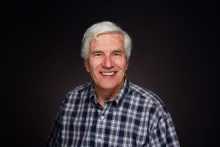
Steve Shafer was born and raised in Seattle. He graduated from Queen Anne High School in 1959 and later graduated from Ambassador College, Big Sandy, Texas in 1967, receiving a degree in Theology. He has been an ordained Elder of the Church of God for 34 years and has pastored congregations in Michigan and Washington State. He and his wife Evelyn have been married for over 48 years and have three children and ten grandchildren.
