
David Mills
This transcript was generated by AI and may contain errors. It is provided to assist those who may not be able to listen to the message.
And that means the sacred Passover service is not far away, less than two weeks. And then the Feast of Unleavened Bread for seven days. And we're going to be inspired. We're going to have special opportunities for fellowship together, and fellowship with God our Father and Jesus Christ our Savior. And we're going to have an opportunity to grow spiritually. How would you like to grow? We're happiest when we are growing. So these Holy Days are very important. God has designed them to help us in our quest to become a member of His family. And they help us more than we know.
So it's time to say, in the title of the sermon, let us keep Passover and the Feast of Unleavened Bread. Questions I'd like for us to address today, should Christians even keep the festivals today? We won't go too long into that because most of us here have proved beyond the doubt that we should. But we will address it briefly. Another question, do we have the right calendar for reckoning the Holy Days?
We will briefly discuss that because the calendar, questions about the calendar do surface periodically. Somebody comes up with his own idea. Does anyone have that prerogative to suddenly become the one that has all knowledge about the calendar? How is that to be done? We need to understand so that we have no doubt the way God would have us to do it. What is the meaning of the Passover and what is the meaning of the Feast of Unleavened Bread? We again want to touch on that. And how do we prepare for the Passover and for the Feast of Unleavened Bread? And will we really keep the Feast in spirit and in truth?
If we are to observe the Feast, it is much more than just coming to the meetings. Passover, much more than just showing up. Much more than just washing feet and taking bread and wine. Feast of Unleavened Bread, much more than just putting away leavening and eating the unleavened bread. Much more. There's something spiritual in all of these things that certainly we must realize if we are to really keep the Passover and the Feast of Unleavened Bread. So let's take these questions one at a time. We're going to go for about 45 or 50 minutes. And we do have some meetings after the service today.
So probably about 50 minutes. We'll try to keep the sermon about that length. Should Christians keep God's holy days today? This is a question many of us had to really prove at one time. I think all of us here have proved it to ourselves beyond the doubt. Hopefully nobody has any question about it. But it's always good to be reminded.
God gave these days to ancient Israel seven annual holy days. You can find all seven in Leviticus 23. Also, many of them in Deuteronomy 16 and Exodus 23. Passover, Feast of Unleavened Bread, Pentecost, Old Testament name, Feast of Weeks, or Feast of First Fruits. And then the Feast of Trumpets and the Day of Atonement, the Feast of Tabernacles, and the Last Great Day. Should we be keeping these days today? Aren't they just ceremonial? Just like the sacrifices or some of the washings and things like that, which they did back in the Old Testament. Aren't they just ceremonial?
Well, we do find ample proof in the Scriptures that they're not ceremonial at all. For example, Jesus Christ kept the holy days Himself. We find ample proof of that in the Gospels. He kept the Passover. As a boy, even, He kept the Feast of Unleavened Bread.
He kept the Feast of Tabernacles and the Last Great Day. So Jesus kept it these days, but then people say, well, that was before the cross. All right? Well, let's come after the cross. And what did we find in the early church? We find them keeping these days. Keeping, for example, Pentecost. The church was formed, or began. The church Jesus said He would build began on the day of Pentecost in Acts 2. And then we find, mention of Passover and the Feast of Unleavened Bread in Acts 12, and also in Acts 20, and we find Pentecost in Acts 20.
Acts 27, we find the Day of Atonement. So ample proof, even in the Book of Acts, that the early church... You know what? It's not just in the Scriptures, but even secular history supports or gives proof that the early church continued to observe the festivals of God. You can find just open statements about it. The early church continued to keep the Sabbath. They continued to keep the festivals the Holy Days. And Eusebius, an early church historian, I believe he lived around roughly 300 or so AD, 300 years after the time of the early church, wrote about the early apostles continuing to keep the Passover and the Feast of Unleavened Bread.
The day the people threw away the leaven, they continued then keeping these days. There came to be a big controversy about the Passover. The church in the west, that is in Rome, said, well, we should be keeping Easter, celebrating his resurrection. They falsely thinking that the resurrection was on Sunday morning, which it was not.
So they insisted upon Easter, but the churches in the east, by east we would mean around Ephesus, in what is today western Turkey, the area that John was last in. And they insisted upon keeping the Passover on the 14th of the day. This became known as the quarto-deciman controversy. Look it up. Google it sometime. And there's a lot written about the quarto-deciman controversy. The word quarto-deciman simply means 14th, those people that insisted upon the Passover, keeping it instead of Easter. So there's ample evidence that Christians should be keeping the Biblical Holy Days today and not be keeping such pagan holidays as Christmas and Easter. If anyone has any questions, there is ample proof in our booklet here, God's Holy Day plan, the promise of hope for all mankind.
There's proof of keeping the Holy Days today, and also there's a chapter on each of the Holy Days in our booklet. I would recommend, I often do it almost every Holy Day, I just go to that chapter on the Holy Day in the spring here, Passover, the chapter on the Passover and the Feast of Unleavened Bread, and read those chapters and always pick up some new things.
So yes, Christians should be keeping God's Holy Days today, and they will be kept in the Millennium. Jesus indicated the Passover, He would partake of the Passover in the Kingdom of God. And also, Zechariah 14 is certainly proof that the Feast of Tabernacles will be kept by all nations when Jesus Christ returns and reigns as King over all nations. And if that festival will be kept, we believe the others will be kept as well. So they'll be keeping the world in the world to come. People will be keeping these days, not the holidays of this world. But do we have the right calendar? And can we be confident that we are keeping the Passover at the right time?
Is April 2nd, that Thursday night, is that the right time to observe the Passover? Can we be sure about that? Well, let me briefly mention that the calendar is very complex. The lunar month is not regular. It's very irregular in its length of time. The solar year is very irregular. Twelve months—and God's calendar is a lunar calendar that is based on the new moon— twelve lunar months do not come out evenly to a year, a solar year. And so how the calendar is constructed is that seven years out of nineteen, there is an extra month.
The intercalary year has thirteen months, and over a nineteen-year period, it works out just perfectly. So that is how it is calculated in the sacred calendar. Now, the sacred calendar goes back to the very beginning of human life. Noah had knowledge of a calendar. You can read about it in Genesis 6, 7, 8, 9. A certain month of the year, the flood started in certain days of the year, certain things happened. You can read about that. So Noah and the patriarchs, Abraham, they would have had knowledge of the calendar. But guess what? The Israelites in Egypt, for over two hundred years in slavery, had lost sight of the calendar. So God gave them the knowledge of the calendar, and He told them in Exodus 12, verse 2, that this month, this new moon right here—you know, we're right at the new moon time that begins this year, aren't we?
What is that moon that they called that a special name for this moon? And I can't remember exactly what it was. But it is the new moon, the beginning of the first month of the year. This month is the beginning of the new sacred calendar year. So God gave Israel knowledge about the calendar. Now, I just want to read two or three verses on this because I think it's so important. Every now and then, somebody comes along, and I just have an idea that it's going to yet happen in the future, just as it has in the past.
Mr. Armstrong had to address calendar issues in the early years of his ministry, and he came up with a certain conclusion as far as the calendar, which we in our looking into the calendar issue come up with the same conclusion today.
And yet there are, from time to time, those who come along and say, I believe, using their human reasoning, this is the way that it should be done. And they do it differently. And they come up with a different day for keeping the Passover, a different day for keeping various of God's holy days.
In Acts 7, I want us to notice something here. And I think this is very important so that you would never be carried away by someone that would come along and claim that he has the knowledge of how the calendar should be kept. Who has commissioned him? Who has authorized him to be like the custodian of the calendar? We find the custodian of the calendar given or revealed in the Bible.
In Acts 7, in verse 37, So Jesus Christ did come as a prophet like Moses, and he has delivered us from spiritual Egypt as Moses did the Israelites from physical Egypt.
You shall hear in verse 38 a very important verse regarding the calendar.
Well, that's where the Israelites were in Exodus 12 and verse 2, where God said, This shall be the beginning of months to you. Well, with the angel that spoke on Mount Sinai, and with our fathers, the one who received, and this is talking about then Moses, the one who received the living oracles to give to us. The living utterances understood the utterances of God, the living words of God to give to us.
Well, you know, those words were the Ten Commandments, those words were the laws and statutes of God, and those words were also the beginning of months. This shall be the beginning of months to you. Knowledge of the calendar was included in the living oracles. So the Israelites received knowledge of the calendar. Guess what? The Bible records the seven annual holy days, but it doesn't reveal exactly how the calendar is to be kept. It doesn't reveal exactly how it's to be calculated. So how do we know how to carry on in the calculation, the keeping of the calendar? Well, when that knowledge was given to Israel, then they had it in the Old Testament.
They knew when to keep the holy days, but then the ten northern tribes went into captivity. They lost knowledge of the Sabbath, the holy days, and the laws of God. But guess what? The Jewish people taken to Babylon and then later returning, returning to really be jealous and keeping the Old Testament Scriptures and also keeping the knowledge of the holy days in the calendar.
So when Jesus came along 1500 years after Mount Sinai, roughly, then Jesus had no question as to when to keep Passover or when to keep the Feast of Tabernacles, because the Jewish people had preserved the knowledge of the calendar. And by the same token, we can fast forward onto our day.
And guess who keeps the calendar still today? The Hebrew calendar is the one that we use, and it is the one accepted by the Jewish people. So you'll always find our holy days corresponding, except their Passover is on the 15th day.
And they realized that, whereas our Passover is on the 14th day, one day before, because we believe, according to the Scriptures, the 14th day is the proper day for having the Passover, not the 15th. So the Jews are just one day off on that, but they know they're doing it on the 15th, and we know we're doing it on the 14th.
But they have preserved the knowledge of the calendar. A very important verse is in Romans chapter 3 and verses 1 and 2. Romans chapter 3. Brethren, keep this in mind that God, don't you think that God would want to have a way that we could be assured that we have the right day for keeping Passover and the other holy days? Well, He would.
Romans 3 and verse 1. What advantage, then, has the Jew? Or what prophet is? What is the prophet of circumcision? Any prophet in being a Jew? Paul says yes. And it's interesting, he's right into the Romans. The Western church would be the one to get away from God's law and get away from anything Jewish.
The Western church, the Catholic church, didn't want to be considered Jewish. They wanted to get away from it. Interesting that he's right into the Romans when he says this. Well, he says, what advantage is the Jew? Much in every way. Chiefly, very top of the list, because to them, we're committed the oracles of God. Those living oracles that Israel received at Mount Sinai have been committed to the Jewish people. And you know, they have faithfully preserved the Old Testament Scriptures.
We get our Scriptures from the Hebrew manuscripts. They don't come down in any other language. They're not Chinese. They're not, you know, they're not German or Italian or some other language. They come to us in the Hebrew language, the manuscripts. The Jews have been the ones to preserve the Old Testament Scriptures. And the Jews have been the ones to preserve the knowledge of the weekly cycle, the Sabbath. Ask any Jew. Is Saturday really the seventh day?
The same one is back in Bible times. Every Jew will, you know, will say yes. My dad asked a Jew in our hometown. He said, oh yes. Our people, you know, have always kept the knowledge of Saturday being the seventh day Sabbath. Of course, you can ask any Protestant minister. They know they meet on Sunday morning and they are on the first day of the week. There's no question in their mind as to what day is the seventh day. They know it is on Saturday. So the Jews have preserved the knowledge of the Sabbath. They've also preserved the knowledge of the Holy Days. And they have preserved the knowledge of the calendar as to when the Holy Days should be observed.
God has committed to them, notice, in verse 2 here, Romans chapter 3 and verse 2, to them were committed the oracles of God. So is God able to oversee things, make sure that the Scriptures do not have anything that's lost, anything that's corrupted?
Jesus Himself said that not one jot or tittle will pass from the law until all is fulfilled. So, you know, every little bit of Scripture has been preserved without being corrupted. And the calendar, the knowledge of the calendar has also, God has seen to it, has not been corrupted. So we can have absolute faith. We don't have to have any doubt about it. And God, it's not that we can trust the Jews, but it's that we can trust God, which has committed these things to the Jews, to oversee the whole process.
And then make sure that it's done in the way that He originally revealed to the Israelites at Mount Sinai. So we believe we're just following the same calendar calculations, and it's been preserved until the time of Christ and until our time today, by the people that God has committed it to.
Okay, let's get into what is the Passover then? What is the meaning of the Passover? And what is the meaning of the Feast of Unleavened Bread? Let's go back now to Exodus chapter. Well, you know, I want to briefly summarize chapters 1 through 12. Last week we gave a sermon. I gave a sermon on Jacob. The end of the sermon brought out that the Israelites were now in Egypt, and after the death of Joseph there would be another Pharaoh. And he put the Israelites into slavery, and the Israelites were made to serve with rigor, it says. They were in hard bondage in Egypt. And then God raised up Moses, miraculously saving Moses at the time of his birth, remember? And how actually Pharaoh's daughter then took Moses out of this basket that had been put in the Nile River and raised Moses as her own. It's an interesting story. Moses became mighty in Egypt. And he was in line. It would appear to be himself a future Pharaoh or a leader. But at the age of 40, then things developed where Moses fled the land and was away from Egypt for 40 years. And then at the age of 80, then, God, in the burning bush, appeared to Moses and called him to lead the Israelites out. It's just a very interesting reading, these first chapters of the book of Exodus. And so then there were various plagues that God brought upon Egypt. The first plague was the waters became blood. The second plague was frogs. How do you like frogs hopping all over you? Lice. Same thing. Then the fourth plague was flies and the fifth one livestock disease. And the sixth one boils. And the seventh one was hail. And then the eighth one was locusts. And the ninth plague was darkness. And by the time we come to this ninth one, Egypt is already devastated. The superpower had been brought to its knees. And yet Pharaoh hardened his heart again. And so God said there will be one more final plague. The tenth one. And the tenth one was the Passover night when the Lord came through the land of Egypt. And all the firstborn of man and beast were killed. Unless the blood was up on the doorpost. And all the Israelites had been instructed to put the blood up on the lentils and up on the sides of the doors. So in chapter 12 we come to that. We might even read verses 1 and 2 that we referred to earlier. The Lord spoke to Moses and Aaron in the land of Egypt saying, This month shall be your beginning of months. It shall be the first month of the year to you. So God revealed knowledge about when the year would begin and how the calendar would be kept. And as I mentioned, has been brought on down to our time. Okay, they were to take a lamb without blemish in verse 5 and keep it, verse 6, until the 14th day. And then they were to kill the lamb. And verse 7, put some of the blood on the two doorposts and on the lentil of the houses where they eat it. And they were to stay in their houses all that night. Last part of verse 11, you shall eat it in haste. It is the Lord's Passover. And verse 12, I will pass through the land of Egypt on that night and will strike all the firstborn in the land of Egypt, both man and beast. Against all the gods of Egypt, I will execute judgment. I am the Lord. Now, the blood shall be a sign for you on the houses where you are.
When I see the blood, I will pass over you. That's where the festival gets its name. Passover. I will pass over you and the plague which shall not be on you to destroy you when I strike the land of Egypt. Well, it happened. The Israelites did what they were told to do. And verse 29, it came to pass at midnight that the Lord struck all the firstborn in the land of Egypt from the firstborn of Pharaoh who set on the throne to the firstborn of the captive in the dungeon and all the firstborn of livestock. And so that's when Pharaoh and all the Egyptians insisted on Israel leaving. And because they said we all be dead. So, you know, this gives us some things about the Old Testament Passover that, you know, God wants us to learn lessons just like Moses would lead the Israelites out. And then so Jesus Christ leads us out of spiritual Egypt. And just as they were delivered from the when the Lord struck all the firstborn by the blood of the Lamb without blemish. So we are delivered. You know, this this is very important that God wants us to learn from this type that is given to us in the Old Testament. We learn from things like this and very important lessons. Indeed, we learn. Now today we don't we don't kill a lamb. We'll get to that in just a few minutes. What we are to do. Jesus Christ is the Lamb of God. The Lamb slain from the foundation of the world has been slain. And so we don't kill the lamb. We don't put the blood up. But we do have something that Jesus instructs us to do. And we are redeemed by the blood of the Lamb. We are forgiven our sins. The New Testament Passover is quite different from the Old Testament Passover. And we'll get to how that or to that difference in just a moment. But I wanted to while we're here in the book of Exodus and chapter 12 also cover just a few things about the Feast of Unleavened Bread. In verse 15, Exodus 12 and verse 15, seven days you shall eat unleavened bread. On the first day you shall remove leaven from your houses. Whoever eats leavened bread from the first day till the seventh, that person shall be cut off.
On the first day shall be a holy convocation. And on the seventh day there shall be a holy convocation. And no manner of work is to be done. So we do observe the Feast of Unleavened Bread. We'll read a scripture in just a moment in the New Testament about it. But what does it mean to put out leaven? What is leaven?
Well, leaven is that which causes bread to rise, that which creates a fermentation in the end causing the dough of the bread to rise, such as yeast, baking powder, baking soda, and potassium bicarbonate. Now, some have wondered about brewers' yeast and yeast extract, corn starch, cream of tartar. They are not leavening agents.
They don't cause that fermentation process, that leavens. So we should put out of our homes the leavening agents, and that we already have on our counter a package or two of yeast. And we'll be getting baking. I don't know if the baking powder and baking soda are on the counter yet, but we're gathering up things.
And then any crackers and cookies and self-rising flour that you have should be gathered up. And on Friday, which is this year April the 3rd, on that Friday by sunset, we are to have leaven then out.
Of course, if you have a mate, if anyone has a mate that wants leaven and leavened bread, then let them have it. But you yourself should keep the feast of unleavened bread and not eat of that regular bread yourself. But to do a search is good. It is typical, then, of us looking into our lives and doing a search for our sins.
And to purge out those things that violate God's laws or God's way of life.
And it's a big spiritual type here. It begins on that very night. And we should go through the seven days doing that spiritual search to see how we're doing. Now, that night when the Feast of Unleavened Bread begins, we call the night to be much observed. What is that all about? Well, Exodus 12 here. Let's read that as well while we are here. Beginning in verse 40. Exodus 12 and verse 40. Now, the sojourn of the children of Israel who lived in Egypt was 430 years. That goes all the way back, actually, to Abraham's time. It came to pass at the end of 430 years on that very same day. It came to pass that all the armies of Egypt or the Lord, pardon me, went out from the land of Egypt. And that is verse 42 now. It is a night of solemn observance to the Lord. We call it the night to be much observed most often. For bringing them out of the land of Egypt. This is that night of the Lord, a solemn observance for all the children of Israel throughout their generations.
So we have not felt that there has to be like a holy convocation meeting, but there is the observance there that is holy in God's sight, where we get together and have food and fellowship together. And it's a type of us beginning our journey out of sin. It's always good to go back and even think about the early days when God began to call you into the church and how excited you were with the understanding and the knowledge God was given to you. You know, these festival days are days to rekindle our own dedication. One of the very reasons God gives us these days is that they do serve like revivals. This is God's revival system. And it does help to revive us. It helps to rejuvenate us to keep these holy days year by year. It helps to keep us growing spiritually. It helps to keep us focused on God's kingdom. So, you know, very, very important. God does not have us to observe the holy days for no reason. They benefit us. They help further His plan of salvation with us. And so they are there for a big purpose. And it'd be a shame to miss out on the Passover or to miss out on the night to be much observed for the first holy day or the last holy day. That would be a shame, wouldn't it? When God has invited us to be at His festival and we choose not to be there. Of course, that's true of the weekly Sabbath, too. It'd be a shame to miss unless we're really just not able to for some valid reason. Otherwise, God expects us to be here so we can grow and understand more. Well, what is the meaning of the Feast of Unleavened Bread? Let's go to 1 Corinthians 5. And God has us to go through this exercise so that we can learn some vital spiritual lessons. We need this every year to be reminded and to further the process of what the Feast of Unleavened Bread pictures.
In 1 Corinthians 5 and verses 6 through 8, your glorying is not good. Brothering glorying is never good. Humility, being poor in spirit, being meek in your heart is always good. But trying to exalt ourselves, trying to, or being puffed up about ourselves, thinking more highly of ourselves than we should, is not good. So your glorying is not good.
Do you not know that a little leaven leavens the whole lump? Any baker knows that. It doesn't take much. Verse 7, therefore purge out. That purge shows there's some effort that will be involved. Purge out. Go to the effort to purge out the old leaven, that you may be a new lump, since you truly are unleavened. Apparently they were in the days of unleavened bread when Paul wrote this. For indeed Christ our Passover was sacrificed for us.
There's a connection between Passover and the Feast of Unleavened Bread. After our sins are forgiven, pictured by the Passover, then we go on to strive not to sin, to put sin out. We don't do it perfectly, but we do work at it. With God's help we make progress. Look at verse 8, therefore let us keep the feast. Do what? Let us keep the feast. What feast could this be? Other than the Feast of Unleavened Bread.
Let us keep the Feast of Unleavened Bread then. Not with the old leaven, and that would be referring more to the physical leaven, nor with the leaven of malice, the spiritual leaven of malice and wickedness. Keep it with the unleavened bread of sincerity and truth.
Brother, this shows what the Feast of Unleavened Bread is all about. And the Feast of Unleavened Bread means keeping God's laws. It means obedience to God with sincerity and truth. It means putting out sin and malice. And this seven-day feast then is a seven-day spiritual exercise unto righteousness and coming out of sin. So let's rejoice in that. When we come together, of course, we rejoice in the Passover, even though it's a very solemn night.
We rejoice at the love of God. We'll get to that in just a moment. But we rejoice in the Feast of Unleavened Bread too on that Friday night, and then the meetings we'll be having on the first and last days. And let's rejoice with one another as we keep God's feast and grow. It'd be a shame to not grow. I mean, every year we should grow closer to God as we keep the Passover and the Feast of Unleavened Bread.
Again, strive to be at every service. Be at the Passover. All baptized members. The Passover is for baptized members of the church. Older teens. And that would be maybe in the latter years of high school, last couple of years of high school or so. Older teens. Out of high school. You're invited to come and watch, but do not participate in the symbols of the Passover. Just watch. You're very invited to do that. Night to be much observed. Let's keep that night. And at the beginning of the Feast of Unleavened Bread, first day of the feast, and keeping it this year with the Raleigh congregation.
That's going to be special. Having a dinner and dance afterward. And then the last day with the Roanoke Church. And that's wonderful to be able to be with brethren from two other congregations on the two high days of Unleavened Bread.
Come with an offering. Just a brief reminder on that. Exodus 20 and Deuteronomy 16 mention that we are not to come before God empty, but every man should give as he is able. Brethren, I'd like to zero in these, maybe the last 10 minutes or so of the sermon, on the Passover.
Certainly the Passover, the first of the festivals of God, the seven festivals, is the Passover. It's not even a high day. That is, it's not. It's a day where work can be done on the Passover day. But still, it is the most important festival of all. We could not begin to get started unless our sins were forgiven. All have sinned and come short. The penalty of sin is death. We have the death penalty over us. So the Passover is by far, then, the most important single festival and the most important single meeting I would say we have all year long.
There's not a meeting that would be more important than the Passover. You'd have to say the Passover service is on top because we have to begin with repentance. We have to begin by asking forgiveness by the sacrifice of Christ. That's how we get started. And then we're baptized and receive God's Holy Spirit. But it all begins with repentance. We have to realize we have broken God's laws and feel remorse because we have done that.
But thankful that God has provided a way to be forgiven. He's provided what is called in the Bible a Redeemer. There's a price to be paid for our sins, and it's the death of someone. It's our death or it's the death of Christ. That's what it comes down to. God has provided a way for a Redeemer to pay the price for us. So how do we keep the New Testament Passover? Let's just briefly mention or see a couple of verses here in Matthew 26.
Matthew 26. And let's begin reading in verse 26. Jesus was keeping that Passover. It was the Old Testament Passover with the Lamb, a Passover meal. He was eating it with His disciples. And notice in verse 26, as they were eating, Jesus took bread, blessed it, and broke it, and gave it to the disciples and said, Take, eat. This is my body. So this bread was a representation, a symbol of the body of Christ. That body of Christ would be broken that very day.
There would be a scourging so that Jesus was virtually unrecognizable. He was beaten. He was hung up on the on the stake or the cross. That broken bread that we will take on Passover night represents the scourging and beating and suffering He went through. Then verses 27 and 28, He took the cup and gave thanks and gave it to them, said, Drink from it, all of you. This is my blood of the new covenant, which is shed for many for the remission of sins. That's how our sins may be forgiven. We have a Redeemer, don't we? We have someone that buys us back from the death penalty. It is Jesus Christ. And so we will take the bread, broken bread, and the wine, representing the body and the blood of Jesus Christ.
I tell you, we want to take it in a worthy manner. We want to take it respecting, honoring, realizing what it means, appreciating it, and thankful for it. Let's go to something else we do. One other thing that is symbolic is found in John 13. John 13.
John doesn't mention the bread and the wine. Do you know that? The bread and the wine are only found in the synoptic Gospels. You know what the synoptic Gospels are? Synoptic means same view, same flow. That's Matthew, Mark, and Luke. They follow a similar flow in the story and teachings of Jesus Christ. Synoptic Gospels.
John is an irregular Gospel, then. He does not have the bread and the wine, but John has something that the other three don't have. He has the foot washing. You don't find that in Matthew, Mark, and Luke. Nothing about the foot washing. So that just shows that God inspired four Gospels, and you have to get the whole story of what God reveals. You have to put them together. They complement each other. In John 13, we have the Passover service here, mentioned in verse 1, same Passover service as we just read about.
In verse 4, Jesus took a towel, and he poured water into a basin, and began to wash the disciples' feet. We have this episode with Peter. And then in verse 12, when he had washed their feet, and taken his garments, he said, Do you know, you understand what I've done to you? You call me teacher and Lord, and you say, Well, for so I am. If I then, your Lord and teacher, your very Lord and teacher, have washed your feet, and have bowed down and done something that's menial, something that servants usually would have done back at that time, I've washed your feet.
You also ought to wash one another's feet. And we're going to do that on the Passover night. I've given you an example that you should do, as I have done to you. We will have foot washing on the Passover night. Brethren, think about it. On the most important festival of the year, Passover service, the first thing we do after a few introductory remarks, we take about maybe three or four minutes to make a few remarks, we get right into the foot washing.
What a humble and neat way to begin the observance of the festivals of God during the year, to get down and to wash one another's feet. It symbolizes our determination to follow Jesus Christ and his humble example of service to fellow man, and serving others, not ourselves. Of course, Jesus was about to exhibit the greatest possible humble service to give his life.
You couldn't get any greater than that. He gave his life. So we need ourselves, then, to think about how we're doing in our humble service toward others, toward fellow man. Do some examination of yourself. Do we carry around that foot washing spirit and attitude all the time? Well, we will then take the broken bread. Next in our ceremony, we take the broken bread.
It represents the broken body of Jesus Christ. It does include healing physically and spiritually. And it is by the stripes of Christ that we are healed. But Jesus' broken body, our sins are forgiven, and our sicknesses are healed. I'll tell you what, we need to think about what the broken bread symbolizes. Jesus went through the scourging. Many of us have heard, you know, we know that the scourging is where a rod is taken, probably several feet long, and then strips of leather, also maybe at least a couple of feet or so, two or three feet long.
And with a strip of metal tied onto the end of it, many strips of metal, and then the one called the lictor, the Roman administrator of the scourging, would come back and bring it forward, and it would lash onto the victim's skin and flesh, opening up the flesh and blood vessels and convulsing the victim with pain. Just kind of imagine then, that broken bread symbolizes a lot of suffering on the part of Jesus Christ.
And then the Roman crucifixion, where the victim was nailed, two nails in one in each of the wrists and one in the arch of each of the feet. And the victim would feel the agony of the nails tearing the flesh and the nerves and muscles with cramp. And once hoisted up into the air, the victim would have trouble breathing, because if he sagged down too much, his lungs were compressed and he was not able to get his breath. He got to push up pain, which was very painful, of the nails in each foot. And get his breath, and then when that became too painful, sagged down once again to relieve the suffering on the legs.
You can imagine that going on for six hours. Oh, that's a part of the broken bread. And it's good for us to think about that. Jesus went through just great pain and twisting and joint-wrenching cramps and intermittent partial affixiation. That's what the broken bread symbolizes, the broken body of Jesus Christ. The wine represents that time when the Roman soldier, you can read in John 19, verse 34, the Roman soldier came by and pierced the side of Jesus Christ with a spear and out poured water and blood, it says, the very life of Jesus Christ.
Then, pictured by the wine, spilled out around 3 p.m. that it passed over afternoon. Brethren, it's good for us to consider briefly who killed Jesus Christ. The Jews, Pilate, the Roman soldiers, the Jewish people have borne the brunt of the blame. But who really killed Jesus Christ? The truth is, all of us, our sins required the death of Jesus Christ. But the question comes down to, do we realize that?
Are we convinced of our personal guilt in His death? That we were complicit that our sins required His death. It'd be good for us to think about how the apostle Paul felt. How do you feel about yourself? Paul said he was the chief of sinners. Think about that. I'm at the top of the list of sinners. Of course, he had sinned in ignorance, but he realized his role in killing Jesus Christ. Well, we acted in ignorance, when we sin now, often in weakness.
But we need to see our guilt and the brutal death of Jesus Christ. We must not be like the publican who felt so good about himself. I should say the Pharisee. The Pharisee felt so good about himself and all that he was doing. And the poor publican would not lift up his eyes and said, God, forgive me, the sinner, the definite article is in the Greek. Forgive, be merciful to me, the sinner.
That's a very good spirit and attitude to have. God has been very good and gentle to all of us, very merciful. We need to realize our part in the death of Jesus Christ. We must not, as we think about the Passover, we must not forget the role of the Father.
I believe that we could. Sometimes I think we, even in the Church of God, realize that the Father has the preeminent role in the family, and he has the preeminent role in the Passover. It is God who so loved the world that he gave his only begotten son. It's God who gave the Lamb. It was the Lamb of God. God sacrificed a Lamb.
The Lamb was his son. And it was not easy on God the Father to sacrifice his own son. So we must realize on Passover night that we're not just there with our minds focused on Christ only. We are there with our minds focused equally much, if not more, on the Father. That's very important. If you just grow in that one little bit, that would be some growth, because I think sometimes we don't, let's say, put the Father at the preeminent role that he is in the family, including Passover.
Brother, let's get ready then for Passover. I want to wrap this up. How about some extra time in prayer and even fasting? What about reading and meditating certain key scriptures? What about Psalm 22? It would be a good chapter to read. My God, my God, why have you forsaken me? You'll find that there. What about Isaiah 53? All of Isaiah 53. How Jesus Christ then was like a sheep led to the slaughter, and he was dumb, and how he was offered by the Father as a sacrifice for sin.
Don't read only about Jesus Christ in Isaiah 53. Read about the Father, the Lord. It pleased the Lord to make that offering. The Lord there is the Father. Don't read only about Christ in that chapter, but also about the Father.
John 6, where Jesus said, unless we eat of his flesh and drink of his blood, we have no life. That's some rich spiritual food that relates to the Passover. Final scripture. Let's go to... Oh, by the way, again, don't forget the chapters on the Passover and the Feast of Unleavened Bread in our booklet. Let's go to the final scripture now in 1 Corinthians 11. And here's... this summarizes what we need to be doing these next 12 days.
We have 12 days before the Passover service. So let's use them to do what is... what the Corinthians were admonished to do. 1 Corinthians 11 and beginning in verse 23. Paul writes, I received from the Lord that which I delivered to you, that the Lord Jesus on the same night in which he was betrayed took bread. When he had given thanks, he broke it and said, This is my body, broken for you, due in remembrance of me.
And he took the cup and said, This cup is the new covenant in my blood. This due, as often as you drink it, in remembrance of me. Yet we will be doing it as a memorial of Jesus Christ suffering for us. As often as you eat this bread and drink this cup, which is actually once a year on the Passover day, you proclaim the Lord's death till he comes.
But notice the next couple of verses. Therefore, whoever eats this bread and drinks this cup of the Lord in an unworthy manner will be guilty of the body and blood of the Lord. But let a man examine himself, and so let him eat of that bread and drink of that cup. So let us do some examining of ourselves. Do we accept that we could be the chief of sinners in our own mind?
And as the publican, God be merciful to me, the sinner. Do we accept Jesus Christ as his sacrifice to pay for our sins instead of us doing so? Is Jesus Christ the one that has paid a price? He's our Redeemer, and redemption then comes through him from the death penalty.
Do we see that our personal sins require the death of Jesus Christ? We were complicit in his death. Are we ready to do the foot washing in symbolic of willing and humble service to others and take the bread and wine as symbols of his supreme sacrifice?
Brethren, pass over. Let us then keep Passover and the feast. Passover itself is just 12 days away.
Let's examine ourselves, draw close to God. Let this Passover and feast of unleavened bread draw you closer to God, endear you to him, and embed you more deeply into the family of God.
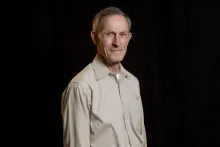
David Mills was born near Wallace, North Carolina, in 1939, where he grew up on a family farm. After high school he attended Ambassador College in Pasadena, California, and he graduated in 1962.
Since that time he has served as a minister of the Church in Washington, Florida, North Carolina, South Carolina, Oregon, West Virginia, and Virginia. He and his wife, Sandy, have been married since 1965 and they now live in Georgia.
David retired from the full-time ministry in 2015.
