

David Mills
This transcript was generated by AI and may contain errors. It is provided to assist those who may not be able to listen to the message.
For the first 18 or 19 years of my life, I did not keep God's Sabbath or Holy Days. And for the first 15 or 16 years of my life, I went to church on Sunday, and I kept holidays like Christmas, Easter, and Halloween. In fact, I remember at a Christmas play, I was one of the three wise men.
And at an Easter egg hunt, I found the most Easter eggs that got the prize. I didn't know at that time that these days were wrong, and keeping these days did not lead me to know God and His great plan and purpose. I was totally deceived about God and what God is like, and also what God is doing. Meanwhile, my father was receiving a magazine called The Plain Truth, and he was listening nightly to a program called The World Tomorrow.
I became interested in some articles in the magazine and also in the program. Around age 17, I began taking the Ambassador College Bible Correspondence Course. My senior year in high school decided to go to Ambassador College. So arriving on campus in 1958, August of 1958, I was not aware of the Sabbath and Holy Days. Back at that time, there were very few congregations in the U.S. and many students had never attended services, and so there were sermons on basic doctrines like the Sabbath and Holy Days, encouraging all the students to open up their Bibles and to see whether or not the Sabbath and Holy Days are in the Bible.
Well, I did this, and so in August of 1958, almost 54 years ago, I started keeping the Sabbath and the Holy Days that fall. For 15 or 16 years of going to church on Sunday and keeping the holidays of the world, I did not understand the Bible, or I read the Bible. I remember reading from even Daniel in Revelation, but I had no real understanding. But once I started keeping the Sabbath and the Holy Days, I began to understand the Bible, began to understand God and His great purpose.
I think many of us here have a similar experience that we went to church many, many years, but we never really understood God's purpose and plan until we began to keep the Sabbath and the Holy Days. Did we really appreciate the Sabbath and the Holy Days? Here we are just a few days, a week and a half, or so away from the beginning of the spring Holy Days. Of course, we keep the Sabbath every week, but did we really appreciate the Sabbath and the Holy Days? In the very beginning, God made the Sabbath day by resting on it.
That's how He made it. He worked for six days. He created the things that man needs for human life. And then God made the Sabbath by resting on it. Later, Jesus would say that the Sabbath was made for man. God made it. He made it by not working. He made it by resting. And He made it sacred. He sanctified it. Later, in the fourth commandment, He said to remember to keep the Sabbath holy. You know, remember... I want to focus on this a little bit more later. Remember takes effort. It's an action word. We have to do something.
We have to be diligent, in fact, to remember to keep the Sabbath holy. The Sabbath is more than just a day off of work. It's more than just a day of rest. You can take a day off of work on Wednesday and do nothing rest. And you'll be refreshed by it. You'll feel refreshed physically. But to keep the Sabbath holy, to remember to do that, takes action on our part. I think we need to think about that just a bit more. And I'll mention that in a few minutes just to come back and revisit that thought.
Let's go over to Exodus 31. And the Sabbath, and by extension I think we can say the Holy Days, are a sign between God and His people. They actually help us to identify where God's people are on the earth. Today, to find God's people, we do want to find. We are looking for a commandment-keeping people. And one of those commandments which really set God's people aside, or set them apart, is the Sabbath. And this really distinguishes us from most other people that claim to be Christian, because most of them do not keep the Sabbath. In Exodus 31, verse 13, Verse 15, work may be done for six days.
That's a generous amount of time that God allows us to do our work. But the seventh is the Sabbath of rest, holy to the Lord. And verse 17, it is a sign between me and the children of Israel forever. And it's a sign of spiritual Israel, the Church of God, today.
We're looking for a Sabbath-keeping group of people, if we are looking and searching for the people of God. The Sabbath is that sign. And we even notice in verse 13 again, the latter part of verse 13, why did we keep the Sabbath and why is it the sign? That you may know that I am the Lord who sanctifies you. The Sabbath does help us in a way that no other commandment is able to do.
The Sabbath involves 24 hours of time. No other commandment involves time in the same way. No other of the 10 commandments, just the Sabbath, involves 24 hours of time. By properly remembering to keep these 24 hours holy, it does help us to come to know the true God and to know His true purpose. Because keeping the Sabbath properly means Bible study. It means finding out more about what God has inspired, finding out what His purpose and plan and what His will are. The Israelites did not keep God's Sabbath, and guess what? They fell into idolatry.
When people do not keep the Sabbath and remember to keep it holy, guess what happens to them? They fall into false worship and they fall into idolatry. That's what happened to the Israelites. Turn over to Ezekiel, Ezekiel 20.
Beginning in verse 11, Ezekiel 20, verse 11, Notice that they greatly defiled and profaned God's Sabbath, that sign between God and them. Verse 16, because they despised my judgments and did not walk in my statutes, but profaned my Sabbaths, for their heart went after their idols. Idolatry and Sabbath-breaking are closely related. False worship, idolatry and breaking the Sabbath have a relationship with each other. Notice in verse 24, because they had not executed my judgments but had despised my statutes, profaned my Sabbaths, and their eyes were fixed on their Father's idols.
So this chapter certainly points out that we start breaking God's Sabbath and it leads right into false religious worship. It leads right toward idolatry. So it was by keeping the Sabbath. They say the proof of the pudding is in the eating. The proof is in the pudding. So, you know, by keeping the Sabbath, I began to understand God and His purpose and His plan.
All those years of keeping Sunday and the holidays of the world, and I did not understand God and His purpose and His plan. Well, that is not surprising, because to know God, we have to worship Him in spirit and in truth and keep His commandments. Let's go to 1 John 2. If we really want to know God, then we have to be keeping His commandments. There's just no other way that we can come to know Him, except to keep the Ten Commandments that He has given for mankind, showing us how to worship God and how to relate to one another.
In 1 John 2 and 3, some powerful verses here. 1 John 2 and 3. Now, by this we know that we know Him. How do we know that we know God if we keep His commandments? That's the simple answer. We come to really know that we know that we know God if we keep His commandments. And isn't that true? As all of us are now striving to keep God's commandments, not only do we know God, we know that we know God. We can go a step further than just knowing we know that we know God because we keep His commandments.
And verse 4 goes on to say that He who says, I know Him, people say, isn't it good to know the Lord? And yet, if they're not keeping God's commandments, it goes on to say, if this person does not keep His commandments, He's a liar, and the truth is not in Him. It's pretty strong, straight from the shoulder language. But verse 5, whoever keeps His word, truly the love of God is perfected in Him. And so it is by the keeping of God's commandments over a lifetime, day by day, week by week, and year by year, and decade by decade for one's entire life. It is by keeping God's word and obedience to His commandments that the love of God then is perfected, little by little.
The love of God is perfected in us. And by this we know that we are in Him. So if we're keeping God's commandments, we know we fall short, we know we're not perfect, we know we need to grow, we need to improve this very season of the year.
We look at ourselves and examine ourselves and realize we need to do better. But yet, we are striving to the best of our ability in our own weak human way. We are asking God to empower us so that we can do it better in the keeping of His commandments. But what about us? Do we really appreciate the Sabbath? Do we really appreciate the Holy Days? Just the Sabbath itself.
God generously gives us six days to do our work. And it's fun to work, it's fun to produce, it's fun to create, it's fun to look back and be rewarded by things we have done.
I'll tell you, there are people that are disabled, that are not able to do anything, that would just give anything just about, to be able to work. And of course, there are people today that are unemployed without jobs, who give just about anything to have a job that they could report to, a job that would add meaning and purpose to their life, and would give them structure, a job or work gives structure to one's life.
And it's good to be able to work, to accomplish, and to produce. But then it's also good to rest on the seventh day. And the Sabbath is that day that God has set aside then for rest, but also for more than just rest and for not working. Also for worshipping God in spirit and truth. And that's why the command says to remember the Sabbath day to keep it holy.
I tell you that remember takes effort. This takes diligence on our part. Remember, don't forget, put out effort, put out effort to remember to keep the Sabbath holy. Why does God put it that way? He knows we're human. And it's so easy, and I think all of us will relate to this, it's so easy on the Sabbath for your mind to begin to wander off to your job.
And you think about things that are related to the job, whatever your job might be. And you begin to think about that. Well, we're to worship God in spirit and truth and lay the job aside on the Sabbath. We're supposed to forget about the job on the Sabbath. But it's easy for the human mind to gravitate and start thinking about the job. Or maybe you got chores around the house. Many people use Sunday because it's not a day that... many times the work week on the job is Monday through Friday, so they have Sunday at home.
And they have chores. Maybe it's mowing the grass. Maybe it's painting a room. Different things around the house that they want to do. And it's so easy on the Sabbath to begin to have the mind thinking about these chores and things that you'll be doing maybe tomorrow around the place.
Well, the Sabbath is not a day to think about those type things, like painting a room or mowing the grass or whatever you might be doing around the place. Or this time of the year, there's a lot of March Madness around. Maybe your favorite team is playing on the Sabbath. That happens. And your mind can gravitate to that. And so, you know, that is not something that we should be thinking about on the Sabbath day. We should be thinking about God's kingdom and about the spiritual things of God and not the things of this world.
So it takes... I believe it takes a lot of effort. It takes even God's Spirit to be able to think the kind of thoughts that we're supposed to think on the Sabbath and say the kind of things we're supposed to say or to talk about. Turn over to Isaiah 58. And so God instructs us to be careful with His Sabbath. If we are to remember to keep it holy, we're going to have to put out some effort.
We're going to have to think about how we're doing it. And so I encourage all of us this year as part of our self-examination, ask yourself, how well am I doing in keeping the Sabbath? How well am I doing in remembering to keep the Sabbath holy? And that's what God tells us to do. Isaiah 58, verse 13. If you turn away your foot from the Sabbath, we can trample all over the Sabbath and we can think thoughts about the job.
We can think thoughts about chores we're going to be doing around the house. If you think thoughts about our sports team, or maybe a hunting trip, or fishing, or something of that type, it's so easy to let our minds gravitate toward that on God's Sabbath day and put our foot all, trample all over the Sabbath when we do that.
And we're certainly not remembering to keep it holy. If you turn away your foot from the Sabbath, from doing your pleasure on my holy day, and call the Sabbath a delight, a holy day of the Lord honorable, and shall honor Him, not doing your own ways, not finding your own pleasure, nor speaking your own words. You know, I just have every idea that all of us do put our foot on the Sabbath too, and that we need to think about this, whether or not we are really keeping it as God intends for us to keep it.
And I say then that we need to put our effort to keep the Sabbath in the way that God instructs us to keep it. We need to be respectful toward His Sabbath day. We need to teach our children this as well. We need to teach them to be respectful toward the Sabbath. It's not a day for being as running as hard as other days.
Oh, children will run, some they will play, that's okay, but we need to teach our children. Son, daughter, this day you're not supposed to run as hard as other days. This day is to be... there's a difference even for children then in the things that children do on the Sabbath. So this is something for us to think about. When we come to church services, there needs to be a respect.
Look at Ecclesiastes chapter 5 and verse 1. Ecclesiastes chapter 5 and verse 1. Walk prudently. That means to be careful, to be discreet. Walk prudently when you go to the house of God. We should do that. We ourselves should certainly be wise and discreet when we come to worship before God. Walk prudently when you go to the house of God. Ecclesiastes 5 verse 1. And draw near to here. Come to hear God's word read and expounded, and also so we can apply and live by it in our lives. Draw near to here rather than to give the sacrifice of fools, for they do not know that they do evil.
Somebody needs to teach our children also. Son, daughter, don't run at church. Don't be rowdy. This is the house of God. And we need to work with our children so that they have a respect toward God's holy convocation. So I just say these things about the Sabbath day because God does want us to remember to keep this day holy.
And we can very easily trample on it if we're not careful. So we need to get our minds onto the things of God. Read a lot of the Bible, pray a lot, meditate a lot about the Scriptures. And so, certainly be careful as far as thinking about things we'll be doing on the job, or chores, or recreation and pleasure, sporting events in this world.
The things of the world, we have to be careful that we do not get our minds dwelling or thinking about those things. Let's appreciate God's Sabbath day. Let's remember to keep it holy. What about the annual holy days? I think there's an application here that we need to have a deep respect as well and put out the same effort to keep the annual holy days. The annual holy days reveal how God will accomplish His purpose with mankind.
I didn't know how God was working before keeping the holy days. I thought people went to heaven or hell. Most went to hell, actually. And that's what I was told. That's what I believed. But I didn't realize that God has a plan that includes everyone. And the holy days reveal how He plans to accomplish His purpose step by step. Passover is the beginning of it all. Who needs to pass over? Everyone needs to pass over because everyone is sinned. The Passover shows how we can deal or reckon with sin and how that price can be paid. And that we do have a Redeemer, one that has stepped forward to pay the price for us.
The price for sin is death. And Jesus paid with His own life for our death. So that that can be removed from us and we can then go on to have eternal life in God's family. We need to think about this more deeply, this Passover, and thank our Father for it and understand the sacrifice to comprehend it more deeply. And we will have more to say about it today and in sermons just ahead. And the Feast of Unleavened Bread, what a wonderful feast that is. After being forgiven, should we continue in sin or should we put sin out? We should purge out sin and strive to keep the holy and righteous laws of God.
Pentecost shows that God is not trying to save the world today. That's certainly different than what most people believe. But there is a firstfruits of the Spirit described in the Bible. And this feast is called the Feast of Firstfruits in the Old Testament. And so Pentecost shows the ones that God is working with today. And he is preparing them to rule with Christ when Christ returns. Well, the next holy day, Feast of Trumpets, shows the return of Christ at the last trump. It's also the resurrection of the righteous who have been prepared during this time to reign with Christ.
But only the righteous are resurrected. That's very different, isn't it? Most people in the world believe that when Christ returns, everybody is resurrected. And then everybody comes before the judgment seat of Christ, and all the wicked go down to hell, and the righteous then follow Christ up to heaven. Well, that is not what happens at all. Jesus will reign right here on the earth. The Day of Atonement shows Satan being bound, and the world coming to be at one with God.
And what a wonderful time then that will introduce the millennium, pictured by the Feast of Tabernacles. Of course, all of these holy days we will be keeping as we begin with Passover and go on through this year. The Feast of Tabernacles pictures the one thousand year reign of Christ on the earth. And all of mankind will have the opportunity to be in God's family during the thousand years. In a happy, joyful time, all nations will keep the Sabbath. They will keep the holy days during the millennium. They don't keep the holy days. They have no reign. Zechariah 14. And the last great day, what a wonderful bit of understanding that is.
See, God is not trying to save the world today, but that doesn't mean that all the masses of people that God is not working with are lost. They have a day of salvation in the future. It will be right after the one thousand years. You know, we many times take for granted what the holy days picture, especially if we've been around a long time, we just kind of take it for granted. But these holy days are wonderful knowledge. For the first eighteen years of my life, I didn't understand the holy days, and I didn't understand God's plan. But once I understood the Sabbath and holy days, I did begin to understand God's plan.
And it's a marvelous plan that includes everyone. And truly, in the end, God is not willing for any to perish, but for everyone to come to repentance. He desires all men to be saved to come to the knowledge of the truth. So, Sabbath and holy days really do picture wonderful things, and let's not take them for granted. Let's thank God for being able to understand about His Sabbath and holy days. I want us to, especially now, for the remainder of the sermon today, to transition over to thinking more deeply about the Passover and the Feast of Unleavened Bread.
These are the two holy days that are right upon us. Let's just read a few verses that will help us to begin to prepare for Passover and the Feast of Unleavened Bread, and also to examine ourselves. And we're going to, in our Bible study right after services, talk a little bit more interactively about how to prepare for Passover and the Feast of Unleavened Bread and how to examine ourselves. Let's turn all the way back to the book of Exodus, chapter 12. This is where the Israelites, in slavery, in Egypt, were given the Passover.
I think many of us, most of us, are familiar with this chapter. The Israelites were instructed to take a lamb, the first few verses, and this lamb, verse 5, was to be without blemish. It was a type of Christ. They were to take this lamb on the tenth day of the first month. By the way, God gave them His calendar, which this is the first day of the sacred calendar. And verse 2, this month shall be your beginning of months. It shall be the first month of the year to you.
And God has preserved this calendar through the Jewish people. He has also seen to it that the Old Testament Scriptures have been faithfully preserved by the Jewish people as well. God has committed these things to the Jewish people. Paul said in Romans, chapter 3, verses 1 and 2, God has committed to them the oracles of God, the Old Testament Scriptures, the knowledge of the calendar, and they have also the knowledge of the weekly Sabbath and also the knowledge of the Holy Days during the year.
Not that their understanding of it all is ours, but at least we do know when the calendar begins and we know when the Holy Days occur during the year. So that knowledge, God has seen, has been preserved. So they were to keep, verse 6, they were to keep this lamb until the fourteenth day of the same month, and then they would kill the lamb, they would put the blood up on the doorposts and the lentil, verse 7, and they would eat the lamb roasted with fire and with unleavened bread and bitter herbs in verse 8.
Verse 10, whatever remained till the morning, they would burn with fire. And they were to be ready to leave Egypt. Verse 11, with their belt on their waist and sandals on their feet, that just shows they were to be ready to leave Egypt soon. God was liberating them from their slavery. So you shall eat it in haste, it is the Lord's Passover.
I will pass through the land of Egypt, verse 12, and strike all the firstborn in the land of Egypt, both man and beast. Against all the gods of Egypt, I will execute judgment. I am the Lord. Now the blood shall be a sign for you on the houses where you are. And when I see the blood, I will pass over you. And that's where the word, the name Passover comes from, right here in verse 13. I will pass over you, and the plague shall not be on you to destroy you when I strike the land of Egypt.
And so we know that the Israelites did this, and they were spared that night. Whereas in Egypt, all the houses of the Egyptians did not have the blood, and there was the death of the firstborn. But the Israelites were spared because they had the blood of this Lamb. We know it's a type of the blood of Christ. I'll tell you, if we have the blood of Christ covering us, you might say, in our lives, then God passes over us also as far as the death penalty.
Jesus Christ takes care of that death penalty in our stead. While we are here in Exodus 12, I want us to read also in verse 15 about the Feast of Unleavened Bread, Seven days you shall eat unleavened bread. And these seven days began on the very next day after the Passover day.
Passover day was on the 14th, and the Feast of Unleavened Bread begins on the 15th. So seven days they were to eat unleavened bread. On the first day you shall remove leaven from your houses, for whoever eats leavened bread from the first day till the seventh day, that person shall be cut off from Israel. On the first day there shall be a holy convocation, and on the seventh day there shall be a holy convocation. No manner of work shall be done, but that which every man must eat. And so you shall observe, verse 17, the Feast of Unleavened Bread, for on the same day I have brought your armies out of the land of Egypt.
You shall observe this day in your generations for an everlasting ordinance. And so God gave the Israelites the Passover and the Feast of Unleavened Bread when they were yet in slavery, but they were about to be set free, and they were able to leave the land of Egypt. Well, we know that in the New Testament we don't kill a lamb. The Lamb of God has come, and He has made that supreme sacrifice. But let's notice how Jesus changed how we observed the Passover in Matthew, chapter 26. Yes, the New Testament Passover is observed in a different manner. But yet, just as the Lamb was a type of the sacrifice of Christ, so what we do is our symbols of that same sacrifice of Christ.
In Matthew 26, we read about the preparation for the Passover. In verse 19, the disciples did as Jesus had directed them, and they prepared the Passover. So Jesus came, and they sat down, and there was a lamb. They had killed a lamb. They had roasted that lamb. They had bitter herbs with the lamb. And so they sat down to that Old Testament Passover meal. And it was during that meal that Jesus instituted the new symbols for the New Testament Passover.
In Matthew 26 and verse 26, As they were eating, Jesus took bread, blessed it, and broke it, and gave it to the disciples, and said, Take eat, this is my body. And then He took the cup, and gave thanks, and gave it to them, saying, Drink from it, all of you.
For this is my blood of the new covenant, which is shed for many for the remission of sins. And so Jesus showed that the Passover from now on should be observed with the broken bread, representing His broken body, and with wine, the fruit of the vine, which represented His blood. The Apostle Paul confirmed this to the Gentile Corinthians. Turn to 1 Corinthians 11. And the Apostle Paul confirms that this is the New Testament Passover that we should be observing on that very same night that Jesus instituted these new symbols.
1 Corinthians 11 and verse 23, We just read about it in Matthew 26. He took bread.
And so we do take the broken bread, and we remember the broken body of Jesus Christ. He was scourged. He was beaten. Even maybe not recognizable after that scourging and beating. A Roman scourging was called the halfway death. And a person was then beaten about halfway to death before it ended. And then He was led off to be crucified after that. Well, in verse 25, Some people misread that. They say, well, you can do it as often as you want to. No, the Passover only comes once a year. It comes on the 14th day of the first month. That only occurs once a year. So the Passover day, commemorating the very death of Christ, is on the Passover day, which again is just once a year. Verse 26 says, Often as you eat this bread and drink this cup, you proclaim the Lord's death until He comes. So that's the manner that we observe the Passover. When we come together, we will take broken bread, representing the broken body of Christ, and we will take wine representing His shed blood. Notice something else that we do in John 13. I'm wanting us to just go to review quickly the things that we will be doing just ahead and to be preparing and examining ourselves so that we will be ready, because it is very near. In John 13, we have something that Jesus added to the Passover, which had not been done before. During the Passover meal, John 13, verse 1, the Feast of the Passover is being discussed here. In verse 2, supper being ended. And Jesus, then verse 3, knowing that the Father had given all things to His hands and that He came from God and was going to God, rose from supper and laid aside His garments, and took a towel and girded Himself and poured water into a basin and began to wash the disciples' feet, and wiped them with a towel with which He was girded. Well, this little episode with Peter, you can read about that later.
But in verse 12, when He had washed their feet and taken His garments and sat down, He said to them, Do you know what I've done to you? You call Me teacher and Lord, and you say, Well, for so I am. If I then your Lord and teacher have washed your feet, you ought to wash one another's feet. I've given you an example that you should do as I have done to you. So we will have a foot washing on the night of the Passover, and then after that we will take the broken bread representing the body of Christ, and then the wine representing His shed blood.
Now, what about the Feast of Unleavened Bread? Is there any New Testament instruction explaining what the Feast of Unleavened Bread means? Yes. Let's go to 1 Corinthians 5. Well, this is a passage that certainly proves the Holy Days, that we should be observing them. In 1 Corinthians 5 and verses 7 and 8, Therefore purge out the old leaven, that you may be a new lump, since you truly are unleavened. For indeed Christ our Passover was sacrificed for us. This shows what the Passover means. It means the sacrifice of Christ for us. But this is talking about purging out the old leaven, so we can be a new lump.
And verse 8 says, Therefore let us keep the feast. Let us keep the feast, not with the old leaven, nor with the leaven of malice and wickedness, but with the unleavened bread of sincerity and truth. So let us keep what feast? What feast could this be, other than the Feast of Unleavened Bread? How do we keep the Feast of Unleavened Bread? We put out yeast and baking soda, baking powder, and also potassium bicarbonate. And we put out also bread, regular bread, crackers, cookies, self-rising flour, any products that have the yeast in them.
We put them out of our homes. Unless we have in our homes a mate who is not in the church, who wants to have the regular bread, we don't try to impose this upon them, but we ourselves, of course, do not eat of the leavened products during the seven days of the Feast of Unleavened Bread.
So on Friday, April 6, we should by sunset, that day, have all the leaven and leavened products out of our homes. Again, if our mates are not members of the church, we ourselves would certainly not participate ourselves in the eating of anything that has leaven in it.
Be ready to keep the seven days of the Feast of Unleavened Bread. What about the night to be much observed? Well, let's read about that. Let's go back once again to Exodus 12. This night is symbolic of something very important. And it's the night the Israelites began their journey out of slavery. They had been slaves all of their lives. And now they were set free. What a happy, joyful night it must have been.
How would you feel if you'd been a slave all your life? And now you're free! At last you are free. You would be so happy, so joyful. Well, so were they. And in Exodus 12, verse 40, The sojourning of the children of Israel who lived in Egypt was 430 years. It came to pass at the end of 430 years. On that very same day, it came to pass that all the armies of the Lord went out from the land of Egypt.
It is a night of solemn observance to the Lord for bringing them out of the land of Egypt. This is that night of the Lord, a solemn observance for all the children of Israel throughout their generations. And so this is the night they began their journey out of Egypt. So we commemorate this night in a very solemn way, but a way of rejoicing also by having a meal together, special fellowship. And we do remember how God brought us into His church and began to lead us out of this world.
Well, I'd like to read as the final Scripture. We're going to go over some other Scriptures in our Bible study, which will follow, but let's go to 1 Corinthians 11. And after those verses that we read earlier, we want to set the stage for our Bible study. That is, that we do consider ways that we can prepare for the Passover and the Feast of Unleavened Bread, and that we consider ways that we can examine ourselves as we are admonished to do here.
1 Corinthians 11 and verse 27. Therefore, this verse follows what we had read earlier, the instruction about the Passover, about the bread representing the broken body of Christ in verse 23 and 24. And then verse 25, the cup representing the blood of Christ. And as often as you eat this bread and drink this cup, you proclaim the Lord's death till He comes. Verse 26 and verse 27. Therefore, whoever eats this bread and drinks this cup of the Lord in an unworthy manner, what would be an unworthy manner?
Let's discuss that some in our Bible study right after the service. Whoever eats the bread or drinks this cup in an unworthy manner will be guilty of the body and blood of the Lord. We don't want that to happen to us, I'm sure. But let a man examine himself, and that's what we all must do in these days just ahead.
Let a man examine himself, and so let him eat of that bread and drink of that cup. For he who eats and drinks in an unworthy manner eats and drinks judgment to himself, not discerning the Lord's body, not really comprehending what he is doing. So these verses show that we need to comprehend what we are doing on the night of the Passover. We need to appreciate the sacrifice that has been made for us.
Passover is a very solemn occasion, and in the Bible study we especially want to consider how we can prepare for the Passover and how we can examine ourselves so that we can take the Passover in a manner that is worthy, certainly not one that is unworthy. So be sure to stay around for the Bible study. It will be an interactive discussion on how to prepare for the Passover and how to examine ourselves before the Passover.
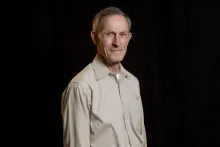
David Mills was born near Wallace, North Carolina, in 1939, where he grew up on a family farm. After high school he attended Ambassador College in Pasadena, California, and he graduated in 1962.
Since that time he has served as a minister of the Church in Washington, Florida, North Carolina, South Carolina, Oregon, West Virginia, and Virginia. He and his wife, Sandy, have been married since 1965 and they now live in Georgia.
David retired from the full-time ministry in 2015.
