

Robin S Webber
This transcript was generated by AI and may contain errors. It is provided to assist those who may not be able to listen to the message.
We have just come off of a presidential election, and I thought, what more fitting message to give all of you than to speak about leadership. And so today I am going to speak about leadership, and just so that you will know what I'm talking about, have you ever heard a message and say, well, what did they talk about anyway at the end of the day? So I'm just going to give it to you right up front.
How's that? And I'm going to give you principles of Christian leadership. Over the last year to two years, as we've had the presidential campaign, we have seen a lot of exhibition of what people propose their leadership might be and what it will become. So today, let's talk about the Christian leader that God wants all of us to become. But I want to go beyond 2016 and the presidential elections.
I want to take you back to another time, another place, and actually a different continent. And I want to describe to you one of the great battles of the Hundred Years' War. It's known as the Battle of Angencourt. I like to set up the battle scene of what occurred and then the leadership that occurred from it. What had happened in 1415, and of course the conflicts between the French and the English had already been going for about 60 years.
It was not a war every year during that Hundred Years' War, but it was battles and conflicts that occurred over a hundred year period. But we find ourselves in Normandy, and what had happened was that King Henry V, otherwise popularly known as Harry, King Harry, he had led his men into France for a knockout blow and an incursion to stymie the French.
He then had to retreat back to the coastline of Calais, which was under British control. The men had been marching for 18 days. That's a lot of marching and a lot of days. They were tired. They were hungry. They were trying to get back to the coast where the castle was in Calais. What had happened is they found themselves cut off by 18,000 French soldiers, many of them knights, many of them mounted knights. And so what they had as they were trying to get back to the coast was that they had the fringe between them and the coast and the rest of France to their rear.
Finally, King Harry understood that basically his army was outnumbered three to one. And here before them was a muddy farm field about 3,000 feet wide with about two sets of woods on either side. And there were 18,000 French between them. Now, you and I were not there, just in case you think I'm that old, but neither you or I were there. But Shakespeare gives a little prose and gives a little thought to this. Whether this happened or not, he offered one of what we call the great time, half-time huddles.
Go out and do one for the Gippur. And so I'd like to draw some of what those men might have been thinking through the words of Shakespeare for a moment. And we're going to move right into Shakespeare Act 4 and Scene 3. And it's that famous set-up scene where the battle is about to occur, which moves to a very famous speech called the St.
Crispin Day Speech. What had happened were some of his relative nobles were quaking in their boots. And one of them's name was Westmoreland. And Westmoreland said, oh, that we had here but one ten thousand of those men in England that do no work today. And all of a sudden King Henry kind of comes wandering out of the woods and he says, What's he that wishes so?
My cousin, Westmoreland? No, my fair cousin. If we are marked to die, we are enough to do our country loss. And if to live, the fewer the men, the greater share of honor. God's will. I pray thee, wish not one man more. No faith, my cousin. Wish not a man from England. God's peace. And after this speech goes on and on, which I'm not giving all of it to you, Salisbury, another of the noblemen, says, My sovereign Lord, bestow yourself with speed.
The French are bravely in their battle set and with all expedience charge on us. Now, that was quite a lineup that was before that when you recognized the French cavalry was the best in Europe. And this is when they had those big, big, big horses and all of the armor that was very prevalent in the 1400s. They were like moving tanks. And they said, Come on, let's get going. And then Harry comes back and says, All things are ready, all things are ready, if the mind be so. Goes on a little bit later to where the herald comes up to him.
The French herald says, Harry, are you ready to surrender? And Harry goes into a tirade saying, You're just not going to do it. You're going to have to come for me and ransom my bones, what might be left. But he said to the French herald, at least this is what Shakespeare said, which I think is a great line, But by the Mass, in other words, the entire group, but by this entire group, our hearts are in the trim.
Now, whatever the king said that day, we know that his mind and we know that his heart was prepared. And he encouraged the others that were with them, those few men from England on that day, to move beyond the fear and to be more than they could possibly be and bring out the very best in them. That is leadership. Proverbs 23 verse 7, just jot it down. When Henry said, All things are ready if the mind be so, either King Harry and or Shakespeare was channeling Proverbs 23 in verse 7, As a man thinks, so he is.
Now, that's nearly 600 years ago. That time has come and gone. And it was a great victory for the English, at least on that day. The story is, about 30 years later, they did have to leave French soil. But for that day and for that leadership, King Harry held his ground, and he made ground in the hearts of his fellow men.
What does that have to do with you and me? We, too, have challenges. We, too, have challenges. We might call them battles. We might call them situations. And at times, we also, and maybe some of you feel that way today with what you brought into this room, we, too, can feel as cut off as the English did from getting back to Calais.
There is something standing between us and God's best for us. And when we serve God's best, then we also serve others. Now, with that stated, let's understand something. We can talk about King Harry, piddled Harry V, or King Henry V.
But here's something I want each and every one of us to understand. We're going to think out from where we are right now. We're here today. We're in church. We say, well, I'm a church member. You're more than a church member. You are a disciple of Jesus Christ.
Your election is by God the Father above. And you say, well, you know, here's one of these messages on leadership. Another leadership sermon. But we've got to understand something very important. You and I have not just been called to fill and sit in a seat today in November here in L.A., California.
Disciples have something out ahead of them. You say, well, I just, I can just, I can handle being a disciple.
But a disciple is learning something. That's the very word. That's what it means. Disciple means to be a learner.
And when we learn, we become more than we are. And our discipleship in this lifetime has a specific outcome that neither you or I would have chosen on our own, but God Almighty expresses it in Revelation 5. Join me, if you would, in Revelation 5. And let's pick up the thought in verse 10. In Revelation 5 and verse 10, there's this song coming from the heavens above as John sees it in his vision. And notice what it says, speaking of God, and has made us kings and priests to our God.
And it says, and we shall reign on the earth.
Well, that's not talking about me.
Come on.
I'll just settle for knowing God's truth. I'll just settle for being a disciple.
A disciple is a temporary situation towards an outcome that God is preparing for us by His grace and by His favor.
That apart from ourselves, not because of who we are or what we know, but because of what He's doing with us, He's calling us to one day assist Jesus Christ in the wonderful world tomorrow.
And we are going to be leaders, kings. We're going to be a realm of priests unto our God. And priests guide, they lead, they encourage, they motivate people.
And that is our role.
That is our destiny.
Now, if you want to, you can take scissors.
Cut that out of the Bible because it says that's not me, but then I'll let you have the discussion with God later, okay? Because that's what He says. But you say, but I'm not the leader type.
Some of us may feel more comfortable sitting on the bleachers by personality, by background, by experience.
But once again, that is our ultimate calling. I have a question for you. A couple questions I'm going to pop to you. Then we're going to try to answer it. The rest is message.
Is there such a creature as a born leader? Is there such a creature as a born leader? We've all used that phrase. Sometimes we see some young lads, see some young lasts, and we'll say, they're natural. They're just going to be a born leader. I would say yes by DNA and by genes. I'm not talking about blue genes, but by genes, we might say some seemingly are born to be born leaders. But don't take yourself out of the story, okay? Stay with me. But it's one thing to be born a leader. It's another matter to stay a leader. And the Bible is full of examples of that, which we're going to cover later on. With that thought, I submit to you that leaders are made.
Leaders are made, not born. Princes may be sired, but kings are not born. And that's what you and I are doing today in this Sabbath service. We're being groomed by the Spirit. We're being groomed by Scripture. We're being groomed by the example of the King of Kings set before us, so that later on we can have these stepping stones of leadership to put into practice now. With that all stated now, now that we all know that we are training to be leaders. And this is not just something that I'm mentioning today. I remember that being mentioned 35-40 years ago from the stage in Pasadena.
When we were told, now is the time.
Now is the time prepared to be a priest before God.
I remember as a young man, that really struck me. I was younger than 35-40 years ago.
But I remember that voice saying that, prepare now. Don't mortgage. Don't push it off to the future. Don't wait until manana. We all know that word in Southern California.
Not tomorrow.
Tomorrow sometimes can be the most wonderful word in the English, because, well, after all, there is always tomorrow via Scarlett O'Hara. But tomorrow can also be a death knell of what God wants to do with you and me today, to start today. And today is the beginning of the starting line. So I'm going to give you today three principles of Christian leadership that will serve God, serve you in responding to His calling, and serve others. Let's understand that again, unless you miss it. It's going to serve God, number one. Number two, it's going to serve you. It's going to make your life more abundant.
And true and real leadership, leaders serve others.
At the end of the day, it's not about you. It's not about you. It's about God, and it's about serving the others. You say, well, who am I serving? I don't have a job outside of the home right now. I work in the home. Okay, fine. But you serve your husband, you serve your children, you serve your grandchildren, you serve your community. You come to church, if you can ever make it here through the traffic. Joke, joke, joke.
In L.A. and you serve those that God puts in front of you. Sometimes you say, well, I don't know who to serve, because, well, we're 80 miles apart from one another. I understand that. I get that. What you do is you serve the person that's in front of you.
The person that you have not chosen to serve, or you never knew existed. But you know what? They are in front of you today at this moment, and there is a need to be fulfilled.
And you fill it. That's being a leader. I want to share a situation. You want to jot this down if you get nothing out of this message. Are you with me? Put this down. Leadership is not a position.
It is a condition.
Leadership is not a position. It does not have to be in a box. It doesn't have to be in some Google organizational chart.
That might be deleted by one push of the button.
Leadership is a condition inside of us.
That God is developing for His purposes, known but to Him for the wonderful world tomorrow. So with that stated, let me give you number one. Okay, are you with me? Here we go. Number one.
First principle of leadership. Establish a goal worthy of your life's devoted sacrifice.
Establish a goal that is worthy of your life's devoted sacrifice.
That first point in every word is crafted to be important. Now, why is that so important? Because we only have one life.
We only have one life.
And time is fleeting.
Is it all right to have other goals in life? Oh, absolutely. You can have many goals. You can have secondary, tertiary goals. Secondary. Those goals that then come in third. Absolutely, that's fine. But they all have to be tied into the greatest goal of all.
Why is it so important to have a goal? Let me share a few thoughts. Have you ever noticed that a lot of people aim absolutely at nothing in their life?
And they hit it smack dab every time?
There are people just wake up.
And they aim for nothing and they get nothing. You reap what you sow. Now, that's on one side of the ledger, okay? That's over here. We've met some of those and, well, it may be us.
On the other side, there's other people over here that all of their life, they climb the ladder of success up, up, and up, and up, only to find out that when they're at the top, that ladder is leaning on the wrong building.
They spend all that time, all that energy of what they consider success, only to find that when it all comes up to the end, it's leaning on the wrong building. Then they look down and, you know what? There's nobody to help them down because they've kicked everybody else off on the way up in being a leader, which is another aspect of leadership.
A leadership is not about yourself.
It is to serve and to bring others up that ladder with you, but not on the wrong building, on the right building. Very important.
Henry V set a goal. He was going to make his stand. It was the Alamo in Normandy in 1415. Actually, the outcome was better for him. It wasn't good for the French, but it was better for him. He set a goal and he was willing to sacrifice his crown, his kingdom.
And we marvel at that, but there's a greater king that was willing to sacrifice all. Join me if you would in Philippians 2 and verse 5, because this is the role model that we follow. Philippians 2 and verse 5. Join me if you would, please.
In Philippians 2 and verse 5.
Again, let this mind be in you, which was also in Christ Jesus.
Very important. Remember what Shakespeare said?
All things be ready if the mind be so. Let this mind be in you, which was also in Christ Jesus. Who, being in the form of God, did not consider it robbery to be equal with God. And it's a very tough translation. You're saying, what was there? Was there a heavenly heist or what's going on up there? No, it's not as if he held onto. It's not like he grabbed onto that uncreated existence.
It wasn't like the one that later on became the father. You will go down, go down, go out, out, out, boom, boom, boom, you know, holding onto something. No, no.
He voluntarily released that divinity in the uncreated world and gave himself. Now you say, let this mind be in you, which that's a bumper sticker. And you can gain a certain amount of wisdom off a bumper sticker, but it's lacking. That's why we have to look at the next part of the verse. Who, being in the form of God, did not consider it equal to be God, but made himself of no reputation, taking the form of a bondservant, and coming in the likeness of men, and being found in appearance as a man, humbled himself, and became obedient to the point of death, even the death of the cross.
Now, let's understand something. His mind in that sense, the mind that is to be in us, was in the trim.
And we see what he did.
But there's more to it. Luke 19 and verse 10. Join me if you would for a moment. In Luke 19 and verse 10, let's notice what it says.
This is sometimes called the specific scripture verse of the book of Luke.
For the Son of Man has come. Oh, he was up there. He did not think that he would hold on to it, but voluntarily.
See, leaders volunteer, and leaders humble themselves, and came down here for you and me, for the Son of Man has come to seek, and to save that which was lost.
Two things that I want you to understand about the head of the church and the Lord of your life, Jesus Christ. Number one, he was totally devoted to come down here for you and me.
And number three, he sacrificed. Let me share something with you, very important. Let's keep this trajectory going. It's one thing to be devoted, and it's another thing to sacrifice. Let me share a story with you. It's a story about the chicken and the cow.
The chicken and the cow on the farm, and they're talking. And they're talking. So you already know that this is a story because they're talking. But the chicken comes up to the cow, and the chicken says, Hey, cow, how you doing? Fine.
Fine. And the chicken says, I've got a great idea. You know that that farmer has been so good and so kind to us. I tell you what, let's do something nice for him. The cow says, absolutely, let's do it. So the cow was devoted to doing what the chicken wanted to do. And the chicken said, I know what we'll do. You know what? We're going to supply him breakfast. Isn't that a great idea? And I'll tell you what, I'll supply the eggs and you supply the meat.
The chicken wanted the cow to follow him into doing something good. And the cow could only trot away with a downcast face.
Remind you a little bit of Luke 9, where so many people wanted to come up and said, Oh, that's a good idea. And I will follow you.
And yet they walked away. They were not willing to give their future, their present or their past to Jesus Christ. There was the young man that said, Oh, that sounds like a really good idea. What shall I do? Oh, Lord, and you know, what shall I do? Oh, Lord, he says, give away all that you have and follow me.
And like the cow, he had to walk away.
Being a leader, like the ultimate leader, Jesus Christ, means that we must not only be devoted.
We must not just simply be a sunshine patriot, but we must be willing to sacrifice. And the thing that a leader sacrifices the most is himself.
Very, very important.
What a blessing we are here on God's Holy Sabbath day, Seventh Day of the week.
One thing about being leaders, leaders need to take time to ponder, to think, to stop. Remember what I said earlier that, you know, it's alright to have many, many, many goals in life, but it's most important to have the big goal in life. Matthew 6 and verse 33, Seek you first the Kingdom of God.
And, are you with me? And His righteousness.
So often we just say, seek the Kingdom. No, seek the Kingdom of God.
In a sense, the fulfillment of that is in the future. And His righteousness, that's now, not later, now, as we draw upon the righteousness of God, the righteousness of Christ in us. And then it says, and everything else will be added. So it's alright to have secondary and tertiary goals.
But they all must be attached to the big goal. And this Sabbath day, a day of rest allows us to think and to consider. And leaders need time to pause and think and consider. How important is that for us today, dear brethren, here in Los Angeles and those that are listening, when we have so many voices, this is my so many voices gesture, so many voices coming at us.
So many voices.
To where we allow the instrumentality of this world to control us, rather than turn it off and allow the Spirit of God and the Scripture of God and the wisdom of God to guide and to lead us.
As I say, and I always have to say this, this is not an anti-technology message, but it is a warning that there is more coming into our life today than any human generation has ever been able to have. In your phone, not my phone, I don't want to show you my phone, remember I'm going to put it on eBay when it gets more expensive, the little flip-flop. But on your phone, the smartphone you have, there is more knowledge, there is more information in that smartphone than in the combined libraries of old of Alexandria and Pergamum. Put them together. It does not match. And with opportunity comes responsibility.
The Sabbath day allows us to shut out this world, to turn things off, and allow us to contemplate the goal and the role of leadership that God wants us to have, and to reassess again what is our devotion level to that goal, and what is our sacrificial quotient to that goal to make it happen.
A leader, a leader must sacrifice, a sacrifice that moves just simply beyond devotion. And that is being a risk taker. And risk-taking is a vital part of leadership.
Leaders must have courage to begin while others are waiting for better times, safer situations, and assured results. A leader is willing to take a risk because they know that over-caution and indecision are robbers of opportunity and success. They take initiative, are independent, and are not unduly influenced by others.
I know you had that question today, and those of you that were in the Women's Discussion Group, about influence, do others influence you? What does that mean? Actually, Susan and I had our own Women's Discussion Group on the fourth lane out there about 40 miles. Couldn't make it in. Susan looked over at me and said, Robin, are you influenced by others?
Am I influenced by others? Yes, I am. I use the word I will consider what others say, because in a multitude of counsel there is safety. But at the end of the day, you must make a decision. You must make a decision. And that's very, very important. Which leads us then to the next point. Point number two about leadership. Be decisive. Learn to make definite decisions.
Learn to make definite decisions. All of us grew up watching cartoons.
Nobody's shaking no. Okay. And we remember that famous, you know, she loves me. No, some gal or some guy, you know, with the posy. She loves me. She loves me not. She loves me. She loves me not. We're letting the flower try to determine whether a human being really loves you.
And people do that going through life. They're not decisive. Let me share a thought with you, may I?
True leaders. Leaders in the grooming. Leaders in the grooming. Not just simply born leaders, but leaders in the grooming. Understand that not making a decision is a decision.
Not being decisive is a decision. And it can vastly increase the fog index for you and those relying on you. For none of us live alone on an island. Can you imagine King Harry there in Anshan Corps? Well, well, guys, this is it. Let's just stand on the line and get run over by the French cavalry. You Welsh longbow men, just put down those bows. This is it. But that's not what King Harry did. King Harry said, if the mind be so, if mind be ready, all things are so. He also said that our hearts are in the trim. We'll build on that as we continue. Now, why do sometimes people why do sometimes people live in the goldfish bowl of indecision? Let's be frank. Let's be honest.
Let's face it. Deciding to decide is often the hardest part of the leadership equation.
Hardest part. Hardest part. Absolutely. I've been there. I can think of decisions that I've had to make over the last 40 years as a minister, as a pastor. Big decisions. Big decisions. But ultimately, you have to decide. Ultimately, you have to decide. You have to put it in a motion.
You have to draw a line in the sand, and you have to do it. Absolutely.
I'd like to tell you a story. Maybe you're familiar with it. It's legend, so we'll cut that one in half. But the story is about Alexander. But there's a point in this. Alexander the Great, in his conquest of the Persian Empire, came into the city of Gordium. Gordium. In Gordium, in the middle of the square, was a gigantic, huge, huge, gigantic, double gigantic knot. All tied and twisted and turned.
Look worse in your tennis shoes when you were in sixth grade. Remember that one? Getting the pencil or getting the nail or getting the screwdriver. You didn't do that. You just knew how to tie your shoes. Is that what you're telling me? I'm looking at Bob Brown. He never had this. You had it. Never had it. Okay. They teach you how to do that better in Wisconsin than California. Okay. But it came up to where it was said that this knot was simply this, is that the person that was able to untie that knot would be the ruler of all Asia. So men came and men went.
Many of you know this story. Men would come and would go. And what they would do, you know, they would do just like what I did in sixth grade with when my shoes got. I'd get a penny. No, they did all of this, you know, they did all of this.
And you know what happens when he did all of this? They tied themselves up in knots themselves. Alexander came along, cocky, young, Macedonian, and he came by and he saw the knot. Mm-hmm. Went over here, pondered because leaders ponder and leaders think. And all of a sudden he just took out his sword. Cut the knot in half. You're looking at me as if I were there. I'm not that old. Okay, I'm seeing some of the back row there.
And the rest is history. He became the conqueror all the way over to western India. Sometimes we're like all those men that came up before Alexander the Great. We hack around the edges. We move around the edges. We deal with everything other than what needs to be dealt with. Allow me to share something about leadership. May I? You might want to jot this down. Always remember that the main thing about the main thing is that the main thing always remains the main thing. Don't ask me to repeat that. But so often we get sidetracked. We get over here hacking on the edges rather than being decisive and moving towards it.
Now, how do we slice through the matters of our life as a leader? Let me share a few quick thoughts here. Does that mean that we just get the gay blade and like Zoro cutting everything? I'm not saying that at all. That would be the height of presumption. There are steps. We know that in the book of James. I'm just going to jot these down.
I'll let you look at them over the week. In James 1, 4 through 8, it says allow patience to have its perfect work. And we need to be patient. Remember the old carpenter's rule. Measure twice before cutting once. Leaders do that. They measure twice before they cut once because we're not dealing with wood as leaders and as disciples that are training to be leaders. We're not dealing with wood. We're dealing with hearts. We're dealing with lives. So measure twice before you cut once. Allows, it says in James, to have that perfect work. Well, how do we do that? I'm just going to throw some verses at you.
I'll let you do the study later. 2 Chronicles 1, 5 through 11. You go to God like Solomon. And you say, God, you've put me over all of these people. I need your wisdom. I need your understanding. I need you to be by my side. Seek guidance. Right there in the book of James, along with allowing patients to have a perfect work, it says, ask.
It says, seek. It says, knock. It says, you have not because you ask not. Don't be double-minded. I'm going to show you something here. Let's go to James.
I'm excited about James. In the book of James, I want to show you something. In James 1, verse 6. But let him ask in faith with no doubting, for he who doubts is like a wave of the sea driven and tossed by the wind. For let not that man suppose that he will receive anything from the Lord. And he is a double-minded man. Double-minded, unable in all of his ways. The word there, the Greek behind all of that double-minded man is dipsukos. Dipsukos, which literally translated means too brained. Don't be a too brained individual.
Ask God to help you once you move through the paces of leadership to be decisive. I remember as a boy going to the San Diego Zoo, some of you have been down there, the reptile house over there on the left as you move in and you know has the tile roof. I used to go there about 1959. I was always looking for this little, little square exhibition and there was a glass because that's where the two-headed snake was.
Two-headed snake. And you always wondered which way it was going to go because it had two heads. It had two brains. Now, that's not the world that we want to be in, but that's the world some of us are in because to this point we are not decisive. And you have some, probably in a room this big, have some major decisions among some of you. And you must realize that any recovery lies on the other side of the panic that you feel. You can't go to the left. You can't go to the right. We need to ask. We need to seek. We need to knock. We need to be patient. We need to look at the examples that are in the Bible. You think about the people in the Bible that had big decisions before them, whether it be a Hannah, whether it be a Sarah, whether it be a David, whether it be a Paul. And all of those are examples for us to learn about, to learn about. That's very, very important. Join me if you would for a moment in 1 Samuel 17. In 1 Samuel 17, 1 Samuel 17, the story of David. And he had a giant in front of him and his name was Goliath. That was verse 32. Then David said to Saul, Saul had called him in. He heard that David was having a hissy fit about this uncircumcised Philistine down there, defying the army of God. So he got the call in by the king. And then David said to Saul, the king, let no man's heart fail because of him. Your servant will go and fight with this Philistine. Hmm. Hmm. But did King Harry say? He said that our heart is in the trim.
David's heart was right. He began to line up a sequence regarding his shepherding that whether it be a lion or whether it be a bear that he took them on one by one. He was decisive. He had a role. He was a leader. He was a shepherd over his father's sheep. And he had a responsibility. And he was not only devoted to being that shepherd, but he was willing to sacrifice himself for the sheep and to do it. And he gave God the credit. Verse 36. Your servant is killed, both lion and bear, and this uncircumcised Philistine will be like one of them, seeing he has defied the armies of the living God. The main thing in David's heart, the main thing remained the main thing. And he recognized that if there's any recovery for his nation, Israel, it was not going to be to go around Goliath, but through it. And David said, God gave me the lion and the bear, and thus he will do likewise. Now, let's go over to the next page.
And in verse 43, it says, So the Philistine said to David, Am I a dog, that you come to me with sticks? And the Philistine cursed David by his gods. And the Philistine said to David, Come to me, and I will give your flesh to the birds of the air and the beast of the field. Then David said to the Philistines, You come to me with a sword and with the spear and with the javelin. But I come to you in the name of the Lord of Host, the God of the armies of Israel, whom you have defied. And this day the Lord will deliver you into my hand, and I will strike you and take your head from you. And this day I will give the carcass of the camp of the Philistines to the bird of the air and the wild beast of the earth. Why? Why was David doing this as a leader that was being made before all of Israel watching? This is why, notice at the end of the verse, that all the earth may know that there is a God in Israel. Not just me, not just Israel, but that all the earth. We have not, as leaders in the making and in the grooming, been called just to simply be silent, but to set an example. We read to know that we are not alone. That's why we read David. That's why we read about Hannah. That's why we read about Ruth. We read about leaders in the Bible. We read about Esther, both men and women, and a young man, some of you back there, 19 or 20. This is probably how old David was. And he was devoted.
He sacrificed and was willing to do that. His eye was on the goal. And not only that, but he was going to do his part. Leaders make room for God and give the battle to God, but they also do their part. I'm sure thought, look at verse 40. Speaking of David, then he took off his staff in his hand and he chose for himself five smooth stones from the brook and put them in the shepherd's bag. Have you noticed that? Now, I realize some people say, well, he did that because Goliath of Gath had five brothers. Well, he would have had to have run the course on that one, wouldn't he? What this really suggests to me is that David asked God, as a leader in the making, David asked God to do his part, but he was going to do his part as well. And even if he missed going in, he was going to keep on firing until either Goliath went down or he went down. But he knew that the battle was indeed going to be the Lord's.
Let's go to point number three. Spiritual leaders, and we'll conclude with this, spiritual leaders are upright and full of integrity.
Spiritual leaders are upright and they're full of integrity.
I think that is what was, in a sense, at least leading up to the election night, disheartening for many of America, looking at what was before us at that time.
And that is certainly not to discount what was mentioned in the sermonette, that we pray for our leaders and we pray that our leaders will grow in office and that only the gospel will be given a free course and that we can practice our way of life and freedom and with liberty. After all, that's why we had a revolution 250 years ago. But I can't speak for Mrs. Clinton and I can't speak for President-elect Trump. All I can do is speak for what God wants out of us as Christian leaders in the making. There's a line that goes like this, personality has the power to open many doors. Yes, it does. Personality can get you through the door, but it cannot keep you there. Personality, that born leader, that ready-made born leader, oh yeah, they can get in the door. But there's a difference between getting in the door and recognizing that it is, are you with me? And especially young people listening, it is character, character that will keep you in the room, serving God, grooming yourself as a disciple and serving others. 2 Corinthians 13, verse 5. Let's notice what it says. 2 Corinthians 13 and verse 5.
This is what a leader does constantly, constantly. A leader being groomed for the kingdom of God, this is probably one of the heralded verses that come out of the Bible, examine yourself as to whether you are in the faith.
To be a person of moral integrity and upright demands continual examination.
And this comes by vigilance. It comes by awareness. It comes and God already helps us by giving us a day before Him called the Holy Sabbath day.
I realize a lot of you have got to be out the door at 5 30 in the morning, 6 in the morning.
And many of you have two income families, two people working outside of the home as well as you ladies, you know, it never ends, working in the home. And you're out the door. And your mind basically is, I've got to get out the door. And so I am sometimes very concerned about the spiritual health of our people because they don't have to have time to reflect. They don't have time to meditate. They don't have time to examine themselves. So I say thank God that He made the Sabbath day holy where we put down our works, when we put down all of our good thoughts, and we get back in tune with Him. And we have a chance to examine ourselves before Him. And that's a very important thing to do. There are people, when you look at the Bible back in the Old Testament, you know, it's just interesting to go down through that Rolodex of kings, both in Israel and Judah, good king, bad king, almost like the posies again, good king, bad king, good king, bad king. And some of them started out really good like Uzziah. Uzziah. Boy wonder, 16, everything's looking rosy for his kingdom.
But he went down. Even Josiah. Boy wonder, born later, raised by a good mother. We've all heard those sermonettes and sermons, but he had issues at the end. He was playing some games with God.
Then you take another name and another king who is the most evil, called the most evil man, and yet that gentleman, when you read the Chronicles, turned out to be a good king.
So it's not how you start. It's not how you start. It's how you finish in this discipleship, in this grooming of allowing the Spirit of God to mold us. So very important.
I'd like to make a quote from Socrates, fifth, fourth century BC poet, philosopher.
He said this. You may want to jot it down. The unexamined life, the unexamined life, is not worth living. The unexamined life is not worth living.
Isn't that what we said that when we came up from the baptismal pool, that we would continually examine ourselves in the light of the example that God the Father has given us, Jesus Christ?
That we would walk that walk, that we would talk His way, that would be the way that He was. And yes, we would falter and we would stumble, but that would be our role model. So we must continually examine ourselves. And it's only by that that then we can become groomed for this responsibility that God wants to give us in the future. To examine ourselves means we need time.
Again, brethren, if I can stress something, some of the one of the most important things that we need to do right now is we need to carve out time for ourselves in this 21st century society.
So much coming at us. And I realize a lot of you work hard, have to work hard. Some of you are are responsible for companies. Some of you are responsible for offices. Others of us are just responsible for ourselves. But you've got to take time out. You cannot continually have your bow, your human bow, strung. If you keep a bow strung all the time, it's going to weary.
It's going to weaken. It's not going to be effective. We've got to find the time to get back to hearing the voice of God over the roar of self, over the roar of society, and over the nudge of Satan's spirit.
Having uprightness and moral integrity as a leader is so important. We need to find time. We need to be honest. You know, when you tell the truth, you never have to remember what you said.
Think about it. When you tell the truth, you never have to remember what you said.
How many times over these past couple years have we seen people, people of note, notoriety, and all of America knows that they're telling the biggest fib in the world?
We're being called to be different leaders. You know, some people can have so many fantastic qualities, but if you are not honest, you're not a person of integrity. God can't use us.
Honesty is something more than keeping out of jail, living within the law, avoiding trouble with the authorities. Honesty is the pure gold bullion of integrity. The honest man determines to scrupulously keep the rules of the game. He stands upright, no matter how great the storm that breaks over him. He is courageously true in action and expression. Our country needs honest men, needs honest women today. The man of high integrity does not have his price.
He can never be bought. Not my words. Words by a gentleman named Gordon Palmer.
When we examine ourselves to see if whether or not we are in the faith, the faith is not just what we know, it's who we know and who we follow, then we will not be bought by Satan. We will be not bought by our human nature. We will not be bought by the society around us. We'll be people of integrity.
Humility. Humility. Humility is the key to greatness.
You want to be a leader in the making, a disciple that is making progress. Humility.
How many of you saw that moon the other night? The moon that was so big? John Garnett alerted me. Moon! You know, did you see that? Susan and I got out. We were moon watchers. And that moon was so bright, I couldn't, we couldn't keep on looking at it. It was like the sun. And you go, wow!
Wow! And yeah, God says in Isaiah 66, I've made the heavens, the earth has made footstool, but to this man will I look, even him that is of a con-cright spirit. Humble. Humble. You can have all the leadership qualities in the world, but if you are not humble, God can't use you.
I want to share one last thought with you, and I'll conclude this message.
And it's under this part about being a person that is upright in moral integrity.
With all the challenges that we have in America, there's this situation that we go through every four years where there is this handoff.
I do believe, while certainly there are variants of opinions and policies and philosophies, initially, initially the other day, I think a lot of grace was shown.
Grace and the concession by Mrs. Clinton.
Grace and victory for the moment by President Trump, or President-elect Trump.
Grace by President Obama.
The way that he is beginning a transition that hopefully will be effective for the Trump administration. I haven't seen the rest of America quite graceful yet, but maybe it'll kick in.
What I learned watching physical leaders and world leaders is something that I want to incorporate in my life more than ever.
Because otherwise, this is just talk. I really learned that, and so you'll know where I'm going to be at this year in my growing step, as a leader that's been placed into the church.
Grace in all things. Grace in all things to all people.
Grace in all things.
It doesn't start simply by what you say, because what you say comes from what you think. And what you think comes from your heart. And your heart is stirred by the motivation. So I've got to work myself all the way back. I can't start over here. I've got to go all the way back, because out of the abundance of the heart, it says the mouth speaks.
I'm going to put myself before you as one Christian and one disciple, one leader in training, both in this lifetime and moving towards the next. I want you to help me.
If you don't see me being graceful to you as a congregation, or the messages that I give, or the words that I speak to encourage or stimulate or inspire you, or to teach you if I am not graceful, then come and talk to me about it.
Because I'm setting myself a goal, and I realize I'm going to be devoted in that goal.
And that means I'm going to have to sacrifice some of the things I might say, but I need not say. I don't need to say.
So are we all part of this? You're going to help Robin?
In my goal? In my devotion? Because as I do that before God, then I continue to be groomed as a disciple and as a leader.
And as I do that in my own life, and especially for my Susie, who lives with me, then I can also stir and encourage you to be the best congregation and growing disciples, as each of us then incorporate these three principles today of Christian leadership, and to remember the words of King Harry nearly 600 years ago, All things be ready, if the mind be so. Because after all, we've examined ourselves, and therefore our heart is in the trim.
Look forward to seeing some of you at the memorial service 30 minutes after the Amen.
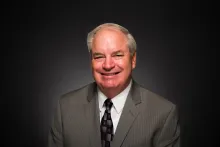
Robin Webber was born in Chicago, Illinois, in 1951, but has lived most of his life in California. He has been a part of the Church of God community since 1963. He attended Ambassador College in Pasadena from 1969-1973. He majored in theology and history.
Mr. Webber's interest remains in the study of history, socio-economics and literature. Over the years, he has offered his services to museums as a docent to share his enthusiasm and passions regarding these areas of expertise.
When time permits, he loves to go mountain biking on nearby ranch land and meet his wife as she hikes toward him.
