

Robin S Webber
As disciples of Jesus Christ, we are being trained NOW to assist Jesus Christ in serving others in the future. How are we handling the NOW in our own lives when it comes to establishing goals worthy of our life's devotion, being decisive in maintaining them, and walking upright in establishing them with spiritual integrity akin to Christ?
This transcript was generated by AI and may contain errors. It is provided to assist those who may not be able to listen to the message.
Well, good afternoon, everybody, and I want to welcome those that are on the streaming service with us today here on God's weekly Sabbath day. I look forward to building upon the fine message that Mr. Skip Miller just gave on us about having hope and having resolve, and knowing that we're not alone, and that we have God the Father and His Son Jesus Christ guiding us in all of our actions.
And there are actions that of and by ourselves that we might not be able to take. We might shrink back. And this is a non-shrink back message that I'm going to be giving you, and you'll be finding that out of Scripture. This weekend, we have two special occasions during this long weekend. We have the weekly Sabbath, and we also have a Presidents Day on Monday. One of those reflects on God's ongoing creation under the leadership of His Son, the Lord of the Sabbath, none other than Jesus Christ.
And the other reflects on the human leadership of our nation. And in this message, I would like us to think upon and consider both towards God's ultimate assignment for you. And you do have an assignment, and there is a way of going about it. It's a little challenging these days to discuss Presidents Day in American history when some of us that are recycled teenagers were growing up in the 50s and in the 60s, that there was Washington's birthday, which was a federal holiday, and there was Lincoln's birthday, which at least, if I remember right, was a state holiday in most of the states.
Which was honoring gentlemen that are usually at the top of the pantheon of American presidents. Even to this day, normally Lincoln, at this point, especially over the last 20 years, has been deemed the most important president that we've ever had in the United States of America. Washington normally comes in at number two, being the father of our country. And number three normally comes in at this point, Franklin Delano Roosevelt, especially being the president that guided the nation during the Great Depression and doing World War II. One thing I'd like to share with you, it didn't just happen in these men. Leadership at the presidential level, at any level, in where you're dealing with people and leading people, just doesn't happen overnight.
There's an old expression that says that princes are sired, but kings are groomed. Now, we don't have kings in this country. That's a part of where George Washington comes in. But I think you see what I'm saying, that leadership doesn't just happen. We are groomed towards leadership, not only in the secular world around us, but also we're going to see how we are being groomed spiritually to be leaders under Jesus Christ.
And you say, well, Weber, I'm going to turn you off right now because I like to just be at the back of the bus. Don't have to be a leader. Stand by. Don't bail out yet because you're going to be talking about that. When we think about some of the gentlemen that we've had, no, it didn't just happen. I'd like to just go through a few of these with you just to kind of see where we're going and we're going to build upon it spiritually as we move through this presentation.
We think of number one of George Washington, George Washington, who is commonly called the father of our nation. Did he just kind of come down? And well, there was no White House then during his first term, but he just did. Did he just kind of sit in the chair and that was it? Or was there a lifetime of development to bring him to that situation where he would be the first president of the United States in a critical time at the birth stage? When you think of Washington, you think of him in a sense.
The different things just rapidly that come to my mind is where he was a man under pressure that had to lead. You think of a long island at the beginning of the Revolutionary War to where there was a disaster, this defeat in what's called Brooklyn Heights, and he had to evacuate. He didn't have to. They could have been prisoners, but he chose to evacuate in the middle of the night and go across the East River to Manhattan, taking thousands with him. Oh, no, excuse me. Not with him. They went on ahead of him. This evacuation that occurred in the dark of the night across the East River, not the Hudson.
That's on the other side of the East River. From Brooklyn, it's Brooklyn today, to Manhattan, which has always been there. But there's one thing that you need to recognize. Washington evacuated everybody. He was not in the first boat. He was in the last boat. He was going to make sure that all of those that were under his command were going to get out first.
Just interesting. Just interesting when you think about leadership. You think again of the story of Valley Forge. And in the Valley Forge, we always think of Washington and the troops there in the snow and cold. And men are dying. Their feet are in the snow. They don't have the shoes that they need, etc., etc. And what could have become the tombstone, or excuse me, the cemetery, totally, of the early Revolutionary Army, actually became the first training center for the United States Armed Forces.
It went from bad to training in that environment. We think of him crossing the Delaware. We've all seen that very famous picture. There are thoughts about that picture. It might not quite have happened that way. But you know what? We know that the commander was in the boat on that great surprise attack on Trenton and the Hessian soldiers. We think of his presence at Philadelphia. Just his presence as the nation began to go from being a revolutionary story to becoming a nation among the nations, to recognize that just his sheer presence being in Philadelphia, not adding a lot, but just being there, spoke volumes.
Leadership does not always have to be being a know-it-all. It doesn't have to be yacky. It doesn't have to be on the front seat. Just presence in a room can create an aura of calm and stability and hope. Speaking on Skip's message, Washington, being in the middle of that crowd, offered hope to those that were around because of what he'd done before.
Were there smarter people? Absolutely. There was a Jefferson. There was a Hamilton. There was a Madison who was actually the primary author of what we now call the U.S. Constitution, to think about that. And then, perhaps the most important thing that a leader can do and doesn't do too often and stays on too long, after the Revolutionary War, he walked away from power, went back to the farm. He had that much humility and self-awareness that maybe he had filled his spot in history.
And just thinking that through, over on the other side of the pond, over in England, George III was having a portrait drawn, and he got into a conversation with the painter, and he said, Well, what's happened to George Washington? And the painter said, Well, you haven't heard? He's gone back to the farm. He's what? He's gone back to the farm? He said, That will make him the most famous man in the world.
And he didn't just do it once, did he? He did it twice, because after he was president for two terms, setting the basic pattern for nearly about till 140 years after that, he walked away from power, very much in the spirit of what the Latin folk hero, Cincinnatus, did. That when he had saved Rome on the bridge from the invaders, they invited him to come back in and become king. And he refused. He said, I've done my duty. I will now go back to my farm. And of course, when you think of Cincinnati, Ohio, it all comes out of that folklore of Cincinnatus and Washington. And actually, that was the city of Cincinnati was in honor of what Washington had done. It's very interesting that in all of this, Flexner, who is one of his major biographers, now the book is older and older, 40 or 50 years old, called Washington the indispensable man.
The indispensable man. I'm going to build upon that a little bit later. We can talk about Lincoln for a second, because I know that they're not probably talking about this too much in the schools anymore. Not on a President Day weekend. Everybody, they're not thinking about the presidents. They're thinking about what's the sales at the shopping marts. Maybe I can get a few dollars off. So I'm sharing a few things with you about this. Lincoln. Lincoln, Susan, I've been doing a lot of studying on Lincoln of recent date, was a very challenged life. We always know that he grew up poor, log cabin, reading, writing, math problems on the back of a shovel or whatever it does, in the fireplace, and walking five miles for a book. And I don't underestimate those myths. They probably did happen. But when you read about Lincoln, in a sense, here was a man that had a very challenging life. He was melancholy. He was oftentimes depressed, as well as his wife, Mary Todd, depression and the challenges of marriage and the challenges that happened, and losing children, a couple of them, even before they became adults, and that setback after setback, failure after failure. But each of those failures groomed him. As in the story of Esther, for such a time as now, because a time came with everything that was against him, everything that was against him, and perhaps the most hated man in America during the Civil War. We already knew the South did not like Lincoln, because of what they considered the invasion of their territory. And the North was about had it up with them because of the losses, the gigantic losses that were occurring.
In the heartland of America. And yet this man, much like Winston Churchill, had a gift with the English language, a gift of thought to move people beyond the moment and skip to give them hope.
When you look at the Gettysburg Address, the Gettysburg Address, which, you know, the guy before Lincoln spoke, had spoken for two hours, and Lincoln gets up and speaks for two minutes. It's called the Gettysburg Address. Which one do you remember, or at least have heard about? And it is in that sacred poem text of the Gettysburg Address. Four score and seven years ago, our forefathers came forth onto this continent, and it said that it was conceived, the starting of the story of birth. It goes on, then talking about the the death of a nation at its very ebb of the civil war of what was happening. And yet at the end of that, in the Gettysburg Address, he talks about resurrection. He starts with conceived in liberty, goes to the malady that is occurring at that time, and lifts it up to the aspect of a resurrected nation, and that, and that, and that, and that, and pounds that what can be. Interesting to understand all of that.
A man for the moment, for such a time as now.
We can talk about Eisenhower. This will be the last one I'm going to kind of mention. Eisenhower.
A lot of us, Eisenhower, were so stable and so calm, for us that grew up in the 50s, and some of you are older, so you might remember him, not too much older, but that remember him more than I did, but being the studier that I am, to recognize one thing about him. Leadership, you might want to jot this down, takes responsibility, and at times needs to be humbled in the decisions that they make.
On that big night, the night before, 160,000 men would land on the beaches of northern France. The greatest amphibian invasion in human history. 160,000 men. You think that through. 160,000. I think Escondido has about 150,000, something like that. Just think of all of Escondido landing at Oceanside, Carlsbad, and Solano Beach. They didn't know if they were going to do it, and then the weather lightened up, the time was now. They were prepared to go the next morning, and maybe something you don't know is that Eisenhower wrote two letters. He wrote two letters. The first letter was about if they were victorious, and at least got a foothold and a beachhead on Fort Truschera. The second letter was about if they were defeated, and that he would own it. He was supreme allied commander of all troops, American, British, and Free French. He left. He never had to share that second letter, but he was willing to take responsibility for his actions, and was humble enough to do that. He had a purpose. You have a purpose, and I have a purpose. Now I'd like to share a thought about another leader, as I mentioned earlier, the Lord of the Sabbath, Jesus Christ. Join me if you would in John 18, verse 37.
He is before Pilate in the last day of his life, humanly speaking. And Pilate therefore said to him, Are you a king then? And Jesus answered, You say rightly that I am a king, and for this cause I was born, and for this cause I have come into the world, that I should bear witness to the truth, and everyone who is of the truth hears my voice. For this purpose I have come. What purpose did he come? He came to become one of us to share the truth, to not only share it, but to practice what he preached.
He came for a cause and a purpose that he would be the bridge, the way, the truth, and the life that would connect us with his Father and our Father. That was his purpose.
Jesus was a leader. Jesus is Messiah. Jesus continues to be our heavenly rabbi, and we are his disciples. We, too, have challenges. Let's get brought up. Might as well call them what they are. Some of us have battles. Some of us have situations, and at times can feel paralyzed at the very roots of our personal existence and seem to be frozen. Yet we, too, by God's election, are called to be simply more than disciples. I like the thought of being a disciple. I know what that means. I've heard enough. That means to be a student. I can kind of be a student, but you haven't just been called to be a student. That's for now. That's a part of the grooming. You've been called to be more than that, but by God's grace, are being groomed to be guiding forces. A guiding force in the kingdom.
We're called, in Revelation 5 and verse 10, it says that Christ is preparing a kingdom of priests. What do priests do? They teach, who is the most effective teacher? Who is the most effective minister or pastor or preacher of the word? Is it the one that hears it? Is it the one that speaks it? Or is it the one that lives it? The one that practices what they preach? But that's not just you and me. I mean, that's not just in my position. That's in your position because you also preach sermons all day long. Because the most powerful sermon is before people by example. Your examples are the most powerful sermon that you can give, and that people see that difference. So each and every one of us have been called. You might say again, I'm just really kind of happy to be in the bleachers. I'll just kind of be up in the bleachers. That's where I kind of feel cozy. That's where I kind of feel comfortable. Bottom line is simply this. God does did not call you to simply be up in the bleachers. He's called you to put skin and heart in the game and on the floor. And the story of Esther and Mordecai's echo comes down to us this day. Tell Esther this.
This may happen or that may happen, but for such a time as now the kingdom has come. He wasn't talking about Persia. He was talking about the kingdom of heaven, the kingdom of God, that kingdom, a greater kingdom than Persia, and not the kingdoms of this world today. Because sometimes I would say this that some of us, we have doors in front of us. You know, when Esther that door on this side of the door, she would be free. She wouldn't have to be worried. But once she made the decision and went through that door, she knew very much, as Skip was bringing out, lo, I am with you always. She was going in before a beast power, the king of Persia, the mightiest man, the mightiest man in that portion of the world, and she could have died. She was not held back. Why? Well, that leads me then to what we're going to be talking about today. Today I want to share with you three principles, three principles of Christian leadership, three principles. I'll try to make it simple, and I'll try to get to the point. I want to share three principles of Christian leadership that will, number one, allow you to serve God, to fulfill His calling of grace that has come upon you. And grace is not a feeling. It is an action from above that then has a corresponding, corresponding impulse back because of God's touch in our life. Number two, to serve you, you in responding to your calling then, your part in it. And number three, to serve others, because that's what leadership is actually all about. That is serving others and not just simply ourselves. So point number one, here we go. Buckle up, as we say. Buckle up. Number one, establish a goal worthy of your life's devoted sacrifice because it will take sacrifice.
Establish a goal worthy. There are many goals, but are they worthy of your life's devoted sacrifice? After all, we only have one life. As we do, all subsequent goals will come into alignment. There are many things that are out there. They are good goals. They can be kind of good, good goals, but you've got to have a goal that is worthy of your life's devotion. And once you set that in motion, all the other little goals, if they are worthy of your life's devotion and they match that, then you can have those. Have you ever thought about a simple bottom line is this? A lot of people that are out there, nice people, good people, but lots of people aim at absolutely nothing in life, and they hit it every time. What are you aiming for? If I can, you know, we're going to meddle here with you a little bit today and those that are listening to this message. What are you aiming for? What are you aiming for? On the other hand, there are people that are energizer bunnies, and so they energetically, like they take the proverbial ladder and they put it up against a building. They climb, climb, climb, climb, climb up this, thinking they're making progress, only to find that the ladder that you used and the building that they put it up against is leaning against the wrong building. Energy wasted. Time wasted. That's why I want to give this message. Let's focus on Jesus' example in John 18. I think I already mentioned that, but let's go to Luke 19 verse 10. Luke 19 verse 10. For the Son of Man has come to seek, and to save that which was lost.
Very specific. He had a purpose. We could spend a whole hour on this, just alone, for the Son of Man has come to seek, and to save that which was lost.
That's what was his purpose. In Matthew 20 verse 27, join me here for a second. Matthew 20.
And picking up the thought in verse 27.
Notice what it says here. And whoever desires to be first among you, let him be your slave, just as the Son of Man did not come to be served, but to serve and to give his life a ransom for many. The leadership that I'm talking about now as we move from the human world of men that, in a sense, God has perhaps touched for a purpose. But we're now looking at the ultimate leadership of Jesus Christ and what he did. And it was to serve. That was his job. Notice again what it says in Philippians 2 and verse 5, just to lay some plank down of where we're going with this. In Philippians.
And picking up the thought, the kind of leadership that we are following, let this mind be in you, which was also in Christ Jesus, who being in the form of God, did not consider it robbery to be equal with God, but made himself of no reputation, taking the form of a bondservant, and coming in the likeness of men, and being found in appearances a man, he humbled himself and became obedient to the point of death, even the death of the cross. So we're talking about a different kind of leadership. We're not talking about a power play. We're not talking about looking at me. We're talking about looking up to God and to recognize that we have a helper in the Spirit of God to bring us along. And it says, let this mind be in you.
Let this mind be in you. You know, I tend to like Shakespeare, and we'll read Shakespeare from time to time. And there are two famous lines that come out of Henry V, and it takes place during the story of the Battle of Anshan-Kor, of where the British are pinned in against the woods with the whole chivalry of France on horseback ready to make a charge. And the herald comes by one more time and say, Henry, are you ready to give up?
And there's two lines that come out of that. I'd share this with you, because he's not going to give up. He's going to make his stand. He's cut off from the coast. His back is to the woods. The French cavalry is about to charge. And there are two lines that come out of chapter, yeah, act four, and it goes to all things are ready if our minds are so. All things are ready if our mind are so. But there's another line that you tie in the mind, because we know that God gives us a new mind, doesn't he? And that's the mind that kicks us into gear. But also in that same chapter, it says, our hearts are in the trim. Our hearts are in the trim. So if the mind be ready, that all things be so, and our hearts are in the trim, because there can be a lot of things that are in our minds. We can know what is right. We can know what we need to do. You ever been there and sat on your mushroom and waited and waited and waited and rather than act? You know what is right, but it just never seems to be the right time to do it.
And you'll die before it's done. And you should have, could have, and would have.
But don't have. That's a new one. You just didn't do it. And it is our heart, not our mind. Our mind is a receptacle. Our heart is the engine. And what fills your heart, and God willing, it is a good heart, a godly heart, in what your actions are, will fulfill that.
What is our goal? What is our purpose? Jeremy, if you would, in Matthew 6, 33.
A verse that we know, and we're going to look at it again, because it's a part of the calling of being groomed to be a teacher in the wonderful world tomorrow. But seek first the kingdom of God and His righteousness.
Not third on your list, not fourth on your list, but in every point of the list that you make, it is central. It is not marginal. It's not on the edges.
It's a part under that grand purpose. But seek first the kingdom of God and His righteousness.
The calling of the gospel and the response to that calling from above is not just simply about traveling to a destination. It is the manner of traveling that you're doing it. We say, seek the kingdom, but it also says, and His righteousness. I, as a speaker and as a teacher, I cannot but help couple those always together. We're not going to Disneyland.
We're going to the kingdom of God and enter. But we have responsibility beyond that. And His righteousness. And then it says, and then all these things shall be added. We've got to get the batting order right. If we're going to be a disciple of Jesus Christ being groomed in this life to live with God the Father and Jesus Christ forever. And what is interesting is one thing that I want to share with you, and I've used this phrase over the years, because we get caught up, you know, with everything coming at us. Am I the only one? And I don't even know how to run buttons. But I've heard about this TikTok. TikTok, TikTok, TikTok. TikTok, TikTok. Kind of like my grandfather, our clock up on the wall. TikTok, TikTok. We have so much coming at us today.
And those of us that are not really on social media, I'm not condemning. This is not, but I'm really bad with buttons. Like I always say, you know, my ancestors were Dutch and their people are still wearing wooden shoes. I'm kind of bowed at the same level, okay?
But even I feel the frenzy of all the activity that is coming. When do we have time to think? Life is so fast paced. I want to share something with you. You might want to jot this down. I've mentioned over the years, and I think also in the columns and beyond today, have you ever thought that Jesus Christ never walked more? He never walked faster than four miles per hour in his life. Now, I'm glad today that we're not walking. That's our limitation on transportation. Or I see you once a year here in San Diego with Susie, okay, to get down here.
Is it any wonder that he told his audience, look to the hills, look to the lilies, look to the birds, but we get so much coming at us at times that we lose purpose. We lose motion, and we need to slow down. And that's why God gives us this holy Sabbath day, which is such a gift. Do you ever feel bad for people that don't understand the Sabbath and to observe the Sabbath and just allow to become rewired to think, to meditate, to be? Here's God. Here I am. Thank you, Lord, for this. No, Lord, I it's a little troublesome over here. I haven't quite gotten on this, but you begin thinking about it. You begin studying about it. You begin praying about it. You begin contemplating. That's why God gave us the Sabbath. It's a time of peace and rest that moves beyond this day.
Why go to Ezekiel 44 verse 23?
Remember how I said that we are being called to be members of a kingdom, a priest? Revelation 5 and verse 10. There's a verse over here I'd like to share in Ezekiel 44 and verse 23.
It's note. It says this, Speaking of the millennial priesthood, this is a vision of the millennial temple. And they, who's they? Hello.
They shall teach my people the difference. And there is a difference. It's not, I'm okay, you're okay, com-si, com-sa, oh, that's your thing, cool. No, there is a difference between that which is holy and that which is profane. And they shall teach my people the difference between the holy and the unholy and cause them to discern between the unclean and the clean. How are we going to do that unless we are being groomed today by the holy Spirit of God saying, this is the way? This is the way? Our Bibles are not only open to God, but He has opened our mind, He's opened our hearts, He's given us that new heart as the book says, and what are we doing with it? In all of that, I'm going to share a thought, I'm going to go to point number two.
You might want to write this down and make it personal. We need to be a risk taker.
Certain personalities will jump over the cliff and dive into a pond of piranha, okay? I've got that. It's in the personality. We all need to be responsible risk takers as developing leaders for God's kingdom. I like to read this. Risk taking is the vital part of leadership.
Leaders have the courage to begin while others are waiting for better times. What are you waiting for right now for better times?
And then better times. And then better times of things that maybe you have known that for years you needed to bring into control in your life.
They're waiting for better times, safer situations, and assured results. They are willing to take a risk as they know that over caution and indecision are robbers of opportunity and success. They take initiative, are independent, and are not unduly influenced by others. The very word opportunity is a Greek word, oportunity. It's a word in Greek that means there comes a certain time when the tide is just right that the ship could come into port. See what I'm saying? It was the right time. Now there are times when it has not been the right time and we plunged in and that's going to be another point. Please understand, so we're going to get the balance of this. But ultimately we have to be a risk taker. Well, you say, I don't know if I want to be a risk taker, but the Bible is full of risk takers. How about Joshua? How about Caleb?
Two out of 12 spies that went into the land. What about Meshach? Meshach? Shadrach? Abednego? Otherwise known as Mishael, Hananiah, and Azariah. As everybody was genuflecting, they stood tall. They made a decision. They were being groomed for leadership. And it's one thing to take a stand.
It's another thing to keep on standing in the decision that you've made. What about Paul? Paul, who writes in the Epistles of Timothy, said, I stood alone.
I stood alone. And there was no man with me. Save, I think, one individual.
He wasn't there to be a crowd pleaser. He wasn't there to hear the roar of the crowd. Oh, look at Paul. No. But he had a purpose, and he lived up to that. Let's go to point number two. Be decisive.
Learn to make definite decisions. Learn to be decisive. Make definite decisions. True leaders know that not deciding is a decision. Not making a decision is a decision. But it can vastly increase the fog index for you and those relying on you, because many of the decisions that we make are not just simply about ourselves. Whether we are grandparents, whether we are parents, whether we're a husband, whether we're a wife to a husband, whether to our fellow neighbors, whether to our congregants, whether to our co-workers at work, whether it be to, if we're in school, to those that we're in school with, that our decision is going to go out all directions and can impact people. Let's face it, deciding to decide is often the hardest part of the leadership equation. But once you have established your goal and a goal that is worthy of your life's devotion and you've thought it through, be decisive. Put it in motion. Draw your line in the sand. Step on it and hold your position. It may not be the end of winning the battle or the fullness of the decision, just like the Marines during World War II. They would land on the islands in the South Pacific and they would establish a beach hat.
But that was not the end. That was just the start. You know, sometimes, oh, we made it. And of course, you think of what the story of Normandy that I shared earlier, that was just the beginning. That was not the... that was only the end of the beginning, as Winston Churchill would say, not the beginning of the end. It was the end of the beginning. Now they had to slug through France and Belgium and into Germany and World War II. And the gents on the South Pacific had to get off the beach and go into the jungles and go up to the plateaus and to meet the enemy.
But we must be willing to cut.
And that is the difference sometimes. And sometimes we just have to give it to God.
Sometimes we're just nibbling around the corners, aren't we? You know, you know, like this. See, I can kind of go like this all day long. Good boy. Stay. You know, do all this. Rather than... I'm glad that was one piece.
Anyway, I made the decision. Followed through. And so what happens is, we take it a little bit at a time. I've shared with you before the story of Alexander the Great. The knot at Gordium.
And in that knot of Gordium, it said that the person that could untie that knot would be the ruler of Asia. Well, everybody came by, and you know what they do. You ever done that where you have a knot in your shoe, or am I the only one that gets knots in shoes, or, you know, kind of get out the ice pick and try not to poke your eye into doing this or doing that, or get out scissors, and you know, that's it. What is that? It's like the fly that will not die, you know, buzzing around. That knot will not cut. Well, what Alexander did is he looked at it, and he said, like the doctor, scalpel please, and they put a sword in his hand. Story over. The rest is history. Just a simple question, just to meddle with you and to meddle with me, because I'm talking about the echoes coming back to me. Are we playing with some of the knots that have tied us up in life, and we've not made a decision to just simply cut through and allow God to have the victory because he filled our heart and he's filled our mind?
Just asking a question. I'm not saying to be impulsive. There are different ways that we need to be able to come up against that. I'm going to send out all the rest of my notes just for sake of time, because I could keep you for about three hours, and I don't mean to. But, you know, a very basic one is Proverbs 16 and verse 3. Commit your works to God. Commit your works to God. And there's a promise, and it says, and He will establish your thoughts. Cause and effect. We're also told about the aspect in 1 Corinthians 1, 24, speaking of the Lord of the Sabbath, Jesus Christ, the leader that God the Father has put over the body. It speaks about the wisdom of Christ. There's that old, famous acronym, WWJD. What would Christ do? What would Christ do?
If we're going to follow Christ, there's very little doubt of what you would do, because the four Gospels are filled with how Christ handled tough situations. And not only that, but the book of Revelation, have you ever noticed how much red print is in the book of Revelation, speaking of the words of Jesus? And He continues to share with us, guide us, as a living GPS, as you go through Revelation 2 and 3, as to the wisdom that we need to have? Absolutely.
We also know that in Proverbs 11 and verse 14, it says, in a multitude of counsel, there is safety. Absolutely. But with all of that spoken, then, what do we do? Then we make a decision. But I'm not... But that sounds so final. Wonder if... Wonder if Eisenhower had kept all the troops in England and not sent them over. After much calculation, after much counsel coming his way, he made a decision. And that can sound so final. But that's why some of us aren't growing and developing to the next step of our spiritual development. We're locked up inside, chain and ball, in a sense, around our ankles, and remain isolated in a prison of indecision.
Because we have feelings. Feelings were never designed to be the end result. Feelings are an alarm signal. Feelings are alarms. There comes a time when you have to shut off the alarm. Join Esther by the door and move through because you're a follower of Jesus Christ, you're a disciple in the making, being molded to assist the great high priest and the Lord of the millennium one day. The same people that will come around to you when you think of that proverbial... I think it's in Zachariah where it says, in that day, which means not today, but in that day, it says, there will be ten men that grab the heel of the Jew.
How did you do it? How did you do it?
That's for us to understand that we have to learn to practice what we preach. We have to take head knowledge. It's like what Skip was saying today, going to Matthew 28, verse 20, and speaking and giving the last half of that first skip. I noticed that. Lo, I am with you always, even to the end. It's one thing to read it. It's one thing to know it. It's another thing to think about it, but it's another thing to get your feet walking towards that moment and going through that door. That God might be praised, that God might be honored, and that He can look down and say, I know where you're at. Go to point number three. This will be quick. Spiritual leaders are upright and full of integrity. They are upright. Personality and intellect have power to open many, many doors, but only character can keep them open. I remember going through Ambassador College. We used to have an expression, you either build character or you become one.
But Paul mentions to us in 2 Corinthians 13, verse 5, examine yourselves. Examine yourselves whether you be in the faith. What do you mean? I know that there's God the Father. I know there's Jesus Christ. I know that there's no Uncle Holy Ghost. There's just two of them up there. I know that. I keep the Seventh-day Sabbath. I keep all the Holy Days. I haven't had any pig in 60 years. We kind of want to throw this all out of what we have done. It's not what we have done. It is what God has yet put on our plate to do, to go to the next step in praising Him and honoring Him by our actions. And this comes by vigilance. This comes by awareness that we are nothing apart from God. And to heed that Scripture about pride, that pride goes before a fall. I'm challenging myself. I'm challenging some of you with the issues that are in our minds and our hearts to be prepared to tackle, even as we come up to the New Testament Passover here in a couple of months. You don't want to bump into that. We want to be in alignment with God, right? We want to be in alignment with God. And so we take a look at this. And to always remember that it's not about us. It's not about us. It's about God.
We can get stuck on us.
Make sure Susan Seepbelt is on, because I'm going to say something about Susan. She's very good at this with me when I'm talking about things. She'll say, Robin, it's not about you. Thank you, honey. I'm working on it. I'm trying to go from being an alpha male down to X, Y, or Z. I'm not sure. I'm trying to get on the other side of the alphabet.
And that's stimulating. We need to spur one another to recognize that, because God, no matter how great pride is, ultimately God can't use it. But no matter how small humility is, it can serve His purpose. And yet, humanly, we're wired the other way. We all want to sing the tune of human nature. Me, me, me, me. And we've got to get me out of the way. Get back to point number one. What is the prime directive? What is our purpose? And everything's got to follow through with that. I'm going to go right to the conclusion for sake of time, because we're going to point out where we want to be and who we want to be with. I want to share just one thought. I'd like to quote out of Life in the Woods about Thoreau's time in Walden's Pond. Susie and I have had the opportunity to be there years ago with our daughters. Thoreau was a unique person, kind of maybe the first beatneck in human history, maybe part hippie, I'm not sure, but he does have points of wisdom. He's kind of helped there sometimes, but sometimes he's right there. Listen to this. Thoreau, this is written about 170 years ago. I went to the woods because I wish to live life deliberately, to front only the essential facts of life, and see if I could not learn what it had to teach and not, when I came to die, to discover that I had not lived. I did not wish to live what was not a life. In other words, he didn't want to waste it. Living is so dear, nor did I wish to practice resignation unless it was quite necessary. I wanted to live deep and suck out all the marrow of life, to live so sturdily and Spartan-like as to put to rout all that was not life, to cut a broad swath, shave close, to drive into a corner, and reduce it to its lowest terms. We've been to Walden's woods, Walden's Pond, with the typical New England woods around it. It's about five miles, I believe, west or east of Concord. We're going to walk into the garden for a second. Join me, if you would, in Isaiah 11 in conclusion, because we've talked about Washington, we've talked about Eisenhower, we've talked about Lincoln, we've talked about you. But here's the snapshot of leadership that we long for, that God wants to implant in us. He is our model. And what I'd like you to think about as I get to this is simply this. You want a leader? You want to know what we need to look like second by second, minute by minute, day by day? This is the snapshot that should go into the pocket of our heart, everywhere we go. This is the echo that we follow. These are the footsteps that we long for. These are the footsteps that the whole world needs to be rescued from itself when Jesus Christ comes through the clouds and touches on the Mount of Olive.
There shall come forth a rod from the stem of Jesse, and a branch shall grow out of his roots. The Spirit of the Lord shall rest upon him, the Spirit of wisdom. Remember, he is the wisdom of God. 1 Corinthians 1.24. And understanding. What do you mean? He bent down here. He put skin in the game. He put his flesh on this earth, he who did not need to, that he might be that bridge. He fulfilled his purpose. For this purpose I have come. The Spirit of the Lord shall rest upon him, the Spirit of wisdom and understanding, the Spirit of counsel and might. The Spirit of knowledge and of the respect and the fear of the Lord. And his delight is in the fear of the Lord. The fear doesn't mean the fear isn't like this, you know, like, you know, shaken like a whatever. It's talking about the reverence. It's talking about the respect. It's speaking about the awe of being with God and the responsibility that God's Spirit is in us today. And he shall not judge by the sight of his eyes. That's a part of your decision-making. Not to judge a book by its cover, nor decide by the hearing of his ears. But with the righteousness, he shall judge the poor and decide with fairness, with equity, for the meek of the earth. And he shall strike the earth with the rod of his mouth and with the breath of his lips, and he shall slay the wicked. Righteousness. Remember, seek you first the kingdom of God and... like saying, and his righteousness. It's not one fold. It's all a part. It's all a part of our responsibility. It's not just walking towards the kingdom. It's having that kingdom life in us now. And righteousness shall be the belt of his loins and faithful the belt of his waist.
Thoreau, over 150 years, 170 years ago, said, I wanted to live deep. Notice this. And suck out all the marrow of life.
There's a garden where people had to make a decision, and they did not make the right decision. The original Garden of Eden.
There is a garden in the future when people are going to be granted to live forever because they, by God's grace, made right decisions, and his purpose became their purpose. But there's another garden, the one in between, Gethsemane, where the God-man had to make the most important decision of his earthly life. And he said, yes, sir, not my will, but your will be done. What I'd like you to do and think about this is I've read Thoreau and to suck the marrow out of life. I'd like you to do a Bible study on your own of Isaiah 11. And look what real Christian leadership is about. The man that humbled himself. And this is what he did when he lived. He fulfilled this prophecy in Isaiah 11 and now is exalted as King of kings and Lord of lords, a name above all names, because he took the risk. He did not hold on to God, but came down to us to lead a lost child. To lead a lost humanity back to our father. Suck the marrow along with Thoreau out of Isaiah 11.
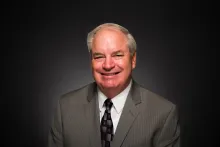
Robin Webber was born in Chicago, Illinois, in 1951, but has lived most of his life in California. He has been a part of the Church of God community since 1963. He attended Ambassador College in Pasadena from 1969-1973. He majored in theology and history.
Mr. Webber's interest remains in the study of history, socio-economics and literature. Over the years, he has offered his services to museums as a docent to share his enthusiasm and passions regarding these areas of expertise.
When time permits, he loves to go mountain biking on nearby ranch land and meet his wife as she hikes toward him.
