

Jorge de Campos
This transcript was generated by AI and may contain errors. It is provided to assist those who may not be able to listen to the message.
All right. Brethren, how effective are your prayers? Do you feel that your prayers are really connecting you to God? Or do you sometimes feel that it's like it's bouncing off the ceiling? That is not a connection there. Do you feel you have improved your relationship with God, with your prayers? Turn with me, please, to Psalm 34, verse 15. Psalm 34, Psalm 34, verse 15. And it says, The eyes of the Eternal are on the righteous, and his ears are open to their cry.
God is listening to your prayers. Look at in verse 17. The righteous cry out, and the Lord hears. He delivers them out of all their troubles. God does answer prayers, and God is the God of miracles. But we all sometimes feel that we need to increase, let's call it, our prayer power, if you could call it that way. Could it be one of the reasons that sometimes we don't know what to pray about? So I have decided to give you a two-part series of sermons.
And in this first part today, I want to share with you some biblical teachings of how and what to pray about. In the next sermon on this series, which will not be next week, but I hope to do it in two weeks from today, in the next sermon on this series on prayer, I'll then hope to talk about principles to make your prayers more effective. But let's focus today on a few biblical teachings about how and what to pray. And so the first point that I thought, I'll put it under the title of Avoid Inhibitors.
You know, to avoid those things that kind of hold you back in your prayers. And one of the things that I thought of is that we need to be honest with God. We need to be honest. Like, for instance, one of the things that we need to be honest to God is that, say, there are times we don't want to pray.
Sometimes we don't want to pray and be honest. And you may have an excuse like, I don't have time. Or, I don't have time. Or, I feel guilty. God will never listen to me because I'm so bad. I feel guilty. Now, brethren, none of us is perfect. And we all are pretty busy. But we just need to be honest with God. And say, God, I'm struggling. I feel guilty. Just be honest! Tell Him! He's your friend. He's more than your friend. He loves you. He cares you. He's your loving, almighty, powerful God.
He's your creator. He made you. He knows what takes you. He just wants honesty from you. Be frank. Be honest. Tell Him! You see, because God wants us to worship Him in spirit and in truth. Right? To be honest is to be truthful. And in spirit means, God knows what you're going through. You can't hide it from Him. So, look at John chapter 4. John chapter 4 verse 23. Here we are is Christ in this section, John chapter 4 verse 23.
So, there's this woman. And you know it's the Samaritan woman. I think we're hearing a lot about Samaritans today. We had it in the sermon there. And now, you know, the Samaritan woman. And he was talking to her. And then, during the conversation, he says, But the hour is coming, and now he is, when through worshipers will worship the Father in spirit and truth.
For the Father is seeking such to worship Him. God knows what we do, what we think. He's spirit. He can get through. He can see you and I. And He wants truth. He wants you to be honest. He wants you to be open. So, tell God your excuses. God, I don't have time! Tell God, I feel guilty! Don't be shy. He knows. But He wants you to be honest. He wants you to be frank. And that's not the name of a person. He wants you to be honest and frank. Alright? He wants you to confess your weaknesses yourself, doesn't he? Turn with me to Psalm 31 verse 22.
Psalm 31 verse 22. Psalm 31 verse 22. For I stand in my haste, I am cut off from before your eyes. In other words, I said, God, I'm useless, I'm worthless. I'm cut off. You don't want to listen to me because I'm a sinner?
Nevertheless, you heard the voice of my supplications. So, yeah, you may say, I'm useless, I'm no good, God doesn't listen to me. God will not listen to me because I'm so bad. Be honest. David was being honest here. But then he says, nevertheless, you, God, heard my pleas, my supplications, my prayers. When I cried out to you, look at chapter 32 verse 1 through 5. Look at chapter 32 verse 1 through 5. Blessed is he whose transgression is forgiven, whose sin is covered. Blessed is the man to whom the Lord does not impute iniquity, and in whose hearts, in whose spirit, there is no deceit. So, if God is not accusing you, not imputing in you any iniquity, isn't that a blessing? When I kept silent, my bones grew old. If you hold it inside, then you are going to affect your health. You're going to get stressed up, you're going to get sick, you're going to get worked up about it. Through my groaning all the day long, for day and night, your hand was heavy upon me. Oh, God, you're hard upon me. Why? Because you're holding it inside.
My vitality was turned into the drought of summer. In other words, I became just completely dry, completely empty, completely negative, completely down. Selah. Right? It says Selah. Do you know what Selah means? Meditate upon that. Think deeply about it. Think deeply about it. Consider that. Stop and pause and meditate. Then he says, However, when I changed my outlook, when I acknowledged my sin to you, and my iniquity, I have not hid it. I was honest. And I said, God, I'm a piece of junk. I think we've always said that. It's not just you. It's me, too. I've said that to God. I'm a piece of junk. And I said, I will confess my transgressions to the Eternal. And you forgave the iniquity of my sin. Selah. Ponder on that. Brethren, we need to be honest and admit our frailties and our weaknesses and our problems. And you know what? He's a loving Father, full of graciousness, kindness towards you. He's not a condoning son, but he wants to help you. He wants to hold his hand and help you. And that's why he sent his son, Jesus Christ, to help us through that with the power of his Spirit. And this lack of sincerity may come across in many ways. There might be in these thinking ways of thinking, but it might be in actions. Look at Matthew 6, verse 5-8. Matthew 6, verse 5-8. Matthew 6, verse 5-8. And when you pray, so okay, now you're praying, and when you pray, don't be like the hypocrites. For that I have left to pray standing in the synagogues and on the corners of the streets that they may be seen by men. It's like he says, okay, guys, yeah, come, I'm going to pray now. Sing him. Everybody look. Obviously, I'm exaggerating, but it's that sort of attitude. I hope people are noticing me, but I'm praying so well. Are we being hypocrites? Now, obviously, you don't do that, but think about the intent beyond it. Think about a little bit more deeper than just that. Not the outward, but inside. Are we kind of acting something up? Let's go on reading.
You know, it was go and have a private prayer. Yes, that is the direct implication, but further than that is when you have a private prayer, you've got to be honest and sincere in spirit because God can see you. He can understand. And verse 7, and when you pray, do not use vital repetitions. So now you're in private, and you keep saying the same thing like a broken record.
Don't do that. Do we do that sometimes? I remember when I was in another church, you had what we called the runaround, the lap of the rosary, and say it so many times, and you say so many our fathers and so many our Marys and whatever it is, and you've got to do so many circles. That's plain repetitions. The interesting thing is, sign that in verse 7. Two verses later, he's giving what we call the Lord's Prayer, which I would call it the bottle prayer. And people use that Lord's Prayer in vital repetitions when he's just finished saying two verses before, not to do it.
And for they think that they will be heard for their many words. In other words, your prayers don't have to be long to be effective. You look at some of the prayers in the Bible, some of the men. You look at Elijah's miracle when God did the miracle and burned the sacrifice and burned it. That was a short prayer, and many of those prayers are very short and effective. But the people have been close to God, and God was there backing it up. So therefore do not be like them, for your Father knows the things you have need of before you even ask.
So, and by the way, keep a little marker there on Matthew 6, because we're going to be in and out of Matthew 6 a few times, so to make it easier. But vital repetitions is one thing. But look at it, squintily. Now, Christ gives an example of buying repetitions. But spiritually, there are other principles that you can draw out of that. For instance, pray in a normal voice. Or do we put a town that sounds more religious? That's the principle that you're going to be heard. Look at it beyond, behind that. Do we make it an artificial language, or do we talk to God like day-to-day language? Like you walk with God. If you were walking with somebody else down the street, you'd talk normally. You don't put an artificial town or voice. In other words, you don't make a show. Yeah, because that's what it is. V You don't need to do that. You can have your hands normal. Yes, we'll show. At times, you want to pray to God. You lift up your hands in prayer to us. But you don't need to make a show to come across to be more religious. God does not hear you because of the way you hold your hands. Turn with me to 1 John 3, verse 22. 1 John 3, verse 22. Now, please brethren, I'm not saying if you're doing these things that you are bad. I'm just saying, hey, maybe it seems for us to analyze and say if we're doing it, let's look at it with meaning and see how can we change and improve. But 1 John chapter 3, verse 22 says, and whatever we ask, we'll receive of Him because we hold our hands in a specific way. Now, we'll receive of Him because we keep His commandments and do those things that are pleasing in His sight. Now, you can read very scriptures. You can go to Daniel 6, verse 10. Just make a note because I've got a lot of material and I don't want to just spend too much time in some scriptures. But in Daniel 6, verse 10, it shows Daniel praying on his knees. That's a good thing to pray on your knees. Does it mean you have to always pray on your knees? No.
But in private, if you want to do it, do it. But if you have a health issue and you can't get on your knees, don't you think God understands? In fact, when it says, pray without sneezing, that means you're walking down the street and you could be praying and nobody knows that you're praying. I mean, yes, it talks about in Psalms, it says, lift up my hands and I lift my hands in prayer. And even Christ, in Luke 24.50, He says He lifted up His hands towards heaven and blessed them. So, lifting up the hands in prayer, there's nothing wrong with that. Look at 1 Timothy 2, verse 8. 1 Timothy 2, verse 8. It says, I desire, brethren, that the man pray everywhere. Pray everywhere. So, wherever you go, you're praying. But are you now being a show? So, like everywhere and now everywhere, getting on your knees in the middle of the street, down Louisville or Lake Sinter, and now making a show? No, because it says it's going to be like the hypocrites. But you know, you do it, you pray privately, quietly, nobody knows. But He says, lifting up holy hands. Do you have to lift up holy hands all the time? No! But sometimes there is a need to. In private prayers, there are times when I'm praying, I'm pleading with God, and I lift up my hands.
So, let's be sincere. The point here is, let's be sincere. Don't be artificial. Have a normal voice. Walk with God. Pray all the time. I mean, it talks about in Psalms, no, it wasn't in Psalms, it was Daniel, sorry, Daniel, that prayed three times a day. Does it mean that we just pray three times a day? If we're praying without seizing, you could be saying that you're praying about 90 times a day. But you take some specific chunks of time, a number of times in a day, where it's more intense and more organized than where you pray more specifically. But you should be praying a lot more times than just three times a day. So, now that we've talked about some of these inhibitors, another important thing that we need to have when we pray is we need to have a goal. We need to have a goal. Now, to have a goal is the law of success. Say, for instance, you want to achieve something in life, obviously you have that goal, and that means you work towards that goal. And yeah, you want to do this, but maybe you're not going to be able to achieve it with the timeframe. Yeah, then maybe move your timeframe a bit further down, but you still have a goal that you're aiming for it. It's a law of success, so we must have a goal. Otherwise, we want to achieve it. And on every goal, we're shooting all over the place. And likewise in our prayer life, it's important to have a goal. One goal could be to get closer to God. Look at Isaiah 55, verse 6-8. Isaiah 55, verse 6-8.
It says, For my thoughts are not your thoughts, and your ways, nor are your ways my ways, says the Eternal. For as the heavens are higher than the earth, so are my ways higher than your ways, and my thoughts than your thoughts. So God's thinking is different than ours. So let's pray to get closer to God, so that our thinking becomes more like Him. Now, you may have other gods. You may have goals to have more wisdom. So, you know, if anyone lacks wisdom, ask. Remember that? In James? So you could have a goal. You could have a goal to say, please God, I need more faith. In your mercy, help me to increase my faith. You may have a goal that says, I've got this weakness. God, I'm praying, and maybe I'm fasting to ask you to help me overcome this weakness. You may have a goal to ask for more forgiveness. You may have a goal to ask to become a more kinder person. Look at just two examples of Paul. One is Ephesians chapter 5. Ephesians chapter 1 verse 15. Therefore, I also, that's Paul, after I heard of your faith in the Lord Jesus and your love for all the saints, do not cease to give thanks. Yeah, it was a goal in his prayer to give thanks for you, making mention of you in my prayers. And yeah, some of the goals that he had in the prayers for the brethren. That the God of our Lord Jesus Christ, the Father of Glory, may give you, and he has some of his goals, may give you wisdom, the spirit of wisdom and revelation of the knowledge of Christ.
Look a little bit further. That he may give you the eyes of your understanding, being enlightened. Yeah, it's another goal. That you may just understand better God's truth, and you can ask and pray for that. That you may know a little bit better the hope of this calling that we have.
And that we may know what are the riches of the glory of his inheritance for us. Why? Because that, once we visualize a little bit better the glory of what he's got for us, that helps us to be motivated, to stir to action, to change.
And look at verse 19. And what is the exceeding greatness of his power towards us? He has another goal. Praying that God may help us for us to seize power so that we may be motivated and use it.
Look at Colossians chapter 1. Colossians chapter 1 verse 9. Colossians chapter 1 verse 9. For this reason we also, since the day we heard, do not cease to pray for you and to ask that you, so now he's identifying the goal in his prayer of what he's asking, that you may be filled with the knowledge of his will. Again, he's asking that we may understand what is God's will in all wisdom and understanding. So what? So that you may walk worthy of the Lord, fully pleasing him. You know, we read a little early on, 1 John 3 verse 22, says God answers the prayers of those that obey him and do those things that are pleasing in his sight. Now he's asking, please God help us, as brethren, to fully understand what is pleasing to you, so we may do what's pleasing to you. In good words. And obviously, in daily sales and also giving thanks. So there are some goals, just an example of goals. Now, a third point is pray in detail. Pray in detail.
You know, it's not just saying, oh well, God bless us. But go into detail, because that shows that you've given it thought and looked at that detail a little bit more specifically. For instance, turn with me to Leviticus 16 verse 12. Leviticus 16 verse 12. And now it's talking about the offerings that they did. But as I mentioned in a sermon previously about offerings, and they point to spiritual principles. And now we have in Leviticus 16 verse 12, it says, as part of the offering, Then he shall take a sancet full of burning coals of fire from the altar before the Lord, with his hands full of sweet incense, beaten, fine, and bring it inside the veil. Now, I think when you read Hebrews, you can see, bring inside the veil. It means you bring it to God's throne. But you bring the sweet incense, beaten, fine. Why? Why? What is the incense? Look at Revelation 5 verse 8. Revelation 5 verse 8. Revelation 5 verse 8. The question is, what is the incense? Revelation 5 verse 8. Now, when he had taken the scroll, the four living creatures and the twenty-four elders fell down before the Lamb, each having a heart and the golden balls full of incense. You see, there is this incense, which is beaten small. What is the incense, which are the prayers of the saints? So, this incense, beaten small, are our prayers. Beaten small. Here it was in detail.
Brought beyond the veil, it was brought to God's throne. And so God wants us to pray in detail.
Now, so those are just some points about being honest, about having a goal, about praying in detail. Yes, another point. Quite often, you and I don't know what to pray or how to pray. Do we? Sometimes we don't know. Look at Romans 8, verse 26. Romans 8, verse 26.
Romans 8, verse 26. It says, likewise, the Spirit, God's Holy Spirit, also helps us in our weaknesses. So we have a weakness, which is, we don't know what to pray, but we don't know how to pray. For we do not know what we should pray for. It's not just you, it's not just me. I mean, Paul is saying, we don't know what to pray for. But the Spirit, but God's Holy Spirit, Himself, in itself, God's Spirit itself, makes intercession for us with groanings which cannot be uttered. God's Spirit helps us. So sometimes you can't put it into words when you pray. But those emotions and those feelings being presented before God with the help of His Spirit, God can read the words out of those emotions and feelings that you're expressing to Him in prayer.
So, ask God for His Spirit to help you and I in what to pray.
So that's a fourth point. A first one, don't pray just for yourself, for me, myself and I. Look at Matthew 6, verses 9-13. And you probably have a marker there on Matthew 6, so you can go straight to it. But here is what we call the Lord's Prayer. And look at, and I'm going to emphasize the pronouns. It says, in this manner therefore pray, our Father in heaven, hallowed be your name, your kingdom come, your will be done, on earth as it is in heaven. Give us this day our daily bread and forgive us our debts as we forgive our debts and do not lead us into temptation, but deliver us from the evil one for yours is the kingdom and the power and the glory forever. Amen. You can see it's not my Father in heaven. It's not give me this day my daily bread and forgive me my debts as I forgive my debtors, etc. It's about us. It's not selfish. It's not just for me, but it's for others as well. And so it helps us to put the focus on others. Look at Philippians chapter 2 verse 4.
He says, let each of you look out not only for his own interests, but also for the interests of others.
You know that structure in James chapter 4. Remember it says, why there's wars among you. Let's look at that. James chapter 4.
And remember he's writing to Christians to the Church of God. So it says, amongst you means amongst you Christians. But then a bit further down, it says there in verse 3. He says, you do not have because you do not ask, and when you do ask in verse 3 and do not receive because you ask a mess that you may spend it in your pleasures. Our prayers should not be selfish, should not be for our own greed or our own pleasures, but should be for us, not just for me, for us. Then, the sixth point is we need to ask the Father in Jesus' name. So let's go back to Matthew 6 verse 9. The Lord's prayer again says, our Father. So in first place you are addressing the prayers to the Father. That's what Christ instructed us. Now, do the disciples used to ask Jesus things? They were walking around with Jesus and they asked Jesus things. But He's encouraging us, He didn't prohibit them from asking Him things, but He's encouraging us to ask directly from the Father. Look at John chapter 16. Now, John chapter 16 is that evening in which, after the Passover, the evening in which He was betrayed, and so during that discussion that He had with these disciples, after the last Passover that He celebrated as a human being, in John chapter 16 verse 23.
In that day, as we're talking about in the future, He said, You will ask Me nothing.
In other words, you're not going to ask Me Christ. Most assuredly I say to you, whatever you ask, the Father. So He's encouraging us to pray to the Father. In My name, yes, by My authority, but ask the Father. He, the Father, will give you.
Until now, you have asked nothing in My name. Until that time, until that night, before He died, people were not asking in Jesus' name. That's why the Jews say, Oh, well, we're not asking in Jesus' name. Yes, until then, they didn't ask in Jesus' name. But from that night, in well-sacrificed, He gave a new, let's call it instruction, that says, Until now, you have asked nothing in My name. But now He says in verse 24, Ask, and you'll receive, and that your joy may be full. From now on, ask in My name, but ask the Father. Look at verse 26. In that day, you will ask in My name, and I do not say to you that I shall pray the Father for you. In other words, you ask directly to the Father, I don't even need to ask the Father for you, because you ask Him in My name, I'm giving you the authority to go directly. You don't have to come through to Me. And look at just two chapters earlier, in John 14, verse 13 and 14. And He says, And whatever you ask in My name, so you ask the Father in My name, and I will do it. You know, it really is amazing, the attitude of Christ, that the Father may be glorified in the Son. And if you ask anything in My name, I will do it. So, obviously, there is a scripture that says, you ask like we read in 1 John 3, verse 22, you know, keep the commandments and do the things that are pleasing to God, but it says you ask and I'll do it. And again, it says, our Father, so we are a family. We are addressing our loving Father. So, we've seen some points, yeah, that Christ and the Bible gives us some important teachings. But there's one, the seventh that I want to highlight today, which is actually Christ's prayer outline. And let's go to Luke, chapter 11. Look, chapter 11. Look, chapter 11. Use Christ's prayer outline when you pray. Now, do you use it every time? No, not necessarily. Don't have to. But yeah, it is a guideline to help you add value and content to your prayers. So, in Luke, chapter 11, let's read verse 1 and 2.
Now, it came to pass as he was praying in a certain place when he ceased praying, and it was when Christ ceased praying, that one of the disciples came to Christ and said, Lord, teach us to pray. And this is actually the title of my sermon, I mean, of my sermon. Lord, teach us to pray.
As John also taught his disciples, so he said to them, when you pray, say. The word say in Greek is a word that you will remember, or maybe you don't remember, or a say that you'll remember. Lego. You know Legos? You know, play with Lego. And Lego is the word which basically means refers to the sentiment of substance of what it is said according to Vines commentary. In other words, it's the essence, the gist, not the specific words. In other words, it's an outline. In other words, the eye is an outline. Say Lego. The eye is a framework. Like Lego is a framework, think about it. And so he describes that section there from verse 2 through verse 4, our Father in heaven. But again, I want to highlight what I've said before. Don't use repetitions. It's an outline. What he says, if you look in Matthew 6, it says, in this manner, in verse 9, Matthew 6 verse 9, in this manner they fall prey. It was in this manner, it was in this outline, not with these specific words. And so let's look at this outline very briefly. The first point in the outline is, hallowed be your name. Now God's name reflects His great power, His great work, His great deeds. For instance, God is our Creator. God is the strong one, like words like L, the strong one. God is eternal, like Yahweh, like Y-H-W-H, eternal, ever living. God is our Master, like words like Adonai, our Master. God is our Sustainer and Protector, like El Shaddai. God is our Healer. God is our Savior. These are part of God's name, which represent His great deeds and loving actions towards us. Many scriptures, particularly in Psalms, you see a praise and honor being given to God's name and giving thanks to God for what He is. That is part of hallowing His name. Looking at Philippians chapter 4. Philippians chapter 4.
Philippians chapter 4 verse 6.
He says, One God and Father of all, who is above all... I'm reading the wrong one, I'm reading the Ephesians chapter 4 verse 6. Philippians chapter 4 verse 6. It says, Be anxious for nothing, but in everything in prayer and supplications with thanksgiving, let your requests be made known to God. So when you praise God, you're also giving thanks for what is done for you. What is done for us? So we praise and thank.
Are we really putting God first and thanking Him?
One of the problems in this modern age is idolatry. That we're not putting God first.
And I think you read in the Bible about idolatry and quite often you see images and things like that. Typically, most of the people don't do that, although in some religions they do. Particularly paganism, in the regions they do. I've seen that in paganism. They put things on the street and worship things and whatever. That's just terrible. They put food in the middle of the streets on corners for these pagan gods, and then all you have is rats and mice to go there. But anyway, we quite often think of that as idolatry. But we don't think about what I call modern-day idolatry. What is modern-day idolatry? Modern-day idolatry is something where you put your actions and your words, your new example, and those things become more important than God. And they become first before God. I'll give you an example. And I don't want to offend you. But you know, sports can be a God. And we've got to be careful. When you take a specific sport, and you become so embroiled in it, so focused in it, so much takes your life and energy and everything, and you've got to be careful. Because you could be crossing a line of making that a God.
Maybe you put so much time into social media, like Facebook or whatever, and put more time on that than in contact with God. And that could become a God. For some people, maybe their job is a God.
Maybe your political ideas that you're always thinking about, and whatever it is, they're becoming a God. I'm being careful. I don't want to stick on any toes. But we've got to analyze ourselves. I'm not saying you don't have your ideas. I'm not saying you don't have your sport. I'm not saying you don't have those things. But there is a time when it gets out of balance. And we have to look at that. There's another God that we've got to be very careful with. Or let's call it ideology.
And maybe you haven't thought of this. But some people make God after their own self-image.
Say, what? In other words, you create your own idea what God is, not what the Bible says, and that to you becomes a God. I've got to be careful with that.
So, there is, if you look here on the announcements, there is a Beyond Today program coming. I think it's next week. It says, Are Christians guilty of idolatry? Could you be practicing idolatry without realizing it?
Wow! You see, because this modern world dresses certain things up, and we may not even realizing it, but we're putting those things before God. And so we need to analyze ourselves. So when it says, Hello, be thy name, we need to be careful and look at that. The next instruction in Matthew 6, which is in verse 10, says, Your kingdom come. You know, Scriptures like, Seek your first kingdom. You know Ezekiel 9, verse 3 to 4, that it says, I'll put a mark on those that sigh and cry for the sins that are going on in the land.
Brethren, as we look at things in the world, always sigh and cry for the sins that are happening in this country and around the world.
And that God is sooner or lighter than bringing a punishment. There's going to be consequences. And therefore we need to be praying, Thy kingdom come. We need to be praying for the leaders of this nation. Look at 1 Timothy 2, 1 Timothy 2, and not just of this nation, but of all nations.
1 Timothy 2. 1 Timothy 2, verse 1 through 3.
It says, Therefore I exhort, first of all, that supplications, prayers, intercessions, and giving of things be made for all men, for kings, and for all who are in authority, for the police, for the ones that are protecting us, for the presidents, for the leaders of nations, pray for them, that we may lead a quiet and peaceable life in all godliness and reverence, for this is good and acceptable in the sight of God our Savior.
Now we understand this is not the kingdom of God, but we need to ask that they may have wisdom so that we don't get ourselves into deep and hot trouble and waters. And so we need to pray for that. And then the next one in Matthew 6 says, Your will be done on earth as it is in heaven.
And there you could pray for God's will to be done. And for God's will to be done, God's work has to be done. And so you could pray about God's work for the leaders in the church, for the council, for the president, by name, beat them small, right? Pray for the unity in God's church. John 1711, you see Christ's prayer to the Father says, I pray that they may be one as we are one. Pray for unity. Pray for the ministry. That they may be inspired and serve the church. Pray for decisions that needs to be done, that they may be, the leadership in the church, may be able to make those decisions with wisdom to help and serve the church. That they may teach clearly. That there may be more laborers in the harvest. We are few. We are still few. And, last but not least, pray that God's work may be done in our lives. That you and I may have Christ living in us, and we may change. Like you, I mentioned you the prayers of Paul early on, that he prayed for the brethren, and he prayed for them to have wisdom and understanding, so that they may do the right thing and what's pleasing to God. And that leads us to the need of God's Holy Spirit. And so, if you read in Matthew 6, the next verse is, Give us this day our daily bread, which is physical, yes, our jobs, but spiritual. Every word of God is the bread of God, it's the word of life, Christ. And we need to be praying that we, the inward man, may be renewed daily by Christ living in us. Look at 2 Corinthians 4. 2 Corinthians 4.
2 Corinthians 4.
Verse 16.
Therefore do not lose heart, even thou our outward man is perishing, yet the inward man is being renewed day by day. We need to pray that our inward man may be renewed day by day. So we need to pray that Jesus Christ may be in us, not me, but in us, and pray for our families. And now, yes, an opportunity to be praying for God's Spirit and for help, and you can think of all the family members and pray for each one. Pray for the brethren by name. Pray for friends. And pray for enemies. Because in Matthew 5, it says, let's look at Matthew chapter 5. So get your marker there, Matthew 6, and just go a little bit beyond... Before that, Matthew 5.
Verse 43. It says, You have heard that it has been said, You shall love your neighbor and hate your enemy. Nowhere in the Bible says that, brethren. Nowhere in the Bible says, hate your enemy. That's what the Jews said. That's the so-called oral law, the dead tradition. But it never says that in the Bible to do that. But anyway, you have heard that said. But Christ said, I say to you, love your enemies. Bless those who curse you, and do good to those who hate you. And those who spitefully use you and persecute you. So Christ is saying, don't do that. In verse 48 says, Be your perfect, like your father in every spirit. In other words, do things for those that will make the things towards you.
We need to forgive in other words. And that brings us to the next point. In verse 12 of Matthew 6, says, Forgive us our debts as we forgive our debtors. Do we forgive others?
Well, I forgive, but they don't. Well, maybe. It's easy to say that. You know, I forgive, but they don't. Well, we've got to look at ourselves. Because that makes us more self-righteous.
We need to forgive others. There, in chapter 6, immediately after the Lord's Prayer, in verse 14 and 15 says, But if you forgive man that trespasses, your heavenly Father will also forgive you. But if you do not forgive man that trespasses, neither will your Father forgive your trespasses. So you and I think, well, I've got all these things wrong. I've got all these sins. I'm so bad. Do you forgive others?
Well, if you forgive others, then you can have the confidence that God will forgive you.
Look at Matthew 18, verse 21. Matthew 18, verse 21.
Then Peter came to him and said, Lord, I often shall my brother stand against me, and I forgive. Oh, Peter being self-righteous, oh, seven times. And Christ said, no, but 17 times seven.
Do we really forgive from the heart? He says, then he says, but you have to forgive from the heart. Look at verse 35 of Matthew 18. So my heavenly Father also will do to you if each of you from his heart does not forgive. We have to forgive really genuinely inside.
And then we need to ask, as we see here in Matthew 6, verse 13, says, And do not lead us into temptation, but deliver us from the evil one.
God will never lead you into temptation.
What leads us into temptation is our carnal mind. It's our sense. It's human nature. It's the world around us. It's Satan. But what it says is, do not lead us into temptation. It says, do not lead us. It will help us to get away from what we've been led by our carnal mind. You know, lead us away from that direction that our carnal mind is leading us. Lead us in the opposite direction of our different temptations. It's the carnal mind that makes us go back.
Look at Matthew 26, verse 41. Matthew 26, verse 41. Watch and pray, lest you enter into temptation. The spirit indeed is willing, but the flesh is weak. We can enter into temptation by our weaknesses, by our priorities, by our thoughts being wrong. Not God, it's ours. You see, God does test us. Yes, God does test us, but God does not tempt us. Different. Now, when you go to school or to university and you have a test, it's so that you can study and work it so you can get better. So God tests you to make you stronger. A temptation, it tempts you to sin so that you go down and sin. It's two different things. God tests you, proves you to make you stronger. He never tempts you so that you can fail. It's two different things. Look at James chapter 1. James chapter 1, verse 2 and 4, through 4. James chapter 1, verse 2 through 4.
My brethren, count all joy when you fall into various trials. Yeah, when you have different tests. Look at it positively. Knowing that the test of faith, in other words, this exam, this test, proves you. Proves what? Produces patience. It helps you to become more patient. And that patience, when it has that perfect word, that you may be perfect and complete, lacking nothing, making you stronger.
So God's tests are to make us stronger so that we lack nothing. Look in verse 13. Look in verse 13 of the same chapter. Let no one say, when he's tempted... Now he's talking about temptation. I'm tempted by God. God does not tempt us. For God cannot be tempted by evil. In other words, God cannot be tempted to say, ha ha, let George now stand. I want to put something in there so he says, that's evil. And God's not going to do evil towards you and I.
Nor does he tempt anyone. What tempts us? Verse 14. We are tempted when we are drawn away by our own desires. When we are attracted, we are pulled out by our own lusts and desires and our thinking processes. And those desires then entice us. And when that desire is conceived, because we allow it there, we allow it there, it brings forth sin. So the temptation is not wrong, but we've got to overcome it and put it away.
The temptation is not sin. It's when we allow that temptation to conceive. That's when it's wrong. So pray that God leads you away from your own temptation. That God helps you with the Spirit to control your thoughts and to well ahead of time. So that you stop that before you allow it. So when you've got that thought, well, this thought is wrong. Get it out. Before it gets too strong. You know, it's because when it's enticed, you know, it's like a little bite.
It's a little bite fishy. But once the bite bites and becomes stronger, then it's very difficult to stop. So stop it early, early when it's easy or easier. So ask for God for that help. We have to control our thoughts. And it says, you know, God will never allow you to be tempted beyond what you're able to cope with. So God can prevent you from getting into bigger trials.
But you've got to do your part early on, not allow it to get bigger. You see, it's Satan that wants to get you an eye. Look at 1 Peter, Chapter 5. 1 Peter, Chapter 5, Verse 8-9. Be sober, be vigilant, because you're the firstly the devil walks about like a roaring lion, seeking whom I devour, resisting steadfast in the faith, knowing that the same sufferings are experienced by your brotherhood around the world. So brethren, there's going to be difficult times in the end time. We know that the end time is perilous times. You can know that. But we've got to be careful about what we think, what we allow our minds to think.
Be careful of Satan's tricks. He's going to get stronger, and he's going to fight against us. So that's why we read in Ephesians 6, put on the whole armor of God. Put on the whole armor of God. And then he says, and he put on the Word of God, which is the sword, which is God's Word, and pray. And then going back to Matthew 6, verse 13, we're reading, leaders not into temptation, so you pray and ask God, not just for me, but for us, for our brethren, for our brothers and sisters, leaders not into temptation, deliver us from the attacks of Satan.
And then we praise God again, because you say, for yours, God, is the kingdom, and the power, and the glory, forever. So be it. That's what we say. So be it. Amen. It means, so be it. Forever, we know that the prayer of the righteous man avails much. We know that when we talk about healing, and in James 5, 16, says, the prayer of a faithful man avails much. God has great power in his praise, but I hope that I've given you some Biblical principles to help you in a prayer life, to be honest and sincere, to have a goal, to pray in detail, to ask for his Spirit so that you can pray and know what to pray about, not to be selfish, to ask from the Father in Jesus' name.
And then we looked at that outline in 7 places. We look at an outline which is giving God thanks and praise, pray for the kingdom, for world conditions, pray that God's will may be done, in the works of God's work will be done, pray for our daily bread, physical and spiritual, for our families, for our brethren, for our friends, and even for our enemies.
Then we are to look at ourselves, ask God to help us to forgive others from the heart, so that we may be forgiven, and ask God to lead us away from the temptations that we encounter ourselves day to day, to help us to be wide awake, so that we don't fall into any traps, and to be close to God, so we're not going to fall from the attacks of the evil one, which is Satan. And then we praise God because we know he has the power, he has the glory, his is the kingdom, and therefore he can help you, and we're giving thanks in advance for his help.
So my humble prayer is that this sermon may be of great value to you in your prayer life and work with God. My next sermon on this topic will address principles to make your prayers even more effective.
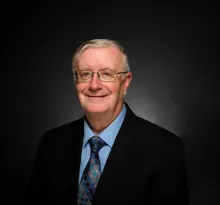
Jorge and his wife Kathy serve the Dallas (TX) and Lawton (OK) congregations. Jorge was born in Portuguese East Africa, now Mozambique, and also lived and served the Church in South Africa. He is also responsible for God’s Work in the Portuguese language, and has been visiting Portugal, Brazil and Angola at least once a year. Kathy was born in Pennsylvania and also served for a number of years in South Africa. They are the proud parents of five children, with 12 grandchildren and live in Allen, north of Dallas (TX).
