
Don Ward
This transcript was generated by AI and may contain errors. It is provided to assist those who may not be able to listen to the message.
As I mentioned to you, in the announcements, at a chance to visit Cincinnati, left last Sunday, we had the Council of Elder meetings of the church all the way through to Thursday. And one thing that got my attention has been in these past weeks, a lot of people have asked me about the situation in Chile, Bolivia, and Colombia, areas that I supervise, where we have members residing there, and some have not been able to meet in services because of all the social unrest going on. Things got so bad about two weeks ago that I wrote a prayer request for the entire church, because some of the brethren, their safety and livelihood were in danger. And so this week I was asked to do three short Beyond Today dailies. Those are about five minutes long. About these three different places, I spoke about Chile in one, Bolivia in the other, and the third in Colombia. It struck me that there are important biblical lessons and Bible prophecy about what is going on. Those dailies should be available next week for those who want to see it. I would like to share some lessons about these incidents and see how they relate to the Bible and prophecy. In other words, to talk a little bit about the whys, the whats, and the hows. How have we gotten to this society where all of these protests just burst out? There's killings, there's destruction at an incredible scale. And so I'd like to update you a little bit about what's going on in Chile, Bolivia, and Colombia. The unrest in Chile started some two months ago. And at first, it was just one isolated incident that took place in one of the subway stations, where the government had jacked up the prices of the subway ticket by the equivalent of about ten cents. But some of the students protested. They had been having all kinds of different strikes through the years. And this one, they decided they weren't going to pay. And instead of paying and opening the stalls, as you do with the subways, they started just jumping all and skipping, paying for the stalls. But not only that, but then they started destroying the stalls. And pretty soon, others joined in, and they started attacking other subway stations, to the point where about 60 subway stations in the Santiago region were heavily damaged, and some destroyed, just burnt up with all of the electronic and computer systems. The subway station was one of the pride and joys of Santiago. It was basically brought, the whole system had been contracted by the Chilean government. They had taken the French metro subway system, and they had brought in the engineers, and they had built the same French subway system, instead of with iron wheels, like they have in many places. These were rubber eyes, so transportation was a lot softer, and the subway stations were all decorated with ceramic, beautiful ceramic tile. And all through the different years of different protests, nobody had ever touched the subways. But boy, at this time, it just lost control.
This protest in the subway stations was a catalyst. That's a word that means it triggers something far greater. In biology, a catalyst is some protein that is able to increase the level of the chemical reaction by over a million times. So you can imagine, it just multiplies. And that's what happened in Chile. My wife, Cottie, was at the Feast of Tabernacles. She went to half of the feast in Mexico, half in Chile. And while she was there, those protests started spreading throughout the country. And where we have our feast site, which is two hours away from Santiago, it's a small town. Very nice nestled in the valley, surrounded by mountains.
They have good Chilean wines, they have folkloric festivals, and guess what? It was like this senseless destruction by mobs. And they actually burnt down the town hall. Just the people, the brethren, could see the fire coming out. Well, after two months, the police reported that there have been 7,000 acts of violence in the country. 18,000 arrests. 2,500 policemen have been injured. And because then the human rights people came in, the government stepped back, and further violence took place after that. The looters started acting with impunity. Walmart owns approximately 400 supermarkets in Chile.
It was a pride and joy, again, of the Chilean people. They actually had the best and cheapest products they'd ever had in the history of that country. And what did people do? They attacked over 200 of those Walmart supermarkets.
And of those, 37 were burnt. They throw a multitude of cocktails. Over 200, no, 120 were looted. In other words, more than a fourth of those supermarkets were looted, attacked. 37 of them were torched, and 18 entire supermarkets went up in flames. And of course, that's only the Walmart, because they have hundreds more, which also suffered.
When I traveled a week later, after my wife, Cottie, had been there, the protests continued on. We were staying with Cottie's father and mother, and the supermarket, two blocks away, had also been burnt down. So the whole area, neighborhood, didn't have a supermarket close by. Not only that, but they also ransacked the entire strip mall. They looted two pharmacies that were there. They also looted a pizza place, and they went into the gas station and looted it, and took the ATM machines.
And this is just two blocks away. So you can imagine this was going on in all of Chile. So we can talk about one of the first biblical principles that was violated. Ecclesiastes 8, verse 11. Ecclesiastes 8, verse 11, in the Good God's Word version, says, When a sentence against a crime isn't carried out quickly, people are encouraged to commit crimes. And so it started at a subway station. And because they were students, the police didn't really want to get involved, and the things started spreading. And pretty soon it had gotten out of control. So the press, of course, showed all the students destroying all of these stalls.
But in the same way, instead of saying, this needs to be stopped, it was almost like celebrating. And of course, the government had been slow to enact certain reforms. One of the biggest complaints was about the toll roads that they had in the country that had gotten so expensive that people were losing a good part of their salary, just paying to use the different highways. I know that a small business that my wife's brother has there employs about five or six people, and has a truck or two, and he has to pay over $1,000 in tolls, just using the different streets. And of course, people were fed up with that because that had gotten out of hand, and the government had not taken care of that.
Also, the pension systems had not been increased, as they should. The minimum wage was still around $300 a month for a very high cost of living area. Well, the government raised it to $350, the pensions a bit more, they're looking into the toll roads, but a little too late. Too little and too late, as they say. After two months, the violent protests have temporarily exhausted themselves. There's not much more to destroy. Hundreds of traffic lights have been destroyed. So as the looters came, and they were protesting, and they looked at the lights, they said, well, let's go destroy those.
They can't take them home, they're not any good. They cost thousands of dollars, but that was another way of destroying things. The spirit of the age had taken and possessed them.
Now, a new constitution is being set up. Pensions have increased, tolls have been reduced some, minimum wage has been elevated, but at a great cost, because the free economic system in Chile is now under danger of going with the wind, and a socialist model is being promoted. It's like a virus that spreads the spirit of this age. It's much more than just socialism, a type of political system, because it has to do with secular humanism, a departure from God and the Bible, where human beings and their reasoning want to govern everything.
That spirit of this age is described in Ephesians chapter 2. Ephesians chapter 2 verse 1. People are taken over by this spirit and start destroying, rebelling, robbing as they can. Ephesians chapter 2 verse 1 talks about the spirit of this age. It comes from Satan. It says in verse 1, Those streams, because of his great love, which he loved us, even when we were dead in trespasses, made us alive together with Christ. So I'll just end right there because it goes on.
But what I wanted to mention about the spirit of that age, and that is influencing more people than ever before. We saw that in Chile, in Bolivia, in Colombia, in Bolivia. And by the way, like I said, things are winding down in Chile because they've lost like 3% of their national gross product. They're talking about $3 billion. They've just thrown down, thrown out the window.
Bolivia is still in turmoil. And for the foreseeable future, the members have not been able to meet in the church hall since the feast. It's almost two months. They're going to have new elections in the next couple of months after Ousting, the Socialist President, Abel Morales. But he still has considerable support, especially among the Indian population, of which he is one of them, and coca traffickers, of which he was the one in charge in the country of coca trafficking. So the minister there, Raul Machical, has told me that he calculates there will be social and economic turmoil until around this coming feast. So next 10 months, he feels things are still going to be up in the air.
And then we go to Colombia. There's still unrest there, all kinds of different strikes. Some members were not able to attend because there's no transportation. They would have to walk over an hour just to get to services. One thing is that most of these protests are concentrated in Bogota, Colombia, the capital. And recently they've been able to get together again. Still, there's a lot of anger that's simmering, ready to explode again.
And so I'd like to cover two of those commandments of the Ten Commandments that have to do with a lot of the protests going on, that have to do with the economy. So let's go to Exodus chapter 20. We see that in God's law, it covers the focus regarding money, goods. In Exodus 20 verse 15.
God is speaking here, giving the Ten Commandments, and he says, you shall not steal. That's the first of the laws, which means that you are not to physically take what is your neighbor's, what is somebody else's possession. So you see, they've broken that when they go in and loot the places. They're stealing because somebody had to pay for that. A lot of the owners are not able to survive. They've closed the stores and they say, I don't want to have another store here because I'm afraid they'll do the same thing later on. So stealing has to do with the physical taking of things that are not your own. And then we have the Tenth Commandment, which is in verse 17. It says, you shall not covet your neighbor's house. You shall not covet your neighbor's wife, nor his male servant, nor his female servant, nor his ox, nor his donkey. That's his car nowadays, the equivalent. Nor anything that is your neighbor's. So while the Eighth Commandment covers the physical taking of things, the Tenth Commandment is the mental part. You're not even supposed to lust after what is somebody else's possession. The Tenth Commandment has to do with mentally wanting to take it.
And of course, the respect for the Eighth and Tenth Commandment is the basis for a free economy, where people are not going to have their goods taken over by other people, nor by the government.
So you are to respect your neighbor's goods, no matter how much or little they have. And you are to love your neighbor as yourself. You're not supposed to just hope things go bad for them. You hope things will go well. Years ago, I took a class at UCLA, and I remember the professor talking about the problems in Latin America.
And he gave me an article by Louis D'Arman, back in 1968. He talked about the historical contrasts between Spanish and Anglo-America. And this is what he said, the comparison. In sharp contrast was the course of educational development in, especially, the Middle and Northern English colonies. In the Puritan colonies, the good citizen was expected not only to go to church on every appropriate occasion, but also he was expected to spend additional time in reading the Bible. The ability to read thus became a requisite to being a good Christian. The contrast with Spanish America is dramatic. There, the churchgoer was discouraged from reading the Bible, out of fear that he might misread it without the aid of clerics.
As early as 1647, the magistrates of the Massachusetts Bay Colony, after attacking Catholicism for keeping the Scriptures, quote, in an unknown tongue, which is Latin, they ruled that, quote, "...every township of fifty householders shall appoint one within their town to teach all such children as shall resort to him to write and read." And so you had a population here in the U.S. that was literate, knew their Bible, applied the principles, and you had other places where it was the clerics, it was the priests who only knew Scripture, and people stayed in ignorance.
The same can be said about the work ethic. In the U.S. they didn't come to find gold. They came to work on the farms. They wanted a new land to work and develop. In Latin America, the great majority went for the gold to enslave the Indians, to have them work for them, and to build up all of this huge land, get the gold, and be enriched by it.
So it was two different mentalities. You can say the same thing about the motivation as well as the work ethic. The Spaniards didn't want to work the land. They wanted to have the Indians work the land. So I'd like to now define these terms that I've been talking about because it's important what has happened in Latin America, in Chile, Bolivia, Colombia, and also Venezuela.
So socialism, according to Webster's dictionary, is a system of society in which the means of production are owned and controlled by the state. So that's the primary definition, is that the government is the one that runs the industries, and it has the power to control the means of production and the sales of them. You have such socialist systems as the Nazis in World War II.
These are the term. Nazi comes from the National Association of Socialist Workers. That's the one that Hitler founded, and it has the term socialist. Also, of course, the USSR was a union of Soviet socialist republic. Mussolini established the socialist system in Italy. Now, capitalism simply means the investment in which private individuals or businesses own capital goods. It's not the state. It's not the government. It's the individuals. The production of goods and services is based on supply and demand in the general market, known as a market economy, rather than through central planning, known as a planned economy or command economy. So you have, through competition and capitalism, the supply and demands are met, and it is the individual that controls the means of production.
Individuals can gather together, build a company, but it's not the state that is governing them. So, just to give you a summary of it, socialism is the system that advocates the control of the state over the means of production. Maybe it's gradually. Maybe they want to take over the health services first. Then, maybe they want to take care of the handle of what is the steel production, or the water sources, or whatever. But the idea is to finally control the great amount of businesses. Communism goes one step farther.
It's not only the control of the economy, they want to control politics. So communism, there's only one party that is allowed, and they control the power in the country. Whereas in capitalism, it believes in free markets. It knows some people are going to succeed, others are going to fail. There should be some type of a safety net. But you have to let people have incentives to improve their lives.
And so those are the main systems. Unfortunately, in my life, I lived under communism for one year in Cuba. And I saw how the dregs of society appeared. They took over the banks, they took over the press, they took over the schools. I'll never forget the two shocking things. I was only seven years old at the time. But they took over the schools and they started teaching communism. And on that very first class, when they had replaced our teachers, which were religious, for communist teachers, and it was a lady, and she said, there are two things I want you to learn today.
One is that God does not exist. And two is that you should tell us what's going on in your house. In other words, spy on your parents. We want to know what your parents are doing, whether they're supporting this communist system or not. And the second experience that I remember at that time, which also just, of course, they took over my dad's medical clinic.
I mean, they confiscated it. And when they took over the banks, what I'll never forget, I had a rich uncle. And they called him and they said, Mr. So-and-so, we just want you to let you know that the government has just taken over this bank and they just opened up your safety deposit box and they have taken everything out. And you know what? My uncle couldn't handle it. He had a heart attack and he died in that moment. Just think, how many people suffer this type of thing? That spirit of the age, of wanting to control things, of having individuals do their bidding instead of letting the person decide for themselves.
My wife, Cottie, lived under a socialist system for three years in Chile. And she saw the nightmare that took place where the government started taking over lands, started taking over industries. We had a gentleman that his wife was a member of the church. He had worked for one of these, I call it pork factories, where they made sausages and all of this.
And he worked there and the workers took over the thing because at that time the socialist government was just giving everything to the workers. And so I said to him, well, how did it go now that you control the factory? And he said, oh, we had a wonderful time for six months until everything went broke. In other words, we used up all the reserves. We had parties every day.
We enjoyed things. But of course the party ran out. And of course they ran that factory into the ground, which had taken decades to build up. You see, that's the wrong spirit of the age.
So we had to leave Cuba with everything behind, just to close on our backs and start anew. But at least we had freedom. We left that concentration camp behind. So the worst of human nature will come out when license is given to loot, to sack, to take advantage of others, to confiscate the goods. And of course, once you have tasted that wholesale violence, you have an appetite. It doesn't matter how long it'll take. You've already tasted it. In places like in India, in the Middle East, in Africa, they say once a tiger has tasted human flesh, you have to go out and kill it because it will do it again. Once they've tasted flesh, it likes it, it will attack humans. Lions are the same way. Normally, they don't. But once they've tasted human flesh, then they have an appetite for it. And once you've tasted what it is, the sacking, looting, taking advantage, coming back and filling your house full of other people's goods, it might take years. And the next opportunity, you're going to be out there. You're going to go to that store. And unfortunately, that's what has happened in Chile, under those three years of socialism, under Salvador Allende, where disrespect was multiplied and attack against God. And the looting and confiscation that took place, you see now that spirit arose again. And that's why it wasn't about a subway ticket going up 10 cents. It was an opportunity. And people, and those had children that they had taught them about the good old days when we could go into a store and sack it. And unfortunately, that happened. And Bolivia, in Chile, it was from 1970 to 1973. But you know that virus was already in that system. And it just needed a catalyst to trigger it again. Because you saw, I was on the street. I watched those kids when it was like they were spellbound. Something had caught them up. You know, I was walking over a bridge where they have the safety rails on it. And those kids were out there beating, trying to destroy those safety rails. And you know, nobody wanted to get close to them because it was like fighting rabid dogs. They were ready to come at you. People were scared, and they still are scared. In Bolivia, it wasn't in the 70s. It was after approximately 2006 when Eva Morales, a socialist cocaine trafficker, was elected. And he ruled all the way to 2019 in some of the most corrupt. And his cheating on the elections got so bad that people went out and protested here in October. And finally, when he didn't have the backing of the military, he fled to Mexico. Still, he wants to come back because he has that indigenous group of people that still support him. And that socialism. People benefit from that. If you're part of the system, you can loot. You can do a lot of things. And it's very unfortunate. In Colombia, you have to go back to the 1950s when they had a civil war that lasted 30 years between the conservatives and the socialists. And that's why there's such a violent nature over there because they already had that virus of looting and sacking and killing.
So much of that mentality is also fomented in many of the universities and schools and in politics as well. It's convenient. You tell the lower classes, you back us up and we will give you all these things that have been kept from you. And all this unfairness. We will right the ship and you are going to prosper. So people start lusting after their neighbor's goods. And this is a way that allows that to take place.
There's a scary statement in a book by Paul Johnson called The Intellectuals. He's a British historian, a wonderful writer, and he mentioned about Karl Marx as one of these intellectuals that basically had to live off of other people. Never really had a job to speak of except he was a reporter part-time for some newspapers. But basically it was Engels, his friend, who had to subsidize him. And he was talking about Marx. He wrote some poems in his youth. And this is what Paul Johnson, the author, says. He says, And he was one of the most onerous, despicable people. Couldn't hardly have any friendships with anybody except Engels. He was fond of quoting what the devil had said in the book, Faust, by Gette. Quote, And that's a description of anarchy, the absence or denial of any authority or establishment of order. In 2 Timothy, chapter 3, we see here what has happened in the generation that has grown up with these anti-God, anti-Bible, humanist secularism, this system that they think human beings don't need God. We are gods. We can decide for ourselves and do things good. In 2 Timothy 3, I'd like to read it from God's Word, verses 1-4. Paul warns Timothy, We see that. They will brag, be arrogant, and use abusive language. We see that.
They will curse their parents, show no gratitude, have no respect for what is holy, and lack normal affection for their families. There are groups nowadays that are called Parents Anonymous. Just like you have Alcoholics Anonymous because people have problems with drinking. Well, you have Parents Anonymous because they have problems because their kids have taken over their home and they're getting together. Well, what can I do to get back control of my home? So they try to comfort each other. That's how ridiculous things have gotten. They will refuse to make peace with anyone. Nowadays, you've got to be careful who you speak with. They talk about road rage. Somebody, if you say something, they might come out, pull a pistol, and kill you.
They will be slanderous, lack self-control, be brutal, and have no love for what is good. They will be traitors. They will be reckless and conceited. They will love pleasure rather than God. So yes, the church hardly anybody goes, but boy, big football game, big basketball. Oh yeah, people pay millions to go to those. Love pleasure more than God. And so I'd like to share with you the important dates. When you look back, how did this spirit of the age start? Of course, you know, I started back in the Garden of Eden, but in recent time, I'm talking about the modern spirit of this age. The great irony is that it has basically spread 70 years at a time. It's almost like you planted this virus, and it's taken 70 years to then produce more fruit. So the first important modern date is 1789. At that time, there were two social, political, and economic experiments that took place. One in the U.S. and one in Europe.
The revolution in the U.S. was based on biblical principles of the founding fathers, and has thrived up to today, despite all the problems. The other in Europe was the French Revolution, also 1789. Just like 1789 was when George Washington was the first president. He took the oath of office in 1789 and really started the government working.
The French Revolution was not based on biblical standards. It was based on secular humanism, taught by philosophers like Rousseau, Voltaire, which is radical humanism. You focus on what we can do, what human reasoning, and they exalted human reason to the point where during that French Revolution, they actually had a statue to the goddess of human reason. They didn't need God now. They were going to run their own affairs.
It lasted six years with what is called in history the reign of terror, because that guillotine started falling. First, it destroyed the aristocrats, the upper classes, but it took a life of its own and started— people started accusing others because they wanted their own businesses. And so the middle class started getting with their heads lopped on. And then it was the lower classes, and then it was the leaders like Robert Spier and others, Dalton. These guys who had started this anarchy that now we're all going to share, we're going to have a wonderful system.
Well, they ended with their heads on the block. And so Francisco Goya's, the Spanish painter, his famous painting of the god Saturn devouring his own children. And there was a legend back in the Greek days and Roman days that it said that the god Saturn had been told by the prophetess that one of his children would eventually take over his place, his throne, and would kill him. So then in that myth, what he did was as soon as he had a child, he would eat it so the child would not grow up to kill him.
And in this kind of a myth, he lost count of one of the children, who was supposed to be Zeus, that the mother put a stone instead of swaddling clothes instead of the baby. And so he threw the baby out and crushed it, and he thought, but it was a stone. And Zeus was the one that overthrew him.
And the point is that he has a revolution that ate its own leaders. Well, 70 years later, 1789, you come to 1859, the year that Charles Darwin published the origin of the species, which was his attack on God, that you don't need God to create things, that life just evolves from non-life, and that God, you don't need one. And so that bent of humanism now took that form, where it went into the sciences, and it spread its virus against God, against the Bible. 70 years later, from 1859, you come to 1919.
Basically, that was the World War I ended in 1918, and it was in 1919 when really that Russian Revolution took a hold. The Bolsheviks who had been in power in 1917 after the war, they really started in 1919 with their system of applying that same spirit. And of course, Karl Marx had also been, basically 70 years later, ceding that mentality of communism, socialism, and in Russia, that's where it took hold, first of all.
70 years later, from 1919, we come to 1989, the fall of the Berlin Wall and the beginning of the end of that Soviet Empire. That was founded on sand, the sands of humanism, that actually started back in the French Revolution. 30 years later, we're in 2019, and those seeds are still spreading around the world, contaminating people more than ever. We see it in Venezuela, we see it in Chile, we see it in China, North Korea, Cuba.
Even in the United Kingdom, in the area of Great Britain, they just had an election between a socialist and a conservative. That socialist was so extreme that he lost ground. But he said socialism is still alive here in England. In the US, we still have the same type of spirit as well. It's very popular with the youth. So, let's go to the future. Now, talking about the Bible and prophecy, what the Bible tells us is going to happen in the future. Revelation 13, verse 15, talks about a system that is going to arise before Jesus Christ comes back.
As we have studied, and you can look at our booklet on Revelation, and also booklets on who is the beast and other things. Revelation 13, verse 15, talking about the second beast, this is the false prophet that is going to ally himself with this political beast. Verse 15, he was granted power to give breath to the image of the beast, that the image of the beast should both speak and cause as many as would not worship the image of the beast to be killed.
He causes all, both small and great, rich and poor, free and slave, to receive a mark on their right hand or on their foreheads, and that no one may buy or sell except one who has the mark of the name of the beast or the number of his name. So here comes another economic system where the state is going to control everything, where people are not going to have their say about it.
You're either part of the system or you're not going to be able to go and buy goods and basically starve you out because it's going to be so powerful. And so we see in the future that these seeds are also going to succeed for a short time. A system where it controls the goods, the economic lifeblood of the world. It doesn't say it's going to be a communist. It doesn't say that it's going to control all the nations of the world and the political because it says that it fornicates with the kings of the earth.
But it is an economic system. Notice in Revelation chapter 18.
It talks about verse 9 of Revelation 18. It says, The kings of the earth who committed fornication and lived luxuriously with her will weep and lament for her when they see the smoke of her burning. And it is similar to what happened with Hitler's Germany, where this socialist system that Hitler had, he controlled through the different industries the production. And all the Germans were pretty happy with the system. They all got a share of it. As long as they backed him and his efforts in the war, you got recompensed. You got rewarded. Notice it says, verse 19, standing...all these are the commercial powers... standing at a distance for fear of her torments saying, Alas, alas, that great city Babylon, that mighty city, for in one hour your judgment has come, and the merchants of the earth will weep and mourn over her, for no one buys their merchandise anymore. Why? Because it's a controlled economy. So it wasn't just kind of a free market system. You had to be part of the system to buy and sell. So we see this spirit is going to continue on until Jesus Christ returns. What is the ultimate solution? Are we going to live under all of these ups and downs of political and economic systems? No! The Bible tells us God's going to put an end to that. When Jesus Christ comes back, nobody's going to exploit anyone else. They're not going to have all kinds of competing nations and war. Jesus Christ will end the evil system established and will start a new one in the world tomorrow. Human nature is going to be changed. For those who are converted, who have God's spirit now, it says that they will rule with Christ for a thousand years. So their human nature is going to be changed. So they're not going to be subject to bribery or power or envy. That's all gone. They're going to have the very character of God, and they will rule under Jesus Christ. And of course, people will be converted. God's laws will be written in the hearts of the people. They will want to do the right thing. It's not like today, if you try to do the right thing, you're going to get attacked for it. Notice in Micah, one of the prophets in the Old Testament. Let's go to Micah, chapter 4. Micah, chapter 4, verse 1. This is a prophecy of the establishment of the kingdom of God on the earth. It says, now it shall come to pass in the latter days, not now, but when Christ returns, that the mountain of the Lord's house shall be established on top of all the mountains. Talk about really symbolically, a mountain is a symbol of a nation. So Christ is going to establish his kingdom above all the nations and shall be exalted above the hills. And people shall flow to it. Today, people are flowing against the Bible and God. Then they will flow to it. Many nations shall come and say, come and let us go up to the mountain of the Lord, to the house of the God of Jacob. He will teach us his ways. Talking about God. For out of Zion, which is Jerusalem, the law shall go forth and the word of the Lord from Jerusalem. He shall judge between many peoples and rebuke strong nations afar off. They're not going to be able to practice their own system of government or philosophy at that time. They shall beat their swords into plowshares and their spears into pruning hooks. Nations shall not lift up a sword against nations. Neither shall they learn war anymore. But everyone shall sit under his vine and under his fig tree, and no one shall make them afraid. There will be universal peace at that time. Very different from what I just saw a little over a month ago when I was in Chile. And that spirit of rebellion and rage that was spreading throughout that nation.
So what to do now?
First of all, beware of this spirit, the spirit of this age that goes against those Ten Commandments of God. To respect the Eighth and the Tenth Commandments, don't let envy infect and consume you and love your neighbor as yourself. Be happy when things go well with your neighbor, for usually you also will be better off if your neighbor is doing well.
And finally, back this work of God. It's warning and pleading with the world while there's still time to turn back, not to go the ways of this world, to be saved from the coming wrath of God. As prophet Haggai constantly says, turn from your ways to God. He was pleading with the nation before it's too late, before God intervenes. And then you're going to try to find where God's people are. It'll be too late. And be preparing to teach to your children, to those around you, God's ways, based on God's law and His grace that we all need so badly. Learn so you can teach and govern under Jesus Christ one day. Be the best student you can, and then participate here, applying those godly principles. So, brethren, there's a spirit of this age that is spreading throughout society. Don't let it catch you. Don't let it contaminate you. And right now we have, brethren, around the world, praying to God for His kingdom to come, because that's the real solution. In Chile, in Bolivia, and in Colombia, there's a group. They're preparing for that coming kingdom of God, just as all of us.
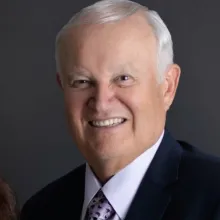
Mr. Seiglie was born in Havana, Cuba, and came to the United States when he was a child. He found out about the Church when he was 17 from a Church member in high school. He went to Ambassador College in Big Sandy, Texas, and in Pasadena, California, graduating with degrees in theology and Spanish. He serves as the pastor of the Garden Grove, CA UCG congregation and serves in the Spanish speaking areas of South America. He also writes for the Beyond Today magazine and currently serves on the UCG Council of Elders. He and his wife, Caty, have four grown daughters, and grandchildren.
