
Robin S Webber
This transcript was generated by AI and may contain errors. It is provided to assist those who may not be able to listen to the message.
Well, ladies, thank you very, very much. That was beautiful. Lovely praise to God. Well, today we're going to begin a series, and I'd like to give you the title of that series, because you're going to be hearing a lot about it over the probably the next couple of months.
And it's a very simple title, and it's simply entitled this, Not One Stone.
The title, Not One Stone, comes out of the words of the Bible and comes out of a very famous passage, but may be words that you have not fully focused on. And that hopefully will be our goal as we move through this series, entitled, again, Not One Stone. Now, you say, well, Mr. Weber, you've already repeated that three or four times.
Well, that's good, and that's well, because that's what education is, because repetition is oftentimes the best form of emphasis to be able to communicate the things that God wants us to know.
We're going to be using, as our text, by and large, what has commonly been called the Olivet Prophecy, and it's discovered in Matthew 24. It also has parallel accounts in Mark 13 and in Luke 21. And we will be touching upon those parallel accounts as well in the course of this message. And we're going to be using it as a guide to open up the future through the words of none other than Jesus Christ, who was the greatest prophet who ever lived, and yes, indeed, lives. Now, some of you may say, well, I already knew that the Olivet Prophecy was in these three different accounts. But let's be aware, friends, that we have people amongst us that have not heard a series on prophecy. We have young people that may not be acquainted with prophecy, and perhaps you have not focused on prophecy for some time. So please understand, while I might use the elementary terms that you might be familiar with, again, it is for a reason. What is interesting when we discuss the subject of prophecy is that while prophets like Jonah and Daniel were at times used to warn the nations, the overall focus of most prophecy is initially, at least, directed to covenant people, old and new. Well, you say, well, how can you say that? Because the words of God were primarily given to the people of covenant, whether it be Israel of old, that was later on Israel and Judah, the northern and the southern kingdom, and or to we today that are the Israel of God, what we call the church, what we call the body of Christ. And initially, we are the ones that are charged with receiving it and understanding the message therefore. Now, there's a couple things that we want to understand when it comes to the subject of prophecy. Number one, there is an encouraging promise that is given over in Amos 3. Join me, if you would, there, please, in Amos, one of the minor prophets. And when we talk about the minor prophets, let's do remember that they also bring major messages to us. They're called minor not because of their content, but because of their size. And over in Amos, and let's pick up the thought in verse 3. In Amos 3 and in verse 7, surely the Lord God does nothing, nothing unless He reveals it, His secret to His servants, the prophets. God is not playing surprises with His covenant people. Now, God may not necessarily give us every ounce and every detail thereof, but He's going to, in the course of His holy Word, which the prophets are now a part and the greatest prophet of all in the New Testament, Jesus Christ, that God's Spirit is going to direct us and enable us by the Spirit to at least understand the overall picture, to be able to understand the overall impact. And then as it draws nearer and clearer, He's going to allow us to understand and to comprehend exactly what is going on.
The first thing I want you to understand as we develop a framework, as we move towards Matthew 24, simply this, God promises and informs us and encourages us that He's not playing around with our minds. He's not messing with our minds. There's not a booby trap out there. There's not a trap door. There's nothing to be afraid of and to recognize that He's there to guide us and to encourage us. Now, there's a promise and there's an encouragement, but now I want to take you to another verse. Join me, if you would, in 1 Peter. Again, remembering that prophecy is initially directed to covenant people. And in 1 Peter 3, I say 1 Peter, I think 2 Peter, pardon me, 2 Peter 3.
2 Peter 3, verse 1, Beloved, I now write to you this second epistle in both of which I stir up your minds by the way of reminder that you may be mindful of the words which were spoken before by the holy prophets and of the commandments of us, the apostles of the Lord and Savior, knowing this first, that scoffers will come in the last days, walking according to their own lust and saying, Where is the promise of His coming? For since the fathers fell asleep, all things continue as they were from the beginning of the creation. And for this they willingly forget that by the word of God, the heavens of old, and the earth standing out of the water, and in the water, by which the world that then existed perished, being flooded with water. But the heavens and the earth, which are now preserved by the same word, are reserved for fire until the day of judgment, and the perdition of ungodly men. This is a wake-up call. This is a call to arms. This is a call to wake up and understand that the coming of the Lord Jesus Christ is even now nearer than it was before.
And the encouragement out of Peter is not to go to sleep. This is an admonition, if you want to use a friendly word. But it's also a warning to the covenant people of God then and now to wake up and to recognize that the prophetic utterances of the prophets, God breathed, are real, are true, and will be coming to pass. Now with that spoken more framework, to gaze upon the future, utilizing prophecy as Christ intended, demands that we take a serious look at ourselves presently. We must look at ourselves.
Why do I say this? As a young person growing up in this way of life, as one that has now served as an elder for many years, as one that has been involved in prophetic teams and prophetic studies and going out around the nation and handling the subject of prophecy and watching where sometimes people are, that people sometimes are more concerned about what somebody somewhere someone else is doing and focusing on an individual rather than recognizing that ultimately prophecy is to mold us. Prophecy is designed to mold and shape us. What do I mean by that?
We need to, number one, point number one, we need to know where we stand, where we stand in the here and the now. And number two, we must importantly know whom we stand in. Who do we abide in? Remember our message on the book of Ephesians last time, where we have to take on the whole armor of God, the whole armor of God, the entire battle ray, just to stand. Mr. Grinnell talked about that impact. He mentioned to the young people on the meadow up there at camp, and he likened it to the brave heart. And that's actually what the Bible talks about in the future, that there is going to come a time where in the book of Matthew and in chapter 24 it says that there's even the possibility that even the elect shall be deceived. Even the elect, members that have been called to be a part of the body of Christ, offered citizenship from heaven, offered familyhood down here below, offered to be the articles of the holy temple of God being developed in the new creation called the body of Christ. Even those individuals, it says, have the possibility of being deceived. Thus, we need to understand more and lay down some more basic ground rules.
This subject of prophecy and the Greek word is prophetaea, and that Greek word can actually be used in two different forms. One is to where you foretell. Oftentimes when you read the scriptures, it'll say that they had the gift of prophecy. That's really the gift of foretelling or to share what God's purpose has been and is. That is foretelling. Another aspect of prophetaea is foretelling, and that is to convey, moving beyond the present to the future, what God's purpose, plan, provision, and promises will be in the future. One thing we want to share is this, and the point I want to get to is simply this. Prophecy and the reason why God gives it in the scripture. And there's a lot of prophecy in scripture. It's been said that one-third of the Bible is prophecy. Much of that prophecy was about the first coming of Jesus Christ.
Much of it also is about that second coming of Jesus Christ, much of what, as far as we can comprehend, has not yet been fulfilled. So a lot of it is still out there. But to recognize that it's not just simply about information. Here's what I want to share with you and why we're going to spend many weeks in dealing with the subject of prophecy. Prophecy is not just about information.
It is not just simply to leave you at inspiration. Say, oh, I better do this. And by Tuesday, you're back asleep again. Prophecy, first and foremost, let's jot it down in our notes, is about transformation. It is about your transformation into the image of Jesus Christ. How can I say that? Join me if you again in Peter, 2 Peter 3. And 2 Peter 3. And this is giving the whole discussion of what's going to be happening at the time of the end. Let's pick it up in verse 10. But the day of the Lord will come as a thief in the night, in which the heavens will pass away with a great noise, and the elements will melt with fervent heat. Both the earth and the works that are in it, it will be burned up. There is going to be a cleansing of this present age, and the glorious golden age has yet to come. And there's going to be this transition. Then notice what it says in verse 11. Therefore, since all of these things will be dissolved, what manner of persons are you to be in holy conduct and godliness, looking for and hastening the coming of the day of God, because of which the heavens will be dissolved, being on fire, and the elements will melt with fervent heat. Now, what is this telling us today here in Los Angeles? Ultimately, the focus...let's talk about characters that are in the scriptures. We can think of elements out of the book of Revelation. We can talk about the false prophet. We can talk about the beast. We can talk about the two witnesses. Now, remember, they're the good guys. They're on God's side. But we can put so much focus on who they are that our focus ultimately is what God is interested in. Who are you? What are you like? How are you, in that sense, becoming in the image of Jesus Christ? How is your day-by-day activity changing in relationship to God, in relationship to your spouse, the way that you treat your children, your motivation of what you are about? Prophecy is not about some theological jigsaw puzzle where you have a missing part and you're sitting down at your cardboard table trying to squeeze something in that is never going to be squeezed in. Such is a date of when Jesus Christ is coming back. How often have people spent so much of their lifetime trying to figure out when Jesus Christ is going to come back when he says, no man knows the day or the hour. But some gal says, but he's talking about men. I'm a woman. I can figure it out. No. He says, no man knows the day or the hour.
God says, no trespassing. Off limits. That is my own divine prerogative and you will have to have faith in me.
But he says, it's easier if I know the date. God says, but that's not the way that I work.
The way I work is my son before he ascended said, lo, I am with you to the end. That's all that you need to know. That whatever this world is going to go through, that my son said, lo, I shall be with you to the end. And that will have to suffice. But that's not fun. If we're going to go through an entire series and Mr. Weber is not going to give us a date, then we're going to have a walk out right now. Well, it's better that you walk out rather than walk towards me. That's when I get nervous. So we've got to just set that up right now that I'm not going to be giving you dates as we go through this. I have found over 45 years in the church, the only safe date I have is with my wife.
I don't set dates. Because I think what God gives us is so rich and so incredible and so fantastic and so colorful and so powerful that if that is not enough, that you and I right now can have a confidence, can have the peace of God in us to recognize that even as shaky as world events look like. Have you noticed that they're a little shaky out there right now?
Are they a little shaky in the United States of America? Are they shaky over in the Middle East? Do we see a whole transition of the geopolitical theater happening in our life over these last 10 to 15 years? But that we can have a calm and that we can have a peace at the center, recognizing that God in Amos said this, surely I will do nothing but that I don't first reveal it to my secrets, to my servants, to prophets. And they're right here. We may not be able to fully comprehend them right now, but when it is God's time, He will open up that to us. I know that with the greatest of confidence. And I want to encourage you the same way.
Thus, when we see all of this, prophecy is about transformation of our minds and our hearts and our motivation, becoming like the head of the body, Jesus Christ. And thus, when we look at it this way, we come to see that the biblical intent is not simply about physical deliverance, but spiritual salvation. Again, allow me to put a framework in where we're going with this.
Prophecy is not designed solely for physical deliverance and escape from the wrath to come. I'm sorry. I don't want to disappoint you, but that's the biblical truth. And God willing, I will always be straight with you on this. Now, can physical deliverance be conjoined with spiritual salvation? Be a part of it. Be a part of our existence. Absolutely. Absolutely. But I want to share a thought with you. Join me in Luke 21, verse 36. We're going to go to that parallel account of Matthew 24, Luke 21, verse 36.
Luke 21, verse 36.
Watch therefore and pray always that you may be account worthy to escape all of these things that will come to pass and to stand before the Son of Man. Now, let's look at that for a moment. It says to watch and it says to pray. Jesus, in many of his parables, talked about being vigilant, being sober, being awake. Because no one knows when the thief in the night is going to come. We do have a responsibility to watch. And there is a spiritual responsibility among some to be a watchman for the church. And or if you want to go to Ezekiel for Israel, Ezekiel 3 and Ezekiel 33. So we are to watch. But here's something that's very important. We simply watch and maintain this incredible cerebral vigilance without praying. Our watching can be in vain. To only use our mind and our gray matter when it comes to the matter of prophecy and not have our hearts change. And be motivated in our heart. Makes prophecy empty. What do I mean by that? It says to watch and it says to pray. Prayer changes and shapes and molds our mind to think like God. It doesn't have God necessarily coming our way. It has us coming God's way. And when we have that motivation and we have that direction, I want to share something with you. It's profound. God will bless us with even more understanding about prophecy. When our motivation and when our hearts are correct, God will grant greater visage into prophecy. And guide the church and guide you towards it. It says to watch and pray that you may be account worthy and that's always our human hope. Nobody ever wants to partake of the plagues that are going to be visited upon this earth. And yet also, hear me, when you go back to the initial model of Israel in Egypt. When Israel was in Goshen, even Israel went through the first three plagues that were visited upon Egypt. There was a time when God spared that people and created an exodus out of Egypt. And they did not partake in the rest of the plagues. But nonetheless, it says that we might be account worthy. But now, let's look at the end of verse 36. And that you may be able to stand before the Son of Man.
Who is going to stand before the Son of Man? The person that has a computer trying to figure out a date? The person who's trying to figure out this person or that person in the Bible? The person who is only using their brain and is worried about everybody else, rather than allowing God's Spirit to transform them into a humble and a joyful individual? The person that stands before the Lord in confidence is the person that is approved. And then the person that is accepted. Because they've accepted what it says in 2 Peter 3, where it says, therefore, what manner of individual are you going to be like?
Now, why do I say this again? It is simply this.
What lens we view prophecy through makes all the difference in the world as to what we will reap, both in the realm of prophetic understanding and in also the transformation of our lives. We can look at prophecy through the lens of love manifested in his purpose, God's purpose, his plan, his promises, his provisions, and or we can look at through the lens of human fear and failings. I want to share a verse with you. Join me if you would for a moment. You say, well, Mr. Weber, you haven't even gotten to Matthew 24 yet. That's right. We're laying down the foundation, the Sabbath. Join me if you would in Matthew, excuse me, Matthew 1 John, 1 John 14.
Actually, let's go to verse 17. Sorry, note takers. 1 John 4 verse 17, Love has been perfected among us in this, that we may have boldness in the day of judgment. Remember, we were just talking about judgment in 2 Peter 3? Because as he is, so are we in this world. There is no fear in love. The love that is being spoke about there is agape. That's godly love.
Love without return. But perfect love casts out fear. Because fear has torment. But he who fears has not been made perfect in love. And we love him because he first loved us. Why do I mention this? As I so often say at this moment, can we talk? We know many of us that have been in this way of life for 40 to 60 years, perhaps longer.
Not mine to 60, but 40, 45, is simply this. We have seen far too many individuals. Individuals that we have loved. Individuals that we've gone to supper with. Individuals that we have grown up with.
And they have entered our midst because when it's all said and done, they were fleeing the wrath to come. They were fleeing the wrath to come. Their motivation for understanding was constricted. It was not based on the love of God. It was not based on outgoing concern. But it was based upon pictures that portrayed a world. And they said, I don't want to be a part of that. And they were fleeing the wrath to come.
Now, I saw some of those same pictures when I was growing up. Those pictures were very effective. Please trust me. But you and your Christian walk have to ultimately move away from fleeing the wrath to come to walking towards God and having Him transform you. I have a question for you. Some of you that are, dear, I dares say, old-timers. Have you allowed God's Spirit to make that transition in you? That you are not simply fleeing the wrath to come.
But that you now have a walk towards God that is based upon faith. That is based upon peace. That is based upon a calm. That allows us to have a peace of passive understanding. And that is better than the facts on the ground.
Facts on the ground are not good right now. You know, and I know, that right now, when we see what's happening to modern-day America in 2012, that we as a people in that element of our message for years have been speaking about what is happening to America today. If you wanted to go back to a plain truth of 1962, 1972, 1982, it is coming to pass. Oh, not necessarily on our time frame or when we had it planned.
But it is coming to pass. We see the blessings of Abraham that were visited upon America, not just simply because of American ingenuity or because of who we were, because of our Yankee ingenuity or whatever. It was because of God's blessings, God's blessings on this nation, a nation that says, in God we trust. In God we trust.
That's about as thin as the silver or copper that they use these days. It's on our coins, but it's not on the heart of our citizenry. And because of that, America has a responsibility, and it has an accountability, and God is going to hold America accountable. And He's going to hold us accountable for what we know. Now, before we go any further, it's simply this. I want to share a verse with you.
One more verse. Matthew 16. Matthew 16. And all of this kind of is integrated into what we discussed in Luke 21, verse 36. Watch and pray, therefore, yes, that you may be account worthy to escape. That is a good prayer of and by itself. Please don't dismiss that. But if that's your only prayer, we need to expand. Why? That we might be able to stand before the Son of God.
What happens when we stand before the Son of God and stand before His Father? How often have we heard sermons in and out where it says, Don't you all want to be there? Don't we want to be there when God looks upon us and says, Well done, thou good and faithful servant.
Why is God going to say that to us? Because of what we know or because of what we are? In Him, and by Him, and through Him. Is it going to be because of everything that we stacked up in our brain? Or is it because of everything that we have filled our heart with that we've come into the image of Jesus Christ? Join me if you would again in Matthew 16, verse 24.
And then He will reward each according to His works. The purpose of prophecy, dear brethren, here in Los Angeles, is for us to lose our identity into the framework of God's identity and not only gain information out of the Bible, not only gain inspiration from some given speaker on a Sabbath day, but to truly allow our hearts to be transformed that ultimately you and I might experience being members of a kingdom of priests right there in the temple of God, to be there, pillars with Him. That's the purpose. That is why I am bringing you this message entitled, Not One Stone.
Because what's going to be important to recognize is that everything that you and I, humanly, might hold of value today. Brethren, I've got news for you. If you haven't read Matthew 24, Mark 13, or Luke 21, everything in this world ultimately is going to be coming down. And there will not be one stone left upon another. So the question comes, what are we building on?
And what are we building towards within the spiritual household of God? If there is not one stone that is going to stand, then what are we building on and what is our foundation? With that, now we move into Matthew 24 for a few minutes today. It's going to be the guiding light to this series. But as so often occurs when reading the Bible, and you've had the same experience as I probably have, is we kind of get into the middle of the story rather than find the beginning of the story.
And that so often happens because of the chapters that are in the Bible. And they're divided into chapters, and it's kind of like computers. Computers kind of work for you, and they work against you depending on the morning that you wake up. Can't live with them, can't live without them. Well, that's sometimes how we have the chapters in the Bible.
Can't live with them, can't live without them. Sometimes they work for us, and sometimes they work against us. We need to find where the story begins actually before Matthew 24. Let's then understand a few things that are happening here as we come up to Matthew 24. Let's appreciate that Matthew 24, or what we call Matthew 24, the words thereof, are basically being given by Jesus in the very last days of His earthly ministry. He's come to Jerusalem. He's about to give His final witness to that very special city. He is in Jerusalem, and it's very, very important to recognize that He has set His face towards Jerusalem.
Let's shut this down, Luke, if you're taking class today. Luke 9, verse 51. There is a division in the way that Luke records the Luke in commentary, and that is that up to Luke 9, 51, it is basically called the Galilean ministry. Then it says like this, and then He sets His face, and there's a solemnity to this, He sets His face towards Jerusalem.
Jerusalem, here I come. I'm going to knock on your door, I'm going to ring your doorbell, and I'm coming in to give you a message. There was a determination. Why is that? Why was Jesus' face set towards Jerusalem? Historically and biblically, if you look at analytically, it's often been said that Jerusalem is where Heaven, if it had a choice, it has made that choice, touches earth.
It is where Heaven touches earth. How can I say that? When you go back, it allows us to understand the purpose and the plan of God. If you go back to the environs of Jerusalem, to recognize that Abram, the man of faith, that he is the one that deals with this man out of the recesses of Genesis called Melchizedek, this priest-king, this man of Salem, this city of peace depicting a Jerusalem. Later on, this is where Abraham, in the mountains of Moriah, and you have to understand, one of the seven mountains of Jerusalem is Moriah.
It's in the mountains of Moriah that Abraham offers and surrenders up Isaac, before God and says, I will sacrifice him, he will be yours, and thus showing authority, God's authority over his life. It is in Jerusalem that David, in trying to unite the southern and the northern kingdom, chooses this as his capital, and then tries to make it a religious center by bringing in the Ark of the Covenant, where God is, his law will be, and the law will be amongst his people.
It is in Jerusalem that when Solomon builds the temple, that is, when that temple is concentrated and dedicated, that the Shekinah presence of God, the very essence, the very presence, comes into that temple, and it is that which makes it holy, and therefore becomes that holy city.
If God chooses to touch any city on earth in that sense, you might say where heaven touches earth is Jerusalem, and it will be touched one more time as Jesus comes. It's very important for us, because in our discussions as we go through prophecy, I remember hearing this many, many years ago by an elderly gentleman in Pasadena, and it is simply this.
Jerusalem is the bullseye of biblical prophecy. If X marks the spot, the X is Jerusalem. Now, I think, I know some of you are probably disappointed you thought it was Altadena. It is not. It's not Monrovia. It's not Almani. It's not even Reseda or Northridge. It's Jerusalem. If X marks the spot, the bullseye of biblical prophecy is Jerusalem. Thus, Jesus enters Jerusalem. Notice Matthew 23, verse 25. Matthew 23 and verse 25.
Jesus comes with extremely powerful words. Let's notice what he says here. He offers and gives a stunning indictment of the religious community of that day. Now, what I want to share with you, and this is called becoming existential with the Word of God.
That's not new age. That means to exist in the Scriptures. To exist and to understand and to get into the skin of the people of that day. And even in that sense, to get into the skin of Christ for a moment. He is coming and he is speaking to a covenant people. He is coming to visit Jerusalem. It is the time of their visitation, which is a solemn wording of the Old Testament. That means prepare to meet your Maker. Prepare to meet your God.
Judgment is now upon you. Listen to what I have to say in other words. Woe to you, scribes and Pharisees, hypocrites. He is speaking to the church of that day. For you cleanse the outside of the cup and dish, but inside they are full of extortion and self-indulgence. Blind Pharisees first cleanse the inside of the cup and the dish that the outside of them may be clean also.
Then it says again, woe to you, scribes and Pharisees. One woe might be enough, but now there are two woes. Woe to you, hypocrites. For you are like whitewashed tombs, which indeed appear beautiful outwardly, but inside are full of dead man's bones and all uncleanliness. Jesus is basically saying, listen, you that think you count. Listen that you that think that you are well off and spiritually groomed and just fine and gym and dandy. You are dead men walking when it comes to spirituality. You're working from the outside in. God works from the inside out.
Even so, you also outwardly appear righteous to men. But inside you are full of hypocrisy and lawlessness.
Woe to you, scribes and Pharisees, hypocrites, because you build the tombs of the prophets and adorn the monuments of the righteous. And say, if we had lived in the days of our fathers, we would have been partakers with them in the blood of the prophets. We would not have been partakers with them in the blood of the prophets. Therefore, you are witnesses against yourselves that you are the sons of those who murdered the prophets.
You, your people, you kill them, you slay them, you saw them asunder, and then you give them a tomb, you give them a send-off, and you go back and you decorate their grave.
Your whole approach to God and His servants and His ways and His commandments, they're in conflict.
You say, in God we trust, but your life does not bear that result. The fruit is not there.
Therefore, you are witnesses against yourselves that you are the sons of those who murdered the prophets. Fill up the measure of your father's guilt. Serpents, brood of vipers. How can you escape the condemnation of hell? The hell that is mentioned there, you might want to circle it, is Gahanna.
He's taking it a step further. He's not dealing with Hades. He's not dealing with Tartarus. Hades is the grave. Tartarus is a place of restraint. He's talking about judgment.
How can you escape the condemnation of judgment?
He's speaking to the church of that day, the people of God at that day, that they have been weighed in the balance, measured, and found wanting.
Well, you say, that's talking about a bunch of Jews in Jerusalem in 31 A.D.
If the shoe fits, wear it.
Because our actions will betray what motivates us, whether it is love that motivates us forward or fear.
That on you may come the righteous blood, shed on the earth from the blood of righteous Abel to the blood of Zechariah, son of Berechiah, whom you murdered between the temple and the altar. He didn't even do it outside. He did an inside job here.
Assuredly, I say to you, all these things will come upon this generation.
Now, lest you think that we're just speaking about a bunch of Jews, remember what I said about prophecy. Prophecy is initially given, most of the time, directed to a covenant people. Israel, the Jews, were a covenant people. The Israel of God today is a covenant people. Join me, if you would, in 1 Peter 4. And let's pick up the thought in verse 17. For the time has come for judgment to begin at the house of God. And if it begins with us first, what will be the end of those who do not obey the gospel of God? In 31 A.D., those that sat in the seat of Moses were of that household.
The time of visitation by the Lord of the earth had come upon them. They had a rendezvous with God's destiny, and God found them wanting. We are no more or no less. This is indeed the time of our visitation.
Therefore, we need to handle these things very seriously. That's what I want to wind up with. If you come back to Matthew 24, and pick up the verse 38.
He was speaking to a real-time audience, who at that time was taking form over substance. They weren't dealing with their hearts. They were dealing with the outside. They had even a sense. I'm not saying purposefully, but many of the things that we do in life were never done on purpose. They just lied in. They had made the temple and the law of and by itself a God unto itself. Here, speaking to this audience, Jesus was speaking of what would happen to the very place that we were at, 30 or 40 years down the line. I think there's a much far-reaching conclusion here when it comes to, because notice what it says in Matthew 24, verse 38.
This is speaking about a time that moves beyond 70 AD or even 135 AD with the Barkofa Rebellion. This moves to a different time that depicts intervention and re-education and restoration, not against Christ, but under Christ. Now, I want to leave you with this thought. Can I ask you a question? This is the interactive portion of the message.
It is not mentioned, but I perceive that when Jesus was talking to the scribes and the Pharisees, that the disciples were basically with him at this time. I have a question for you. How would you have liked to have had these words spoken against you? I would not want these words spoken against me. How many of you think that if, but for a moment, that if you heard the one that you believed was Messiah speaking to this to people, that your life might unauthorably change, and you might be different after you had heard this?
Because I'm sure Jesus was an incredibly compelling speaker, because it says he came as one speaking with authority. Let's conclude by seeing what happens to the disciples. Notice the transition from 39 to now, chapter 24, verse 1. We're just going to get into the first two verses. Then Jesus went out and departed from the temple, and his disciples came up to show him the buildings of the temple. And Jesus said, Do you not see all these things?
Assuredly I say to you, not one stone shall be left here upon another that shall not be thrown down. Now, let's understand something here. Here we are, Jesus is just scolded to the religious community, the church of that day, and given them an earful and a heartful. And then the disciples come and say, Well, let's take a temple tour.
Got an idea. Let's go to Disneyland, because they see this temple, and there's an incredible wow factor about it. Absolutely. They say, Look how great. Look how enduring. Look how stable. Here's the point. Either they were in major denial to what Christ was saying, or they were not fully informed. Jesus had just given a powerful message and challenged the religious community of that day to wake up and to repent and to understand the fate that lay before them because of their killing of the prophets that God had sent amongst them.
And then it's like, let's go to Disneyland. And the disciples are more impressed with the temple than the one to whose glory it was built towards. Let's talk about that temple for a moment. Berkeley's commentary is very informative on this and why the disciples had this wow factor of what they saw. It was marvelous. Berkeley tells us that the summit of Mount Sinai had been dug away to leave basically a plateau of 1,000 square feet.
1,000 feet that way, 1,000 feet that way, across again 1,000 feet. Big square, 3 football fields. Massive. Gigantic, especially in that day of antiquity. At the far end was the temple built with white marble plated with gold that shined so brilliantly in the sun that it was even hard to look upon and to view. The temple area was surrounded by great porches, Solomon's porch and the royal porch. These porches were upheld by 38 foot high. This ceiling is probably about 30 feet high, so a little bit higher than this.
38 feet high. Solid marble pillars cut in one piece, so thick that it took three men to wrap their arms around them. At the corner of the temple angle, stones may have been found measuring 20 to 40 feet in length. This stage, from that handrail to that handrail, and probably a little bit longer, stones that big. Weighing up to 100 tons. Even to this day, people do not know how they got it there or how they made it fit.
With that said, the disciples said, wow! They wanted Jesus to join them on, quote-unquote, the temple tour. But then again, let's begin to conclude by again looking at Matthew 24, which is going to set us up for next time. Matthew 24. And Jesus said, do you not see all these things? Here's how we put it in Weber paraphrase. Take a look. Open up your eyes and look around. Assuredly, which was a solemn biblical manner of making a pronouncement. You might say a drumroll. Assuredly, I say to you, not one stone shall be left here upon another that shall not be thrown down. Not talking about an earthquake. We're talking about something that God allows, a part of God's will, to help His people come to a transformed heart.
Here's what I want to leave you with today. We're just starting. Hope you don't mind. I want to establish the framework of where we're going today and how I will be presenting it as a Christian communicator. And my hope for me to you, and hopefully in God's will from Him to you, that we will have a heart towards prophecy as we begin to move deeper.
Jesus said, speaking of a temple, which I think even if that is the Holy Temple of God, speaks to a greater grand design that not one stone of this present evil age will remain. And that it is going to be thrown down. I have a question for you as you walk into Sunday and Monday and Tuesday and Wednesday and Thursday and Friday, and until we meet again, what part of this society remains so precious to you that you are striving with all of your being and spending all of your time and all of your heart and all of your passion and all of your energy to uphold it, to keep it up, to keep on propping up something that God Himself says ultimately is going to come to naught so that the glorious golden age of the kingdom of God can emerge? I only have that as a simple question. You will now go away from this sanctuary facility now, and you will answer it by the way that you live, by the choices that you make, by the conversations that you have, as to whether or not you join the disciples for a temple tour, or you want to hear more about what Jesus is going to say in Matthew 24. Look forward to continuing this discussion in a fortnight. For those of you that don't know what a fortnight is, 14 days.
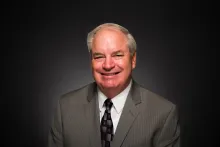
Robin Webber was born in Chicago, Illinois, in 1951, but has lived most of his life in California. He has been a part of the Church of God community since 1963. He attended Ambassador College in Pasadena from 1969-1973. He majored in theology and history.
Mr. Webber's interest remains in the study of history, socio-economics and literature. Over the years, he has offered his services to museums as a docent to share his enthusiasm and passions regarding these areas of expertise.
When time permits, he loves to go mountain biking on nearby ranch land and meet his wife as she hikes toward him.
