
Robin S Webber
This transcript was generated by AI and may contain errors. It is provided to assist those who may not be able to listen to the message.
Those beautiful words and a beautiful melody. I want to mention, in case you're going to the book Chronicles, that's why Susan is looking at the cross-eyed from the back row, is that it was 22,000 oxen and 120,000 sheep. So we want to get that right. Are we right now? All right, okay.
Gentlemen, have you ever noticed, when in doubt, look at your wife's eyes. Very important aspect of marital counseling. The eyes, very important. Well, let's get into the subject that I want to address this afternoon, and I hope that your minds and your hearts are open to receive what God would have us to receive on this day. Most students of the Scriptures are intrigued, to one degree or another, regarding the subject of prophecy. And well, they should be. Some sources, different biblical commentaries, some of our own booklets mentioned that up to 25 to 30 percent of Holy Scripture is actually prophetic in nature. Some have even gone further to say that, out of that, perhaps 90 percent of that is yet to be fulfilled either in our lifetime and or in the future. Whenever we deal with the subject of prophecy, the biggest question always comes simply down to this. When will Jesus Christ return? Big question, important question, the question that everybody wants to have the answer to. But from the time of the disciples till now, Jesus has not decided to let us know. Join me, if you would, for a moment. Let's go to the book of Acts. The book of Acts is put in the Bible to help disciples of Jesus Christ to know how to act. Have you ever thought about it that way? How to respond? How to follow Him? And in Acts 1 and verse 6, the question comes up by those that were following Him at that time. In Acts 1 and verse 6, therefore, when they had come together, speaking of the disciples, it says they asked Him, saying, Lord, will You at this time restore the kingdom to Israel? And He said to them this, it is not for you to know times or seasons which the Father has put in His own authority. You're not going to know? But you shall receive power when the Holy Spirit has come upon you, and you shall be witnesses to Me in Jerusalem and in all Judea and Samaria, and to the end of the earth. You will not know this, but this is what you are to do with what I have given you to know. Now, please remember that because we're going to conclude with some of those thoughts as we move towards the conclusion of the message. Interesting.
But interesting, even as this is said, seemingly many sincere and, may I say, well-intended people have simply leapfrogged over this verse, over this declaration. They dive into the book of Daniel or the book of Revelation, and they disregard the no trespassing sign. Jesus said, no trespassing on the day or the hour. No man knows when Jesus Christ is going to return. But we just kind of want to know. Just kind of want to get as close as we can.
Why do people do this? Why is it so important for them to know when Jesus Christ is going to return? Let's think of a few reasons for a moment. Number one, we're all human beings. Naturally, the natural man looks around, and as people we are going to be frightened by what we see in this world. A world that is apart from God, at times confrontational to the ways of God. A world that seems to be headed for a dead-end road. And so they want the facts in their hands, and they want it now. Another sort of person is this kind of individual. Some people are, by nature, intrigued and, may I even say, entertained by the excitement of future events, with all their color, all the personalities, all the drama, and thus become engaged in some sort of a jigsaw puzzle of trying to put all of these scriptures together, of connecting prophecies at times to suit for chance their own thoughts, their own agenda, their own fancies. I've always kind of had a smile on my face when I think about it, because have you ever noticed that such people, they're always the ones in the lifeboat, and everybody else is out on the high water? Another kind of person is this. Some people, in the truest sense, want to secure their lives. And humanly, who doesn't want to? Self-preservation is one of the strongest drives in human nature.
The truth be known about all of this, we are indeed living at the time that scripture calls this present evil age. And I believe, quite sincerely, and I think you're here, I think I'm speaking to the right audience, that many of us believe that the time is short, and the time is to a degree now. I don't know how long now is, but to recognize that we are in this present evil age.
It is not the kingdom of God on earth. Thus, here's the question. How do we responsibly approach the subject of prophecy? And that's what I'd like to do this afternoon with you. How do we responsibly approach the subject of prophecy? Because, like all items that are precious and valuable, you think of items that come in Federal Express, or that you take the post office, and you mark with that red puncher, fragile, fragile, fragile, fragile, because there's something very special and very dear inside that we need to be careful with.
Well, that's what prophecy is. It is special, and we need to treat it with care. We need to treat it with humility. We need to know how to handle it amongst ourselves as we communicate the world. If I can use that phrase, world. If I can use that phraseology. And as we transmit it from generation to generation, our understanding of prophecy. So what I want to do today in this message is lay a framework for us to appreciate why and how a Christian should squarely and responsibly deal with the subject of prophecy as outlined by God's holy Word.
So often what we want to do is we want to deal with our head, but I want to take it a little bit deeper today, and rather than just dealing with our head, what I really want to do is go to the heart of the matter and to recognize that it's prophecy not only deals with facts, figures, time charts, and dates, it really deals with how we approach it with our heart. For prophecy is more than names and times and dates and kingdoms and events. It's more than simply a form of code breaking, but understanding that God has a heart towards His creation.
And that's what I'd like you to cross to you today about prophecy. Prophecy throughout the Scripture reminds us and encourages us and either energizes or revitalizes us to the point that God has a purpose for humanity, and He will not be deterred. And no matter how bleak, no matter how troubling, man's civilization becomes or looks or the challenge upon the church down through the ages, God's Word grants us the sure view of Jesus Christ's ultimate victory and the bringing of that kingdom for the Father to this earth.
And the ultimate purpose of prophecy is simply this. After this, I guess I could just sit down. I told you what it is. The ultimate purpose of prophecy is simply this, to assure and to encourage the saints that God is true, that He is true to His Word, that He is true to His promises, and that their life has meaning. Your life, my life, has meaning because God has visited us. He has opened up our minds, opened up our hearts, as Paul says, led us by His Spirit to have audience with Him, to have Him come into our life, and no matter what is around us, no matter what it looks like right now, no matter what course this world is going on, that God will be true to His promises.
Therefore, as Paul would have stated, we do indeed need to have a rightful heart towards prophecy. For those of you that are notetakers today, if you want to put a title into this message, it's simply this, a heart towards prophecy. I'd like to for a moment define simply what prophecy is. Prophecy is a word that comes to us from the Greek, propopeia, and it's interesting because the word propopeia actually has two different meanings. Allow me to, may I, share them with you for a moment.
Number one, it could mean to foretell. It can mean to force tell of that which has been and or is. Oftentimes in the New Testament talks about that there will be those that will prophesy or to have the gift of prophesying.
That can actually not be so much about dealing with the future and the unfolding of events as much as it is about telling what has been and or is to the moment. But that's only one aspect of propopeia. The other one, if you might like to jot this down, there is there is forthtelling, and then there is the other one, foretelling, which is the one that we are more familiar with, to foretell the future.
Now both in context, this word of propopeia with the two meanings, the one Greek word with the two meanings, either to forth tell and or to foretell, both deal with simply this, the revelation of the mind and the counsel of God, the revelation of the mind and the counsel of God. Now if we get kind of cross-wired with forthtelling or foretelling, let's remember something. God owns the past, the present, and the future. So in one sense, it's all to Him, isn't it, when you think about what prophecy is. Now with that, let's come to embrace a certain fact here.
Prophecy is given in the Bible to those that will open the Bible and allow their minds and their hearts to be opened up and to stay open for a basic fact. And some of you may be hearing this message for the very first time. Why is there prophecy in the Bible? Prophecy is given in Scripture to remind us that God is not just simply a benevolent first cause.
He's not just the big bang guy. No, there's a lot of people, well-meaning, well-intended, and sincere, that kind of have a theistic viewpoint of God. All of this couldn't just happen. Therefore, there must have been somebody that wound up the clock, but then he kind of went off.
He's no longer involved in human affairs. Just look around. How could he be? If we looked at human affairs today and we wanted to give God a letter grade as to how it was going here on earth, if he was truly totally in charge of what's going on, what grade would we give him based upon what you and I are experiencing? God is a first cause. He is benevolent, but he's not an absentee landlord. Something is going on down here below right now in our time and in our lives and in the future. When I first came, became acquainted with a grander revelation of the Word of God when I turned age 12 and began to hear some of these things for the first time, I was astonished with what was mentioned in John 5. Would you join me in John 5 for a moment? I had grown up in churches that told me that God loved me, told me that Jesus loved me, and that Jesus had died for me, and I was well-schooled in that. Still am, God willing and growing in that aspect. But it's only at age 12 that I began to understand that there was something else. There was an attribute of God that I had not really fully come to appreciate. And it's found in the beginning in John 5 verse 17, where Jesus gives self-disclosure about himself and about his father. He says, but Jesus answered them, my father has been working until now, and I have been working.
When I heard that as a 12-year-old, I thought, wait a minute, all those pictures that I've always seen in the cathedrals or pictures that I'd seen in Bible stories. It's always kind of an old man with a beard, always old, and kind of back on the throne, maybe his elbow on one quarter of the throne, and just kind of there, and honored and nice, but just kind of there. And I began to sense that there was an activity to the kingdom, that there was an energy that was stemming from the throne room of God, and not only through the Father, but also through Jesus Christ. And then to match that with Isaiah 62, join me there for a moment in Isaiah 62, because again it fits in with the words of Christ in Isaiah 62, explaining the dynamism of a God that is very involved, and that is working loudly behind the scenes, even when we don't recognize that Isaiah 62 in verse 1. For Zion's sake, I will not hold my peace, and for Jerusalem's sake, I will not rest until her righteousness goes forth as brightness, and her salvation as a lamp that burns. Basically, this is sharing through Scripture that we worship a God that's restless. I like that kind of thing. I'm glad God is restless. He has a plan. He wants to fulfill it. It is not all accomplished yet on this earth. It is yet to be accomplished. God is right on schedule. He is. What I came to understand as I became acquainted with the Scriptures as a young lad and continue to grow in them, that basically you can look at the work of God in four different ways. You might want to just jot this down, and then we'll go over it for just a moment. What I want to share with you is just a way of looking at the Bible, not just the only way of looking at the Bible. What works for me may not work for you, but when you begin to understand this framework, you begin to see the consistency of a God that is dynamic, that has a plan. First of all, God has a purpose. Prophecy reminds us that God has a purpose. We find that over in Genesis 1 and verse 26. Join me, if you would, there in the book of beginnings. That's what Genesis means. Right in the beginning of the book of beginnings is the specific purpose statement of the entirety of the Bible. All of the rest of Scripture from Genesis Revelation rests on this declaration of Elohim that we find in Genesis 1. Then God said, let us make man in our image according to our likeness and let them have dominion. It goes on to say, over the world. Verse 27, so God created man in his own image. In the image of God, he created him male and female. He created them. Humanity is not an accident. Humanity is not a byproduct of love, sick, amoeba, in a slimy pond, billions and billions of years ago, that was all of a sudden hit by a ray of light. I've got a question. Who created the ray of light? They hit love, sick, amoeba, in the slimy pond.
Are you with me? So we get this. We recognize that God has a purpose, a great awesome need.
He said, I want to have a relationship. I want to expand that which is within my dominion.
And we're going to create children in our image and after our likeness.
Not only that, because we understand what those children did in the Garden of Eden. So God had to not only have a purpose, but then number two, he had to have a plan. Join me if you would in Genesis 3 and verse 15. Genesis 3 and verse 15 tells us what that plan would be, the very outline of the plan. And we are still in the, we are still in that plan, the two in the fro of it. In Genesis 3, after Adam and Eve, even as they were going out of the Garden, this hope was given.
And I will put in with thee between you and the woman, and between your seed and her seed, and he shall bruise your head, speaking of the seed of the woman, speaking ultimately of the one that came to be known as Jesus Christ. And you, speaking to the serpent, shall bruise his heel.
It shows then the conflict that would occur from Eden on between the one that would become Jesus Christ and the one that was the serpent that was Allah, Aelius, Lucifer, Satan, the adversary. Genesis 3.15, if you've never heard a message on prophecy before, is the first prophecy in the Bible. This is where prophecy begins in Genesis 3 and verse 15. We also understand that in John 3 and verse 16 is that prophecy then is given dimension of how it would happen, that God has a plan. And the plan is on the move. It is in motion. In John and chapter 3 and verse 16, we are reminded, refreshed, and encouraged about the heart that God has towards his creation. When it says in John 3.16, for God so loved the world that he gave his only begotten son, that whoever believes in him should not perish but have everlasting life. For notice, again, having the right mind and the right heart towards Scripture and towards prophecy, for God did not send his son into the world to condemn the world. Sometimes people in dealing with the subject of prophecy will say, it's just all dark, dark, so fun, beast, false prophets, dragons, weird-sounding spiritual animals. You're trying to match me back there, Jordan.
Alan. Watch it. For God did not send his son into the world to condemn.
Prophecy is not about condemnation. It's about the opening of God's love and God's heart to all of humanity. First Peter 2 and verse 15. Again, a prophetic declaration if you will think of it that way. First Peter 2.
Oh, it's not first Peter. It's second Peter.
Pardon me, folks.
I can't find it right now, but again, Peter's words simply say this, that it is God's will that none should perish. That none should perish. You know, there are some that are in churches whose roots go back to a time when it's simply is basically there are vessels of honor and there are vessels of dishonor. Basically, it's all sold, bought, and stored even before you and I began, that we were somehow lined out either for salvation or damnation. I don't worship that kind of a God. I hope you don't either. I think God has a bigger plan for us. He gives us free moral aches and sees. The book says that none should perish. So God has a purpose. He has a plan. He also has promises. Join me if you would in Matthew 24. In Matthew chapter 24, as we go into what is often called the all of that prophecy, which are some of Christ's comments on prophecy. In Matthew 24 and verse 21, let's notice what it says. And this is a promise and one we can take to the bank.
For then there will be great tribulation. Now, I don't believe we're in the great tribulation right now. We are living in times of trouble. But this is speaking of the great tribulation, such as not been since the beginning of the world until this time. No, nor ever shall be.
And it says, and unless those days were shortened, no flesh would be saved.
But then notice the promise. But for the elect's sake, the saints of God at that time, those days will be shortened. This is God's direct promise to you and to me, that humanity of and by ourselves, or even with the agitation of the spiritual adversary, Satan, will not become extinct. This meant a lot to me at age 12. Some of you will remember. I know Mr. Scribe will remember because we were neighbors at that time in San Diego. I was just coming into this way of life at the time. And we were living in San Diego. It was during the time of the October scare with Cuba, the Missile Crisis. And many of us thought that perhaps the world was on the brink of nuclear warfare. For those of you that are younger, this is what was happening. And if it's going to start or somehow end, guess where it might start or end? San Diego, with all the military bases. We were living out La Mesa at the time. And it was a very, very scary scenario to think about. And in those days, we were all naive enough to think that bomb shoulders might help.
I think we've all given up on that fancy. Yeah, that's right. Well, isn't it swimming pool? It was bomb shoulder. And even as a 12-year-old lad, as much as I did know, listening at the time in church, I remember the minister, I haven't gone over this scripture before. That is a promise from God. So God has a purpose. He has a plan. And promises are connected to that plan. And allow me to share the fourth P. Purpose, plan, and promise. Let's go to the fourth P. God also has provisions. First Corinthians 10. In 1 Corinthians 10, let's notice this.
This is a provision. This is what he provides for a way that will open up our minds and our hearts to him and follow the example of Jesus Christ as led by the Father. First Corinthians 10 verse 11.
Now, all of these things happen to them as an example that were written for our admonition. Now, this is written two thousand years ago, which is interesting.
So the end of the age has been at least since the time of Paul. Think about it that way.
This end of the age thing has duration. Therefore, let him who thinks he stands say he lest be Paul, and no temptation has overtaken you except such as his conscience. God is faithful who will not allow you to be tempted beyond what you are able, but with that temptation will also make a way or the way of escape. Not many ways, but the way of escape that you may be able to bear it. God will provide what we need at that time. I'd like to take you to another verse here. God will provide what we need at that time.
I'd like to take you to another verse Hebrews 13. Join me there for a moment.
Again, a provision of God.
Hebrews 13 and let's take a look at verse 5.
Speaking about our conduct being proper.
And then it says, for he himself has said, I will never leave you, nor forsake you, so that we might boldly say the Lord is my helper, and I will not fear and what men do to me.
God is going to make provisions.
So we notice then that if we're looking at the plan of salvation, or if we want to look at the underlying part of that, as far as what prophecy is about as it guides us towards salvation, remember that God works the purpose, that has a plan, that has promises, what is a promise that doesn't have provisions.
Thus, we see the Scriptures clearly declare what God is doing.
Now, let's turn it around and ask, what are we supposed to do? How do we approach prophecy with the right heart? Number one. I've got three points. Number one.
Let's appreciate God's revelation concerning prophecy can only be understood by the proper application of the Holy Spirit.
By the proper application of the Holy Spirit. Why do I say that?
Join me, if you would, in the midst, again, of all of that prophecy, which is not only found in Matthew 24, but in other of the Gospels. Join me for a moment in Luke 21. Luke 21, and let's focus on verse 36.
Let's read it together.
We have an admonition.
You watch therefore and pray, O Holy, that you may be counted worthy to escape all of these things that will come to pass. That's an assurity. They are going to come to pass. What is written in the book of Daniel? What is written in the book of Zachariah? What is written here in all of that prophecy? And or in the book of Revelation is going to come to pass. It's not make-believe. It's not ethereal. It cannot just simply be left at the apocryphal level and to stand before the Son of Man. Now, let's notice a few things about this verse. Have any of you ever had this verse opened up in a sermon before?
Must be in the wrong church. Okay, just checking. Okay, this is not a trick question. Crazy people. Nobody has ever turned to Luke 21.36 with this audience.
You're just asleep. That's why you're not raising your hand. Okay, let's go through it. Let's notice a few things. Let's not only survey the Scripture. Let's excavate. Let's go take a step deeper. Remember one, it says to watch. We have a responsibility to watch.
We have a responsibility to use our head. And we have a responsibility to use our eyes, not to be like the proverbial ostrich with its head stuck in the sand, because after all, that leaves a mighty big target, doesn't it? By being in that fancy, in that philosophy. But then notice, maybe something that we do not center on enough. And it says, and pray always.
Prayer is not about the eyes, and it's not about the head.
It's not about the facts.
Prayer is about a relationship with God.
Prayer, it brings us to seeing things, or help guiding us to see things as God sees them. And that's simply how we see them, and or how we want them to turn out.
This is very important because, dependent upon whether we are praying or not, our watching and our interest in prophecy can then either be, number one, an obsession, and or it can be an opportunity. The reason why I'm providing you this message today is, I think prophecy should be an opportunity. I do not think it should be an obsession.
If it's an obsession, that tells me that we approach prophecy in fear, and not in faith.
It tells me that we haven't read John 1633, a recent date, where it says, Be of good cheer! I have overcome this world.
So prophecy, in reading it all the way through the book, basically tells us at the end, when we read the book, that God is one. We just have to work out the details down here below. And of course, the devil is in the details, quite literally, in the Bible. But we already realize that the victory has been accomplished. But let's notice something here.
Whether prophecy is an obsession or an opportunity is pretty dependent upon where our hearts are at. And frankly, our human eyes and hearts alone cannot handle prophecy correctly. That's why we need the direction of God. And when we do deal with prophecy, we need to be subject to the guidance and the fullness of the Holy Spirit. Why is that? As humans, we want to know who, what, where, when, why, and how.
Not only that, but like immediately.
Oftentimes, when they go out on these lectures, these seminars, we'll deal with subjects like the beast, or we'll deal with subjects like the mark of the beast, or the two witnesses. And everybody wants to know who the two witnesses are. And of course, by the end, and you've heard a message that you've run through, and I tell everybody I know, I know who they are.
Already, pencils are ready, you know, people are ready to text message today. Here it comes, big news. And then you just go through Revelation 11, and God says through the two witnesses, or it says, they're my witnesses. That's all I need to know.
My witnesses.
That's it.
But it'd take an hour to get there. It's a good way of keeping people in the chairs for an hour. They're my witnesses. And if they're good enough for God, can I tell you something?
They're good enough for me.
Let's consider something about prophecy. If we had everything figured out to the T, where would faith come in?
Where would faith come in?
How would we desire, maintain, or sustain a relationship with God that is based on faith? If we knew everything, had everything figured out, it would only be by our own human detective skills, rather than God's grace and God's revelation.
We understand that man, by himself, seeks after times and dates and places. Why? May I be so bold?
For physical deliverance.
For physical deliverance. Whereas God properly utilizes prophecy for one basic end in mind. And if you have not taken a note yet today, I would ask you to consider taking this note. God utilizes prophecy for one basic end in mind, a relationship whose end is spiritual.
Prophecy ultimately is not about physical deliverance in this lifetime or in the next decade.
It is about spiritual salvation.
That is to last for eternity.
Notice Luke 21, 36 again. Let's do a careful reading.
Watch therefore and pray always that you may be accounted worthy.
Well, who does the counting?
Are we counting dates?
Are we counting individuals? No. God is the one that counts. God is the one that establishes worthiness. To do what? To escape all these things that will come to pass. That's a natural human desire. Please understand. I'm right there with you.
But why? What is the end result that we might stand before the Son of Man? Have you ever seen that before? It's not just about watching and praying.
It's not only about escaping.
The whole goal of watching and praying is only that through our prayer, our relationship with God will establish His worth upon us that as He might choose, we might escape those things that are to come. But nonetheless, whether we in this lifetime escape anything, it says that we might stand before the Son of Man. Have you ever thought about that? What it's going to be like to stand before Jesus Christ as we are guided over that sea of crystal, as we come up before the seraphim, the parabim, and that we come not in fear but in faith, confidence, prophecy, and friends. When it's all said and done, it's about God's purpose, plan, promises, and provisions that you and me will be saved by Him. Now, with that stated, God's Spirit, when we do use it properly, will guide us with humility and carefulness and appreciation with what He does choose to reveal.
That's what I'd like to center on for a moment. There are times when God chooses to reveal things, and there are times when He doesn't choose to reveal things. It's very important that I often share this message. I'm sharing with you what I often share with people around the nation on this point. God, at times, grants the saints down through their ages many things they consider.
He will give us considerations.
He gives us considerations, but He doesn't always at any one moment give us total full comprehension of what those considerations are about.
That's very important to understand.
That grants us a humility.
When we back off of thinking that we understand and or we know everything, and we approach God humbly about the subject of prophecy— may I make a comment? I think God gives us more understanding.
We're approachable. We're open. Rather than just turning over here and saying, well, it says right here, well, no, it's about God and what He wants to do.
Another thing that I'd like to share with you when it comes to considerations— excuse me, when it comes to, yeah, considerations versus comprehensions— God's Spirit will also allow us to appreciate what doctrine is and what is understanding. You might want to jot that down if you want to stay with me for a second, because sometimes we tend to lump it all together into one ball of wax.
When it comes to prophecy, the Church of God for 2,000 years has had a doctrine, and it is simply this, that Jesus Christ is coming back to this earth. In fact, it can be established loud and clear in Zachariah 14 that He is going to come back to this earth to Jerusalem, and He's going to land on the Mount of Olives, and with the verses that we find in Revelation, we know that He is going to become the King Kings. May I make a comment so that we understand something about what—are you with me? That is the doctrine of the Church.
That Jesus Christ is coming back to this earth. That's doctrine. That is loud. That is clear. That is dynamically firm. Now, beyond that, though, then, what about understanding? Doctrine does not change. Understandings can change over the years, especially based upon some of the considerations that God gives us. From generation to generation, world conditions change.
For example, how the Church—if I can put it in that term—how the Church in the Middle Ages understood all of that prophecy is much different than how we might understand it in 2007, especially after the advent of nuclear warfare, the advent of the state of Israel, giving the Jewish people a homeland after 2,000 years, and the advent of the electronic and internet media today that allows the gospel to go through all ends of the world. So, in 2007, our understanding, coupled with the Scriptures, can be different than the understanding of the people of old. Let me take you a step back further, because all of us understand something that God does in His wisdom. Someday, you and I will have to ask God some questions. I'm sure you've got your list, like I do, and it's simply this. God, why did you somehow make us think that we were the last people that was going to be yet? Because people have been doing that since Peter and Paul. Peter said, on whom the ends of the ages have come. God has always allowed the Church to believe that it was at the end of the age that it was in the last times. You ever notice that, or am I the only one?
So, am I supposed to get mad at God, or am I supposed to understand what God is doing? If God had said, you know, Robin, I'm really glad to have you as a part of the team. Welcome to the family. I'm looking forward to coming back in about 6,000 years.
If He asked you that, you know, what would you do? God has always kept that positive tension in the heart of His people, bringing the present and the future together. With some of these thoughts and considerations, as far as understanding, when we look at the Bible, allow me to use just one example. If we went to Daniel 11, and we talked about the King of the North and the King of the South, and our understanding of that, you're going to understand what I'm saying, our understanding of the King of the North and the King of the South, what would you have done if you were in 1095 AD? And in 1095 AD, the Seljuk Turks, not the Arabs, but the Seljuk Turks had taken control of Jerusalem and had cut off the pilgrimage route of Christians from Europe to the Middle East. They could no longer visit Jerusalem. That would have been a pushing, and that would have been a prodding of what that day and age might have considered the King of the South. And then you have a united Europe coming together under Pope Urban II, and all of them stopped fighting one another and said, we're going to go fight over here. You had a prodding and a pushing of the King of the South, and now the King of the North comes, and where did they go? What was the big fight over? Can anybody help me?
The Holy City. That was an understanding at that time. What about if you looked at the time of Charles V? Charles V was the Holy Roman Emperor. He was the Holy Roman Emperor, a Holy Roman Emperor, Roman Emperor. And he dominated an empire that reached from Vienna, no, actually beyond Vienna, to Budapest, to the western shores of Argentina. Basically ruled half the world. And then what happens? Again, not the Seljuk Turks, but the Ottoman Turks, different Turks. Now the Ottoman Turks are in control. They rule all the Muslim world.
They rule Mecca. They ruled Jerusalem. And now again, they push up against the King of the North. Now I wonder if you'd been a member of the Church of God and the Bosnian Alps at that time. There are Alps in Bosnia, and that is where we believe in a sense that the Mogamil community was, and the remnant of the Church. I wonder if you're watching all of this. What would have been your understanding at that time? North, South, we're reading, or you know, if you can't read, maybe it's been proclaimed to you to go back to those times. What would you have thought? It was an understanding.
The bottom line that I want to share with you is that our understanding of the scriptures and the considerations that God gives us, and the marquee titles that God gives us of a King of the North, and a King of the South, and a Beast, and a False Prophet, and the two witnesses. Those are marquee items. Those are understandings. But our comprehension of them will change over the time. But one thing that God does not allow to change is found in Revelation. Join me there if you would for a moment. Because no matter whether it was in the time of John the Apostle, when there was a beast-like emperor named Domitian that was crucifying the saints and boiling them in oil, and one of the great persecutions of the church, or whether it was during the Crusades, or whether it was during these other times, there's one thing that always comes up. We find it in Revelation 6. Notice what happened. This is the prophecy. When he opened the fifth seal, I saw under the altar of the souls those who had been slain for the word of God, for the testimony which they held. And they cried with a loud voice, saying, How long, O Lord, holy and true, until you judge and avenge our blood on those who dwell on the earth? The cry of God's saints for 2,000 years has been, How long, O Lord? That's a consistent cry. And it talks about the blood of the saints, which reminds us again that salvation is not and cannot be simply synonymous with physical deliverance. We are reminded in the book of Revelation where it speaks of those that did not love their life unto death.
And whether it was in the first century or in those years yet ahead of us, there are going to be people that are going to die and murder Tim for the testimony of Jesus Christ and for the keeping of the commandments.
So then that begins to allow us to understand that prophecy is not only about us escaping, but honoring and glorifying God, even in very challenging and very troubling times, recognizing that when it is all said and done, we win through God.
Takes us to the next point. Point number two. Although we don't know everything, although we don't know everything, God does. That's point two. After all, that's what makes him God. That's why we're here worshiping him.
In a very true sense, God has already visited the future and brings it to us. Join me if you would in Isaiah 46. I have heard this scripture in my ear for nearly 45 years, and I really appreciate it. I hope you will appreciate another reading of it, as it's meant to encourage us.
Remember the former things of old. For I am God, and there is no other. I am God, and there is none like me, declaring the end from the beginning.
How do you do that? Well, you have to be God to do that. And from ancient times, things that are not yet done, saying, notice my counsel shall stand.
There's not a great controversy going down here below. Satan has no way of winning.
He can think he's winning. He's not going to win. The Bible tells us the end. God's already been there. He tells us what it's going to be like. And I will do all of my pleasure. What is God's pleasure? To make man in his image, after his likeness. To bring many, as Paul says, to bring many sons to glory.
God gets excited about that, don't you? I do.
Nothing's going to withstand God doing his pleasure. Interesting.
There's nobody like God. Again, this is what makes Jesus Christ so special when you think about it.
Let's think about Jesus Christ for a moment. That he is not only our Savior, he's not only our high priest, but he is the great revelator. He is the great revelator. In fact, you know, Jesus has so many titles upon him. Have you ever thought of Jesus as being a prophet?
In Deuteronomy 18 to 15, you can jot that down. I'll let you do the homework.
Deuteronomy 18, 1500 years before Jesus, says that God, speaking through Moses, that I will bring another one likened unto you, a prophet, speaking of Jesus Christ.
Jesus is, in that sense, the second Moses, the lawgiver and a prophet. And that is, again, when we think about it, the all of that prophecy that we find in Matthew 24, Luke 21, I believe in Mark 13, that it reveals what Jesus did in that is he, I'm going to choose my words carefully. You've heard it different ways. I'm going to kind of make a change here. A thought, an understanding. You've often said that the all of that prophecy is a blueprint.
A blueprint might be, especially with what I'm offering you today, might be too strong a word. I would rather suggest that what Jesus did is he gave us an outline, an outline of activity that would occur from his first coming to his second coming. A blueprint would suggest detail upon detail upon detail upon detail upon detail, so deep that we would understand everything. And I'm not trying to be... that's what I want. I'm trying to be careful with prophecy. I think it's best described as an outline. And we come to understand then that what Jesus did in the all of the prophecies, he basically gave yesterday's headlines two thousand years ago. Now let's think about this for a moment. That was during his earthly ministry. Stay with me. We're now going to take it up a beat. In his heavenly ministry, as Jesus the Christ now ascended through the Apostle John, the book of Revelation then gives us, on top of all of that prophecy, specific characters and systems to focus on. Allow me to mention a few. And we could give sermons on each of these, and we're not really going to go there today. That's not the purpose for this. We could talk about the beast, the false prophet, the two witnesses, the mark of the beast, the number of the beast. We could talk about Babylon. We could talk about Jerusalem being the bullseye of biblical prophecy, etc., etc. But again, let's remember that the book of Revelation is written in apocryphal style.
Let's get now apocalyptic style. Apocalyptic style. It's a Greek word. It was a way of writing that was extant from about 200 BC to about 300 AD. A lot of imagery, a lot of illusion, a lot of figures. The reason I'm mentioning this is simply this. The book of Revelation is not only an outline of prophecy. It's a book of wisdom. Remember when it talks about dealing with the mark of the beast? It says, he that has wisdom. Wisdom comes by God and through the Holy Spirit and by having a right heart. It's very important to understand.
When it's all said and done, allow me to share something with you that I feel very strongly about. I'm just kind of giving you some philosophy as I quote prophecy. Sometimes in dealing with prophecy in the book of Revelation or in other books of the Bible, sometimes we can become so focused or want to know this or we want to know that. Let's understand. Let me ask you the audience question. Who is the greatest personality of prophecy? Who is the great personality of prophecy? Sandy? Jesus? Jesus Christ? In dealing with prophecy, we had an issue here. I can see. That's why we have church. In dealing with prophecy, you must always start with God the Father and Jesus Christ. They are the illuminaries. They are the big subjects of the Bible, the big subjects of prophecy. Prophecy moves from them and is about them and about their realm and about their sovereignty and about what they want to do with you and me. Times people will move over and put an accent on what about this, what about this, what about that, and what about this, of which we need to take a measure. We have full booklets and I give lots of messages about it. All you have to do is turn to wnponline.org and you can hear all of my discussions on all of the different subjects that we discussed. But let's remember some prophecy. The great personality of prophecy is about Jesus Christ. And what is it about Jesus Christ that prophecy tells us? He wins! And then he hands the kingdom over to his Father. That's another prophecy. So I'm just trying to show you a perspective of how we try to approach these things. Another thing that we want to understand about God knowing everything, join me if you would in Amos 3 verse 7. Amos 3.
Again, one of the wonderful scriptures regarding prophecy and the encouragement that we can receive from God.
Amos 3 verse 6. If a trumpet is blown in a city, will not the people be afraid? If there is calamity in a city, will not the Lord have done it? Now notice verse 7. For surely, that's a confident statement, the Lord God does nothing, nothing unless he reveals his secret to his servants, the prophets. God gives us, again, a promise that God is going to do nothing except that first of all, he reveals it to his servants and prophets. In that sense, he takes that which might have been simply an understanding, something that might have been a consideration, and it allows it to become a comprehension to serve the people of God. Now, how does this relate to you and me? Again, I've got to take it back to one of the great moments of my life back in 1962, living in San Diego, California, that we thought might be under nuclear bombardment as we've gone to war. And yet, at that time, one of his servants, over a telecast or over a broadcast at the time, in the booklets that were being sent to us, alerted my family's attention, perhaps your family's attention, to the prophecy in Matthew 24. That even though how bad it looks, how troubling Satan's world can seem to be, that God is not going to allow humanity to extinguish itself of them by itself. You know, I think sometimes, friends, we have heard that so often that we take it to rest. That is a great truth. That is a wonderful revelation. And somebody long ago was inspired by God to bring that truth into my life and into the life of our families and your families. And that's, again, something that we can take the spiritual back. Point number three.
A proper understanding and spirit-led framework of prophecy allows us to understand God's greatness and goodness. Having a right heart towards prophecy allows us to understand God's goodness and His greatness. Join me, if you would, for a moment in Acts 3. In Acts 3, Acts 3 has oftentimes been called the gospel in Samatia. Just in microcosm. You can put it all in here. The reason I'm saying this is sometimes people say, oh, prophecy. And, oh, the minister's giving a whole... he's going back to Boston to speak about prophecy. That sounds like, well, that's about doom and gloom and all those nasty things that are mentioned in the book of Revelation. Yeah, there are some things that are going to be along the way. But when you look at prophecy, you've got to look at the end result. Don't get stuck on the details out here in the middle of the story. Best parts at the end of the book. God wins. Dragon loses. World is saved.
People come to have full knowledge of God the Father and Jesus Christ, many for the very first time. What part of this story don't you like? Notice what it says in Acts 3 verse 17.
You now, brethren, I know that you did it in ignorance and did also you rulers. But those things which God foretold, prophesied, foretelling, foretold, there it is, quite the mouth of all of his prophets that the Christ would suffer, he can fulfill.
Pent, therefore, be converted, that your sins may be blotted out, so that the kinds of refreshing may come from the presence of the Lord, and that he may send Jesus Christ, who was preached to you before. Now go to verse 21. Whom heaven must receive until the times of restoration of all things which God has spoken by the mouth, again notice, of his holy prophets since the world began.
When you take the Bible from cover to cover, it basically talks about two gardens. In the book of Genesis, we start with what? The Garden of Eden. Have you ever noticed what we end with in Revelation 21 and 22? We're dealing with another garden. Eden restored. It talks about the trees of feeling.
A lot of that actually comes out of the book of Ezekiel. I want to share something with you for a moment. You may want to jot this down as students of the Bible. Oftentimes, we think of the book of Revelation as basically being an extended book of Daniel. Have you ever noticed how much the book of Ezekiel is in the book of Revelation? Allow me to put it this way. Where Daniel gives the outline that is enhanced by Revelation, the book of Ezekiel gives the heart of God. In the book of Revelation, it talks about the love of God, the healing of God, the new spirit, the new heart that God wants to give to all of humanity, of which prophecy is all about. We need to understand that.
When we come to understand prophecy, for what it is, such a gift, such a revelation, there's got to be more than simply an eternity to God, a thank you note.
When we understand prophecy and what prophecy is for, prophecy as understood through the Holy Spirit is to transform our lives. You say, show me that. I will. Join me if you would in 2 Peter 3. In 2 Peter 3, prophecy is not just simply to be left in books. It's not just simply to be left in our mind. It's not just simply about us and what we know, but what we are and what we are yet to become. 2 Peter 3 and notice verse 10. Speaking of the final climax of this world and this present evil age and the coming of the new heavens and the new earth is the context. But the day of the Lord will come as a thief from the night. That means we don't know the day or the hour in which the heavens will pass away with a great noise and the elements will melt with fervent aid. Both the earth and the works that are in it will be burned up. So God's kind of telling us what the end is going to be like right now. Thus and therefore, verse 11, since all of these things will be dissolved based upon this prophecy, this foretelling of the future, seeing all of this is going to occur, what manner of persons ought you to be by what you know or what you are to be in holy conduct and godliness. The purpose of prophecy and the revelations of God are not designed for us to have some kind of self-righteous, esoteric knowledge that simply saves ourselves. It's to change us from inside out. It is to surrender ourselves to the sovereignty of God the Father and emulate the example of Jesus Christ and every thought in every word, in every deed, and to give God praise and thanks for what he's brought into our life. With that thought in mind, join me again in Acts 1. Remember what it said in Acts 1? It said that basically this, it is not for you to know the times of the seasons which the Father has put in his own authority, but you're going to receive the Holy Spirit. It's going to come upon you, and you shall be a witness to me to the end of the world. When you allow prophecy to do its perfect work in you by the working of the Holy Spirit in you and having not only a mind but a heart towards prophecy, we then become a witness in the world throughout the world. Not by what we know, but by what we are. Join me with that thought in 1 Corinthians. It's going to go about five minutes. We'll conclude 1 Corinthians 13. And Mr. Helmut, you can start passing out this next outline. 1 Corinthians 13. Again, speaking of having a heart. Thank you, Mr. Gardiner. Having a heart, though I speak with the tongues of men and of angels, but I don't have loves.
I have become a sounding brass or a clanging. I like to say that clanging symbol. And though I have the gift of prophecy, take your choice. Fourth telling or foretelling? Whatever coin of prophecy you want to do and understand all mysteries and all knowledge. And though I have all faith so that I could remove mountains, but I don't have love. That means I don't have the right heart. I don't have the right framework for what God is revealing to me. Notice what it says. I am nothing. Now, this is Paul writing. The talk is cheap. Paul actually put into action. I'd like to share a thought with you in Romans 9. Join me if you would for a moment. In Romans 9, one of the tremendous moments in Episodes and Scripture. In Romans 9, Paul is distraught. Paul wishes so much that his own people could understand the wonderful works of God. Chapter 9, verse 1, I tell the truth in Christ, I am not lying. My conscience also bearing me witness in the Holy Spirit. I have great sorrow and continual grief in my heart.
Romans 9, verse 2, for I could wish that myself were accursed from Christ for my brethren, my countrymen, according to the flesh. Speaking of Israel, to who pertain the adoption, the glory, the covenants, the giving of the law, the service of God, and the promises.
Well, basically, Paul is saying here, let's please understand. The term accursed there means that he wished or would will upon himself anathema. That means forever. Are you with me? Forever being separated from God. This is not just a little vexing. This is not just a this.
He's saying, my own salvation is nothing. And I would vacate that opportunity to be saved.
If only others could come to understand the wonderful works of God as revealed to the prophecies of Christ, about how God is going to save this world from its stone. Oh my! It's so much different than old Jonah back in the Old Testament.
I suggest to you that Paul understood something that we need to understand if we're going to have a proper heart for its prophecy. It's not about us.
It's about them. God so loved the world.
We'll go back to that manza of John 3, 16, and 17. The Bible does say that the Lukeus offers in this day that they would impugn and that they would ridicule people of God and their understanding of prophecy. That God truly is bringing back His kingdom. Now, in Matthew 25 and 34, you don't need to turn to that. You can jot it down. Jesus said that in that parable that a kingdom is prepared for us. Now, there are many ideas about the kingdom of God that are out there. Some claim it to be a church.
Some of it claim it to be the church. Thus, you figure out which the church do you want to talk about. Others say that the kingdom of God is just simply something that is lodged in our hearts.
But what is the biblical reference? What is the biblical definition of kingdom? I'd like to conclude on this. The Greek word for kingdom is basalia. It rhymes with vaisalia. Basalia, like basilica.
And that term, basalia, which we translate into the English kingdom, denotes sovereignty, royal power, and dominion. All you have to do is put a vine's commentary. And it's often been said that the four elements of a kingdom are number one, a ruler, number two, a territory, number three, laws, number four, subjects. With this thought in mind, let's conclude with a verse in Daniel 2. Because again, this is our hope. This is our prayer. But we have to have a right heart, a right spirit. Under the new covenant, God says that He would grant us a new heart and a new spirit. And for the church, the body of Christ today, Christ in that sense, His kingdom is in part in us. He has landed. We have turned our lives over to Him. We have surrendered. Because of that, He gives us a new heart. He gives us a new spirit. He gives us an expectation of leaning forward, waiting to this day that we find in Daniel 2. When you read Daniel 2, verse 44, you recognize that this is not just something that can be subject to a heart and the kingdom of God simply being in our heart. Daniel 2, verse 44, gives the full ramifications of the word bazalea. Daniel 2, you're already there. You're an alert audience. Daniel 2, let's read it together.
And in the days of these kings, speaking of a system that would come down to our age is revealed in the dream of Daniel, of the Gentile kingdoms, what is often called the nations, that which is opposed or confronting the sovereign God. And in the days of these kings, the God of heaven will set up a kingdom which shall never be destroyed, which shall never be destroyed, and the kingdom shall not be left to other people. And it shall break in pieces, who consume all the other kingdoms, and it shall stand forever. Fascinating! When we recognize Daniel's dream and how Daniel...excuse me, Nebuchadnezzar's dream, how Daniel interpreted it, it talked about one oriental potentate after another lining up in succession from Babylon to Persia. So when the Greco-Macedonians came into the Orient, to the aspect of Rome, and taking the book of Revelation, we recognize the extension and the resurrections of that vestural power. But Daniel 2.44 suggests something, that human history is going to be interrupted. God is going to enter time and space once and forever. Notice it says this is not just another kingdom in place. No human being is going to reign over it. Just imagine that. And it says it will be forever. There is no end.
Inasmuch, verse 45, as you saw the stone that was cut out of the mountain without hands, and that it broke in pieces, the iron, the blanc, the clay, the silver, and the gold, the great God has made known to the king what will come to pass after this. The interpretation is sure. That stone that was cut out of the mountain, are you with me? Is none other than the stone that was disallowed, as mentioned in the book of Psalms, as mentioned by Peter. The stone that humanity rejected, the stone that humanity threw away on the cross. It's the same one that was raised to heaven and is coming right back down here for God the Father and is going to extend His sovereignty once and forever over this earth. You know what? I can't leave you with any more exciting news than that. Can't wait! How about you? I don't know the day. I don't know the time. I don't even know the hour. But the Bible tells me the right time to part peace.
That's what I want to bring to you today. I'd like to conclude the song. We've heard it before, but I think it's a fitting conclusion to today. Remember how I mentioned in Isaiah 61 that we worship a God that does not rest, does never get tired, is restless to see His kingdom come to this earth. We're going to conclude the message today by listening to For Zion's Sake by Marty Gatz. You've got the words in front of you. After that, then we'll have Mr. Scriber come forward. Conclude the hymn and then the prayer.
Jerusalem, Jerusalem, hear Yeshua cry. How I long to gather you to hear.
Oh, Jerusalem, Jerusalem, the sial wept for you. So should we not be in need to move. For Zion's sake, I will not keep silent. For Zion's sake, I'll not hold my peace. For Zion's sake, for you shall I heal. I will not rest.
I will not rest. I've said, watching on your walls, oh Jerusalem, They shall never go there.
May your light all you who call upon the Lord, Call upon the Lord for Zion's sake.
Make us, watching on your walls, oh Jerusalem, Lord will never, never hold on our peace. Day or night are we who call upon the Lord, Will take no rest, and give you no rest, Till you make Jerusalem a praise in the earth, For Zion's sake, I will not keep silent. For Zion's sake, I'll not hold my peace. For Zion's sake, for you shall I heal. I will not rest. I will not rest. I will not rest.
For Zion's sake, I will not keep silent.
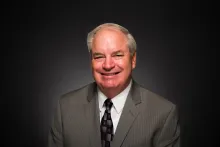
Robin Webber was born in Chicago, Illinois, in 1951, but has lived most of his life in California. He has been a part of the Church of God community since 1963. He attended Ambassador College in Pasadena from 1969-1973. He majored in theology and history.
Mr. Webber's interest remains in the study of history, socio-economics and literature. Over the years, he has offered his services to museums as a docent to share his enthusiasm and passions regarding these areas of expertise.
When time permits, he loves to go mountain biking on nearby ranch land and meet his wife as she hikes toward him.
