


Robin S Webber
This transcript was generated by AI and may contain errors. It is provided to assist those who may not be able to listen to the message.
I'll just use this. Okay, that's fine. Thank you very much. Well, I want to say thank you very much for Mr. Pink Buchanan leading us in praise to God. Not only that, but certainly appreciate Will's opening message. I'd like to redirect our steps to what he did mention in verse, which is Proverbs 16 and verse 9. Because I'd like to build upon the foundation that our sermonette speaker has given.
It says that a man's heart plans his way, but the Lord directs his steps. And that's exactly what I would like to build upon and talk to you about today. I'm mindful of that this past week when I was putting together the bulletin for all of our congregations.
As you know, I like to put something into the third page of something to think about. And I realized that we were turning a calendar page. And this is a good thing. When we think about our lives and what we plan, it's always good to reflect and pause and consider as we come up to a weekly Sabbath and or come to the biblical festivals and or the turning of a page of the calendar.
To be able to stop, just to stop and to think and to consider and to ask God to be our partner. We're about to conclude a year. For some of us it's been a good year. For some of us it's been a challenging year. For some of us, as is said in Latin, it has been a year of Tereblis Annus, a terrible year. For some of us, it's been up and down like a roller coaster.
There's probably no year and no person that completely matches. But we do recognize that all of us live through the 23rd Psalm. 23rd Psalm is not just prose. It's not just pretty psalm. It's about life and it's about the seasons of life and it's about the episodes of life that we long for and sometimes come upon us that we're not prepared for.
It is about still waters. It is about green meadows. It is also times of valleys of decision when our God and His Christ deal with their most tender and intensive and sensitive work towards us. But always with that thought that mercy and goodness will follow us all the days of our life.
I'd like to share and just read for a moment what I did write in the bulletin this week. It happens to be one of my favorite sayings. It's on my desk. I think most of you know I like literature. I like poetry. I like philosophy. I like good sayings.
My desk is, in a sense, underneath a glass. It's littered with sayings that I need to look at sometimes just to remind me, to encourage me, to remember that I'm a child of God.
And that I'm not lost. To recognize that no matter how dark things are, that we worship a God of light. I'd like to read this. It's on the third page of your bulletin if you picked it up today. It's called The Hand of God. And it's often spoken about and read at the beginning of a year.
It says, I said to a man who stood at the gate of the year, Give me light that I may tread safely into the unknown. And he replied, Go you into the darkness, and put your hand into the hand of God. And that shall be to you better than light, and safer than a known way. So I went forth, and finding the hand of God trod gladly into the night. And he led me towards the hills, and the breaking of the day in the lone east.
So heart, be still, God knows. And his will is best. The stretch of years which winds ahead, so dim to our imperfect vision, is clear to God. And our fear is premature, because in him all time hath full provision. I'd like to build upon that by having all of us turn over to John 10 and verse 9.
Join me if you would, please, and let's turn to the Gospel of John. John 10 is one that may be familiar to you. It's about the Good Shepherd. And speaking of the people of God as the flock of God, and labels Jesus self-proclaimed, self-described, as he who is the Good Shepherd. But it's very interesting in verse 9 where Jesus uses one of the great I AM phrases of John, where he demonstrably links himself to the name of God, I AM, that same I AM that spoke out of the burning bush.
And here he says, I AM the door. If anyone enters by me, he will be saved, and will go in and out and find pasture. Now let's understand that Judea and Galilee, Mediterranean culture, had many, many, many sheep.
And of course, when you think of the sheep and the sacrificial system, etc., etc., they were indelibly linked. Everybody knew, in a sense, about sheep and how they live. Susan and I have the blessing, and you've heard this before, that we live in sheep country.
We live where there's winter wheat fields, and when the wheat fields go, the sheep come in. In fact, the sheep are sometimes literally right behind us by about 100 feet. Nothing like listening to sheep at 5 in the morning as they wake up. But where we live, just like then as now, there's a sheepfold. And at nighttime, the sheep are huddled in there, and they are surrounded.
But then there's a door, and there's a gate. Now, that door and that gate has something very special to the mind of a sheep in that flock. It is their entrance into the world. They go through that framework. That is what they enter. They're safe here, but then they move into the world, and they go through the door. And then at nighttime, when they've come back from pasture, they once again come through that door.
In other words, that door is the entrance and the exit of all of what and who they are, how they picture themselves, how they imagine themselves, and how they are shaped, and how they are molded. It literally, in that sense, develops their life going through that door. And that's exactly how it is for we that are the flock of God.
God calls us sheep. I know sometimes that can seem, I don't want to be a sheep. I want to be a grizzly. I want to be a bear. I want to be a cougar. I want to be an anaconda. Why can't I have kind of a spicy, revved-up, red-hot name? No. God calls us sheep for a purpose because we're his flock. And he is our shepherd. And we rely constantly on him as Christians. That's why we're called sheep. And to recognize this, then, that door that we're speaking about, that he is speaking about, the gate of the year and the door that we now enter 2016 in, is through the life and through the death and through the resurrection of Jesus Christ.
All that we are and all that God wants us to be comes through that framework. And that is why he is the door. This morning when I was speaking to the Redlands congregation, we have six or seven people that are about to be baptized. I reminded them, as I reminded everybody, because most of the people there are baptized, that it's always good to go back for a moment and to remember where the journey started. Because we're all on a journey and we're not done, are we? We're all on the journey.
And to recognize that there came a time, and as it says in Romans 8.14, that for as many as are led by the Spirit of God, the same are the sons of God. And God brought us up by his revelation and by his miracle to a point when we wanted to be baptized. We recognized that we could not go any further by ourselves, that we needed his divine help. And we wanted to be bonded with him so much that we wanted to ask for his Spirit.
All of you that have been baptized in the Church of God culture go through a very common saying and a very common creed. And allow me to repeat it for a moment, because it's going to build upon some other questions that I'm going to ask later. And that we recognize that when somebody is baptized and we're down in the pool with them, we say, have you repented of all of your sins?
And have you repented of what you are apart from God? The answer has normally been yes. And then we ask, have you accepted Jesus Christ as your personal Lord and Savior? And again, the answer normally comes back, yes. Then we say, because you have repented of your sins and because you have accepted Jesus Christ as your Lord and Savior, therefore I'm going to baptize you not into any church, sect, creed, and or denomination of this world.
But I'm going to baptize you into the name of the Father and the Son and the Holy Spirit for the remission of your sins. And then the person is put into the water as a type of burial of the old man and raised in type of resurrection to the new life. But what I want to share with you today as we are here at the gate of the year is to recognize that the questions are never over. Because I've mentioned, too, that people answer, but there's going to be three questions that are going to be coming to you for the remainder of your life and the remainder of the journey that you are on.
And it is to that that I want to deal with today. Three very important questions that you will answer. And if you do answer them, I want to share something with you. You will be on a radical journey. You will be on a radical journey. Now, sometimes when we use that word radical, you go, Wow! What is this pastor getting us into?
Where is this headed? Because often we begin to go back to the 1960s, you know, the radical movements, the street movements, the counterculture movements, and this and that. They gave radical a reputation that post-states how it was originally used. Radical was initially used as a term of people that are incredibly serious, incredibly dedicated, know what they are about, and are about doing it. The word radical comes from the Latin word radix. It means root. Think of radish. It's a root. It's down there. It's solid. It's firm. And to recognize, I think of all people, we especially in Southern California and you, that live in San Diego that has, over the last 10 years, been like toast when it comes to Santa Ana fires.
We know what happens when the flora is burnt off, when the plants die, the roots don't hold. There is erosion. There is further devastation. There are mudslides, and there are other calamities that happen. It is so very, very important to be rooted as a Christian. Now, here's my concern that I share with you as your pastor, is to recognize, just simply because we say that we are Christians, I want to go a step deeper as we cross over into another year.
I want to ask you a question simply, may I? That is, are you a real Christian? Are you a radical Christian? Are you a Christian that has roots that are sunk down deep for the storms of life, the challenges of life, and the hurdles of life that are going to come at us when we least expect it? Yes, maybe we have budgeted as was brought out by will, but are we flexible enough to allow God to work His plan in our lives?
That's what we're going to talk about today. You know, when you go back, it's very interesting, when you go back to the story of the early believers in Jesus Christ, it's very interesting that they were called Christian. In fact, it says in the book of Acts that it was in Antioch that they were first called Christians. Now, that's interesting because Christianity at that point was not simply pegged to a race, a linguistic group, or an ethnic group. This was a broad handle because it was exemplary of what God was doing, that it was no longer just simply amongst the Jewish community, but now became cosmopolitan in nature.
And there were Greeks, there were Syrians, there were Aramaic people, there were Jews, all in Antioch, and they were given this general title of Christian, tied to the term Christus. And it had to be a very exciting time. But to recognize that in that time it would come and it would go, and I have a question for you. Did all of those people remain in the way? Did they remain disciples of Jesus Christ? In our culture and in our way of life, we often talk about the aspect that the United Church of God is about authentic Christianity.
We see that term that is on our home pages and in our literature. But that's about a group. That's about an organization. Here's what I want to ask you today. How radical and how rooted are you? And my question for you is simply this. Are you and am I an authentic Christian? Are we an authentic Christian or have we just had a title placed and we go to a group, we go to a church, not recognizing what God actually wants to have done with us? I'd like to think that beyond being an authentic Christian, perhaps what we really need to consider and center on, and the question I want to ask you is this.
Are you a disciple of Jesus Christ? Are you a disciple? Wait a minute, I thought that was back then. I thought that was those bearded guys in the togas that were following Jesus through Galilee and Samaria and down in Jerusalem. No, are you a disciple? Let me share why. A disciple, let's talk with some terms here for a moment. A disciple, either both in the Hebrew and or the Greek, depending where you want to find it, because it's both in the Old Testament and the New Testament.
A disciple literally means one that is taught, one that is taught and or a trained one. A disciple is one that followed a master. He was a student and he was one under a disciple discipline, same route. He was under the training to be like the master. He was exercising, he was training, and he was molding himself and or herself to be like the master. So let's talk about that. Today we're going to talk about discipleship. We're going to be talking about being a radical Christian, a radical disciple, that we can be rooted for that which is about to occur this coming year.
As was mentioned by Will, those that plan to fail, fail to plan or plan to fail. We do not know what is going to happen in our life, but we do know that we have a God above, a God of love, a God of mercy of which we are a part of his plan. We need to understand what's going on here. I'm going to give you three questions that I'd like to share with you that I want you to hold on to this coming year. By the way, we're going to be all in this together, okay?
These are the questions that keep popping up to me in my life. I think it's very important because, let me use an example, sometimes as much as I know about a computer, which is little, but I'll get on the computer. I'll be on the Internet. I like to read essays. That's kind of where I go. I'd really love to read historical, socioeconomic, political, and religious essays. But you ever notice that you pop that and there's a pop-up that comes up. It's an ad. You go, oh boy, there's the ad. There's the ad.
Then finally it says, you can skip this in three or four or five seconds. I love it when it just says three seconds. It can't go, pop, like that. Well, here's what I want to share with you if you'll stay with me for a moment. If you'll stay with me for a moment, I think this is going to be a wonderful spiritual GPS for all of us as we go through 2016.
Because our Father above and Jesus Christ are going to have pop-ups in our life during this year. Pop-ups. And these pop-ups that are going to come about are ones that you do not want to skip. Because they can change your life. They can mold your life to be a disciple, to be a follower of Jesus Christ. And it's going to be so important that as these questions come your way, that you will be to answer.
How you answer these three questions that I'm going to give you this afternoon can dynamically affect your life and cause it to be a blessing. Not only to you, not only to honor God, but to honor others. And it's very simple. I'm going to give you the first question right now. You might want to write it down. Be ready for when this comes. Now, as it comes to you, please understand, it is not necessarily to come through an earthquake, a windstorm, or a fire.
We know that lesson from the story of Elijah, who came out of the cave, and it all went by. And then it was that still, small voice that came, that he had to respond to. Pulled him out of the cave, made a man of him again of God, and he went out, and the rest is history. So here's the first question that you're going to have to answer.
And we find it over in Matthew 16. I'm going to tease you here for a moment and let you know what's in Matthew 16. Jeremy, if you were there, Matthew 16, and let's pick up the thought in verse 13. It says here, when Jesus came into the region of Caesarea, Philippi, he asked his disciples, saying, Who do men say that I am?
Who do men say that I, the Son of Man, am? And so they said, some say John the Baptist, some Elijah, and others Jeremiah, or one of the prophets. Here is an astounding individual, a man that came amongst the Jewish people that did not, quote, simply Moses or the prophets, but said, Assuredly, and this was in the first person, think about it, he did not use the second or third person, he always spoke in the first person, Assuredly I say unto you, Who is this guy?
Nobody else does that. They always quote Moses. They always quote the prophets. So who is this man? What is he about? Then notice verse 15, he said to them, But who do you say that I am? Who do you say that I am? And Simon Peter answered and said, You are the Christ, the Son of the living God. Then notice what Jesus said in verse 17, Blessed are you, Simon of Arjona. For flesh and blood has not revealed this to you, but my Father who is in heaven. This is a question that cannot be lost on 2,000 years ago, dear friends, here in San Diego.
This is a question that will come to us again and again and again this year, when we are dealing with life. When we said already that Jesus Christ is our Lord and our Master, and that we have elected by God's grace to be a slave of righteousness. But we'll still have those pulls that we'll talk about in the sermonette. And a question will come to you when we're pulled this way or we're pulled that way. And pulled where? Pulled in our marriages. Pulled on the job as an employer. Pulled on the job as an employee.
Tossed back and forth when it comes to matters that we're going through in college or high school or in the neighborhood. Extended family, dealing with adult children, dealing with teenagers, dealing with one of the most blessed and yet challenging relationships of marriage. As when you think of Ephesians chapter 5. And it will come to you when you are naturally prone to do one thing. And then the question will come to you, yeah, but who do you say that I am?
When we are ready to answer that question throughout the day, it will not only change the motion of our activity, but the motivation of our activity underneath. Whether it is just about self or whether it is about honoring and worshiping God with our tongue, with our thoughts, with our words, and with our deeds. When we say, Who is Jesus Christ? And he asks us of that. I like to quote from John Stott for a moment, religious writer, author. It's a fascinating thing because the voice I talk to you about is the voice of the Holy Spirit that will come to you and say again and again, Who do you say that I am?
And it can be flooded out by all the many, many voices that are out there today that cause us to be distracted, cause us to detour, cause us to go tone-deaf, cause us to not even hear the roar of self that is in us, with all of the isms that are out there, all the pluralism, all the narcissism, all the moral relativism.
And people say, well, you're a disciple, you're a Christian, so what? Who is he? Who is this that you worship? Allow John Stott to fill in the blanks. Pluralism affirms that every ism has its own independent validity and equal right to our respect. It therefore rejects Christian claims to finality and uniqueness and condemns the sheer arrogance, the attempt to convert anybody, let alone everybody, to what it sees as simply our opinions. How should we respond to the spirit of pluralism? All of this, the new Corinth, the new Athens, that is now our society in the post-Christian world.
I hope, and with no hint of personal superiority, but with great humility to answer, we must continue to affirm the uniqueness and the finality of Jesus Christ. For he is unique in his art incarnation, though one and only God-man. Unique in his atonement, only he has died for the sins of the world, and unique in his resurrection, only he has conquered death. And since in no other person but Jesus of Nazareth did God first become human in his birth, then bear our sins in his death, and then triumph over death in his resurrection.
Therefore, he is uniquely competent to save sinners. Nobody else possesses his qualifications. Now, if you have not gotten anything out of this short reading, this is the crescendo. And I want you to think about it when you become distracted, when you want to take detours, when you think you're all alone out there, when you think there's not a help from heaven above to help you in the needs that are down here below.
So, we may talk about Alexander the Great. We may talk about Charles the Great, otherwise Charlemagne. And or we might talk about Napoleon the Great. But not, but not Jesus the Great. He is not the Great. He is the only. There is nobody like him. He has no rival, and he has no successor. He is the wisdom of God, the Son of God, given to us so that God, in a sense, might understand us and be touched by our humanity. And that, ultimately, you and I, in the course of 2016, might know that God will reach down in our lives and take care of us no matter what the need is.
When we answer that question, when we answer that question, who do you say that I am? And you answer that you are the Lord Jesus Christ. You have said then that He is your Lord, He is your King, He is your Sovereign, He is the ruler of your life. You say that He is Jesus. That means He is Savior. He is salvation sent from above. And He is Christ. He is anointed. He is all.
He is Messiah. He is the promise of prophecy made incarnate so that we might have a door, that we might have a gate to move towards God Almighty above as our Father. And if we accept that and we make that answer, then you and I have said something very special. And that is that we're going to be a nonconformist to the ways of this world. And that which is natural, that which is of man, that which is of woman, that which was hatched at Eden, and that we put that behind us.
And that we have done what it says in 1 Peter 1, 16. Join me if you would there, please. 1 Peter 1, verse 16. That we have been elected, called of God. See, you're not here today. You're not here today in this building, in this group, as you are in other groups and other buildings during the week. You may be a part of the Stamp Club. You might be a part of a Flower Club.
You might be a part of a Women's Club. That's a choice on your part. And you can join a club, but you cannot join the family of God of and by yourself. It's a miracle. It's a revelation. Jesus said that. Simon Barjonis, man below, has not been revealing this to you, but from above, it's from the Father. And to recognize in the life that we are to lead. Notice what it says here, verse 15. But He who called you, it's a calling. It's a selection. He who called you is holy.
But you also be holy in all of your conduct, because it is written out of Leviticus. The echo never changes between the two covers of the Bible. Be holy, as I am holy. To do that in 2016, you have to be radical. You have to be rooted. You have to be grounded. You have to be enshrined. You have to be dedicated with all of your being to the highest calling that any human being can ever have.
And that is to be made over into God's spiritual image. Because you see, the creation is not over, is it? He made us in His physical image to begin with, but now He's making us in His spiritual image. And that's very important to understand. The second point that I'd like to give you, the question that will come to you this year, and I hope it does. I hope it boings you on the head. I hope it hits you in the heart.
When you're in between those two trees, which are not simply lost in Eden, or stuck in a garden long ago, the Tree of Life, the Tree of Good and Evil, that tree that looks pretty, that tree which looks like fun, that tree which looks...it's just so much simpler to go that direction. And then there will be the Tree of Life. Which one will you pick? And I will say to you that when those choices come, and they may be happening right now while I'm talking, and you're stuck between those two trees right now with the decision that you have to make.
A decision that can change your life or affect the lives of others. The next thing will come, and we find it over in John 21. Join me if you would. John 21. The next question that will come to you, and comes to me, that is not lost simply in Scripture. It's the famous story of John and Peter. We know what Peter had done. He had denied Jesus three times on the night that his master and his Savior needed him more than ever.
And so we know the famous parallel that with the three denials comes the three questions. And we notice here then where it says in verse 15, so when they had eaten breakfast, Jesus said to Simon Peter, Simon, son of Jonah, do you love me? Do you love me? More than these. I'm not going to go through the whole section of chapter. I just want to raise the question, may I? This is something that will continually come at us this year as we're stuck between those two trees, those two ways.
And the question will come to us by the prompting of God's Holy Spirit. Do you love me? He said, but wait a minute, I thought I answered that at baptism. No, that was just the beginning. Baptism is just the infancy of the journey. God wants to know that you not only love him when you're younger, but in every instance of life, everything.
And it's a growing love. I remember I've grown up in this way of life since I was 11 years old, started right here in San Diego, listening to the telecast. First church I attended was here in San Diego. But where I am today versus where I was yesterday, God willing, by His mercy and through His grace, it's a different love today than when I was 11 years older, when I was 19, and I was baptized. I remember the first time I told God that I love Him.
It's different today. I remember the first time I told Susan that I love her. I won't tell you where or when, but I was 19. I thought I really knew what love was about at age 19, like all of you that are smiling right now. I said that. I committed to God at baptism when I was 19. I committed to marriage to Susan when we were 22. Boy, was that young, looking back. That love towards God and that love towards my mate Mator's, as you go through the still waters, the green meadows, those valleys of decision, that affect every couple.
Nobody has a silver spoon. Nobody has, like we used to say about Disneyland, nobody has an E-ticket. Everybody has to go through the hurdles of life. Everybody has to come to that maturity, that conformity, that image of Jesus Christ that was bespoke in the garden on the last night of His earthly life. When He said, I would rather go this way, but I'll tell you what, Father, not my will, but Your will be done.
And we will continue to be tested all the remainder of our spiritual lives with that question. Do You Love Me? Join me if you would please in John 17. In John 17, let's pick up the thought, if we could, in verse 1. The Gospel thereof. In John 17, it says, Jesus spoke these words, lifted up His eyes to heaven, and said, and He's in the course of prayer with His disciples listening, Father, the hour has come. Glorify Your Son, that Your Son also may glorify You, as You've given authority over all flesh, that He should give eternal life to as many as You have given Him.
God wants to give His life through Christ. Also, just on a theological sidebar, it says that Christ can give life. Only God can give life. Life is inherent only to the deity, only to the Godhead, both to the Father and to the Son. But now let's notice verse 3. And this is eternal life, that they may know You, the only true God, and Jesus Christ, whom You have sent.
How do you look at the Scriptures? Are they simply don'ts? And are they do's? Do. Is it simply about rules? Or is it about a relationship?
If you want to develop your authenticity as a Christian this year in living in the Word, and abiding in this Word, not just the Scripture, but in the living Word, Jesus Christ, bequeath to us by God Almighty, then when you are studying and when you are reading Scripture, just don't get stuck on facts. Just don't get stuck on numbers. Just don't get stuck on the don'ts. Get stuck on the do's. Remember the don'ts. Don't just simply look for the rules. But wherever you are in Scripture, when you see a relationship, this is the key to Bible study, if you see a relationship that is demonstrably laid out, look for the rule that keeps it in check. Look for the commandments, those borders, those bumper guards that keep us going along on the journey. If somehow your eye lands on a rule or a commandment, then scan the page. Look for the relationship. Don't leave the page until the rule and the relationship come together as one. Because otherwise, a rule without a relationship is like a postcard without a stamp. It's not going to go anywhere. God has always wanted to love us and for us to in turn love Him in return. Again, let's remember that at Eden. When God made man and brought him out of the clay, and later when He took the rib out of man and made the woman, the very first thing that that man and that woman saw was those eyes opened up. They're opening up. They saw God. God wanted to be loved. God wanted to be worshipped. It's really interesting that when you think about it, why did God make humanity? Have you ever asked yourself that question? What is man that thou art mindful of him? As it says in the old King James English. Why?
Is God lonely? Does He get bored being God? Have you ever asked yourself that question? Does God get bored being God?
I can tell you that some of you have never asked yourself that. I'm watching your eyes. You have fun eyes to watch.
No, God doesn't get bored. But that's what makes Him God. God doesn't need us. We need Him. And God desired out of the magnanimity of all that He is that He knows who and what He is. And He designed a creation because He wanted to share it. He wanted to give. He wanted to offer this to an outflowing and outgoing concern. Because He wanted to do something special. He doesn't get bored. He wanted to give. He wanted a relationship. And what He wants is you. Not a quarter of you, not a half of you, not two-thirds of you. He wants all of you. And He'll settle for nothing less. And it's only that when we can say that we have given God our past, when we've given Him our present, and when we have given Him our future, our all-in-all, that He can begin to do something with us. Now, some of you are saying, but wait a minute. I'm not quite there yet. Well, your journey's not over. It's just beginning. That God is patient. God is kind. God is merciful. And He wants us to be just like Jesus Christ, who said, I can do nothing but that the Father doesn't first bid me. What is the last thing that we need to ask about? Let's go to Isaiah 53. Isaiah 53, and here's the last question that will come our way this year, and I hope it does.
Because it's going to be good for us. It's going to allow us to be authentic, radical, rooted, grounded, real. You know, it's kind of interesting being a disciple, being a Christian, because we have this thing that's been hanging around us for 2,000 years. When we don't practice what we preach, what is told us. You don't practice what you preach. You don't follow the Master. If you're tired of hearing that, do something about it. God wants us to follow Him and abide in His Word. Let's look at Isaiah 53. This is again another question that maybe you've never thought about this way. What are the two questions first before we get lost? Number one, who do you say that I am? Every thought, every word, every deed, and the underlying motives of all that we do continually give God our answer to that question.
Are you with me? Period. Then number two, do you love me? Number three, who has believed our report? It's a question. This is the Messianic prophecy out of Isaiah. Who has believed our report? The question is there. Will anybody bear the cross? Will anybody accept the responsibility? Will anybody, when Jesus says in John 21, follow me? Be like me. Who will take up that cross? Who will rise to that stature? Who will become a part of that conformity? Notice the second question. To whom has the arm of the Lord been revealed?
Who has believed that report? Every day, as we enter into 2016, as we move through the gate of the year, you will be testifying. You're a witness. You're a witness to your mate. You're a witness to your children. You're a witness to your non-member adult children. You're a witness to your boss. You're a witness to your employees, your coworkers. You're a witness, younger folk, to those that you are in college with, in high school with.
We live a life of witness with one heart towards God moving on two feet. Everything that we do, dear friends, is an act of worship towards God. Wait a minute. I'm not genuflecting. I'm not bowing up and down. What do you mean by that? Worship is given God his due. Worship comes from the Greek word proskoun, which means to kiss the hand. In other words, that we recognize that we are not our own master. That we have decided to, in the 20th and 21st century, to radicalize. To put our roots down deep into the life, the death, the resurrection of Christ. This word. And to live by it like our life depends upon it. Because it does. Join me if you would, last scripture, 1 Peter 2. 1 Peter 2.
I have a question for you. Why have we been called? Is it just simply for personal salvation? Is it simply because God has revealed and opened up our minds to understand his saving purpose for humanity? His plan through Jesus Christ? The understanding of obeying all Ten Commandments? And not just nine? Of understanding that the kingdom of God is not just simply in a stained glass window somewhere, but is literally coming to this earth? Is that the end of our responsibility of having so much knowledge? And just simply understanding? Or have you considered yourself an instrument of God? Of praise? Of honor? It's interesting that in studying history and studying the world of antiquity, that oftentimes you would have a very solid foundation. You'd have the temple itself and you'd have the pillars. And we know what it speaks about in the book of Revelation about being a pillar. But sometimes a pillar was not just simply a foundational item. What they did in the Hellenistic world is with those pillars, they adorned them. Sometimes with paintings, sometimes with garlands, sometimes with wreaths. They were an adornment of that which was supposed to be inside. It was, in other words, a display. Being a pillar is not just something that is structural or foundational. It is also an adornment. It is being a light. It is being a testimony that somebody else is living inside of you other than yourself. With that thought in mind, let's look at 1 Peter 2. But you are a chosen generation and a royal priesthood, a holy nation, his own special people, that you may proclaim the praises of him who called you out of darkness into his marvelous light. Proclaiming his praises is not just simply saying, glory, hallelujah, and some religious revival. Don't do that too much here, as we know. Proclaiming his praises is how you live, even as a non-conformist, as a radical, authentic, disciple Christian in this age, as the world goes one way and we stand our ground on the sure foundation that God the Father has given us, Jesus Christ. It is not only what we know, but what we are. It is about his love, showing his love to others, showing his mercy to others, showing others kindness, having a gentility with our words, with our tongue, with our thoughts. Not getting involved somewhere where we're not needed or we don't know the facts. Somewhere where people say, here is a measured individual. No, we do not live in a measured society. My wife and I, we try to watch television at night and it's everybody talking over one another. It's sick!
It's ruinous. There is no longer any moderation. There's no longer any measurement. Well, you know, my opinions are just so much, frankly, better than yours. But I didn't want to bring it up. But they don't even bring it up. They just talk over people.
And today in our 21st century, everybody is talking over one another rather than listening to one another. That's why God gave us two ears and only one mouth. There are so many ways of nonconformity that we can practice as radical Christians.
I'd like to give you an assignment this week. Here's the artwork. Here's the homework. I'd like all of you to read Colossians 3. Otherwise, the sermon is going to go another half hour and I don't want a pressure conversion.
Colossians 3 does not deal with necessarily the Ten Commandments. It does not deal with this. It does not deal with that. It does not deal with this. It deals with issues of the heart, of how to be like Jesus Christ, how He approached people.
A disciple is one, as it says in John 8, about verse 32, that abides in the Word. Not just the parts of the Word that we like, but every Word of God. We want to be a church that is galvanized, that is electric, that is radicalized, being in the roots of what the Bible is about. Read Colossians 3. Because when people come to the San Diego congregation, as I often tell them, our hope and our desire, is that we worship God in spirit and in truth. It's not enough to have the truth. It's not enough to have the truth.
It's not enough just to be doctrinal. We've got to be spiritual. We have to know how to handle that truth. We have to know how to serve that truth. We have to know how to live that truth. We have to be able to subjugate ourselves, subordinate ourselves to Him who says that He is the way, the life, and the truth. I often tell people, they call me on the phone, they say, you come and you visit. I hope it will be a good visit. But I hope that you'll come and you'll hear us open the Bible and that you'll hear the truths of God. But something that's much more important to me as a pastor is, I want you to see if there's evidence of the Spirit of God amongst our people.
And if it isn't, you go find it somewhere else and let me know and I'll join you. So far I haven't joined them because I think it's here.
We cannot just simply worship God in facts, but in relationships, and in a spirit that is desirous, who once were not a people but are now the people of God, who has not obtained mercy but now have obtained mercy. Beloved, I beg you, as sojourners and pilgrims abstained from fleshly lust, which wore against the soul. And notice, having your conduct honorable among the Gentiles, that when they speak against you as evildoers, they may by your good works, your testimony, they will know that somebody has believed the report that God sent His only Son by your actions, by your words, by your love towards them. And that they will observe it and glorify God in the day of visitation. Dear friends, San Diego, what a joy to be able to speak out of the Word of God to you today. As we move through the gate of the year, let us remember the three questions that will come to you, and when they'll come, you'll say, Oh, that's what Weber was talking about. I say this as a friend and as a fellow disciple, and I need all the help that I need on my own. But I know that I worship a good God, and I know that He will help me, and He will give me that spiritual GPS when I need it to show me the way. Lest I become distracted, lest I move off the pilgrimage, lest I tire of the journeying, He will come to me, and yes, He will come to you. I'll ask you just three questions. Number one, who do you say that I am? It will be said to jolt you into full awareness that you need that good shepherd more than ever, and he is near. Number two, He will ask you, Wait a minute, you're about to do that, but I have a question for you. Don't you love me more than these? And do you love me? And number three, number three will be simply this. Who will bear my testimony? Who has believed this report? I'll tell you what, you use that as your guide, and let's continue on the road of the journey, the pilgrimage, the destination. Because remember this, friends, the Kingdom of God is more than a destination. It's a way of traveling. Let's do it together.
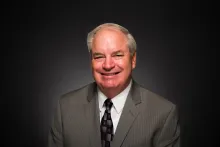
Robin Webber was born in Chicago, Illinois, in 1951, but has lived most of his life in California. He has been a part of the Church of God community since 1963. He attended Ambassador College in Pasadena from 1969-1973. He majored in theology and history.
Mr. Webber's interest remains in the study of history, socio-economics and literature. Over the years, he has offered his services to museums as a docent to share his enthusiasm and passions regarding these areas of expertise.
When time permits, he loves to go mountain biking on nearby ranch land and meet his wife as she hikes toward him.
