


Robin S Webber
This transcript was generated by AI and may contain errors. It is provided to assist those who may not be able to listen to the message.
I want to welcome those that are on the webcam today. We have a number of people that watch from California to Arizona to Nevada, distance from a congregation, and what a blessing it is to have the technology to bring them into the United Church of God. I have a message this afternoon that I hope will be encouraging. I hope that it will be informative, and I hope that it will help us as we begin a new calendar year and begin a new life here in the United Church of God Los Angeles in our new facility. God has not merely called us to exist, but He's called us to live and to live for Him.
Join me if you would. Let's open up the Bible today and anchor this on John 10 and verse 10. Jesus was speaking to be awake spiritually, to be alert. And we notice what it says, the thief does not come except to steal and to kill and to destroy. That's not actually what I want to center on. It's the last part of the verse. Notice what it says. I have come that they may have life and that they may have it more abundantly. The life that the Christ is talking about is not a life that is based upon Main Street or Wall Street or necessarily the street that you live on.
It's talking about the avenue of our heart, what goes up and down in our lives that we might be spiritually blessed. And even when we go through things that humanly are not happy or fun, to recognize that God has something in store, something more, something better, not always in our possession, but ahead as we follow Him, as we are indeed at the gate of the year, a new day, and once again in a new facility to worship and learn more about God, let's understand the implications of a verse right next to this in John 10 and verse 9.
It's one of my favorite verses that center my personal life. It is one of the great seven I.M.s of the Gospel of John. It says, I am the door. Some of you may have a translation that says, I am the gate. But here it says, I am the door in the New King James English.
If anyone enters by me, he will be saved. That's a promise. That's something that you can put in the bank of your heart. He will be saved and will go in and out and find pasture. I'd like to talk about that for a moment and what that meant because this was written to a society in antiquity. It was written to, in general, a rural people. And there were a lot of sheep. It's interesting that God calls those that he has elected and those that he has chosen.
Have you ever noticed he doesn't call us cobras? He doesn't call us cougars? He doesn't call us mustangs? Thankfully, he does not call us rhinos. He calls those that follow him, the good shepherd. He calls sheep. And to those sheep that he shepherds, he not only says, I am the shepherd on the outside. Notice the implication here. He says, I am the door.
I am the gate. Now, if you've never been a sheep, you've never been a lamb or been a round sheep, you don't understand the implications. Thankfully, Susan and I, in our last move, were plopped by a 400-acre ranch in which they bring the sheep. So after the winter week goes, all the sheep come in. They come in so close that we can hear them at five in the morning.
You know what it's like for 500 sheep to go all at once? It's an interesting alarm clock. Do you know what 500 sheep smell like from 100 feet away? It's an interesting life. But every night, the shepherd puts them and surrounds them, especially because we have coyotes in the hills above us. He puts the sheepfold, he brings them into the sheepfold. They're secure. But what is very important to understand, if you ever get into a sheep's mind, the sheep's life moves from through the framework of the gate of the sheepfold.
We might call it the door. And what happens is that as the sheep awakens in the morning and it is ready to go out to that exterior world, it takes a look at the door, at the gate. It has every meaning to it. Because inside it is in the sheepfold and it is safe. It's in its own world. But now, as it goes to the exterior, now as it goes out into all of the challenges that are going to happen in the pasture that day, the framework by which it exits into the world and enters that world or enters that world is through the door. And Jesus Christ is telling each and every one of us, I am that door. As you depart from the safety of your sheepfold in the morning and you go to school, you go to work, you help in the neighborhood, you volunteer your services, you come to services on the Sabbath day, everything that you do is outlined and framed by the life, by the death, by the resurrection of the door. And then, as you come out of that world, as you come back out of the pasture at evening tide and you come back amongst your own and you're with your flock, whether it be your family or you come into services with the flock of God, everything is framed, everything is outlined through that gate and through that door of the life and the death and the resurrection of Jesus Christ. Interesting, isn't it? And that's what we said that we would do when we were baptized, whether it was a couple of months ago, 10 years ago, or for some of us nearly 45 years ago.
I'd like to rehearse that for a moment because two questions were asked of you at your baptism. It is the seminal moment of when you give that outward confession of inward testimony in you, of responding to the call of God, that you audibly, with a servant of God, take a vow before God and say, I am yours and you are mine. You will be asked simply this, what is your name? You will be then asked this, once you give your name, your full name, and nothing but your name, you will be asked this, have you repented of all of your sins?
Remember, have you repented of all of your sins?
Number two question, and have you accepted Jesus Christ as your Lord and as your Savior? You said, yes. And then the minister said simply this, because you have repented of all of your sins, all that you have done, and not only repented of those sins, but repented of what you are apart from God. And because you have accepted Jesus Christ as your Lord and your Savior and your High Priest, I'm going to baptize you, not into any sect or creed and or denomination, but I'm going to baptize you into the name of the Father and of the Son and of the Holy Spirit for the remission of your sins. The minister most likely asked you, do you understand? And you said, yes. And he said, amen. And you were baptized in the water, and you were baptized by the laying on of hands. The purpose of this message is to just let you know that more questions are going to be coming to you in your life. It only starts with baptism. There's more that are coming. They may be coming right after this service. They may be happening when we meet in the cafeteria. They may happen at night when you go home. They may happen on the job or school. They will happen. That is not the question. The questions are going to come to you, not by me, but by that which is above, and he that is above. So I'm preparing you. And how you respond to those questions in your life will make all the difference. But before I get to that, let's share a thought here for a moment. Let's go back and understand our calling and what we are. You know, it's very interesting that after Christ died and as people began to move about and people came into the church that they were first called Christians at Antioch, one of the great cities of the empire, third great city of the empire, Antioch. And it's very interesting why they were called Christians. Understanding that Antioch was a very cosmopolitan city. It was not just simply one ethnic group and or one racial group. So there had to be an identifying moniker to describe or to identify these that were following Jesus of Nazareth. And so they were called Christians. That's how that came about, simply and purely. Now those people that were in Antioch, 45 or 50 or 60 AD, they were sincere as they began to follow Jesus Christ. But then, like now, not everybody that started on the journey stayed on the journey and or remained on the journey. Those that were identified as Christians, some became distracted, some became disturbed, some departed, and they forgot Jesus' own words, that he that endures to the end, he that endures to the end, the same shall be saved. That's why it's noteworthy. Taking it a step deeper, let's be ready to turn our Bibles and let's go to John 8 and verse 31 to set a further framework of what he who is the gate in the door ask us to do. In John 8 and 31, the Gospel thereof, John 8 and verse 31, let's take a look and notice what is mentioned here.
In John 8 and verse 31, then Jesus said to those Jews who believed him, if you abide in my word, you then are my disciples. Indeed, not what people call you, not what people think you are doing, but what I and my father know you are doing and what you are about, and that you are abiding.
Abiding is not putting your head on a couch with folded hands and I'm abiding. Abiding is a very powerful word. It means that you're standing firm, that you're staying within the framework of that gate, that door that I spoke about concerning the spiritual sheepfold. It says, only then and then only are you my disciples. Now, let's ask ourselves for a moment, what is a disciple? Let's look for a definition. A disciple is one that is taught or a trained one. He's a follower of a master. He's a student. He's one who is under a discipline of becoming like the master. Now, let's think about this for a moment. Disciple, are you with me? Disciple and discipline come off the same roots of the Latin language. So, not only know what disciple is, but now we have to know what it means to be in a discipline. Some of you have gone into higher education and or some of you have been in where you work with your hands. You go into a certain discipline as a disciple, as an apprentice to learn something. Discipline means it's a field of study. It means to train and develop by instruction and to exercise, especially in self-control. It's training that corrects, it molds, and it perfects towards a certain outcome. Now, for you and me that are in this room, there is one outcome. Join me if you would in Ephesians 4. In Ephesians 4, join me if you were there, please. And let's notice the focus of this discipline, this teaching, this study that all of us have been called to be in. In Ephesians 4 and verse 13, "'Til we all come to the unity of faith, and of the knowledge of the Son of God, to a perfect man, to the measure of the stature of the fullness of Jesus Christ." Is that it? No, there's more. That we should no longer be children, tossed to and fro, and carried about with every wind of doctrine by trickery of men in the cunning craftiness of the seedful plotting. But speaking the truth and love may grow up, may be structured, may be taught, may be nurtured, come to this outcome into Him who is the Head of Jesus Christ.
Now, why do I bring this up to you? We that are in the United Church of God Los Angeles today, as a church, a church of God, we often speak of authentic Christianity.
It can be on our local home pages. It can be in our books. We say that we do not come from this religious group or that religious group, but we believe that our roots are founded in the teachings of Jesus Christ.
But I want to go a step further, because it's easy to talk about a group. I want to ask you a question today. More questions. Are you an authentic Christian? As we begin this new calendar year, are you an authentic Christian? I think that's a very important question to deal with. But let's build upon that, and what we're going to do is we're going to go radical.
That's supposed to wake you up. Not just the volume of my voice, but the word radical.
You go, oh no, where's the door? I am out of here. Where is this church going? And what is Weber about to say? How radical are you about the calling that God has given you?
I remember as a young man, growing up in the 60s, we talked about radicals.
These were people that were really serious. Whether you believed in what they were doing or what they were not doing was not the question. But you knew that they were radical. You knew that they were different. You knew that they were down to serious business about what they believed in.
Now, to belay your fears about where I'm going as a person, and most of you have known me for some of you up to 40 or 45 years, put on your seatbelts. Be ready to deploy your airbags. It's not going to be that bad, though. When we talk about radical, we need to understand where the word radical comes from. It comes from the word radix. R-A-D-I-X. You might want to write that down because we're going to build upon that for the remainder of this message. Radix. That's where the word radical comes from. That's where the word radish comes from. Radix is Latin for root. It's Latin for root. It means being rooted. It means being grounded. It means seriously entrenched.
Now, that means a lot to us that are in Southern California because we know what happens when our hillsides and our mountainsides burn, and the flora goes off the ground. There's nothing to hold back the mud. There's nothing to hold that back which is above. And if there are not roots, there's going to be erosion and everything around it and below it and under it, and even human life and your property can be destroyed if you are not grounded and if you are not rooted. Well, that's why today I want to give you this message. I'm going to give you a title that we're going to continue to build on. You might want to jot this down to stay with it, and that is simply this. Responding to God's radical calling. Responding to God's radical calling. You know, there truly is a difference between walking with Christ and having Christ walk in you and be rooted and grounded in your life. If you don't think so, just ask the disciples. The disciples, the 12 and the others that followed Jesus, they walked and they talked with them for three and a half years, but it wasn't until the Spirit was given, and they fully responded to the call that God had given them through Christ, that they grew in that understanding. So let's understand how it works. Join me if you would, building upon that now, and now that we know that radical and radix and root are going to directly affect your well-being, spiritually speaking. Join me if you wouldn't, Matthew 13. In Matthew 13, and picking up the verse, thought in verse 3, then he spoke many things to them in parables, saying, Behold, a sower went out to sow. And as he sowed, some seed fell by the wayside, and the birds came and devoured them. And some fell on stony places, where they did not have much earth, and they immediately sprang up, because they did not have any depth of earth.
But when the sun was up, they were scorched, and because they had no notice, are you with me? They had no root. You might say they were not radical enough.
No root, they withered away. And some fell among thorns, and the thorns sprang up and choked them. But others fell on good ground, and yielded a crop, some a hundredfold, some sixty, some thirty. He who has ears to hear, let him hear. God has planted seed, and He has given us the soil to plant it in. The words of Jesus in Matthew 13, 23, coincide with 1 Corinthians. Join me if you would. And the words of Paul, in the words of the Apostle Paul, 1 Corinthians 3 and verse 11.
What is that soil? What is the ground? What is the base that God plants us in? 1 Corinthians 3 and verse 11. For there is no other foundation, you might say, no other soil, no other ground, can anyone lay that which is laid other than that which is Jesus Christ.
Jesus Christ, who said, I have not only come to give them life, but more abundantly. Jesus Christ, who said, I am the door, I am the gate. Now, before we go any further, I've said more questions are going to be coming your way, and indeed they will. They come my way every day, and they've been coming your way every day, but maybe you just didn't recognize that they were directly asking you to answer. And before we go any further, I want you to know how they come, because if you do not understand how they come, it can imperil our spiritual development as Christians. Let me explain. Point A. There's only two letters. Point A. The questions that come to you from above are not always going to come with fanfare. They're not going to come with the sounding of a trumpet. They are not going to come by the roll of the drums. They will not always come by earthquake, wind, or fire. That would be so exciting if they did, but they don't always come that way. All we have to go back is to 1 Kings, chapter 19, and see the story of Elijah, who was being a caveman. He was in the dark. You know, the only thing that's normally in caves are mushrooms and bats, but a prophet of God was in a cave. And God had all of this go before Elijah, and he says, no, I am not in the wind, I am not in the fire, and I am not in the earthquake. And then it says, but a still, small voice. I have a question for you. Are you waiting for a drum roll, or are you responsive to the still, small voice that comes your way? Number two.
When the questions come to you, it will not always be in a crowd like this. It will not always be in a community of fellow like-minded believers that keep the commandments and follow Jesus Christ.
It will be alone. It will be alone.
Because that's how God deals with us. Join a few wood in 1 Corinthians 12. Let's take a look at what Scripture says here for a moment. In 1 Corinthians 12, and picking up the thought, pardon me, in verse 27, puts it all together. Now you are the body of Christ. So God speaks of the collective.
God speaks of a community. He speaks of a fellowship. He speaks of that spiritual organism that He alone knows. But then notice what it says here. And members individually.
When you are called, and God gives an invitation, and shares His election with you, and that Spirit begins to guide and direct you, it is alone. You alone can answer that. As you begin to open up your Bible, and blow the dust off that Bible, and blow the dust off your heart, only you can do that individually, and respond to the Word of God. When you repent of your sins, you repent alone. There are going to be times when we're just going to be alone, because God is not having grandchildren. He's having children. It's direct. And one day we will be judged. I will not be judged by what Susan does.
She will not be judged by what I do. But we will be judged alone.
Oftentimes, people come into a building like this, and they come into a community like this, with many people, a hundred or hundreds of people, because they're looking for something. They're looking for help. And a part of that is good, and part of that is well. But until they deal with themselves, and allow themselves to be dealt with God and Christ, and do the homework, and do the hard work, and the heart work, they cannot fully serve the community. And sometimes people come, and they go. Because they have not planted on good soil in that radical aspect of them. That root has not gone down, because they didn't know how God operates. They put their personal salvation based upon the group, rather than recognize that God is calling them to put down their roots for Him. Now please understand, this all works together at the same time. God always intends us to come together as a people. But we cannot effectively serve our local congregation here, and to our families, our community, our workplace, our schools, until, are you with me? We are alone and give ourselves to God, just like the baptism.
When I was baptized, and I knew Susan then, I was at her baptism, the minister didn't ask me a question, and then Susan wasn't next to me saying, what should I say next? Yes or no?
Were any of you at a baptism like that? No.
And until we learn that, until we allow God to mold and to shape us, and that we go through that door and come back through that door, we cannot totally serve the community the way that God wants us to. So here's the first question, now that we're set. It's going to go real quickly. Number one. We find it in Matthew 16 13. Matthew 16 13. Join me if you would there, please.
You thought that this, some of you are familiar with this, you'd say, well, that was in the Bible, that was spoken 2,000 years ago. No, God is speaking to us this question today. When Jesus came into the region of Caesarea of Philippi, he asked his disciples saying, who do men say that I am? Who do men say that I, the son of man, am? And so they said, some say John the Baptist, some Elijah and others, Jeremiah, or one of the prophets. See, Jesus was confounding people. He said, well, how was he confounding people? And how was he stimulating people? There was nothing like him. Here is a rabbi, an individual, that was in one sense conservative with God's law, but liberal with his love.
Think that one through. Where's this man going? Beyond that, he spoke in the first person.
He didn't quote Moses necessarily. He didn't grab a property. He said, assuredly I say unto you.
That was not typical rabbinic training. And so they said they were amazed at the authority. It was not the volume of his voice. It was speaking in the first person. Who was this man? And then, verse 15, he said to them, but who do you say that I am? And Simon Peter answered and said, You are the Christ. You are the Son of the living God. And then Jesus answered and said, Blessed are you, Simon, Barjona, for flesh and blood has not revealed this to you, but my Father, who is in heaven.
He said that you are, in a sense, the one and the only. And Jesus said, You did not get this by your good looks or your smart brain. This was a revelation.
We are here today, brother, and I want to stir you up and understand the blessing that is ours. We are here based upon a revelation from above.
John 6, in verse 44, says, No man can come unto me unless first the Father draws him.
You were not put into this soil by your own GPS. Turn left here, turn right there, turn left here, turn right there. Now sink down. You don't join the Church of God, the Ecclesia.
You can join a flower club. You can join a YMCA.
You can't join the Church. God's got to direct and move you and plant you and say, This is where you're going to grow, and this is the soil that I have given you. But first of all, you're going to be asked a question. Who do you say that I am?
I'd like to share a thought by John Stott. He's now dead, author of many books. But I love this because we have so many voices coming at us today saying, Me, me, me, me. I want thee, thee, thee, thee. I want your attention. I want your personhood. I want your resources. Too many voices.
We have all of this moral relativity around us. I'm okay. You're okay. This is okay. Many roads to Nirvana, many roads to Paradise, many roads to heaven.
Not recognizing that heaven's coming back down here. But all these voices. Stott answers to this. How should you and I today, hear me please, how should you and I respond to the spirit of pluralism? He says with great humility, I hope, and with no hint of personal superiority, but we must continue to affirm the uniqueness and finality of Jesus Christ. For he is unique in his incarnation, the one and only God-man, unique in his atonement, only he has died for the sins of the world, and unique in his resurrection, only he has conquered death. Now listen to this, please. And since in no other person but Jesus of Nazareth did God first become human in his birth, then bear our sins in his death, and then triumph over death in his resurrection, he is uniquely competent. That gate, that door that I spoke about early, uniquely competent to save sinners. That's something that we forget sometimes, that we are in the process of salvation, that the Bible is not just an almanac about knowledge and putting two and two and two and two and two together. It's a revelation and it's about God saving us, not just humanity around, but us from ourselves. And in the course giving us life more abundantly, Stott says nobody else possesses these qualifications. Listen to this now. So we may talk about Alexander the Great, Charles the Great, Napoleon the Great, but we do not talk about Jesus the Great. He is not the Great. He is not the Great. He is the only. There is nobody like him. He has no rival. He has no successor.
Let's fully understand what we've been called to and whom the question will come from.
You will be asked this question tonight, perhaps in your living room. Not audibly per se, but as things come your way with your mate, with your children, and you're ready to go one way, the way that comes naturally, the way that you, well, I so rightfully deserve this.
Doesn't everybody know? Doesn't she know? Or don't they know my children? Or don't my adult children know? Or don't my, doesn't my boss know? Or doesn't my teacher know? I'm ready to get good and human!
You're all looking at me like I'm the only one that's ever done that. Okay, thank you.
And then a small, still voice comes to you and rings in your ears and rings in your hearts. Who do you say that I am? Your answer will be how you respond to that which comes to you externally, in ways that perhaps you did not ask for or even dream of. But it will come, and you will have a choice. And in the space of time that it is to make that choice, makes the difference in everything. We need to understand that.
When we at baptism, in every day of the rest of our lives, acknowledge that question and say that you are the Christ. To have Him in place, something else has to go.
A great force in Germany before World War II, and a man that gave his life because he was a man who gave his love for the Jewish people, and for his venomous against the Nazi regime and the euthanasia that they were perpetrating on people. A man named Bonhoeffer said this, when Christ calls a man, He bids him to come and to die. When Christ calls a man, He bids him to come and to die. I've written a column for many, many years. Some of you may have read it. It's called Follow Me. When Christ bids us, when He asks in that still small voice, in the light or the darkness of our living room or bedroom or kitchen or office or on the freeway, who do you say that I am? It is not to mention His name in Hebrew or Greek.
It is not at that point to figure everything out about Him, but to respond and to be like He is. It is to be a nonconformist in this world as He was in His world.
It's very interesting. Stay with me for a second, because it's only by the Holy Spirit that we can do this. In one sense, Jesus says, come out of the world. Ready to go. Ready to do. Then at the same time, He says, Father, in that prayer in John 17, keep them in the world.
So we're supposed to go out of the world, but stay in the world. How does that work? It's a quandary.
Well, we can only do that by the Holy Spirit. And every day of our life, as He bids us to come to lose our life along the way, show me if you would in Matthew 8. In Matthew 8. And let's pick up Mark, pardon me, in Mark, in Mark 8 and verse 34. Join me if you would there, please.
Mark 8 and verse 34.
Let's notice what it says. When He had called the people to Himself with His disciples, those that were under His discipline and teaching, He said to them, Whosoever desires to come after Me, let Him deny Himself, take up His cross, not just believe in the cross, the stake, the staros that I was placed on, but we in turn must take up our cross, our personal cross, and follow Me.
For whoever desires to save his life will lose it. But whoever loses his life for My sake, and the gospel will save it. For what is the profit of man if he gains the whole world and loses his own soul? Or what will a man give in exchange for his soul? And thus to say that to have life towards God the Father, in Christ, within that door, or within that gate, as we go out the gate, as we come in the gate, there's sacrifice. And that is to give ourselves away, emphatically.
How does that work? Join me if you would in Galatians 2 and verse 20. Galatians 2 and verse 20.
How do you give away your life? Oof! You know, that's kind of tough. Nobody wants to die.
I've told you before, and I'll tell you again, I'm always reminded of what Woodu Allen says to the comedian, I do not mind dying. I just don't want to be there when it happens.
None of us want to give ourselves away. But again, notice what it says in Galatians 2 and verse 20.
I have been crucified with Christ. It is no longer I who live, but Christ lives in me. And the life which I now live in the flesh, I live by faith in the Son of God, who loved me and gave himself for me. In days of yore, when an individual is being led down a road out into the countryside, and he was carrying the crossbeam of that which he was going to be killed on, there was no doubt about the outcome. There was no doubt about what he was about.
He was going to be crucified. When you give yourself away, and when you answer that question on a daily basis, not only at baptism, but every day of your life, when it seems like you're stuck between the two trees, the tree of good and evil and the tree of life, know that that question will come to you. Simply this. Who do you, who do you, who do you say that I am? Second question, quickly. Second question is found over in John 21. Join me if you would there, please. In John 21, and let's pick up the thought in verse 15, this is the story of Jesus' discussion with Peter and John, and we know that the Apostle Peter had denied Jesus three times, so we know the famous story. I'm not going to go into it completely, but it's simply this. Jesus kept on coming back at him. Do you love me? John 21 verse 15. Simon Peter, Simon son of Jonah, do you love me more than all of this? All of these. Again, verse 16. Simon Jonah, do you love me?
Do you love me? And then again in verse 17, Simon Jonah, do you love me? And it says, Peter was greed because he said to him the third time, don't you know that I love you?
I want to share a thought with you. Stay with me. Very simple. Three questions. They will come.
Perhaps not audibly, but this way. Number one, who do you say that I am? How you answer that will affect everything in your life. Your thoughts, the motives behind those thoughts, not just what people see on the outside in the motion, but the motives of those thoughts, your words, your deeds, and how you will affect other people, and how you will worship and honor and glorify God in everything that you do.
This second question is, do you love me?
And times we can become frustrated just like Peter and say, don't you know that I love you? And then God gives us something else that pushes us a little bit. That's good. That's good. Because he wants to see our love affair with him develop and grow.
And it just doesn't happen in the baptismal pool. It doesn't just happen in the first year, the second year. It will often happen when life just literally seems to be going to pieces. And there are no human answers. It is then that God Almighty, through Christ, does his most delicate and sensitive ministry to us from above. They've got to know.
And to recognize that he says, I will never leave you nor forsake you. And to get over that hurdle. We're talking about buying a 12-foot curtain here to hide the cave.
Some of us are dealing with hurdles that are a whole lot higher than 12 feet.
But God said, I will never leave you nor forsake you. And that his spirit will never lead us to a spot to where his grace and his love and his relationship for us will not be there. But we've got to know that.
I remember many, many years ago when first time this lovely lady on the fourth row and I were together one time, I remember, here it goes, I remember the first time that I told Susan that I love her. I won't tell you how old I was. I was pretty young, pretty green around the gills.
I was 19. You might ask yourself, what does a 19-year-old know? I knew at the time that I loved her to the degree that I loved her at age 19. I've loved her ever since. But when I say, I love you now after 42 years of marriage, three children, seven grandchildren, different moves, the hurdles that she and I have had to go through in life, for nobody has a silver spoon. When I tell my wife today that I love her at age that's not how I say I love you. It's so much deeper. It's rooted. It's grounded because we stuck with it. God wants to know that we will stick with him. Number three. One that maybe you've not thought of is a question. Isaiah 53. Join me if you would there, please. Isaiah 53. Messianic prophecy. But I don't know how many of you realize that this Messianic prophecy starts with a question that is about you and me today. Okay. Notice what it says in Isaiah 53 and verse 1. Who has believed our report?
And to whom has the arm of the Lord been revealed?
Do we recognize that how we respond on a daily basis to those two questions that I've already asked you? Who do you say that I am? And do you love me? Reveal something that we say that we have believed that God the Father sent his Son to this earth born in humility living a perfect life dying a humbling death resurrected in glory and ready to come back to this earth to rescue humanity from itself? Who has believed our report? And to whom has the Lord been revealed? It is those that are not only looking at the kingdom of God as a destination, but as a way of traveling, that we as members of the body of Christ have an opportunity to live the kingdom experience today. Show me if you would in John 17. In John 17, where Jesus prays and uses example for us to learn by. In John 17, and let's look at verse 16. Jesus saying, speaking of us, they are not of the world just as I am not of the world. Sanctify them by your truth. Your word is truth. As you sent me into the world, I also have sent them into the world. And for their sake, I sanctify, set myself apart that they also may be set apart by your truth. Now notice verse 20. I do not pray for these alone, the twelve, the seventy, the hundred and twenty, whatever is around Christ, but also for those who will believe in me through their word.
Brethren, if I may say that, this verse is speaking directly to you and to me that believe. believe that he is the Christ, believe that he desires our love, believe that by what we do, testifies of his existence, that they, excuse me, that those who will believe in me through their word, that they all may be one as you, Father, are in me and I in you, that they may be one in us. Notice that the world may believe that you sent me.
By what we do, brethren, I'm about to conclude by what we do, how we respond to those questions, what we think, what's rolling around in our heart that creates the motive, what springs from our mouth, our interaction with other people, not even people sometimes that are being nice to us. God puts this together and says there is a testimony, there is a testifying, there is a witness that God the Father sent his Son to this earth. And therefore, it goes right back to Isaiah 53 in verse 1, who has believed our report and to whom has the hand of the arm of the Lord been revealed?
Three simple questions. As we begin moving through the gate of the year, as we begin to establish ourselves and gain a root in a new home and root in our own personal lives, let's reflect on Jeremiah 17.5 verse 8 as we leave this service today. Jeremiah 17.
Susie pointed this out to me this morning, and I thought this was a wonderful way to conclude this message. Jeremiah 17.
And picking up the thought if we could in verse 5.
In the way that God illustrates this is the way that he does it best. There is a contrast. God always teaches by contrast. Thus says the Eternal, Cursed is the man who trusts in man and makes flesh his strength, whose heart departs from the Lord, for he shall be like a shrub in the desert, and shall not see when good comes, but shall inhabit the parched places in the wilderness, in a salt land which is not inhabited.
Now let's read. Consider the words of verse 7. Blessed is the man who trusts in the Lord, and whose hope is in the Lord.
For he, think of roots, think of being radical, think of being firm, think of being entrenched. I'm going to read a story this morning that in the desert there is a certain plant.
Are you ready for this? It has a root system that goes down 230 feet.
That's 224 feet taller than me. And it's radical. It's radical. It's rooted. It's going down to find the water, to find the water.
Whatever it takes, it stays entrenched. It kind of reminds us of John 7, doesn't it? About the living water. About the soil that God has given us.
About the door. About the gate. As we go out and as we come in. Blessed is the man who trusts in the Lord, and whose hope is in the Lord. For he shall be a tree planted by the waters, which spreads out its roots by the river, and will not fear when heat comes. Think of Southern California right now, and our drought, when no fear, but its leaves will be green. And it will not be anxious in the year of drought, nor will cease from yielding fruit. It will not be afraid. It will have answered the question of, Who do you say that I am? It will not be afraid, no matter what comes our way. And because we have answered the question, Do you love me?
And we will not be afraid, but secure in our belief, and in God's grace, and in God's saving harm, when we answer to the question, Who has believed our testimony? And to whom has the arm of the Lord been revealed?
Brethren, the sermon is over. Be ready. The questions are coming.
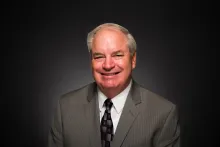
Robin Webber was born in Chicago, Illinois, in 1951, but has lived most of his life in California. He has been a part of the Church of God community since 1963. He attended Ambassador College in Pasadena from 1969-1973. He majored in theology and history.
Mr. Webber's interest remains in the study of history, socio-economics and literature. Over the years, he has offered his services to museums as a docent to share his enthusiasm and passions regarding these areas of expertise.
When time permits, he loves to go mountain biking on nearby ranch land and meet his wife as she hikes toward him.
