

David Mills
This transcript was generated by AI and may contain errors. It is provided to assist those who may not be able to listen to the message.
I might first of all add one announcement, and that is that Louise Steed, who was in the hospital, did come home early in the week, and she found out that her heart does not have a blockage, and everything seems to be very positive. But for those who knew about her situation and being in the hospital, we appreciate your prayers for her.
One of the most interesting jam-packed experiences of my life occurred in the summer of 1961, when I went on a baptizing tour. In 1961, there were very few churches of God, and so when people heard the program, and our program at that time, our radio program covered the United States, powerful stations even out of Mexico, covering the Midwest, and also the East, and many other parts of the country. So there were people that heard the program daily, and also read the Plain Truth magazine, and booklets and articles, and God was working with them, and they wanted to be baptized. And so we did not have churches anywhere, for example in the southeast in 1961.
We had churches in a few areas of the country. There were probably a couple of dozen or so congregations at that time, but we had baptizing tours that would go around. Of course, those tours have begun back in the 1950s. Three, four, maybe even more, baptizing tours. Baptizing tours were two man teams, usually a pastor, a leading minister, and a student would go with him as a learner. Well, I was a student. I was between my junior and senior years in college, and so I accompanied how I bared an ordained minister on a baptizing tour. Our tour began in Florida, and we also went to Georgia, South Carolina, North Carolina, Virginia, and Tennessee at the end of the of the tour.
We met 323 people, baptizing 145 of them. And what an experience it was. The way it worked is that we would meet two or three groups of people each day. We would have sent a letter to them about a week ahead, making an appointment with them, meet us at the post office in a certain city at a certain time.
And we will be driving, and we gave them the type of car and the color of the car we would be driving so they could be on the lookout for us. They had never met us, we had never met them. And so we would then arrive at the post office and begin looking for them, and they'd be looking for us. We'd try to arrive at the set time. And then anywhere from two, four, or a dozen people sometimes would meet us, and we would try to find a location nearby a park or somewhere that we could go and counsel with them about baptism.
We would explain the basic teachings and the basic doctrines of the Bible, and then we would try to become acquainted with each one and be able to make a judgment, a determination whether or not they were ready for being baptized or maybe needed to do more study. We found 145 of them were ready to make that covenant with God. Usually each counseling session would last two or three hours. Then after that we would quickly try to find a nearby place, water, a river, a creek, or somebody of water that we could do the baptizing, and then we'd be on to the next visit.
And if we met someone at nine or ten o'clock in the morning, by twelve or one we'd need to be on the road to the next stop, meeting some there, maybe around two o'clock, and then by about five or six o'clock a third group. So it made it a very long and full day of meeting people and determining whether or not they were ready to make that big decision of baptism. When did we sleep? Well, we didn't sleep very much.
We got five or six hours of sleep each night. Have some very vivid memories of baptizing people in Tampa Bay, meeting people in Miami, and baptizing some of those down that way. I can't remember if we go to the ocean or exactly where we baptized them. There was one lady in Florida that we met, a very fine lady. She had missed us in the Tampa area, so we made an arrangement to meet her at Lake Okeechobee, the city, which is also the name of the biggest lake in Florida.
So we met her there, arranged to one Sunday night, I think around eight o'clock. We worked her into the schedule and talked with her until about ten o'clock, and she was ready for baptism. So I was the one that did all the baptizing, the actual taking people and putting them under the water. So we went walking out over Lake Okeechobee. I didn't realize we had to walk halfway across the lake to find water deep enough to baptize her. We finally got ankle deep, and then after that we got knee deep, and finally we found water deep enough to to baptize this lady around ten o'clock at night.
It was a moonlit night, so it worked out. We baptized people in rushing mountain streams in western North Carolina. We didn't lose anybody, but the water was rushing in this mountain stream where we did the baptizing. Sometimes members who had been baptized earlier years would find out about our coming, and they would meet up with us as well. And so there were some baptized members, I think, as well as some of the baptisms.
One experience I remember in Georgia, the swamps of Georgia, I will never forget, is walking down in the swamp, and we had to make our way through all the brambles and bushes and everything to get down to the little stream. And once we got there, we baptized two or three people. And then after baptizing people, you know, we always lay hands upon the person according to the scriptures and and asked God to grant the gift of the Holy Spirit.
And as we laid hands bare arms and everything on these people and mosquitoes coated our arms, it was awfully hard to leave our hands there for the laying on of hands. It was very tempting to have the laying off of hands, but I'll never forget that experience. Yes, we met over 300 people, and 145 of them were ready to be baptized. I want to speak about baptism today. Is baptism necessary? Well, the scriptures indicate, yes, the baptism is absolutely necessary. What good does it do? Well, let's discuss some of these things in the sermon. In Matthew chapter 3, we find that Jesus Christ set us the example of being baptized, and we should follow in His footsteps, certainly. In Matthew chapter 3 and verse 13, Jesus came from Galilee to John at the Jordan to be baptized by Him. And John tried to prevent Him saying, I have need to be baptized by you, and are you coming to me? And Jesus answered and said to Him, Permit it to be so now, for thus it is fitting for us to fulfill all righteousness. And so John allowed Him, and then Jesus, when He had been baptized, came up immediately from the water. Well, notice in all the examples of the Bible that people went down into the water. They didn't... Jesus wasn't, you know, sprinkled. Some people think you can sprinkle, put a drop of water in the forehead. I even saw one evangelist who was out in a kind of public little square area outside outdoors, and he had a water hose, and he was baptizing people, just spraying water on them. Well, the word baptism in the Greek means immerse. So Jesus came from the water, and behold, the heavens were open to Him. And he saw the Spirit of God descending like a dove, and alighting upon Him, and a voice saying, this is my beloved Son, in whom I am well pleased. So Jesus Christ was baptized, and let's notice in Acts chapter 2 that on the day the church began, there is the instruction that those who believe the gospel and those who repent should be baptized. In Acts chapter 2 and verses 37 and 38, Acts 2 verse 37, when they heard this, these people heard an inspired message on the day of Pentecost at the start of the New Testament church. When they heard this, they were cut to the heart. And they said to Peter and the rest of the apostles, men and brethren, what shall we do? They were motivated. They were ready to take action. And what did Peter tell them? Very simply, repent. Repent. And let every one of you be baptized in the name of Jesus Christ for the remission of sins. Number one, repent. Number two, be baptized. And then he said, you shall receive the gift of the Holy Spirit, the promises to you, to your children, and all who are far off, as many as the Lord our God will call. And so the scriptures make it clear that, yes, baptism is necessary. But what is baptism all about?
Is it hard to understand the meaning of baptism? Does it make any difference whether someone is baptized? What good does that do for a person's body to be immersed, to be placed under the water, and then to be brought back out again? All of you who have been baptized will readily identify with what happened when you were baptized. Your body was simply let down into the water and brought back out again. And you were momentarily submerged or immersed in the water. Does it make any difference whether you're baptized or not? What's the meaning of baptism?
Well, the Bible indicates there is a deep and profound meaning to this ceremony. Let's go to Romans chapter 6. Very profound meaning. Of course, if a person did not carry through with this meaning deep in his heart and mind, I guess just letting one's body down into the water wouldn't do any good. Unless the symbolism that is involved in baptism is carried through in one's life. In Romans chapter 6 and verse 1, what shall we say then? Shall we continue in sin that grace may abound? Certainly not. How shall we who died to sin live any longer in it? That's a little feast of unleavened bread message, isn't it? Coming out of sin. Verse 3, or do you not know that many of that is many of us as were baptized into Christ Jesus were baptized into his death. Therefore we were buried with him through baptism into death that just as Christ was raised from the dead by the glory of the Father, even so we should walk in newness of life. So here we have the symbolism of baptism. Baptism represents a death. A death and it represents a burial. You know, after a death there's a burial. And then in this case here there's a resurrection being raised up to newness of life. In verse 5, for if we have been united together in the likeness of his death, certainly we also shall be in the likeness of his resurrection. Knowing this, that our old man was crucified with him, that the body of sin might be done away with, that we should no longer be slaves of sin.
For he who has died has been freed from sin. And so these scriptures show that the old man, baptism pictures the old man, the old former self, the old way of life must be put to death, and it must be buried. And then we are to rise up and walk in newness of life. And so, baptism is symbolic of death and burial and resurrection. Let's go to Colossians chapter 2 in verse 11. Colossians chapter 2 in verse 11. At that very time when we, when a person repents and is baptized, guess what happens? There's something that is cut away from our lives, and there's something that is blotted out at that time. Colossians chapter 2 in verse 11. In him, and that's in Christ, you were also circumcised with the circumcision made without hands by putting off the body of the sins of the flesh by the circumcision of Christ. We're all very much aware of physical circumcision. We also are very much aware that this is only something that happens to men, to the male half of the human race. But the spiritual circumcision is something that happens to male and female. It is something that happens in the heart. It is one of the sins, the evil sins and wickedness that we have had in our life in the past is cut away. And all those sins are forgiven. There's a spiritual circumcision that takes place. All of us who have been baptized, it took place when you repented and when you were baptized.
Those sins of the past were cut away. A spiritual circumcision took place, and they were forgiven by the body of Christ, by the blood of Christ.
And in verse 12 it goes on the same, buried with him in baptism, in which you also were raised with him through faith in the working of God who raised him from the dead. And you being dead in your trespasses and the uncircumcision of your flesh. He's writing to Gentiles who were uncircumcised.
He, God, has made alive together with him, having forgiven you all trespasses.
Let's skip on over to chapter 3 and verse 1. We have more about this, what happens at the time of baptism. Chapter 3 and verse 1, if then you were raised with Christ.
And that means raised at the time of baptism, raised up to newness, a new way of life. The old man, the old way of life, was crucified and was put to death and buried.
If you're raised up, then, with Christ, seek those things which are above where Christ is sitting at the right hand of God. Set your mind on things above, not on things on the earth. For you died, and your life is hidden with Christ in God. We died when? At the time that we repented and were baptized. We died, we buried that old former way of life, that old self. When Christ, who is our life, appears, then you also will appear with Him in glory. Therefore, put to death your members, which are on the earth, fornication, uncleanness, passion, evil desire, and covetousness, which is idolatry. Because of these things, the wrath of God is coming upon the sons of disobedience.
So, baptism is what begins a whole new way of life, and a whole new person. It is a new beginning.
It is being raised up to a new life, and a new person. It's a very simple act, and yet it is symbolic. It doesn't mean that all of this is accomplished at the time of baptism. One after baptism must go on to fulfill what baptism pictures. He must crucify and fight against the old man, and put him to death, and bury his old self, and continually be rising up to newness of life, and becoming a new person. Let's turn to John chapter 3. This point in our life, when we repent and are baptized, is a brand new beginning. It's a whole new beginning, and this one is a spiritual beginning. In John chapter 3, verse 1, a man of the Pharisees named Nicodemus, a ruler of the Jews, came to Jesus by night. He was kind of sneaking him, wasn't he? He didn't want to be seen by others. This man was a ruler of the Jews, but he was very interested in what Jesus was saying. He came to Jesus by night, and he said, Rabbi, we know that you are a teacher, come from God. For no one can do these signs that you do unless God is with him. You know, it's quite a confession, isn't it? We know this man was a ruler of the Jews. We know that you are a teacher from God. No one could do these things if God wasn't with him. You know, you would think that Jesus, with this pad on the back, would come back with some type of compliment to Nicodemus, but he came off the wall, really. He said in verse 3, Jesus said to him, Most assuredly I say to you, Nicodemus, I say to you, unless one is born again, he cannot see the kingdom of God.
Unless a person experiences a second beginning, like a second birth, then he cannot see the kingdom of God. When Nicodemus understood what he said as far as being born again, he said to him, How can a man be born when he is old? Can he enter a second time into his mother's womb and be born? He understood exactly the terminology Jesus was using. Can a person enter his mother's womb, enter a second time into his mother's womb and be born? And Jesus came back and said, Most assuredly I say to you, unless one is born of water and the Spirit. And this water would certainly represent water baptism. Water is also used to represent, of course, God's word as well as God's Spirit. Unless one is born of water and the Spirit. So this is a spiritual birth that Jesus is talking about.
It's a new beginning, but it's a spiritual beginning, whereas the first beginning was a physical beginning. Unless one is born of water and the Spirit, he cannot enter the kingdom of God. That which is born of the flesh is flesh, and that which is born of the Spirit is spirit.
You know, we were born of the flesh, the sperm and the ovum of our father and mother united in our mother's womb, and we developed and grew, and we were born. Here we are. We were born of the flesh. That was our first beginning, but our first birth. But there's another birth, another beginning, and it's a spiritual one. It begins at baptism. Repentance and baptism and receiving of God's Spirit.
So it's a new beginning, just like our human life had a beginning point. Our spiritual life has a beginning point, and that beginning point is at baptism and receiving God's Holy Spirit.
It all begins with repentance.
Repent and be baptized, Peter said. It all begins with repentance.
Repentance, what does that mean? The word in the Greek is metanoia, and it means a change of mind.
Yes, we must have a change of mind and a change of heart and a change of direction and begin to think differently.
And along with that, there is compunction for the past. That is, we feel guilt, and we're sorry for what we have done in the past. There's a good chapter on repentance. I'd recommend that, especially what we all review from time to time, especially anyone that might be considering baptism. You read this in our booklet, The Road to Eternal Life, one of the booklets published by United Church of God. The Road to Eternal Life. There is a road. Baptism puts us on that road. It doesn't bring us to the destination yet, but it does get us started. And we're pointed in the right direction. Once we repent and are baptized, we're pointed in the right direction, and we're heading toward our destination. The very first chapter, repentance, your first step. The Bible describes repentance as a profound realization of our sins and resulting sorrow that leads us to change our thoughts and actions. At its core, repentance is change. It is turning from our previous way of life to serve God. Repentance unites us with God the Father and Jesus Christ in an extraordinary relationship. And the next section has the heading, the miracle of repentance. Early in our relationship with God, we need to understand that repentance is a miracle. God is the one that does the calling and the drawing.
And a paragraph here says, it is impossible for anyone acting alone to completely surrender his or her will to God. Humanly, we cannot comprehend the depth of change that God desires in our hearts and minds. We need help even to understand what sin is. That's why God must grant us repentance.
We meet people that were baptized many years ago. They were head over heels and going to church on Sunday. They were keeping the holidays of the world and not understanding anything about the calling of the reward of the saints, thinking that people are going to go to heaven when they die, the immortality of the soul, all kinds of false teachings. And sometimes have a sincere, what they think is, repentance and baptism. And yet, that's not really an acceptable repentance in God's sight. As we'll develop more as we go along, an acceptable repentance is one where we turn to God's laws. We turn to God's definition of what is right and wrong, not what the world says or what we think. It's God's definition of sin and what is right that matters. So it is God that grants repentance. Repentance at the foundation, the very basic foundation of repentance is truth, true knowledge from the Bible, one that really understands the word of the basic teachings in the Word of God. A reading on here, we then need to recognize the pervasive influence of the carnal mind, something else that goes along with repentance. Paul, I mean, rather, well, Paul writes about it in Romans chapter 7 and 8. We must recognize the sin that is within us and comprehend our deep-rooted hostility to God. And we'll read a verse on that a little bit later. Paul describes our natural carnal state apart from God, and we'll read some of those verses in just a few minutes. God requires that we surrender our will to Him. He expects us to bring into our lives His way of thinking and living as revealed in the Bible. He wants us to rid ourselves of our former way of thinking and living and become a new man in thought, attitude, and character. These admonitions mean to us a lifetime of growth and change, starting with the initial change the repentance God expects before baptism. He asks us to change our heart and direction in life. We must be willing to let the revealed word of God change our thinking. Let the Bible determine what you believe and what you don't believe.
The word of God, to change our thinking, that is where real repentance begins. Come into understand basic teachings in the word of God. Repentance is our personal choice to let God change us inside and out, utterly. So a godly repentance is from deep within.
And it's coming to see our human nature for what it really is. Many people think that, even ministers, I've read articles of ministers and seminaries who feel their basic job is going to need to bring out the basic goodness that is in every human being. That is not what the Bible teaches. There's not a basic goodness deep down that every human being has to come to the surface, but there is a goodness that God through His Spirit can put within us. That's what the Bible would teach. Let's notice the natural human state in which we find ourselves according to the Bible. In Jeremiah 10, verse 23, Jeremiah 10, verse 23, "'O Lord, I know the way of man is not in himself.'" Jeremiah saw it. He didn't see goodness deep down within himself. "'I know the way of man is not in himself. It is not a man who walks to direct his steps. It's just not in us. O Lord, correct me, but with justice, not in your anger lest you bring me to nothing.'" And in chapter 17, Jeremiah 17, verse 9, he puts it very plainly our human makeup. You might say our human nature and what it's like. Jeremiah 17, verse 9, the heart, the human heart, is deceitful above all things and desperately wicked. Who can know it?
God does say that he will search in verse 10, "'I the Lord search the heart. I test the mind, even to give every man according to his ways and according to the fruit of his doings.'" But in verse 9, the heart of man is deceitful. And the word in the Hebrew means crooked and desperately wicked. The word in the Hebrew means sick, incurable, corrupt.
So who can know it? The expositor's Bible commentary says, even its owner doesn't know it, the human heart. And that is so true. People in the world think they're good people. And they see things that maybe they've done, and so they feel good about themselves. Even its owner doesn't know it as far as the human heart. Of course, you would never deceive yourself, would you? Yes. Even members of God's church can deceive themselves. Yes, absolutely. So we have to recognize your heart, my heart, deceitful above all things. We have to recognize that and fight against it controlling us. Let's go to Isaiah 64 and verse 6.
Isaiah 64 and verse 6.
But we are all like an unclean thing, all of us, like an unclean thing. All our righteousnesses are like filthy rags. We all fade as a leaf and our iniquities like the wind have taken us away.
Our righteousnesses would indicate the best side of us, the best side of our human makeup, the good deeds. I've heard of people that would... well, somebody in Florida, I remember many years ago, that took a kid or two out to the Grand Canyon who otherwise would never have been able to go. And they felt good about it. They said, that makes us feel so good. Well, that is a good thing to do. And yet there was... it made them feel good. It wasn't all just, you know, altruism either.
So even our best side, our righteousnesses are like filthy rags. Many years ago, I was counseling with a man about baptism. This was an older man. He was kind of feisty. He came up one day, he had been coming to church for a while. He came up one day and he said, I want to be baptized. I think he even looked at me in motion to me. I want to be baptized. I said, well, let's sit down and talk about it. So we made an appointment and I came by to see him at his home. During the process of the counseling, we went over many things. And part of it is that I was looking for, did he really see himself? And so we asked him what kind of life he had lived in the past, how he felt about his past. Oh, he said, pretty good. I've always tried to treat my neighbor right. Well, I wasn't satisfied that he really saw himself. And so I read some of the verses we've read here. Jeremiah 10, the way of man is not in himself. Jeremiah 17 9, the hardest deceitful, above all things. Isaiah 64 and verse 6, filthy rags. Well, he I gave him these verses and a few more we're reading just a moment and asked him to study and think about these verses. But the human makeup, we can't look back and think, oh, I've been pretty good. We have to see we've not been good. We have sinned and broken God's laws and we need to repent of that. He needed to see that. Well, a few weeks later, he came up at church one day and said, I want to be baptized. I talked with him a minute or two and then I asked him, what kind of past have you lived anyway? And he said, filthy rags. So we baptized him and I think he was I think he was faithful and true in the faith the rest of his life. But, you know, we do have to see ourselves as filthy rags and not as somehow being good people. And in Job, let's read from Job 42 and verse the first six verses in this last chapter in the book of Job.
Job 42 and beginning in verse 1. Well, verse 2, Job said, when God had really brought him down, here was a man that in his own estimation, he was very a righteous man. Job was so righteous that when his children threw a party, he said, well, they may have sinned. So I'll sacrifice to God just in case. Job was, you know, he was a good man, humanly speaking, but there's none of us good, no, not one.
We all have a deceitful nature and desperately wicked and the way is not in us. And so when God humbled Job, here's what he said, verse 2, I know that you can do everything. Job has a humble spirit here, a repentant spirit that no purpose of yours can be withheld from you. You asked, who is this who hides counsel without knowledge? It's me. I've uttered what I did not understand, things too wonderful for me, which I did not know. Listen, please, he's begging God to listen, let me speak. You said, I will question you and you will answer me. I've heard of you. Yes, I've heard of you, God, by the hearing of the ear. But now, at last, my eye sees you.
And therefore I abhor myself and repent in dust and ashes. Job really came to see himself.
He saw through his self-righteousness. If there's any self-righteous thing in any of us, we need to repent of it like Job did and abhor ourselves as he did and repent in dust and ashes. Let's turn over to Romans 7 and 8, these verses by the Apostle Paul.
Romans 7. Let's read, first of all, in Romans 7 and verse 14. We know that the law is spiritual. But I am carnal. I'm carnal, sold under sin. Later he said what he wanted to do, he did not do, and what he did do, he didn't want to do, and it was sin that dwelt in him. But notice in verse 18 how Paul looked at himself, his viewpoint of himself. I know that in me, that is in my flesh, nothing good dwells. So that's something all of us need to ponder. The Apostle Paul came to see that in me, just humanly speaking, just humanly speaking in me, leaving God out, but just in me as a human being, nothing good dwells. And then he talks about the carnal mind, that mind that is deceitful above all things and desperately wicked in chapter 8. And in verse 6 he said to be carnally minded is death, but to be spiritually minded is life and peace, because the carnal mind, just the natural human mind, is enmity against God. Enmity, that's at hatred, at odds with God. For it is not subject to the law of God, nor indeed can be. And the Apostle Paul saw this law of sin working in himself in chapter 7, and so we also should see it as well. Real repentance, then, is coming to see ourselves as we are, and repenting of it and wanting to change from the inside out. That's a basic element of real repentance, is realizing that the change must be from the deepest level on the inside out. Real repentance is turning from dead works of the past. Let's read that in Hebrews chapter 6. Hebrews chapter 6 and verse 1, therefore leaving the discussion of the elementary principles of Christ, let us go on to perfection, not laying again the foundation of repentance from dead works. That's the very beginning point, the foundation of repentance from dead works. You know what? Dead works. Well, like going to church on Sunday. Sunday's a work day.
The Sabbath is the day God has made holy. I went to church on Sunday. I had to come to see that that was wrong. That was a dead work that I needed to repent of. What's another dead work? Christmas. I was involved in a Christmas play. Easter. I found the most Easter eggs at an Easter egg hunt at school. So I was very much involved in this world and had to repent of these dead works.
I thought the righteous went to heaven and the wicked went to hell. I had to change my thinking on that as well. So repentance from dead works means coming to understand the truth of the Bible and striving to live by every word that proceeds out of the mouth of God. It means turning to God's kingdom and seeking it first in the righteousness of God's kingdom. Turn into the Ten Commandments, keeping the Sabbath and the Holy Days, tithing, eating only the clean meats.
All of those are things that we must do when we repent.
What about real repentance? It is surrender of the self, of the self-will. Surrender to God's will in our lives. Real repentance is actually coming to a crossroads in one's life.
I want to read about that from the autobiography of Herbert W. Armstrong. He wrote when God had knocked him down because he admits he was full of himself and accomplishments and things he had done, and God brought him down. God humbled him tremendously. And finally, he did, in desperation, throw himself at God's mercy. He writes in his autobiography, this surrender to God, this repentance, this giving up of the world, and of everything was the most bitter pill I ever swallowed. Yet it was the only medicine in all my life that ever brought about a healing.
For I actually began to realize that I was finding joy beyond words to describe in this total defeat.
I'd actually found joy in the study of the Bible, in the discovery of new truths heretofore hidden from my consciousness. And as a rendering to God in complete repentance, I found unspeakable joy in accepting Jesus Christ as personal Savior and my High Priest. I began to see everything in a new and different light. Somehow, I began to realize a new fellowship and friendship had come into my life. I began to be conscious of a contact and fellowship with Christ and with God the Father.
When I read and studied the Bible, God was talking to me. And now, I love to listen. I began to pray and knew that in prayer, I was talking with God. I was not yet very well acquainted with God, but one gets to be better acquainted with another by constant contact and continuous conversation.
That was the beginning of Mr. Armstrong's conversion and his repentance and baptism in that chapter.
After one has totally surrendered then and yielded his will and his life to God, then he should be baptized. Baptism is a covenant agreement with God. It is a contract. It is a commitment to do God's will and not one's own will. God promises to grant the gift of the Holy Spirit after one has been baptized. But there's the laying on of hands. Let's read a few verses about that in Acts chapter 8. Philip had come down to the city of Samaria and the people there listened to him and they saw the miracles done. Let's pick up the story in Acts 8 and verse 12. When they believed Philip as he preached the things concerning the kingdom of God and the name of Jesus Christ, both men and women were baptized. The Simon also. Verse 14, when the apostles who were at Jerusalem heard that Samaria had received the Word of God, they sent Peter and John to them.
Who when they had come down prayed for them that they might receive the Holy Spirit. What? Here are these people they had repented. They had been baptized. They had not received the Holy Spirit, well next verse. As yet it was fallen upon none of them. They had only been baptized in the name of the Lord Jesus. So then they, Peter and John, laid hands on them and they received the Holy Spirit.
Today we follow that example. Also, you read this in Acts chapter 19 and verse 6 where the apostle Paul laid hands upon people that were baptized. The Holy Spirit. What is it? It is the earnest, the very beginning down payment of eternal life. It is the power to fight life's battles. God has not given us the spirit of fear, but a power and love and a sound mind.
This guy gives us the power that helps us to fight our battles. We no longer just have to rely upon our own puny human strength. And so we see then in all of these verses we have read that repentance and baptism are the start of a transformed life. It is the start of true conversion.
It is the start of God writing His laws upon our hearts and minds. It is the start of God's divine character and His divine nature being instilled within our hearts and minds.
When should a person be baptized? Does he have to know everything?
You know, there have been those who felt, well, I just don't know enough.
In some cases that may be true, but does a person need to know everything?
Does it need to be almost perfect? Oh, we know that's not, you know, possible anyway to be perfect, almost perfect. We have to grow toward perfection. So no, a person does not have to understand everything, but he should understand the basic fundamental teachings of the Bible. He should understand what God wants him to do. There should not be things he's going to find about later on that surprises him, like, oh, God wants me to keep the Sabbath. Well, he should know that that's part of repentance. And so a person should know the basic fundamental teachings of the Bible. He certainly needs to grow toward perfection and toward having godly nature and character. There are examples in the Bible that show that a person, once he knows, once he understands basic fundamental knowledge, and his heart is to do God's will in his life, should not delay or put off baptism. Well, right here in Acts chapter 8, verse 26, you can read of Philip being told to go down and to meet this man of Ethiopia, verse 27, a yinnuk of great authority there in Ethiopia. So Philip went and this man was reading certain scriptures from the book of Isaiah, and he asked about what it meant. And so in verse 35, Philip opened his mouth and beginning at this scripture preached, he explained about Jesus Christ to this yinnuk. And they must have spent some time counseling and talking, maybe even mentioning about baptism, because in verse 36, as they went down the road, they came to some water. And the yinnuk said, well, see, here is water.
What hinders me from being baptized? And Philip said, if you believe with all your heart, you may.
And he answered and said, I believe that Jesus Christ is the Son of God. He had not even fully understood about Christ. He may have known some things about Christ, but Philip filled in a lot of knowledge about Jesus Christ. And this man said, I believe that Jesus Christ is the Son of God. So Philip commanded the chariot to stand still, and both Philip and the yinnuk went down into the water and he baptized him. And so this yinnuk, once he knew what he wanted, what he believed, he was baptized. What about the Apostle Paul in chapter 9? We can read in the first part of the chapter how God knocked him down. And he was blinded and came to this house in Damascus. And verse 9 says he was three days without sight and neither ate nor drank. And there was a disciple there named Ananias, and God told him to go and to pray for Paul, or Saul, and how he was calling him to be a chosen vessel to go to the Gentiles. Well, in verse 17, Ananias went his way and entered the house. And laying his hands on him, he said, Brother Saul, the Lord Jesus, who appeared to you on the road as you came, has sent me that you may receive your sight and be filled with the Holy Spirit. Immediately there fell from his eyes something like scales and he received his sight at once and he arose and was baptized. And so the Apostle Paul, persecuting the church a few days earlier, was baptized and a member of the church of God and had God's Spirit. Of course, Paul already understood all about the Sabbath, all about the Holy Days. He understood, you know, all the basic teachings of the Bible. He just needed a change of heart, a change of perspective. And God gave him that when he knocked him down and blinded him. Paul did a lot of thinking and repenting in those three days that he was blind. So baptism for Paul did not take very long at all, did it? Let's go to... you can read also about the Gentiles in chapter 10. Let's go to Acts chapter 16. We have some examples of here of ones that were baptized. Once they got the message, once they understood, then they were baptized. They didn't know everything. They were not perfect yet, but they knew what they wanted.
They understood about the Gospel. They understood the truth. They understood about forgiveness through Christ. So they had the basic knowledge and the basic understanding of what they needed to do.
Acts 16 and verse 14, this is in Philippi, and a certain woman named Lydia heard us. She was a seller of purple from the city of Thyatira who worshipped God. The Lord opened her heart to heed the things spoken by Paul. And when she and her household were baptized, and she begged Paul to come to her house and to stay and constrain to them. So Lydia and her family were baptized. It doesn't indicate that there was any long waiting period at all.
In Acts 16 and verse 25, yet another example. At midnight, this is when Paul and Silas were thrown in prison, and they were at midnight praying and singing hymns and prisoners listening to them. There was a great earthquake in verse 26. The doors were opened, everyone's chain was loosed. The keeper of the prison awoke and saw the prison doors open. He knew what would happen to him. He would be probably crucified. But anyway, supposing the prisoners had fled, he drew his sword and was about to kill himself. And Paul said, do yourself no harm, we are all here. And then he called for a light and ran in and fell down, trembling before Paul and Silas. And he brought them out and said, sirs, what must I do to be saved? I have an idea. There's a little more background to this. This man likely had heard Paul or some of the things Paul was saying.
He understood a certain amount, very likely already. But anyway, Paul said to him, believe on the Lord Jesus Christ and you will be saved, you and your household. And then they spoke the word of God to him. They probably spent some time doing that, explaining God's will and God's way to him and to all that were in his house. And he took them the same hour of the night and washed their stripes. And immediately he and his family were baptized. So again, once a person really understands the truth, these examples certainly indicate that he should not delay. As soon as he understands, then he should act on that knowledge and not put off baptism.
I know when I was baptized in March of 1959, I went to a minister's office on the campus at Ambassador College and he talked with me and counseled with me for about an hour or so. And then he said, well, why don't you just go and read and study a little bit longer and come back in a couple of weeks? Well, I thought I was ready for baptism and so I persisted and let him know that I believe this is the work of God, is the Church of God, and the doctrines and the teachings that I've learned that I was striving to do. And so he looked at me and talked a little bit longer and he said, okay, go get your clothing and towel and meet me down. And there was a pool on the campus where baptisms were done. So we met there in late March of 1959.
So once a person really knows what he wants to do with his life, then he understands the basic doctrines and the basic teachings of the Bible and what God wants, the way of life that God wants him to live, he should not delay. It is after baptism that we will learn more deeply knowledge more and more. We grow in grace and knowledge after baptism and we grow toward perfection.
So for anyone thinking about baptism, here is my recommendation. Prove, number one, that this is the Church of God. Is this the work of men? Is it just a work of a bunch of men? Or is this the work that God is doing through men? Through men of God? Is this a work being done by men or by men of God?
That's important for us to understand. I believe just as much as I did in 1959, this is the work of God. I believe it even more because we have been through so many things in the Church, but guess what? The Church keeps right on going and the work keeps right on being done. It has the same doctrines, the same beliefs, the same teachings. Oh, we've grown, we've refined here and there, but it's the same as in 1959. It's not, it's the same Church as the Church of God. It is the Church Jesus said He would be with right to the end, and the one that He said would not die away. The gates of hell, Hades, would not prevail. So is this the Church and the work of God? Anyone contemplating baptism needs to be absolutely firm on that. Number two recommendation is that a person would read and study and be very familiar with our 20 fundamental beliefs of this Church, the United Church of God. These are not just teachings of the Church, only they are teachings of the Church, but they are teachings, major doctrines and teachings of the Bible. Some of these 20 would be things like God and Jesus Christ and the Holy Spirit, that God is not a Trinity, the Word of God, the Bible is our infallible base of belief, Satan the devil, humanity, God's laws and commandments, sacrifice of Christ, repentance, water baptism, Sabbath, holy days, holy Passover, holy days, food laws, clean and unclean meats, military service in war. It's a doctrine on that.
Promises to Abraham, the Church, tithing, resurrections, Jesus' return in reign. So all of these 20 fundamental beliefs, for those that I baptize, I'd like for them to be familiar with this. We try to go over everything before baptism, so there are no surprises. A person knows what the Church is becoming a member of, the Church of God, what it teaches and believes, and why.
So prove this is the Church of God. Read and study the 20 fundamental beliefs and teachings. And then, next, another booklet is the one that I have quoted already. The Road to Eternal Life has a chapter on repentance, has a chapter on baptism, and on God's Holy...nay for God's Holy Spirit. And at the end, the final chapter is staying the course. That's the title of it, the final chapter. Enduring to the end. Why get started if we're not going to stay the course? Why begin the journey? Why get on the road and go a little way? And that's happened to so many people down through the years, hasn't it? Was it a lack of understanding on their part? Was it a lack of commitment? What caused them to drop by the wayside? Once we get on the road to eternal life, we need to stay on it. So, yeah, study. Then our booklets, 20 Fundamental Beliefs in the Road to Eternal Life. Then pray about it. Next advice after we have...we know this is God's Church. We know these are the fundamental teachings of the Bible and the way of life we are to live. We know and understand about repentance and baptism. Pray about it. And then ask for counseling, and we'll sit down and talk about baptism. Certainly the Bible encourages us to count the cost. And we go over that. Let's read that here near the end of this sermon in Luke chapter 14. We must count the cost. It's not going to be simple and easy. We must always keep the perspective that God and obedience to Him is first. Brethren, we've had members that have lost their jobs because of the Sabbath. We can't compromise on the Sabbath. If anybody wants to go and work on the Sabbath, then I'm sorry, but that just doesn't fit into what we do here.
We keep God's laws. In the Holy Days, we've had members go to the feast, and they were told by their boss, well, if you can go, but you don't have a job when you get back. I've talked to some that say, well, when I got back, I didn't have a job. The boss meant business, but they found a better, another job, often a better job. And one man who was told he wouldn't have a job went, and he came back, and the boss begged him to come back. He was so valuable to the company. So it happens many different ways. But, you know, we must count the cost of following Etrichrist. Jesus said it would be hard, straight, and narrow. He didn't promise it would be easy.
In Luke chapter 14 and verse 25, great multitudes went with him, and he turned and said to them, If anyone comes to me and does not hate his father and mother, wife and children, brothers and sisters, his own life, he cannot be my disciple. Don't even think about being baptized if you don't put your own family, closest family members, second. Notice it mentions father and mother. I've known of children that have been disowned by their parents. One told me that she would call her parents who would not speak to her now, and she could hear them at the other end kind of breathing and listening. I know you're there, but they would not say anything in return. She lost her parents. And another man who lost his wife, she just could not stand him being a member of this church, leaving one of the Protestant denominations. So, yes, we've had people that have lost closest ones in their lives because of being a member of God's church. If we're not willing to do that, we cannot be a disciple of Christ. Whoever does not bear his cross and come after me cannot be my disciple. Yes, there will be persecutions. There will be opposition. There will be crosses to bear. Difficulties that come. Is it going to cause us to stumble? And so Jesus went on to say, which of you, intended to build a tower, does not sit down first and count the cost, whether he has enough to finish it. The churches of this world often have, and especially evangelistic campaigns where thousands of people, they play the soft music and come on and give your heart to the Lord while this mute...they appeal to the emotions and people come flooding down the aisles up to the front to give their hearts to the Lord and to be saved. But look at this. Jesus never had anything like that. He never appealed to people's emotions to come and give their heart to him. Instead, he warned that a person must count the cost. He must consider whether or not he can get on this road to eternal life and continue on it to its final destination.
Baptism, then, is the biggest contract in all history, isn't it? It involves land, lots of land, the universe. It involves space. There's a lot of space out there. It involves life, eternal life.
Baptism is like our signature on the contract. We sit down, we agree to do certain things, to obey God, do his will, seek God's kingdom with all of our hearts and minds, yield and surrender our lives to God, what he wants us to do. And so, baptism is our signature. God signs it, too, with the blood of Christ. Our sins are forgiven. He's there to help us every step of the way. He will encourage us. He will see us. He will never desert us. Great is thy faithfulness. We sing about that. God will never leave us or desert us. He will see us through to entry into his kingdom if we do our part. God's part is sure. The only variable in the equation would be us, because we could fail. But it is a solemn promise on our part that we will be true to God and to his requirements on us. It's an eternal covenant between us and God, an eternal, everlasting covenant. It's a great miracle. I'd like to conclude the sermon by just reading a little bit that we want all those who have been baptized, we want to continue on this road that we are on. The last chapter again is Staying the Course. Baptism and the related steps we must take are only the beginning of the road to eternal life. Before we arrive at our ultimate destination, there are miles of road to travel. A good way to put it. Remember that we are traveling a narrow road. A clear sense of purpose and direction can help us stay the course. We will need that. A clear sense of purpose and direction. When we respond to God's calling through repentance and baptism, many blessings and opportunities await us. Our minds will change. We will grow in wisdom, knowledge, and understanding. We will learn to think and act as God thinks and acts.
Trials will come and sacrifices will be required. These tests help us build godly character.
Just as small children learn to walk, we may be wobbly at first stumbling in this new way of life. The temptations and trials we face will sometimes cause us to stagger and fall.
But remember that God and Jesus Christ are there to comfort and help us each step of the way.
Our job is to keep trying and to become mature Christians. Today, if we remain faithful to God throughout our lifetimes, we will share with Christ the role of kings and priests in His coming kingdom. We can look forward to becoming spirit and living forever. As His resurrected children, we will inherit all things from God. As long as we actively seek God's will and allow His Holy Spirit to work in our lives, our eventual salvation is guaranteed. Yes, God promises to help us every step of the way through every turn in the road. If we will repent, have faith in Him for the forgiveness of our sins, be baptized, and look to Him in His coming kingdom.
And so, God is with us every step of the way, and it all begins with repentance and baptism.
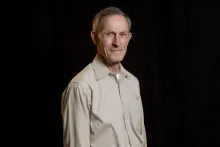
David Mills was born near Wallace, North Carolina, in 1939, where he grew up on a family farm. After high school he attended Ambassador College in Pasadena, California, and he graduated in 1962.
Since that time he has served as a minister of the Church in Washington, Florida, North Carolina, South Carolina, Oregon, West Virginia, and Virginia. He and his wife, Sandy, have been married since 1965 and they now live in Georgia.
David retired from the full-time ministry in 2015.
