

David Mills
This transcript was generated by AI and may contain errors. It is provided to assist those who may not be able to listen to the message.
True Christians who strive to follow in the footsteps of Jesus Christ have a very high calling, but it's not to go to heaven and float around on a cloud, as most Christians think today, to be the reward of the saved. This deceived world has this false idea. But what do people do in heaven for all eternity? Very few people have even thought about that. But the truth is that heaven is not the reward of the saved, and true Christians can then no longer sing the song when we all get to heaven. Many, many verses in the Bible show that true Christians are being prepared to reign with Jesus Christ. Revelation 2, verses 26 and 27 says that those who overcome and keep my works and to the end will be given authority, power over the nations. In Revelation 5 and verse 10 we read that we are made into kings and priests and shall reign on the earth. In Revelation 20, verses 4 to 6, those who are in the first resurrection are going to reign with Christ right here on the earth for a thousand years. We've read these verses many times, most of us, but certainly the reward of the saved then is right here on the earth, reigning with Jesus Christ. Could anything be plainer when you read the Scriptures? True Christians don't go to heaven, but they are glorified with eternal life and they will reign with Christ for one thousand years right here on the earth. So yes, indeed, it is a high calling. To become a king and a priest, something that we ourselves cannot even begin to think about or to imagine deeply, it is hard to imagine ourselves being a king and guiding and directing people and a priest teaching them God's ways, reigning with Jesus Christ. And yet that is what the Scriptures plainly teach. A few questions then that this makes us ask. Could this awesome responsibility be given to just anyone to reign as a king and priest with Christ? Don't you think it would require a lot of training and preparation? Even in the world, someone that has a responsibility like a teacher in a school or college, someone that is in a position of rulership, normally a lot of training and preparation is required. Well, in Revelation 2 and 3, we do read that the message to each of the seven churches is to him who overcomes, he will be given power and authority to reign with Christ. To become a king and priest, then we must overcome. We must go through a period of training and preparation. In fact, it's a lifetime of training and preparation. It's a lifetime of growing and overcoming. And so today, I'd like to have us consider the cost and the reward of becoming Christ's disciple. The cost involved and the reward. The reward, as we already have pointed out, is high. So is the cost. I want us to consider the cost of becoming Christ's disciple. Many people don't realize just even among ourselves maybe just how difficult it is. And that it is not an easy path that we have chosen if we are striving to follow in the footsteps of Christ. Let's turn to Matthew 7. In the Sermon on the Mount, notice what Jesus said. In fact, he said, hey, it's not going to be easy to follow in my footsteps. It's not going to be easy to reign with me. Prepare to reign with me in the kingdom of God when it's set upon the earth. Matthew 7, verse 13, Enter by the narrow gate, Jesus said. For wide is the gate, and broad is the way that leads to destruction, and there are many who go in by it. So, but Jesus said we should enter the narrow gate, not the wide gate. We have then two roads we can travel.
One is broad and easy. Most people go on that one, choose that one. The other road is narrow and difficult, not an easy path or road at all. It's more like a path and it's difficult. In verse 14, he said, because narrow is the gate, and difficult is the way which leads to life, and there are few who find it. So Jesus indicated that the cost, the way of life required, would be a difficult way of life. The cost would be high. Back in Matthew chapter 5, also in the Sermon on the Mount, Jesus indicated that we could meet opposition, even persecution. In Matthew 5 and verse 11, bless are you when they revile and persecute you. We don't usually feel quite that way, but actually, as we live God's way of life, we should realize that actually, that's part of being a Christian today. And Jesus said, bless are you when they revile and persecute you, and say all kinds of evil against you falsely for my sake. Rejoice and be exceedingly glad, for great is your reward in heaven, for so they persecuted the prophets who were before you. So he indicated there would be persecution, there would be opposition, that there would be those who stand up against us. Let's go to Matthew 10. We see the same thing. Jesus sending out His twelve disciples, told them, and this is directed certainly toward the disciples, toward the ministry, the leadership, but every member can expect to have some of this. Matthew 10 and verse 16. Behold, I send you out as sheep in the midst of wolves, like a sheep going out in a pack of wolves. You know, that's how we go out into the world. Therefore be wise as serpents, we do need wisdom as we go out, and harmless as doves. But beware of men, for they will deliver you up to councils, and scourge you in their synagogues, and you will be brought before governors. And look at verse 23. When they persecute you in this city, flee to another. So, and that God's people have certainly had to do some fleeing down through the years. In verse 34, Jesus said, Do not think that I have come to bring peace on earth. So many people think that he did. No? No, not yet. He will in the future, but not in this present age. Do not think that I came to bring peace on earth. I did not come to bring peace, but a sword. For I have come to set a man against his father, a daughter against her mother, a daughter-in-law against her mother-in-law. And a man's foes will be those of his own household. And we've seen that to happen even in our time, and certainly down through the ages. He who loves father or mother more than me is not worthy of me. And he who loves son or daughter more than me is not worthy of me. And he who does not take his cross and follow after me is not worthy of me. He who finds his life will lose it. And he who loses his life for my sake will find it.
And so we see then that this is a straight and narrow and difficult path. And opposition and persecution can develop maybe even opposition from one's own family. Let's go to Matthew 19. Matthew chapter 19 and verse 27.
Jesus said to them, assuredly I say to you that in the regeneration when the Son of Man sits on the throne of His glory, that's when Christ will set up God's kingdom on the earth.
So Jesus indicated there would be some forsaking of maybe family and land. And that it would not just be easy. So brethren, we should make no mistake about it. The cost of being a disciple of Christ is high. Our course of training is difficult. It requires total commitment on our part and total sacrifice and yielding of our lives.
In other words, we have to really want the kingdom of God. And God will test us on that to see if we really want it more than anything else on this earth.
It's also a lifetime vocation. Not an avocation. An avocation is like a hobby. But it's a lifetime vocation. It takes precedence over our job and career by far. By far. It is our primary job that we are to work at. Growing, overcoming, preparing, and training to be a king and priest when Jesus Christ returns. And we must be willing to make any sacrifice and keep our eyes constantly on the goal. Well, the cost is high. Let's go back and review. How is it that one becomes a disciple of Jesus Christ?
How does that begin? It begins to become a disciple of Jesus Christ is not something that somebody can just choose. Somebody can't just say, well, I think I will become a member of the Church of God. I think I will become a disciple of Jesus Christ in this age today. Did you know that's not the way it works? Sometimes we have people that use the expression, back when I joined the church. Well, you know, you didn't so much as join God's church. You were drafted into it. You were selected. You were elected by God to be a part of His church. Let's notice that in a couple of verses in John 6 and verse 44.
John 6 and verse 44. We turn to this verse rather often, but it is an important verse. John 6 and verse 44. Jesus, again, said, no one can come to me. No one can come to Christ unless the Father who sent me draws Him.
Think about that. No one can just decide, well, I think I will be a member of the church. That's not the way it happens. The Father is the one who looks down and draws a person. Maybe a person stumbles across it. He might think as he understands and his mind is opened up, he might think he's come to this on his own, but he's mistaken. He's come to it because the Father, God the Father, has opened his understanding to the truth.
Let's notice in Matthew 13 and verse 23. Matthew 13 and verse 23. We'll understand just a bit more how this happens. How is it that God draws a person? Well, He begins to give this person understanding of the Bible, of the truth in the Bible. Matthew 13 and verse 23. He who received seed on the good ground. This is the parable of the sower. Remember some seed was devoured by the fowls of the air. Some fell by the wayside. Some fell upon stony ground. None of that produced fruit. But here's the seed that fell on the good ground. It's the seed that God the Father has sown. It's one that He has called to be a member of His church. He who received seed on the good ground is He who hears the Word and understands it. And then bears fruit and produces some 100, some 60, some 30-fold. So this is one whose mind has been opened by the Father. The Father has drawn this person. And when God draws a person, guess what He does? He begins to reveal the truth to them. You think back in your own life, even if you grew up in the church, you were learning these things as a child. There was a time that you came to understand it and look at it from an adult perspective before you were baptized. You became an adult in your mind, in your thinking. So God the Father is the one that begins to open one's mind. I went to church on Sunday. There was a time that God opened my mind to the Sabbath. I kept Christmas and Easter. There was a time God opened my mind that these are not Biblical days at all, but days from ancient, false religious worship. And I began to understand the Holy Days. So little by little, God revealed the truth, the Kingdom of God. It will reign on the earth. So think back in your own life. But who was that? Was that your superior knowledge and understanding? No. That was God the Father drawing you. He was opening your mind to comprehend. He was enabling you to be able to understand spiritual knowledge.
So many scriptures in the Bible make this very, very clear. That it is God, then, who calls. It is God who opens hearts and minds to understand the truth. And so we encourage everyone before baptism. I went over these things with the ones when we baptized this past week. But we encourage everyone to study and be very familiar with the teachings, the 20 fundamental basic beliefs of the United Church of God. Because these are 20 fundamental teachings of the Bible. And everyone needs to be very knowledgeable of these. This just gives us a foundation. It is not all Bible knowledge, but it certainly gives us a good, solid foundation that we can base our Christian life on. That we can base our beliefs. We can base what we do. What we do in life. The type of behavior that we have. So God wants us to know the truth. Notice what Jesus said. Sanctify them by your truth. Your Word is truth. John 17 verse 17. Let's read John from John 8 and verse 31. Let's return to John chapter 8 and begin to read in verse 31. Jesus said to those Jews who believed him, If you abide in my Word. And again, we've already shown that God's Word is truth. If you abide in my Word, in the truth, you are my disciples indeed. So it is required that we abide in the truth of the Bible. And verse 32 goes on to say, You shall know the truth, and the truth shall make you free. It does set us free to know the truth of God. There's nothing that binds. There's nothing that enslaves. The truth just sets us free any way you want to look at it. Because it is the truth. It's the proper way to conduct our lives. It's what's going to happen in the future. It's the purpose and plan that is being worked out here below. It's all the truth, and it does set us free. So before a person is baptized, he does have to become familiar with the basic fundamental teachings of the Bible. And our booklet will be a big help. Because we base our lives on the truth. A Christian is one that strives to live by every word that proceeds from the mouth of God. Our guidebook, the one that we base our lives on, is right here, the Bible. And our fundamental beliefs give us a good send-off, a good foundation for all Bible knowledge. We build on that foundation of the fundamental beliefs. True knowledge then leads a person, once a person has true knowledge. I began to, first of all, understand prophetic things myself. I understood about the millennium, for example, the one thousand years on earth that Christ would reign, that the saints would reign with Him, would not go to heaven, that we're living close to the end of this age and the time when Christ will return, that America and Britain are modern-day Israel. Some of those things I understood first. Then the Sabbath, then the Holy Days. Also, I understood tithing fairly early on. Cleaning down clean meats before too long also.
So, you know, God guides and directs. Where did you first understand? You know, we all understood things differently, the first things, but one by one by one, God revealed fundamental doctrines. And then once we have the fundamental teachings, we have the opportunity to change. In other words, the opportunity to repent. That's what the word repent means, to change.
To change what we believe, to change our way of life, to change really everything about us. So Jesus included repentance and change, and He came preaching the gospel of the kingdom of God, and He said, repent and believe the gospel. So once we do have that knowledge that is given to us, and we understand it, then we do indeed have the opportunity to repent and to change. Let's start Acts 2.38. We have read this many, many times, but then we have the opportunity to do what Peter told those people on the day of Pentecost.
When they asked Him, men and brethren, what shall we do? Acts 2, verse 37. Men and brethren, what shall we do? You know, once we have the truth, we have that opportunity also to ask, what shall we do? And the answer is very simple. Verse 38. Peter said to them, it's very simple, repent, change your life, set your focus on the kingdom of God, set your focus on living a life that is based upon the Scriptures. Repent. And second, let every one of you be baptized in the name of Jesus Christ for remission of sins, so your sins can be forgiven.
Believe on the sacrifice of Christ. Accept Him as your personal Savior and your Lord and Master. And be baptized for the forgiveness of your sins. The Bible indicates, at the time of baptism, all the sins that we have ever committed, childhood, teenage years, adult, all the sins we've ever committed are blotted out. We're given a clean slate. So when we are baptized, all of our sins are blotted out, and when the minister goes to lay hands upon you right after baptism, guess what? You have a clean slate. There's not a sin to your record.
No matter how serious or bad the sins may have been, you have a clean slate. Of course, we do continue to mess up that slate a little bit after baptism, so we have to continue being forgiven after we are baptized, because a Christian is not perfected yet, and he has to grow to word perfection. But repentance is the beginning of a baptism. Repentance and baptism are the beginning of a process leading to perfection, where we can enter God's eternal family. There's a lot of work to be done after one has repented and has been baptized. A little bit more about repentance.
Repentance means to be remorseful. Is there sorrow when one repents? Yes. We look back at the sins of our past, and we do feel remorse. We feel sorrow for breaking God's laws, and we ask forgiveness, and we thank Him for providing forgiveness, the sacrifice of Christ, and we accept that sacrifice. And at the time of baptism, we ask one that is now being baptized, have you repented of your sins, and have you accepted Jesus Christ as your personal Savior and your Lord and your Master?
And he must answer yes to that. We have one person understand—I was told this story many years ago— the minister went down into the water with the person and asked him, have you repented of your sins? Have you accepted Jesus Christ as your personal Savior? And the individual said, well, no. And so the minister said, well, why didn't you tell me? And the person said, well, because you never asked me.
So I always try to make sure that's covered before we get down into the water. Have you repented of your sins? Because I'm going to ask you once we get down into the water, if you have repented of your sins. Have you accepted Jesus Christ as the means of forgiveness for your sins, his sacrifice? You really understand his sacrifice, and that's the means by which your sins can be forgiven. So I'll try to make that very clear to everyone that I baptized in the counseling process before we go down into the water.
So I'd like to read just a little bit from our booklet, The Road to Eternal Life, has a chapter on repentance. It also has a chapter on baptism. It has a chapter about being forgiveness of sin. There's a whole chapter on forgiveness of sin in this booklet, and then one on enduring and staying the course, the last chapter. But the chapter on repentance has this. Let me read just a little bit from it. God requires that we surrender our will to him.
See, that's what we do at the time of baptism. It's no longer our will. It is God's will now. He wants every one of us to rid ourselves of our former way of thinking and living and become a new man in thought, attitude, and character. These admonitions mean a lifetime of growth and change for us, starting with the initial change the repentance God expects before baptism. He asks us to reorient our hearts. Reorient our hearts toward the kingdom of God. That is what we have set our minds on. Our eyes are focused on the kingdom of God. We must be willing to let the revealed word of God, the Bible, change our thinking.
Think about that. God's word is powerful. It will change our thinking if we begin to live by it with the power of God's Spirit. Repentance is our personal choice. It's a personal choice. Repentance is. And that's something anyone not baptized needs to think about. You've got a choice to make. And you should go ahead and study. Do your homework well. But then you've got that choice of repenting and then being baptized and then growing and overcoming.
Repentance is our personal choice to let God change us inside and out. That's a powerful statement. To let God change us inside and out. God's mercy is so great that He will forgive us, provided we forsake both our way and our thoughts. Isaiah 55 and verse 7, let the wicked forsake His way, and the unrighteous man His thoughts. Let Him return to the Lord, and He will have mercy on Him. And to our God, for He will abundantly pardon.
That's just the kind of God that we worship. He's very eager, in fact, to lay aside our sins, blot them out. God's eager. He wants to blot them out, put them totally away. If change originates from the inside, with our thoughts, right behavior will follow. You see, if we have that change from within, the right kind of behavior will follow.
But how can we learn to think like God? God reveals His thoughts and mind through His Word, the Bible. The Bible contains His values, standards, and principles. Jesus said man is to live by every word that proceeds from the mouth of God. One with a truly repentant attitude will search God's Word for instruction on how to live. And we continue that process. We continue to look at God's Word. No matter how many years we've been in the Church, we continue to look at God's Word to tell us how to live, how to think. Because we're not perfected yet. And where we're wrong, we need to let God's Word correct us.
And we need to continue to get our lives more and more in harmony with God and with God's Word. That's what growth toward perfection is all about. Getting in harmony with what God commands us to do in the Bible. Part of repentance also, and part of that change from inside out, is coming to see what we are inside. You can't really want to change what you are inside unless you see what is inside. What is inside? Jeremiah 17.9. We've quoted it many times. That is that the heart of man is deceitful above all things and desperately wicked. Who can know it? God can know it.
He will test and try and find out. But the heart of man, and it doesn't say some men, all of us, is desperately wicked and deceitful above all things. In Romans 7, the apostle Paul brought out that there is this law of sin that is in our members. And we have to see this. We're not going to be able to fight against it unless we recognize it.
Do you see, you members of the church, and those who maybe are not members, do you begin to see the kind of nature that it is deceitful above all things? What? You? Yes, you and me. The human heart is deceitful above all things and desperately wicked. Who can know it? And we begin to see this law of sin. Actually, in this chapter, when you read it, the apostle Paul was blind to it at one time. You know, we all were. But as God opens our minds to understanding and knowledge, we begin to see human nature.
We begin to see that law of sin that is in our members. We begin to look at things like Paul did here in Romans 7. Romans 7, in verse 23, I see another law in my members warring. Oh, there's a war going on, even. A Christian has a battle, a struggle. I see another law in my members warring against the law of my mind and bringing me into captivity to the law of sin. This is a powerful law, this thing of our human nature, which is in my members, oh, wretched man that I am.
And he described this law of sin more fully even in the next chapter. In verse 7, he said, the carnal mind, that fleshly mind, the heart of man that is deceitful above all things and desperately wicked, the carnal mind, the fleshly mind that we all have at the time of birth, human birth, the carnal fleshly mind is enmity against God. For it is not subject to the law of God, nor indeed can be. And that's something to really think about. That nature is never going to just submit itself to God's law. And so we have to fight against it. As long as we live, we will be fighting against that fleshly nature that we have, which is called the law of sin in chapter 7.
So a Christian is one that recognizes this, and he is doing battle. He is fighting against his own inward nature that is deceitful and wicked. He fights against that. He fights also against the evil, wicked world around him. And he fights against the God of this world, Satan the devil. But he recognizes all three. He recognizes Satan. Now Satan tries to deceive us. He recognizes also the evil world. It's an evil world. Of course, that's not very hard to recognize, is it?
You can just see it everywhere. It seems getting worse all the time. But also that evil, you might say, or the nature that is within the fleshly nature, that is just not capable of itself to be subject to God's laws. So we need God's spirit. We need God's help if we are to begin to keep the laws of God.
In our mind, we want to, but that law of sin will try to bring us in the captivity and override what we want to do in our minds. So it's a constant struggle there against the fleshly nature. What's a person, though, really comes to understand God's truth and God's ways. He should go ahead and be baptized. He should get this battle underway.
He should engage in that battle. And he should want to put to death and bury the old man, the old former way of life. Romans 6, back just a chapter or two. Romans 6 and verse 3, Do you not know that as many of us as were baptized into Jesus Christ were baptized into His death? So baptism is a death. It's a burial. Therefore we were buried with Him through baptism, a death and a burial unto death. That just as Christ was raised from the dead by the glory of the Father, even so we also should walk in newness of life.
So there is, as we come bursting out of that water, it also is symbolic of a resurrection to a newness of life. And actually, other verses show a new creation, something that never existed before, and it's a creation of a Son of God, someone that has the mind of God and the nature of God and the character of God. That coming bursting out of the water is symbolic. Do you know baptism is only symbolic? The death and burial haven't taken place completely.
We have to keep fighting the old man, that law of sin, and through God's Spirit, overcoming. And then becoming a new creation is not accomplished either, but it's the beginning. Baptism is the beginning of a new creation. God's Spirit is given, and that new creation is then possible. Just as soon as a person repents, he should be baptized. On the day of Pentecost in Acts 2, those people were struck to the core. They saw these miracles take place.
They heard the rushing mighty wind. They saw the apostles speaking in other languages. They heard Peter's powerful message. They said, What shall we do? Peter said, Repent and be baptized. He went on to say, Save yourselves from this wicked evil generation. And this perverse generation. Be saved from this perverse generation. Well, this world is more perverse today than it was then, I believe.
So I would say we need to cry out today. Be saved from this perverse world that is all around us today. You know, it goes on to say that in verse 40, that 3,000 people were baptized. It says, That day. It doesn't say they waited till the next day. They were baptized that day because they knew what they wanted. Other scriptures then, other examples of baptism, show that once a person comes to understand the truth, has the true knowledge of the basic fundamental teachings and what God wants him to do, then he should be baptized right away.
The people in Samaria were baptized when they heard Philip preaching. The eunuch later in chapter 8, Philip went up to the chariot, explained to him the truth. The eunuch understood. Philip must have also mentioned about baptism. And the eunuch said, Well, here's water. What does hinder me from being baptized? He was baptized that very day. Other examples in the book of Acts show people that Paul met in the wee hours at midnight, counseled them, and they were baptized. A whole household of the jailer. So a person does not need to be perfect, or he will never be baptized.
He does not need to know everything, or he will never be baptized. He doesn't need to be good enough. I just recently had one person who has come up in the church many, many years, not yet baptized, but certainly very well an adult, and just feels that maybe she is not good enough. Well, you'll never be good enough to be baptized, and I told her that. But you do need to understand the true gospel. You do need to know what you want to do with your life and with the things that you understand.
And you do need to be ready to make an everlasting covenant with God. The kind of agreement, the kind of covenant we enter into at baptism is one that never ends. An agreement between us and God is going to go on and on and on forever. It is a lifetime commitment to walk with God, to obey Him, and do what is pleasing in His sight.
And it's a wonderful process of conversion that takes place, a process of transformation. And of course, we have a booklet about that, Transforming Your Life, the Process of Conversion. It's a wonderful process of transformation that takes place in our lives. And good things do happen. I tell you, all those who have been in the Church many years, look back over your life.
You're different now than you would have been if you had never been called by God and never accepted His calling. Good things have happened in your life because God has been working. The Master Potter has been at work. And you would not be the type of individual you are now trying to do what is right and trying to think what is right, except that God's Spirit has been working.
Where would you be? I'm kind of afraid to even think about what would have happened in my life. But good things have happened because the Master Potter is at work. And he is little by little, etching, creating. He's painting a portrait, a spiritual portrait of Godly character in nature in us.
But as I brought out earlier, the cost is high. The reward is great, but also the cost is great as well. Let's read some, and I always read this in baptismal counseling in Luke chapter 14. Luke chapter 14 and verse 25.
I tell you, every person that begins to think about baptism should sit down and count the cost, as this passage brings out. Luke 14 and verse 25. Great multitudes went with him, and he turned and said to them, Just come on down the aisle and give your heart to the Lord. No. You know, Jesus never had an altar call. Churches of this world, they try to catch people at an emotional moment. Maybe soft music playing, and the minister is working upon their emotions to come on down. And so people do. They come down the aisle and they give their hearts to the Lord. But Jesus never did it that way. Never. Never once did he have an altar call. Never did he try to persuade people, Give your heart, be saved right this very moment. Instead, he warned that straight and narrow is the path. You better... is the right path. Choose it, but realize it's going to be hard and difficult. And here, notice what he told this great... the great multitude. Hundreds of people, probably. Verse 26. Pretty hard, difficult, you know, deal here that he gave to them. If anyone comes to me... and that's what a person seeking baptism is doing. It's coming to Christ and the sacrifice of Christ. If anyone comes to me and does not hate his father and mother, wife and children, brothers and sisters, yes, in his own life also, he cannot be my disciple. He can't be a Christian unless he's willing to put second those members of his family who are the very closest to him. Sometimes family members don't want... don't like it. I've heard of marriages. One minute, one man that later became one of our ministers, had his marriage to break up. His wife just could not take him no longer going to one of the Protestant churches of this world and starting to keep the Sabbath and not keeping Christmas or Easter anymore. She said, well, if you're going to go this way, I'm going to leave you. And I'm going to take our little girl with me. And she did. Tough choice there. I myself, when I went to Ambassador College, my mom, who is now deceased, my dear mom, just did not want me to go. I think it was the distance as much as the beliefs, but she did not believe in the beliefs either. And she would not even go to the bus station to see me off from eastern North Carolina on traveling all the way across the country to Ambassador College. Later on, my mom, though, had a different viewpoint. They no longer ate the unclean meats. They listened to Mr. Armstrong and watched him on television every Sunday morning on the television program. And so later on, she had some different viewpoints toward all that. But she was very much against my going to Ambassador College at age 18. But, you know, I felt drawn. And I think that's the word the Bible uses, that God does draw. So we have to put God in His way first ahead of everything else, ahead of family. But notice it also says, Your own life also. In case there's persecution, they love not their lives to death, it says in Revelation 12.
So our own life also cannot be put ahead of what God's will might be in our lives. It goes on to say, verse 27, Whoever does not bear his cross and come after me cannot be my disciple. There will be crosses to bear. There will be difficulties in life. For which of you, intended to build a tower, does not sit down first and count the cost?
So we urge people, count the cost of being a Christian, because Jesus uses it here. Whether He has sufficient to finish it. I told the young lady this past week that I'm stressing to you, not starting.
It's good to get started, but I'm stressing to you, finishing the journey. Anybody can start a race. Anyone can start a journey. But you've got to finish that race. And that's where Jesus put the stress in verse 28. That you have enough to finish it. Lest after He has laid the foundation and is not able to finish it, all who see it begin to mock and say, This man began to build and was not able to finish. I just noticed the word finishes used three times. So Jesus really is putting the stress on finishing what we start.
And in summary of this section in verse 33, verse 33, He says, So likewise, whoever of you does not forsake all that he has, cannot be my disciple. Now, brethren, we have to keep our will totally subjugated, totally yielded, totally surrendered to God. We can't have a little percentage of our life that is ours. God wants 100%. 100% His will and His way. Not 99%, 100%. So we need to count the cost and see if we can finish the job.
How many have we known down through the years who got started but have not finished? Did not finish. I think we all can say that we have known some. In some ways, I want you to think about this. When I sit down to counsel someone, I tell them, you have two roads before you. One is easy, not all that difficult. You'll be accepted. You can go to church every Sunday, and you can become a very highly respected member of the community.
There's another road that is difficult and narrow. Hard to stay on. It's not easy at all. Anyone in his right mind would choose that broad and wide road instead of the narrow. I present this to a person, and it would seem like he would just want to go that easy way instead of the hard and difficult way. But you know, I've counseled hundreds and hundreds of people, warning them that what they are requesting me to do is going to be the most difficult thing. There's going to be hardship and opposition and persecution, possibly even death. And yet, in just about every case, I can't change their thinking.
I can't change their mind. They want to go ahead and be baptized and take this narrow and difficult road. So does that make any sense? I've baptized hundreds and hundreds of people after warning them, you've got two roads. One's easy, one's wide, broad, you'll fit right in with everybody. This other way, you're not going to fit in. It's going to be hard and difficult. And then they go and choose the hard and difficult road.
Well, a little bit tongue-in-cheek there, but you know, God has opened their minds. They understand the kingdom of God. They understand the things we're talking about here. And so they choose God's kingdom, choose to be different, choose to be separate from the world, to come out and be to be not of the world as Jesus said he was. Can a young person repent? Can he count the cost and be baptized?
Paul told Timothy, you as a young person have known the Holy Scriptures, able to make you wise and to salvation. Timothy knew as a child. The Bible is full of people. Well, it has many, many examples of young people. There's Joseph, who was striving to do what was pleasing to God.
There was David, and there was Samuel, Daniel and his three friends, Jesus himself as a child. And then Timothy. So, yes, young people can know. We counsel that ones who are not adults yet not be baptized. We don't baptize children, but we do urge children to read and study the Bible. We urge them to read, perhaps, our Good News magazine as they get older, to study our Bible study course, to study our booklets and literature, and be close to God and pray.
And then when they become adults, to go ahead and seek baptism. For young people that have reached adulthood, normally we feel that's around age 18, 19, 20. You know, maturity may arrive a little bit differently with each person, but somewhere around that point, I was 18 when I began to make independent decisions. I did choose to go to ambassador of college, even though especially my mother was opposed to it. So somewhere along that point of getting out of high school, you begin to make independent adult decisions for yourself and what you're going to do with your life. Somewhere along there, you begin to be adult enough to make a decision about baptism.
Now, my wife was 18 when she was baptized. I was 19. Looking back at it, I was pretty young, and I wasn't fully mature yet.
But I wasn't mature enough to make an adult decision to be baptized and commit my life to the kingdom of God. I still remember the minister counseling with me. He even said, well, maybe you should think about this for another week or another, well, a few more weeks, and then come back. And I said, well, no, I want to be baptized now. And I believe this is God's church, and I understand about God's kingdom and what I need to do.
So he talked a little while longer, and he said, well, meet me down at the baptismal area. And I was baptized that day, March 25, 1959. So a young adult can know what he wants to do with the knowledge and the understanding that he has. He can come to know what he wants to do, that he wants to live by it, and he wants to commit his life to it.
And again, there are many, many examples of young people who have committed their lives to God's way of life at a very young age.
Well, remember, us all remember, whether baptized or thinking about baptism, that it is a lifelong commitment. We are yielding and surrendering our life to God.
It's no longer our will, but God's will. We become his slave. And I'll tell you, God takes very good care of his slaves, his servants.
And that commitment that we have must remain strong all during our lifetime. How about your commitment, all of us? Is your commitment strong? You kind of let down a little bit here and there. We cannot let down.
Remember, there's no turning back.
The last chapter of our booklet, The Road to Eternal Life, Staying the Course, that means we must endure to the end.
And it is to those who overcome and keep my works to the end, God says, who will be given power over the nations.
So we have to stay the course. There's no looking back.
We've cut off all bridges.
In Luke 9, I'm still at Luke 14, so just back a few chapters, Luke 9 and verse 57, Luke 9 and verse 57, it happened as they journeyed on the road that someone said to him, Lord, I will follow you wherever you go.
Well, here's someone that just felt like he had what it took to follow Christ wherever he went, whatever might be required.
Jesus, again, warned him, foxes have holes and birds of the air have nests, but the Son of Man has nowhere to lay his head.
He indicated that a Christian then may have some uncertainties in his life about some of the physical aspects.
Verse 59, he said to another, follow me.
Jesus said to another person, follow me.
This person said, Lord, let me first go and bury my father.
I've got some other things to take care of first.
Jesus said, let the dead bury their own dead.
Let the spiritually dead of the world take care of that.
But you go and preach the kingdom of God. Do the work of God.
And verse 61, another said, Lord, I will follow you.
I want to follow you, Lord, but first of all, I've got something else.
Let me go and bid farewell to those who are at my house.
Apparently, staying around maybe until some of them had passed the scene.
Well, verse 62, Jesus said to him, No one having put his hand to the plow, and looking back, is fit for the kingdom of God.
So what this passage tells us is that we have to put our hand to the plow, and we don't have any things that we have to do first.
Let me do this first, and then I'll come do the work of God.
Let me take care of this, and then I'll be free to think about the kingdom of God.
We've got to put our hand to the plow, and then keep doing the work that God has called us to do.
We must not waver. We must stay committed.
The patriarchs could have turned back, turned to Hebrews 11.
Hebrews 11.
They could have gone back to their homeland.
They did not have to continue living in tents.
They had houses. They had, Abraham no doubt, had a house back where he came from, first 75 years of his life.
And then he lived in a tent as a stranger in a strange land.
But Hebrews 11 and verse 13, they all died in faith.
Not having received the promises, but having seen them afar off, were assured of them.
They embraced them and confessed they were strangers and pilgrims on the earth.
That's what they were, just strangers and pilgrims. And that's actually how Christians feel about themselves today.
Strangers and pilgrims. We don't really fit in with the main flow of society and the world.
Those who say such things declare plainly they seek a homeland.
And truly, if they had called to mind that country from which they had come out, they would have had opportunity to return.
If they really thought about it, they could have gone back.
They'd be like us, you know, going back into the world.
But I hope no one would entertain that thought, to go back into the world.
No, we don't want that. But like them, now they desire a better, that is heavenly, country.
And that New Jerusalem is going to be brought down to this earth.
God is not ashamed to be called their God.
He's prepared a city for them, the Holy City, New Jerusalem.
So, brethren, we today have brought upon many aspects of the cost and reward of becoming Christ's disciple.
It does involve a lifetime of growing and overcoming.
We have an excellent booklet to help in our daily process of growing and overcoming tools for spiritual growth.
Make sure you have a copy of that.
It's a lifetime of growing in grace and knowledge.
And we have so much fruit.
Our training to be a king and a priest requires strong faith.
It requires continuing commitment, a strong desire and zeal.
Yes, there will be trying and testing, but we must overcome all obstacles.
Remembering that God is training and preparing us for an awesome responsibility to reign with Christ as a king and priest.
And teach all nations the way to peace and happiness and eternal life.
It is easier. That narrow, difficult path turns out to be easier than that broad, wide path. When you think of the curses, the evils that go along with that way of life, just anything goes, all the curses of disobedience to God's way of life, all the evil things we see in the world. I'll take that narrow path anytime to the difficulties of the broad and wide path. And then most of all, knowing that it's just the right path to choose. It's the right way of life, and it is the way that in the end we will be richly rewarded here and now and in the life to come. Final scripture, let's turn to Mark chapter 10. We read Matthew's account, but we'll read Mark's account of this as well and end with these scriptures and these thoughts. I tell you, God's way in the long run turns out to be, even though it's straight and narrow and difficult, turns out to be the best and the easiest. In Mark chapter 10 and verse 28, Peter began to say to him, See, we have left all and followed you. You know, there's indication that Peter had before he actually dropped everything, that Jesus just didn't come by one day and say, My name is Jesus, and follow me. Peter had never seen Jesus before. Indication he had seen Jesus, had heard Jesus, knew about Jesus. One day Jesus came by and said, Follow me. And Peter and Andrew, his brother who were fishermen, dropped everything. They left their ships, they left their nets, their business, all their gear, their family, they left it all and began to follow Jesus Christ. So Peter, that's what he meant. He said, See, we have left all and followed you. We left everything. We left our means of livelihood. We left our business. We left it all behind. We've left all and followed you. Well, Jesus answered and said, Assuredly I say to you, and I'll tell you, this is wonderful. That's why the broad and narrow path really does pay off. I say to you, there is no one, no one, not even one, who has left house or brothers or sisters or father or mother or wife or children or lands for my sake and the Gospels. That's what we've done. Those who have been baptized, we have left. We put everything second, far second, to the Gospel and to doing God's will. There's no one that's done this. Verse 30, Who shall not receive a hundredfold when? Now, in this time. I can look back in my life and say that has certainly been true. A hundredfold now in this time. Houses and brothers and sisters and mothers and children and lands. Those things that we may have given up have been replaced a hundredfold. But notice it goes on the same. It is the narrow and difficult road with persecutions. Yes, there will be some hardships. But then also go on to notice the last part of verse 30 and then the age to come, eternal life. So, the cost is great to become a disciple of Christ, but the rewards are even greater. So what is our choice? It's so obvious, isn't it? What should we do? Choose the narrow and difficult road that leads to rich rewards here and now and forever.
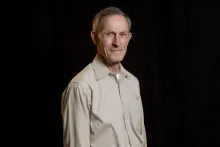
David Mills was born near Wallace, North Carolina, in 1939, where he grew up on a family farm. After high school he attended Ambassador College in Pasadena, California, and he graduated in 1962.
Since that time he has served as a minister of the Church in Washington, Florida, North Carolina, South Carolina, Oregon, West Virginia, and Virginia. He and his wife, Sandy, have been married since 1965 and they now live in Georgia.
David retired from the full-time ministry in 2015.
