

Jorge de Campos
This transcript was generated by AI and may contain errors. It is provided to assist those who may not be able to listen to the message.
Well, good afternoon, everyone. Glad to have all of you here. I really appreciated Mr. Holiday's presentation because it does show that the Kingdom of God is not what people think. It's going to have a major effect on this earth. People think about the Kingdom of God as being off to heaven or some forth. It's not really related to the earth, but as you can see from the scriptures that Mr. Holiday gave, the Kingdom of God has everything to do with this earth and transforming this earth and transforming life on this earth. But, of course, it's very important to realize how can we help change this world. We can all look at the world we live in now. We can all see the problems and difficulties, and we can all realize this world needs to be transformed. It needs to be changed. People need help. They need hope. They need to understand what their future is and what God's plan for that future is. Of course, that's all part of the message of the Kingdom of God. But, of course, before we can be a part of that now, God is giving an opportunity for many, and all of you are here, an opportunity to be a part of that Kingdom now, to be prepared for that, to be planning for that, to be a part to be able to help change the world when Christ returns and transform it and to help change people's lives. And, of course, a tremendous calling and an opportunity we have now. But the Kingdom of God is, really. You look at the world, the situation in the world, the Kingdom of God is indeed man's only hope. Now, Mr. Holiday is a computer guru. He's a 21st-century guy. I'm still back in the 20th century. I'm not a computer guru. I'm an old dog trying to learn new tricks. So you're going to see quite a contrast here. Mine is very, very fundamental, very simple, very basic. This is about as far as I've gotten as far as progressing using PowerPoint right now. But I want to look at the first of Scripture in 2 Timothy 3.1, where Paul said, but know this, inspired by God, in the last days, in the time leading up to Jesus Christ's return, it says very perilous times are going to come. And I don't have it on the screen here, but if you go on in 2 Timothy 3, it gives a reason for that which ties right in, describes the side we live in today. It says men are going to be lovers of themselves. They're going to be lovers of money. They're going to be a lot of greed. We certainly see a lot of greed. And of course, the whole world is facing financial turmoil right now because of greed. They're going to be boasters, proud blasters, disobedient to parents, unthankful, unholy, unloving, unforgiving, slanders, without self-control, brutal despisers of good, traitors, headstrong, haughty, lovers of pleasure, more than lovers of God, having a form of godliness but denying the power of God. And that's the world we live in. That's a very apt description of the world we live in today. So there's no doubt that we're now living in very perilous times, very dangerous times. We're living in a time when one event, as we've seen now, like 911, just one event, somewhere in the world, can trigger events that changes the world overnight. We all saw that happen in 911. It changed our world. Our world has not been the same since. When will the next event occur? How will it change our lives?
What subsequent events will the next event trigger, such as 911?
Matthew 24 verses 21 to 22 is part of the Olivet prophecy of Matthew 24 that Christ gave to his disciples. And he said about all kinds of events that were going to take place, but basically said the time leading up to Christ's return, because they asked him. He'd sit there with his disciples, and they were there, saying before the great temple of Herod that he'd rebuilt, magnificent temple. And he said, well, not one stone is going to be left about another and not going to be thrown down. So the disciples then asked him, he said, well, what's going to trigger that? What's going to lead up to that? What events are going to bring that about?
When will the end of the age come? And as part of that, he gives a number of events, but back getting down to Matthew 24, 21 to 22, he said the time is going to come. Well, there's going to be great tribulation. He says, it's not been since the beginning of the world until this time, no one ever again shall be. Unless those days were shortened, he said no flesh would be saved physically. No flesh would be saved alive. So then, look, knowing that these events were prophesied to come in the time leading up to Christ's return, is there anything we can do in advance to prepare ourselves for that eventuality? Again, the key scripture that we use for these Kingdom of God seminars that Mr. Holiday showed as well is Matthew 1, verses 14 to 15, where it says, Jesus came to Galilee preaching the gospel of the kingdom of God and saying the time is fulfilled, the kingdom of God is at hand. And then, as Mr. Holiday pointed out in his last slide, repent, repent, and then believe in the gospel. So, in preparation for the kingdom of God being at hand, Christ said to repent, that we can prepare in advance for the kingdom of God by repenting.
What does that mean? It does a great deal of meaning, and the meaning actually goes quite deep.
But if repentance is saying yes to God, as the title of this presentation indicates, then what does it mean to say yes to God? What does that mean? And what will happen to those who don't repent? And leading up to this time we're living in, as this tribulation time comes upon the world, it's going to be even greater than what happened after 9-1-1. What happens if we don't repent? Well, those are questions I would like to address in today's second presentation, entitled, Repentance, saying yes to God. So, what will happen then if we don't repent?
Because they're those who don't. We just continue to ignore the events that are happening in the world, and continue just living their lives as if next day's going to go on, lead to the next, and month after month, and year after year, and so on, as if nothing is going to change, to transform the world.
At the time of Christ's ministry, Pilate was the Roman governor of Judea, and you go back in some of that history, some of those leaders had authority, they used brutal force to enforce things.
And at one time Pilate used brutal force to quell what he might consider to be rebellion against Roman authority. And Luke mentions an incident that occurred during that time of that nature, where Pilate turned Roman soldiers loose on some Galilean Jews. It's a court in Luke 13, verse 1. It says, there were present at that season some who told them about the Galileans whose blood Pilate had mingled with their sacrifices. Now, as we know, you read through the Gospels, you see that Christ always took advantage of any opportunity he had to teach a spiritual lesson.
So then he countered with this question, verse 2. He answered and said to them, do you suppose that these Galileans whose blood Pilate mingled with their sacrifices, and he intervened and took their lives, he said, do you suppose they were worse sinners than all other Galileans because they suffered such things? You know, it could be a tendency for all of us.
When calamity strikes, we can maybe think, well, maybe that person, maybe God was getting retribution on that person because of what they did. And sometimes we can even think that of ourselves, you know, when we have a lot of real severe trials and calamities come upon us, we can think, well, maybe God is trying to punish us or something like that. But Christ then answers his own question in the next verse.
He says, I tell you, no, that's not the case. No. They aren't worse sinners than anybody else, necessarily. But unless you repent, you will all likewise perish. Christ then mentions another incident that apparently happened about that same time in the next verse. He says, what about those 18 on whom the tower of Siloam fell and killed them? Do you think they were worse sinners than all other men who dwelled in Jerusalem? He says, no, I tell you, no, that wasn't the case. But unless you repent, you will all likewise perish.
Of course, Christ was living in very tumultuous times back then in that first century A.D. He knew it was about to happen to the inhabitants of Judea. He knew that in the not too distant future they would be struck by national calamity that was going to come upon the people of Judea. He knew, as foretold in Matthew 24, that the temple was going to be destroyed, and that was going to trigger some very catastrophic events. He knew the time was going to come when nation would rise against nation and kingdom against kingdom. He knew that there was going to be famines coming and earthquakes and pestilences in various places.
All this foretold in Matthew 24. And, of course, it was talked about in relation to what was going to happen the time leading up to Christ's return, but he also knew these events were going to happen to some degree even back then in that first century A.D.
after the temple was destroyed. He knew there was going to be tribulation that was going to come upon them, and hatred and betrayal. He knew lawlessness was going to increase. There would be resurrections, I should say, and that the love of many would grow cold. And he said in Matthew 24.13, he said, but when all these things are happening, when you get all this tribulation and you have these events and things that are occurring, he said, he'll endurest to the end, and she'll be saved. So it would take a lot of endurance. And that's especially true in the time leading up to Christ's return, the years ahead of us.
And then he said that before the end comes, this gospel of the kingdom is going to be preached and all the world is a witness to all the nations. Matthew 24.14. He said there's going to be great tribulation, such as not then, since the beginning of the world until this time, nor ever again shall be. Unless those days were shortened, no flesh would be saved alive. But then he said, but because of the elect, because of those people who see what's happening in the world, and they see the opportunity to be a part of something where they can maybe change the world or help Christ change the world in the years ahead, and even now, he said, but for the elect's sake those days are going to be shortened, because there are people on the earth that are yielding their lives to God, dedicating their lives to God in God's rule.
And he said, for those people, those days are going to be shortened, so all flesh will not be wiped out, because he's got a kingdom he wants to bring, and he wants those people to be a part of that kingdom to help change this world that we're now living in. But Christ knew when he gave all of that prophecy in Matthew 24 that even then, in that first century AD, he knew that the world would soon be turned upside down.
They would be caught unaware, if many of them would be.
That they have only one possible way of escape, which they could then use to prepare themselves for what was coming. But will those who suffer these coming to national economies be worse sinners than any others? He said, no, I tell you, no, they won't be, but unless you repent, you will show all, likewise, perish.
So what will happen if we don't repent? If we don't repent, Christ said, when these things come upon the world and we get caught and aware in them, then we're going to suffer what the world suffers when that happens, and many people will perish because of that. So we want to yield to the opportunity God gives us to repent. But what does repentance really mean? What does it really mean? What does it entail? It's a big subject. What does it entail and does it put us into a dilemma? I want to go into a deeper aspect of repentance toward the end of my presentation because there is a very deep aspect of it that really does, in a sense, put us into a dilemma when we understand it. And a dilemma is a situation in which we are faced with equally unfavorable choices or outcomes. Is there an aspect of repentance that puts us in that kind of a situation? Well, indeed, there is. And those outcomes are not only equally unfavorable, they are equally impossible to overcome, and we really understand it without special intervention. But first, what does repentance really mean? What does it entail?
It doesn't put us into a dilemma, into a situation in which you're faced with equally unfavorable outcomes. Well, repentance basically means two things.
The first meaning can be illustrated by two scriptures. One scripture is in the Old Testament and the other is in the New Testament. This is just a very basic fundamental meaning of repentance. But first, let's look at a scripture in the Old Testament that ties into this first basic meaning of repentance, and that's in Isaiah 59 verses 1 and 2. This is a situation we find ourselves in if we don't repent, or until we do repent. He said, he tells the whole world, the Lord's head is not shortened. God has all power. He's sovereign over all things. He could intervene right now if he wanted to. The Lord's head is not shortened that it cannot save, nor is he heavy that it cannot hear. But he says, but your iniquities have separated you from your God, and your sins have hidden his face from you. So it's the most basic terms in sin is disobedience to God and disobedience to the laws of God. See, God's Word, what it is, it's an instruction manual.
Now, when you buy a car or anything, you get an instruction manual with it. It tells you how it's supposed to take care of it and operate it to get the most out of it. Well, God's Word is His instruction manual to mankind on how to live, how to live in relationship with God, and how to live in relationship with one another as defined by God's laws. God's laws of love, which then define the boundaries of those relationships. We're going to keep it in the realm of love. When Christ was asked, as we might, I just mentioned this, when Christ was asked, what is the great commandment in the law in Matthew 22, verse 36, he said, you shall love the Lord your God with all your heart, with all your soul, with all your mind. This is the first and great commandment. And then he said, the second is like it, you shall love your neighbor as yourself. Matthew 22, verses 36 to 39. So sin then is disobedience to God's laws of love, which define God's way of life, the way he intended life to be lived by mankind in relationship to God and to one another. When mankind chooses, then, to decide for himself to ignore God's word and say, I want to live my life the way I want to live it. I'm going to live my life as I please, as I choose. When mankind does that, he then he separates himself from God. He becomes separated from God and separated from the opportunity to be a part of God's kingdom at that point. So repentance then has to do with reestablishing a proper relationship with God and with our fellow man so we'll no longer be separated from God.
This is in Isaiah 59, verses 1 to 2. Now, there's a New Testament Scripture which also adds additional light on this aspect of repentance, this first part of repentance. That's Ephesians 4 verses 17 to 18, where the apostle Paul says, This I say therefore and testify in the Lord, that you should no longer walk as the rest of the Gentiles walk. Don't live your lives the way the rest of the world is living their lives. In other words, that's what he's saying.
Don't go that way. When you do, look at the world. Look at the way they live. Look at the consequences.
Look at the suffering that they bring on themselves and on men, their fellow man.
Because they're doing that in the futility of their mind, having their understanding darken, moving into that dark kingdom that Mr. Holiday was talking about, the kingdom of Satan, which is dark, that Satan's way. He would belt against God. He'd say, I'm not going to follow what you God says. He told Adam and Eve to just live your life whatever you decide what's right and what's wrong.
That's the way of darkness spiritually. Having their understanding darken, being alienated from the life of God because of ignorance that is in them because of the blindness of their heart.
So our iniquities not only separate us from God, they also separate or alienate us from the life of God, from the life God lives and from the life that God intended for all of us to live in harmony with God's laws and God's way of life. So the Corinthians has to do with getting our lives into harmony then with the life of God because mankind has separated himself from God and from the life of God, from the life God designed and intended for all of us to live. So the first basic meaning of repentance then is it has to do with separation. Separation from God and from the life of God.
So repentance then is taking steps to restore that relationship by obeying what God tells us in His word, by obeying the laws of God which define and set boundaries on a relationship with God and with one another. So what must take place then in each of our lives in order for that to happen?
What must take place in each of our lives in order for our relationship with God and with our fellow man to be restored so we'll no longer be separated from God?
That then leads to the second overall meaning of repentance.
It was given to us by Peter on the day of Pentecost in the book of Acts when God then poured out His Holy Spirit on the day of Pentecost. What did Peter tell them? What did he say in that sermon that he gave on the day of Pentecost? He recorded in Acts. Acts 3, 19. He said, repent, repent therefore, and be converted, repent and be converted that your sins may be blotted out so the times are refreshing may come from the presence of the Lord. So the second overall meaning then of repentance ties into being converted. Now, repentance here in the Greek means to change one's mind, to change the way we think, which in turn then will lead to a change in our behavior and how we live our life, a change in the direction of our life, which then leads to being converted. Now, to be converted here in Greek means to turn, to actually turn and change directions, to change the direction and change the course of our life, to change the way we're living our lives. That must be preceded by a change in the way we think. Now, how can that change in direction of our lives be accomplished? Well, there's only one way it can really be accomplished, and that way is alluded to in the next verse, which is verse 20. The only way it can take place is through Jesus Christ. That He may send Jesus Christ to us preached to you before. So true conversion can only be accomplished by and through Jesus Christ. Why is that? Because repentance is much more than just changing our behavior. That's where it starts. We change our our behavior to get that in line with God's laws, which is defined by God's Word. But conversion is really a process that has to begin on the inside. It has to go much deeper than just outward change in behavior. It has to begin on the inside. It must begin in our hearts and in our minds. So the real process of conversion, then, must be accomplished by Jesus Christ, by Christ living His life in us.
Paul refers to that as a great mystery hidden from the world, but revealed to his saints in Colossians chapter 1. So I now rejoice in my sufferings for you for the sake of his body, which is the church, the spiritual body, which is the church, of which I became a minister according to the stewardship from God, which was given to me for you to fulfill the Word of God. And he says there's a mystery which has been hit from generations, but now has been revealed to his saints. And then he tells us what that mystery is. To them, to his saints, God willed to make known what are the riches of the glory of this mystery among the Gentiles that the world does not understand. He says, which is Christ in you, the hope of glory? So the only hope of glory, the only hope of receiving the gift of eternal life is through Christ living His life in us.
That's the only way real conversion can take place, which ties into repentance.
So to repent, we have to give our lives to God, to Jesus Christ, so Christ can live His life in us.
Because real conversion has to begin on the inside. That's to be from the inside out.
We must be in Christ, and Christ must be in us.
Repentance then has to do with a total change and a total conversion from the inside out. So we can become what Paul described to the church at Corinth, where he said this in 2 Corinthians 5, 17, therefore if anyone is in Christ, he becomes a new creation. That's what conversion is, becoming a new creation because of Christ living in you.
Old things have passed away, beyond all things have become new. Now here then is a summary.
First of all, I'll ask this question. I've forgotten how to that side. How do we become a new creation? Paul tells us the answer to that in Galatians 2, 20. He said, I've been crucified with Christ, so it is no longer I who live, but Christ lives in me. That's the only way we become a new creation, is by Christ living in us.
And Paul tells us that very plainly here in Galatians 2, 20. So this is now the life which I now live. I live by faith in the Son of God, who loved me and gave himself for me.
Summary then, repentance has been basically means two things. One, restoring our relationship with God by living by God's laws, so we'll no longer be separated from God or from the life of God, from the life that God created us to live and to enjoy. In other words, we have to repent of our sins, of our disobedience to God and God's laws and God's way of life. But there's more to it than that. Secondly, it's a process of conversion by which we can then become like Christ. I mean, what was the very first thing that God said? What's the specific purpose to the entire Bible?
Genesis 1, 26. Let us create man in our image and our likeness so we can become like God and like Jesus Christ. That's what this process of conversion is, is becoming like God, being created in God's image and likeness. By having Christ live his life in us, it means becoming converted inwardly, not just outwardly. It means a change of our heart and becoming a new creation in Christ. That means we must acknowledge and repent of what we are inherently, not just repent of what we do, but also what we are. It means we must acknowledge and repent of being sinners, not just a committing sin. So that's another aspect of those. Those are the two basic fundamental meanings of repentance. So what then is the dilemma? What aspect of repentance puts us in a situation with equally unfavorable outcomes? This takes us really into a much deeper meaning of repentance. But it's important to understand what is that dilemma when it comes to repentance. What did God create us to be? How did God create us? He created us in a certain way.
What is that? What did God create us to be? And the answer is, God created us as free moral agents.
We can, we can, mankind was created in a way that he can choose for himself. We make choices. We can analyze these. He gave us minds. We can look at things and we can analyze and he gives us the freedom to make our own choices. Notice what God told ancient Israel. It's recorded in Deuteronomy 30 verses 19 and 20. He said, I call heaven and earth as witnesses today against you. I have said before you life and death. Of course, life is living God, as God tells us, going by God's laws and God's commandments, doing what God says. Or if we disobey, this leads to death.
Blessing and cursing. Therefore, he says, choose life. God had made man with the ability to choose that both you and your descendants may live, that you may love the Lord your God, that you obey his voice, and that you may cling to him, for he is your life and the length of your days.
So God created us to be free moral agents. He said, choose life that both you and your descendants may live. So God then here tells us as free moral agents to choose life, to choose to love God with all of our hearts by obeying God with all of our hearts.
As free moral agents with the ability to choose, then what does that make us? This is getting into a very deep aspect of repentance that it's important to think about, at least become familiar with.
As free moral agents then, it makes us personally responsible for the choices we make. Since we are free to make our own choices, we then become responsible for God for the choices we make in our lives. It also makes us responsible for the consequences of our behavior and of the choices we make. It makes us basically accountable to God for our sins. What are the wages of sin?
Well, Paul tells us in Romans 6, 23, he said, the wages of sin, the wages are just going our own way, choosing for ourselves how we're going to live our lives, ignoring God's Word. That leads to death. The wages of sin is death. So we are responsible for our sins, how we choose to live, how we choose to live our lives. And the wages of sin is death. But the good news is given, of course, in the latter part of this verse, where it says, but the gift of God is eternal life in Christ Jesus our Lord. So, well, how can we have that? Well, we have to repent. Repent of our past sins and ask for God's forgiveness and then obey God, follow what God says, and become converted.
What, then, is the dilemma when it comes to repentance? Dilemma is that's only just part of the truth. The whole truth is far more devastating, far more convicting. Let's take a look at the whole truth of repentance, and let's go look at it step by step. I want to look at three steps here. Number one, step one is our sins have separated us from God and from the life of God. So then to be reconciled back to God and to the life that God intended us to live, we must repent by obeying God and obeying God's laws. That's the first basic steps we have to take. The next step is we must then become converted inwardly by allowing Christ to live his life in us, and that's an entire process. It's a lifetime process that we go through.
That occurs, of course, through repentance, of turning our lives around, changing direction of our lives from the inside out, the way we think. Of course, it eventually leads to baptism and laying on its hands and receiving God's Holy Spirit, because that's whereby Christ can then live in us to bring about that process of conversion. But then the third point is we are all free moral agents who are personally responsible for our sins. So once we have repented and been baptized, received God's Holy Spirit, we are then under grace, God's grace and mercy and forgiveness.
But does that mean we can continue living in sin? Well, Paul answers that for us in Romans 6, verses 1-2. Shall we continue in sin that grace may abound? Now we're under God's grace and mercy, because we've yet to dedicate our lives to God. He says, certainly not! The Old King James says, God forbid. How shall we who died to sin live any longer in it? Of course, he's showing there that being dead to sin is symbolically what happens when we're baptized by immersion. We are putting the old self to death by going into that watery grave. That's why baptism should be by immersion, because the picture is putting the old self in the old way and putting all of our sins to death under the blood of Jesus Christ. But Paul here says that once we repent, we have died to sin, and we should no longer, from that point on, live in sin, live in disobedience to God.
But that is not the end of the story when it comes to repentance.
See, here is the dilemma. God's Word not only tells us we are responsible for our sins, and that we must stop sinning, it also tells us that we can't do that by ourselves, that we are powerless to totally put sin out of our lives fully. Why? He answers that in Romans A7, because the carnal mind, our natural minds, when you get right down to it, they are enmity against God, and they are not subbing to the law of God, and nor indeed can be.
So to repent, we must change the course of our lives by living in obedience to God's laws, and change our minds the way we think. And yet here Paul tells us that our minds, we really understand our minds the way we think, deep down inside. We really can't do that fully. We can try, we can have the right attitude, we can turn around, but when it comes to 100%, we're going to fall short. He tells us that our natural minds are not subbing to the law of God, nor indeed can be. But he also tells us that God's laws are holy, that God's commandments are holy, just, and good. So it's not God's laws, it's a problem. Paul says, I'm the problem, not God's laws. God's laws are righteous, they're good, they're holy. But he says, I am carnal, I'm sold under sin. In other words, he says, I'm a slave to sin. I'm a slave to sin, I'm sold under sin.
He then illustrates that in verses 18 to 20. He says, for I know that in me, this is Apostle Paul now, he's an apostle of God, he's been an apostle for many years when he stated this. He's not new, he's been converted for a long time or in that process of conversion for a long time. As he goes through that process of conversion and repentance, he realizes there's something deep down he needs to keep struggling with repenting of. He says, for I know that in me, that is in my flesh, nothing good dwells. For to will is present with me, it's my will to want to follow God and be in harmony with God, but how to perform that fully? He says, I don't find how to do it. I struggle, I want to do it, but I keep slipping up, I keep falling short.
For the good that I will to do, sometimes I fall short and I don't do it. I don't fake God completely. Sometimes my attitude is wrong, sometimes I make a mistake and I do something I know I shouldn't or say something I know I shouldn't, it's contrary to what God's will would be. Sometimes the things I know that are wrong, that I shouldn't be doing, sometimes that's why I practice. He had a struggle going on in his mind. God's Spirit was there, the mind of Christ was in him, but he was having this struggle with his own mind, his own thoughts, which you realize were contrary to God. Now if I do what I will not to do, I see there's something wrong inside. There's no longer I who do it, but there's a sin that dwells in me. So we have to repent by putting sin out of our lives, and yet, in one sense Paul is saying here it's impossible to put sin out of our lives fully. That's a dilemma. We have to put sin out of our lives, but yet there's a deeper aspect of that that tells us that we can't fully put sin out of our lives. And since the wages of sin is death, and since it's impossible to fully put sin out of our lives, that then puts us into a dilemma, into a situation in which we face equally devastating outcomes since the wages of sin is death, and we can't fully put sin out of our lives. What's the answer then? Well, I promoted Paul to say this in Romans 7.24.
When he understood that, and he understood a deeper aspect of repentance and what he was struggling with, he said, oh, wretched man that I am. He said, what am I? I'm in a dilemma. What can I do?
I want to follow God. I want to be in God's kingdom, but I can't fully put sin out of my life. It's like it's there. It's part of me. So he then says, he asks a question. He says, who is going to deliver me from this body of death? He says, I'm in a body of death because they're sitting in there that I can't get out. I'm in a body which cannot escape death, as my ultimate destiny is saying, unless I can find someone who can deliver me and save me. Paul then gives us the only solution to our dilemma, which is really the bottom line when it comes to repentance and saying yes to God, and when it comes to deliverance from sin and death. He says, I thank God. I thank God there is an answer. It's through Jesus Christ, our Lord. It's only through Jesus Christ, our Lord, that we can be delivered from our body of death. So Paul came to understand when he really got into deeper aspects of repentance. So repentance, then, is not only saying yes to God, it's also saying yes to Jesus Christ as your Lord and Master, as your Savior. It is serving the law of God with our minds, even though with the flesh we serve the law of sin. As Paul tells us in the latter portion of this verse, he says, so then with my mind, attitude, my heart, I myself serve the law of God.
I strive every way I can to be in harmony with what God says and with God's laws, but with the flesh I'm in a predicament. My flesh keeps serving the law of sin.
So to go through the whole process of conversion and of repentance, to get to where Paul takes us here in Romans 7, 25, we have to begin by simply seeking God and by forsaking our own way of life. You have to begin there. But the world we're now living in is rapidly becoming a very, very dark place, spiritually speaking. It's Satan's world right now. Satan is the God of this world. And who knows what lies around the corner? When will the next 911 event be? How is that going to change the course of the world again? And how is that going to affect our lives? Therefore, it's very appropriate to end this Kingdom of God seminar with an admonition from God through the prophet Isaiah 55, verses 6 and 7, where Isaiah, God told us, tells us through Isaiah, seek the Lord while he may be found. While there's still time, before the next disaster strikes, it's going to change the entire world. Call upon him while he is near. Let the wicked forsake his way and the unrighteous man his thoughts. Let him return to the Eternal. And he will have mercy on him and let him return to our God, for he will abundantly pardon and forgive if we do that. And he will deliver from this body of death that Paul talked about. Now, just as I conclude here, there's one very important additional step in seeking the Kingdom of God, and that goes back to our Mark 1.15. The time is fulfilled. The Kingdom of God is at hand. Repent. Then there's one other step, and we have to believe and believe in the gospel. Believe in the good news, the message that Christ gave. Believe in his sacrifice and his resurrection, and there's a lot to entail in that as well. So, after we repent and turn back to God, we must then fully believe the gospel or good news of the Kingdom of God. We must fully believe in the sacrifice of Jesus Christ and what that means. And we must fully believe in his power to forgive us and to live his life in us, to change our lives, and to give us the future Kingdom of God that he's promised all of mankind.
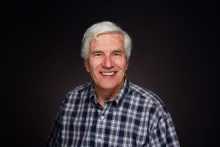
Steve Shafer was born and raised in Seattle. He graduated from Queen Anne High School in 1959 and later graduated from Ambassador College, Big Sandy, Texas in 1967, receiving a degree in Theology. He has been an ordained Elder of the Church of God for 34 years and has pastored congregations in Michigan and Washington State. He and his wife Evelyn have been married for over 48 years and have three children and ten grandchildren.
