

Jorge de Campos
This transcript was generated by AI and may contain errors. It is provided to assist those who may not be able to listen to the message.
Can you really visualize your true, your real hope? Can we really visualize it? Is it based on sound moral values? Or is it just an intellectual knowledge of various biblical events? Think about you climbing, going up the stairs on a tall building. Now, you probably normally would not do it because you'll take an elevator, but imagine that you're going up through the fire escape and sometimes when I'm at the feast at an hotel, I sometimes climb up the fire escape just to get a bit of extra exercise.
But imagine you go and then as you stop on the next floor there's a window, you look at the view outside, and you go up another floor, you look at the view outside, and as you go up level by level, you get a better perspective of the environment around.
The same thing is true if you go to a tall tower or a tall restaurant. Like yeah, you have in Dallas, you have what they call the Reunion Tower. Understand that you've got to buy the tower before you can go up. I'm just joking. It's quite expensive to go up there, but anyway. But if you go up some sort of a tall building, you have an amazing view.
I mean, if really it's a tall building like 50, 60, 70 stories up and you look down, you see for instance at the rooftop of other buildings, you see swimming pools and things like that. It's rather amazing. But you have a better perspective of the reality. I mean, it's a reality that you see those buildings if you're on the ground floor and you walk around, but as you go further up and up, you have a different perspective. You have a different view. If you've never been up on one of those tall observation towers, do go because it is really an amazing view quite often to go up.
But on a spiritual level, as we keep God's early days and as we keep God's principles and laws year by year, it's like you're climbing up that stairwell or staircase that fire exit and you go to, after the first year, you go let's think it like to the first floor or second floor and you look out the window. You know, as you have time at God's feasts, you ponder, examine yourself, etc. And you start seeing a little bit of a better view of God's plan, of what you need to change. And as another year goes by, it's like you go another level up on that building as you're overcoming and you have a slightly better view.
It's the same reality. It's the same God's plan. It's not a new truth, but it's just your experience that you've had over the previous year and as you, quote-unquote, rehearse God's holy days again, you start understanding a little bit better God's plan. And as you are in the church, like imagine you're now 30 years in the church or 40 years in the church, it's like you're now on the 30th or 40th story of that building and that basic knowledge has not changed, but you just have a better perspective and understanding. And you have a better understanding of our goal, of our great purpose, year by year, and your hope hopefully increases.
And that is obviously if you are applying and living God's ways. If you're not applying and living God's ways, it's a safe year by year, you're just going down one level and you start losing that understanding, regretably. So the key is you've got to keep growing and applying it. But look at with me to 1st John chapter 3 verse 3. 1st John chapter 3 verse 3. It's talking about how much love God has for us, that we are His children and we're not yet what we shall be.
But then in verse 3 it says, And everyone who has this hope in him. Do we have this hope, this understanding, this vision, year by year, that becomes clearer and clearer and clearer of God's plan for us? Do we have that? And it says, and who has this hope in him purifies himself just as he is pure? You know, as we meditate and as we are year by year in the church and we practice the observation of God's commandments, God's early days, God's Sabbath, hopefully as we are obeying God, God blesses us with a deeper and more profound understanding of the same truth.
It's not a new truth, but it's just a deeper, more meaningful. And the key of it is that we have to live in a right degree of morality with God. In other words, we're obeying God's laws, we're doing what he tells us to do, what is pleasing in his sight, and in a sense, what you are doing in a form of an analogy, you are cultivating a garden.
The garden is your life and you are cultivating your garden and over the years, this, let's call it herb garden, is getting better and better. But if we're not cultivating it and we kind of let it run down, you will have thistles and thorns. And so our life needs to be continuously a work of cultivating it based on God's morality and principles. So my purpose today is to talk about our vision, that our vision and our hope needs to be based on a solid foundation.
And that vision and that hope culminates with our resurrection and eternal judgment. And so to kind of build up this message, which is framed around Hebrews chapter 5, the last section of Hebrews chapter 5, till the first few verses of Hebrews chapter 6, let's go to that. Because we're going to look at those verses in a little bit more detail in the approach that I'm taking today to us understand a little deeper our vision, which needs to be of the world tomorrow of the kingdom of God, which will be achieved through a resurrection and final eternal judgment.
So in Hebrews chapter 5 verse 8, it's talking about Christ and it says that he learned obedience by the things he suffered. Yes, Christ learned obedience. Yes, the Son of God learned obedience through the things that he suffered. He is the author. He is the beginner of our eternal salvation, as it says, because having been perfected, verse 9, he became the author of eternal salvation to all that obey. Oh yeah, yeah, it's the key factor. You've got to obey. It's like that example of climbing up that fire, okay, stairwell or that emergency well on the building. Obedience gives you that capability to grow. This obedience is like you're going backwards.
So he's the author. He is the beginning, beginner, he's the source of eternal salvation for us if we are doing our part and doing obeying God and doing what's pleasing in his sight. And he, Christ, was called by God as high priest. And so he's not only the beginner of our salvation, but he is the continued one as our high priest that is continuing to intervene for us day by day when you and I pray and we have the blessing as we heard in the opening prayer to appear in a spiritual way before God's throne. Yes, we still have sin, so this is symbolic that now we with God's early spirit, we are the two loaves still with leaven, but we can appear before God's throne. And that is further explained in Hebrews 10. And so he's our high priest. In other words, he's our defense advocate. He is the one that is saying when our accuser, Satan, goes to the father and says, look at what George will put your name there. Look at what your name there has done again. And you come to God's throne on your knees asking for forgiveness and being repentant in a moment of weakness or maybe you went as close to God as he should have been and you slipped up. And then your high priest, Christ, says, Father, cover his or her sins. He or she is repentant. He's walking in the light. She's walking in the light, but just help him and God forgives us. So Christ is our high priest, so he's not only the beginner, the author, but he is actually sustaining and maintaining and intervening for us on a daily basis. And then Paul says, in verse 11 of whom we have much to say, which is hard to explain since you have become dull of hearing.
This is quite an indictment because he is talking to, I believe it's Paul, but he's talking to the ones he's writing to, which were basically Jewish people that were in the church, and they have known God's principles, God's laws for a long time, not like the Gentiles, they just kind of had learned, but these Hebrews had known it for a long time. But they become dull of hearing because in this Christian journey it's easy to get tired when you climb from the 47th floor to the 48th. If you're doing that in one day and you just keep going up, the Christian life is like that. After a while you can get tired and oh well it's a lot easier just to go down, and that's a danger, and you become dull of hearing. And so Paul is giving a serious warning, yeah, for though by this time you ought to be teachers, yeah you should be doing better, you should be climbing up and yes, building on a foundation, but you should be, you ought to be teachers, you need somebody to teach you the first principles of the oracles of God, of the teachings of Christ. You need somebody to teach you the very basic things. You've forgotten the foundation.
Now the foundation hasn't changed, but you need to be building on it. You see, we still keep the holy days, but the understanding and the depth gets more profound and deeper as we maintain a moral value as we climb up this ladder. And so he says you ought to be teachers. You need someone to teach you again the very first principles of the oracles of God, and you have come to need milk and not solid food. You have come to a point where you just need the basic things like a baby.
You should be walking and you are crawling.
And so he says, but he says, for everyone who partakes only of milk is unskilled in the world of righteousness. You see, like Paul talked in Matthew 23 to the Pharisees, and he said, you bunch of hypocrites, because yes, you've done these things. You've been meticulous on these things, which you need to do, but you've forgotten the important part of the law, the weightier matters of the law, which is justice, mercy, and faith.
And the lesson to us is, are we just taking the Sabbath or the Holy Days as just, oh well, it's just another Sabbath, oh well, just another Holy Day, and well, you know, just, yeah, we keep the Sabbath, we keep the Holy Days. Or are we really taking it to a deeper, more profound meaning based on moral values and growing in spiritual knowledge because we are applying these principles in our daily lives and we're learning to discern right from wrong, because that is the meat. I'm not saying don't keep the Sabbath. I'm not saying don't keep the Holy Days. Please don't misquote me. But like Christ said, yeah, you should have done these things, but you should have considered the weightier matters of the law. Matthew 23, 23, justice, mercy, and faith. We need to do these things, but we gotta consider what's beyond the depth of it. And that's why it says, verse 14, but solid food belongs to those who are mature.
We are full of age, mature. You know, as you're climbing up this from 36 to 37 to 38 years in the church or whatever number of years it is, and you are learning and you're becoming more mature. Or maybe you're only two or three years in the church, but you are very committed, and you are learning from it. And that is those who by reason of use, by applying what you and I know or must do, have their senses exercised to discern both good and evil. You see, that is the meat of the matter. That is the solid food. In addition to keep, for instance, the Sabbath, the holidays, is understand the profound meaning of these foundational principles that we can take them a step beyond. Not new truth, but into true Christianity of justice, mercy, and faith.
Then, Paul continues in chapter 6, verse 1. He says, Therefore, leaving the discussion of the elementary principles of Christ, now, does it mean that we are not throw away God's holidays and all that? No.
But we need to take those foundational principles to a deeper, more perfect level. A more profound meaning. Let us go on to perfection. Like it said, Christ, you know, he learned to obedience by the things that he suffered. And therefore, having been perfected, perfected, as we read in Hebrews chapter 5 verse 9, we also, we're going to move on to perfection. There is obedience, not laying again the basic principles of the second, the bigger part of the six basic doctrines. And now he lists six basic doctrines, which are foundational. And, you know, foundation is something that stands.
If you have a building that is kind of destroyed, the foundation remains.
The foundation stands. And so we need to be building on that foundation solid stuff that is going to stand, like on a rock. And so the foundation stands. And now the interesting point is these six fundamental doctrines. I don't know if you've noticed, there actually are three groups. In other words, three groups. In other words, there's a pair. There's three pairs.
The first pair is repentance from dead works and faith towards God. The second group is doctrine of baptisms and of lying of ants. And the third group is the resurrection of the dead and eternal judgment. You see, we need to build upon these foundational doctrines.
The first pair being repentance and faith. We remember that. We rehearsed that just a few months ago through the Passover and the Dice of Unleavened Bread.
And the willingness, the deepness of that replication is understanding the spiritual value that we have to change from the old man to the new man, to a new person. We gotta change.
And that is repentance from dead works and belief, faith, trust.
The second pair, then, is baptisms and laying on of ants. That's a whole subject because the word is plural. Baptisms, plural. Right? And obviously, there is the baptism in water. There's a baptism of the Holy Spirit and there's a baptism of fire. Not gonna go into too much depth into those now, but the baptism of the Holy Spirit is what happens after the baptism of water through the laying on of ants. And you receive the Holy Spirit, which is also symbolized by the day of Pentecost. So we can see God's early days being role-played or rehearsed because those are basic principles. Those are foundational principles. And we have rehearsed those, in fact, this year, just recently.
The first pair and the second pair symbolically as part of God's early days. The third pair, which is in verse 2 as well, towards the end of verse 2, which is of resurrection of the dead and eternal judgment. That pair comes together. Those two come together. As we are approaching just a month or a little bit more to the rehearsal of God's early days that symbolize these basic, deep, profound teachings, which are basically the four holy days of festivals on the seventh month. What we call the full holy days. And so as we approach the season in just short of two months, some of you probably noticed this past week, the supermoon was beautiful. It was stunningly beautiful. But a full moon at this time reminded me that we were on that day two months exactly away from the beginning of the feast. Because the beginning of the feast is always on a full moon, right? The 15th of the seventh month. It's a full moon. So as we started contemplating, shortly, these festivals of the seventh month, it is important for us to rehearse and remind of ourselves of the meaning of these two basic doctrines which we need to build upon. You see, in 1 Corinthians 2, verse 9 and 10, we see that God reveals to us deeper truths by His Holy Spirit. Through His power of His Spirit, He reveals to us additional truths.
If you read in 1 Corinthians chapter 2, verse 9 and 10, He says, I have not seen nor have entered into the heart of man the things which God has prepared for those who love Him. We just don't get it. But, He says, God has revealed them to us through His Spirit. Now, you and I have a deeper understanding. It's the same truth. I'm not talking about new truth.
It's the same truth, but you just have a deeper understanding every year as you love God's way, because God pours His Spirit on those that obey Him.
If I remember correctly, it's Acts 5.32. God pours His Spirit on those that obey Him.
And the more you have of His Holy Spirit, the more you start understanding these deeper, significant principles, truths. It's not new truth, but you just understand it more profoundly. Every year that you go to the feast, or that you have one of the festivals, or a Passover, or a lemon bread, it is as if you understand it a little better. I hope, because if you're not, maybe you're actually going down the stairs, but we need to be going up the stairs. When we go down the stairs, it's like a vicious circle. When you go up the stairs, it's what I call a virtuous circle.
So we need to be going up the stairs on that virtuous circle. And God, as He gives us more of His Holy Spirit, and you and I need to pray daily, daily, for your daily bread. Right?
And spiritually speaking, your daily bread is God's Holy Spirit. So we need to pray daily for God's Holy Spirit, that we have more of God's Holy Spirit.
And because it's God's Spirit that reveals to us, that teaches us, that opens our mind to deeper understanding of His truths. It says, for the Spirit searches all things, yes, the deep things of God. You see, Satan has deceived mankind, the whole mankind, even on the principles of simple things like resurrection and judgment. Oh yeah, mankind's deceived about that.
I mean, I remember I went to a funeral of one of our relatives. My wife remembers very well.
And there was this priest putting, after closing the coffin, and says, now this coffin is sealed till the day of the resurrection. Hey, you understand something? But the next sentence he said, but now he's in heaven looking down at us.
You know, they wash away the whole meaning of resurrection because it's just words.
Satan has deceived mankind about death, about resurrection, about eternal judgment.
People don't understand it. I mean, one of the most beautiful, one of the most beautiful, wonderful understandings that God has given us through His Spirit is the meaning of the lost great day, of the eighth day, of the hope for those that never had the hope.
That is such an encouraging, comforting, in a sense, differentiator between the Church of God and every other so-called Christian religion.
That is such a beautiful, but that's probably where most people are more confused about that eternal judgment, and they really don't understand it. The meaning of that eighth day, really please pay attention to messages during the last, the eighth day, the last day of the feast, the eighth day, because it is a meaningful, meaningful and beautiful meaning for all of us.
You see, and mankind doesn't understand these resurrections. In John 5, we see there Christ talking, and in verse 28, John 5, verse 28, John 5, verse 28, he says, Do not marvel at this, for the hour is coming in which all who are in the graves.
Now, brethren, all means all. All means all. The good, the bad, and the ugly.
Taking a praise from another. All! So, who are in the graves will hear his voice. You know what, they will resurrect, and will come forth, will come alive. Those who have done good to the resurrection of life. Who have done good? Those that have been justified.
Those that have been overcoming. Those that are faithful to the end. Those are the ones that, at that time, have done good. The others that have not repented yet, are deemed amongst those who have done evil. It's not saying that they are condemned.
Some Bible versions translate that to the resurrection of condemnation, but that is not a correct translation. It's the resurrection of judgment. The Greek word is chrisus, which means judgment. And so, there will be a resurrection of the rest, and they will be judged.
You see, Paul, when he's talking to Felix as well, you read that in Acts 24, he's the governor of Judea, and he's talking about judgment, the resurrection and judgment.
And Felix was afraid when you read in Acts 24 verse 25. And basically, what Paul was saying, there's going to be an evaluation of your moral conduct.
And we also know from 1 Corinthians 15 verse 22 through 25, there is a time factor.
First Christ, then those that are Christ, those that have repented, that have been justified, that have been faithful till the end, those that are Christ, Christ's, at his coming.
And then the other ones, the rest, later.
It also reads in 1 Corinthians 15 verse 52, that will be at the last trumpet, at the last trumpet.
The resurrection of those that are Christ's, of those that are faithful till the end, will be at the last trumpet.
And you read also in Leviticus 23 verse 24 that there is a holy day that symbolizes trumpets.
Now granted, trumpets are blown when a nation goes to war, they are blown on the Sabbaths, they are blown at the beginning of the moufs, they are blown at festivals.
But when it's talking about a holy day that represents trumpets, it's a prophetic meaning. It's not saying, oh well, therefore that means that trumpets are blown, therefore it means pedicost. No, this is prophetic. And the last trump, when it basically means there is a certain number, and it will be the last. And where you get those number of trumpets is in Revelation.
In Revelation 8 verse 1 and 2, it talks about the seventh seal. And when the seventh seal is open, there's silence in heaven, and there are seven trumpets.
And the last one is the seventh. It's got nothing to do with the beginning of the moufs.
It's nothing to do with, it's this holy day or that holy day, it has to do specifically with the holy day that represents those prophetic trumpets, which is the first day of the seventh month, the day of trumpets. Which, symbolically, as you know, represents that last year of the Great Tribulation. And that's a whole section to explain that. This fourth holy day out of seven, as you know, they are seven, the fourth is in the middle, isn't it? There are three before and three after. So this is the pivotal holy day. This is the pivotal holy day. It's the one in the middle, right? It's not Pentecost or whatever people make it to be, because that's human reasoning and that's incorrect. Thus, it's pivotal. And why is it pivotal? Because it's when Christ comes, it's the lost trumpet, it's the resurrection, it's the reward of the saints, and it's the time when those that destroy the earth will be destroyed. Where do I get that from? Obviously, Revelation 11, verse 15. If you turn to it, Revelation 11, verse 15 says, at the lost trump. Revelation 11, verse 15.
The seventh angel sounded. The seventh is the lost trumpet, because there were seven trumpets, seven angels with the trumpet, so he sounded. This is the last one, the seventh trumpet.
And it says, then Christ becomes the God of the swold. You see, Satan is the God of the swold.
Not Christ, but from that moment, he's the God of the swold.
And what happens? You read in verse 18, the nations were angry.
Oh, there's an invasion from outer space! You will see more and more talk about UFOs, which is Satan's inspiration to try and think that we as human beings are going to be invited by aliens. And so, when Christ comes, all these aliens are invading us. We've got to fight him. And so the nations will gather. We know it. He comes. That's the lost trump. What happens to the lost trump? There's the resurrection, right? We read that in 1 Corinthians 15, 52. But then, the resurrection is putting it in different terminology when the dead will be judged.
What do I mean by that? Because some dead are judged to be resurrected now, and some dead are judged to be sleeping, to remain sleeping, for another thousand years.
So the dead will be judged. That's what you read here in verse 18. The nations are angry, but it's the time also. You see, so it's the time where there's war. The nations are angry, but also it's the time where there's great joy. Because you and I, God willing, if you and I remain faithful till the end, we will be changed from corruptible to incorruptible, from mortal to immortality. And so, it's the time of the judgment of the dead, as we read in verse 18. And secondly, it's the time that God should reward his servants, whether they're prophets, or saints, or whoever fears his name, small and great. In other words, the time where you will be given your job description for eternity is going to be X. Your job description for eternity is going to be Y. In other words, you will rule over 10 cities, you'll rule over five, you will be given your reward. And towards the end of that verse, it's the time that Christ is going to destroy those who destroy the earth. Christ is coming, and they will be destroyed.
So, the nations will fight, the returning Christ, and we will be of Christ if we are faithful till the end, because those who will be with Christ at that moment, as you read in Revelation 17-14, are those that remain faithful till the end.
And the whole creation will rejoice, as you read in Romans 8, towards the end of Romans 8. The whole creation waits, as you read in verse 19, for this time when you and I will be born into the family of God. And that's the time when our bodies will be redeemed from a mortal body to a spiritual body. You read more about that in Philippians 3, verse 20 and 21. And as those nations get wiped out, and you can read about that in Zechariah 14, verse 3-5, where it says Jesus Christ will return and his feet will be on the Mount of Olives, east of Jerusalem. So this alleged invasion from outer space from aliens, well, maybe to the world, God is an alien, but that's Christ coming. And we will be resurrected, meet him in the clouds, and then from there, we'll come to earth, and Christ will be at the Mount of Olives, and he'll destroy those nations that are gathered to fight against him, as we read in Zechariah 14, verse 5, as I may refer to it. And so we'll reign with him for a thousand years, as we see in Revelation 5, verse 10. And if you turn with me to Revelation 20, verse 6, Revelation 20, verse 6, it says, blessed and holy is he who has part in the first resurrection, because they resurrected straight to eternal life, not to physical life.
And that is a great blessing. That is a great blessing.
And so we'll reign for a thousand years, as it says at the end of verse 4. Well, we'll reign eternally, but we'll reign for a thousand years on earth, and we'll reign eternally in the new heavens and new earth. After that, we read that Satan first is put in prison, symbolized by the Day of Atonement, and then we got the millennium symbolized by the millennium, or the Feast of Tabernacles.
And then at the end of that millennium, Satan is released for a short while, and then we can read that he will then be thrown into the lake of fire after that, as we read in verse 10 of Revelation 20.
And beyond that, what do we have? We have then the resurrection, because it says in Revelation 20 verse 5 at the beginning, the rest of the dead did not live again until the thousand years were finished.
So the rest of the dead then will resurrect. And those dead is reflected in verse 11 and 12, because it says, I saw a great white frown, and him that sat on it, from whose faith the earth and heaven fled away, and there was found no place for them. And we know elsewhere that it's Christ that is going to judge the world and the nations, because judgment was delegated to Christ. In verse 12, and I saw the dead, small and great, standing before God. So those, the rest of the dead, will now resurrect, because it says standing before God, and the books were open. It was the Bible. And then they'll be led to understand the truth, and they'll be able to have an opportunity which they never had, a chance that they never had, even though it's their second physical life. It's their first real opportunity.
And they're going to learn the truth. We're going to teach them. And they have an opportunity to be baptized, obviously to repent, to receive a Salih spirit, and to live to live eternally, if they remain faithful, till the end of that probation period that they will have. Because that's what it says. And another book was open, which is the Book of Life. So if they repent and they really are faithful till the end, they will have eternal life.
But they all will be judged according to their works. So whatever they've done today, or yesterday, will be taken into account. And that's what Christ said in Matthew 11, verse 20 through 24, and Matthew 12, 39 through 40, that it says, in the day of judgment, it'll be more tolerable to Sodom and Gomorrah and others than those Pharisees that lived at that time.
It also talks about the queen of Sheba who come there. They all resurrected at the same time.
And then those that don't repent will then will be joined by those that have not repented today and have known the truth, because it says those are what it refers in verse 13, the sea gave up the dead who were in it, and the death and Hades delivered up the dead who were in them, and they were judged each one according to their works.
So those dead, yes, will be judged according to their works, and that death and Hades, death and the grave, will cost into the lake of fire, which is a sick and death. And that's the eternal judgment. There is eternal judgment. All will be judged according to their works. There will be a resurrection, and there'll be a time of judgment. And that's foundational doctrine, as Paul describes in Hebrews chapter 6. But every year as we rehearse it, we understand it a little deeper. So let's go back to Hebrews chapter 6, because it says, he says, we'll, in verse 3, he says, let's move on to perfection. And that means we've got to work on this, and grow in this knowledge and the standing, and he says, and this will do if God permits.
And this is what I'm trying to do today. Rehearsing these things so that we get a deeper level so we can move on to perfection. Because it is impossible if we go back down the stairs till we get down to ground level, it is impossible to be enlightened again.
Because if you have tasted the heavenly gift, which is God's holy spirit, and have become the four partakers of that spirit, you've been given the grace from God, and given his spirit to overcome, and you've tasted those good works of God, and the power of God's holy spirit, you've tasted it. But if you go back and fall away, it is impossible to renew them again to repent us. Why? Because they do not want to repent. They do not want to repent. That is the unforgivable sin because they have rejected the power of God, which is God's holy spirit. They don't want to repent. And if they don't want to repent, it's impossible for them to repent. They've rejected God's power that would help them to overcome. They've thrown it away. They blasphemed God's holy spirit.
And then it says in verse 7, You see, For the earth which drinks in the rain that often comes upon it, and bears herbs useful for those by whom it's cultivated, receives blessing from God.
Like I mentioned at the beginning, at the introduction, we gotta be cultivating God's moral values in our lives. And we gotta bear fruit like herbs that are useful for eternal life. In other words, our life, we need to be cultivating in our life good stuff, good fruits, using God's holy spirit, a good herb garden in our life. But if what are we cultivating or neglecting, if we bear thorns and briars and fossils, it is rejected and near to be cursed, whose hand is to be burned. So, we have a great blessing, a great understanding through these holy days.
But if we don't take it seriously and take it to a deeper meaning every year and every day of our lives, we could be allowing thorns and fossils to grow in the garden of our lives.
Our morality could go down like the world, and the end would be to be burned.
In the second death.
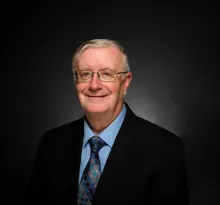
Jorge and his wife Kathy serve the Dallas (TX) and Lawton (OK) congregations. Jorge was born in Portuguese East Africa, now Mozambique, and also lived and served the Church in South Africa. He is also responsible for God’s Work in the Portuguese language, and has been visiting Portugal, Brazil and Angola at least once a year. Kathy was born in Pennsylvania and also served for a number of years in South Africa. They are the proud parents of five children, with 12 grandchildren and live in Allen, north of Dallas (TX).
