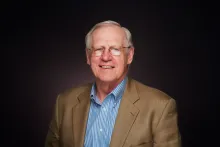


Mark Welch
This sermon was given at the Anchorage, Alaska 2021 Feast site.
This transcript was generated by AI and may contain errors. It is provided to assist those who may not be able to listen to the message.
Psalm 93. If you would, turn with me. What we're going to do is go through some Psalms here. The name of these Psalms, or the title of this, is a cluster of Psalms. The title of this cluster is the Royal Psalms. There are many Psalms in the Psalms that are called the Royal Psalms, and they're so named because they speak of the coming rule of Jesus Christ. The coming kingdom of God, the coming rule of Jesus Christ. This particular cluster is, to me, personally very exciting and inspiring.
As I read the plan of God, what God is planning to do with the coming of Jesus Christ. We're going to take a look at these Psalms. We go from 93 to 100. It is debated by scholars whether Psalm 100 is a Royal Psalm. I'm going to say that it is, and I think that when we get to that, you'll see why I'm saying that. But these Psalms give a foretaste of the coming kingdom. They give a shout-out, and they demonstrate the kingdom rule of Jesus Christ. Because the Feast of Tabernacles is a picture of God's coming kingdom, then we will see many feasts of Tabernacles themes as well.
We have two sets of themes. The first theme is the Lord reigns. That's the shout-out. That's the theme. The Lord reigns. Now, the second set of themes is our response to the rulership of Jesus Christ. Our response to the coming rulership of Jesus Christ. It is a five-fold response, tying right into the kingdom, tying right into the Feast of Tabernacles.
These five themes are what we do. This is our response. These five themes are worship and humility. Two, thankfulness. Thankfulness. Three, joyful singing. You know, the Feast of Tabernacles is a lot about singing, a lot about music. Joyful singing. The next theme is the fourth theme is generosity. And the fifth theme is obedience. So, worship, humility.
One, thankfulness, joyful singing, generosity, obedience. And we will review these as we go along. I do give credit to some writers who have written on this subject. The Bible reading program has a lot of material in this. I found some very good information in the new Bible commentary as well. So, I do give credit to those authors. So, we start out with the invincible rule of Jesus Christ, Psalm 93.
The Lord reigns. That's it. The coming Kingdom. God reigns. Jesus Christ is coming to this earth. He is clothed with majesty. The Lord is clothed. He has girded himself with strength. Surely, the world is established so it cannot be moved. Christ is coming to bring stability and peace to this earth and will not be shaken or moved again. Your throne is an everlasting throne of old. It is everlasting from of old, Psalm 93. Now, it talks about some of the destructive forces of nature, specifically the floods.
So, verse 3, the floods have lifted up, O Lord. The floods have lifted up their voice. The floods lift up their waves. And we think about the floods that were, well, in Europe in the summertime. The horrible floods in Europe. But also, the hurricanes that have come through up through the south. And then up through the eastern seaboard, as far as well way into New York State and into New Jersey and even further north than that.
And we see this terrible, terrible destructive flooding even in our country. And yet, God is saying here that the Lord on high is mightier, verse 4, mightier than the noise of many waters, than the mighty waves of the sea.
So, we get frightened or perhaps terrified by waves, by storms, by floods. But God is mightier than all of this. And we can think of many examples in the Bible that really show how powerful God is when it comes to storms and waves. And just one example, keep your place here, but if you would, please turn with me to Luke, I should say, pardon me, Mark, chapter 4.
And we want to see here what Jesus Christ was doing about storms and waves. It's pretty interesting. So, we'll go here, and it has to do with a storm and a wave and so forth.
And we will start in Mark 4 and verse 35.
And the waves beat into the boat, so that it was already filling. Have you ever been in a situation like this? We were in Homer, Alaska this summer with my son and his family, and we were on one of those bays, we were fishing, trying to catch halibut. And a storm came up, and they said, what do you think we should do? I said, I think we should head for shore. That is big water and big waves and a little boat. So, it can be kind of exciting. So, a great, in this case, the Sea of Galilee, the great windstorm arose. Waves beat into the boat. It was filling. But he, Jesus himself, was in the stern asleep on a pillow.
And they awoke him and said to him, teacher, do you not care that we are perishing? Then he arose and rebuked the wind and said to the sea, peace be still. I'm sure Christ must have thundered those words that command out. And the wind ceased. It was a great calm. We've probably been on water, haven't we? And it was today, the Lake Hood, for a while, it was like glass, just real smooth. And that's quite an amazing sight. And that's what happened. And he said to them, why are you so fearful? How is it you have no faith? And they feared exceedingly and they said to one another, who can this be? That even the wind and the sea obey him. So this is just a New Testament example from our Lord and Savior that really fulfills what Psalm 93 is talking about. Storms, wind can be pretty scary, but not to worry, Jesus Christ is mightier than all of them. And he's going to control everything, every weather situation in the coming kingdom. So getting back now to Psalm 93, your testimonies are very sure, and holiness adorns your house, O Lord, forever. Holiness adorns your house, O Lord, forever. Now let's go to Psalm 94, again, another royal psalm. O Lord God, to whom vengeance belongs, shine forth. I'm looking forward to that day. I don't like to see people die or be killed, and none of us do. But God is going to bring justice to those who punish and who make the weak suffer. We've seen a lot of that and read a lot. I don't do much reading about it. I know enough to kind of know what's going on, but in Afghanistan, the horrible things happening there. And Christ is coming to settle the score. He's coming to settle the score. He's coming to teach those people, and all of those kind of people, whether they be in the Western Hemisphere, Eastern Hemisphere, whatever, that there is a better way, and that way is of peace and of love. Rise up, O Judge of the earth. That's Jesus Christ, the Judge of the earth. Render punishment to the proud. O Lord, how long will the wicked triumph? And then it goes on and explains how they live their lives. And they break in pieces, verse 5, your people, O Lord, and afflict your heritage. They slay the widow, the stranger, the murderer, the fatherless. And yet they say, the Lord does not see, nor does the God of Jacob understand. And then he says, understand, God says, you senseless among the people, and you fools.
When will you be wise? And God says, He does hear, He does see. And God is coming to settle the score and to teach them a lesson, speak to them in the only language that they can understand. The Lord knows the thoughts of man, verse 11, that they are futile. I think one translation has it, that they are vain. Now He turns to us and gives us some instructions, some Christian living principles here.
While we wait for the kingdom, blessed is the man whom you instruct, O Lord, and teach out of your law, that you may give him rest from the days of adversity, until the pit is dug for the wicked, and the Lord will not cast off His people, nor will He forsake His inheritance. So God will never leave us, nor will He forsake us. Dropping down to verse 17, and how many times have perhaps we thought of this this past year, so with the troubles and the trials of people suffering so much. Unless the Lord had been my help, verse 17, my soul would have settled in silence. If I say, my foot slips, your mercy, O Lord, will hold me up. Ever feel like we're slipping, falling, about ready to, you know, crash and burn? Your mercy, O Lord, will hold me up. In the multitude of my anxieties within me, your comforts delight my soul. And so the throne of iniquity will not be established forever, but the Lord, verse 22, has been my defense and my God the rock of my refuge. So a good Christian living principle. Why we wait? We understand that God is for us. Okay, now let's go to Psalm 95, and we're going to see several of the themes here. Several of the themes here of the feast. And the first one is the theme of singing. O come, let us sing to the Lord. Let us shout joyfully to the rock of our salvation. Psalm 95.1. Let us come before His presence with thanksgiving. So the Feast of Tabernacles is a time of thanksgiving, a time of thankfulness. And we have a lot to be thankful for. Let us shout joyfully to Him with psalms, for the Lord is the great God and the great King above all gods. In His hand are the deep places of the earth, the heights of the hills are His also, the sea is His, for He made it, and His hands formed a dry land. God is the Creator. O come, and let us worship and bow down. This is another theme. Worship, worshiping God, and bowing down before God. Worship and humility through prayer. And this is what we do as well at the Feast of Tabernacles. So again, in this, so far, this Psalm 95. Joyful singing, thankfulness, worship, and humility. Worshiping, bowing down. Let us kneel before the Lord our Maker. For He is our God. And we are the people of His pasture and the sheep of His hand. We are God's sheep. And there's nothing really proud about a sheep. Sheep aren't very proud. They don't, they don't succeed. A domesticated sheep don't succeed very well on their own. They're going to be either eaten by a coyote or lion or mountain lion or whatever. They're pretty defenseless creatures. That is the domesticated sheep. And so there's humility in being a sheep. So let's leave this place for a minute and jump ahead to Psalm 100. Now, we'll go to this Psalm a couple of times, but... Verse 3 of Psalm 100. Know that the Lord, He is God. Psalm 100, verse 3. And it is He who made us, and not we ourselves. And that's a very humbling statement, but it's a good humbling statement. We are His people and the sheep of His pasture. So it's good for us to know that we are humble little sheep. We haven't made it on our own. We haven't accomplished a lot on our own. In fact, anything good that we've accomplished has really come from God. There's just no doubt about that. So, the firm knowledge that not we ourselves, not we ourselves, we don't belong to ourselves. You know, we belong to God. And we didn't create ourselves. We didn't evolve. God created us. So, a firm knowledge of this particular passage, we are His sheep. We did not make ourselves. That is humbling. And it is a good humbling. It is a good humbling.
And there's comfort in knowing that. Okay, getting back now to Psalm 95. So again, the humble spirit, the humble attitude is what we need to have as well. And so, going back now to Psalm 95, the last part of verse 7. Today, if you will hear His voice, and if it sounds familiar, we remember that we read this in Hebrews, the third chapter. Do not harden your hearts, as in the rebellion. God wants us to be obedient. Obedience is the theme of the kingdom and the theme of the Feast of Tabernacles. And you are here in obedience to God. You are all here in obedience to God because you are keeping the Feast of Tabernacles. You are keeping the Feast of Tabernacles. That is, you are obedient to God. Okay, so do not harden your hearts, as in the rebellion. And He talks about the situation of the Israelites, how they tested God, and that God was reaved with them, and He allowed them to die in the wilderness. Now, let's move on to Psalm 96. Again, the Feast of Tabernacles themes. Verse 1, O sing to the Lord, a new song! Sing to the Lord all the earth! Sing to the Lord! Bless His name! Again, singing, very, very important for the Feast of Tabernacles. We'll have congregational hymns, special music, choir music. We're going to have a lot of music and song during the Feast of Tabernacles. Proclaim the good news of the salvation from day to day. And we can be doing that as well here when you are up and around, and people ask you, where are you from and what are you doing? Don't! Let's not tell them we're at a church convention. Let's tell them, well, okay, we can use that word. I use that phrase. But let's tell them we're at the Feast of Tabernacles. So, once or twice today, somebody asked me, what am I doing? I say, church convention, Feast of Tabernacles. Maybe I should just drop the words, church convention. I'm here to keep the... and that's really important. I'm here to keep the Feast of Tabernacles. That is proclaiming the good news, the big salvation from day to day. Some people almost sound like they know what it is. Maybe they do. Maybe they don't. Maybe it'll be the first time they hear those words, Feast of Tabernacles. You know, Christmas and Easter is like eating sugar cubes compared to the real meat of the Holy Days. People get a big charge out of Christmas and Easter, but it's just like eating a couple of sugar cubes. This is the real meat. This is the real heart. And we can take the opportunity to proclaim the good news of God's salvation. Declare His glory among the nations, His wonders among all peoples. Maybe there are times when you can humbly tell people that you are blessed in a certain way, and you just, you know, God bless me, He did this for me, and humbly tell them that.
Okay, now down to verse 7. Down to verse 7, we're going to have another theme here of the Feast.
Remember I said generosity? Generosity is the theme of the Feast of Tabernacles.
We'll be doing it tomorrow morning and on the last day as well, on the eighth day.
So when we give that offering, that is a part, that's really a part of the Holy Days. That is something we do. That is something we're going to give to God. We're going to give to God an offering. Three times the word give is used, and then God gets more specific and says bring an offering. That is a part, a very strong part of the Feast of Tabernacles. I know many parents will give their child a dollar or something to drop in the offering basket, and that's teaching them a great lesson, a great lesson to give, to bring an offering.
The Bible is what Christ will be bringing. Again, Psalm 97, another royal psalm.
Righteousness and justice are the foundation of His throne. Now, He describes His coming here. In verse 3 and a few verses down.
This is the day of the Lord. This is the coming of the Lord. I'd like to just, again, hold our places here, and let's go to Zephaniah chapter 1. And let's look at what it says here. The great day, Zephaniah 1, and verse 14. The great day of the Lord is near. It is near. It hastens quickly. The noise of the day of the Lord is bitter. There the mighty men should cry out. That day is a day of wrath, a day of trouble and distress, a day of devastation and desolation. You know, there's a 200 million man army that's going to try to fight Jesus Christ. Trying to fight Jesus Christ is a bad choice. Zechariah tells us what happens to them. A day of devastation and desolation. And that's just Gog and Magog. And then there's the beast power in His armies as well.
So a day of devastation and desolation. A day of darkness and gloominess. A day of clouds and thick darkness. A day of trumpet and alarm against the fortified cities and against the high towers. So Jesus Christ is coming to conquer rebellion. Conquer rebellion. All the tanks, cannons, guns, airplanes, laser weapons. What are those things that buzz around? Anyway, I can't think of them. I want to think of helicopter. Drones, yeah, drones buzzing around. They'll be worthless when they try to go up against Jesus the Christ. Okay. So again, going back to Psalm 97-7. Let all be put to shame who serve carved images, who boast of idols. Worship Him, all you gods. Zion hears and is glad, and the daughters of Judah rejoice. Because of your judgments, O Lord, for you, O Lord, are most high, most high above the earth. You are exalted far above all gods. And we know that there's only one God. We understand that Satan thinks he's a god or wants to believe he's a god, but he's really not. There's only one God, and Lord Jesus Christ, of course. You who love the Lord, verse 10, hate evil, and he preserves the souls of the saints. So that is our job. That is what we're supposed to be doing. We're supposed to not only love the Lord, but we are to hate evil. We're to hate evil. Verse 12, Rejoice in the Lord, you righteous, and give thanks at the remembrance of His holy name. Okay, going on to Psalm 98, another royal psalm. O sing to the Lord a new song, for He has done marvelous things.
His right hand and His holy arm have gained, and His holy arm have gained Him victory. The Lord has made known His salvation, His righteousness He has openly shown in the sight of the nations. Well, we're not there yet, but when Jesus Christ comes, the mighty God, Jesus Christ comes, they're going to get the point. They're going to see Him in action. He has remembered His mercy and His faithfulness to the house of Israel.
All the ends of the earth have seen the salvation of our God. Well, not yet, not yet, but that day is coming. Sing joyfully to the Lord all the earth. Again, we get to do that now. We just sang songs of the coming Kingdom. What a wonderful way to start the feast. Break forth in song, rejoice and sing praises. Sing to the Lord with the harp.
Ah, now we've got musical instruments to harp. The sound of a psalm with trumpets and the sound of a horn. Shout joyfully before the Lord the King. We can really get into this. We can really enjoy the Feast of Tabernacles through this joyful song, joyful music. Let the sea roar in all its fullness, the world and all those who dwell in it. Let the rivers clap their hands and let the hills be joyful. Together, before the Lord, for He, Jesus Christ, is coming to judge the earth.
With righteousness, again, that theme of righteousness keeps coming through. With righteousness, He shall judge the world and the peoples with equity. Psalm 99, another royal psalm. And the theme here is the emphasis here is God's holiness. The Lord reigns, let the peoples tremble. He dwells between the carobim. There are other translations which state He dwells above the carobim. Let the earth be moved. Let the Lord is great in Zion, for He is high above the peoples.
Let them praise your great and awesome name, for He is holy. The King's strength also loves justice. That is fair judgment. You have established equity. You have executed justice and righteousness in Jacob. Exalt the Lord our God and worship at His footstool. Worship at His footstool. Another dictionary brings out worship at His mercy seat.
Worship at His mercy seat, because He is holy. Moses and Aaron were among His priests, and Samuel was also among those who called upon His name. They called upon the Lord, and He answered them. He spoke to them in the cloudy pillars of going back to the times of old. They kept His testimonies and the ordinance that He gave them. You answered them, O Lord our God. You were to them, God who forgives. That's one of the names of God. That's one of the names of Jesus Christ, the one who forgives.
The one who forgives us of whatever our sins are. He forgives us. Though you took vengeance on their deeds, those people who will die as they fight Jesus Christ, we understand that. They'll come up in the great white throne judgment, and they'll learn that, well, maybe I better worship Him this time. So, exalt the Lord our God, and worship at His holy hill, for the Lord our God is holy. So, let's conclude by reading Psalm 100. Psalm 100. This is the Psalm of Thanksgiving. This is a Psalm that would be good to memorize. I did memorize it one time.
It's been a while since I've gone back to it. But it's a wonderful Psalm of Thanksgiving. So, make a joyful shout to the Lord, all you lands. Serve the Lord with gladness. We hopefully will be focusing on gladness. God commands us in Deuteronomy to rejoice at the Feast of Tabernacles. He tells, and you shall surely rejoice. We're commanded to rejoice. I know for some it's going to be difficult because of trials and suffering, but we are commanded to rejoice. Come before His presence with singing. Know that the Lord, He is God.
It is He who has made us, and not we ourselves. Again, we commented on that earlier. We are His people and the sheep of His pasture. Enter into His gates with thanksgiving, and into His courts with praise. Be thankful to Him. Again, be thankful to Him and bless His name. Why? For the Lord is good. His mercy is everlasting, and His truth endures to all generations. So, to conclude, just to review the overall themes. The overall theme of these Psalms is the coming reign of Jesus Christ. The secondary theme is our five-fold response.
Worship and humility. And this is what we're going to do for these eight days. Worship and humility. Thankfulness. Joyful singing. Generosity. And obedience. Okay, so that is the end of my message for today. Hopefully, we'll all get a good night's sleep and a good breakfast tomorrow. We'll be back here tomorrow to celebrate the rest of this wonderful first holy day of the Feast. First day of the Feast and the holy day. So, we'll see you here tomorrow as well.
