

Roy Holladay
This transcript was generated by AI and may contain errors. It is provided to assist those who may not be able to listen to the message.
When I was younger, I used to do a lot of work. Initially, when I started working at IBM, I used to fix what they used to call punches and verifiers. I don't know what they are, but they were little machines that punched those little 80 column cards. I used to fix those 80 machines that fixed them and the ones that verified them. You know, you used to go into rooms that they had like 100 machines with people that... onto those things at high speeds. You have to go there and fix those things. And you have to go there in a suit. IBM, you know, blue suit and all this. Go there, take your jacket and just work and fix them. You get all dirty. I mean, you get really dirty. And then you've got to clean everything up, but clean yourself up because you have to go to the next customer and you've got to look like a businessman in a suit and all this stuff.
Meantime, you can get pretty dirty. And obviously everybody sees when you're dirty that they are dirty, but also you feel dirty. You know, when you are dirty and maybe you work in your car and whatever you've done and or in your tractor in a farm or whatever it is and you're full of dust, etc. You're painted in your house and you painted the walls and you know you're dirty and you just want to have a nice hot bath and get nice and clean. And on the other side, you will just add snow. And you look at the snow after the snow falls all over. It's just so peaceful and so clean. And it's a contrast that we are so dirty and we just want to wash ourselves up to be clean and how nice it will be that we can just clean like snow, really that clean. But you know, brethren, spiritually speaking, we should also desire to be clean because sometimes we are dirty. And the problem when we are dirty sometimes, we don't see it spiritually speaking. That's a problem. And sometimes we may be dirty spiritually and others may not see it either. Sometimes they are, they see, but sometimes they don't. We can hide it, you know? Now, I want you to turn to a scripture guy in Isaiah chapter 1.
Right at the beginning of Isaiah. And read verse 16. Verse 16 to 18. Isaiah 1, 16 to 18. He says, wash yourselves, make yourselves clean. And you know, that's what we want to do. You know, if I finish working on one of those punches and verifiers and I'm all dirty, I want to clean myself.
And if you finish painting the house or doing some work at home or work in your car or whatever it is, you want to wash yourself and make yourself clean. But spiritually speaking, God is signing out, wash yourselves and make yourselves clean. Put away the evil of your doings from before my eyes. Put that away. Seize to do evil. Learn to do good. Seek justice. Review your presence. Defend the fatherless. Plead for the widow. Come now and let us reason together, says the Lord. Though your sins are like scald, they shall be as white as snow.
And you know, even though we may be dirty and filthy and red or whatever, we'll be white like snow. Though they are red like crimson, they shall be as warm. As we approach the Days of Unleavened Bread and the Passover, it's always a good time to examine ourselves. And I really appreciate the sermonette which gave a different perspective into it as well, and all as we look into the Passover and to look at things, that we've got to examine ourselves.
But mankind as a whole is blind to the spiritual dirt, let's call it, that is around us.
And one of the reasons is because we kind of think we are doing okay. You know, life is okay. Look, we do have problems, but you are basically a good person. This is typically what man thinks. And if we've got problems, it's the other people who are giving us problems. It's somebody else's fault.
But we've got to look at ourselves, brethren, as we examine ourselves, because every year during the Passover, we are given this opportunity to examine ourselves. But it's a thing, we've got to do it all the time. But look, for instance, at James chapter 1.
Because as we examine ourselves, one of the things we do is we look at God's commandments. We look at God's law, and look at James 1, verse 22 through 25. It says, but be doers of the world, and not ears only deceiving ourselves. So we look at God's word, we look at God's commandments, we look at Christ's teachings, we look at the example of Christ, who we've got to imitate, and we examine ourselves. And as we examine ourselves, it says, are we doing as we should? Or are we just listening to it and deceiving ourselves? Deceiving ourselves that we are okay, that we are clean, we're not dirty. Brethren, we all have some little things to clean up a little bit. I mean, you just have to, you know, examine yourself, and a day or two goes by, and you notice that you said something to this person or to that person. In a way that, or I look, when I say you notice, I mean I notice, we all notice. I don't mean you specifically, but we all notice in ourselves, if we are examining ourselves, that we say something in a way that is upset the other person.
And, or we say that in a tone or in a way that hurt. And that's what we really have to do. We have to look at ourselves and say, hey, I can change a little bit here. I can change a little bit where I'm saying things in not such a nice way. Or maybe I thought, and out of this thought something came out of the mind and I said, wow, why did I think that way? I shouldn't have thought that way. So, continue in verse 23. For if anyone is a hero of the world, another doer. So we've got to do, we've got to listen to this and change and do. But if we're just hearing, we like a man observing his natural face in a mirror. For he observes himself, goes away and immediately forgets what kind of man he was. So we go into the mirror and says, oh, my tie is skewed, my hair is not straight, whatever it is. But when we walk away from the mirror, we forget that, you know, that hair man is got skewed, you know, whatever it is, you know. And we've got to look at that and we've got to say, hey, we forget what kind of man he was. But he looks into the perfect law of liberty. Brethren, God's law is a law of liberty. It's law of liberty because if we obey God's law and if everybody obeyed God's law, there'll be liberty in the land. And so if we're continuing it and not a forgetful hearer, but a doer of the work, this one will be blessed in what he does.
And so brethren, we've got to be doing. And when we're doing and we have Christ with us, our dirt, our sins will be white as snow.
You know, look at Psalm 103. Psalm 103, starting in verse 8. Psalm 103, starting in verse 8. It says, You know, if we are dirty and we are red, he'll make us white as snow. It says, he'll remove our sins from as far away from us as the east is from the west. Why? Because he's merciful, because he's gracious, because he's loving, he loves us greatly. But what does it make us possible? Is it just because he loves us? Yes, he loves us. And I mean, if I just say, well, I love you, does that sort it all out? He's done more than just say, I love you. And today, brethren, we want to look at the tremendous sacrifice of Jesus Christ that makes this possible. Because it's not just saying, imagine God could have sat in his throne and says, well, I love you, mankind. And that's it. I just love you.
But now, he did something specifically. He did something specifically. The church, the world, reads that God so loved the world, John 3 16. God so loved the world that sent his son to mankind to save us. Okay? Do we really get the depth of the meaning of that? I mean, quite often, just by reading that over, just kind of becomes just a statement. But do we get the depth of the meaning of that? Well, that's what we want to do today. Get the depth of the meaning of that, what God has done for us to prove his love. So it's not just saying, well, I love you. Therefore, he's done something else. And so let's look at Ephesians chapter 5. Ephesians chapter 5.
Ephesians chapter 5 verse 1 and 2. Therefore, be it the takers of God as the children, and walk in love as Christ also, as love does. So we ought to love one another. You know what's to have really care and not going concern for other people? We ought to really do like Christ, you know, suffer for others, have concern for others.
Others have done things wrong, just let it go and don't bite back and eat back and things like that. You know, it's be imitators of God as the children, walk in love as Christ also has loved us. And what has he done? He has given Himself for us. He has given Himself for us. You know, He was in the form of God. He was God. He was a creator, imitators. He gave His life for us. For one, His eternal life, He gave it up. And He became a human being just with human powers. Sure, He could ask God to intervene, but like when He was on earth Himself, He said, of me, I can do nothing. I have to ask for the Father, because He was a human being. He divested Himself of all the God powers that He had and became a human being. He gave Himself for us. But more than that, He gave Himself. When the Father said, we're going to do this, and He'll discuss it, and the Father says, this is what we're going to do, He said, I'll do it. He was the one that took that step forward and says, I'll do it. And He was well conscientious of what He had to do, because He wrote those prophecies that prophesied what suffering you would go through. So He was well conscientious of what He had to do, and He gave Himself an offering. That's a gift. There's nothing that you and I can do. It's a gift. It's an offering. It's a gift.
Like we were just talking in a car. We go down to Dallas, and a little girl said, quite often when Kathy goes down, she takes a little gift for the grandchildren. You know, a little gift, you know. So they're all excited.
So she said on the phone, Grandma, when you come down, I'm going to give you a gift. That's so nice to see the change around. And whatever it is, maybe she'll just do a drawing or something like that, you know.
But it's just the mental attitude of wanting to give from what, a three-year-old or whatever it is, you know. It's just lovely. And that God has given us, He says, an offering. And therefore, He says, being a taker of God as dear children, that's what we have to emulate and be the same. And that's what, like when the little girl said that to us, we just said, wow, so exciting.
Well, when we do that, like God does to us and like Christ did to us, how exciting must it be to God? You know, it's the same feeling that He has. So it's an offering, a gift. And a sacrifice. A sacrifice means, was the taking of life. He gave His life.
Mr. Luke, in a sense, gave His life for the church. He came here to serve the church. He gave His life. So it's a giving of life. And in Christ's case, a sacrifice to God that involved shaving blood, dying. You see, because life is in the blood. You can read that elsewhere. Life is in the blood.
So it involved, and that was a sweet-smelling aroma. That was a pleasing thing to God the Father.
And so, when we sacrifice for others, it's like when that little granddaughter says, I'll give you a present. It's a sweet-smelling aroma. It's a pleasant thing to God the Father. It's a sweet-smelling aroma. You see, that's what Christ did. And He had to offer Himself all His own free will, and nobody forced Him. Nobody took it from Him. Because even when Pilate and others asked Him who you are, He just kept quiet. Because that is spoken up, they would have not killed Him. And that's what Satan wanted Him to speak up, so they wouldn't kill Him, because it would spoil the plan of God.
Satan's got his tricks as weird in the sermon there, and that would have been another one. That's why he was under the pressure. Talk, talk, talk, talk. Because, and he talked and said to them who he was, they would have not killed Him. And if you had not been killed, the plan of God for you and I would have been spoiled.
That's why he had to keep quiet, like a lamp. He gave Himself. Nobody took it from Him.
A sacrifice. He had to give, and He had to die. He had to bleed. He had to bleed.
Look at Matthew 26. Matthew 26. We can observe the past over, and during the past over, we're going to read scriptures like this one, maybe not this one, maybe in one of the other Gospels. They all say the same thing.
But Matthew 26 verse 28. Matthew 26, 28. Take it forward. Say this. For this is my blood of the new covenant, which is shed for many for the remission of sins. Jesus Christ had to shed His blood, and during the past over, we take that little gloss of wine, which represents, symbolically, Christ's blood. This is my blood of the new covenant, which is shed for many for the remission of sins.
Christ had to give His blood, had to pour out His blood, and that's how He died for the remission of our sins. And every single Gospel, Matthew, Mark, Luke, and John, they all mention this is the blood of the covenant.
He shed it for us. And look in John, just let's see in John verse 19 verse 34. Because you and I know that that's how He died. When the soldiers came to Him to kill Him, or to make sure that everybody was there because they had to bury them before the annual Sabbath that was coming, they went to break the legs so that they would die quicker. But they did not have to do it to Christ because He was already dead. They didn't break His legs. Why? Because He was already dead. Why was He dead? Verse 34 says, But where were all the soldiers? You know, or as it should, or let me start reading from verse 33.
But when they came to Jesus and saw that He was already dead, they did not break His legs. Why? Because maybe it would be better. Or when one of the soldiers had pierced, as it should be in the translation, He sighed with a spear and immediately blood and water came out. So a soldier had come to Him and pierced His side all the way up into His heart, and blood and water came out, and then He died. And therefore, that's how He died. Therefore, when the soldiers came to see that they knew to kill Him by breaking legs, they didn't need to because He was already dead. Now, that is very well explained, Reverend, because there's a little bit of a translation problem there in our booklet, Jesus Christ the True Story. And if you don't have it, there is an issue there that you can read and look at it. It's very well explained that in this booklet. And in fact, there's another scripture elsewhere that some of the manuscripts have, but some in English do not appear, that support that. So very interesting for you to look at that. So please read that, because that's the reason why Christ died. He shed His blood. And that's why Satan wants to hide the scripture and say, oh, well, He died because His heart was weak.
Now His blood was shed, they murdered Him, and He was murdered, and His blood came out and wore a symbolic of God's Holy Spirit that washes us, the blood and the water. And it just came out, and He died. That's how He died, for the remission of our sins. And that's what we do at the Passover. We take that cup of wine, little cup, symbolic of the blood of Christ. And that's how He died, and that's how He gave His life. Look at John 6, verse 53. So brethren, Christ, yes, He was humiliated.
Christ was knocked around. They spat on His face. They slapped Him around. They scorched Him. They crucified. And they speared Him to death so that He bled. And then in John 6, verse 53, we read.
6, 53. When Jesus was still alive, He said, Then Jesus said to them, Most surely I say to you, unless you eat the flesh of the Son of Man and drink His blood, we have to eat His flesh and drink His blood. And that's what we do at the Passover. Symbolically, we eat the bread, which is the body of Christ, which is symbolically Christ living in us. So we're eating His flesh. That's what we're going to do every day. Christ's going to live in us every day of our lives. And we take off that blood symbolically, and that's what we're going to take every day. Come through that blood, through His flesh, to the Holy of Holies, which is God's throne, and ask for forgiveness. That's what we're going to do whenever we sin. And He says, Unless you eat the flesh of the Son of Man and drink His blood, you have no life in you. Whoever eats my flesh and drinks my blood has eternal life, and I'll raise him up at the last day.
55 and 56. For my flesh is food indeed, and my blood is leaky indeed. He who eats my flesh and drinks my blood abides in me, and I in him. We are required to take the symbols of the Passover. That's what it is. We have to eat that flesh and drink that blood. We are required to do that. And He says, He who eats my flesh and drinks my blood abides in me, and I in him. As the living Father sent me, and I live because of the Father so, He who feeds on me will live because of me. And in verse 63 it says, It is the Spirit who gives life. The flesh profits nothing. Our physical flesh. But it's the Spirit, the words that I speak to you are Spirit, and they are life. And so through God's Spirit, as we hear this, and these words, as we study them, as we live, we put them into practice, and we change our lives, and we take of those symbols. As we digest the Word of God, and we live that way, and as we realize and fully understand and comprehend Jesus Christ's sacrifice for us, and what it has done for us, then we can be near God through His sacrifice because of what He did for us. Let's look also into Ephesians 2, verse 12 and 13. But at that time you were without Christ being aliens from the Commonwealth of the Israel strangers from the covenants of promise having no hope, and without God in the world. So He's talking about Gentiles, and that's what they were, strangers. But now in Christ Jesus, you once were far off, have been brought near by what? By the blood of Christ. We have been brought near by the blood of Christ. He died. He poured His blood. He redeemed our lives by paying it with His life by giving of His blood for us. That's what killed Him. Look at also 1 John, chapter 1. Verse 7. But if we will walk in the light as He is the light, we have fellowship with one another, and the blood of Jesus Christ the Son cleanses us from all sin. So if we are trying to walk in the light, if we try to walk the right way, if we are really set up in doing the right thing, not only have we got fellowship with God, but we have fellowship with one another. Because that's our fellowship, our Christian fellowship, is because we are trying to walk the right way. And the blood of Christ is what makes it possible, is what cleanses us, is what washes us, is what cleanses us from all sin. Look at also Revelation, chapter 1. Revelation, chapter 1, verse 5. It says, And from grace be to you, and peace, starting in verse 4, From him who is and was and who is to come, and from the seven spirits who are before his throne, and from Jesus Christ, the faithful witness, the firstborn from the dead, and ruler over the kings of the earth, to him who loved us and washed us from our sins in his own blood. It's the blood of Christ that caused him to die, losing the blood, and that blood washed us from our sins. Look at also in Romans, chapter 3. Romans, chapter 3. Verse 23, through 25. We all have sinned and fallen short of the glory of God, being justified freely. In other words, being made right with God, being justified freely by his grace, through the redemption, that he is buying back. We've been bought back. We've bought back from slavery of sin. We've been bought back to life, by redemption that is in Christ Jesus, by Christ's life, bought us back. Whom God set forth as a propitiation, in other words, as a mercy seat, as something that expiates us, that forgives our sins.
That's the mercy seat. Remember, the mercy seat propitiation is another variety of the word of the mercy seat, that what it what sanctifies us. In my Bible, it's got a little marker there on verse 35 for propitiation, and on the side says mercy seat. I don't know if your Bible has, but mine has. So as a propitiation, you know, it was as a mercy seat by his blood. And you remember when the high priest went into the Holy of Holies, and where there was a mercy seat, he took the blood and he sprinkled the blood on the mercy seat because of his blood.
It's Christ's blood. That's how he is propitiation. In other words, that is how he passes over. The Passover wasn't a Passover. They were to put the blood on the doorposts. The Passover because of the blood symbolizing, pointing to Christ's blood, the Lamb of Christ, the Lamb of God. So propitiation by his blood through faith. Yes, through faith. I mean, if Christ did not have the faith that the Father would resurrect him, you would have not done that. But he had absolute trust.
The faith of Jesus Christ was that he had absolute trust that the Father would resurrect him. And that's why he did it. Through faith, to demonstrate his righteousness because of his forbearance, God has passed over. He passed over again the symbolism of passing over, passed over the sins that were previously committed.
So indeed, brethren, it is through the blood of Christ that our sins are forgiven that we are made right. Look also in Romans chapter 5. Romans chapter 5 verse 8 through 10. But God demonstrates his own love towards us. God proves his love towards us. He doesn't just say, well, I'll love you.
He demonstrated that love. In that while we were all still sinners, Christ died for us. He demonstrated, he proved that love he asked for us while we were sinners. So if he did it while he was sinners, now that we're trying to live God's way, how much more will he do for us?
So he goes on. God demonstrates his own love towards us in that while we're sinners, Christ died for us. For much more than having now been justified by what? By his blood. We shall be saved from wrath through him. For we, if when we were enemies, we were reconciled to God through the death of his son.
We're made at one to God through the death of his son. Much more having been reconciled, we shall be saved by his life. Because he's alive. We shall be saved, which is future. And it's also interesting, he says at the end of verse 9, we shall be saved from wrath through him. Brethren, there's going to be a day of God's wrath on planet earth.
And he says, we'll be saved from wrath. We'll be protected from that wrath. And that is a blessing that he gives us. He says, we'll be saved from the day of God's wrath through him. So, brethren, it is Christ's blood, the sacrifice that he did. And can we see how big that sacrifice is? Can we see how much we owe to him thanks for that sacrifice? Can we see the value of the sacrifice of Christ? Turn with me also to Colossians chapter 1. Colossians chapter 1, starting verse 13. He has delivered us from the power of doctors and conveyed us into the kingdom of the Son of his love.
So, we are now, as we're trying to live God's way, we in a sense are already living the way of the kingdom, which is living the way within God's laws. The kingdom of God is not the eye yet, but we're already spiritually living that way, the way that people, everybody, all of mankind, will be living when it will be ruled under the kingdom of God. In whom we have redemption through his blood? We have redemption. We have the forgiveness of sins through his blood.
He says the forgiveness of sins. He is the image of the invisible, the firstborn of all creation. And then in verse 20, it says, And by him, to reconcile all things to himself by him, whether things on earth or things in heaven, have he made peace through the blood of his cross. So, brethren, there's no question that Christ, through his blood, made the supreme sacrifice that you and I need to really appreciate, because if it wasn't for that, we would be condemned for eternity. That is a gift that we have, as we read earlier.
It's a sacrifice. It's a gift, and he gave it himself for us. And then let's look at 1 Corinthians chapter 10. Verse 16 and 17. 1 Corinthians chapter 10, verse 16 and 17. The blood, the cup of blessing, which we bless, is not the communion. It was the fellowship of the blood of Christ. We're all sharing that blood of Christ. And so that cup of blessing, which we bless, is not the communion of the blood of Christ. The bread, which we break, is not the communion or the fellowship of the body of Christ. And so when we partake of the Passover, we take that one, which is the sharing of the blood of Christ, which is us sharing that same blood.
And we take that bread, which is sharing that same body. It's one body, and it's one blood that's given to us. For we, through many, although many, are one bread and one body. We are one body. The Church of God, we are the body of Christ. For we all partake of that one bread. We all partake of that one bread.
And then in chapter 11, verse 25, it says again, in the same manner, 1 Corinthians 11, verse 25, in the same manner, you also took the cup of the supper, saying, This is the cup of the new covenant in my blood. So as we're going to be partaking of the Passover soon, let's keep that in mind.
It's the cup of the new covenant. It's the blood of the new agreement. Do this as often as you drink it in remembrance of me. It was how often do we keep the Passover? Once a year. So as often annually as we do a memorial, a remembrance, we do a remembrance annually. And it says, this is what we do in remembrance of him. So, brethren, the new covenant, that's the new agreement between you and I, between us, you and I, and God, individually.
Our agreement with God, our agreement we made, is sealed at baptism and renewed every year at the Passover. We make that commitment, we renew that commitment, and it's redone, re-renewed because of the blood of Christ. The blood is the blood of the covenant. The new covenant is the new covenant in his blood.
So that's what it is. Now, I want to look at a Jesus Christ sacrifice from looking at the angle of the offerings they did at the temple. And that is very well described in Hebrews, starting in chapter 9 and verse 10.
At chapter 10. Hebrews 9 and 10. So we're going to look at Hebrews 9 and 10 very briefly, and look at what was done in the temple, and get the meaning of what he did, and get some symbolism there of that sacrifice. Now, from verse 1 to verse 7, it describes the physical tabernacle. So in Hebrews 9, verses 1 through 7, describes the physical tabernacle.
So it's just showing, and take this in your own Bible study, read Hebrews 9 and 10, and look at that to see a little bit more about the sacrifice of Christ. And so you can see from verses 1 to 7, the tabernacle. And then in verse 8 says, The Holy Spirit indicating this, that the way into the holiest of all was not made manifest while the first tabernacle was still standing. So, and this is actually talking about the Day of Atonement, when they went once a year, they made the sacrifice, and they went into the Holy of Holies.
So it's showing that this indicating was not yet manifest. And this is the way, the way. Now it's important, it is the way. And you and I know the way. The way is Christ, through His blood, as we're going to see it.
But it's Christ. Christ is the way. How we can get into the Holy of Holies. What's the Holy? It's God's throne. So when you and I pray, we've been baptized, we've got Holy Spirit, we have access to God's throne. We have access to the Holy of Holies. And so when you and I pray, we have access to that. How? Through Jesus Christ, He is the way. So let's continue in verse 9.
And it was symbolic for the present time in which both gifts and sacrifices are offered which cannot make Him who perform the sacrifice perfect in regards to conscience. And so, yeah, they did the sacrifices. They did the sacrifices every year to get into the Holies of Holies. But they did sacrifices regularly, daily, morning and evening, etc. There's different sacrifices. But specifically about this sacrifice of getting into the Holies of Holies was once a year. And this was symbolic for the present time in which both gifts and sacrifices are offered which cannot make Him who perform the sacrifice perfect in regards to the conscience. So in regards to His conscience, He was not clean, wasn't washed. Those sacrifices did not clear the conscience. Concerned only with foods and drinks, various washings and fleshy ordinances imposed until the time of Reformation, which is the time Christ came, and Reformation reformed that through Christ. Christ, but Christ came as high priest of the good things to come, which with the greater and more perfect tabernacle not made with hands, that is not of this creation.
Not with the blood of goats and cows, but with His own blood He entered the most holy place, once for all having obtained eternal redemption.
And that brethren, Christ with His own blood, He died, having obtained. And then after He was resurrected, after His resurrection, there was a wave sheath. And the wave sheath, think about it, was the ceremonial official way of Christ going through to the Holy of Holies, to the Father, and presenting Himself to the Father.
So it says here, He offered once for all having obtained eternal redemption for us. So that was once for all, He went through that, and now He sits at the right hand of God's throne, so He's in the Holy of Holies, and is there intervening as a high priest for us, whenever we come upon Him and we call upon His name.
Look at in verse 14. How much more shall the blood of Christ, who through the eternal Spirit offered Himself without spot to God?
It was the blood of Christ. The blood of Christ. That's His dying, His life, through the blood, He gave His life.
Offering Himself without spot to God, cleanse your conscience.
Note the previous one, the conscience could not be cleaned. Thus the cautious is cleaned. Cleanse your conscience from dead works to serve the living God.
Brethren, this is the way. It's a new way. This way was not known before. This is the new way. This is the way that we have. It's the new way.
There we can go through His blood, can have our conscience cleaned. All our persons cleaned. Our conscience does not have to bother us anymore.
Because Christ's blood cleanses our conscience of past dead works. Dead works because we don't do that anymore. That's why they're dead. But now we do living works to the living God. That's why we serve. Now we serve the living God, doing the right things and obeying His law. And for this reason, He, Christ, is the mediator of the new covenant by means of death.
Through His death is the mediator, is the one that intercedes for us.
For the redemption of the translations under the first covenant, that those who are called may receive the promise of eternal inheritance. Brethren, it's important for you to understand the word covenant here. A covenant is in Greek.
Now, in Greek, the word covenant, and forgive me, my Greek accent is not very good, but it's something like diathake.
It's basically a word that means covenant, but it also means testament. It's the same word in Greek.
The same in Greek, that word can be translated covenant, in other words, can be translated to mean an agreement, but it can also be translated to mean a testament, which is a word that you make like your lost living world or your lost world and testament. You know, it's your world.
It says, when I die, this is my world. This is my testament. So that word covenant in Greek can be used with both meanings.
Because in the end, a world is an agreement, is a contract. So it's God. And that's why in verse 16, when it talks about for where there is a testament, in Greek is the same word as we saw in verse 15.
So it could have been translated for where there is a covenant or an agreement. You see, that's why then you say, and in verse 17, for a testimony is enforced, because it's a testimony or a covenant, it's an agreement. So in Greek it's the same thing. And that's what the new covenant is. It's the lost world and testament of Christ that He did and He's silent with His blood.
That's what it is. And that's what it is. So it's His lost world and testament.
And therefore, it completes that section in verse 20, saying, this is the blood of the covenant which God has commanded you. Then likewise He sprinkled with blood both the tabernacle and all the vessels of the ministry.
And this represents Christ's blood being sprinkled in the tabernacle and all the vessels so that we all have access to Christ's blood.
And according to the law, almost all things are purified with blood. And without shedding of blood, there is no remission of sins, basically. That's what it is.
Christ's blood was shed for the remission of sins. Why? Why is it that without the shedding of blood, there is no remission of sins? Why? Why is it required that blood be shed? Because the law says, life for life. So if you and I have sinned, as we all have, we've got a death penalty on us because the salary or the wages of sin is death.
So that's it. An only way that we can get life back or bought back is by another life.
And so the life is Christ's life that buys our life back, life for life. And the life is in the blood. And so by the shedding of blood, that means giving His life, it buys us back.
That's why it's so important that we understand the sacrifice of Jesus Christ and His blood being shed for us. That's what buys us back.
It is important for us to understand and to understand the depth and the significance of that, which actually is a proof of God's life for us.
Because the analogy I quite often give to people is, if I had the power, which I don't, but if I had the power of creating a tiny little ant, would I be prepared to die and become a ant and die a ant so that the ant could become a human being?
Wow! I don't know if I would be able to do that for a ant, but Christ did for us. Wow!
So, brethren, without shedding of blood, there is no remission of sins.
Let's continue in verse 26. He then would have had to suffer often since the foundation of all, but now, once at the end of the ages, He has appeared to put away sin by the sacrifice of Himself.
You see, the high priest had to do sacrifices every year, but now, Christ did it once, and He's paid.
He don't have to do it again. Why? Why do they have to do it again and again and again and again? Number one, because He doesn't do it. I mean, if you have to go back to the motor mechanic to fix your car, and you go back again to fix the car, and go back again to fix the car, because He hasn't fixed it.
But Christ has fixed it once and for all. Don't have to go back. He's done it.
So that's it. He's done it. He's done it once to put away by the sins of Himself, and He's appointed for man to die once, but after this, the judgment.
After this, we will be judged.
So Christ was offered once to bear the sins of many, to those who eagerly wait for Him. He will appear a second time, apart from sin, for salvation.
And yes, He will appear a second time. And the second time, there will be the resurrection, and those that love Him, those that are He's that are Christians, the true Christians, will be resurrected, and they'll be saved at that time.
It is wonderful when you start understanding and putting this together. Continue reading in the next chapter in verse 3.
For then, would they not have ceased to be offered? In other words, if those sacrifices were really, really forgiven people, for the worshippers once, for if I would have had no more conscience of sins.
So they had to read that again. Why? Because they were not sufficient. But the sacrifice of Christ, please, sorted out forever.
Then continue a bit further. Verse 12.
But this man, that's Christ, offered one sacrifice for sins forever, sat down at the right hand of God.
And verse 14. For by one offering, He was perfected forever, those who are being sanctified. Now, note, it's being sanctified. It's a process. It's an ongoing process. You and I are being sanctified while we live. We are being made separate. We're being made different. It's a process. We're not yet there. It's a process.
Verse 17. And then He adds, Their sins and their lawless deeds I will remember no more. He will put away our red sins away like the East is from the West, so that it will become white like snow. You'll become white like snow.
Look at it also in verse 19 and 20. Therefore, brethren, have boldness to enter the holiest by the blood of Jesus. Brethren, you and I need to have boldness when we pray. Do you consciously recognize, because you have God's Holy Spirit, through Christ's blood, that you are entering the holiest of holiest in heaven? You have access through your prayers to the throne of God.
So enter boldness by a new and living way. What is this new and living way? It's through Christ. It's Christ. That way didn't exist before. He created for us through the veil that is His flesh. Through the veil. Through the veil. The veil was His flesh. His veil. And through the blood, the blood made it possible. He died for us. But now, through His flesh, we can live and we can be living and being with God.
So, and then look at it. Let us draw, verse 22, near with a true heart of full assurance of faith, having our hearts sprinkled from an evil conscience. Cleaned from that evil conscience, and our bodies washed with pure water. And that's correct. He had blood and water came out and washed with that.
And then, and then he talks about, looks, make sure that you don't forsake the assembling of ourselves together. And then it goes on, verse 26. For if we sin warfully, now, if we've known these things, and we have the same fellowship as we heard through the blood of Christ and through the body of Christ, and we have fellowship with God and fellowship with one another, don't forsake the fellowship with one another. There's a value in fellowshiping, Christian fellowshiping, like we heard in the sermon there. There's going to be imbalance, but there's a strong value in through Christian fellowship, particularly on the day that God is blessing it, such as the Sabbath and the Holy Days. So don't forsake it, as the manner of Psalm is.
And then, verse 26, if we sin warfully imply that forsaking for fellowship is one of those sins, and if we sin warfully, after we have received the knowledge of the truth, there no longer remains a sacrifice for sins. Wow! That means there could be the unforgettable sin, the unpardonable sin. So brethren, let's look in verse 29. How much more worse punishment do you suppose will be through... will he be thought worthy, who has trampled the Son of God and the fruit, counted the blood of the covenant by which he was sanctified, a common thing, and insulted the Spirit of grace.
You see, we cannot trample the sacrifice of Jesus Christ. It's such an important sacrifice. It's such a sacrifice that you and I need to consider. Now, I want you all to meditate on the following thing as we approach the Passover and Dyson 11 bread. Meditate on the sacrifice of Christ.
Meditate on the price that he spied for your sins and for my sins, for our wrong approaches and actions. Because, understand, God had to give his Son for us. Now, think about it. If you have to take one of your sons and say, take him and kill him, and watch them killing him unjustifiably, and do nothing and allow it to happen, would it hurt you?
That's very painful. For a father to do that is very painful. So, the father gave something, and Christ himself also gave because he was willing to come to earth and give his life for us.
Now, with that in mind, I want you to read Isaiah 53. But I'm going to read Isaiah 53 in a different translation.
And it doesn't matter which translation it is, I would like to, in fact, recommend you to read in various translations during this period to actually meditate on the meaning of Isaiah 53.
I'm going to read it in this translation, which happens to be the New Living Translation. That's follow me in whatever translation you want.
But meditate on it, because you see what Christ prophesied before a body's death.
Now, who has believed our message to whom as the Lord revealed his powerful arm? Now, consider this. What God has done, in other words, my servant, in other words, my servant, that's God's servant, the father's servant, which is Jesus Christ, grew up in the Lord's presence like a tender green shoot, like a root in dry ground.
There was nothing beautiful. In other words, when Christ came and grew up as a physical human being, there was nothing beautiful or majestic about his appearance, nothing to attract us to him.
I mean, he was just a human being like others. Even if he would disappear amongst the Jewish community, they wouldn't even know who he was. They had to be pointed out.
Even Judas, after being there, said, well, it's him, you know, right at the end. And they had seen him for so many years, been around, but they still had to point him where he was because he was just like nothing beautiful or majestic about his appearance.
He was despised and rejected. Yes, he was despised and rejected as a human being. A man of sorrows, acquainted with deepest grief. He turned up, we turned our backs on him, and look the other way.
Yes, when he was killed, people turned his backs and said, oh, let him be killed. He was despised, and we did not care.
Verse 4, yet it was our weakness he carried, it was our sorrows that weighed him down. And we thought his troubles were a punishment from God.
People say, ha ha, God is punishing him. Look at it, you know. A punishment. But he was a punishment that, you know, they thought was a punishment for his own sins.
But he was pierced because of us, for our rebellion, crushed for our sins. He was beaten so we could be whole. He was whipped so we could be healed.
All of us, like sheep, have strayed away. We have left God's paths to follow our own. Yet the Lord laid on him, laid on Christ, the sins of us all.
He was oppressed and treated harshly. Yet he never said a word. He was led like a lamb to the slaughter.
I mean, if you're a farmer, you're probably not far better than me, but if you, when you take a lamb to the slaughter, it doesn't make any noise.
Probably Cliff can tell you that more than I can. And the, but it's, that's, that's, and the sheep is silent before the shearers.
He did not open his mouth. Unjustly condemned, he was led away. No one cared that he died without the sermons. Nobody cared, oh, he's got no children and they're killing him.
No care, no one cared that his life was cut short in midstream. But he was struck down for the rebellion of my people.
He had done no wrong. He had never deceived anyone, but he was buried, buried like a criminal. He was put in a rich man's grave.
But it was the Lord's good plan to crush him and cause him grief. It was God's plan to allow him to be crushed and to be grieved.
Yet when his life is made an offering for sin, you'll have many dissembles. Well, you'll have a lot of children.
And then sons of God and brothers and sisters. He'll enjoy a long life. And the Lord's good plan will prosper in Christ's hands, in his hands.
When he sees all that is accomplished by his anguish, he'll be satisfied. Look at what will be accomplished.
The kingdom of God and millions of human beings will become in that family, in that kingdom. Wow! And because of his experience, because of what he went through, my righteous servant will make it possible. It'll be possible because of what Christ has done for many to be counted righteous, for you will bear all their sins.
I'll give him the honors of a victorious soldier because he exposed himself to death. He was counted among the rebels.
He bore the sins of many and interceded for rebels. It's a lovely scripture to read about what Christ did. And he knew he was going to do that. And he knew what he was going to suffer.
So, brethren, let us comprehend fully what Jesus Christ did for us. What a great sacrifice he offered. He offered himself for us. And though our sins may be red and dark and filthy, we can be washed, and we can become white as snow, through Jesus Christ's sacrifice.
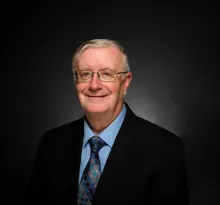
Jorge and his wife Kathy serve the Dallas (TX) and Lawton (OK) congregations. Jorge was born in Portuguese East Africa, now Mozambique, and also lived and served the Church in South Africa. He is also responsible for God’s Work in the Portuguese language, and has been visiting Portugal, Brazil and Angola at least once a year. Kathy was born in Pennsylvania and also served for a number of years in South Africa. They are the proud parents of five children, with 12 grandchildren and live in Allen, north of Dallas (TX).
