

Jorge de Campos
This transcript was generated by AI and may contain errors. It is provided to assist those who may not be able to listen to the message.
I grew up on a farm several years ago. As I have mentioned, we were sharecroppers. Anyone who's ever worked on a farm or a corresponding occupation knows that there are a lot of dirty jobs that one can get involved in. I used to ride the back of a hay baler, and to me that was one of the dirtiest jobs, simply because the baler was constantly kicking up dust, grass, weeds, and a hardy, high old silver as you went down through the field.
Then we had a wire where you tie the wires, and they had grease all over them. Invariably, you got something in your eye, and you tried to get it out. You were a mess from that time forward. How many of you here ever mucked out a barn? Several of you have done that. When you muck out a barn after a winter, when all the livestock has been housed inside in the stalls, and it's funny, you look at a stall.
I remember the first time I saw one, it was about two feet below the door. I wondered why? That's a big drop-off. As time went on through the winter, that stall grew, and by the end it was two feet high. The cow was ducking to get out because you don't throw all of that muck out during the winter. It just stays there. You throw straw in on top of it, and then it just keeps growing one layer after another. So there comes the invariable day when you get the manure spreader out, you get your shovel, pitchfork, and you go after it. You clean all of that out.
When you come back to the house, the rest of the family does not want to see you until you have changed. We didn't have running water growing up. In fact, I didn't have running water until I went to Ambassador College. The main way I had to get rid of odors or dirt or this type of thing was either to stand on the side of the house with one of my brothers with the tea kettle pouring water over me, which was extremely cold coming up out of a well, or get a bar of soap and go down to the creek, which was my preference.
I'd go down to the creek and jump in with the snakes. Who knows what was in there, because it was all dirty and mucky. But at least it was water. I would soap up and try to get clean when I would come back to the house.
Think of the dirtiest jobs you can imagine. Have any of you ever seen men coming out of a coal mine at the end of the shift? They're just absolutely covered with coal dust, having been down there. You begin to realize why many of them have black lung disease if they're breathing this stuff all the time underground. Do you remember pictures of the mudslides that took place last year, maybe the year before?
In Colombia and Venezuela, where in some cases parts of villages were just absolutely covered in mud. Mudslide coming down the hillside and just covering the houses, the businesses, the streets, and dozens of people just buried alive at the time. You look at that bleak landscape and you just see desolation, mud, stones, tops of buildings sticking up.
It's a scary sight to look at. Now, with all of that, change the scene a little bit. Let's think of a wintery scene, the middle of winter, and one that hopefully all of us have experienced at one time or another. That is, watching fresh snow fall. There's nothing more beautiful than big snowflakes, wet snowflakes falling, covering the trees, the bushes, and the ground. Nobody out there yet. Nothing tromping on it. You have maybe a foot or two of snow. Everything is covered.
The landscape is covered with a carpet of snow. It's totally white. Nothing has marked it yet. When cars begin to drive down the road and people begin to walk through it, you see all the animal tracks and after a while begins to melt. It's not quite as beautiful, but when it first falls in that way, there's nothing more beautiful than to see a fresh carpet of snow. Now, with that contrast in mind, I'd like for you to turn to a scripture that I think captures the essence, the contrast of what I've been talking about here.
Let's go over to Isaiah 1, verse 16. God tells the people of Israel, Judah, wash yourselves, make yourselves clean. So God says, clean yourself up. Put away the evil of your doings from before my eyes. Cease to do evil. So in this case, God wants them to clean themselves spiritually of the evil, their evil doings and evil ways.
Learn to do good. Seek justice. Rebuke the oppressor. Defend the fatherless. Plead for the widow. Come now and let us reason together, says the Lord. Though your sins are like scarlet, they shall be white as snow. And though they are red like crimson, they shall be as wool. So God is talking about what happens when our sins are forgiven.
We may be totally filthy and dirty, scarlet, crimson color, and yet God will come along if we truly repent and forgive us of our sins. And we become white like snow in His eyes. Dramatic change takes place. We humans are very good at cleaning ourselves up when we become physically dirty. We become obsessed with dirt. And they go around cleaning on themselves constantly. It is obvious to us and to others if we are filthy. If you've been working outside cutting the grass, or working out cutting trees down, or whatever, you come back into the house. You've been perspiring and you're dirty. You've got grass clippings that have covered you, or whatever.
You come in, your children, your wife, your mate knows that you've been out, and it's obvious that you're filthy. And it's obvious to you, too. You want to go in, take a shower, get cleaned up, take a bath, comb your hair, put on clean clothes, and you just feel so much better after you do that. We can get so dirty, and yet we can become so clean. It's easy for us to do it physically, especially with all the modern conveniences. Your clothes get dirty, what do you do with them?
Throw them in a washing machine. Your plates, your dishes get dirty, you put them in a dishwasher. You get dirty, you go into a shower or a bathtub. When we're spiritually dirty, or spiritually filthy, it's not as apparent to us and to others as it is physical dirt, is it? But we don't always see it in ourselves. The Scripture reveals that mankind is spiritually blinded to the truth, into his own spiritual state. And that's very true. The Bible tells us that every man does what seems right in his own eyes.
James, the Lord's brother, explained in James 1, that we must be doers of the law, doers of the Word, and not hearers only. He said if you're just a hearer, it's like somebody looking in a mirror or a glass. You see yourself, you see the dirt, you see how disheveled you might be, and you go away and forget what type of a person you truly are. But you and I are to look into the perfect law of liberty, as the Bible says, and see our spiritual condition.
And then we're to take what the law of God says we need to be doing, and we're to clean ourselves up. The Spirit of God reveals to us, as we study the Word of God, what our spiritual condition is like. As the Passover approaches, we realize that we need to examine ourselves. We need to prepare ourselves to take the Passover. We are quickly approaching the Passover. We have one more weekly Sabbath, and then comes the Passover.
As Isaiah 1 states, even though our sins are like scarlet, they can be white as snow. What makes that possible? What makes it possible for us to have our sins as white as snow?
Well, there was a tremendous sacrifice offered up, so that we might become that way. We want to look today at what the Bible has to say about Christ's sacrifice and makes all of this possible for us. And that you and I can come before God on the Passover, or we can go to God every day, admitting our sins and crying out to Him for forgiveness. Let's back up to Psalm 103, beginning in verse 8, Psalm 103, verse 8. Psalm 103, verse 8, through about verse 14, shows how all of this is possible, what God does for us. Because you and I cannot forgive our own sins. We cannot clean ourselves up spiritually as far as the forgiveness aspect of having our sins forgiven. But we read this about God, that the Lord is merciful and gracious, slow to anger and abounding in mercy. He will not always strive with us, nor will He keep his anger forever. He has not dealt with us according to our sins, nor punished us according to our iniquities. For as the heavens are high above the earth, so great is His mercy toward us, or toward those who fear Him. As far as the east is from the west, so far has He removed our transgressions from us. So who is it who forgives our sins? God does. He says when He forgives them, He removes them as far as the east is from the west, totally away. As a father pities his children, so the Lord pities those who fear Him. He knows our frame. He remembers that we are dust. So God Almighty knows who we are, and yet He is willing to remove our sins from us. He is merciful. He is gracious. He is kind. Remember John 3.16? John 3.16 says, For God so loved the world that He gave His only begotten Son, but who would believe on Him? He would not perish. So God so loved the world. God so loved humanity. We're not talking about the globe here, but human beings. God so loved all of us that He was willing to give His Son as a sacrifice. But it says God so loved the world. What was the basis of His motivation? What was His love for mankind? Let's turn back to the book of Ephesians, chapter 5. Ephesians 5, and we'll begin to read here in verse 1. Chapter 5 and verse 1. Paul says, Therefore be imitators of God as dear children, and walk in love as Christ also has loved us. Notice, God loved us so much that He gave His only begotten Son. Christ loved us and has given Himself for us. I want you to notice a theme here. It is the love of God, the mercy of God, the grace of God, that makes it possible for us to be forgiven. That is the basis for God's action, the basis, the motivation that He has. It says, He has loved us and given Himself for us, and offering in a sacrifice to God for a sweet-smelling savor.
Again, you find that He has given Himself for us as an offering. An offering is a gift, something that you give. He gave Himself freely as a gift to God. A sacrifice is a taking of life, or the shedding of blood. Christ willingly gave Himself, and He was willing to give His life. He shed His blood, and it was a sweet-smelling savor to God, something that was acceptable to God. Why was it acceptable? Because Christ's sacrifice was able to atone for our sins. Let's go back to Matthew chapter 26 and verse 28.
Matthew 26 and 28, we read this every Passover. But it's good for us to concentrate on this ahead of time, as we found out last week. Jesus Christ, explaining to His disciples here about how to observe the Passover, where He instituted the New Testament symbols. Verse 28, He said, this is My blood of the New Testament. Well, let's back up to verse 27. He says, He took the cup, He gave thanks, He gave it to them, saying, drink from it all of you. For this is My blood, or this represents My blood of the new covenant, which is shed for many for the remission of sins. Notice, Christ shed His blood. He was going to have a spear crammed into His side, have His belly ripped open, have His urine and blood come flowing out. Why? So that many of us could be forgiven. As it says here, for the word remission means the forgiveness of sins. So that you and I might have our sins forgiven. We need to realize the terrible price, the high price that was paid. In Mark 14, verse 24, these are some of the parallel accounts here. In Mark 14, verse 24, He said to them, This is My blood of the new covenant, which is shed for many. So again, we find that He shed His blood for the many. That sacrifice can apply to everyone who repents and asks God for forgiveness. In Luke 22, I want you to notice here, Luke 22, verse 20, it says, Likewise also He took the cup after supper, saying, This cup is the new covenant of My blood, which is shed for you. So the cup of the new covenant and His blood, which was shed for you. When you read the word you, you need to think of that personally. In John 19, we read a scripture here that when they came to break Christ's legs, chapter 19, verse 34, it says, But one of the soldiers pierced his side with his spear, and immediately blood and water came out. Now, this is something that people have wondered about, thought about. Did Christ die of this spear wound, or was He already dead? You'll notice in verse 33, it says, When they came to Jesus and saw that He was already dead, they did not break His legs, but one of the soldiers pierced His side with his spear, and immediately blood and water came out. Now, why was Jesus Christ dead? Well, you go back to Matthew's account, and you find the Fenton translation. The Fenton translation adds a verse in Matthew 27, and it actually inserts basically this verse here, and it indicates that He was pierced in the side, and He cried out with a loud voice and gave up the ghost. If that's true, if that truly is in the Scripture, He would have died of that wound that took place. It does seem that why would Christ die before the others? We know He was weakened. He had been scourged and all of that. But the indication is that Jesus Christ, as we know, had been humiliated, knocked around, slapped around, spit on, had been scourged, crucified, and finally, apparently, speared to death. He died on that stake, and His blood flowed out. He gave His life for us. And the Bible says that He died, and by the shedding of His blood, you and I can have our sins forgiven. John records a lot of interesting facts that none of the other gospels do. Let's go over to John 6, verse 53.
John 6, verse 53. Christ gives a number of points here. Jesus said to them, most assuredly, I say to you, that unless you eat the flesh of the Son of Man and drink His blood, you have no life in you. So you and I, every year, when we take the Passover, we eat the bread, which is symbolic of His flesh, and we drink the wine, which is symbolic of His blood. He says, whoever eats my flesh and drinks my blood has eternal life, and I will raise him up at the last day. So if you and I continue to rely upon God for the forgiveness of our sins, and we look to Christ, to His sacrifice, to what He did in giving His life, then we have eternal life dwelling in us. For my flesh is food indeed, and my blood is drink indeed. He who eats my flesh and drinks my blood abides in me and I in him. And the living Father sent me, and I live because of the Father, so He who feeds on me will live because of me. And Christ comes and lives His life over again within us. So, brethren, you and I are required to take the symbols of the Passover every year. Now, let's notice in verse 63. Christ said, it is the Spirit that gives life. You and I, once we are baptized, have our past sins forgiven, have hands laid on us and received the Holy Spirit. It is the Spirit that imparts to us life and gives us the life of God to dwell within us. The flesh profits nothing. The words that I speak to you, He says, the words, what we have recorded here, these are spirit and they are life. These are the words of life, and they are spiritual words. They contain spiritual principles that you and I are to take and to reflect and meditate on, and to, in a sense, take in and assimilate them. We are to assimilate God's Word and to digest it, and it is to become a part of us. Brethren, we should never forget what Jesus Christ's sacrifice has done for us.
We should never forget the great price that was paid. I want you to notice some scriptures that perhaps we never really stop to reflect upon when it comes to this time of the year, or really any time. In Ephesians 2, verse 12, let's notice what Christ's sacrifice does for us. What it accomplishes. In verse 12, talking here about the Gentiles, that at one time you were without Christ being aliens from the Commonwealth of Israel, strangers from the Covenant of Promise, having no hope without God in the world.
Now, in a sense, that describes all of us, doesn't it? Today, spiritually, we are not converted. We don't become spiritual Jews or the household of God until we receive the Holy Spirit. But now in Christ Jesus, you who were once afar off have been brought near by the blood of Christ. So you and I have been brought near to God by the very blood or sacrifice of Jesus Christ. At one time we were out here wondering alone when God called us, opened our minds, revealed His way to us.
Then He brought us near. He brought us into a family relationship with the Father. I'm His Son. You're His sons, His daughters. We're part of that family. We're near. God is near to us. And through Christ's sacrifice, He's made it possible, as I've covered here recently, for us to have access to the throne of God, to approach God, to pray to God. Notice in John 1 and verse 7. 1 John 1 and verse 7. You'll probably find this quicker that way. 1 John 1 and verse 7. He says, But if we walk in the light, as He is in the light, we have fellowship with one another.
And the blood of Jesus Christ, His Son, cleanses us from all sins. So Christ's blood is what cleanses us from all sins. God doesn't take a bar of soap and a wash rag, but God takes the sacrifice of Jesus Christ. When you and I come to be baptized, there are two major things that happen that we always emphasize to anyone who is being baptized.
1. Have you repented of your sins? 2. Have you accepted Jesus Christ as your personal Savior? Based upon that, if we don't accept Christ as our Savior, if we don't accept what He did for us, then we cannot have our sins forgiven. So Christ, through His sacrifice, cleanses us from all sins. So we're brought into a very close family relationship with God.
We have all of our sins cleansed. Revelation 1, verse 5, reinforces this. Revelation 1, verse 5 says, And from Jesus Christ, the faithful witness, the firstborn from the dead, the ruler over the kings of the earth, to him who loved us, and again we find the love of God being personified here, and washed us from our sins in His own blood.
You wouldn't normally think about being cleaned up by blood, would you? But in this case, our spiritual filthiness, our spiritual self-righteousness, our filthy rags, as God says, God cleans us up, and He washes us from our sins. Notice Romans chapter 3. There are a number of scriptures that we could read. We'll read just a small handful of them here. Romans 3, verse 23. It says, Through redemption that is in Christ Jesus. We are justified. The word justified means to be made right with God, to be made innocent, or to be made righteous.
At one time, we were not in a right relationship with God. We were like two people quarreling all the time. We went our way. We wanted our ways. We lived contrary to God's law. But now, through Christ's sacrifice, we've been justified. Past sins have been forgiven. The wall, the barrier that stood between us and God, our sins have been removed. We've been made right with God. Through the redemption that is in Christ Jesus.
The word redemption means a ransom that is paid to buy a release. What if you were kidnapped? You and I have been kidnapped by Satan the Devil, by human nature, by this world. Then, all at once, you're freed. Your kidnapper says, million dollars will give him back to you. So, you pay a million dollars. You pay the ransom. You get the person back. This is what Christ did for us. He paid a ransom so that we could be released.
What was that ransom? It was his life. The shedding of his blood. Then, going on in verse 25, it says, Whom God set forth as a propitiation by his blood. The word propitiation is an unusual word here. It's the same word that is translated, mercy seat, in the book of Hebrews. We find that God sent him as a propitiation by his blood. God extended his mercy by Christ's sacrifice. The mercy seat is that seat which expiation or forgiveness takes place. That's why it's called the mercy seat. We go to God. We repent. We ask God to forgive us. We ask for mercy and forgiveness. So, God extends that to us as a propitiation by his blood through faith.
It goes on to say, to demonstrate his righteousness because in his forbearance, God has passed over the sins that were previously committed. Notice even the term here, God passes over our sins. God overlooks our sins. He remits our sins. Think the King James Version uses remission. The word simply means a passing over or letting go unpunished. What is the punishment we all deserve for sin? Well, we read verse 23, all have sinned. Chapter 6, 23 says the wages of sin is death. We deserve death, but God does not extend that punishment to us. Christ bore it for us. He died. He shed his blood so that we do not ultimately have to die spiritually.
Chapter 5 of the book of Romans, verse 8. Chapter 5, verse 8, but God demonstrated his own love toward us. Notice again how the love of God figures into this. Do you stop and think about when you come to the Passover every year? About God's love and how the Passover demonstrates the love of God, the concern, the mercy of God? God demonstrated his own love toward us that while we were still sinners, Christ died for us.
So he died while we were still sinners before we repented. Much more than having now been justified by his blood. So again, we are justified. We are made right or just in God's sight.
We shall be saved from wrath through him. We are forgiven of our sins by his sacrifice, by his blood. We are going to be saved by him living in us through his Holy Spirit. Now in Colossians chapter 1, let's go back to the book of Colossians. Colossians chapter 1. We'll begin to read here in verse 13. It says, He has delivered us from the power of darkness. So you and I have been delivered from the clutches of Satan the devil. And he's conveyed us into the kingdom of his Son, of his love, in whom we have redemption. So here we find something else that occurs. We have redemption through his blood. Now again, the word redemption means a ransom.
And you'll find that we are redeemed. The ransom is through his blood, even the forgiveness of sins. So because of his shedding his blood, that was the price, that was the ransom price that was paid so that we might be forgiven.
And then in verse 20, So, brethren, you and I can have peace with God. We can have peace with one another through the sacrifice of Christ.
Look at it this way. If God were willing to give his Son, and Christ were willing to give his life, so that you and I might have peace with him, that the barriers, the hostility, the enmity, all of that would be broken down and could be forgiven. Should we not be willing to do the same with one another? If there is any one that we, there is hostility with us, our enmity between us, our problems with us, that we can realize the tremendous price that was paid to be able to eliminate that, and that we need to do our best to bring peace, and it comes through the blood of his cross. That means, partially, that we've got to be willing to admit when we're wrong.
If you ever had somebody you couldn't get along with, and finally, you had to do what? Well, you had to admit where you were wrong. Generally, it's not just one person, but both. As long as we're both willing to admit, well, you're right, I'm wrong, I did this, I'm sorry, forgive me, guess what? What are we doing? Well, we're doing the same thing we do when we repent. We're admitting our mistakes, our sins, and we're asking God to forgive us. Okay, with all that in mind, let's go back to 1 Corinthians chapter 10. 1 Corinthians 10 and verse 16. 1 Corinthians chapter 10.
Verse 16. Paul, describing here to the church in Corinth about the Passover observance, he says, The cup of blessing, which we bless, isn't not the communion of the blood of Christ. The word communion means fellowship or partnership or participation, something that we jointly do together. When we take that cup, when every one of us, the night of the Passover, when the blood or the wine is passed around, we are taking in common the blood of Christ and the bread which we break. Is it not the communion of the body of Christ? We, though many, are one bread and one body, for we all partake of that one bread. When we come, there is a fellowship, there is a partnership, there is a participation. We are the family of God. We are the children of God. We sit before God only because of what his son was willing to do and what God was willing to do. We partake of those symbols. We say, yes, I accept Christ's sacrifice. It is a memorial. It is a reaffirmation of our willingness to trust in Christ and his sacrifice. We have not given up. We have not quit. We are still striving for the kingdom. We have year after year done so.
In chapter 11, verse 25, He says, in the same manner He also took the cup after supper, saying, this cup is the new covenant in my blood. I want you to notice that the new covenant was established in the blood, or by the blood, of Jesus Christ.
He is shedding his blood. This dew, he says, as often as you drink it, that is once a year on the Passover, in remembrance of me. We do it to remember him. The new covenant was established with the shedding of the blood of Jesus Christ. A new agreement took place. Jesus Christ described what that agreement was. Let's go back to the book of Hebrews, Hebrews 9 and 10. There is no scripture in the New Testament that I know that more clearly explains what Christ has done and is doing for us.
In chapter 9, verses 1 through 7, it describes the physical tabernacle and the two rooms, the instruments, a paraphernalia that we're in inside of that tabernacle. In verse 8, it says, the Holy Spirit, indicating that the way unto the holiest of all was not yet made manifest while the first tabernacle was still standing.
Verse 7, the previous verse, tells us that only the high priest was able to enter into the Holy of Holies. That was only once a year on the day of atonement. Indicating that the way unto the holiest was not made manifest, you and I didn't have direct access to that.
Yet we read in chapter 10, verse 20, just flip over the page here in my Bible. Verse 19 says, Therefore, brethren, having boldness to enter the holiest by the blood of Jesus, by a new and a living way which he consecrated for us through the veil that is his flesh.
Remember that when Jesus Christ was crucified, that veil was ripped in two, demonstrating that now you and I have access directly to the Father. We can come and pray to God.
That's what verse 8 is talking about. Let's drop down, coming back to chapter 9 again, to verse 12.
We find that Christ is entered into the holy of holies, but not with the blood of goats and calves, but with his own blood. He entered the Most Holy Place once for all, having obtained eternal redemption for us. He's obtained eternal redemption where we can be redeemed, bought, paid for.
Again, the paying of a gift or a ransom, expiation, deliverance, or release by the receiving of a payment. When you and I repent, we ask God to forgive our sins. God accepts Christ's sacrifice as a payment, and his blood covers our sins. That's what you did when you were baptized. All your past sins, up to that point, were forgiven, but we still sin. We've got to go daily and ask God to forgive us of our sins. That sacrifice continues to be applied. He says, once for all. People keep asking the question, or I've heard it asked, Is Christ going to be crucified in the future again, or in some future time? Here it says, once for all. He's done it once. He did it for everyone. He's not going to come back and do it again. God will give us each a chance, an opportunity for salvation. If we blow it, that's it. But God will give us that opportunity. Verse 14 says, How much more shall the blood of Christ, who through the eternal Spirit, offered himself without spot to God? Without spot means without sin, without blemish to God. Cleanse your conscience from dead works to serve the living God. So he has cleansed, or purged, our conscience from dead works. Other than the past, our works, we may have had works. You know that people can have works, but those works are dead works. They don't lead to life, they lead to death. Because they're not motivated by God's Spirit. You and I need to be serving the living God. And so we've had our conscience cleansed or purged from those dead works. God wants us to serve Him, not just our own ideas about how to serve Him. For this reason, He is the mediator of a new covenant by means of death for the redemption of transgressions under the first covenant. So all those under the first covenant can have their sins forgiven. Otherwise, those who are called may receive the promise of eternal inheritance. So that's what we're looking forward to, the eternal inheritance. What's the difference in the New Testament and New Covenant? Do you know? Because when you read through the book of Hebrews, it talks about the New Testament and the New Covenant. You realize that the words translated covenant and testament in the Greek are the same. Basically, diaeth eneh. And it means properly a disposition, that is, a contract, especially a will, a covenant, or a testament. The Greek word translated testament and covenant come from the same word. You have to tell by context which one it's referring to. A testament is an act or written instrument by which a person bequeathes or wills certain of his possessions to another. You write out a will, and you say, When I die, I leave all of my earthly possessions, my car and my gun, whatever your earthly possessions might be. I leave all my earthly possessions to my wife. And she may have a will that says, I leave all my earthly possessions to my children.
And maybe they have a will, they leave all of their earthly possessions to their children. And so it goes. Normally, it's very precise as to who is going to receive or be the recipients of that will. The New Testament, or will, of Jesus Christ has been in force since his death. But his testament, or will, has conditions which we must meet before we inherit the promise. I remember seeing a movie once, and I forget the name of the movie, I should have looked it up, but this individual inherited this fortune. But they had to be married by such and such a date. So this fellow was out there, who you marry me. He was trying to get anybody to marry him so that he could inherit this fortune. He had to meet the conditions. Now, brethren, what are the conditions that you and I have to meet? What are the conditions that God gives to us? For us to receive the inheritance from God. What is the inheritance? We are going to inherit all things, the whole universe. All things God is going to give with us. He is going to share. We are joint heirs with Jesus Christ, the Bible says. So we have a wonderful future. The conditions are repent of our sins, accept Christ's sacrifice, accept Him as our Savior, overcome, grow in grace and knowledge, yield to God, and then in the resurrection, God will give us eternal life. Now, since the New Testament involves our agreement to fulfill those conditions, it is also a covenant. And the new covenant won't be confirmed with us until we are immortal.
You see, the new covenant is an agreement. God made the old covenant with ancient Israel. Remember, go back, read Exodus 20, 21, 22, 23, 24. He makes covenant. All those principles, statutes, and judgments, Ten Commandments, are written down. It sprinkles the book with blood and all of that. And the people said what God has said we will do. They agreed to obey God. And why did God agree? God said, well, you obey me, I'll bless you. Physical promises, not eternal life, they were given physical promises upon their obedience. No sickness, abundance, take care of your enemies, don't have to worry. God promised to look after them. But Christ came, and when he died, he established a new covenant. The new agreement is between us and God. We have to repent and we have to change. We have to live by this Bible, these words, and obey God. So a covenant is a mutual agreement, a document containing the terms of those agreements. Well, here they are. They are written down for us. What God tells us to do. What we must do if we want eternal life. Let's go on in verse 17. We'll see more of this explained. Well, verse 16 actually. It says, For where there is a testament, there must also of necessity be the death of the testator. For a testament, or a will, you might say, is in force after men are dead. Just a piece of paper before you die, since it has no power at all while the testator lives. You make out a will, leaving everything you have to your children. They don't get it until you die. Therefore, not even the first covenant was dedicated without blood. For when Moses has spoken every precept to the people according to the law, he took the blood of calves and goats with water and scarlet and wool and hissa, and sprinkled both the book itself and the people, saying, This is the blood of the covenant which God has commanded you. Then, likewise, he sprinkled with blood both the tabernacle and all the vessels and ministry. According to the law, almost all things are purified, are cleansed with blood. Without the shedding of blood, there is no remission or forgiveness. You have to have the shedding of blood. Why? Why does blood have to be shed? Leviticus 17, 11 tells us that life is in the blood. It is the giving of a life. Jesus Christ was willing to shed his life so that our sins could be forgiven. Notice in verse 26, He then would have had to suffer often since the foundation of the world, but now, once, at the end of the age, he has appeared to put away sin by the sacrifice of himself. He did it once to put away sin. And so Jesus Christ died so that our sins could be put away.
So Christ was offered once to bear the sins of many. Again, we find that emphasized over and over again. Now, dropping down to verse 3 in chapter 10, talking about the sacrifices that they offered at the Tabernacle and Temple. But in those sacrifices, there is a reminder of sin every year. Well, verse 4, For it is not possible that the blood of bulls and goats should take away sins.
When we come to observe the Passover every year, is there not a reminder to us that we need a Savior? That's what the Passover pictures, the Lamb of God, that died so that our sins could be forgiven, and that we know who our Savior is, Jesus Christ, and that we are not sinless yet? We constantly need forgiveness. That's what we're reminded every year at the Passover.
Verse 5 says, Therefore, when he came into the world, he said, Sacrifice an offering you did not desire, but a body you have prepared me. Verse 7, Then I said, Behold, I have come in the volume of the book, and it has written of me, To do your will, O God. So Jesus Christ came to do God's will. Why which will? God's will. We're sanctified or set apart through the offering of the body of Jesus Christ. Notice verse 8. It says, Previously, saying, Sacrifice an offering and burn offerings, and offerings for sin you did not desire, nor have pleasure in them, which are offered according to the law, the physical sacrifices.
Then he said, Behold, I have come to do your will, O God. He takes away the first that he may establish, the second. And by that will, we have been sanctified. We've been set apart through the offering of the body of Jesus Christ once for all. And again, we find that expression mentioned. Verse 12. But this man, after he had offered one sacrifice for sins forever, sat down at the right hand of God.
So Jesus Christ came, and he did the will of God. Jesus, as he, grew up. When he was a young boy, at age 12, he went in and reasoned with the doctors, lawyers, scribes, and the temple. They were amazed at his sagacity, understanding, and wisdom. He understood, and as he went through his teenage years, and as he grew older, he understood more and more completely why he had come to the earth. And he knew that he had come to the earth to fulfill the will of the Father.
The book of John is full of that. And part of the will of the Father was to send him, send his son, to die for the sins of mankind. He knew that. And so, he fulfilled the will of God. He did not run from it. Now, let's notice in verse 14. For by one offering he is perfected forever, those who are being sanctified or being set aside. Then he adds, verse 17, there are sins and there are lawless deeds. I will remember no more. Now, where there is remission of these, there is no longer an offering for sin. So, we go on to read again about a new and a living way being established.
I want you to notice in verse 26, a very sobering scripture, For if we sin willfully, after we have received the knowledge of the truth, there no longer remains a sacrifice for sins. There is no sacrifice for willful sins. Christ is not going to come back and die again. Why? Verse 29 says, Of how much worse punishment do you suppose Will he be thought worthy, who has trampled the Son of God under foot, And counted the blood of the covenant by which he was sanctified, Or set apart, a common thing, Something that is holy and has significance, And insulted the Spirit of grace.
So, you and I need to understand that. Brethren, can we see what a great price has been paid So that our sins, our wrongs, our wrong approaches, Wrong attitudes, wrong thoughts can be forgiven? God gave us his Son. Jesus Christ was willing to come to the earth and give his life for us. Let's turn back to the book of Isaiah 53 and finish with this chapter. Isaiah 53 is a chapter that I would encourage all of you to study and reflect on very deeply.
Obviously, the last few chapters of each one of the Gospels. But Isaiah 53 tells us what Jesus Christ went through. I'd like to read this out of the contemporary English version. I think it is very poetic. It describes what Jesus Christ had to go through. What God's servant did for us. Verse 1, As anyone believed us or seen the mighty power of the Lord in action, Like a young plant or a root, he sprouts in dry ground.
The servant grew up obeying the Lord. He wasn't some handsome king. Nothing about the way he looked made him attractive to us. Verse 3, He was hated and rejected. I want you to notice some of these agities, verbs, and so on that are mentioned here. He was hated and rejected by man. His life was filled with sorrow. Why? Because of the sins, the misdeeds of others.
He wept for them. He wept for human beings and what they were going through. He felt sorry for those who were sick. His life was filled with sorrow and terrible suffering. No one wanted to look at him. We despised him and said, He's a nobody. Now, verse 4, He suffered and endured great pain for us.
But we thought his suffering was punishment from God. So, there were those when Christ died and was crucified. They thought, well, that happened because he was such an evil man. They didn't realize what was transpiring and what was taking place. At the very moment that the plan of God was being fulfilled, because without the Son of God coming and dying and shedding his blood, there would be no plan of salvation.
It was imperative that it come to that point, and Christ was willing to come and to die. He was wounded and crushed because of our sins. By taking our punishment, he made us completely well. All of us were like sheep, verse 6, that have wandered off.
We've each gone our own way, but the Lord gave him the punishment we deserved. So, I said we deserve death. For our sins, for the way of life that we've lived, we all deserve the most horrible death. But Jesus Christ was willing to go through it all for us. He was lied of abuse by the Roman soldiers, the priests, the scourging, the crucifixion, the spear being rammed in his side, and giving of his life.
Verse 7, He was painfully abused, but He did not complain. He was silent like a lamb, being led to the butcher, as quiet as a sheep having its wool cut off. He was condemned to death without a fair trial. Who would have imagined what would happen to Him? His life was taken away because of the sinful things my people had done. Why did Christ go through this? Because of the sinful things that you and I have done. It says, my people, all of us.
Verse 9, He wasn't dishonest or violent, but He was buried in a tomb of cruel and rich people. The Lord decided His servant would suffer as a sacrifice. Verse 10, He took away the sins and the guilt of others. Now the servant will live to see his own descendants. He did everything the Lord had planned. Christ fulfilled every jot, every tittle of what God said He was to do. Verse 11, By suffering, the servant will learn the true meaning of obeying the Lord. Although He is innocent, He will take the punishment for the sins of others, so that many of them will no longer be guilty. The Lord will reward Him with honor and power for sacrificing His life. He sacrificed Himself. Others thought He was a sinner, but He suffers for our sins and asks God to forgive us. I would suggest that you get a number of translations out and read through Isaiah 53. Not that they are more accurate than the New King James Version or King James, but as you read it, you get more of a flow and feeling for what went on at that time. Do we comprehend fully what Jesus Christ did for us? What a great sacrifice was offered up! When we come to the Passover, we need to be fully aware of that. We need not just come that day and try to bone up, but we need to be studying, reflecting, thinking, asking God to help us to understand, to have a deeper awareness this year, over last year, and next year, over this year, that we grow in grace, in knowledge, and understanding of what Christ will do. You and I have all been dirty, but we're now clean. Though our sins may have been blood-red, they can be white as snow through the sacrifice of Christ.
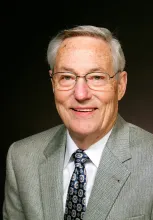
At the time of his retirement in 2016, Roy Holladay was serving the Operation Manager for Ministerial and Member Services of the United Church of God. Mr. and Mrs. Holladay have served in Pittsburgh, Akron, Toledo, Wheeling, Charleston, Uniontown, San Antonio, Austin, Corpus Christi, Uvalde, the Rio Grand Valley, Richmond, Norfolk, Arlington, Hinsdale, Chicago North, St. Petersburg, New Port Richey, Fort Myers, Miami, West Palm Beach, Big Sandy, Texarkana, Chattanooga and Rome congregations.
Roy Holladay was instrumental in the founding of the United Church of God, serving on the transitional board and later on the Council of Elders for nine years (acting as chairman for four-plus years). Mr. Holladay was the United Church of God president for three years (May 2002-July 2005). Over the years he was an instructor at Ambassador Bible College and was a festival coordinator for nine years.
