
Robin S Webber
This transcript was generated by AI and may contain errors. It is provided to assist those who may not be able to listen to the message.
The Apostle Paul tells us to be instant in season and to be able to give meat in due season. That's what I intend to do this afternoon to you, our San Diego Church family, and that our friends of Bob and Sheila Gartenheier. I want to do exactly what I said I would do, and that is to build upon the very fine foundation that Joel began with, and to offer us a Godly foundation today, based upon some of the circumstances that have occurred.
I'm going to give you my title right up front. It's always good, and that way you'll know where I'm taking you. Let's find out that at the end of this message, whether I've taken you there or not, and been successful, hopefully with the blessing that was given in this message. The second question is simply this. Why does God allow good people to die? Why does God allow good people to die? It's one of the great understandings, and it's one of the great truths of the Scriptures to understand this. But at times, because we are human beings, and because we love people and are loved by them, and we have walked on this earth with them, and we give ourselves to God, sometimes we wonder then, why does God allow good people to die?
I hope to address that today. And as I mentioned during the announcements that Sheila Gardenhires said, be sure to tell them the truth. And as I just mentioned, that not only truth to those that have not heard the truth, but sometimes those that are truth seekers, or those that are in the truth and know the truth, need to be reminded of that same truth. And so we're going to share Scripture, we're going to share stories, and we're going to share the promises of God, the guide is forward.
There's an old saying by Joe E. Lewis. Some of you were born. He was way back there, back in the 30s and 40s. He was that man that had that very, very, very wide mouth. It used to be in the black and white pictures. But Joe E. Lewis said this, you only live once, but if you work it right, once is enough. Really? Really? Do you and I truly believe that? If we were to take a poll, and there's been so many polls taken over the last couple of years with the politics at hand, but if we took a poll and if we went to a local graveyard and were able to take a poll of the local residents, and by the way, that's a big F, by the local residents that are there, I think the broad majority would disagree.
They would not want less life. They would want more life. Little babies would want more life. Teens cut off at that youthful stage of life would want more life. Middle-aged people would like to have more life being cut off at 35 or 40 years of age. Older people, I include myself in that. Not my wife, just myself. Older people with youthful and vigorous and dynamic minds, even though they're getting a little rusty in the joints, they would like to have more life.
Faithful people looking for God's healing, expecting it, would want to have more life. All of them would want to have more time. Probably most of them, those especially that are older, would want to have more time to do it all over again. Perhaps do it differently. Perhaps much differently. We'd all like to have another stab at this thing called life, recognizing how much stuff.
Stuff? Whether it be material or whether it be relational, that we've allowed to get in the way of a meaningful and a good life before God and our fellow man. There's that old expression that goes, death and taxes. Happens to everybody. But there's something that we always add, that is kind of a caboose, except me. No, death and taxes occur to everyone. The book of Hebrews, the author of Hebrews, says, it is appointed unto all men once to die. You say, who me? Yes, me. Robin Weber is appointed to once to die. And then the judgment that Joel spoke about in his message.
There is going to be coming a time when God is going to answer to those that have died in faith towards him. Join me if you would in the book of Job. In the book of Job, Job 14, verse 10, let's take a look at this. Job was a man that was under trial, that if anybody wanted to cut off their life then and there, it would have been Job.
It seemed like everything was against him. He recognized his own mortality. In Job 14, verse 10, it says this, But man dies and is laid away, and indeed he breezes last, and where is he? As water disappears from the sea and a river becomes parched and dries up, so man lies down and does not rise, till the heavens are no more. And they will not awake, nor be roused from their sleep, in that sense of and by themselves.
Only that you would hide me in the grave, and that you would conceal me until your wrath is passed, that you would appoint me a set time and remember me. You need to understand that the book of Job is the oldest literary piece of work that we have in the Scripture. It predates even Moses, probably to the time of Joseph, if not even beyond that a little bit. And this question comes up, and the answer comes up, if a man dies, shall he live again?
All the days of my hard service I will wait till my change comes, and you shall call, and I will answer you. You shall desire the work of your hands. For now you number my steps, but do not watch over my sin. My transgression is sealed up in a bag, and you cover my iniquity. The Patriarch, Job. And let's understand Job was written for you and me. I think the longer that you live, the more you get Job. Job was on a journey.
Job was a truth seeker. He was a lover of God. There weren't too many people like him on this earth. But God wanted him to have an even deeper relationship, an even more intimate relationship with him. Perhaps more than any other human being at that time, he wanted to know Job's heart, as we just heard. And he wanted to really, really go deep and understand and allow everybody, including Satan, the adversary, to understand about his servant Job. When he says that I will wait for my change, the word would later on come up, and it is a Latin word in the Bible. It's just simply resurrection. It's Latin. I like to define what that means. That's a lot of syllables, isn't it? I'm going to boil it down to two, common denominator. What does it mean, resurrection? Simply put, it means to stand. That's what it means. To stand. It is a future hope that those that are dead are to stand. Now, if you go to where my brother is buried down here, down over at 34th and Market, Mount Hope Cemetery. That's one of the oldest cemeteries in San Diego. Some of you have probably been there at one time or another, with the railroad track that goes through it down in the valley.
Nobody's standing today. Nobody used to stand there when my mother and I would go by my brother's grave every week. Nobody's standing right now. So nobody's standing right now, but that is a promise, and that is a great truth of God. And that is why you and I are here.
Because of that great promise and that great hope that we will be able to stand and to serve God through eternity, that He invites you and me into, not impeded by this flesh. No longer impeded by human nature. No longer impeded by wrong thoughts, but that you and I are going to have an opportunity to stand.
There's an old expression you've heard it on the air at one time or another, that friends don't allow friends to drink. Friends don't allow friends to drink.
Building upon that, then, allow me to give you the specific purpose statement today for this message. Why does God then allow good people to die?
If Jesus said that you are my friends, if in the book it says that Abraham was the friend of God, then why does he allow good people to die? People that have been in this congregation and are congregations that we've been a part of elsewhere and are dear family members. Why does he allow those that are made in his image and in his likeness to die? I hope to answer that today. We can say this, but there's nothing better than a story. God gives us stories to build upon. We read these stories, friends, at times like this when a dear one is deceased, to give us strength and to give us hope. And we read to know that we are not alone. Join me, if you would, in John 11. In John 11, this is a story of a dear friend of Jesus of Nazareth. And we're going to tell you actually a couple stories, and I'm going to actually share a couple of friend stories with you, and not only the one of Nazareth.
But let's look at John 11. I want you to understand that we read to know that we are not alone. Lazarus died. Barring Jesus Christ coming back in our lifetime, we will die. Jesus allowed Lazarus to die, but for a purpose. Let's understand.
Now, a certain man in verse 1 was sick. Lazarus of Bethany, which is just outside of Jerusalem. The town of Mary and her sister Martha, and it was that same Mary that anointed the Lord with fragrant oil and wiped his feet with her hair, whose brother Lazarus was sick. So these were people that were very intimate with Jesus of Nazareth.
They were dear friends. And therefore the sisters sent to him saying, Lord, behold, he whom you love. Now, we know that Jesus loves everyone, both when he was here and now as he's at the right hand of God. But there's an emphasis here. There's a specialness to this. There's this human contact, because after all, he was the Son of Man. And he just loved Lazarus. And he says, the one that you love is sick.
Now, when Jesus heard it, he said, this sickness is not unto death. But notice for the glory of God, that the Son of God may be glorified through it. Now, Jesus loved Martha and her sister and Lazarus. So when he heard that he was sick, he stayed two more days in the place where he was. He stopped. He stayed where he was, even though there was this great appeal. Allow me to use an example. Yesterday, I was taking my father shopping.
And we were out enjoying the rain and going through the puddles, until all of a sudden I got a phone call from Susan on the cell. And she said, come home. Come home now. Your office is flooded. It didn't take me too long to get there, to be able to help Susan. Everything's okay. But that, I was immediately there. Here's a situation where they sent messengers to Jesus.
And it's not like he dropped everything. He stayed actually two more days. What kind of a friend is that? Anyway. Then after this, he said to the disciples, let us go to Judea again. And the disciples said to him, Rabbi, lately the Jews sought to stone you. And are you going there again? And Jesus answered, Are there not twelve hours in the day?
And if anyone walks in the way, he does not stumble because he sees the light of this world. But if one walks in the night, he stumbles because the light is not in him. And these things he said, and after that he said to them, Our friend Lazarus sleeps, but I go that I may wake him up.
Now they still didn't get it. And then his disciples said, Lord, if he sleeps, well, that means he's going to get a well. He's going to be all right. Verse 13, however, Jesus spoke of his death. Now see, this is written afterwards by John, not before. And hindsight gives us a better understanding. But they thought that he was speaking about taking rest and sleep.
Notice verse 14, then Jesus said to them, Plainly, Lazarus is dead. And I'm glad for your sake that I was not there, that you may believe. Nevertheless, let us go to him. Now, Thomas, who is also called Didymus the Twin, said to his fellow disciples, Let us also go, that we may die with him. So when Jesus came, he found that he had already been in the tomb for four days. Now, Bethany was near Jerusalem just about two miles away. Allow me to share a part of the story with you to create the significance here.
May I? In the Jewish culture, the first three days were known as the days of weeping. The days of weeping. And at that point, they also felt that there was a spirit that was hovering over the dead body. The significance of being there on the fourth day is that, if I can use the phrase, it was over and out.
He was dead. He was dead. There was no coming back. There was no revival out of a sleep, as it were. You think of Romeo and Juliet, where one of them wakes up after the story, and one's alive and one's dead. No, there was no coming back. The symbolism of four is simply this. Lazarus was truly dead. So let's understand a little bit more. Many of the Jews had joined the women around Martha and Mary to comfort them concerning their brethren. Then Martha, as soon as she heard that, Jesus was coming, went and met him.
But Mary was sitting in the house. Now, Martha said to Jesus, Lord, if you had been here, my brother would not have died. In other words, where is God? Where were you?
But even now, I know that whatever you ask of God, God will give you. And Jesus said to her, Your brother, who will rise again. Martha said to him, I know that he will rise again in the resurrection on that last day. Jesus said in verse 25, I am the resurrection and the life.
He who believes in me, though he may die. And let's remember what I said earlier, friends. It is appointed unto all men and all women, once to die. Though he may die, he shall live. And whosoever lives and believes in me shall never die. The question comes down to this. And this is the question I ask you because we have been struck with the situation that we have this week. Do you believe this? Do you believe this? She said to him, Yes, Lord, I believe that you are the Christ, the Son of God, who has come into the world. And when she had said these things, she went her way and secretly called Mary her sister, saying, The teacher has come and is calling for you. As soon as she heard him, she also arose quickly and came to him. Now, Jesus had not yet come into the town, but was in the place where Martha met him. And then the Jews who were with her in the house and comforting her, when they saw that Mary rose up quickly and went out, followed her, saying, She is going to the tomb to weep there. And then when Mary came where Jesus was and saw him, she fell down at his feet, saying to him, Lord, if you had been here, my brother would not have died. I want to share a thought with you as we're reading through this story. This is not a singular question by one individual. We all ask this at various times. This is a question that all of us have to wrestle with as to why a good God would allow a friend to die. And somebody that is faithful, someone that he calls their child, someone that believes in Jesus Christ, someone that has repented of their sins, someone that has faith towards God, someone who is a good individual and gives to the community, gives to the church, continues on the journey of pilgrimage.
If only you had been here, why didn't you heal this individual?
Let's continue. Therefore, verse 33, when Jesus saw her weeping and the Jews who came with her weeping, he groaned in the spirit and was troubled. And he said, Where have you laid him? They said, O Lord, come and see.
And then in verse 35, one of the great statements of the Scriptures, for it is in this Scripture and in these two words that God wants us to frame our Savior. He wants us to understand what he did through Jesus Christ. He wants us to understand that he sent Jesus Christ's earth, that man might be touched by God and that God might be touched by man, and that there would be a transaction, that there would be something new and something special.
Because it is in that frame of a teardrop that we understand the humanity and the passion and the compassion of Jesus Christ. Where have they laid him? He now wanted to go to him in that right time and for a purpose. The purpose that Job was speaking about. And then the Jews said how he loved him.
They removed at the compassion shown by the man of Nazareth. And some of them said, could not this man who opened the eyes of the blind also have not kept this man from dying? We have seen his miracles. We have seen him touch the man's eyes with clay. We have seen him heal the lepers. This man that did all of this, of all people, why didn't he heal Lazarus?
And then verse 38, Then Jesus again groaning in himself came into the tomb, and it was a cave, and a stone lay against it. And Jesus said, take away the stone. See, when we're involved with God the Father and Jesus Christ, they'll always ask us to do something. They will ask us to do what we can do, and God the Father and Jesus Christ will do what only they can do, but they make us a partner in this.
Jesus said, take away the stone, and thus they did. Martha, the sister of him who was dead, said, O Lord, by this time there is a stench, for he has been dead for four days. Jesus said to her, Did I not say to you that if you would believe, you would see the glory of God? And then they took away the stone from the place where the dead man was lying.
And Jesus lifted up his eyes and said, Father, I thank you that you have heard me. And I know that you always hear me, but because of the people who are standing by, I said this, that they may believe that you sent me.
One thing that's very important, understanding the cultures of antiquity, oftentimes there would be wise men, or medicine men, or religious people, and they would mumbo-jumbo, abracadabra, they would speak underneath their breath, they would kind of, you know, do smoke and mirrors to make something happen. And he wanted the people to hear him. He wanted the people to know from whence his source of strength and power came from.
Now when he had said these things, he cried with a loud voice, speaking in that term, understanding why he was speaking with a loud voice, Lazarus, come forth! And he who had died came out bound hand and foot with grave clothes, and his face was wrapped with a cloth. And Jesus said to them, Loose him, and let them go. Let's understand something. There are things that only God can do, and there are things that God asked us to do. If you go back to the story again sometime, remember there were two things that God asked those that were watching to do, to remove the stone, and they could do that.
And also that once he was risen, just to do a little impact zone, take off the bandages, take off the mummy wrapping, as it were. Remember Boris Karloff, for some of you that are older, remember Boris Karloff? No, take that off and twirl them like a top. Take off those grave clothes. People had to know, they had to touch, they had to feel, they had to get it, as it were. And God and Christ are just the master teachers. Then many of the Jews had come to Mary, and had seen the things done, believed in Him. And Lazarus went on, and he lived. In fact, if you look at chapter 12, verse 1, then six days before the Passover, Jesus came to Bethany, where Lazarus was, who had been dead, whom he had raised from the dead.
And they had made a supper, and Martha served, but Lazarus was one of those who sat at the table with him. Is that not cool? That's cool. Lazarus is not only standing, but he's sitting, and he's at a dinner. All of this, as Jesus said, was so that others could understand the glory of God. Others could understand the glory of God. Now, here's one thing I want to share with you. Lazarus was raised from the dead. You know, it's tough enough to die once.
Think about Lazarus. He had to die twice. You ever thought that one through? And not only that, but think of the people that were resurrected from the graves. Remember on the day that Jesus, at Golgotha, there were people that came up, they also had to die. It's tough enough to die once, but these people would die twice. Why? That it might be to the glory of God. Why does God allow us as human beings to die? Because we think we have life in hand. There's something about us, especially when we're younger, that we just have this bug of immortality in us that we think will never, ever dissipate.
And God allows, hear me please, God allows us as men and women to die, that no flesh should glory on its own. No flesh should glory on its own. That it is not by our good looks that leaves me out. It's not by good health that kind of leaves me out. It's not by my good right knee. You know that really leaves me out. It is by the grace of God, the power of God, the miracle of God, to recognize that our God is God, and we have that faith even today on this Sabbath day, even when we have a loved one departed for the moment, that those that have died amongst us, I think of Mr.
Helmut, I think of Sheila Gartenhier, that God alone might have the glory. Do people that die and they ask God for healing, is there something wrong with them? Is God putting a curse on them? Join me if you would in John 9 for a moment. In John 9, let's take a look here. In John 9, let's pick up the thought in verse 1.
Now as Jesus passed by, he saw a man who was blind from birth, and his disciples asked him, saying, who sinned this man or his parents that he was born blind? There's got to be something going on here really bad. Hopefully the reporters in the newspapers will bring it out. Must be something bad. That's how the mind of antiquity was. It was cause and effect. If somebody was born blind, if somebody was born maimed, if somebody was born this or that, it must be that sin was involved.
Jesus answered saying, in verse 3, neither this man nor his parents sinned, but that the works of God should be revealed in him. We know the rest of the story he was healed. And even with that healing, his family turned away from him, his church at that time turned away from him, his neighbors turned away from him, but he was in the clutches of the master. At the end of that story, Jesus went looking for him and found him and asked one question, who do you say that I am?
I want to share a thought with you in all of this, please. We're going to talk about one more story and another near-dear friend of Jesus Christ. I gave a message last week. It was on the laying on of hands, and I encourage you to maybe listen to that in full.
It's on the UCG homepage. But I want to borrow some out of that for a moment, because I think this is indicative of it. Talking about anyone that is amongst us as a Christian and a member of the body of Christ, there are certain things that we go through. The laying on of hands kind of travels through our life, doesn't it?
These physical hands are used that God allows the ministry to use for spiritual purposes. Not that it's by our might or our power, but it's by God's Spirit in what he's doing. These hands are nothing. But there's two things that I want to share with you about the laying on of hands.
One of them comes with baptism. At baptism, we have the laying on of hands. I know that Mr. Miller just addressed this, and I heard that it was a very positive reaction, and many of you were informed about what the laying on of hands is about. And there is the laying on of hands, and I don't mean to go for 20 minutes off on the laying on of hands, but at the very beginning of our introduction into the body of Christ, once we have exhibited faith towards God and have repented of our sins, and then we have the baptism of water, the baptism of repentance, then we have come to understand as we look into the book of Acts that we then, through the laying on of hands, have imparted to us, have imparted to us the Holy Spirit.
What does that laying on of hands mean? Let's talk about it for a moment, okay? What does that mean? The laying on of hands, it's put on your head for a very simple reason, and I'll explain it this way. This is how I explain the laying on of hands. The laying on of hands is that it shows that we have voluntarily submitted ourselves to come underneath the mantle and the cover of God's sovereignty, His love, and His care.
We come underneath that covering. We come underneath that mantling. The laying on of hands goes back millennia, millennia, millennia. It goes all the way back to where Jacob, Israel, laid His hands on the twins, Manasseh and Ephraim. The laying on of hands, there's two things. One thing that the laying on of hands does is it is a matter of committal. You might want to jot that word down. It's a matter of committal, and it's also a matter of blessing. And when we have the laying on of hands, whether it be at baptism, or even when we have the laying on of hands when we anoint somebody, what we are saying, come what may, we are locked into a very dynamic principle.
Allow me to share it with you. It's the only way I can explain it. It works for me. This is what God has helped me to come to understand over these years, is simply this. It does not remove us from the adversities of life.
It does not remove us from some of the pains of life. But what we do when we have that laying on of hands, whether it be for baptism, whether it be for healing, being anointed, it is simply this. We are saying that the Lord is my shepherd. I shall not want. He makes me to lie down in green pastures. He leadeth me beside the still waters. And we go on that travel.
We go on that journey with Him through the different seasons of life. Have you ever noticed, are you with me? Have you ever noticed that some seasons of life are better than others? Or am I the only one that has bumped into that reality? There is spring. There is summer. There is autumn. There is winter. In each of those seasons, in our spiritual journey, have rich meanings if we will allow them to soak into us and allow God's Spirit to work with us.
That same verse says, that same Psalm 23 says, Even though I walk through the valley of death, through the shadow, I shall fear no evil. For thou art with me, thy rod, thy staff, they comfort me.
Thou anointest my head with oil in the presence of my enemies. Surely my cup runneth over. And it goes on to say, for surely I know that I will ultimately dwell in the house of the Lord forever. When I am anointed, or when I anoint others, that is my prayer and that is my thought. When a head and a heart, because the heart goes where the head is, that I am committing myself and or that person into God's hands.
As much as when Jesus was on the cross, nailed to a piece of wood. And one of the final things he said is what? Quoting out of the Psalms, Father, into your hands, I commit my Spirit. I believe that that is what the individuals that recently departed. And have ceased in this life for the moment. Dead. And that's what's there for each and every one of us. I'd like to share a story with you. Let's go back a second or less we lose the thing.
Why does God allow good people to die? That's a thought, right? Let's build upon that with another story. Join me if you would for a moment, and let's go to deal with another one of the friends of Jesus. Let's go to Acts 12. Acts 12. Now we're right in the middle of the book of Acts.
It says, Now about that time Herod, the king stretched out his hand to harass some of the church. Then notice verse 2, And then he killed James, the brother of John, with the sword. And because he saw that it pleased the Jews, he proceeded further to seize Peter also. And it was during the days of 11 Brad. Now for those of you that know a little bit about the book of Acts, we always remember that Stephen is defined as the first martyr.
Right? And the deacon Stephen. Well, here we have an apostle. Here we have an apostle, and this apostle is killed, which is very interesting. But now, let's just drop down here for a second. We find in verse 6 that Herod imprisons Peter in verse 5, and put him into prison in verse 6. And when Herod was about to bring him out that night, Peter was sleeping bound with two chains before the door, and were keeping the prison. And now behold, an angel of the Lord stood by him, and a light shone in the prison, and he struck Peter on the side, and raised him up, saying, arise quickly!
And his chains fell off his hand. Then the angel said, and gird yourself, and die on your sandals, and tie on your sandals. And so he did. And he said to him, put on your garment, and follow me. And they did. Here's the big question, and I think Acts 12 is very pivotal in understanding how God works. I have a question for you, and we must confront it as people of the book and to read the book.
Was James less than Peter? Did Jesus somehow love Peter more than James? Let's remember something very, very important here. James was one of the very first disciples chosen, right? James and John, Andrew and Peter. We also know that if we go to Matthew 17, join me if you would for a moment.
In Matthew 17, in picking up the thought, this is the story of the Transfiguration. Now, after six days, Jesus took Peter, James and John, his brother, let them up on a high mountain by themselves, and when he was transfigured before them, his face shone like the sun, and his clothes became as white as the light. And behold, Moses and Elijah appeared to them, talking with them.
Then Peter answered and said to Jesus, Lord, it is good for us to be here. And if you wish, let us make three tabernacles, one for you, one for Moses, and one for Elijah. And while he was still speaking, behold, a bright cloud overshadowed them, and suddenly a voice came down and saying, This is my beloved son, in whom I am well pleased, hear him. And when the disciples heard it, they fell on their faces and were greatly afraid. But Jesus came and noticed and touched them, laid hands on them, and said, Arise, arise, and do not be afraid.
Let's understand the role of James. James was, you know, there were twelve apostles, but there were three that were, in that sense, that Jesus took in a very special tutelage. There was Peter, there was James, and there was John.
Now, it's very interesting that James was able to, James was able to be a part of that transfiguration scenario, and to see the glory of God visited upon Jesus at that time on this earth. I believe that it was for a point and it was for a purpose. For him to remember. There are times when God intervenes in our life and we are to remember.
There are things that God has done in my life and in your life that he asked us to remember. He asked us at times to remember what he has done and not so much, well, what are you going to do for me now? I can go through my life and I can think of perhaps five very big moments in my life where I know that I've been touched by the direction of God, and I believe I'm touched to one degree or another every day.
Please understand what I'm saying. But things that I am to remember on this journey. This St. James, though, God allowed to die. But he gave him the courage and he gave him the vision beforehand to be able to do it. This was the St. James that had heard what the Son of Man had said, that they would rule over the tribes of Israel when the kingdom comes. So how come he got killed? Why was he the first? God has his purposes. And I believe that God knew exactly what he was doing. James was a leader amongst the disciples. He had a lot of fervency being a son of Zebedee.
But he had to understand, too, that rather than, along with his brother, trying to destroy somebody else, like the Samaritans, that he had to let his life go. That God might be glorified. Now I have a question for you. Does that mean that once James died, that God's forgotten about him? Does he have a purpose for him in the future? Absolutely. We can find that if we go over to Revelation 21. Join me if you would for a moment. In Revelation 21. And let's pick up the thought in verse 14.
Speaking of the heavenly Jerusalem, And she had a great and a high wall with twelve gates, and twelve angels at the gates, and names written on them, which were the names of the twelve tribes of the children of Israel. Now I'm actually looking for the verse in my... It's where it mentions where the disciples are mentioned. Ah, verse 14. Now the wall of the city had twelve foundations, and on them, notice, were the names of the twelve apostles of the Lamb. God allowed James to die.
That it might be to his glory, and that it might be to his honor. Why does God at times heal one person, and not heal another person? Do you think that's a pretty good question? Have you ever had that question, or am I the only one? Just watch your eyes for a moment. Maybe you have all the answers. I don't, but I remember what Jesus said to Peter.
That last conversation that he had with Peter, where Peter got the story about what his life was going to be like. That there was a time when he was young, and he could go hither and yonder, but there was going to be a time when he could not go where he was going to go, and basically saying that Peter was going to be martyred, that God was going to give up his life. And of course, you know what Peter said, that... What about John? What about John? He said, don't you worry about John. Don't worry about John.
I'll deal with him. I mentioned this last week, and it's something that I wrestled with over the years when I was 16. I had spinal meningitis. And again, my mother called for the elder of the church to come to me as a young fuck of a teenager, a basketball player, and laid hands on my head and committed me to God.
And they didn't know whether or not I was going to make it through the night or not. When I closed my eyes, and I think I've mentioned that story before, I was closing my eyes, and I did not know if I was going to open them up the next morning. But God sent a bird to wake me up. It's called a mockingbird. You ever had a mockingbird out your door? They don't stop. But I was never so thankful for a mockingbird as that morning in 1967, because before I even opened up my eyelids, I said, I'm alive.
I made it through the night. God is good. And I was healed. Thank you, God. That same year, there were others that had the laying on of hands, and they were anointed. Not for what I had, but for whatever was going on in their life. God chose to heal some. God chose at this time not to heal others. But in faith, hear me, please, in faith, we commit our lives to God.
We put our lives into His hands. That's what we did when we died to Him in baptism. And even with the factor of death that may come, we say, when Jesus committed His life and His Spirit to God, was He a living? Was He walking through the meadows? No, He was on a cross. He was pegged to a stake. And it is in that moment. Kind of a little bit like what Joel was saying, what do you do when you're happy or what do you do when you're over here?
It was in that moment that Jesus committed His Spirit to the Father to set us an example. I know that our dear friend, Sheila, and you know it because we all know Sheila and we know Bob, committed her Spirit to God through thick and through thin. She also did a lot of work on her own.
God asked us to do that, which we can do for ourselves, and give the rest to Him. And we know how valiant she was. Some people only get cancer once. She got it twice. And nonetheless, put her whole being into it, but always given God the credit and God the victory. And even in her death, there is a victory for Sheila Gardner-Hire and for Bob, her loving husband, because they committed themselves to God. And they came to understand that God is never late.
You and I spell late D-E-A-T-H. But God doesn't count it that way. I want to share a thought with you. Join me, if you would, in Revelation 1. Remember how I just mentioned that Jesus reached down and touched the disciples to calm them down? I think it's okay. Maybe you've never seen this before. I might ascribe it a little bit to the laying on of hands, where John is in vision, and he's just seen all of the glory of Christ in the midst of the candelabra, the lights, seen the glory of heaven.
And then it says in verse 17, And when I saw him, John speaking, I fell at his feet as dead. But he laid his right hand on me, touched him, sang to me, Do not be afraid. I am the first and the last. I am he who lives and was dead. And behold, I am alive forever. Amen. And I have the keys of the grave and of death, and write these things which you have seen, the things which are and the things which will take place.
That touch was so affirming to the Apostle John, just as much as the touch of Jesus of Nazareth upon the men on the Mount of Transfiguration. There is something about touch that is very powerful, isn't it? There's something about touch.
You see babies that are thriving, they are nurtured, they are loved, they are touched by their parents. You see a baby apart from a loving guardian, they wither. It's like a plant without any moisture. And God reaches down and touches us through the laying on of hands and brings us into the body of Christ. And we continue to have that laying on of hands throughout our life, whether it be marriage, whether it be anointing, whether it be ordination, whether it be this or that. God wants to have an intimate relationship with us and to allow us to know He is there. Allow me to conclude with this two sets of verses. Just join me in John 6, 37. And I am just friends, and we are a family here in San Diego. I'm following God's guidance and I'm following the instructions of our friend Sheila. She said, Tell them the truth. And there is no greater truth than this. John 6, verse 37. Notice, but should raise it up at the last day.
And this is the will of Him who sent me. This is the big stuff. This is not the mystery. This is not getting into numbers and details that God will yet reveal about our future. This is the great purpose of God through Christ. And this is the will of Him who sent me that everyone who sees the Son and believes in Him may have everlasting life. And I will raise Him up at the last day. Brethren of San Diego, that's why we're here. That's why we have this great truth. Why does God allow even His friends to die? Well, it goes right back to another question. Why did God allow His very own Son to die? And you and I have that blessing to understand that. Another day, another man, another sermon. But until that day, and until that time, while you and I draw breath, there will be two questions that continually come to us. They came to Sheila. They came to Bob. They came to Mel Helmut. They come to each and every one of us every day. And it is simply this. Number one, who do you say that I am?
Who do you say that I am? How you live will give God and Christ that answer. Second question is simply this. Do you love me? Jesus pestered Peter to the very end, didn't He? And took him deeper and deeper and deeper, just like a New Testament Job. Do you love me? I am so pleased as a brother in Christ to be able to tell you that in Susan's and my conversations with Bob and Sheila, I know that Sheila knew. I knew that Sheila knew who Christ was. And I know that she loved Him.
God puts these people into our lives that will come and will go. They will come and they will go. And you and I go on because you and I worship an ageless God that has touched us on the shoulder as much as the apostles of old or John and vision to answer those questions.
The same way that those that are now not with us have. We look forward to seeing them again in the wonderful world tomorrow. Look forward to seeing you after church.
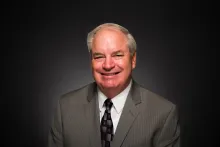
Robin Webber was born in Chicago, Illinois, in 1951, but has lived most of his life in California. He has been a part of the Church of God community since 1963. He attended Ambassador College in Pasadena from 1969-1973. He majored in theology and history.
Mr. Webber's interest remains in the study of history, socio-economics and literature. Over the years, he has offered his services to museums as a docent to share his enthusiasm and passions regarding these areas of expertise.
When time permits, he loves to go mountain biking on nearby ranch land and meet his wife as she hikes toward him.
